
avg —
Courgette Adjika: 9 Recipes, Safe Canning and a Comparison Table

Instructions
Prepare the vegetables. Wash the courgettes: use young ones whole with the skin and seeds; for mature ones cut off the skin and scoop out the loose seedy core with a spoon. Prepare the tomatoes, sweet peppers, carrots and garlic: wash, trim and peel as needed.
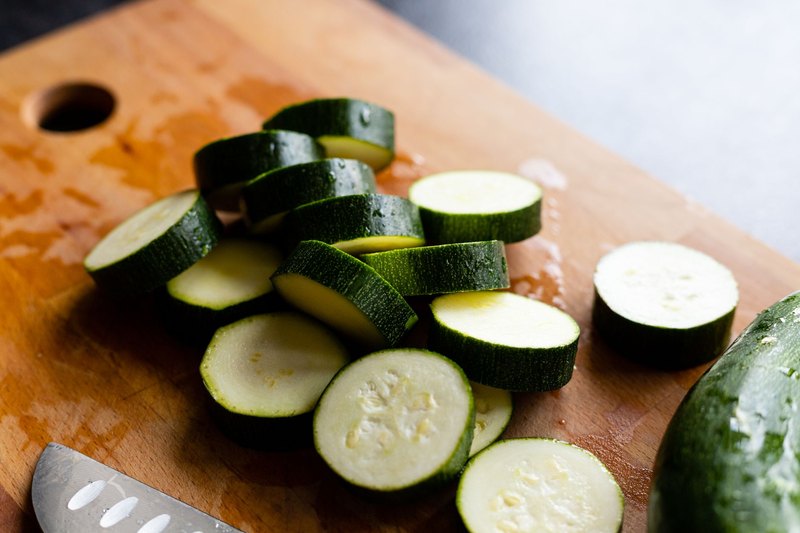
Mince everything. Put the courgettes, tomatoes, sweet peppers and carrots through a mincer with a coarse plate, or blitz with a blender to a coarse puree. Set the garlic and hot pepper aside for now.
Reduce the base. Pour the mixture into a heavy-bottomed pan or cauldron, add the vegetable oil, sugar and salt. Bring to the boil and simmer over a medium heat for 40-45 minutes, stirring, until the volume has reduced by about a third and the mixture has thickened.
Add the heat. 10 minutes before the end of cooking add the garlic pressed through a garlic press and the finely chopped hot pepper, then taste and add more salt if needed.
Pour in the vinegar. 2-3 minutes before taking it off the heat pour in the 9% vinegar, stir and let the mixture come back to the boil.
Fill while hot. Ladle the boiling adjika into sterilised jars right up to the neck and seal with boiled lids.
Cool. Turn the jars upside down, wrap them in a blanket and leave until completely cold, about a day, then put them away for storage.

Yield and jars: how many to prepare
| Courgettes (base) | Finished adjika | Jars of 0.5 litre |
|---|---|---|
| 1 kg | about 1.6-1.8 litres | 3-4 jars |
| 2 kg | about 3.2-3.6 litres | 6-7 jars |
| 3 kg | about 4.8-5.4 litres | 10-11 jars |
The proportions scale linearly: however many times you change the quantity of courgettes, change all the other ingredients by the same factor. Prepare a few spare jars, as the adjika may turn out slightly thicker or thinner depending on how juicy the vegetables are.
Variations
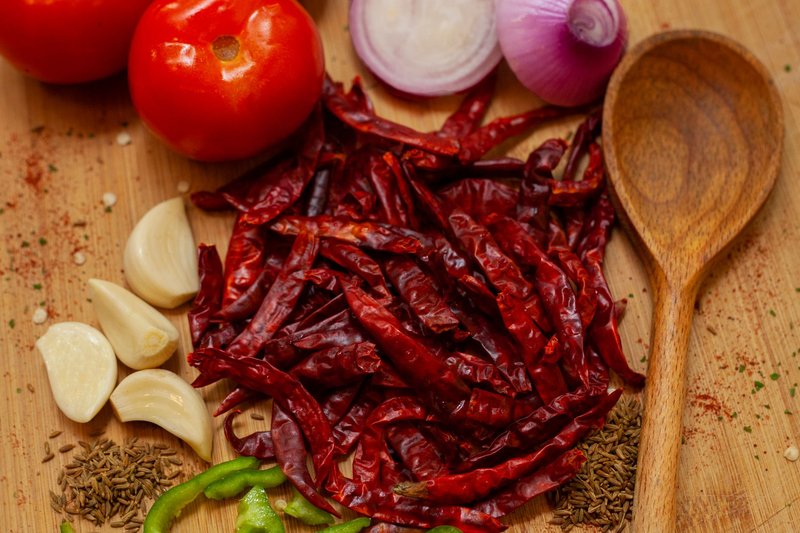
Classic courgette adjika
This is the base recipe, medium-hot, and the one to start with if you are making courgette adjika for the first time. The flavour is balanced and gently spicy, it suits the whole family and keeps happily in the pantry all winter. Every variation below builds on this one, so make a note of the proportions and the order of steps.
Ingredients: 1 kg courgettes, 700 g ripe tomatoes, 300 g sweet peppers, 200 g carrots, 80 g garlic, 1-2 chilli peppers, 100 ml vegetable oil, 2 tbsp sugar, 1-1.5 tbsp salt, 2-3 tbsp 9% vinegar.
- Wash the courgettes: leave the skin on young ones, peel mature ones and scoop out the seeds. Deseed the peppers, peel the carrots and garlic, and cut the stalk ends out of the tomatoes.
- Pass the courgettes, tomatoes, peppers, carrots and chilli through a mincer, or blitz them with a blender until smooth. Set the garlic aside for now.
- Pour the vegetable purée into a heavy-based pan, add the oil, salt and sugar. Bring to the boil and simmer over a medium heat for 40-45 minutes, stirring so the mixture does not catch.
- About 5-7 minutes before the end of cooking, add the garlic crushed through a press.
- Pour in the vinegar, stir and let it boil for another 2-3 minutes, then have a taste and add more salt if you like.
- Ladle the boiling adjika into dry sterilised jars right up to the neck, seal immediately, turn the jars upside down, wrap them in a blanket and leave until completely cold.
Storage: under a metal lid in a dark pantry the adjika keeps for up to a year. Once opened, keep the jar in the fridge and use it within 2-3 weeks.
Hot "Ogonyok" adjika
This is the same classic base, only noticeably more fiery. Keep all the base proportions as they are and change only the hot ingredients: increase the chilli to 3-4 pods and the garlic to 120-150 g. Some of the hot pepper can go in as dried flakes or ground chilli, which makes the heat smoother and deeper. Add both the chilli and the garlic right at the end of cooking, but be sure to boil them in the mixture for 2-3 minutes: the heat treatment removes the risk of fermentation, as raw garlic is only safe in fridge versions kept under a plastic lid. Use vinegar at the upper limit, 3 tbsp for this quantity: the extra acidity acts as an additional preservative and balances the heat. This adjika turns out properly hot, with a long, warming finish, and goes beautifully with meat, kebabs and hearty soups.
Finger-licking adjika
This is a softer, sweeter and more silky take on the classic. It differs from the base recipe in three ways: increase the sugar to 3-4 tbsp, the vegetable oil to 120-150 ml, and keep the hot pepper to a minimum, just 1 small pod, or leave it out altogether. The extra sugar develops a light caramel note during the long simmer, while the oil makes the sauce velvety and helps it keep longer by forming a protective film on top. Simmer the mixture towards the upper limit, about 45 minutes, so it reduces and thickens nicely. The result is a rich adjika with a gentle sweetness, loved by children and anyone who cannot handle heat. It makes a lovely sauce for potatoes, pasta and grain dishes. If you fancy the same sweetish adjika but without tomatoes, combine these proportions with the tomato purée version in the next section.
Courgette adjika with tomato purée (no fresh tomatoes)
This version comes to the rescue in late autumn, when ripe tomatoes are nowhere to be found but you still want a good adjika. It is made exactly like the classic, with one swap: instead of 700 g fresh tomatoes, take 150-200 g tomato purée and dilute it with 150-200 ml warm boiled water to the consistency of a thin sauce. Everything else, the courgettes, peppers, carrots, garlic, salt, sugar and vinegar, stays as in the base recipe. Add the diluted purée to the pan together with the vegetable mixture at the very start of cooking. The purée gives a thicker texture and a rich red colour, so the mixture needs less reducing, 30-35 minutes instead of 40-45, otherwise the adjika will come out too dense. From there, carry on as in the classic recipe: garlic and vinegar at the end, boil for 2-3 minutes, then fill the jars hot and seal. Adjust the thickness with the water: for a denser sauce stay closer to 150 ml, and if you prefer it runnier, go for 200 ml.
Courgette adjika without sterilisation
In this method the jars are not sterilised in boiling water or the oven: the long simmer, the garlic and vinegar boiled through the mixture and the piping-hot filling right up to the neck do the sanitising instead. It is handy when you cannot face fussing with a water bath, but it does demand spotlessly clean jars and a reliable seal.
Ingredients: 1 kg courgettes, 700 g tomatoes, 300 g sweet peppers, 200 g carrots, 80 g garlic, 1-2 chilli peppers, 100 ml vegetable oil, 2 tbsp sugar, 1-1.5 tbsp salt, 3 tbsp 9% vinegar.
- Wash the jars and lids with bicarbonate of soda, rinse them and pour boiling water over them inside and out, then leave them to dry neck down on a clean towel.
- Prepare and mince the vegetables exactly as in the classic recipe, setting the garlic aside separately.
- Pour the mixture into a pan, add the oil, salt and sugar and simmer over a medium heat for at least 45 minutes, stirring regularly.
- Add the garlic crushed through a press along with the vinegar, and be sure to boil everything together for 5-7 minutes: this is the key safety step in a recipe without sterilisation.
- With the pan still on the heat, ladle the boiling adjika into the dry jars right up to the top, so no air is left under the lid, and seal straight away.
- Turn the jars upside down, wrap them in a blanket and leave them like that for a day until completely cold: the residual warmth acts as an extra gentle pasteurisation.
Storage: without sterilisation the preserve is more temperamental, so keep it somewhere cool and dark, in a cellar or the fridge, and aim to finish it within 6-8 months. If a lid has bulged or the contents have turned cloudy, do not eat it.
Courgette adjika without vinegar
Vinegar acts as the preservative in adjika, but you can replace it or leave it out entirely if sharp acidity does not agree with you. There are two reliable routes. The first: skip the vinegar completely and add 1/3-1/2 tsp citric acid for the whole batch instead, dissolving it in a spoonful of water and stirring it in at the end of cooking along with the garlic. The second: use no added acid at all, but increase the share of tomatoes and garlic, which bring their own acids and natural antimicrobials, and simmer the mixture longer than usual, up to 55-60 minutes, so it becomes thicker and more concentrated. Either way the flavour comes out softer and more natural, without the vinegary edge, but the preserve has less of a safety margin. So store vinegar-free adjika only in the fridge or a cold cellar, for no longer than 6-9 months, and use small jars so an opened one gets eaten quickly.
Courgette adjika with apples
Sour apples give adjika a natural tang and noticeably thicken the sauce thanks to their pectin. For 1 kg of courgettes take 300-400 g sour apples, ideally Antonovka or Semerenko. Peel and core the apples and put them through the mincer together with the other vegetables at step two of the base recipe. You can trim the sugar slightly, by 0.5-1 tbsp, depending on how sharp the apples are and your own taste. Thanks to the pectin the mixture cooks down thicker and holds its shape on the spoon, while the natural apple acidity works as an extra preservative, so you can use vinegar at the lower limit or cut it by a third. The finished apple adjika is more fragrant and a touch denser than the classic, with a pleasant fruity note in the finish.
Adjika with extra garlic
This version is for anyone who loves a bold, unmistakably garlicky flavour. Compared with the classic, simply double the garlic, up to 150-160 g per 1 kg of courgettes. It is not just the amount that matters but the timing: add most of the garlic right at the end of cooking and be sure to boil it in the mixture for 2-3 minutes, otherwise a preserve under a metal lid may ferment and blow the jar. Raw, unboiled garlic is reserved only for adjika that lives in the fridge under a plastic lid. If you want a more complex garlic aroma, put half the amount through a press and grate or finely chop the other half with a knife. With double the garlic, keep the vinegar at the upper limit, 3 tbsp: it balances the pungency and safeguards the storage. The sauce turns out rich and punchy, and it is especially prized with meat and salo (cured pork fat).
Raw no-cook courgette adjika
This adjika involves no heat treatment at all: the vegetables are never cooked, so they keep the maximum of their vitamins and the flavour stays fresh and fiery. The trade-off is a short shelf life and fridge-only storage. It is a good method when you need to use up a small batch of courgettes quickly and eat the preserve over autumn and early winter.
Ingredients: 1 kg courgettes, 700 g tomatoes, 300 g sweet peppers, 200 g carrots, 100-120 g garlic, 2-3 chilli peppers, 1.5-2 tbsp salt, 3-4 tbsp sugar, 4-5 tbsp 9% vinegar.
- Wash the vegetables thoroughly and pat them dry, peel the courgettes, remove the seeds from mature ones, and deseed the peppers. Cleanliness matters especially here, as this preserve is never cooked.
- Pass the courgettes, tomatoes, peppers and carrots through a mincer into a large bowl.
- Add the salt, sugar, the garlic crushed through a press, the chopped chilli and the vinegar. The raw version takes more vinegar than usual, 4-5 tbsp for this quantity: it is precisely what replaces the heat treatment.
- Mix thoroughly and leave at room temperature for 2 hours so the salt and sugar dissolve and the vegetables release their juices. Then stir again, taste, and add more salt, sugar or vinegar if needed.
- Spoon the adjika into clean, sterile, dry jars, leaving a couple of centimetres at the top, and close with plastic lids.
Storage: fridge only, and no longer than 2-3 months. You can also portion this adjika into containers and freeze it, in which case it will keep for up to six months. If you spot froth, a sour smell or any signs of fermentation, do not eat it.
Variations
Classic courgette adjika
In short: the base recipe unchanged, medium heat, suits everyone. Use the proportions from the main recipe: 1 kg courgettes, 700 g tomatoes, 300 g sweet peppers, 200 g carrots, 80 g garlic, 1-2 chilli pods. Simmer the mixture for 40-45 minutes and add the garlic and vinegar at the end. Start with this version if you are making adjika for the first time.
Fiery Ogonyok adjika
In short: the same base, but noticeably more fiery. For a true Ogonyok increase the hot pepper to 3-4 pods and the garlic to 120-150 g, add them at the very end of cooking and be sure to boil them in the mixture for 2-3 minutes: the punch and aroma stay, and the preserve remains safe to store. Raw garlic is only acceptable in versions kept in the fridge. Use vinegar at the upper limit, 3 tbsp: it improves the keeping qualities of this fiery preserve.
Finger-licking adjika
In short: milder, sweeter and richer than the classic. Increase the sugar to 3-4 tbsp and the vegetable oil to 120-150 ml, and keep the hot pepper to a minimum, 1 pod. This adjika turns out rich, with a light caramel sweetness: children love it, as do those who cannot take the heat. It works beautifully as a sauce for potatoes, pasta and grains. If you want this mild version without fresh tomatoes, combine it with the tomato paste variation.
Courgette adjika with tomato paste (no tomatoes)
In short: when there are no ripe tomatoes, replace them with paste. For 1 kg of courgettes take 150-200 g of tomato paste and dilute it with 150-200 ml of water, keeping everything else as in the base recipe. The paste gives a thicker consistency and a deeper colour, and you can simmer a little less, 30-35 minutes. It is handy in late autumn, when good tomatoes are no longer around.
Courgette adjika without sterilising
In short: the filled jars are not sterilised in a water bath; long simmering and hot filling take on the job of disinfection instead. Follow the base recipe, but simmer the base for at least 45 minutes, and be sure to boil the garlic and vinegar in the mixture for 5-7 minutes. Ladle it in boiling hot, right up to the neck, into jars washed thoroughly with soda and scalded with boiling water, then seal straight away. This version keeps more reliably somewhere cool.
Courgette adjika without vinegar
In short: the preserving acidity comes from citric acid or from the vegetables themselves. You can leave the vinegar out completely, replacing it with 1/3-1/2 tsp of citric acid for this quantity, or increase the share of tomatoes and garlic and reduce the mixture for longer, 55-60 minutes. This version tastes milder, but store it in the fridge or a cold cellar, and for no longer than 6-9 months.
Courgette adjika with apples
In short: sharp apples add natural tartness and thicken the sauce thanks to their pectin. For 1 kg of courgettes take 300-400 g of sharp apples (Antonovka or Semerenko types work well), peel and mince them together with the other vegetables; the sugar can be reduced slightly. The apple version comes out thicker and more aromatic, and the natural pectin lets you get by with less vinegar.
Adjika with extra garlic
In short: for lovers of a bold garlicky flavour. Double the garlic, up to 150-160 g, add the main part of it at the very end of cooking and boil it in the mixture for 2-3 minutes: the aroma stays bright and the preserve remains safe. Raw garlic is only acceptable in versions that will live in the fridge.
Raw courgette adjika, no cooking
In short: no heat treatment, maximum vitamins, but strictly for the fridge. Put all the vegetables through a mincer, add the salt, sugar, garlic, hot pepper and vinegar (the raw version takes more of it, 4-5 tbsp for this quantity), mix thoroughly and leave for a couple of hours. Spoon into sterile jars under nylon lids. It keeps only in the fridge, for 2-3 months, but holds on to its fresh flavour and full heat.
Storage and safety
Why adjika blows its lid, ferments or goes mouldy
A bulging lid, cloudiness and bubbles are signs that yeasts or bacteria have started to multiply inside the jar. There are usually several causes: poorly washed or non-sterile jars, an undercooked mixture, too little salt, sugar or vinegar, unboiled water getting in, or a loose seal that lets air through. Garlic and herbs added too early and not boiled through can also set off fermentation.
The main danger of any vegetable preserve is botulism. The bacterium develops without access to air, in poorly sterilised jars with low acidity, and it changes neither the taste nor the smell. That is exactly why vinegar or citric acid always goes into adjika (they raise the acidity and suppress bacteria), why the vegetables are washed thoroughly to remove any soil, and why the cooking time is never cut short. If the lid has bulged, or the contents have gone cloudy, fermented or developed an off smell, the jar must not be eaten under any circumstances: throw it away without tasting.
How to sterilise jars
Wash the jars with soda and sterilise them by one of these methods. In the oven: place clean, wet jars in a cold oven, heat to 120°C and hold for 15 minutes (0.5 litre) or 20-25 minutes (1 litre jars). Over steam: hold the jar neck-down over boiling water for 10-15 minutes. In the microwave: pour 1-2 cm of water into the bottom and heat on full power for 3-5 minutes. Lids simply need boiling in water for 5 minutes. Fill the jars with the adjika while both are hot, right up to the neck, so that almost no air is left inside.
Storage times and places
Properly cooked adjika with vinegar, sealed under a metal lid, keeps for 12 months, and the hot and garlicky versions for up to 18 months. Only a sealed, sterile preserve can stand in a flat at room temperature, away from radiators and light. Adjika under a nylon lid, made without sterilising or without vinegar, and all the raw versions belong in a cellar or the fridge. The ideal storage temperature is from +2 to +15°C. Once opened, keep any jar in the fridge only and use it up within 2-3 weeks.
Troubleshooting
The adjika turned out too salty
Add a little pureed fresh tomato or a couple of spoonfuls of sugar and simmer for another 5-7 minutes; the acidity and sweetness will soften the saltiness. If it is far too salty, increase the volume: stir in a batch of minced courgettes without salt and finish cooking the mixture.
Too hot, impossible to eat
Stir in an extra batch of stewed courgettes and carrots without chilli: they will dilute the heat. A spoonful of sugar and some vegetable oil also take the edge off. Next time add the hot pepper gradually, tasting the mixture as you go.
The adjika is thin and will not thicken
Keep reducing it over a medium heat without a lid so the excess moisture evaporates. Thickening goes faster with 1-2 spoonfuls of tomato paste, or if you pour off some of the separated juice or squeeze the minced courgettes before cooking. Sharp apples also help thanks to their pectin.
The adjika caught on the bottom of the pan
Immediately pour the mixture into a clean pan without scraping the burnt layer, otherwise the bitterness will spread through the whole batch. Finish cooking over a lower heat, stirring with a wooden spatula, and use a heavy-bottomed pan.
If the lid has bulged or the contents have gone cloudy or fermented, that is a safety issue rather than a cooking one: see the storage and safety section above and throw the jar away without tasting.
Common mistakes
- Using iodised salt: it can cause cloudiness and fermentation; you need plain non-iodised rock salt.
- Adding the garlic at the very start and boiling it for a long time: the adjika loses its heat and aroma.
- Skimping on vinegar and salt for a milder flavour without moving the preserve to cold storage.
- Filling the jars with adjika that has cooled: air and condensation are left between the mixture and the lid.
- Not removing the seeds and skin from overgrown courgettes: the finished sauce will be coarse and watery.
Video

FAQ
Why does adjika blow its lid, ferment or go mouldy? +
All of these are signs of microbes multiplying in the jar: non-sterile jars, an undercooked mixture, too little salt, sugar or vinegar, dirty vegetables or unboiled water, or a loose seal. Such a jar must not be eaten: throw the contents away without tasting. To prevent it, wash and sterilise everything thoroughly, add the full amount of acid and salt and simmer the mixture for at least 40 minutes.
Are old overgrown courgettes suitable for adjika? +
They are: cooked preserves are exactly where overgrown courgettes are most useful. Be sure to remove the tough skin and the seeds, then mince the flesh. Such courgettes are slightly drier than young ones, so the adjika comes out thicker.
Can courgette adjika be made in a multicooker? +
Yes. Load the minced vegetables into the bowl, cook on the Stew programme for 40-60 minutes, open the lid at the end to let the excess moisture evaporate, then add the garlic and vinegar and cook for a few more minutes. The result comes out just as thick as on the hob.
Should courgettes be squeezed of their juice before cooking? +
For young, juicy courgettes it helps: lightly squeeze the minced flesh or let the juice drain off, and the adjika will thicken faster and need less reducing. Drier overgrown courgettes do not need squeezing.
Can courgette adjika be frozen instead of sealed in jars? +
Yes, adjika can be portioned into containers or bags and frozen; it will keep for up to 6 months. After defrosting the texture becomes slightly more watery, so it is handy as a base for sauces and gravies.
Which lids should adjika be sealed under: nylon or metal? +
For long storage in a flat you need a metal crimp or screw lid plus sterile jars. Nylon lids are only for adjika that will live in the fridge or a cold cellar, and such a preserve keeps for a shorter time.
How many calories are in courgette adjika and can you eat it on a diet? +
Courgette adjika has about 70-90 kcal per 100 g, of which roughly 1.2 g protein, 4.5 g fat and 7 g carbohydrate; most of that comes from the oil and sugar. It is a relatively light preserve, but on a diet it is best eaten in moderation because of the oil, salt and heat, which stimulates the appetite. For a lighter version reduce the oil and sugar.
How does courgette adjika differ from courgette caviar? +
Caviar is a soft, neutral vegetable spread with almost no heat. Adjika is noticeably hotter and spicier thanks to the garlic, hot pepper and vinegar, with a pronounced sour-hot flavour, and it is served more often as a sauce with meat than as a stand-alone spread.
Do the jars really need turning upside down and wrapping in a blanket? +
Turning the jars over checks that the seal is airtight, while wrapping them in a blanket slows the cooling and works as a gentle extra pasteurisation. For preserves with vinegar and proper sterilising it is a desirable step, but not strictly compulsory.
Related recipes
- Comment
or post as a guest
Be the first to comment.