avg —
Cottage Cheese Casserole with Bananas in the Oven

Instructions
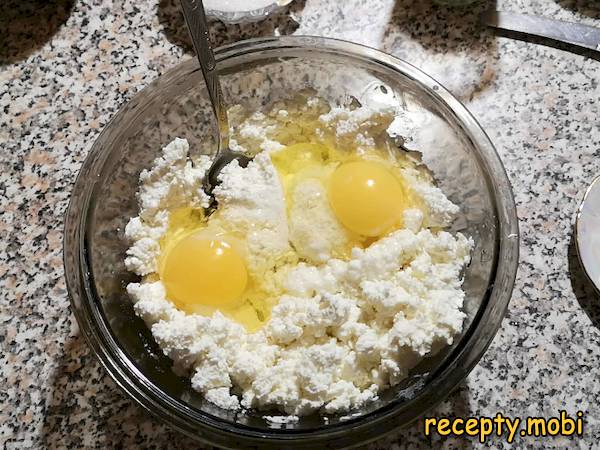
Crack two chicken eggs into a bowl with the cottage cheese and stir. It is best to use cottage cheese with 9% fat content – it gives the casserole the right richness and creaminess.
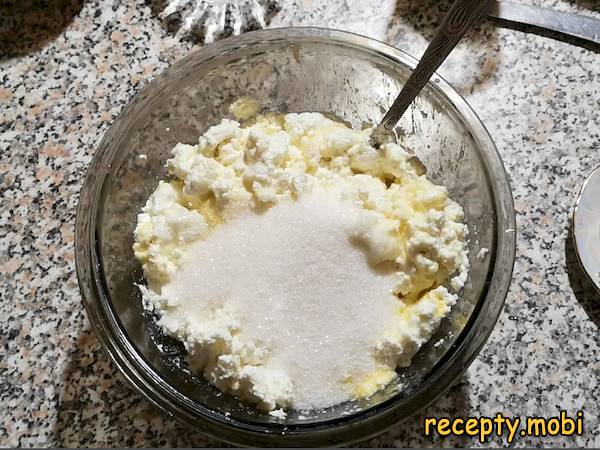
Add 3 tablespoons of sugar and stir again. I add the sugar at the stage of mixing with the eggs – this way it dissolves better in the mixture.
Add 4 tablespoons of semolina. The semolina is the "binder" of the casserole: it soaks up the excess moisture and makes it fluffy.
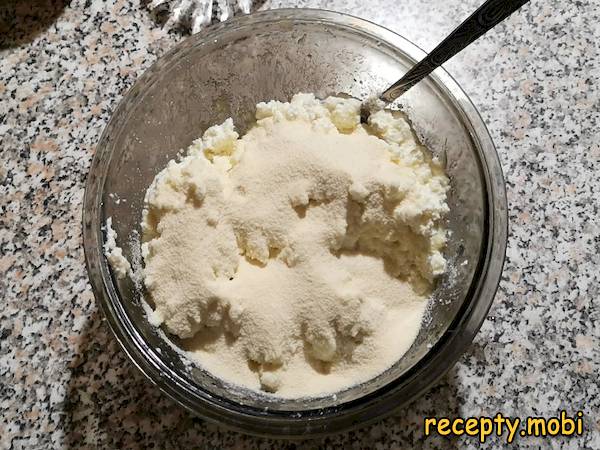
Pour in 100 g of milk a little at a time, stirring as you go. Adding the milk gradually gives a smooth mixture without lumps.
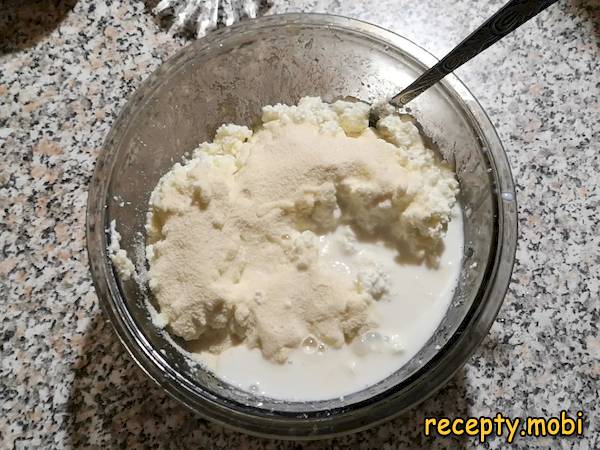
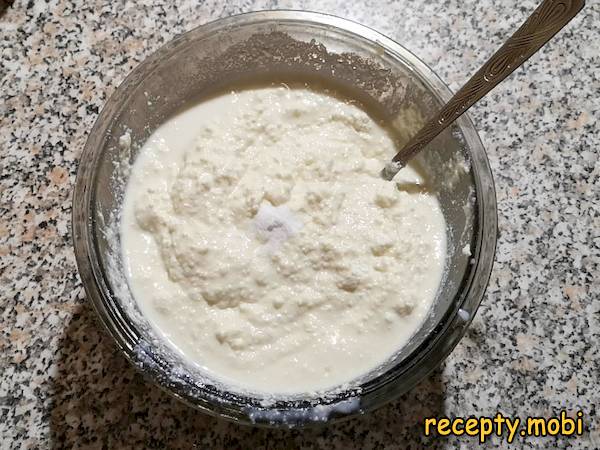
Add 1/4 teaspoon of vanillin and stir. Vanillin gives that characteristic "homemade" aroma of sweet baking.
Cut the banana into small pieces. The pieces should be roughly 1–1.5 cm so that they spread evenly through the casserole.
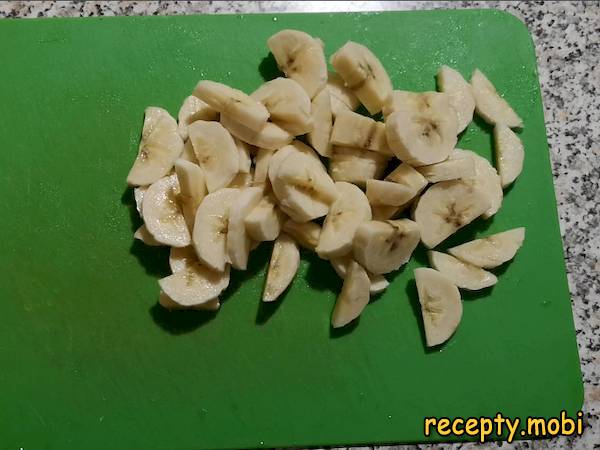
Add the banana and the pieces of dried apricot to the bowl with the cottage cheese mixture. The dried apricot adds a little "highlight" – a pleasant fruity tang that balances the sweetness.
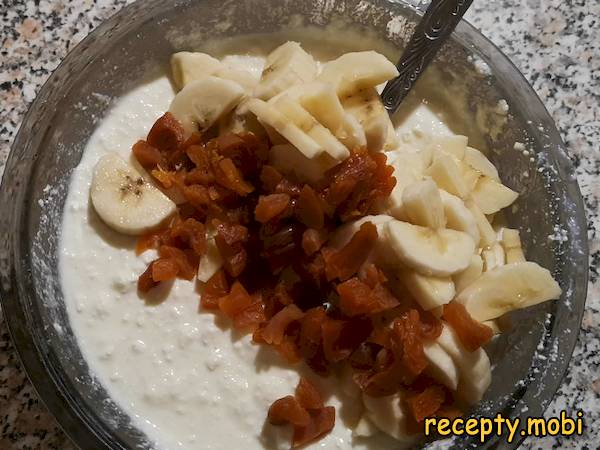
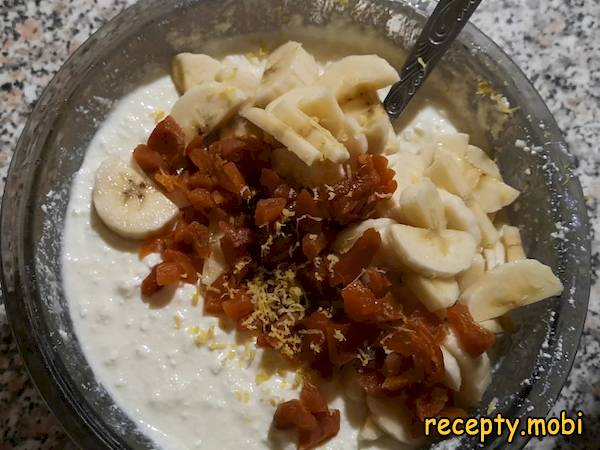
Grate in a little lemon zest and mix all the ingredients together thoroughly. The lemon zest gives a light citrus note – the secret to the aroma of the finished casserole.
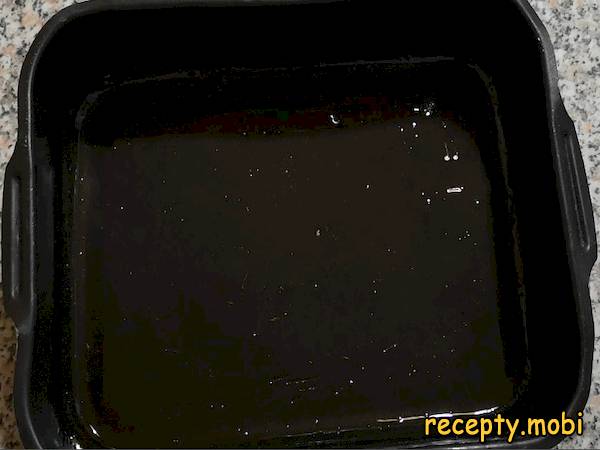
Grease the baking dish with vegetable oil. This is the secret to easily removing the finished casserole.
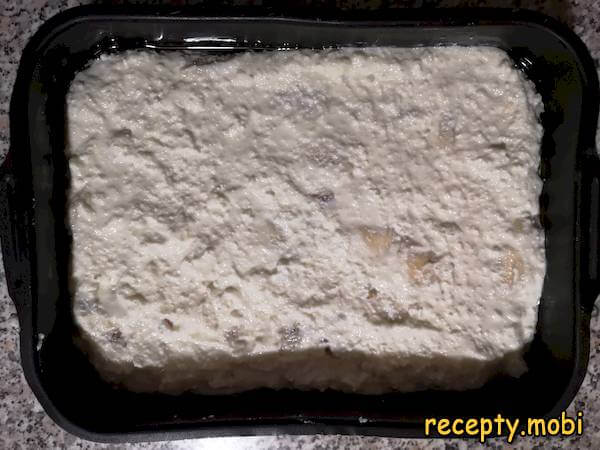
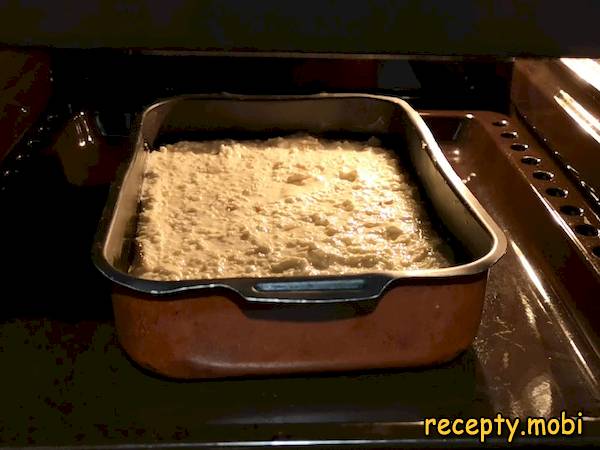
Spread the cottage cheese mixture into the dish and level the surface. An even layer gives uniform baking.
Place in the preheated oven for 30–40 minutes at 180 °C. Do not open the oven for the first 20 minutes – the change in temperature will make the casserole "sink".
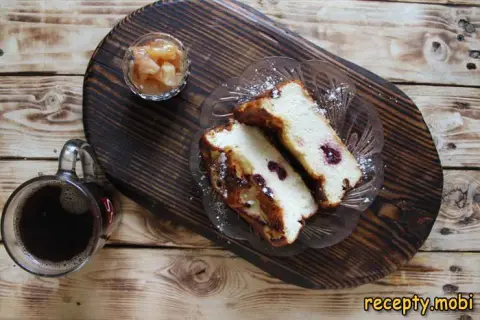
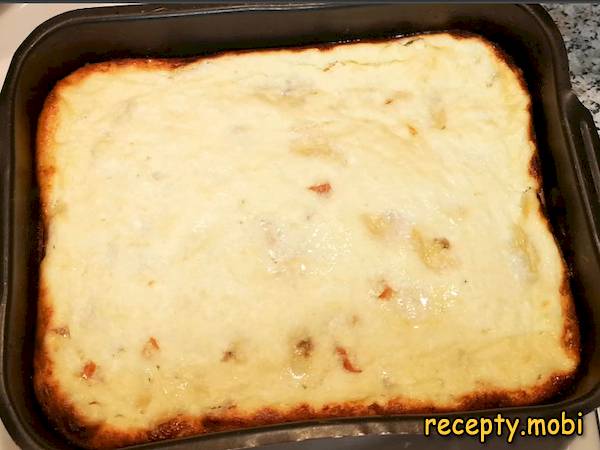
Take it out of the oven and check that it is done. Take a wooden skewer and pierce the casserole. If the tip of the skewer comes out dry, the dish is ready. Wait until it cools and remove it from the dish. The cottage cheese casserole with bananas in the oven is ready. Cut it into pieces and serve with cherry confiture or sour cream.


Tips
- 1
Use cottage cheese with 9% FAT CONTENT – low-fat cottage cheese will give a "dry" casserole, while one that is too fatty makes it heavy.
- 2
The semolina is essential – it "binds" the mixture and makes it fluffy. Without it the casserole comes out dense and densely wet.
- 3
Do not open the oven for the first 20 minutes – a sharp change in temperature will make the casserole "sink". I use a similar principle in other cottage cheese casseroles.
- 4
Let the casserole cool completely in the dish before removing it – a hot casserole may fall apart.
Video

FAQ
What can I use instead of banana in the casserole? +
Alternatives include: apple (a more "Russian" option), pear (tender), peach or apricot (a summer option), additional dried fruit (raisins, dried apricots, prunes – 50 g each), or fresh berries (raspberries, strawberries, blueberries). You can leave the banana out – then it will be a "classic" cottage cheese casserole. The banana gives a characteristic sweetness and tender creaminess, and with it the casserole turns out especially soft. For a gluten-free version, replace the semolina with rice flour or ground oat flakes.
Can I replace the semolina? +
Yes, alternatives include: rolled oats (4 tbsp – let them swell in the milk), wheat flour (2–3 tbsp), cornflour (2 tbsp – gives a "tender" texture), or crushed plain biscuits (3–4 tbsp). Without a "binder" the casserole will not hold together and will crumble. Semolina is best for the classic texture. In modern recipes rice flour or almond flour is often used for a gluten-free version.
How long does the casserole keep? +
In the fridge it keeps for 3–4 days in a closed container. Before serving you can warm it slightly in the microwave (30 seconds) or in the oven (10 minutes at 100 °C). On the second day the flavour is even better – the ingredients have "made friends". You can freeze it in portions for 1–2 months and defrost it in the fridge for 2–3 hours. I serve it with cherry confiture, sour cream, honey or fresh berries – the options are endless.
Is the casserole suitable for children? +
Yes, it is an excellent option for a children's breakfast. Cottage cheese is a source of calcium and protein. Bananas provide energy and potassium. Dried apricots provide iron and vitamins. Nothing fried or heavy. For children under 3 years old, halve the sugar (1.5 tbsp) and leave out the lemon zest. Semolina is easy to digest. Serve with milk or unsweetened tea. You can make individual "portions" in silicone muffin moulds – children love their own "individual" servings.
- Comment
or post as a guest
Be the first to comment.