avg —
Pumpkin Cottage Cheese Casserole

Instructions
Prepare the puree and cheese. Measure the thick pumpkin puree and let it cool to room temperature. It should sit on a spoon rather than run like juice. If the cheese releases whey, drain it in a sieve in the refrigerator beforehand. Weigh the eggs without their shells: the base recipe for 6 servings needs about 150 g, usually 3 medium eggs.
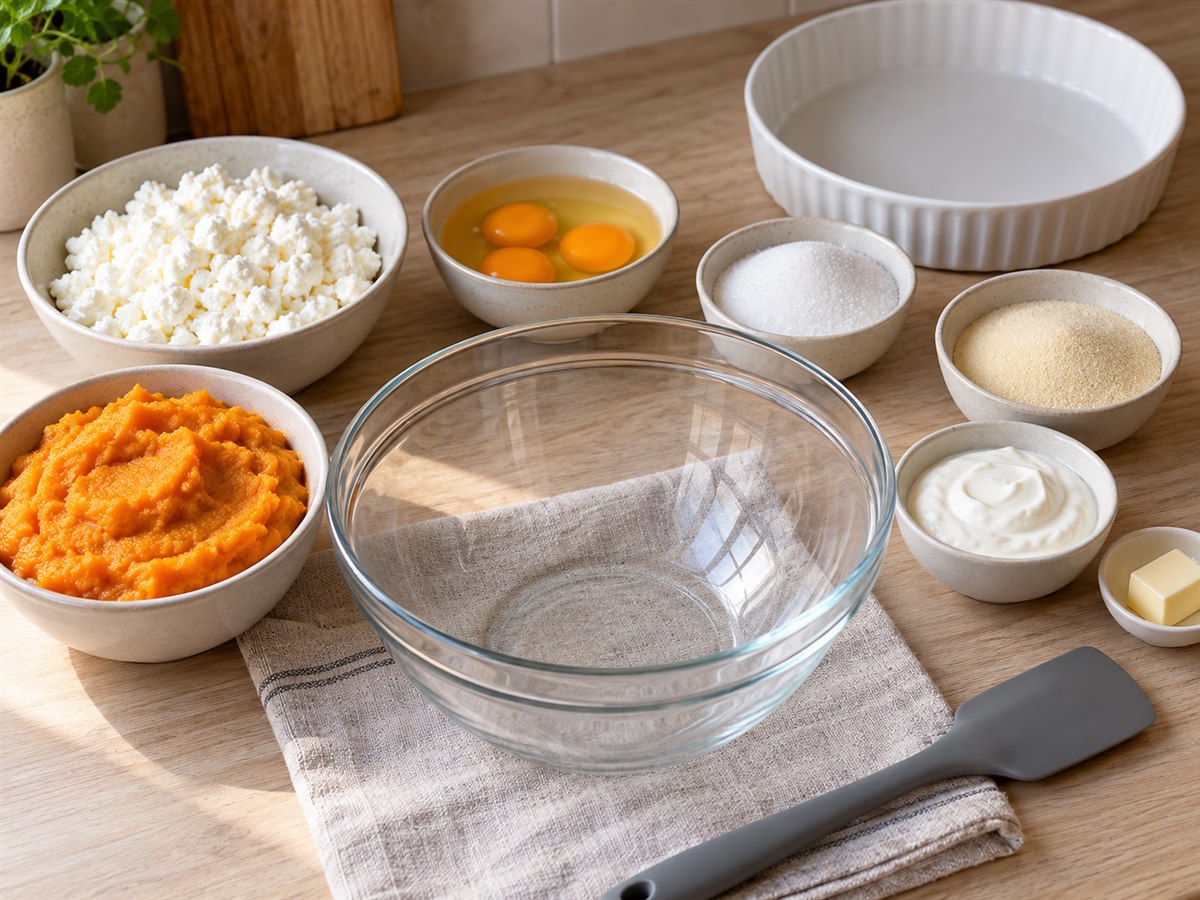
Blend the cheese mixture. Combine the dry curd cottage cheese, eggs, granulated sugar, vanilla sugar, salt and sour cream. Blend with an immersion blender until smooth, or press the cheese through a sieve and whisk everything together. Do not whip it into a foam: this is a tender, fairly dense casserole, not a sponge cake.
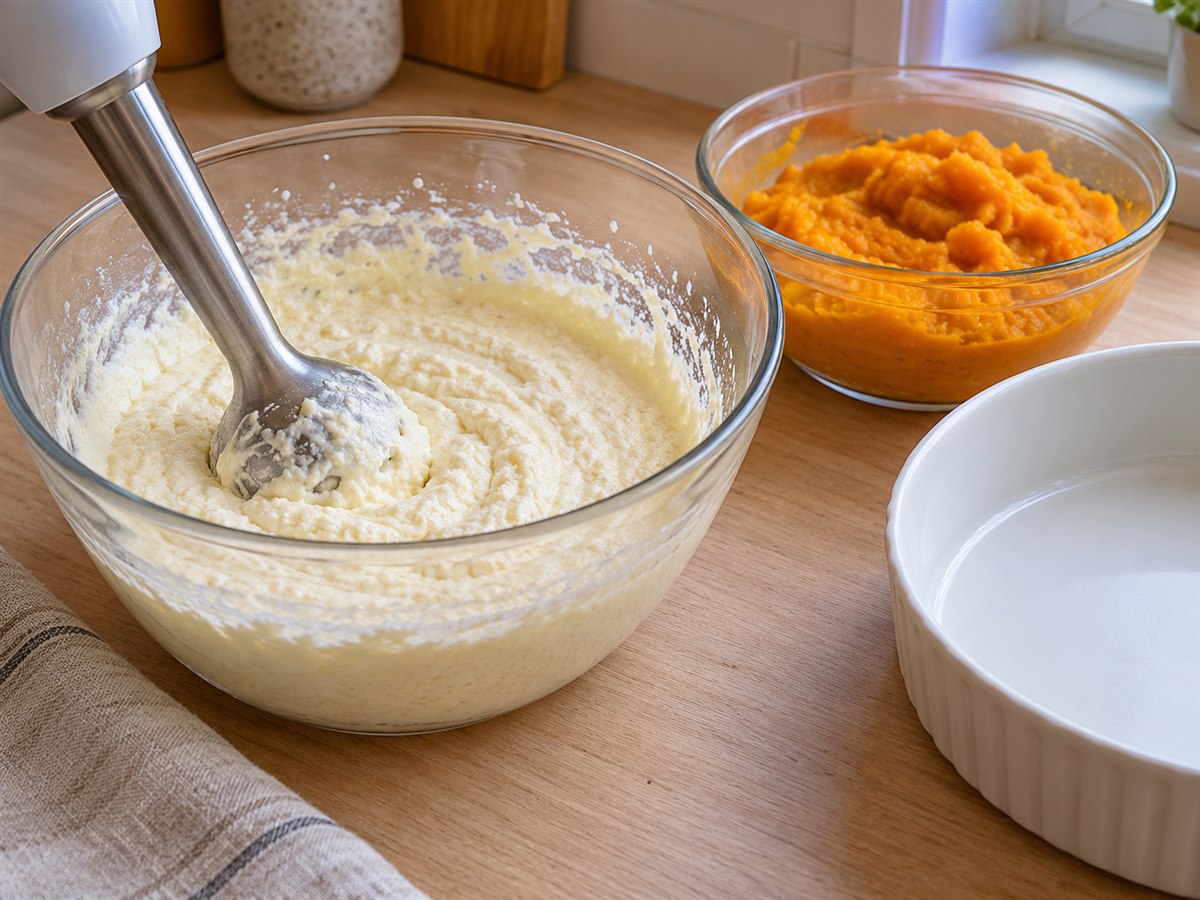
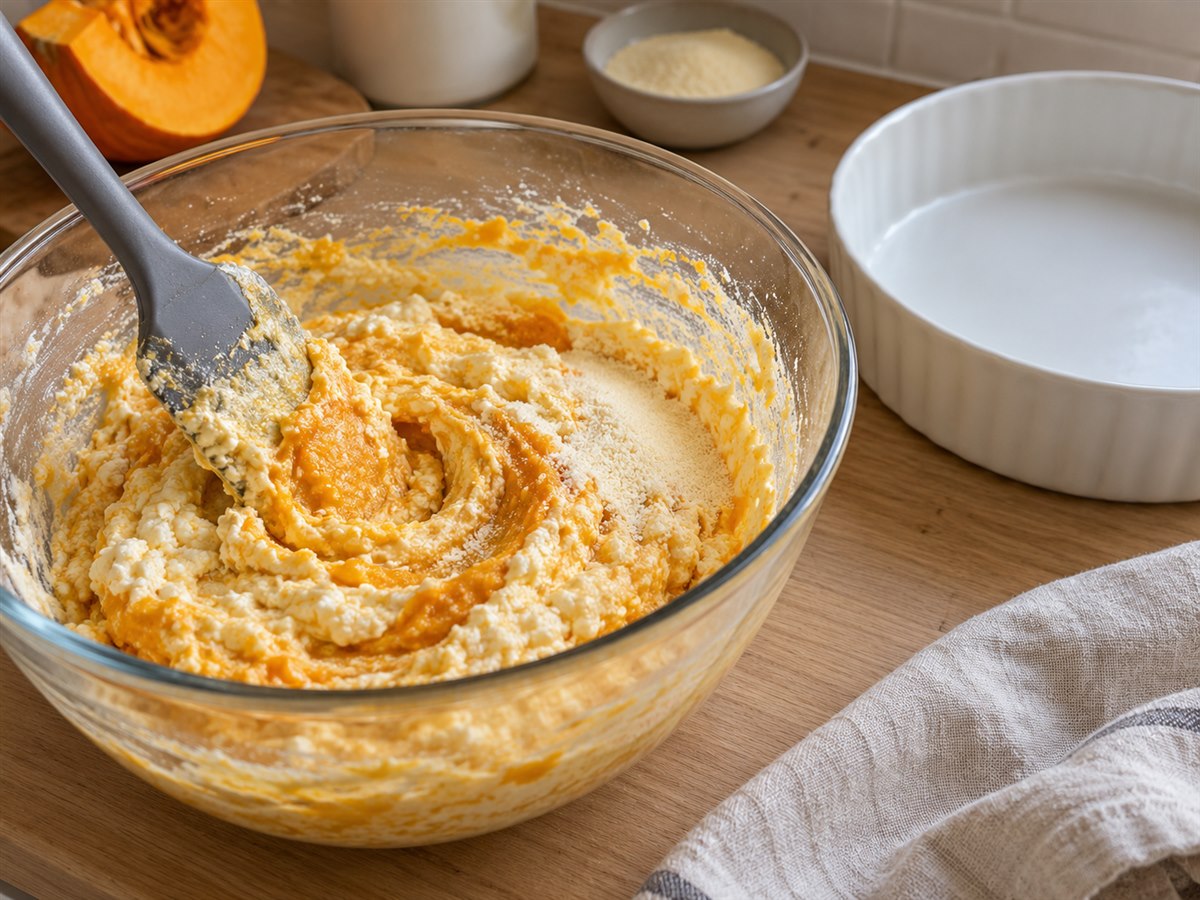
Fold in pumpkin and semolina. Fold in the pumpkin puree and dry fine semolina until the colour is even. Leave for 20 minutes to hydrate the semolina. The batter should be thick but fall slowly from a spatula in a wide ribbon. There should be no separate layer of whey on top.
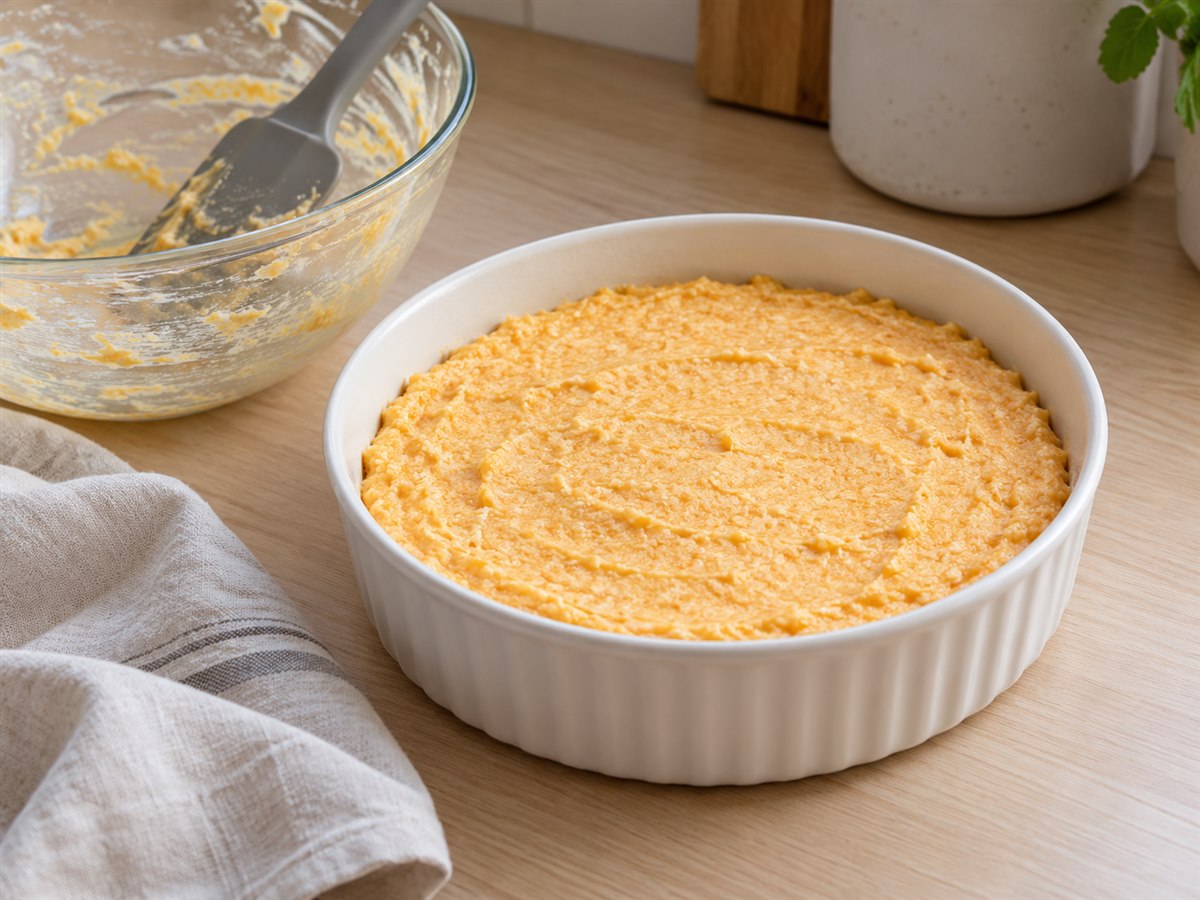
Fill the baking dish. Heat the oven to 180 °C or 350 °F, conventional setting without fan. Butter the base and sides of a 20 cm or 8-inch round baking dish, at least 5 cm or 2 inches deep. Add the batter, smooth the top and leave at least 1 cm of headroom.
Bake until the centre is set. Bake on the middle rack for about 45-55 minutes. The edges should be set, the top lightly golden and the centre should no longer move in a liquid wave. For a reliable check, the centre must reach at least 74 °C or 165 °F. If the top browns too quickly, tent loosely with foil and continue baking until the centre is ready.
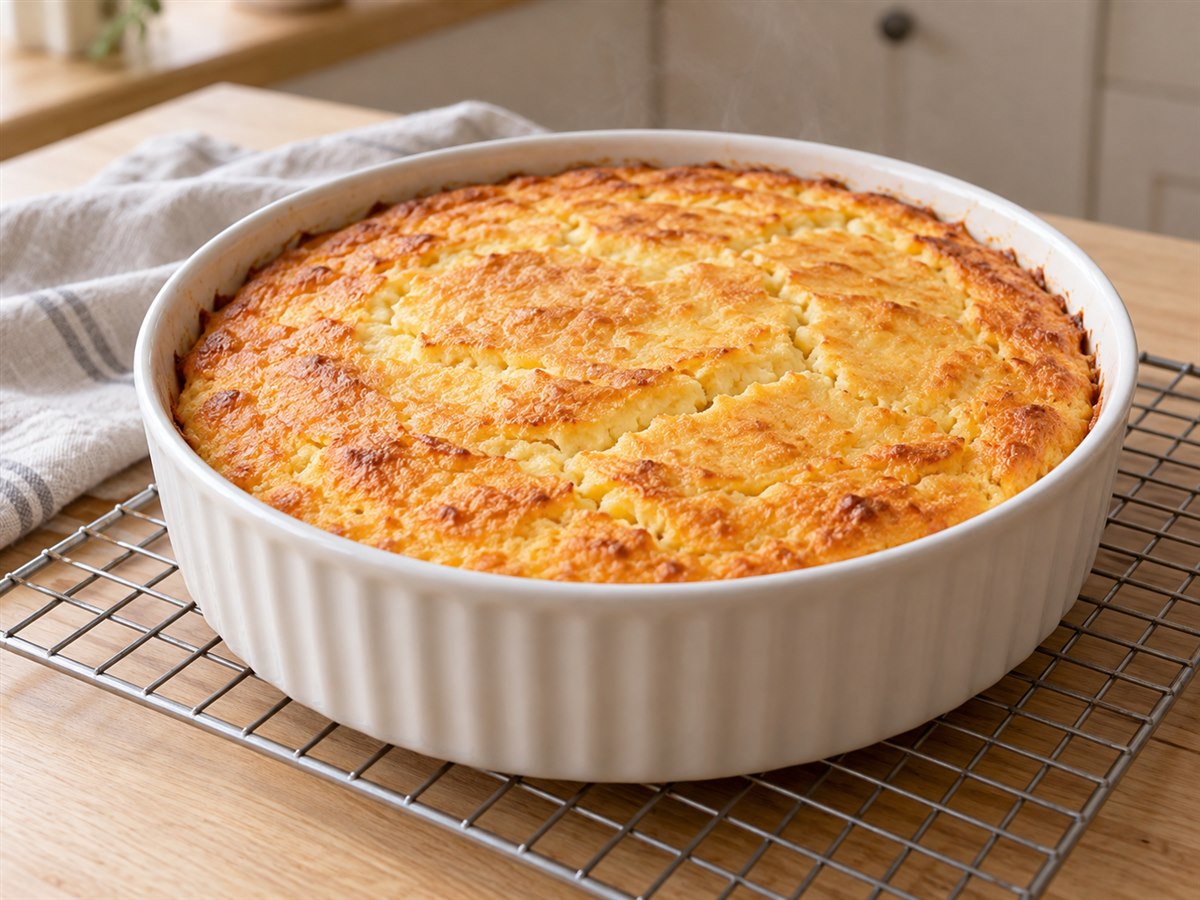
Let the casserole settle. Set the dish on a rack and cool for about 20 minutes before slicing. A little sinking is normal. For especially neat cold slices, refrigerate the portions after a short cooling period. Serve any extra sour cream or toppings separately; they are not included in the nutrition estimate.
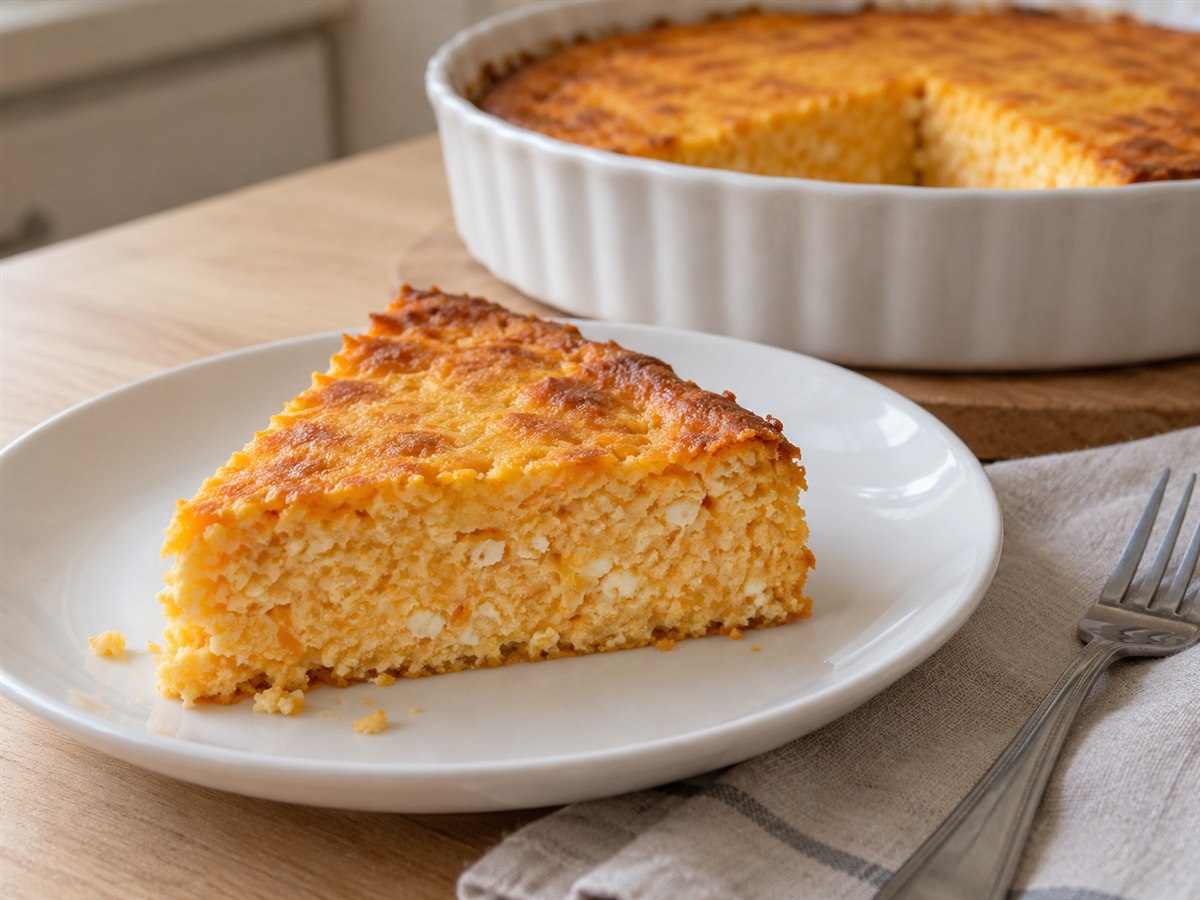


Choosing the cheese, puree and timing
Use unsweetened dry curd cottage cheese, farmer cheese or tvorog with about 5-9% fat, and sour cream with about 20% fat. Wet cottage cheese in dressing and pourable sweet dairy desserts contain different amounts of moisture and are not direct substitutes. Drain any whey in the refrigerator before weighing.
Weigh the puree after cooking. To make it ahead, bake peeled pumpkin pieces at 180 °C or 350 °F for about 30-40 minutes until soft, blend and cool. Around 400-450 g peeled raw pumpkin often gives 300 g thick puree, but the yield varies. Reduce watery puree gently in a pan, then cool again. Pure canned pumpkin can work; sweetened pumpkin pie filling cannot be substituted directly.
The stated 1 hour 50 minutes assumes prepared puree: about 20 minutes of preparation, 20 minutes for the semolina to hydrate, 50 minutes of baking and 20 minutes of cooling. Making puree from raw pumpkin takes additional time.
A set centre without dry edges
A 20 cm or 8-inch dish gives a moderately deep layer. Ceramic heats more slowly than thin metal, so the baking time is a guide. Check that the centre is set and use a thermometer. Raising the heat just to get a darker top can burn the edges before the middle is cooked.
The serving calculator changes ingredient weights, not your pan size or oven timing. When increasing the servings, choose a larger dish that keeps a similar depth. For a fractional egg amount, lightly mix an egg and weigh the portion required.
Serving, storage and the calorie estimate
Serve warm or chilled. For another breakfast bake, try curd casserole with semolina. More seasonal ideas are collected in our pumpkin recipe roundup.
About 285 kcal per one-sixth of the dish is an estimate using cheese with roughly 5% fat and sour cream with around 20% fat, without extra toppings. Brands and fat levels change the result. To calculate calories per 100 g, weigh the finished casserole without its dish: moisture loss is not known in advance.
Divide leftovers into portions and refrigerate in a covered container at 4 °C or 40 °F or below within 2 hours of cooking. Use within 3 days and reheat the centre of a portion to 74 °C or 165 °F. Do not leave this dairy-and-egg bake on the counter overnight.
Recipe video: Pumpkin and cottage cheese casserole
Important: This Russian-language video shows a different, spiced version. Follow the quantities and timing in the text.
Images are AI-generated.
FAQ
Can I use raw grated pumpkin instead of puree? +
Not in the same proportions without adjustments. Raw pumpkin releases water and gives a different texture. For this recipe, bake or steam the pumpkin first, remove excess moisture and weigh the finished thick puree.
Do I need to cook the semolina first? +
No. Add dry fine semolina to the cheese and pumpkin mixture and leave it for 20 minutes. Cooked semolina porridge contains extra liquid and is not a direct substitute.
What kind of cottage cheese should I use? +
Use dry curd cottage cheese, farmer cheese or unsweetened tvorog with about 5-9% fat. Wet cottage cheese in dressing and pourable dairy desserts are not direct substitutes. Drain any whey before weighing the cheese.
Why is my pumpkin cottage cheese casserole watery? +
The usual causes are watery puree, wet cheese or an underbaked centre. Prepare the puree and cheese before mixing, give the semolina time to hydrate, and check the centre rather than judging only by the browned top.
Can I use canned pumpkin puree? +
Yes, if it is pure pumpkin without added sugar or spices. Pumpkin pie filling is not a direct substitute. Remove any free liquid and weigh the puree after preparing it.
Can I use a 24 cm baking dish? +
Yes, but the layer will be much thinner and may bake sooner. Start checking earlier and use the set centre and internal temperature as your guide. Keeping the same depth requires scaling the ingredients by the area of the pan.
Why did the casserole sink after baking? +
A little sinking is normal for a cheese bake without baking powder. A large collapse can result from too much whipped-in air, excess moisture or an underbaked centre. Let it settle before slicing.
How long can I store the casserole? +
Refrigerate leftovers in a covered container at 4 °C or 40 °F or below within 2 hours of cooking. Use this homemade casserole within 3 days. Reheat the centre of a portion to 74 °C or 165 °F, and thaw frozen portions in the refrigerator.
- Comment
or post as a guest
Be the first to comment.