avg —
Pancakes with kefir and milk with holes (thin) (+Cooking video)

Instructions
I lay out the ingredients on the table. If the egg is large, take one; if the eggs are small, take two. The kefir and milk can be of any fat content.
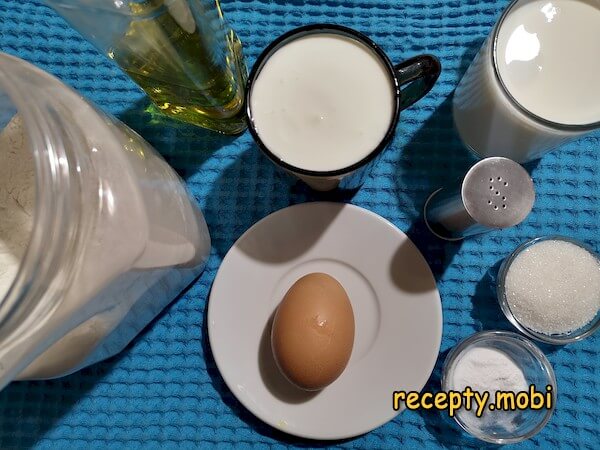
Crack the egg into a deep bowl and add two tablespoons of sugar.
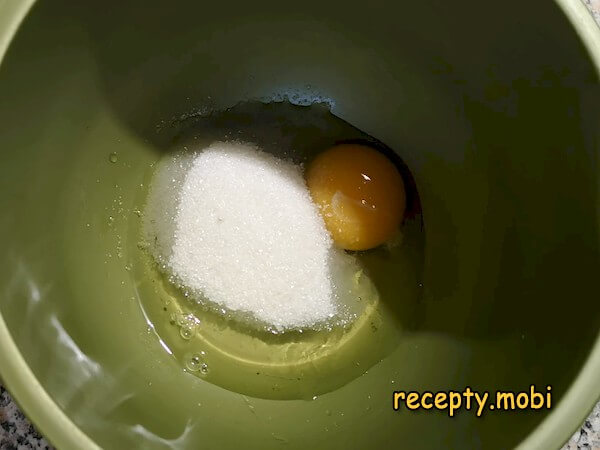
Whisk the egg and sugar into a light foam.
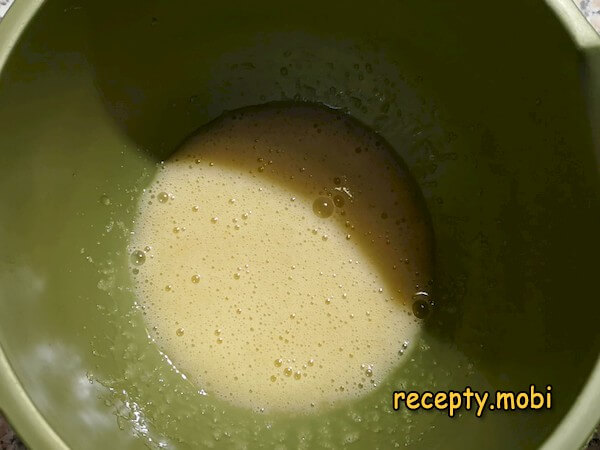
Add a cup of kefir and mix everything together.

In a separate bowl, sift a cup of flour and combine it with a teaspoon of baking soda and a pinch of salt.
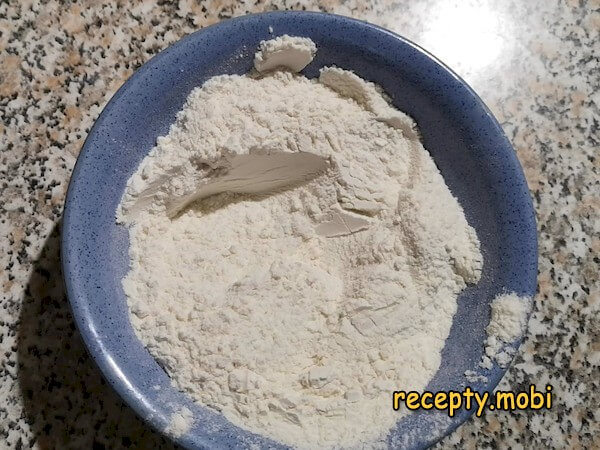
A little at a time, add the flour to the liquid ingredients and mix everything thoroughly until smooth. This is easiest to do with a whisk or a mixer.
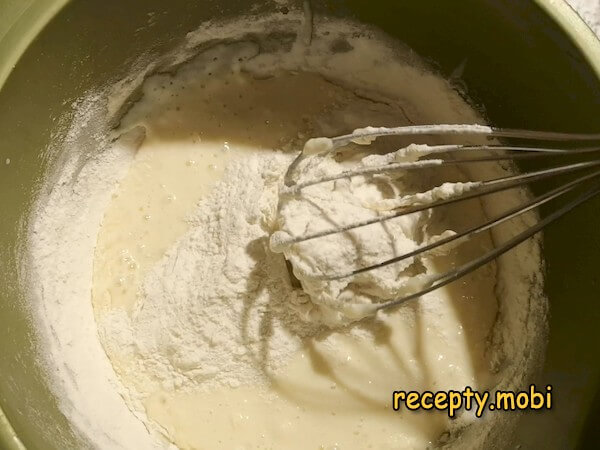
I leave the batter to rest for 15–20 minutes.
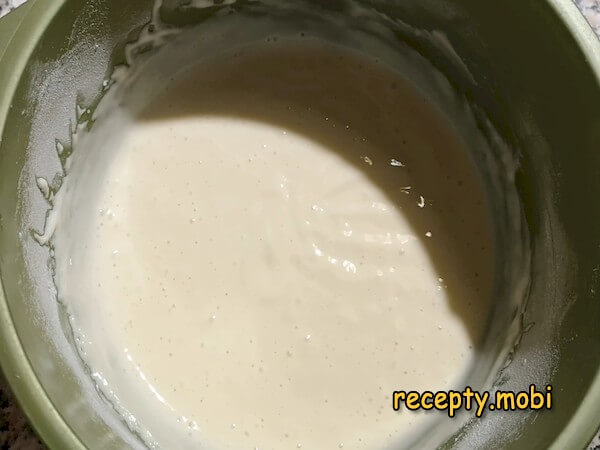
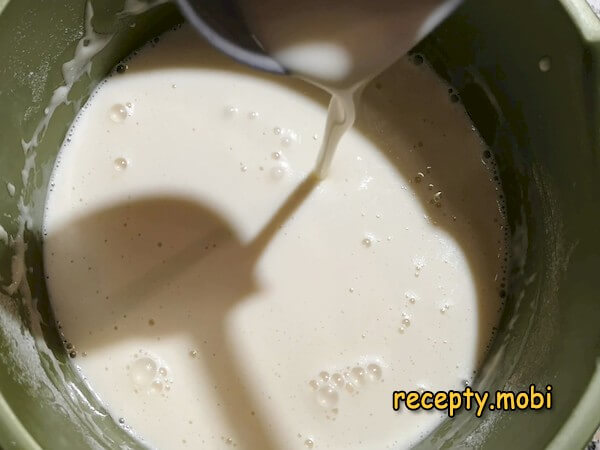
Once the batter has settled, pour hot boiled milk into it in a thin stream, stirring continuously.

Add two tablespoons of vegetable oil.
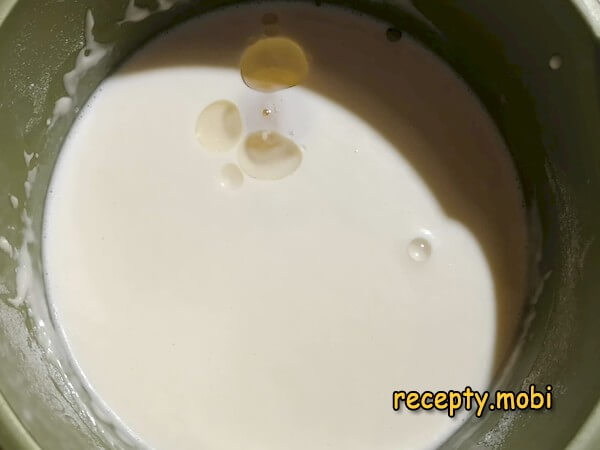
Mix the batter and look at its consistency. It should be quite runny and flow freely off the ladle.
I heat the pan, and before pouring in the first portion of batter I grease it with vegetable oil. I pour the batter onto the pan with a ladle and cook the pancake over medium heat until golden, which takes about 1.5–2 minutes.
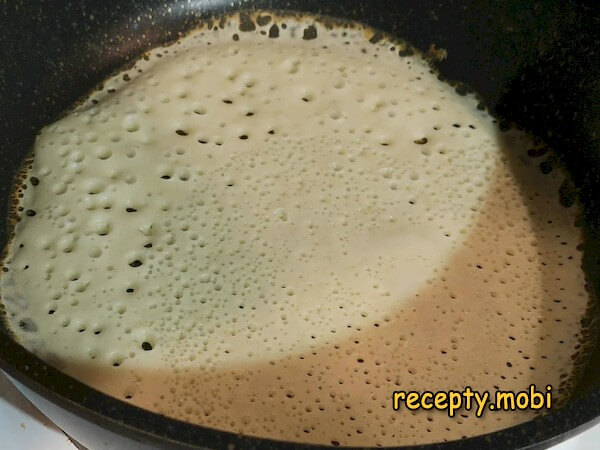
I carefully flip the pancake and cook the second side over medium heat until golden, which takes about 30 seconds.
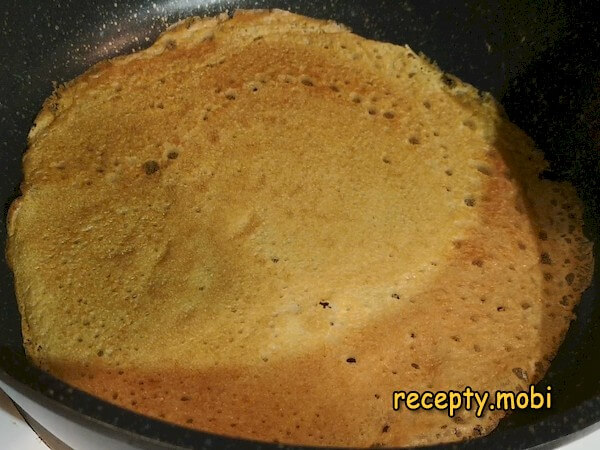
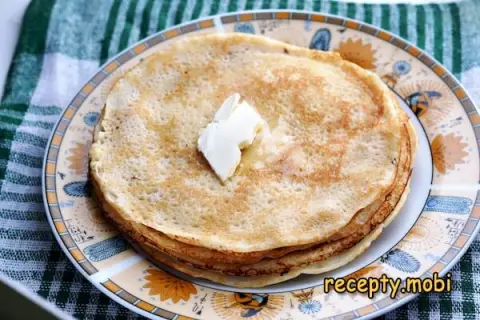
The lacy, thin pancakes with kefir and milk with holes are ready.



Tips
- 1
Hot milk in a thin stream is the secret behind the holes. Boiling milk poured into the kefir-and-soda batter starts a reaction that forms airy bubbles, which become the holes.
- 2
Resting the batter for 15–20 minutes is the secret behind its elasticity. The gluten swells and the batter becomes supple. Without a rest the pancakes are "torn" and break when you flip them.
- 3
Oil in the batter is the secret behind its non-stick quality. After the first pancake you do not need to grease the pan again. With 2 tbsp of oil in the batter, the pancakes come away easily on their own.
- 4
1.5–2 minutes for the first side and 30 seconds for the second is the secret behind even cooking. The first side takes longer because it needs to cook through. The second side is already almost done. The same principle works for other kinds of thin pancakes.
Video

FAQ
Which kefir should I choose? +
Ideally, fresh kefir of 2.5–3.2% fat (1 cup = 250 ml). Alternatives: home-made kefir (250 ml), soured milk (250 ml), matsoni (250 ml), thick ayran (250 ml), a 50/50 mix of kefir and soured milk (125 ml each, for a more tender result), or a 50/50 mix of Greek yogurt and milk (125 ml each). Fresh kefir with a short shelf life is the best choice. Do not use bifidokefir with sweet additives or kefir-style products made with vegetable fats. For classic lacy pancakes, natural kefir is a must.
What can replace baking soda? +
Alternatives: baking powder (1 tsp), a mix of baking soda and citric acid (0.5 tsp + 0.25 tsp, a home-made baking powder), ammonium carbonate (1/3 tsp, the old-fashioned option), or a mix of baking soda and kefir (use as is, since the acid in the kefir will neutralise the soda naturally). Do not use yeast, which gives a different batter structure, or stale baking soda, which will not give any lift. For classic lacy pancakes, you need baking soda, which reacts with the kefir and the hot milk.
How long do the pancakes keep? +
In the fridge, in a tightly closed container or covered with film, for 2 days. Any longer and the pancakes dry out and lose their flexibility. Before serving, reheat them on a dry pan for 30–60 seconds on each side, in the oven for 5 minutes at 150°C under foil, or in the microwave for 20 seconds under a damp cloth. In the freezer, up to 1 month: separate each pancake with parchment, thaw for 30 minutes at room temperature, then reheat. Fresh pancakes are best straight from the pan, while they are hot, lacy and fragrant.
What goes well with thin pancakes? +
The classic breakfast is with honey and sour cream. With mandarin jam or rose petal jam. With a cup of black tea with lemon. With a cup of coffee with milk. With a glass of milk. With condensed milk. With berry jam (raspberry, strawberry, blackcurrant). With 25% sour cream and sugar. With red caviar for a festive touch, or with salted salmon as a savoury option. With curd cheese and raisins. With melted butter. With a cup of cocoa with marshmallows. They are a universal dish for both everyday meals and the Maslenitsa table.
- Comment
or post as a guest
Be the first to comment.