avg —
Carrot Cake with Walnuts

Instructions
I prepare the ingredients. It is important that the carrots are juicy — this gives the batter the texture it needs. The flour should be sifted beforehand.
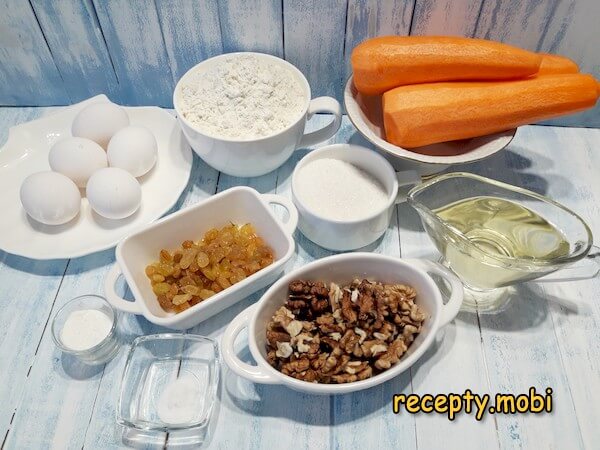
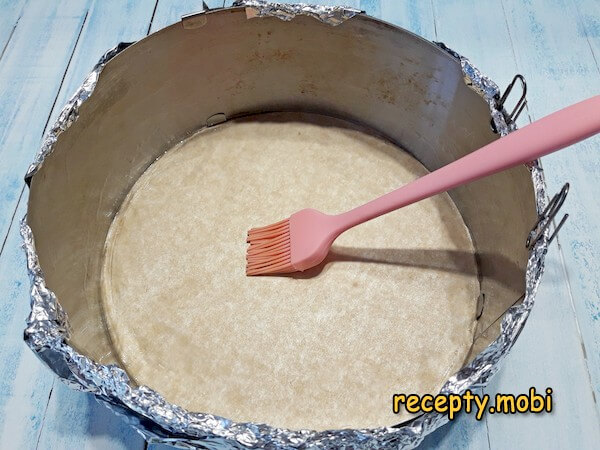
The preparation takes a little time, so I turn the oven on straight away to let it heat up to 180 degrees. If the mould is made of thin metal — a detachable spring-form ring, for example — it is best to wrap it in foil with a sheet of parchment paper on the bottom. I grease the sides.
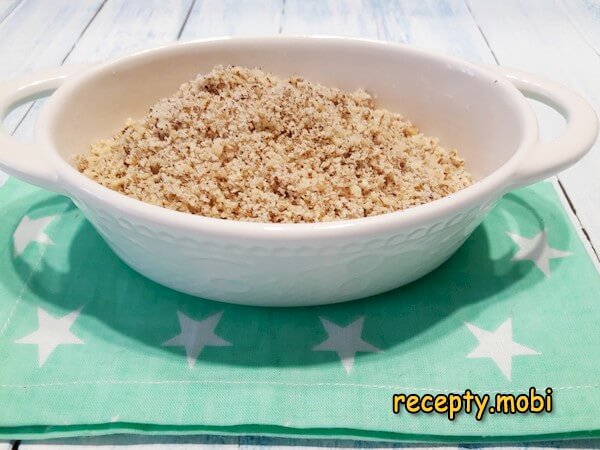
The walnuts need to be chopped. The easiest way is in a stationary blender. If you do not have one, chop them with a knife.
I grate the carrots on a fine grater and do not squeeze out the juice.

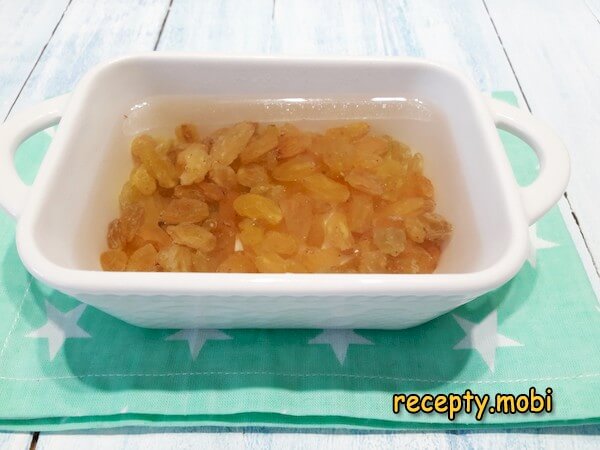
I pour boiling water over the raisins for half a minute — simply so that any foreign particles come away.
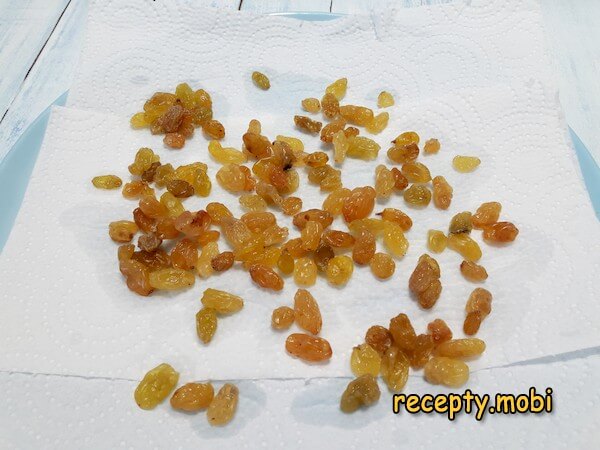
Then I rinse them and spread them on a paper towel to dry.
I put the eggs, vanillin and sugar into the mixing bowl.
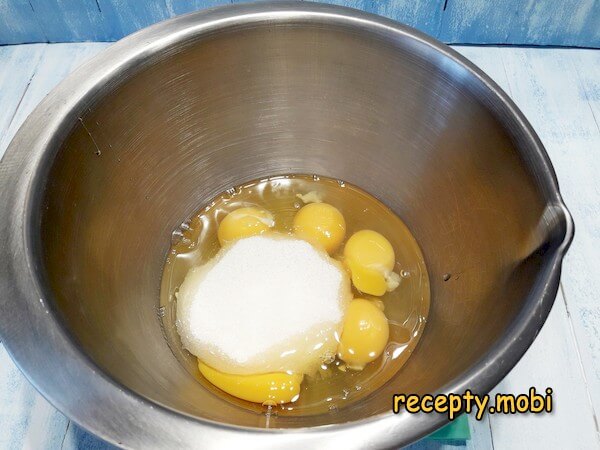
Starting on low speed and gradually increasing it, I beat this mixture until it lightens in colour and grows in volume.
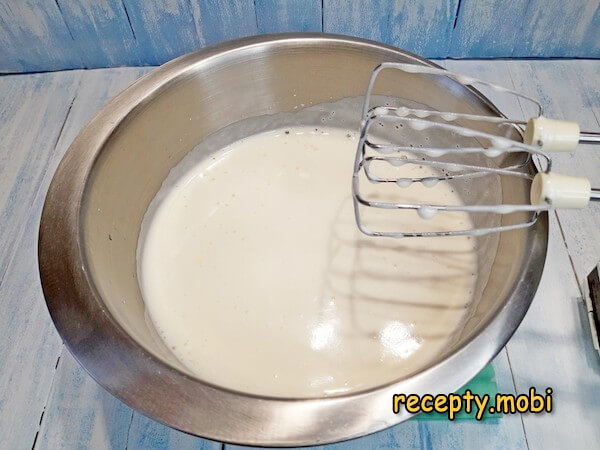
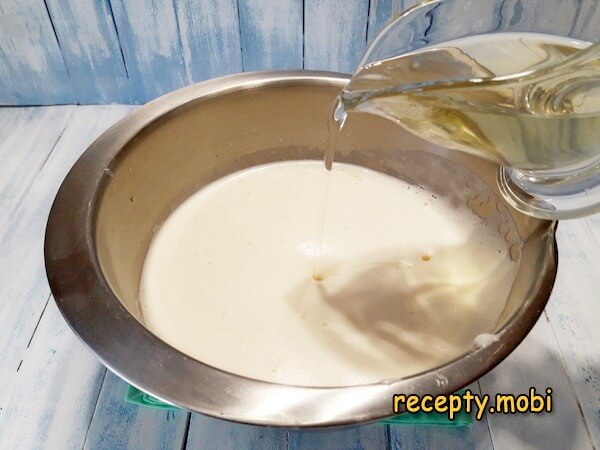
I pour in the vegetable oil and mix.
In a separate bowl, I mix the flour, baking soda and baking powder.
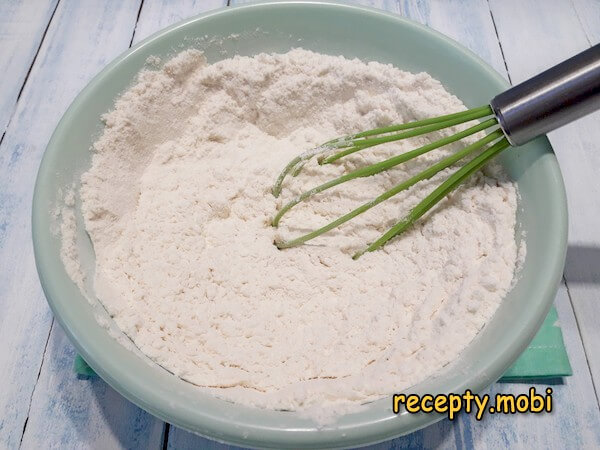
I add the dry mixture to the egg mixture in three additions, stirring it in the first time with the mixer whisks.
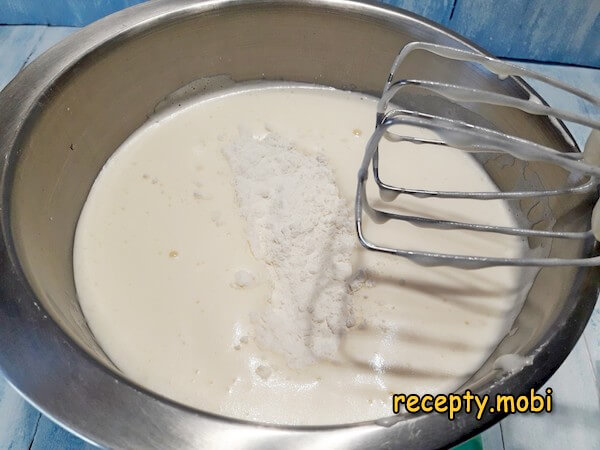
The next two portions I mix in by hand, with a spatula.
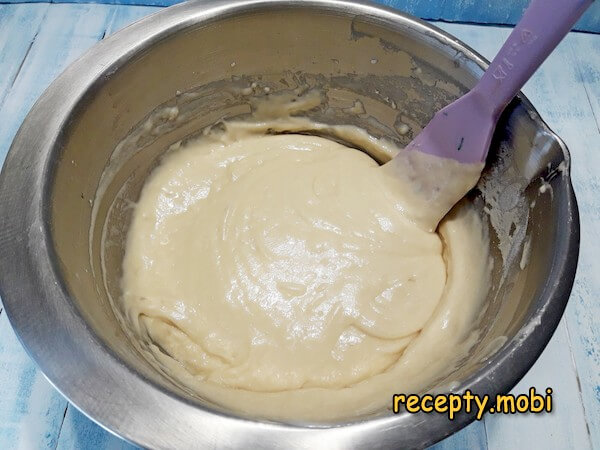
Next I add the carrots.

After mixing, the batter takes on the lovely orange colour typical of this root vegetable.
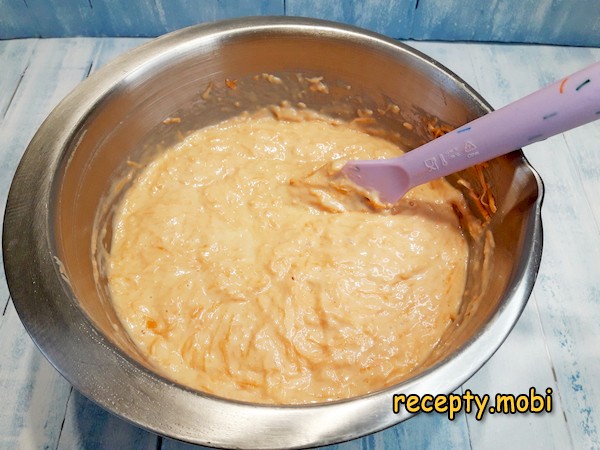
I add the raisins and walnuts to the batter. I mix everything until smooth.
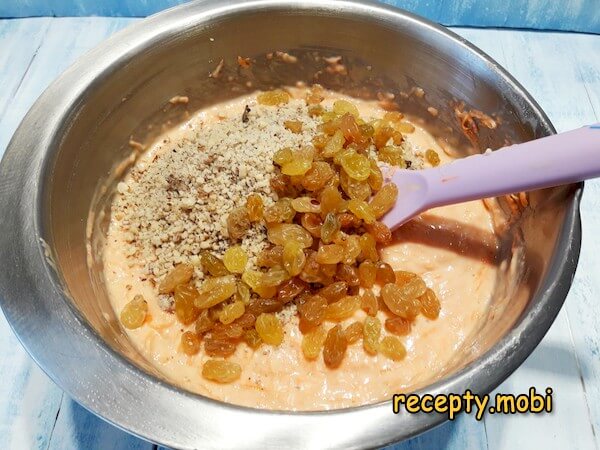
I pour the resulting batter into the mould and tap it gently on the table a few times so that the batter spreads evenly and any trapped air bubbles come out. I place the mould on the middle shelf of the oven.
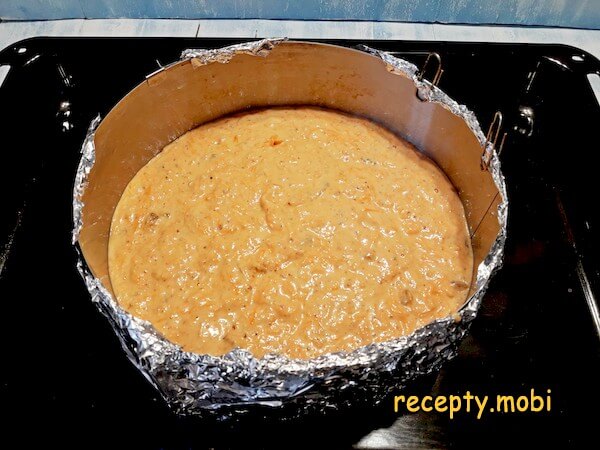
After about 50–55 minutes the cake is fully baked. I check it for doneness with a wooden skewer — after piercing all the way through, the skewer should come out dry. The baking time varies depending on the oven, so you can start testing with a wooden skewer at about 45 minutes; before that, do not open the oven door, so as not to interrupt the rise of the batter.
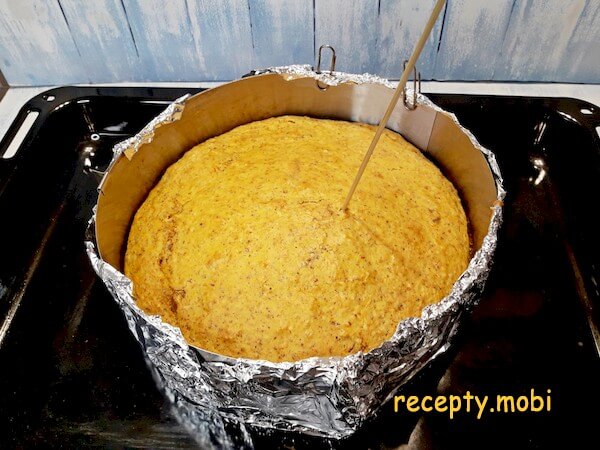
When the cake has cooled a little, I run a knife around the edge of the sides to release any stuck areas, and take it out of the mould.
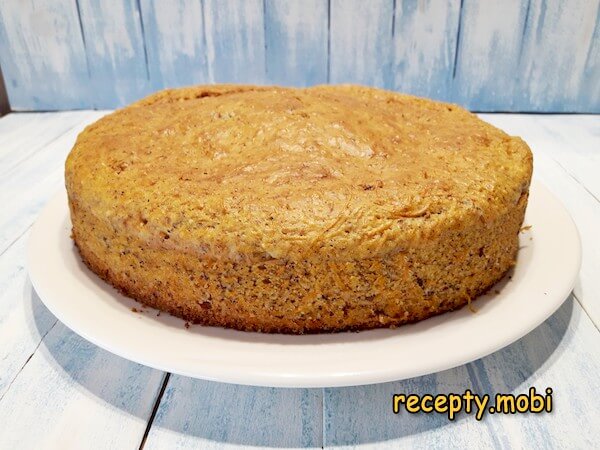
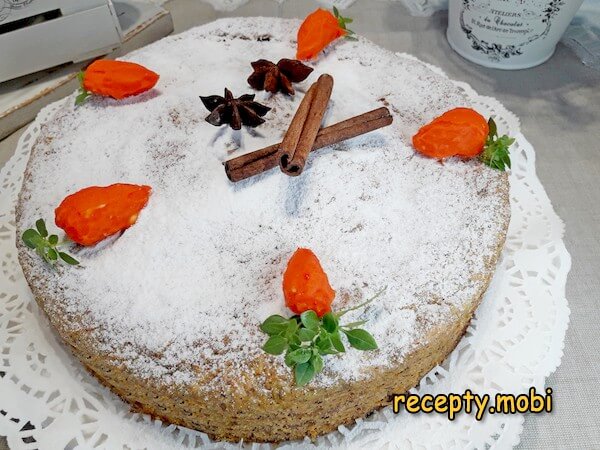
While the cake cools further, I prepare its decoration. You can simply dust the top with powdered sugar, but small details that hint clearly at what is inside the cake will make people want to try it just by looking. For this I combine soft butter with a teaspoon of powdered sugar.
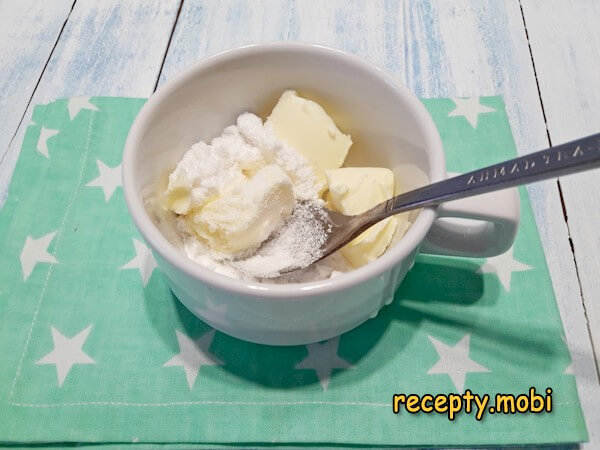
I mash the mixture together and tint it with a drop of orange gel food colouring (you can combine a drop of red and a drop of yellow).

I mix the colouring into the sweetened butter.

I put the mixture in the freezer for a few minutes so that it thickens slightly. Then I shape several small carrots (or one large one), laying them out on a board lined with film. You need to work quickly, because the heat of your hands warms the small shapes fast and they lose their form. I send the board with the decorations to the freezer for about 10 minutes.

Before serving the carrot cake with walnuts, it needs to be decorated. First I dust the surface with powdered sugar, and then I arrange the butter carrots, attaching green tops made from parsley or small basil leaves.


Tips
- 1
JUICY CARROTS are the secret to moistness. Old, dry carrots give a dense, dry cake. Fresh, juicy carrots keep the batter as moist as it needs to be without any soaking syrup.
- 2
A FINE GRATER is the secret to texture. Coarsely grated carrot will be felt as little pieces. With a fine grater the carrot dissolves into the batter, leaving only the colour and the sweetness.
- 3
BAKING SODA + BAKING POWDER is the secret to the rise. With baking powder alone the cake is not as fluffy. The combination of baking soda (which neutralises the acidity of the carrot) and baking powder gives a tall, airy cake.
- 4
DO NOT OPEN THE DOOR — the secret to the shape. Open it before 45 minutes and the cake will sink. Only test with a skewer 45 minutes after the start. The same principle works for other kinds of vegetable cakes and sponge cakes.
FAQ
Which carrots should I choose? +
Ideally, fresh, juicy, sweet carrots with no bitterness. Your own garden carrots are an excellent choice. Do not use limp or cracked carrots, sprouted ones, or old carrots with a bitter core. For a reliable result, the carrots must be fresh, juicy and sweet.
What can I use instead of walnuts? +
Good alternatives are almonds, cashews (milder), hazelnuts (a brighter aroma), pecans or pine nuts. A mix of nuts works well too. Do not use salted nuts (they upset the sweetness) or nuts coated in caramel or honey. For the classic version, use unsalted walnuts or almonds.
How long does carrot cake keep? +
In the refrigerator, in a tightly closed container, it keeps for 4–5 days. On the second day the cake becomes even moister, as the moisture distributes evenly. Before serving, let it stand for 15 minutes at room temperature. Without the decoration it can be frozen for up to 2 months; defrost it in the refrigerator for 8 hours. Do not leave it at room temperature for longer than 2 days, as the butter decorations will run. It is ideal to make it for the next day's tea — it becomes even tastier.
What should I serve carrot cake with? +
It is a classic for tea time: with a cup of black tea, with green tea, or with a cup of espresso or cappuccino. It is also good with cold milk, a scoop of vanilla ice cream, whipped cream, thick sour cream, or Greek yoghurt with honey. Without the decoration it suits a lighter, everyday menu and a children's party equally well.
- Comment
or post as a guest
Be the first to comment.