avg —
Invisible Apple Cake: Thin Layers, Barely Any Batter

Instructions
Prepare the ingredients, tin and oven. Bring the eggs and milk to room temperature. Heat the oven to 175°C/350°F without fan. Butter a 23×10 cm or 9×4-inch loaf tin lightly and line it with parchment, leaving long handles above the sides so the delicate cake can be lifted out.
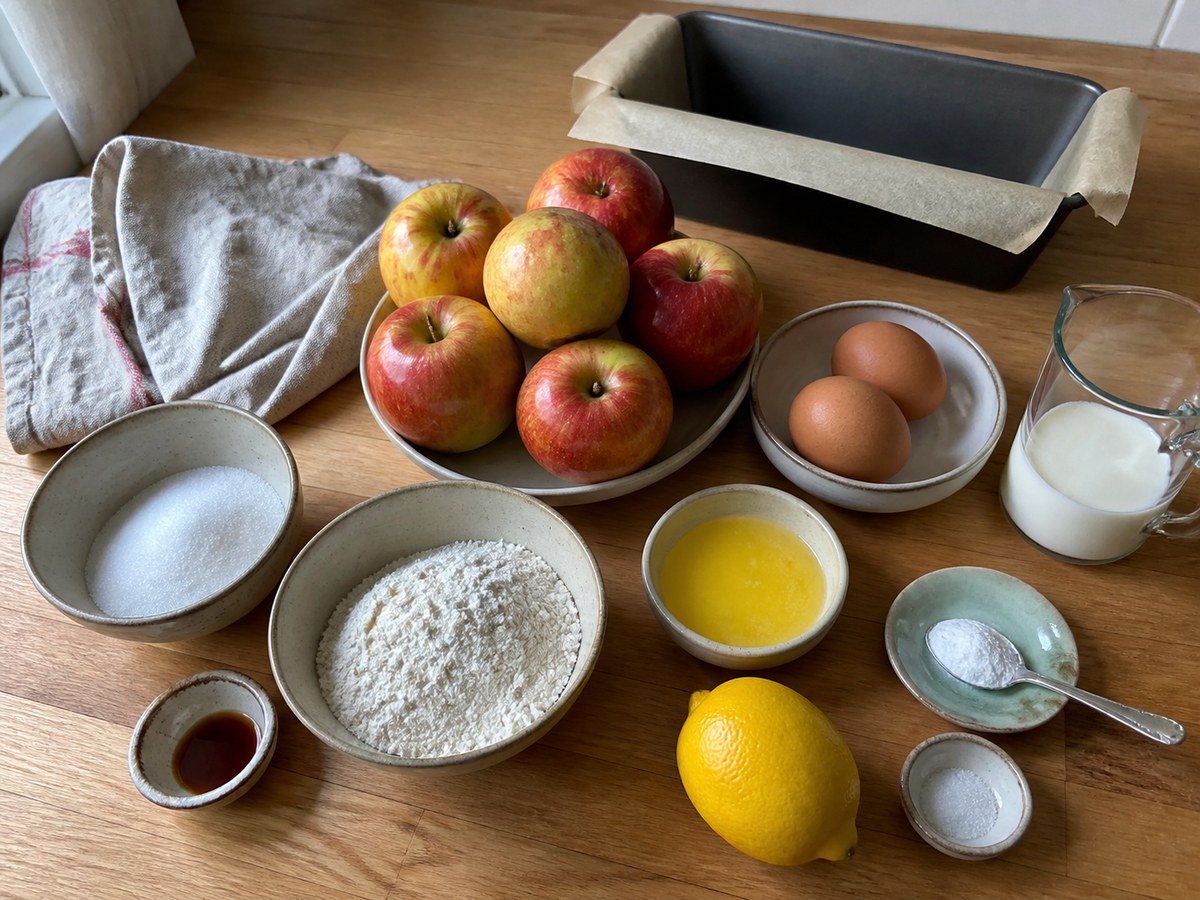
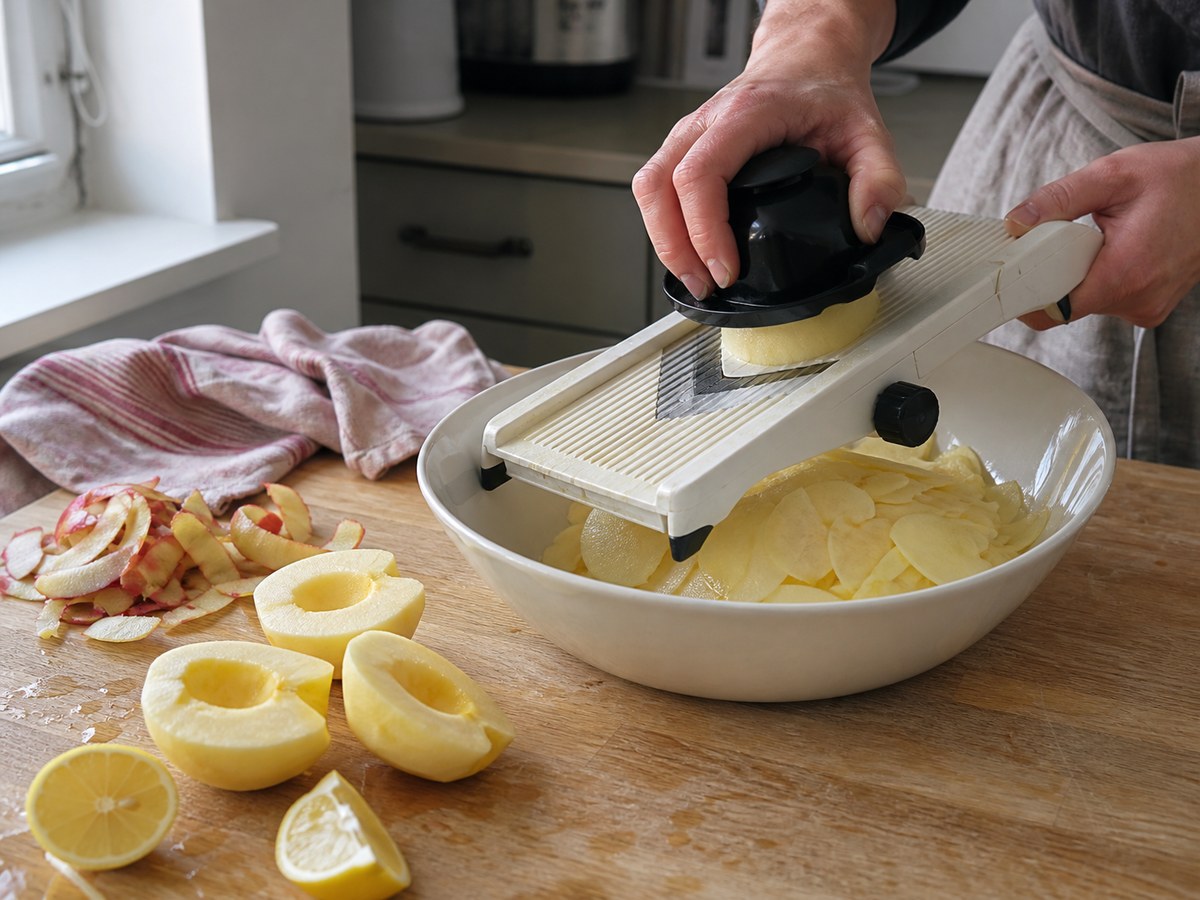
Slice the apples 1.5–2 mm thick. Peel, halve and core the fruit, then weigh 800 g prepared flesh. Cut it into even thin half-moons with a mandoline and its hand guard, or use a very sharp knife. Toss gently with the lemon juice straight away. Set aside noticeably thick pieces because they may stay crisp.
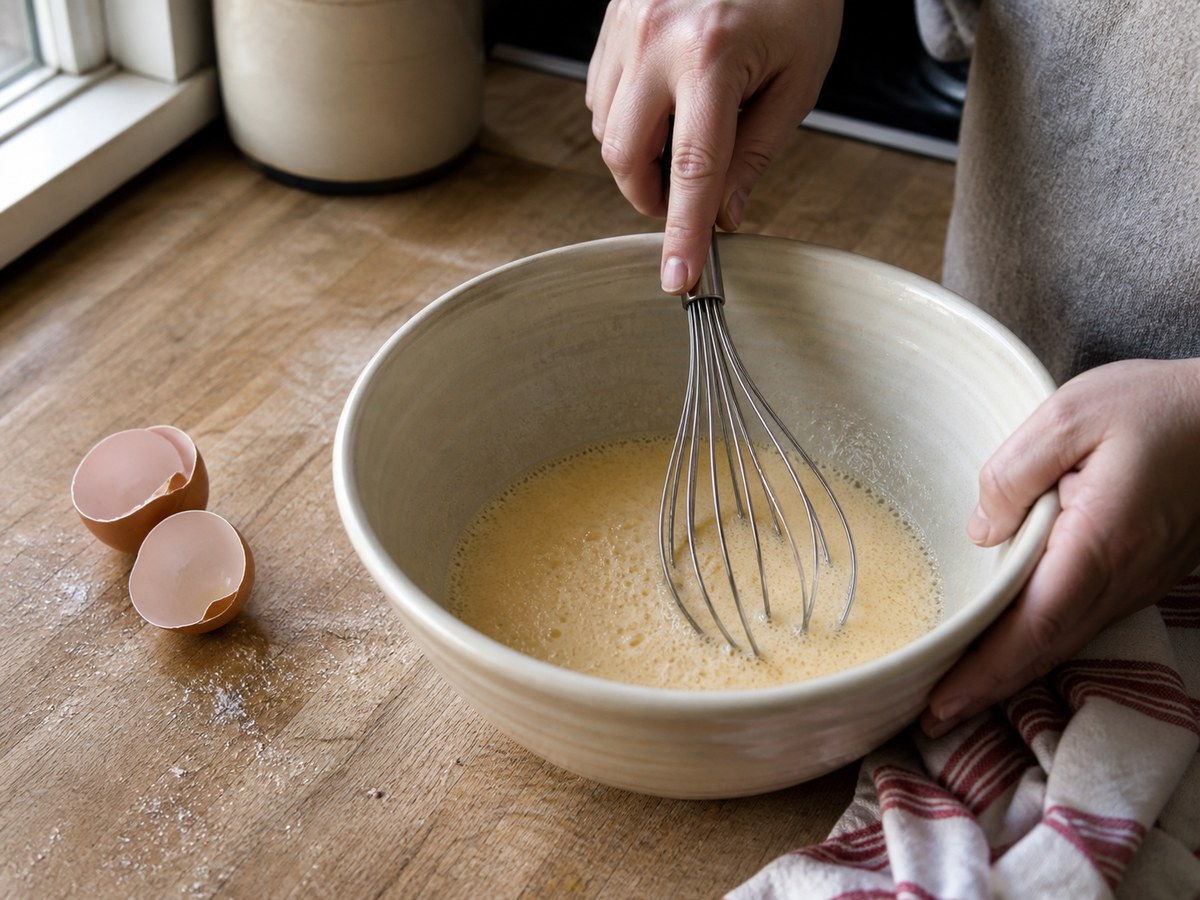
Whisk the eggs and sugar. Combine the two eggs and 75 g sugar. Whisk by hand for 1–2 minutes until paler and covered with fine bubbles. Do not whip to a thick, airy ribbon: excessive volume leaves gaps between the apple layers.
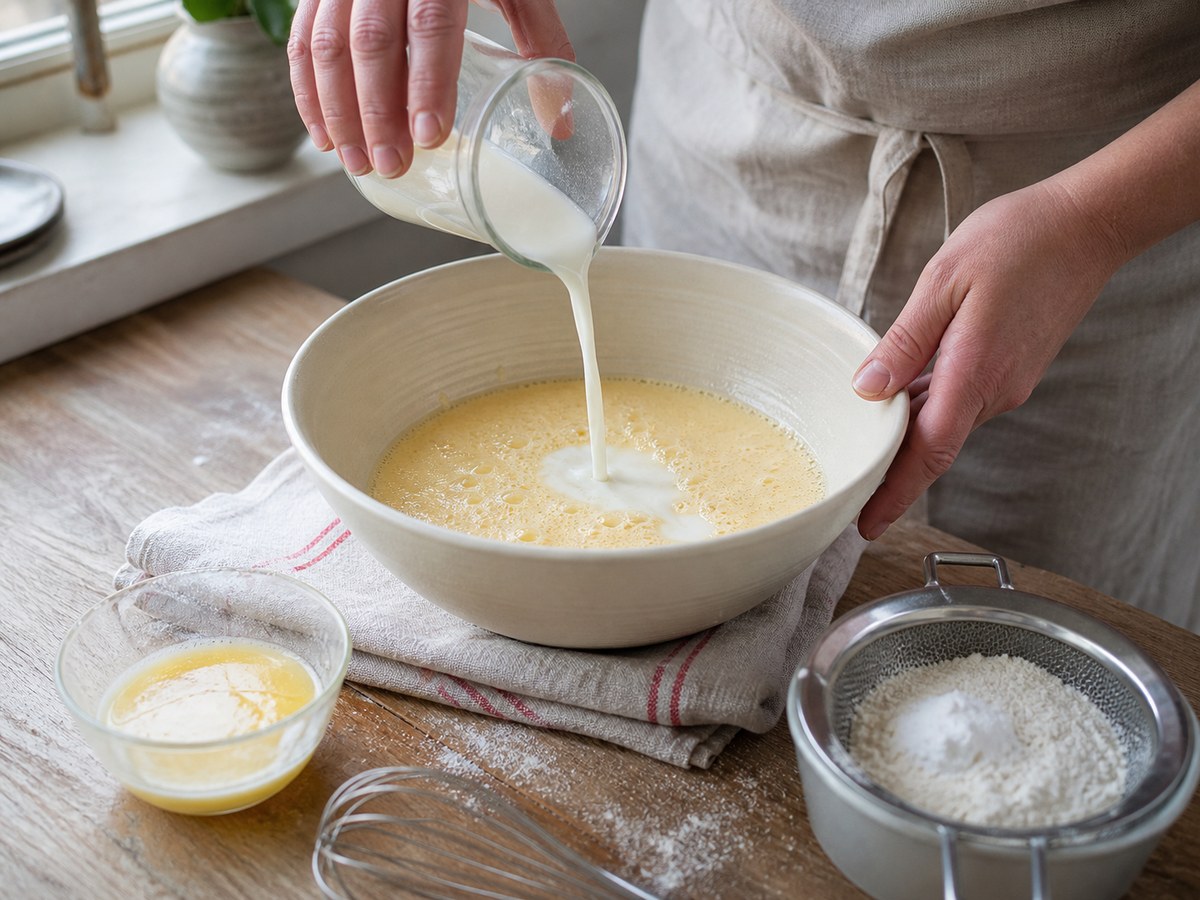
Mix the fluid batter. Whisk in the milk, melted and cooled butter and vanilla. Sift together the flour, baking powder, salt and cinnamon, then whisk them in only until smooth. The correct batter flows in a broad ribbon and is close to thin crêpe batter rather than ordinary cake batter.
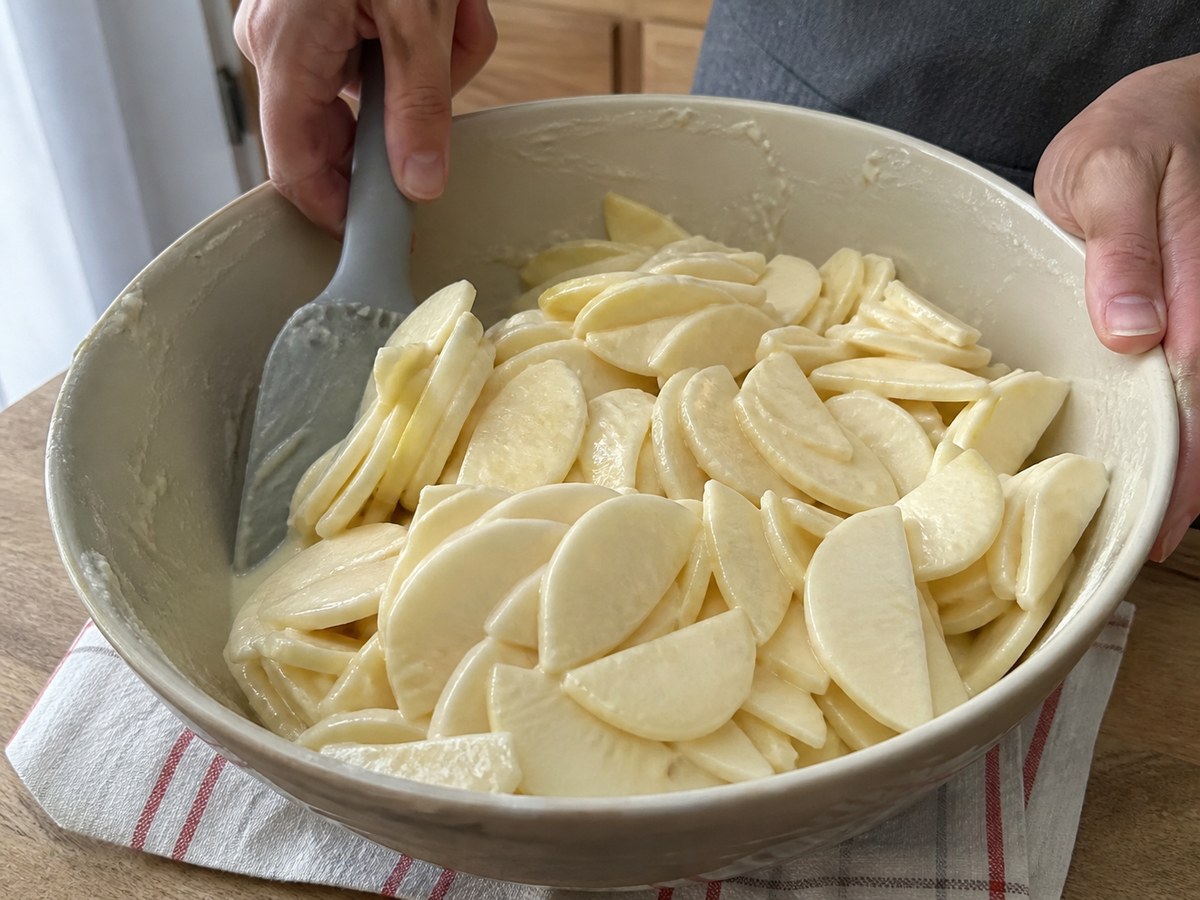
Coat every apple slice. Add the apples to the batter and fold from the bottom with a flexible spatula. Separate any pieces stuck together. It should look as though there are far more apples than batter; that high fruit-to-batter ratio creates the invisible effect.
Pack the layers tightly. Transfer the apples to the tin in small batches, keeping the slices mainly horizontal and overlapping. Press lightly with the spatula after every two or three layers to remove large voids. Pour over every drop of batter left in the bowl, then tap the tin gently on a folded towel.
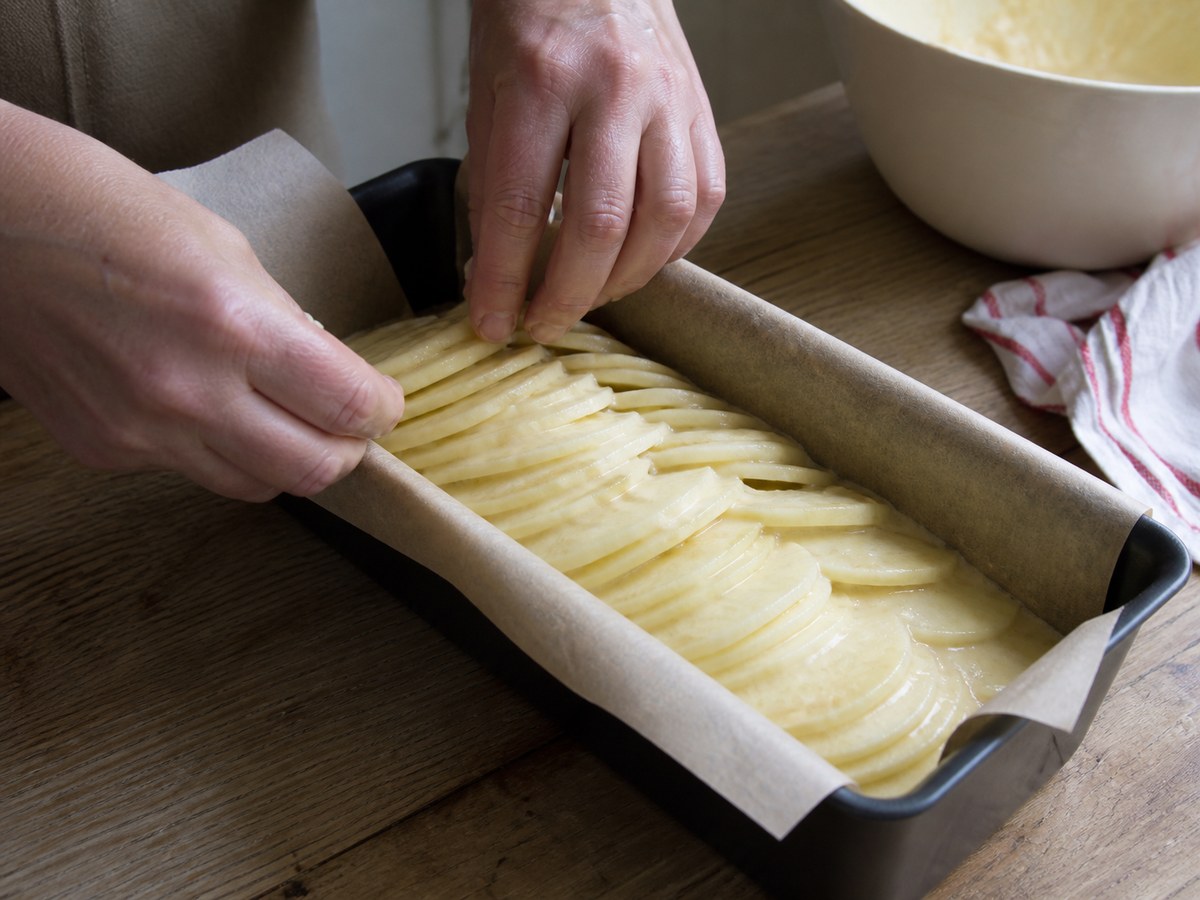
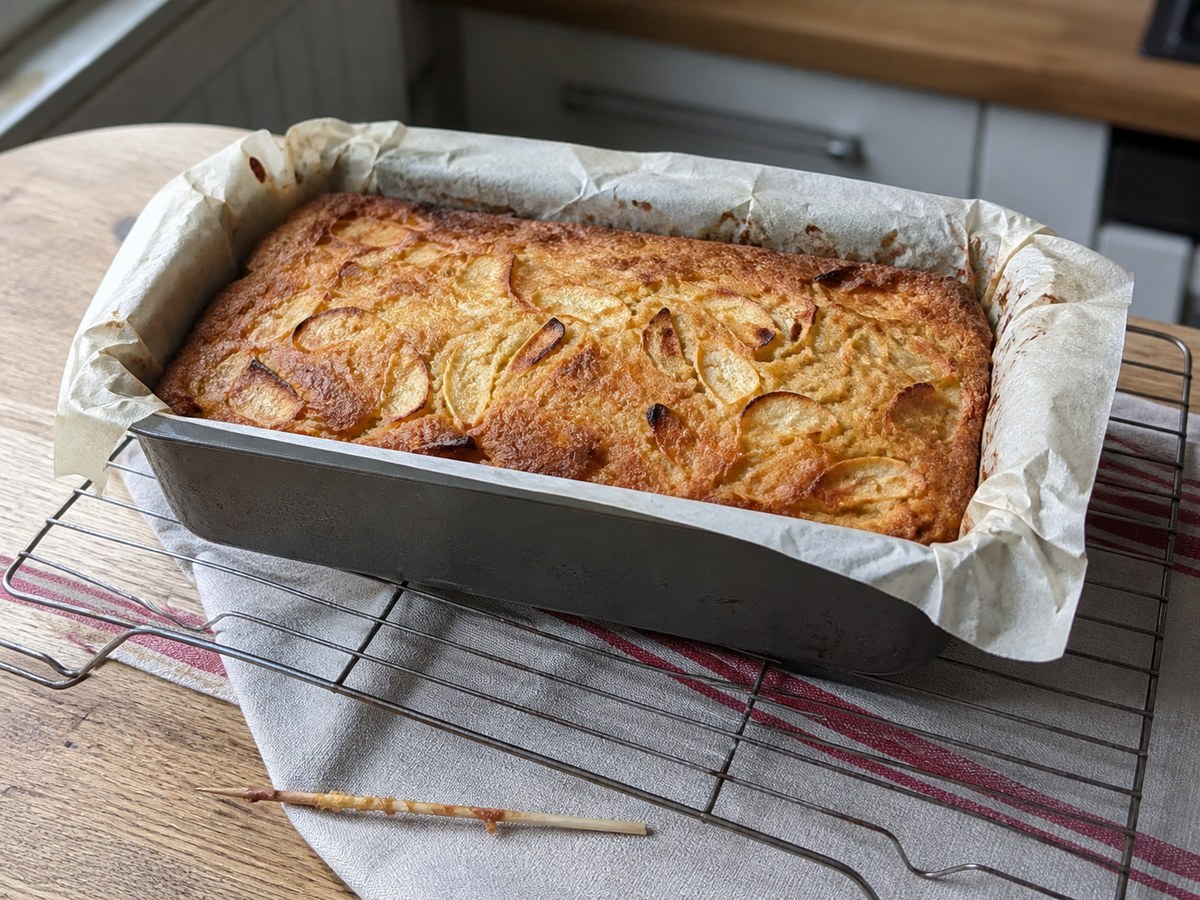
Bake and cool properly. Bake on the middle rack for 50–55 minutes. The top should be golden, the sides should pull slightly from the paper and a skewer inserted in the centre should have no pale liquid batter; apple moisture is fine. Cool in the tin for 30 minutes, then lift out. Slice once completely cool, or chill for 2 hours for the neatest layers.


How this version improves on common recipes
Many recipes list apples only by number, yet three large apples and five small ones produce different heights, moisture levels and baking times. This version specifies 800 g prepared apple flesh, so the fruit-to-batter ratio can be repeated. It also avoids an excessive amount of baking powder and a separate sugary topping: the thin apple strata remain the dominant flavour and texture.
Apple thickness controls the result
| Thickness | Likely result | Advice |
|---|---|---|
| Less than 1 mm | Slices tear and soften into a less distinct mass | Do not chase complete transparency |
| 1.5–2 mm | Clear layers with a tender centre | Best range |
| 3–4 mm | Voids, coarse layers and possible crunch | Allow 8–12 extra minutes |
Baking time for different tins
| Tin | Layer depth | Guide at 175°C/350°F |
|---|---|---|
| 23×10 cm / 9×4-inch loaf | Deep | 50–55 minutes |
| 18 cm / 7-inch round | Medium | 45–52 minutes |
| 18×18 cm / 7-inch square | Shallower | 40–48 minutes |
These times are a starting point. Tin material, actual oven temperature and apple moisture all matter, so begin checking five minutes before the lower limit.
Troubleshooting invisible apple cake
| Problem | Cause | Fix |
|---|---|---|
| Pale liquid centre | Thick apples or early removal | Cover loosely and bake in 5-minute increments |
| Cake falls apart | Cut warm or packed loosely | Cool fully and slice chilled |
| Rubbery texture | Too much flour or overmixing | Weigh 90 g and stop once smooth |
| Top browns too fast | Rack too high or hot oven | Move lower and tent loosely with foil |
Nutrition
One of eight servings contains approximately 185 kcal, 4 g protein, 6 g fat and 31 g carbohydrate. The cake provides roughly 145–150 kcal per 100 g. These are estimates; the apple variety, milk fat and finished weight will change the result.
Storage and serving
Cover the completely cooled cake and refrigerate it for up to 3 days. Cold, it cuts into especially clean layers and resembles an apple terrine; after 20 minutes at room temperature, the texture becomes softer. A light dusting of icing sugar, plain yoghurt or a small scoop of vanilla ice cream is enough for serving.
For a more familiar bake, browse the pie recipes. More seasonal apple ideas are collected in 15 recipes for Apple Spas.
How the recipe was checked and developed
The preparation compared popular methods using three to five apples, oven temperatures from 180 to 200°C and different tins. To make the result reproducible, the fruit is specified as prepared weight, the slices are limited to 1.5–2 mm and the oven is set to 175°C/350°F so a deep loaf can cook through before its top becomes too dark. Nutrition was calculated from the ingredient weights and a finished yield of about 1 kg.
Recipe video: Invisible apple cake — the thin-layer technique
Important: The video complements this recipe. Use the exact quantities, temperature, timing and storage guidance in this article, as the creator's version may differ.
The hero and step images are AI-generated visual aids showing a consistent sequence. The video demonstrates a closely related gâteau invisible technique; if its quantities differ, follow the written recipe on this page.
FAQ
Why is it called invisible apple cake? +
There is very little batter compared with the amount of fruit. It flows between the thin slices and becomes almost invisible after baking, leaving apple layers as the main texture.
How thin should the apples be sliced? +
Aim for 1.5–2 mm, or about 1/16 inch. Slices thicker than 3 mm soften more slowly, leave gaps and may remain crisp in the centre.
Which apples are best for invisible apple cake? +
Choose firm sweet-tart apples that soften without immediately collapsing into sauce. If the sliced fruit is exceptionally juicy, blot it lightly with paper towels.
Can I slice the apples with a knife? +
Yes, provided you can make truly even 1.5–2 mm slices. A mandoline is quicker and more consistent, but always use the hand guard and stop before the apple becomes too small to hold safely.
Why is the middle of my cake wet? +
The apples were probably too thick, the tin was too small or the cake was removed too soon. Apple moisture is fine, but a skewer should not carry pale liquid batter.
Do the eggs need to be beaten with a mixer? +
No. A hand whisk and fine bubbles are enough. This is not a sponge cake; the batter only needs to bind the apple layers gently.
Can I reduce the sugar? +
With naturally sweet apples, reduce it to 55–60 g. A larger reduction changes not only sweetness but also moisture retention and browning.
How should invisible apple cake be stored? +
Once completely cool, cover and refrigerate it for up to 3 days. Serve cold for clean layers or let each slice stand at room temperature for 20 minutes.
- Comment
or post as a guest
Be the first to comment.