avg —
Kutabs with Greens and Cheese

Instructions
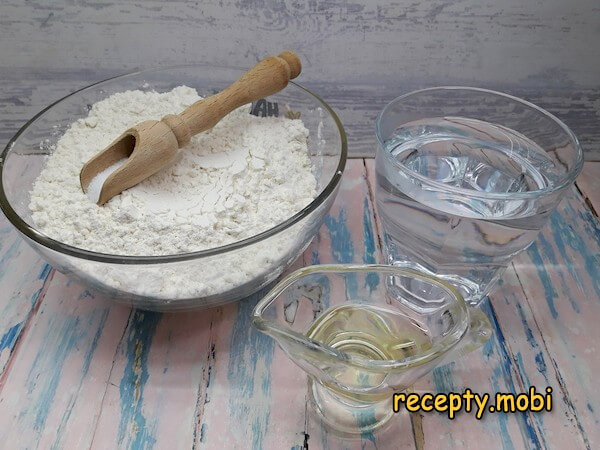
I get the ingredients for the dough ready.
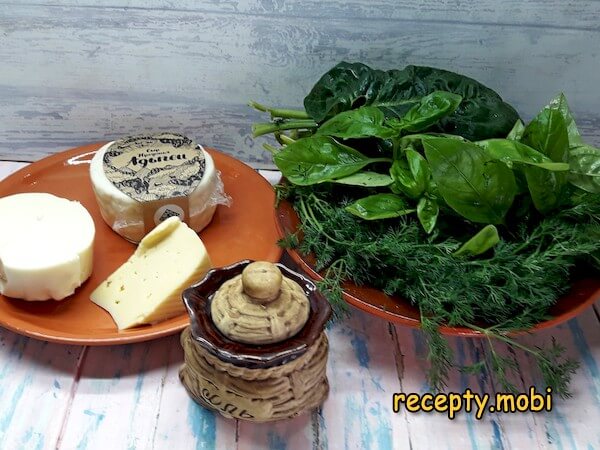
I gather the products for the filling. Instead of the suggested set of greens you can use spring onion, parsley, cilantro or sorrel. The main thing is that the total weight matches the one given in the recipe.
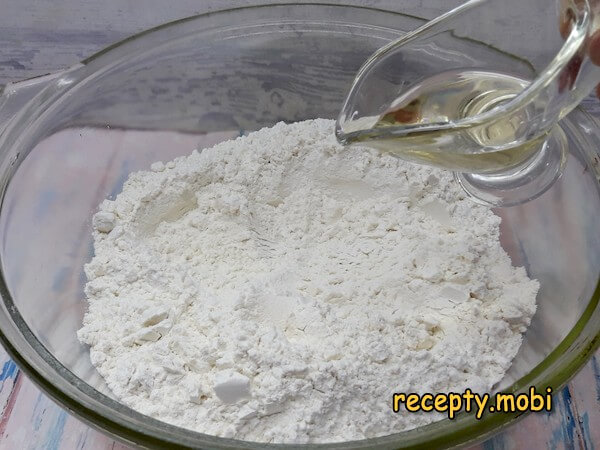
I sift the flour into a mixing bowl, add salt and pour in the oil.
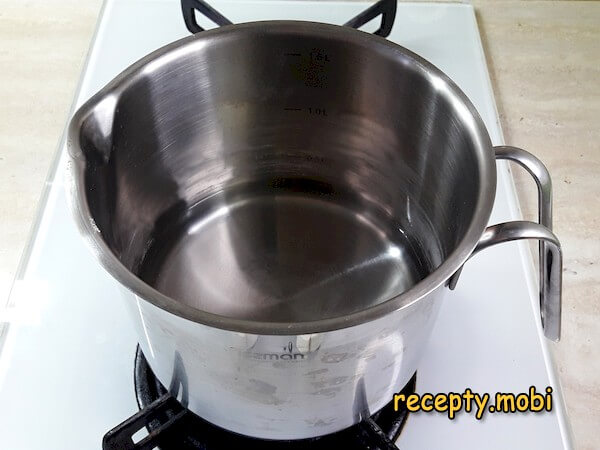
The dough will be a scalded one – it is very easy to work with, especially when you need to roll it out thinly. So I pour the water into a small pan and bring it to the boil.
I pour it into the bowl straight away.
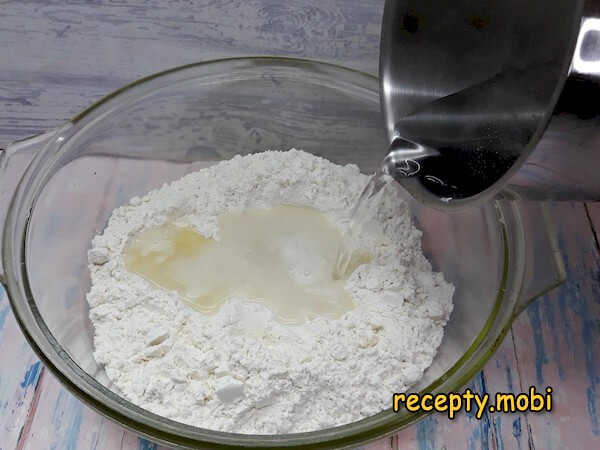
I stir everything with a spoon until the mixture is evenly moistened.
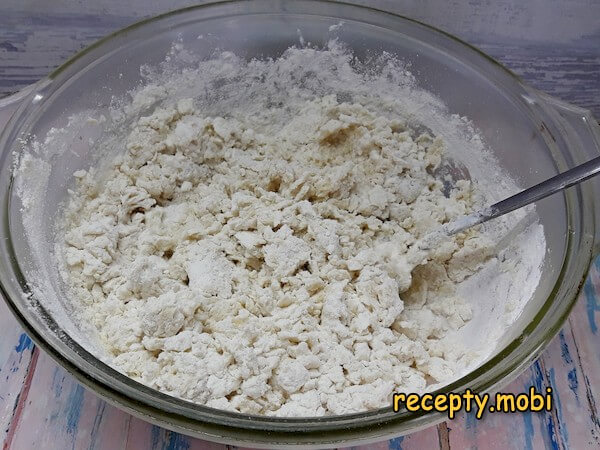
As soon as the mixture cools enough to handle comfortably, I carry on kneading by hand on the table. I knead until the dough has cooled completely and turned into a smooth, soft ball.
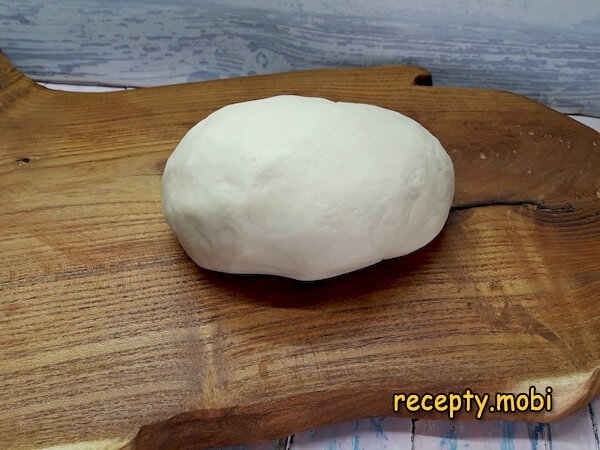
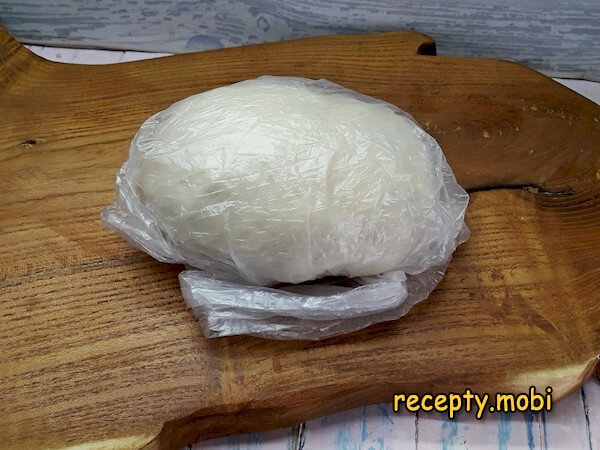
I put it in a bag and leave it on the table while the filling is being made.
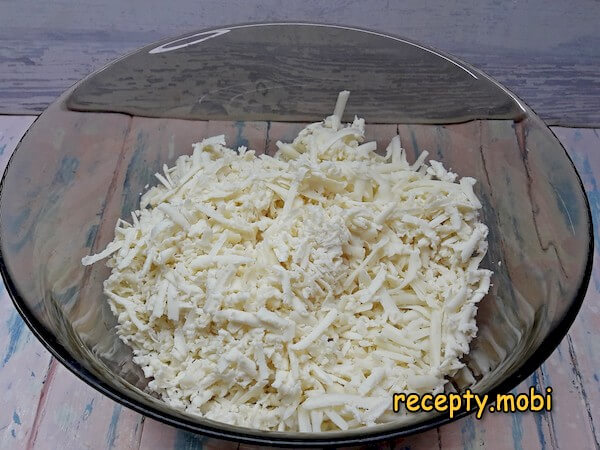
I grate all the cheese.
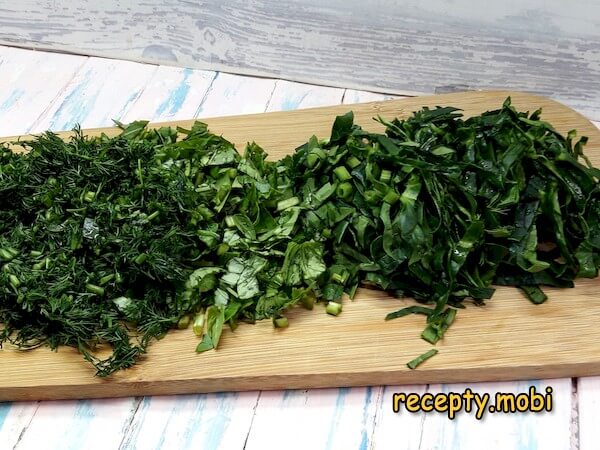
I finely chop the mix of greens.
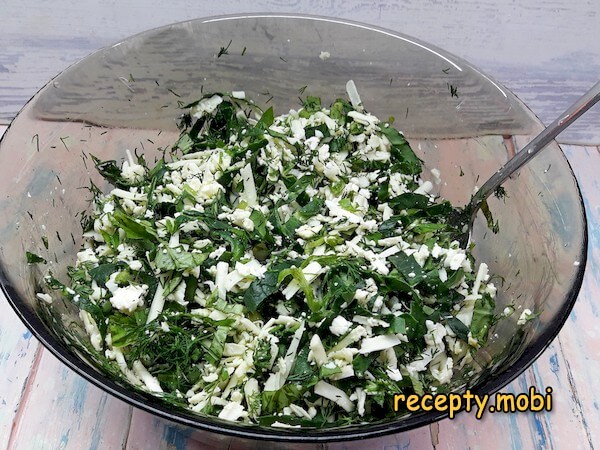
I combine the grated cheese and the greens. I mix them and salt carefully, since some kinds of cheese can be very salty to begin with.
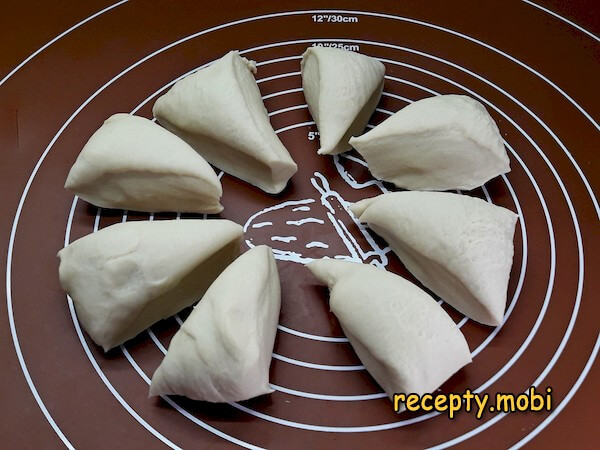
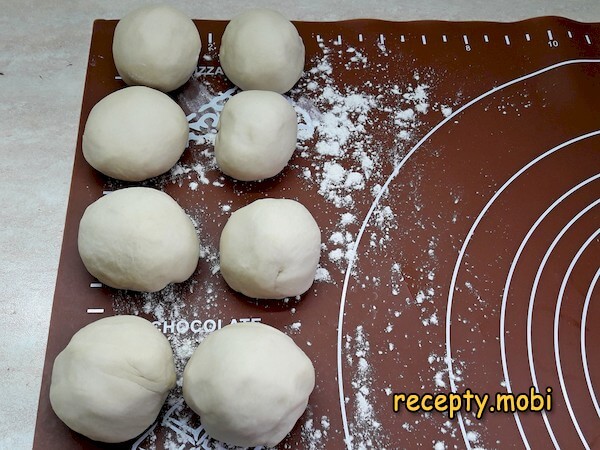
I take the dough out of the bag – it may be moist from the heat that has been released. I knead it a little, but without adding any flour. I divide it into 8 pieces.
I roll each of them into a ball, set them on a floured surface and cover with film.
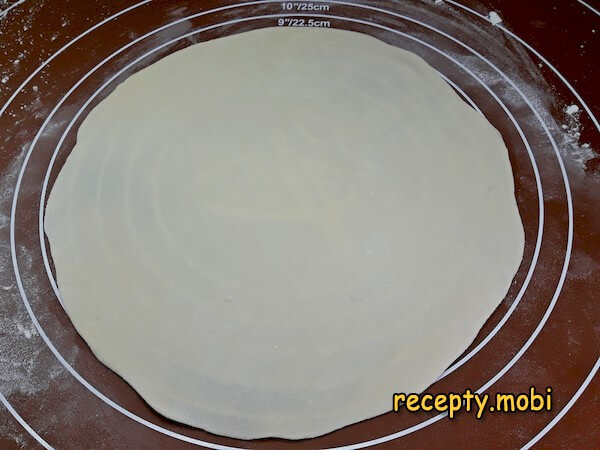
Next I roll the ball out thinly to about 20 cm across. Scalded dough does not contract when rolled, does not tear and will hold a large amount of filling perfectly.
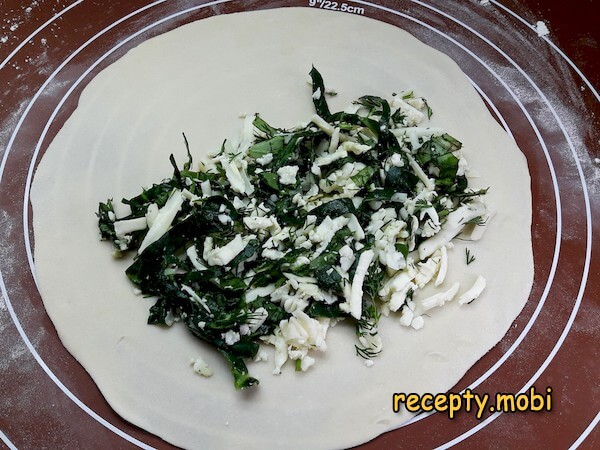
On one half of the flatbread I place 2 large spoonfuls of the cheese and greens. I press them down a little and spread them over the dough, leaving 1–1.5 cm clear of the edges.
I cover the filling with the second half of the flatbread. An important moment – you need to press the air out of the piece with your palm, starting from the fold and moving towards the edges.
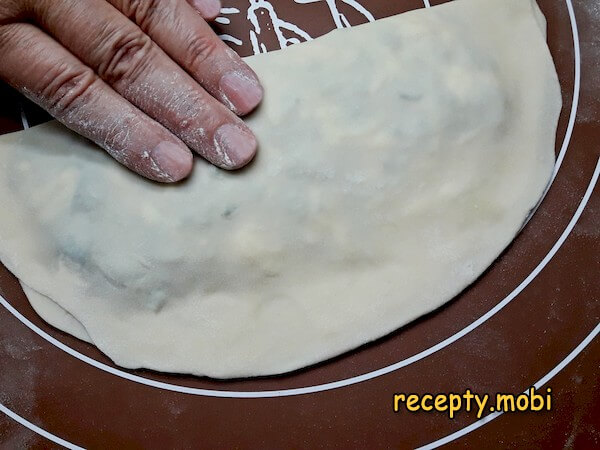
I run my fingers along the cut edges, pinching them shut.
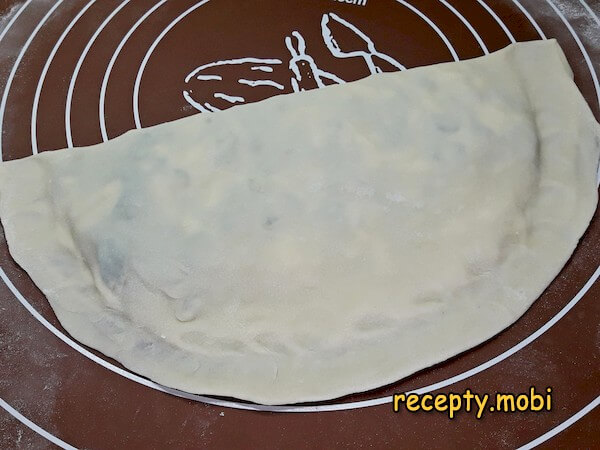
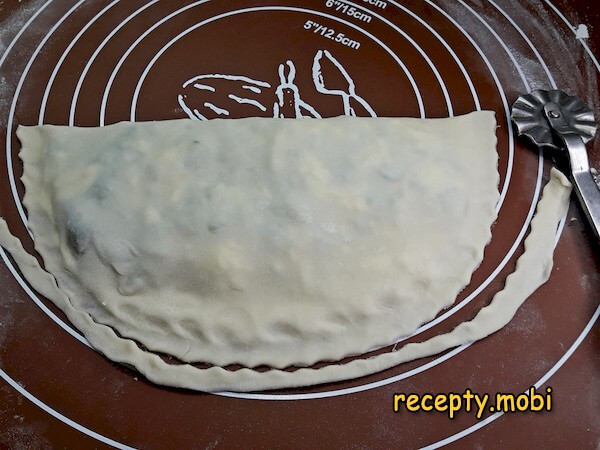
For a neater look I trim off the excess dough with a fluted or ordinary knife.
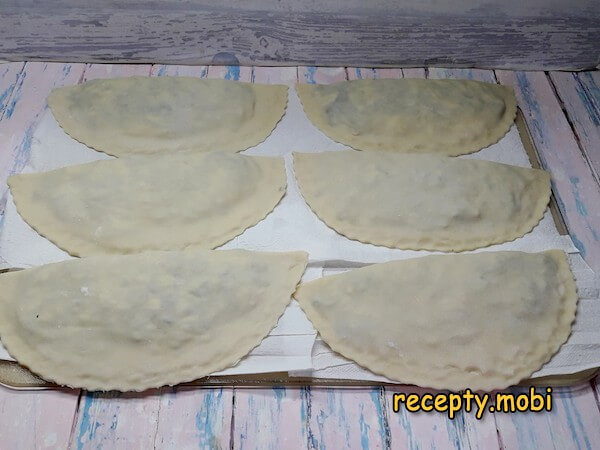
I prepare all the kutabs this way, laying them on a paper towel or a floured table.
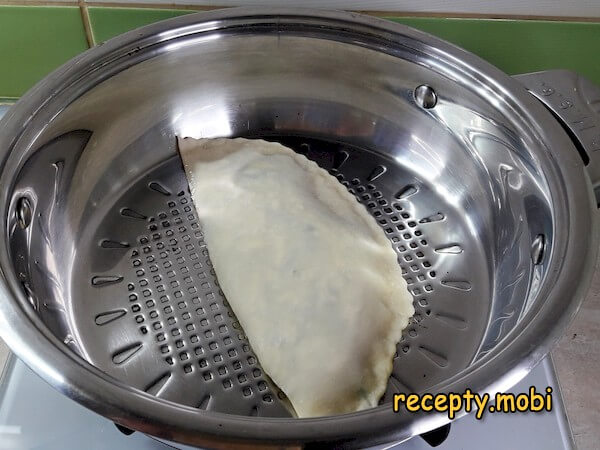
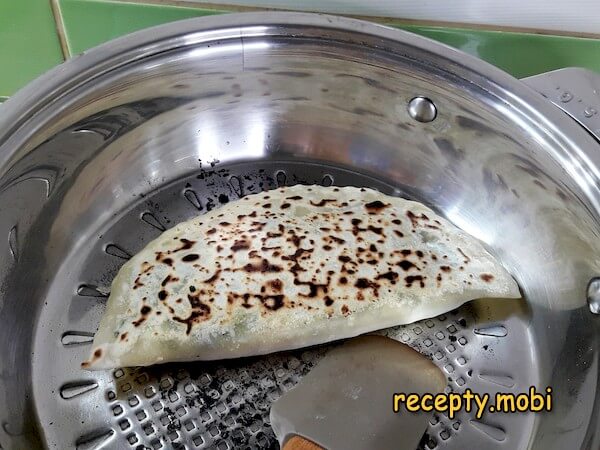
I heat a thick-walled skillet well and add no oil. I set the heat to medium. I lay the first piece in the pan.
After 2 minutes I lift an edge of the flatbread and, if I see light browning, I flip it onto the other side, which I also fry for 2 minutes. If a piece starts to puff up after flipping, I prick it with a sharp knife.
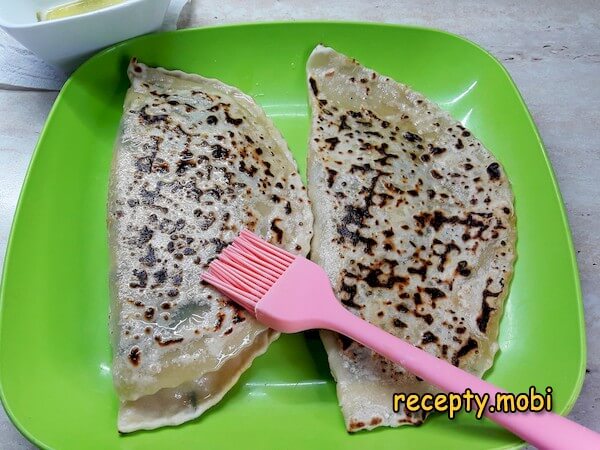
I stack the kutabs, brushing one side of each with melted butter.
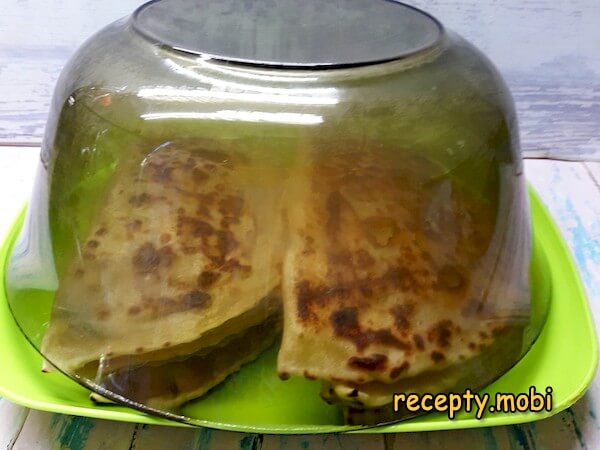
At the end I cover the kutabs with a large bowl and let them steam for 5 minutes.
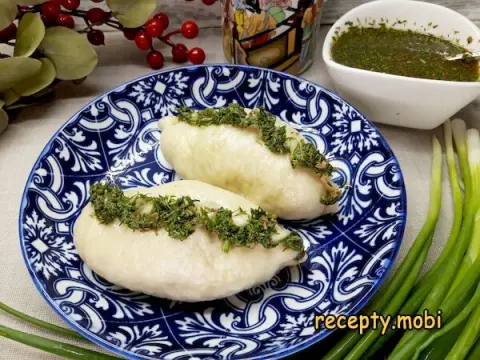
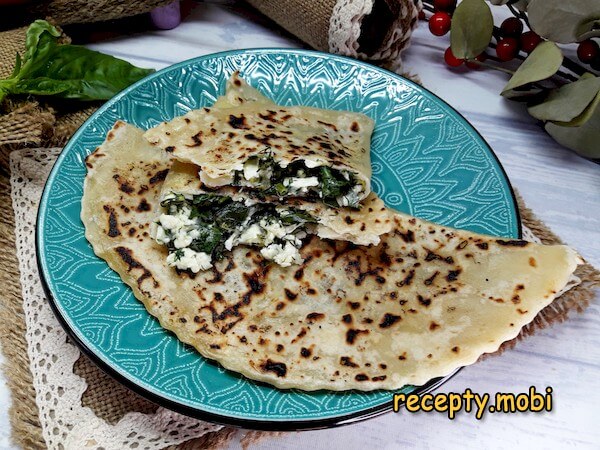
The kutabs with greens and cheese are ready. During cooking the pastries turned juicy – the melted cheese united the filling and the thin dough into a single whole. Flatbreads like these vanish in the blink of an eye with any meat, fish or vegetables. You can also serve them with tea.


Tips
- 1
Scalded dough is the secret to the process. It is easy to work with – it does not contract when rolled, does not tear and holds plenty of filling.
- 2
Pressing out the air is the secret against bursting. Push the air from the fold towards the edges, otherwise the kutab will puff up and burst in the pan.
- 3
A dry skillet is the secret to authenticity. No oil – that is how it is done in Azerbaijan. On a dry skillet the kutabs come out like the real thing.
- 4
Butter after frying is the secret to tenderness. Brush each kutab with warm butter on top.
FAQ
Which cheese should I choose? +
Ideally a mix of three cheeses: mozzarella for stretch, Adyghe for tenderness and a hard cheese for saltiness. As alternatives you can use brynza (200 g, saltier), feta (200 g), suluguni (200 g) or Parmesan (70 g). Freshly grated cheese is best. Avoid processed cheese, which will run, and any sweet cheese, which will change the flavour. For the classic Azerbaijani version the mix is a must.
What can replace basil and spinach? +
Alternatives include spring onion with cilantro and parsley (140 g), sorrel with dill (140 g), a mix of nettle and wild garlic (140 g) or chard (140 g). Fresh bunches are best. Avoid greens that have yellowed and frozen greens, which release a lot of water. For the classic Azerbaijani version you need plenty of greens – at least 140 g. The main thing is that the total weight comes to 140 g.
How long do kutabs keep? +
In the fridge, wrapped in film, for 1–2 days. Any longer and the dough goes stale and the cheese loses its stretch. Before serving, fry them on a dry skillet for 1 minute on each side to restore their softness, or warm them in the microwave for 30 seconds. In the freezer, cooked kutabs keep for up to 1 month and raw assembled ones for up to 2 months. Cook raw ones straight from frozen in the pan. Kutabs are at their best in the first 30 minutes after frying. Cover them with a bowl and they will steam and stay soft. Do not leave them at room temperature for longer than 4 hours.
What should I serve kutabs with? +
The Azerbaijani classic is with ayran or matsoni. They also go with fresh greens, and with adjika or tkemali for a spicier serving. Serve them with a cup of Azerbaijani tea in an armudu glass, with suluguni or brynza as a starter, or with fresh vegetables and salads. They suit a Caucasian spread alongside shashlik and salads, and pair well with a garlic sauce or with narsharab (sumac with greens). It is a versatile Azerbaijani flatbread for festive meals.
- Comment
or post as a guest
Be the first to comment.