avg —
Layered Pumpkin Crumble Pie

Instructions
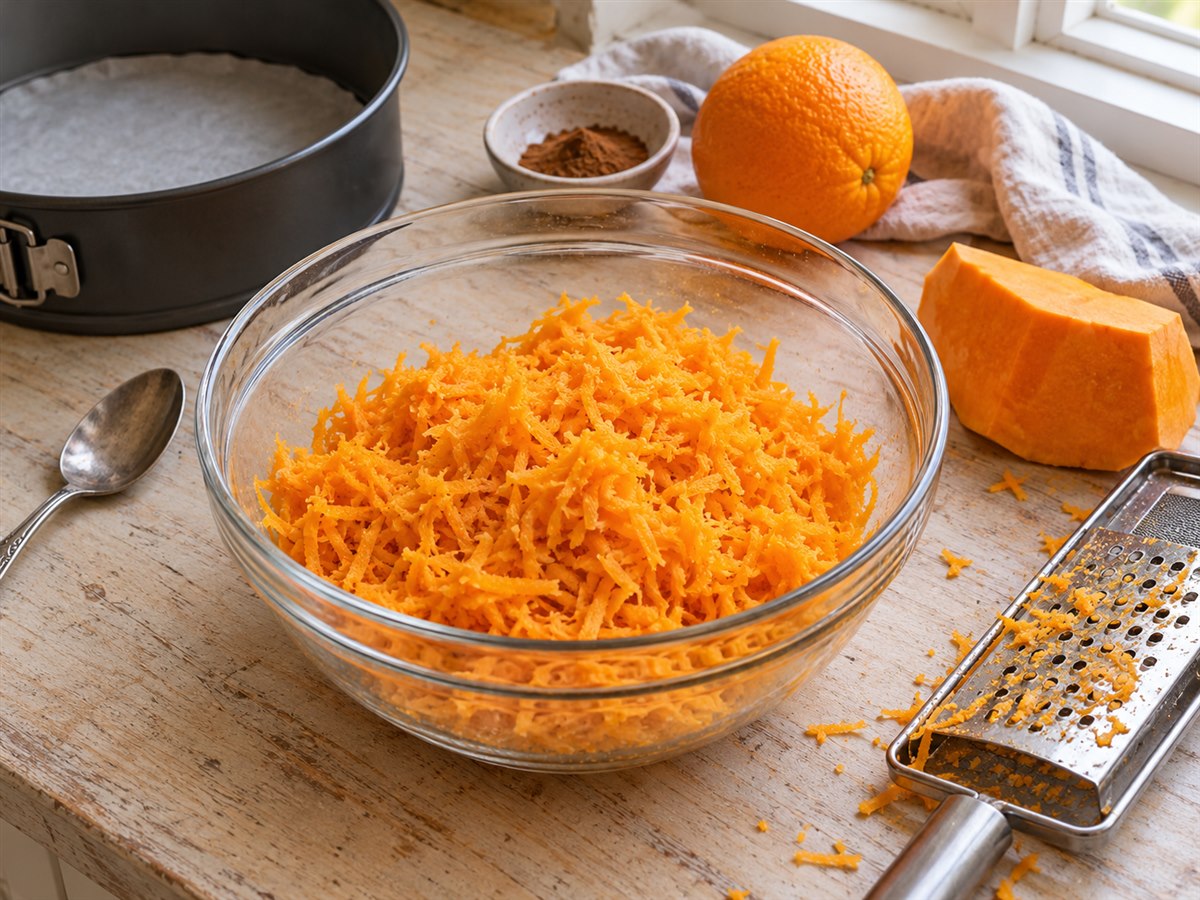
Heat the oven to 180 °C or 350 °F, conventional heat, no fan. Line the base of a 22 cm metal springform tin with baking parchment. Remove the pumpkin skin, seeds and stringy centre, then grate the flesh into fine shreds. If loose liquid immediately pools in the bowl, pour off only that liquid without squeezing the shreds dry. Finely grate the coloured part of a washed and dried orange peel.
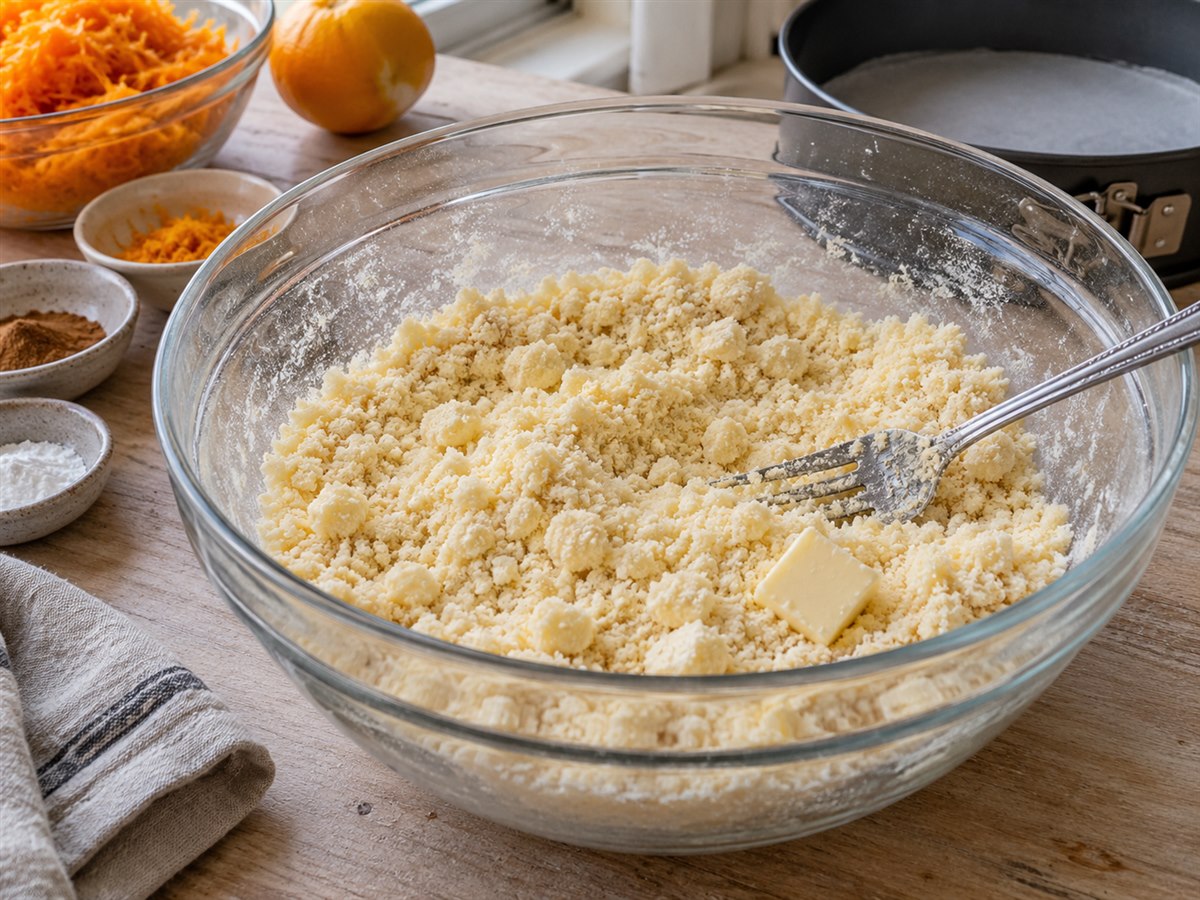
Reserve 50 g of the sugar for the filling. Mix the flour with the remaining 90 g sugar, baking powder and salt. Add cold butter, grated or cut into small cubes, and quickly rub into fine crumbs with a few pea-sized pieces. Do not knead into a firm ball. If the butter becomes soft, chill the bowl for 10 minutes.
Divide the crumbs into three roughly equal portions. Spread one portion over the lined base and lightly smooth with a spoon to cover any gaps. Do not compress into a hard crust or build tall sides. Keep the other two portions cool while preparing the filling.
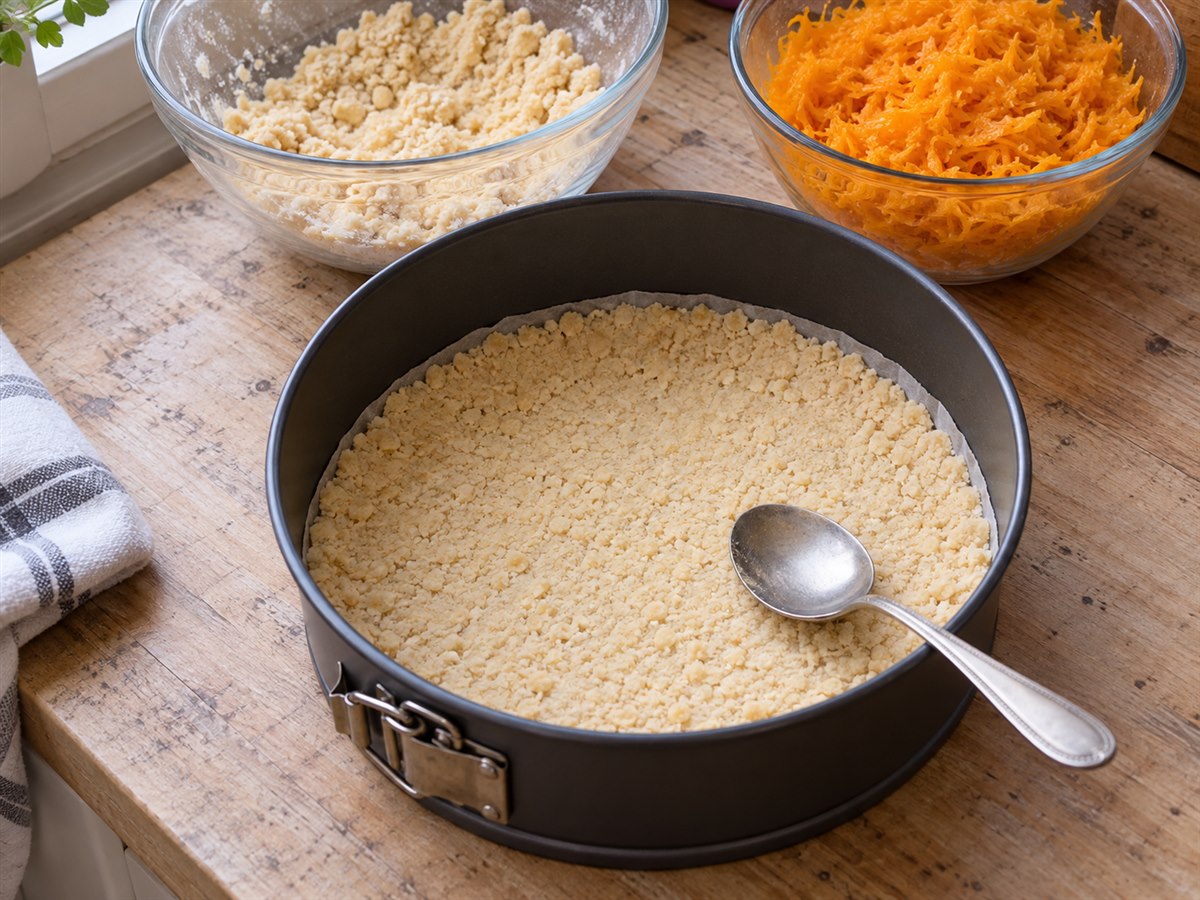
Mix the pumpkin with the reserved 50 g sugar, cinnamon and orange zest, then assemble straight away. Spread half the filling over the base crumbs, add the second portion of crumbs and cover with the remaining pumpkin. Keep the filling equally thin at the centre and edges. Do not pour a separate pool of released juice into the tin.
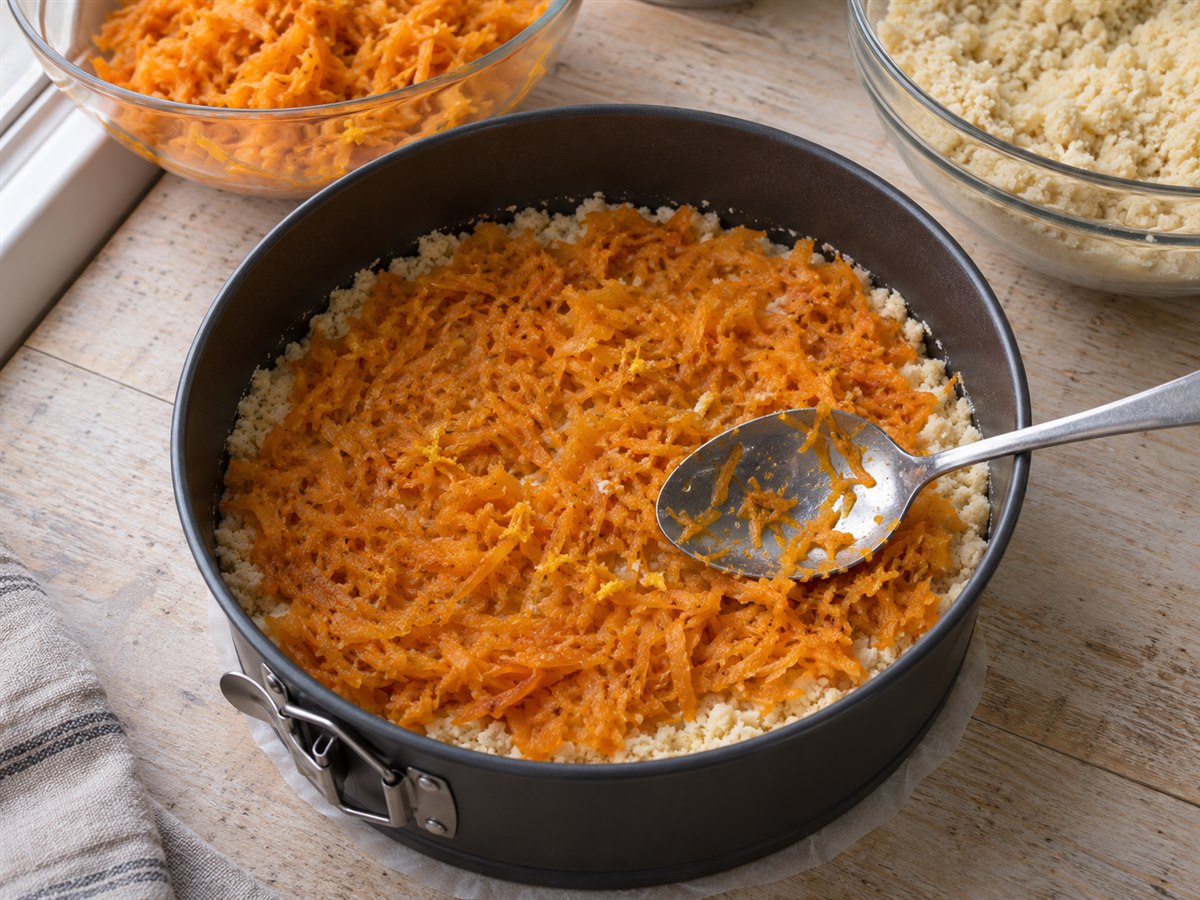
Scatter the last third of the crumbs evenly over the top. Do not pour over milk or add extra butter: all the butter is already in the crumbs. Set the tin on a baking tray on the middle oven shelf and bake for about 50-60 minutes. If the topping browns too quickly, cover loosely with foil without pressing it onto the pie.
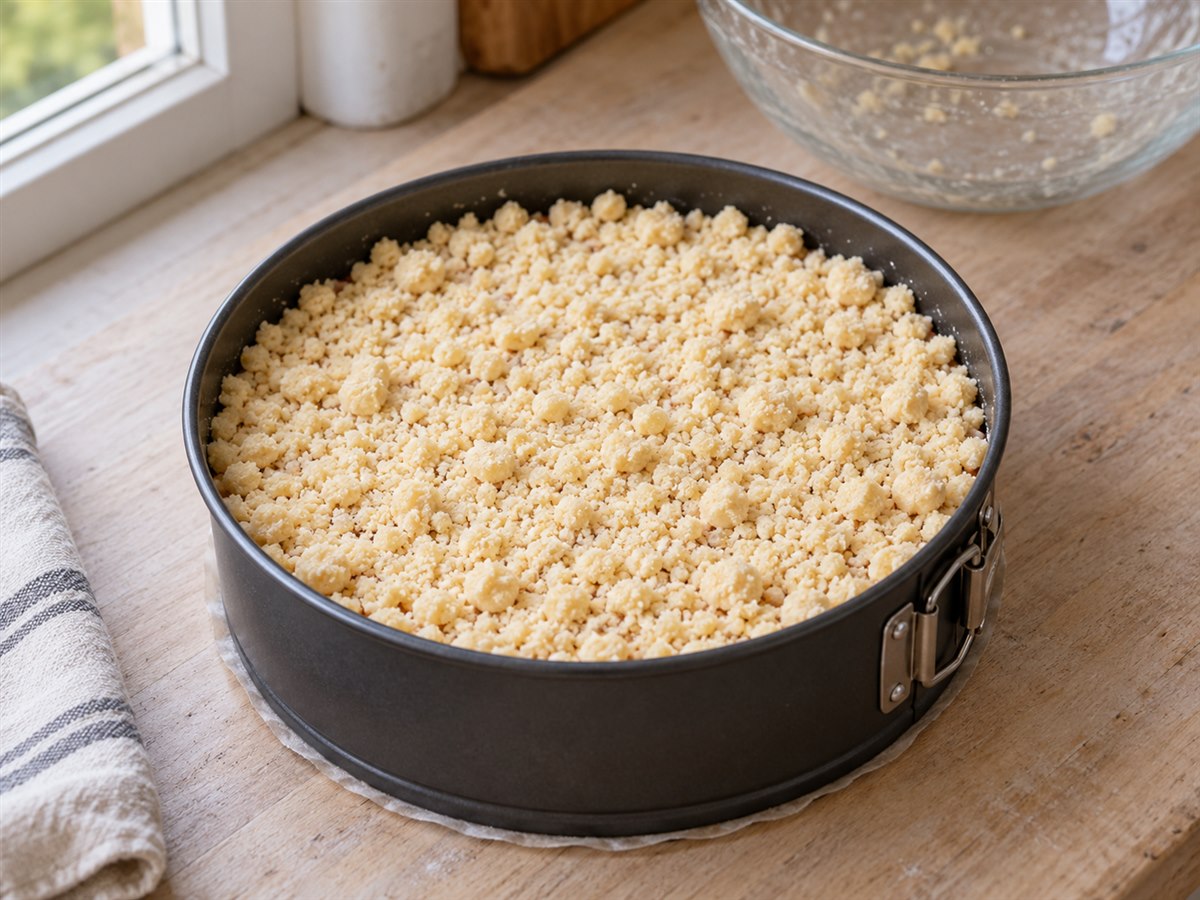
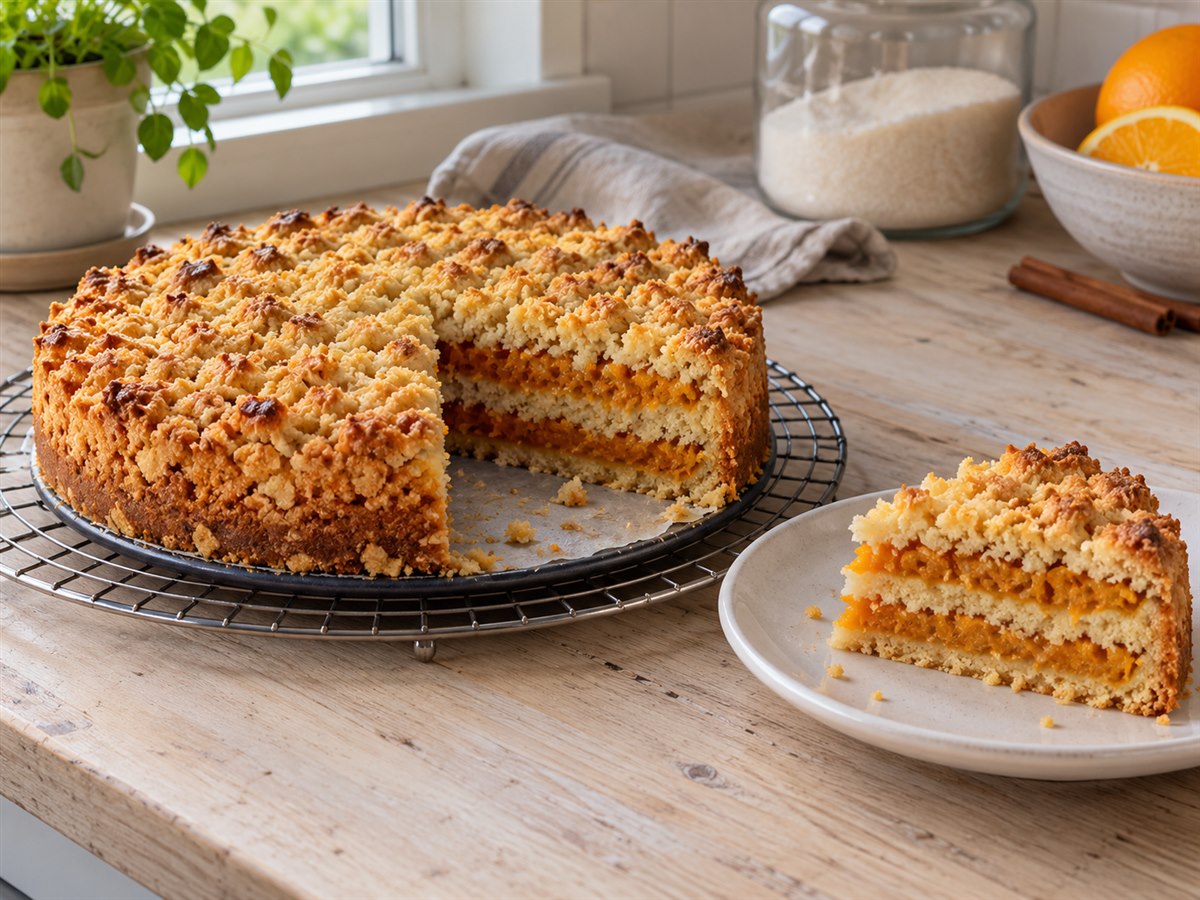
The topping should be golden with no white floury patches. A thin skewer should pass easily through the softened pumpkin at the centre; moist filling on it is normal, but raw flour paste is not. Cool in the tin on a rack for at least 60 minutes. Release the ring carefully, keep the pie on its base and cut into 8 wedges with a sharp knife.


Choosing pumpkin and making the crumbs
Choose a ripe sweet pumpkin with firm flesh, such as butternut squash. Weigh 550 g after peeling and removing the seeds. Fine shreds soften more evenly than thick pieces. This filling is not puree or custard, so the finished pie has a gently fibrous pumpkin texture.
Use plain all-purpose flour, not self-raising flour, and cold unsalted butter with about 82% fat. The total 140 g sugar is divided into 90 g for the crumbs and 50 g for the pumpkin. Distribute baking powder through the flour; do not add vinegar to activate it. Grate only the coloured orange peel, leaving the bitter white pith.
Layer order and tin size
From bottom to top the five layers are crumbs, pumpkin, crumbs, pumpkin and crumbs. Divide the crumbs into three portions and the filling into two before assembling. This is not a cake-mix dump cake or a semolina layer cake: the flour is rubbed with butter first, and no liquid batter is made.
The base recipe uses a 22 cm metal tin. The serving calculator changes ingredient weights, not pan diameter or baking time. To keep a similar depth, divide the square of the new diameter by the square of 22. Do not simply increase the recipe inside the same small deep tin.
A golden top with a properly cooked base
A dark topping does not prove the base is baked. Cover loosely with foil if it browns early, then continue cooking and test the filling with a thin skewer. Keep the base layer thin and avoid pouring loose pumpkin juice into the tin. A baking tray under the springform catches any drips of butter.
Let the pie settle before moving it. Lifting a hot crumb pie off its base can break it. For serving, release the ring and cut carefully on the base without damaging it.
Timing, serving and calories
The total 2 hours 15 minutes includes about 20 minutes of preparation, 55 minutes of baking and 60 minutes of cooling. Add 10 minutes of chilling only if the butter softened while making the crumbs. Hands-on work is short, but this is not a ready-to-eat dessert in 20 minutes.
Serve plain or with natural yoghurt. About 385 kcal per one-eighth of the pie is an estimate without toppings; brands change the result. Calories per 100 g require weighing the baked pie without its tin, as moisture loss has not been measured.
Keep leftovers covered in the refrigerator at 4 °C or 40 °F or below and use within 3 days. Refrigerate after cooling rather than leaving the moist filling on the counter overnight. The crumb topping will gradually soften in the fridge.
More pumpkin ideas
For a softer dairy-based bake, try pumpkin cottage cheese casserole. Breakfasts, sides and desserts are collected in our pumpkin recipe roundup.
Recipe video: Pumpkin crumble pie
Important: This Russian-language video shows a different filling. Follow the quantities and timing in the text.
Images are AI-generated.
FAQ
Does this pumpkin crumble pie need eggs or semolina? +
No. The crumb mixture uses flour, cold butter, sugar, baking powder and salt. Dry semolina layer cakes use a different method, so do not replace part of the flour with semolina without reformulating the recipe.
Can raw pumpkin go directly into the filling? +
Yes, but grate it into fine shreds. Large cubes may remain firm in the same baking time. Pumpkin puree is not a direct substitute because it distributes moisture differently between the crumb layers.
Should I squeeze the grated pumpkin? +
Do not squeeze the shreds dry. Pour away any separate pool of liquid before mixing in the sugar. If the pumpkin is shrivelled and dry, choose a fresher piece rather than adding a large amount of juice.
Why is the base soggy or underbaked? +
Possible causes include watery filling, a thick base layer, an oven that was not fully heated or a dish that heats slowly. Use a metal tin, keep layers thin and even, and check the centre. Stronger top heat alone will not cook an underbaked base.
Why does the pie fall apart when sliced? +
Hot filling has not settled, and shortbread crumbs are naturally fragile. Cool in the tin for at least an hour and slice on the base. This is a crumbly pie, not an elastic sponge cake.
Can I replace butter with oil? +
Cold solid butter is part of how this crumb mixture forms. Liquid oil changes both texture and absorption, so a gram-for-gram swap is not recommended. Use a separately developed vegan recipe instead.
How do I adjust this for a 24 cm tin? +
Multiply every ingredient by about 1.19 to keep a similar depth. For a 20 cm tin, use roughly 0.83. Baking time does not scale in direct proportion; judge the softened pumpkin and cooked base.
Can I use frozen pumpkin? +
Thaw in the refrigerator, drain released water and weigh after preparation. Its texture will be softer, so freshly grated pumpkin is preferable. Do not add large frozen chunks straight to the filling.
- Comment
or post as a guest
Be the first to comment.