avg —
Shangi: Russian Potato Buns

Instructions
Make the dough. Reserve 10 g of the total flour for shaping. Mix the remaining 340 g with the instant yeast, sugar and dough salt. Add the dough milk warmed to about 30-35 °C or 86-95 °F, followed by the lightly beaten egg. Mix, then work in the softened, not melted, dough butter. Knead for 8-10 minutes until smooth. The dough should be soft and slightly tacky, not runny.
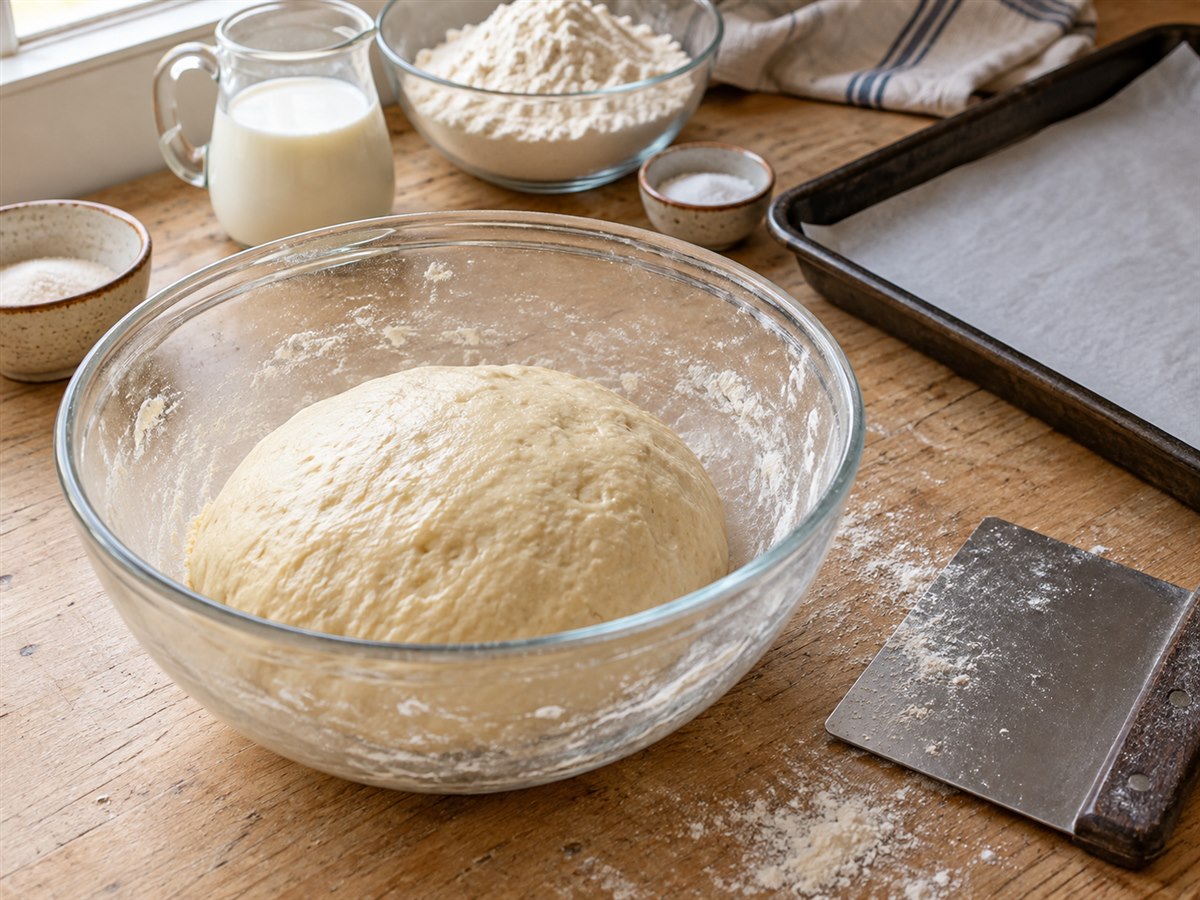
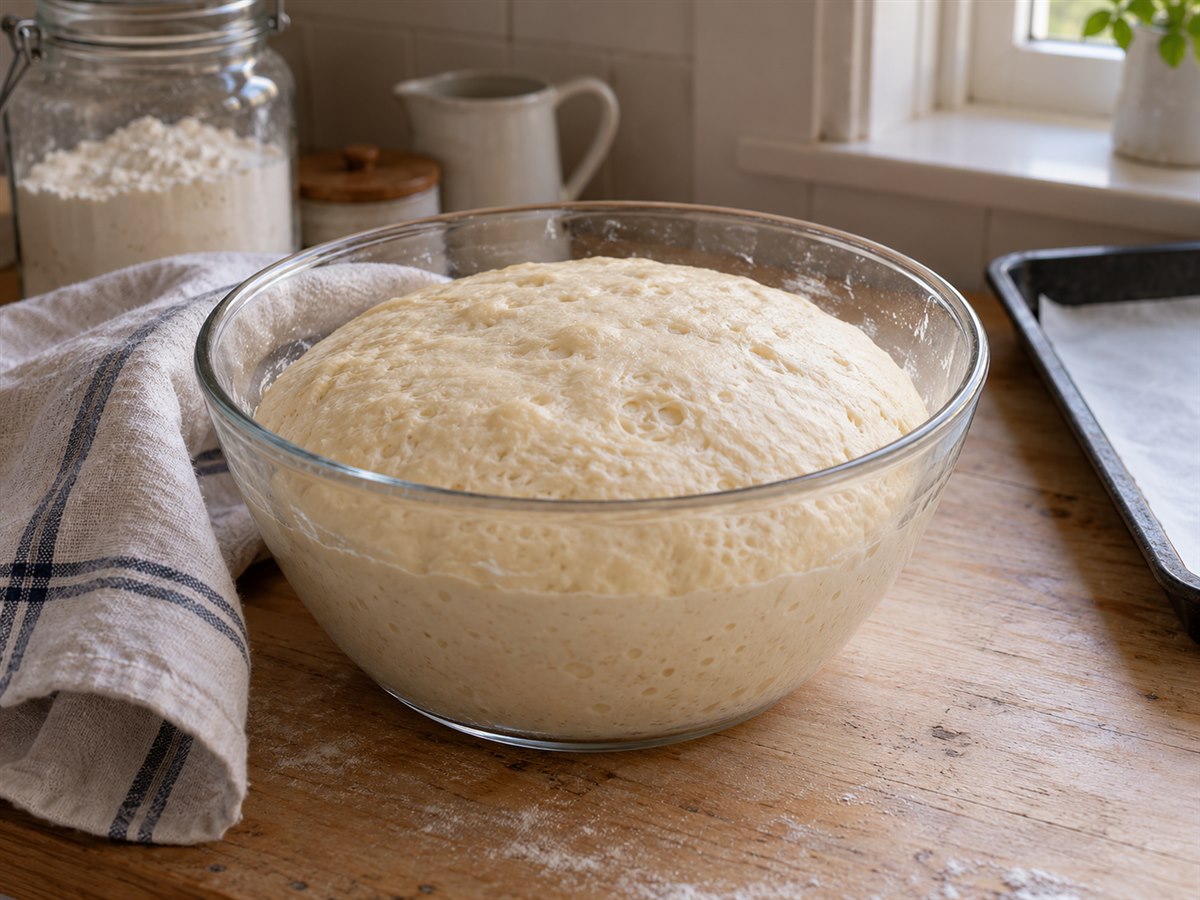
Let it rise. Shape into a ball, place in a bowl, cover and leave in a warm draught-free spot for about 60-90 minutes. It should roughly double and feel aerated. Do not put it on a hot radiator or inside a switched-on oven. Prepare the potato topping during this first rise.
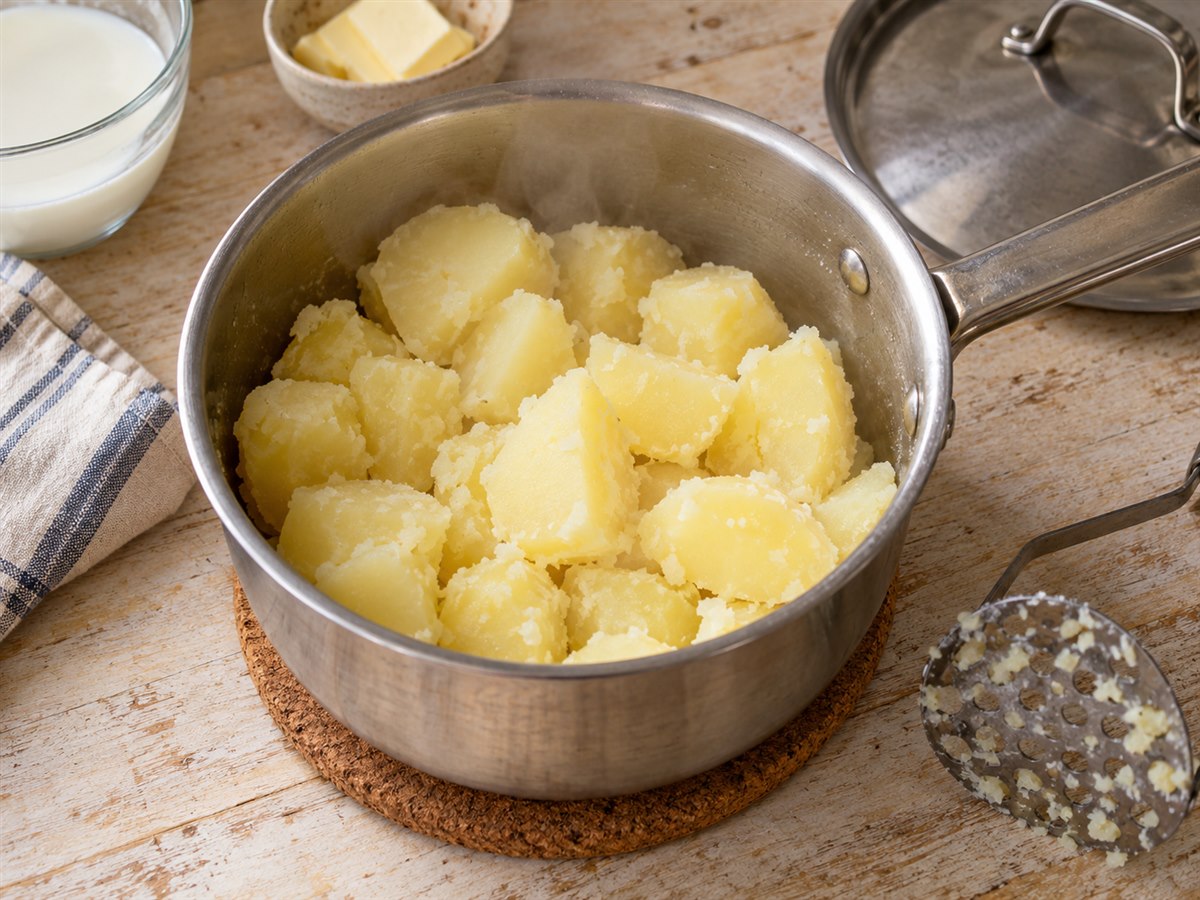
Cook the potatoes. Cut the peeled potatoes into even pieces about 3 cm across, cover with water and bring to the boil. Simmer for about 20-25 minutes until a knife passes easily through the largest piece. Drain completely, then return to low heat for 1-2 minutes, stirring so they dry without catching.
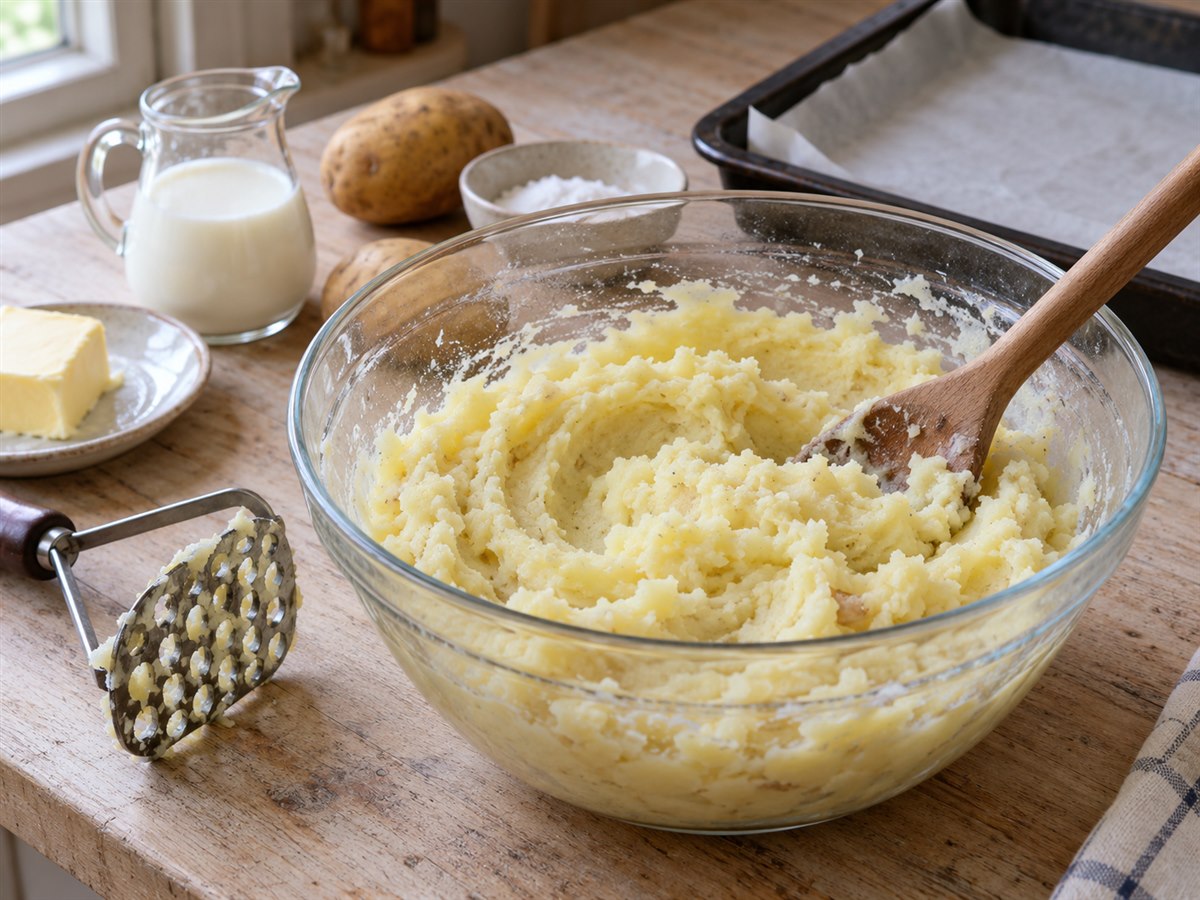
Make the mash. Mash the hot potatoes by hand. Mix in the topping butter, warmed topping milk and topping salt to make thick mash without large lumps. Do not use an immersion blender. Cool until warm rather than hot: the mash should spread with a spoon but should not pour or heat the dough excessively.
Shape the first batch. Gently deflate the risen dough and divide into 8 equal pieces, about 82-83 g each. Cover four and refrigerate for the second batch. Round the other four, cover and rest for 10 minutes, then flatten into discs about 10-11 cm across using the reserved flour sparingly. Set on a parchment-lined tray with at least 3 cm between them. Make the middle a little thinner than the edge, without creating a deep well.
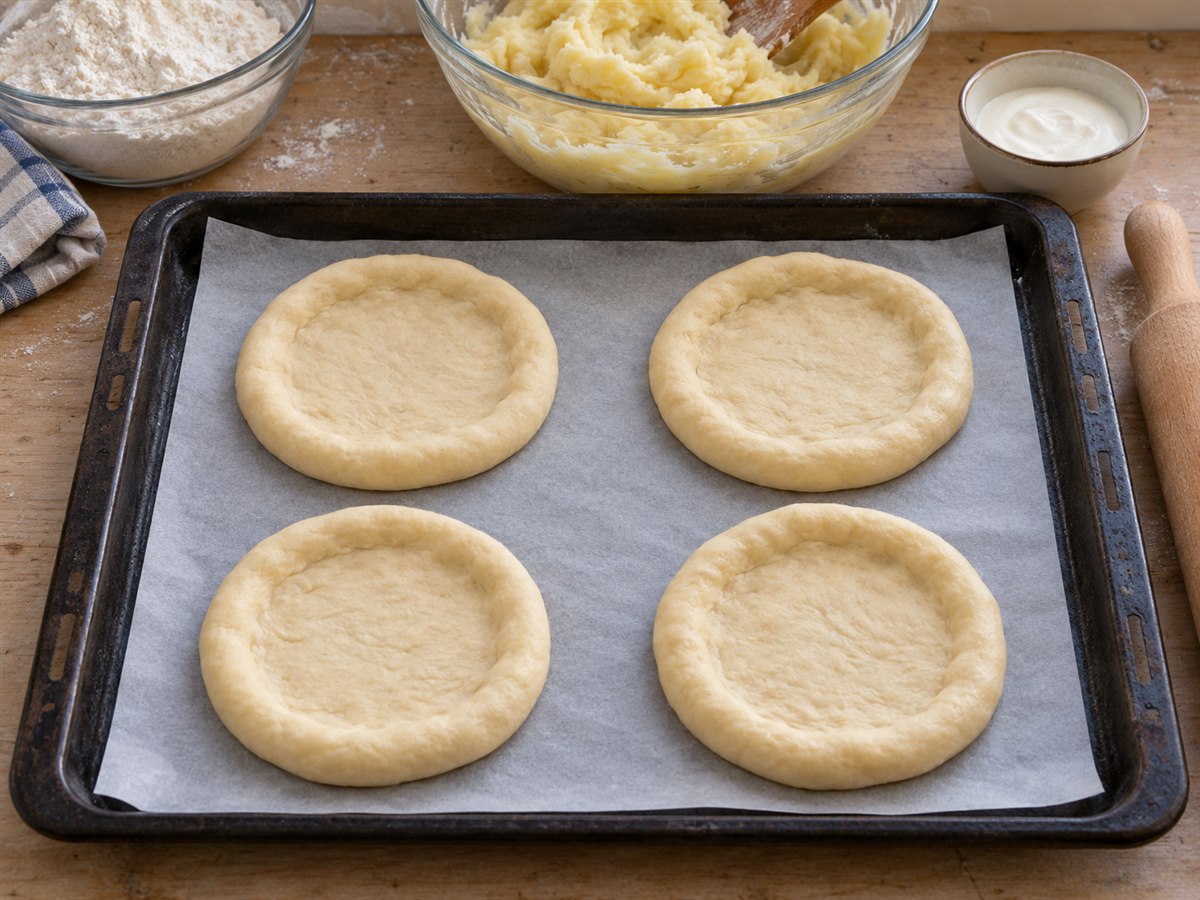
Add the topping and proof. Divide all the mash into 8 equal portions. Spread one portion onto each of the four discs, leaving about 1 cm of dough uncovered at the edge. Keep the potato layer even, not heaped. Cover loosely and proof for about 20 minutes until the rims look noticeably puffy. Cover the remaining mash. Begin heating the oven to 190 °C or 375 °F, conventional heat, no fan.
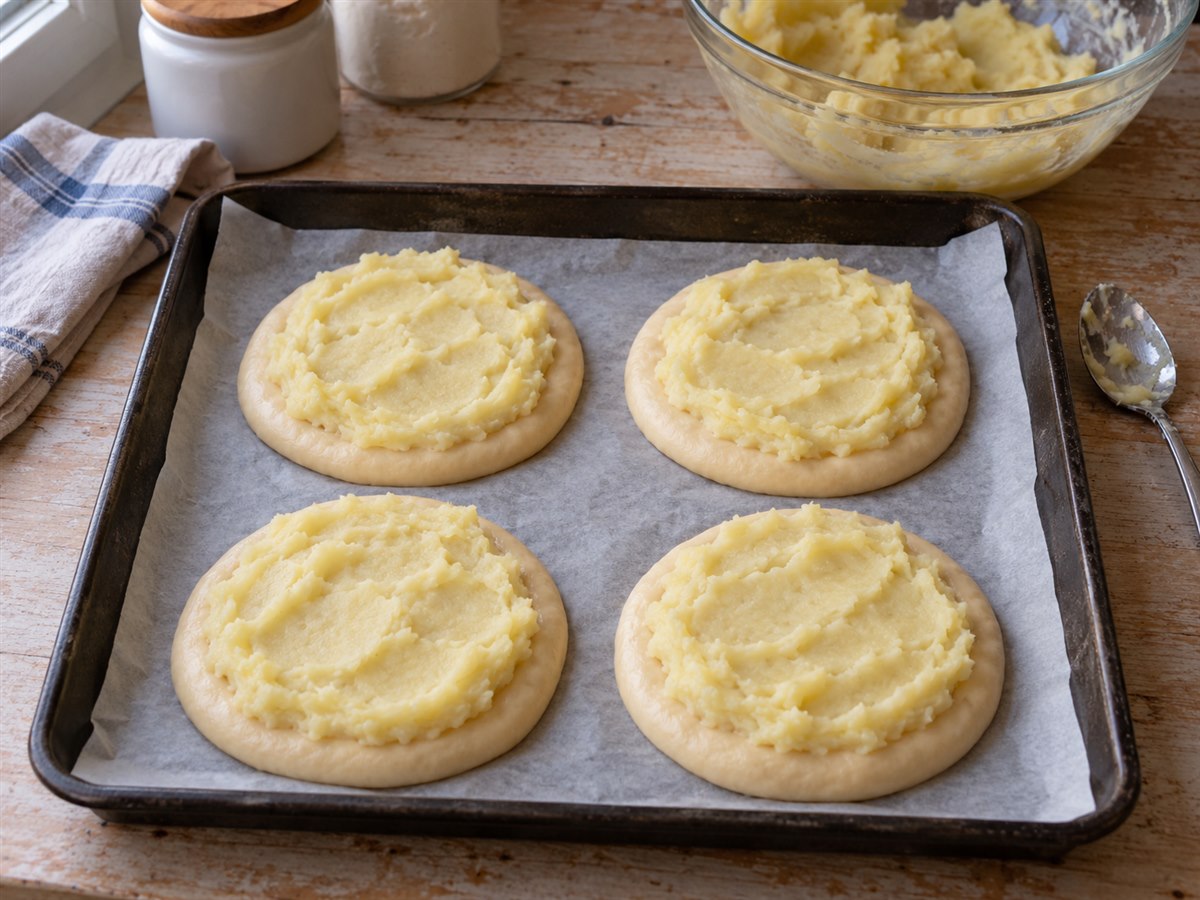
Bake both batches. Brush the potato surfaces of the first four buns thinly with half the sour cream. Bake on the middle shelf for about 22-27 minutes until the rims are golden and the bases are cooked. The topping should be hot and the dough underneath should not be sticky. While the first batch bakes, shape the remaining four on another sheet of parchment, top with mash and let them proof. Brush with the remaining sour cream and bake in the same way, maintaining the oven temperature between batches.
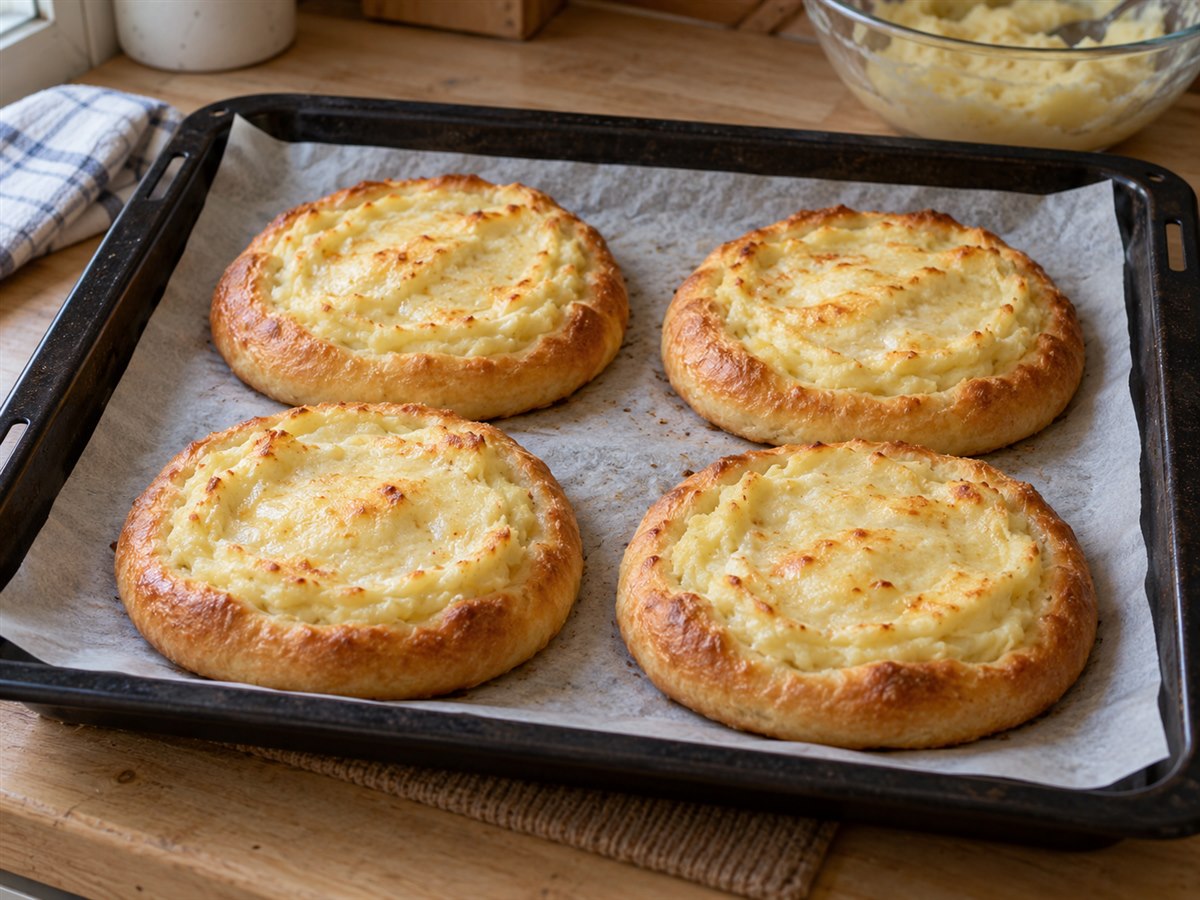
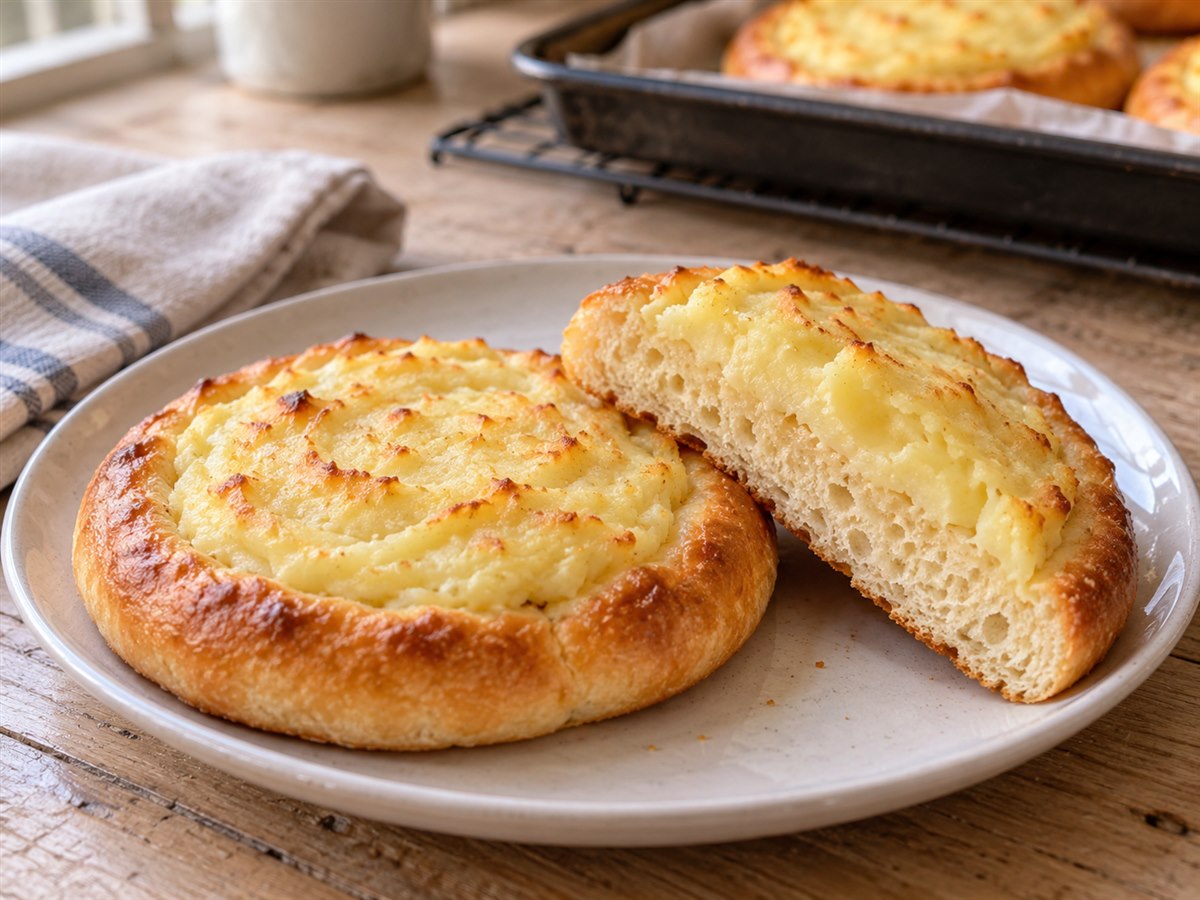
Rest briefly and serve. Transfer to a rack and cover loosely with a clean tea towel for 10 minutes. Serve warm. If you are unsure about the dough, cut one bun: the bread under the mash should have a cooked airy crumb with no raw strip. Do not stack very hot buns tightly in a sealed container.


How the ingredients are divided
The list separates the dough and topping amounts: 200 g milk and 40 g butter go into the dough; 80 g milk and 30 g butter go into the mash. Use enough water to cover the potatoes, then drain it completely. The 600 g potato weight refers to raw peeled potatoes, not prepared mash.
The 50 g shelled egg is roughly one medium egg. When scaling the recipe, beat an egg and weigh the amount needed. Use plain all-purpose flour, milk with roughly 3% fat, butter with about 82% fat and sour cream with around 20% fat. The mash salt assumes unsalted cooking water and unsalted butter.
Soft dough without too much flour
This recipe uses instant yeast suitable for mixing into flour. Check the packet, as other yeast types may need rehydrating first. The milk should be warm, not hot. Work in softened butter rather than pouring in hot melted butter.
A little tackiness is normal. Do not keep adding flour just to make the dough dry. Kneading and rising make it easier to handle. A cool room slows fermentation, so allow more time rather than shaping dough that has barely risen.
Thick mash without a gluey texture
Choose floury potatoes suitable for mashing, such as Maris Piper or Russet, depending on availability. Drain well and briefly dry the potatoes in the warm pan. Use a hand masher or potato ricer; high-speed blending can turn the mash sticky.
Let the topping cool to warm before spreading it on the dough. It should be thick enough to hold spoon marks. Sour cream goes on as a thin coating, not a thick white mound. Cheese and an extra egg are unnecessary for this version.
Proofing and baking two batches
The estimated 3 hours 10 minutes includes the first rise, shaping, final proof, two batches of roughly 25 minutes and a short rest. Cook the potatoes during the first rise. If that rise takes 90 minutes rather than 60, allow about half an hour more overall.
Do not crowd eight large buns onto a small tray. Bake four at a time, leaving room for the rims to expand. Keep the second half of the dough covered in the fridge until shaping it while the first batch bakes. If you own only one tray, shape the second batch on a separate sheet of parchment and transfer it to the cooled tray.
The serving calculator scales ingredient weights, not oven capacity or the time for one batch. More buns may mean more batches. Do not simply make the buns twice as thick while keeping the same baking time.
Serving, storage and calories
Serve warm with soup, tea or as a savoury snack. For a different type of open bake, see royal curd pie: it is a sweet crumb pie, not another version of these potato buns.
About 330 kcal per one of eight buns is an estimate without serving extras. Dairy fat levels, flour and bun size change the result. Calories per 100 g require weighing the baked buns, since oven moisture loss has not been measured.
Refrigerate leftovers at 4 °C or 40 °F or below within 2 hours of baking and use within 3 days. In temperatures above 32 °C or 90 °F, refrigerate within 1 hour. Reheat the centre of the potato topping to 74 °C or 165 °F. Do not leave potato-and-dairy topping on the counter overnight.
Recipe video: Russian potato buns, shangi
Important: This Russian-language video shows another version. Follow the quantities and method in the text.
Images are AI-generated.
FAQ
Are shangi and shanezhki the same thing? +
Shanezhki is often used for small shangi. This homemade version is an open yeast bun with a potato topping. Doughs and toppings vary by region, so there is no single universal formula.
How are shangi different from pirozhki or vatrushki? +
The mash stays on top and covers a broad surface. There is no sealed seam as in pirozhki, and a deep well with a tall rim is unnecessary. These are savoury potato buns, not sweet cheese vatrushki, although their appearance can be similar.
Can I use leftover mashed potatoes? +
Yes, if they were refrigerated promptly and kept at 4 °C or 40 °F or below. Account for milk, butter and salt already added: prepared mash is not a direct replacement for the 600 g of raw peeled potatoes. For a first attempt, make the topping from the stated weights.
Does the potato topping need an egg? +
Not in this version. The egg goes only into the dough. Thick mash and a moderate amount of milk keep the topping in place. Sour cream on top keeps the surface tender; it is not a way to bind a runny filling.
Why did my buns turn out hard? +
Too much extra flour, missed proofing or overbaking are common causes. Knead a soft dough and judge its rise as well as the clock. After baking, give the buns a brief rest under a loosely draped tea towel.
Why does the potato topping crack and dry out? +
The mash may be too dry, the layer too thick or the heat too strong. Mash the hot potatoes with milk and butter, spread evenly and add the thin sour cream coating. A few natural surface irregularities are normal.
Can I replace instant yeast with fresh yeast? +
An approximate replacement for 5 g instant dry yeast is 15 g fresh compressed yeast. Dissolve it in some of the milk already measured for this recipe. Use active dry yeast and products with specific preparation requirements according to the packet; rising time may change.
Can I freeze baked shangi? +
Yes. Freeze fully cooled buns separately, then transfer to an airtight bag. Aim to use within 1 month for best quality. Thaw in the refrigerator and reheat until the centre of the potato topping reaches 74 °C or 165 °F.
- Comment
or post as a guest
Be the first to comment.