avg —
Yorkshire Pudding: Airy Dessert in 35 Minutes

Instructions
I prepare the ingredients – they should all be at room temperature. It is best to sift the flour first. To speed things up, you can switch the oven on straight away to 230 degrees with top-and-bottom heat.
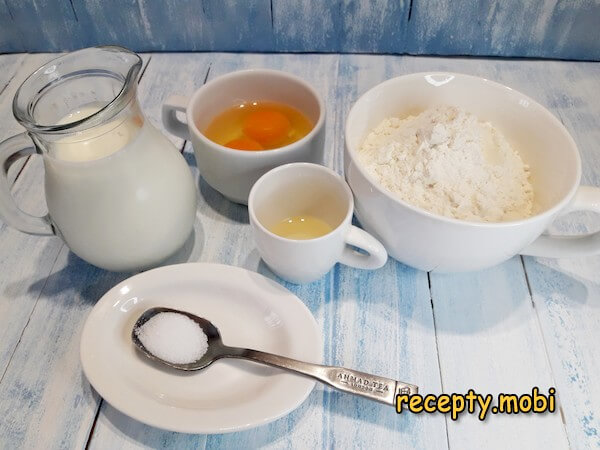
I beat the salted eggs, but not to a stiff foam.
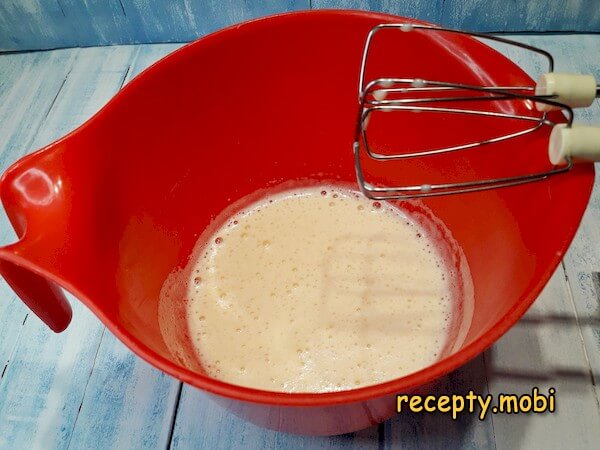
I add the oil to them.

Next comes the milk. I mix everything so that the oil disperses into small droplets.
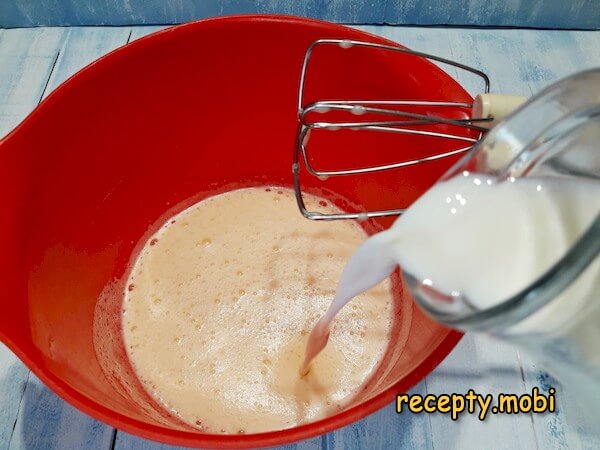
I add all the flour at once.

I stir the mixture so that every part is moistened, then break up any lumps that have formed. The batter should become uniform and smooth.
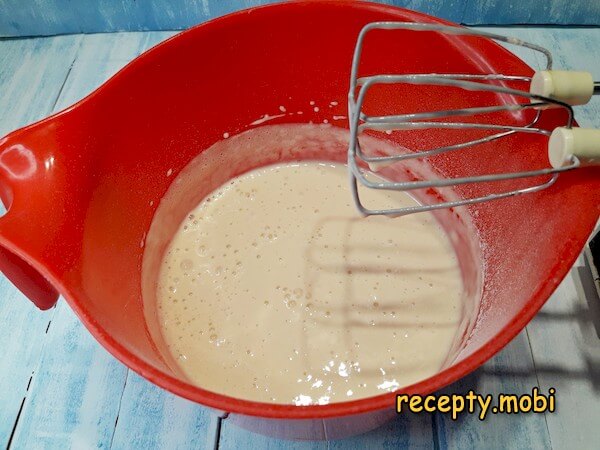
I check the batter for fluidity – it should not drop off the spatula straight away, but flow off it smoothly. In essence, this is the pancake batter we are all familiar with.

So that I do not have to scrub the baking tray afterwards from oil or batter that has run out, I line it with paper. Into the moulds I drop half a teaspoon of refined vegetable oil each. I put them in the oven for a couple of minutes to heat up.

Then I fill the moulds with pancake batter to two-thirds of their volume.

I bake the pudding for 20 minutes. At this temperature it will start to puff up and even turn in the mould. After that I lower the temperature to 180 and keep the puddings in the oven for another 15 minutes or so.

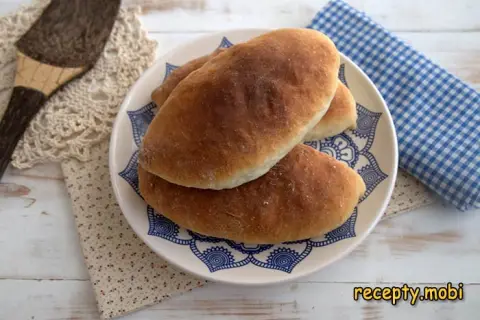
I cool the rolls and take them out of the mould (they even pop out on their own).

A cavity has formed inside each one, but there is some crumb as well.



Tips
- 1
A HIGH TEMPERATURE OF 230°C is the secret of the cavity. The sharp heat evaporates the moisture and the batter "puffs up". At a lower temperature the cavity does not form.
- 2
PRE-HEATING THE MOULDS WITH OIL is the secret of the rise. A cold mould kills the temperature. Searing-hot oil delivers a "thermal shock" that triggers the rise.
- 3
ROOM-TEMPERATURE INGREDIENTS are the secret of a uniform batter. Cold eggs give lumps. Warm ingredients give a smooth batter straight away, with no trouble.
- 4
20 MINUTES AT 230°C, 15 AT 180°C is the secret of the structure. First the "puffing up", then a gentle bake-through. A single setting leaves it either raw inside or burnt. The same principle works for other kinds of English puddings and pancake-batter rolls.
FAQ
Which moulds should I choose? +
Ideally, metal muffin moulds or special Yorkshire pudding tins (12 cups). Alternatives: ceramic muffin dishes (they heat up well in the oven), silicone moulds (but the rise is lower because of poor heat conductivity), metal cupcake moulds (ideal), a standard 12-cup muffin tray, individual cast-iron mini-pans as ramekins (one pudding each), a popover tin (popovers – the perfect Yorkshires). New cast-iron moulds with a coating are the premium option. Do not use: paper cases (they will not withstand 230°C without oil) or glass (it may crack). For the "Yorkshire classic", metal or cast iron is a must.
What can replace the milk? +
Alternatives: a mix of 50% milk and 50% water (125 ml each – the "budget" option), 10% cream diluted with water (50/50 – more tender), lactose-free milk (250 ml – for those with allergies), coconut milk (250 ml – the "vegan" option), unsweetened almond milk (250 ml – the "diet" option), buttermilk (250 ml – premium, a more pronounced rise), milk whey (250 ml – the "budget" option). Fresh whole milk is the premium option. Do not use: sweetened cartoned milk with flavourings, or condensed milk. For the "Yorkshire pudding classic", whole milk of 2.5–3.2% is a must.
How long do the puddings keep? +
In an airtight container at room temperature – 1 day (they are tastiest fresh). In the fridge – 2–3 days. Before serving, reheat them in the oven for 5 minutes at 180°C to bring back the crisp crust. In the microwave the crumb turns rubbery. In the freezer – up to 1 month; thaw for 30 minutes at room temperature, then heat in the oven. A fresh pudding is the "star" straight from the oven (hot, with an airy cavity). On the second day the flavour holds, but the "crust" loses its crispness. It is best to bake them "for a single meal".
What to serve Yorkshire pudding with? +
The British classic: with roast beef and gravy. With roasted beef or lamb. With mushroom cream sauce. With fried sausages and mash. With peas and carrots. With a Yorkshire sauce made from meat juices. With roasted vegetables. With a glass of dry red wine (Cabernet). With a dark beer (English ale). With a cup of English "Earl Grey" tea. With a milk-and-mustard sauce. With fried onions. With swede mash. For the "English Sunday roast" it is an essential classic. A versatile side dish for meat.
- Comment
or post as a guest
Be the first to comment.