
avg —
Homemade Plum Wine: A Reliable Step-by-Step Recipe

Instructions
Prepare the fruit and equipment. Sort, rinse and dry the plums. Remove every stalk and stone. Discard mouldy, rotten or leaking fruit and any plum that already smells fermented. Sanitise the fermenter, demijohn, airlock, spoon, straining bag, hydrometer and siphon.
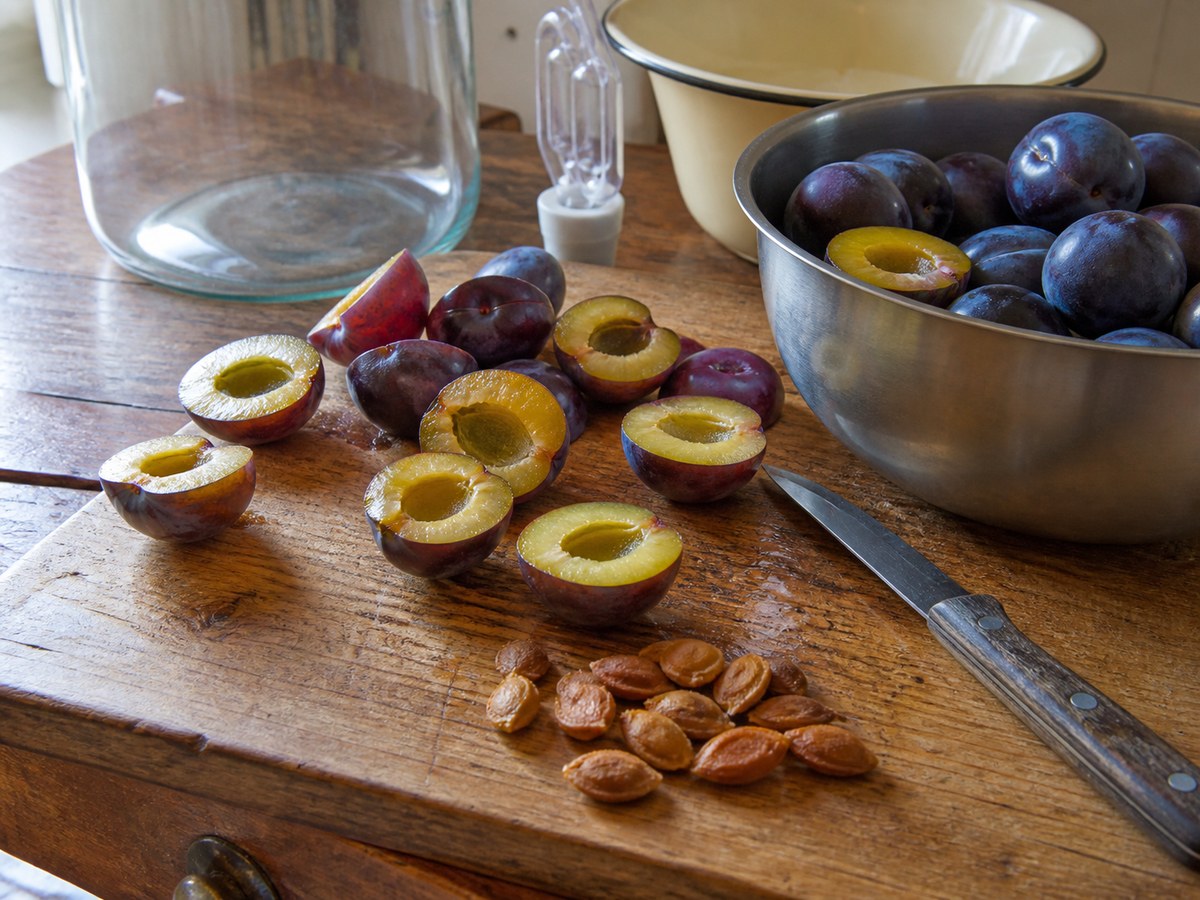
Build the must and measure the sugar. Crush 2.5 kg plums inside the straining bag and put it in the fermenter. Dissolve 900 g sugar in about 1 litre hot water, cool below 25°C and add it to the fruit. Top up with cool water to 4.5 litres. Stir and measure the specific gravity. Aim for 1.085-1.095. If it is low, dissolve and add sugar in small portions, checking again each time.
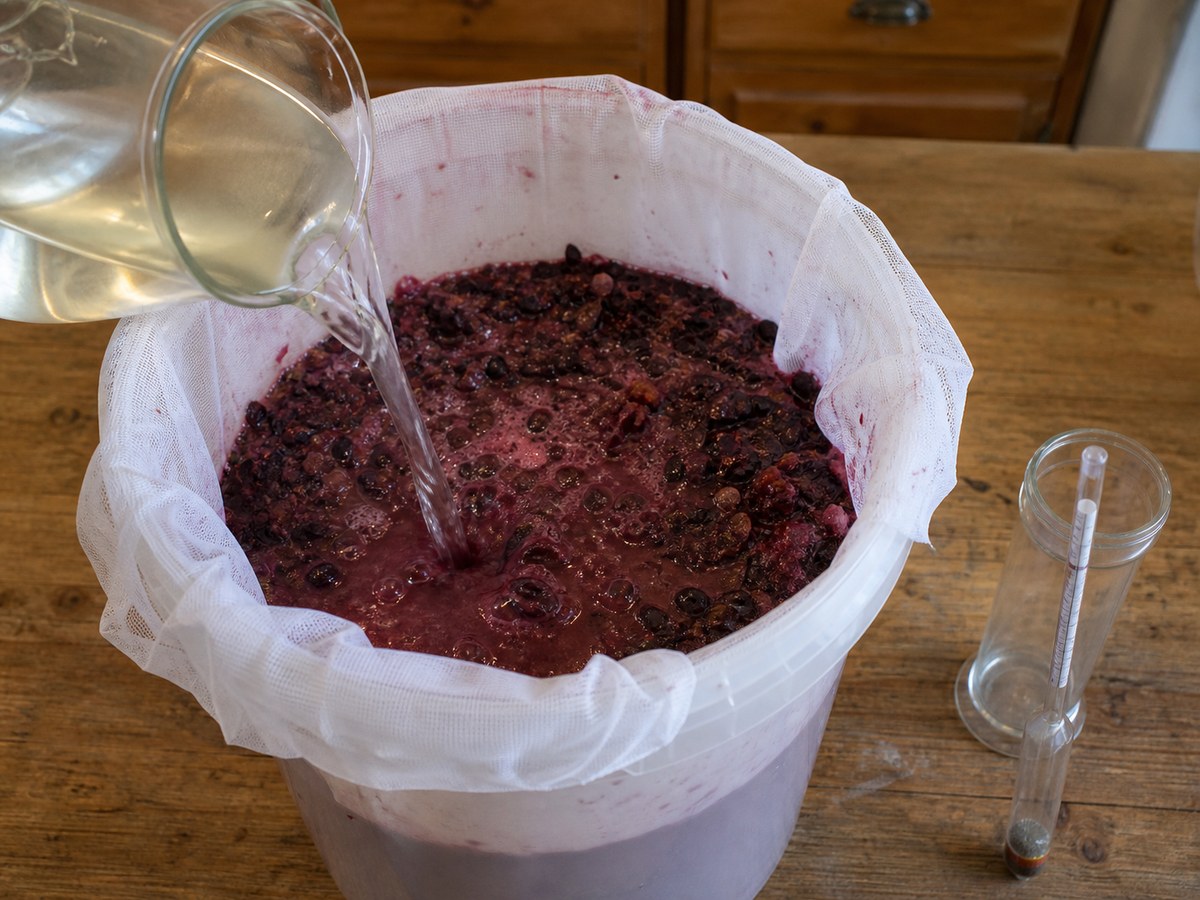
Control unwanted microbes. Crush one Campden tablet, stir it thoroughly into the must, cover the fermenter and leave it for 24 hours at 20-24°C. Add the pectic enzyme, acid blend and yeast nutrient afterwards. This sequence reduces the risk of off aromas and helps pectin-rich plum wine clear more readily.
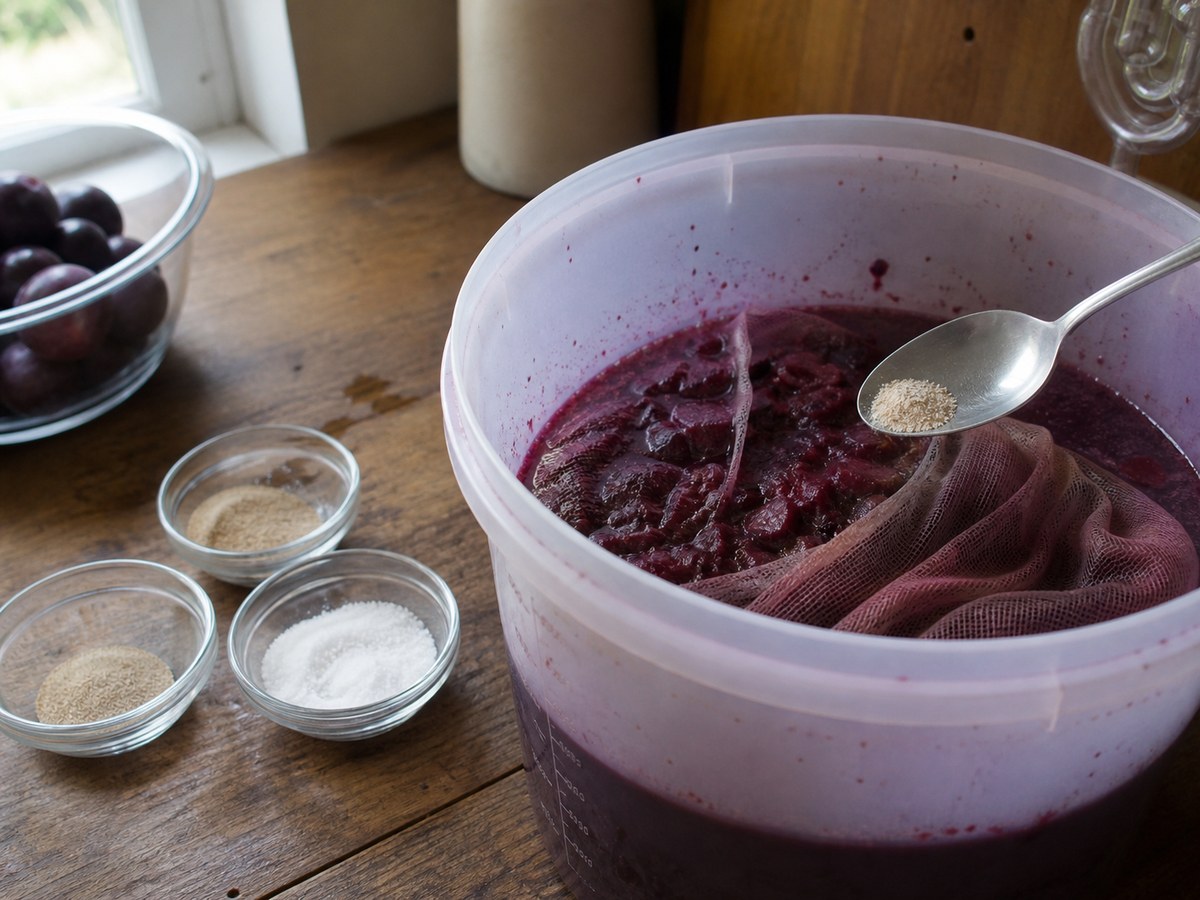
Run primary fermentation. Pitch the wine yeast according to its packet directions. Cover the fermenter, but do not seal it with an ordinary airtight lid at this stage. Keep it at 20-24°C for 5-7 days. Twice daily, push the floating fruit cap below the liquid with a sanitised spoon. Move on when gravity approaches 1.030.
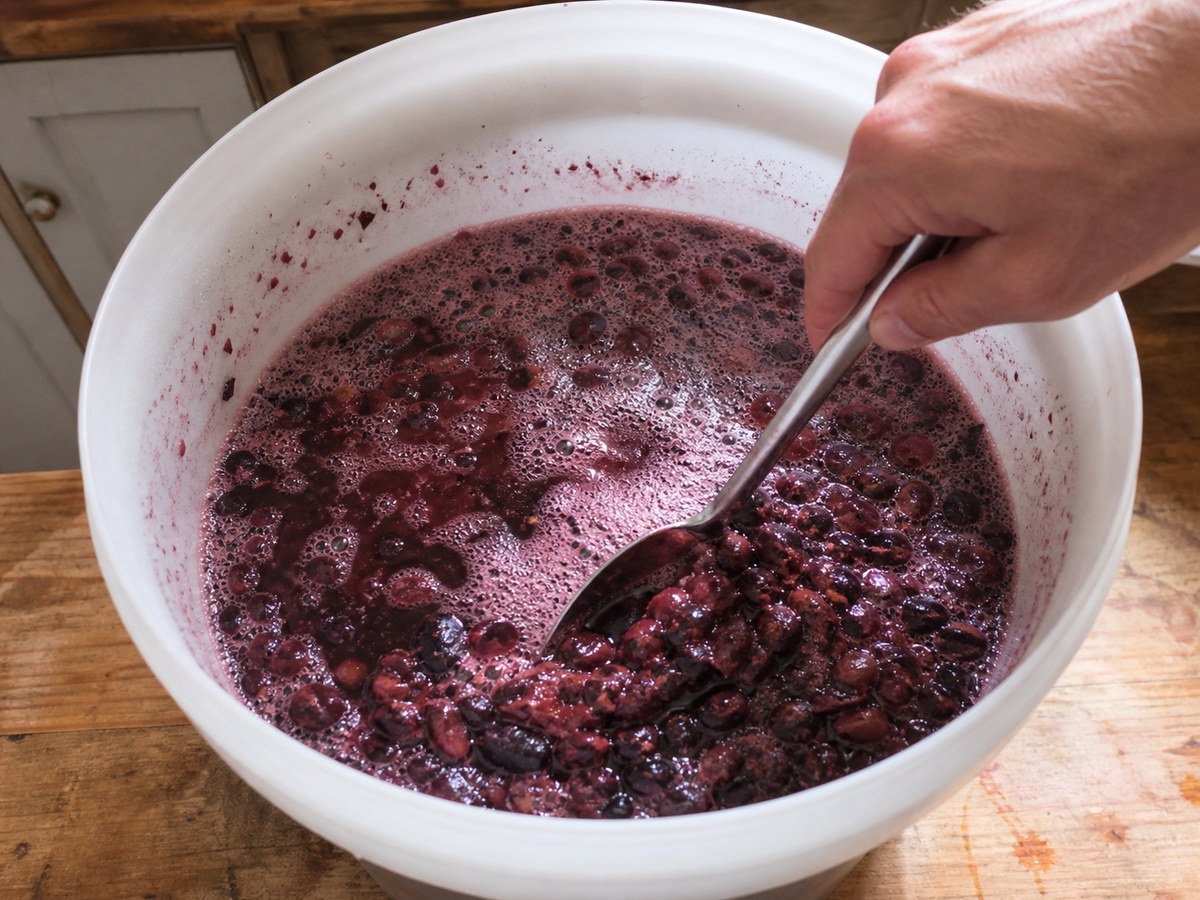
Transfer under airlock. Lift out the fruit bag and press it gently with sanitised hands or a spoon without twisting it completely dry. Transfer the must to a demijohn through a sanitised funnel or siphon. Once the foaming has eased, keep the vessel full enough to minimise headspace. Fit the airlock and ferment for 3-6 weeks.
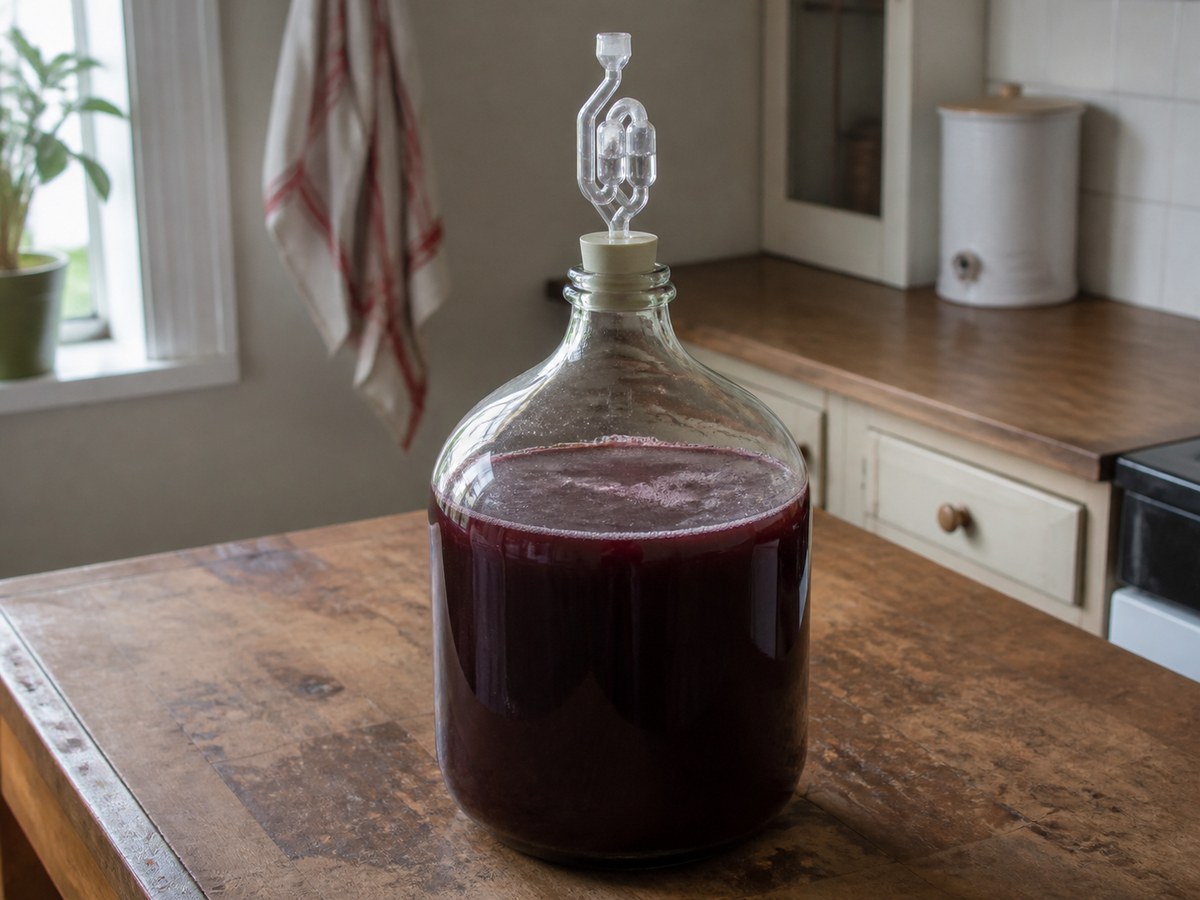
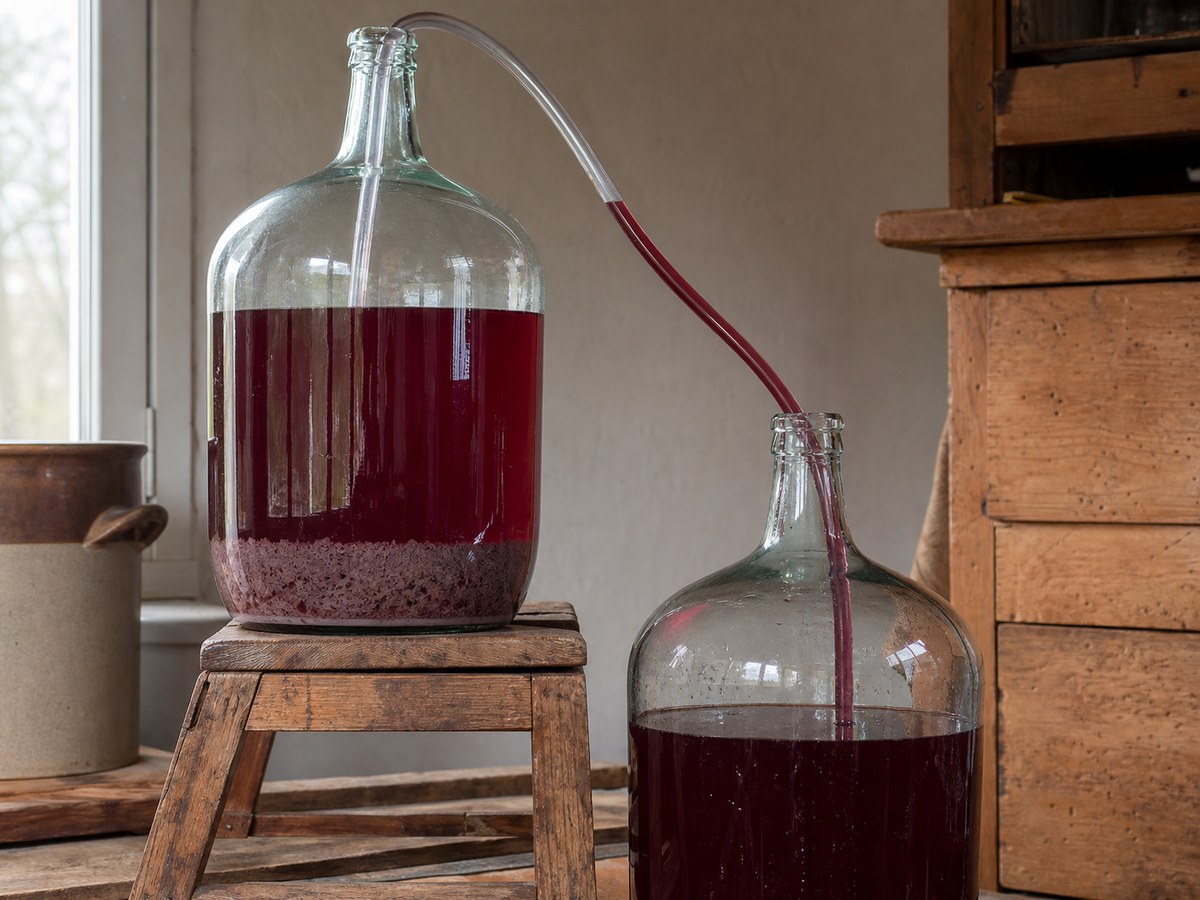
Rack off the sediment. When vigorous gas release has stopped and a compact deposit has formed, take a hydrometer reading. Siphon the young wine into a clean demijohn without disturbing the sediment. Refit the airlock and move the wine to a dark, cool place. Rack again if another substantial layer forms after 4-8 weeks.
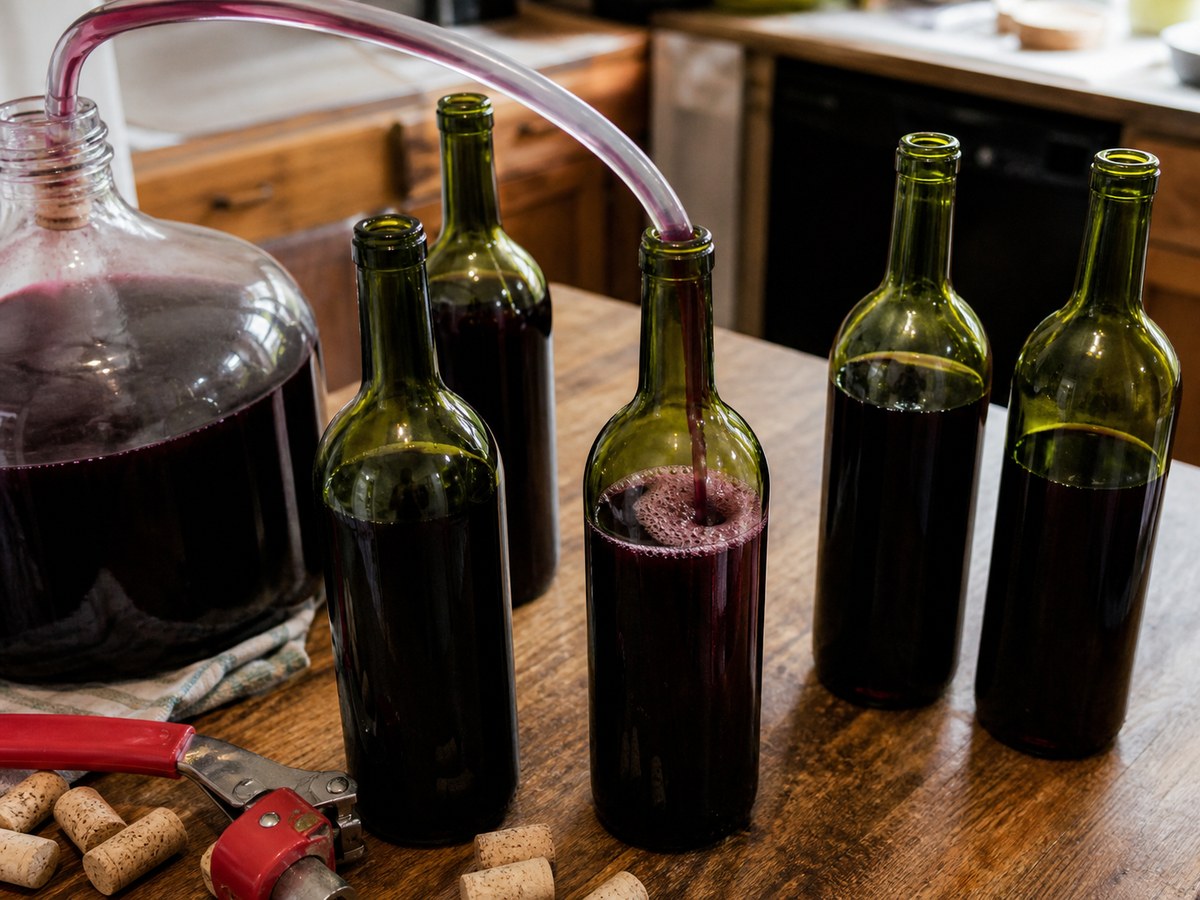
Confirm and bottle. Bottle only when the wine is visibly clearer and its gravity is below 1.000 and unchanged for at least 3 days. Siphon into bottles, leaving 2-3 cm below each closure. Keep corked bottles upright for 3-5 days, then store at 10-15°C in darkness. Mature for at least 2 months after bottling, although 6 months produces a rounder flavour.


Equipment
- 7-10 litre primary fermenter with a lid;
- 5 litre glass demijohn, bung and airlock;
- coarse nylon straining bag for the fruit;
- wine hydrometer and a tall trial jar;
- food-safe siphon, long spoon, scales and measuring jug;
- five 750 ml wine bottles with suitable closures.
Clean and then sanitise everything that will touch the cooled must or wine. Follow the contact time and dilution stated on the food-safe sanitiser. Equipment that looks clean is not automatically sanitised.
Three hydrometer readings that matter more than the calendar
| Stage | Specific gravity | Action |
|---|---|---|
| Before pitching yeast | 1.085-1.095 | Adjust sugar and record the value |
| End of fruit fermentation | About 1.030 | Remove the pulp and fit the airlock |
| Before bottling | Below 1.000 and stable for 3 days | The dry wine can be bottled |
Airlock bubbles show only that gas is escaping. They may stop because a bung leaks or the room becomes cooler even while yeast is still active. Base every transfer and bottling decision on gravity rather than a glove, taste or a fixed number of days.
How to estimate the alcohol content
Record the original gravity before pitching the yeast and the final gravity before bottling. A useful approximate ABV formula is the difference multiplied by 131.25. For example, an original gravity of 1.090 and a final gravity of 0.995 indicate roughly 12.5% alcohol.
This is an estimate rather than a laboratory measurement. Do not keep adding sugar in an attempt to maximise strength. Excessive starting sugar stresses yeast and can leave a stuck, overly sweet wine.
Why cultured yeast is more reliable than wild fermentation
Many simple recipes leave plums unwashed to preserve yeast on the skins. That also carries acetic acid bacteria, mould spores and unknown yeast strains into the must. Cultured wine yeast is selected for predictable fermentation and alcohol tolerance, so the fruit can be washed properly. Careful sanitation and a measured Campden addition make the batch far less dependent on luck.
Why plum wine can stay cloudy
Plums are rich in pectin, so young wine may retain a haze after fermentation stops. Pectic enzyme works best before the yeast is pitched, when the must does not yet contain alcohol. After that, time, cool storage and careful racking do most of the work. Do not shake the demijohn before racking and never boil wine to force it clear.
Common problems
| Problem | Likely cause | Response |
|---|---|---|
| No fermentation after 36 hours | Cold must, old yeast or excessive gravity | Check 20-24°C, the gravity and the yeast instructions |
| Sharp vinegar or solvent aroma | Contamination or excessive oxygen | Do not hide it with sugar and discard any mouldy batch |
| Gravity stalls above 1.010 | Low temperature or undernourished yeast | Warm gently and check the nutrient and yeast guidance |
| Wine darkens after racking | Oxidation from excess headspace | Use a smaller vessel and siphon without splashing |
Safety and storage
- Never use mouldy plums. Cutting away the visible patch is not sufficient.
- Do not close actively fermenting must with an ordinary airtight lid. Carbon dioxide must escape through an airlock.
- Do not bottle wine while gravity is changing. Pressure can eject a closure or break the bottle.
- If fuzzy mould, coloured islands or a rotten aroma appears, do not taste the batch and discard it.
- Store finished wine in darkness at 10-15°C. Refrigerate an opened bottle and use it within 3-5 days.
- This alcoholic drink is for adults only. Never drink before driving.
Serving suggestions
Dry plum wine pairs with duck, pork, mature cheese and roasted vegetables. A slightly off-dry version also works with fruit pastries. Use the rest of the crop for pitted plum jam, plum tkemali or marinated plums.
How this recipe was developed
The method combines the questions addressed by popular beginner recipes with measurable fruit-wine practice. It specifies the stoned fruit weight, must volume, original and final gravity, fermentation temperature, pulp-removal point, racking method and a clear bottling criterion.
Recipe video: How to make homemade plum wine
Important: The video complements the recipe. Quantities and timing are given in the article.
The photos were created with AI as a visual guide.
FAQ
Can plum wine be made without wine yeast? +
Wild yeast on plum skins may start fermentation, but the result is unpredictable. Cultured wine yeast gives a more reliable fermentation and allows the fruit to be washed and damaged plums to be discarded.
Should plums be washed before winemaking? +
Yes when cultured wine yeast is used. Rinse the fruit in cool water, dry it and discard every mouldy, rotten, leaking or already fermenting plum.
Why should plum stones be removed? +
Stones complicate clean pressing and may contribute a harsh bitterness if they are accidentally cracked. Ferment only the flesh and skins and never crush the kernels.
How do I know fermentation has finished? +
The hydrometer reading should remain unchanged for at least 3 days and be below 1.000 for a dry wine. A silent airlock is not proof because the lid or bung may leak.
Why does plum wine remain cloudy? +
Plums contain plenty of pectin. Pectic enzyme, careful racking and patient maturation help the wine clear, but the process can still take several months.
Can I use a glove instead of an airlock? +
A glove can work, but an airlock releases gas more predictably and protects the must from oxygen more effectively. If used, the glove must be food-safe, clean and pierced once with a fine needle.
How is plum wine strength estimated? +
Record the original and final gravity. A useful estimate is the difference multiplied by 131.25. Readings of 1.090 and 0.995 give approximately 12.5% ABV.
When is plum wine safe to bottle? +
Bottle only after fermentation is complete, gravity is stable and the wine has cleared. Premature bottling can build enough pressure to push out corks or break bottles.
- Comment
or post as a guest
Be the first to comment.