avg —
Strawberry Compote for Winter (without Sterilization)

Instructions
Medium-sized berries are ideal for compote canning. I choose varieties with an intense strawberry smell – it will carry through to the finished compote.
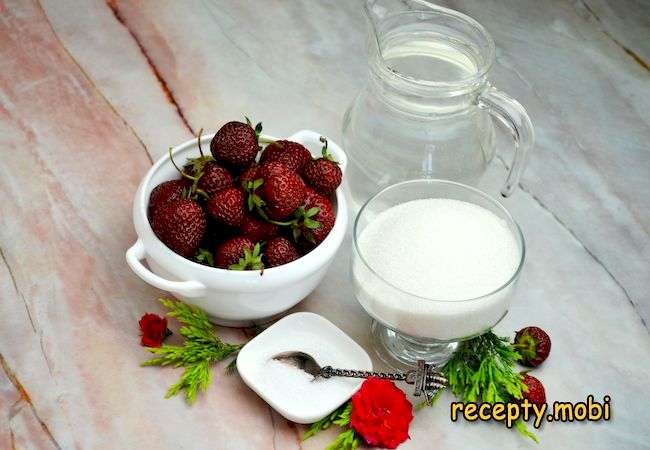
I wash and sort the strawberries. I throw out both the overripe berries (they can turn mouldy) and the unripe ones (they will spoil the taste).
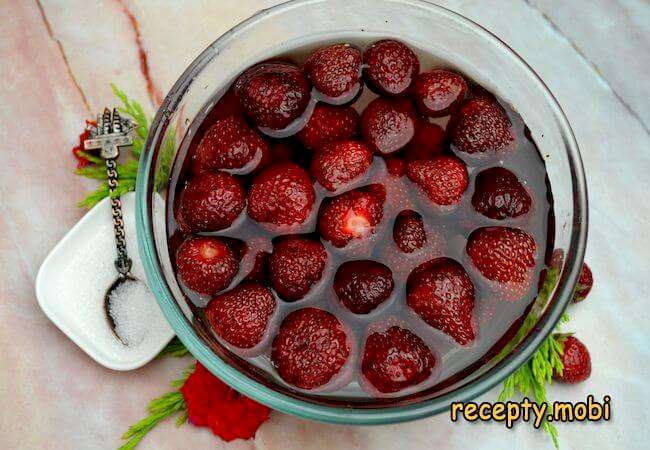
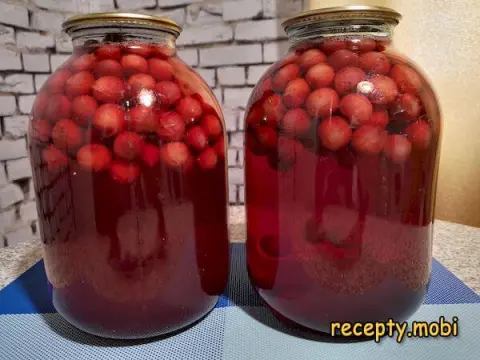
I sterilize the three-litre jar in advance and tip the strawberries into the prepared dry container. The jar must be dry – drops of water would "dilute" the syrup.
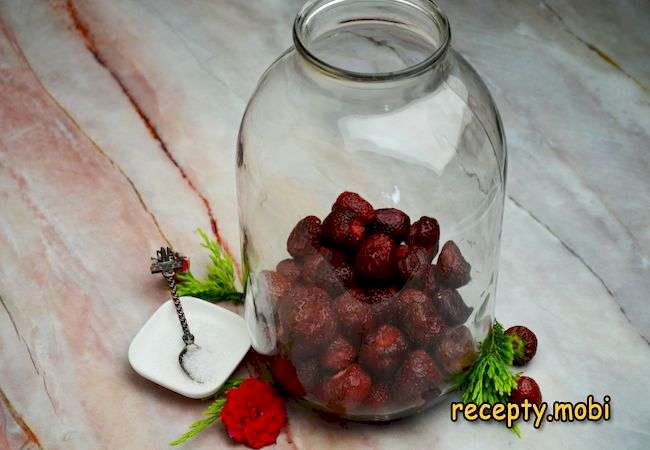
I tip the weighed sugar into a pot. Accurate scales are the key to success: too little and the compote will go sour, too much and it will be cloyingly sweet.
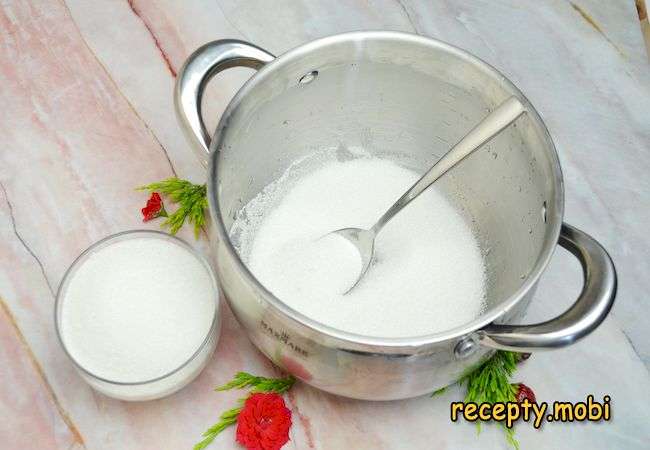
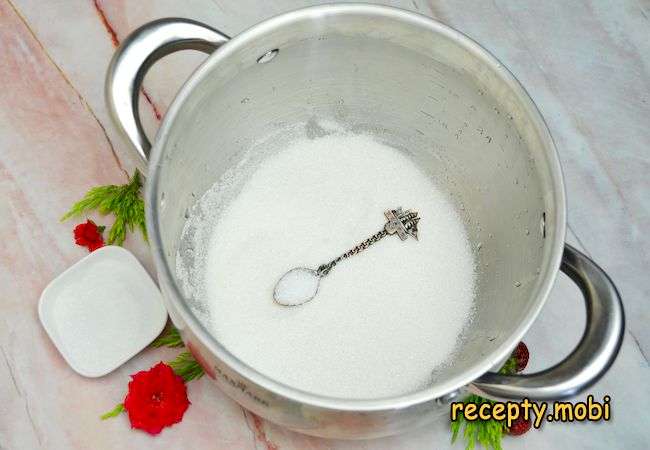
I measure out exactly the right amount of citric acid (5 g is about one level teaspoon). I mix the acid with the sugar.
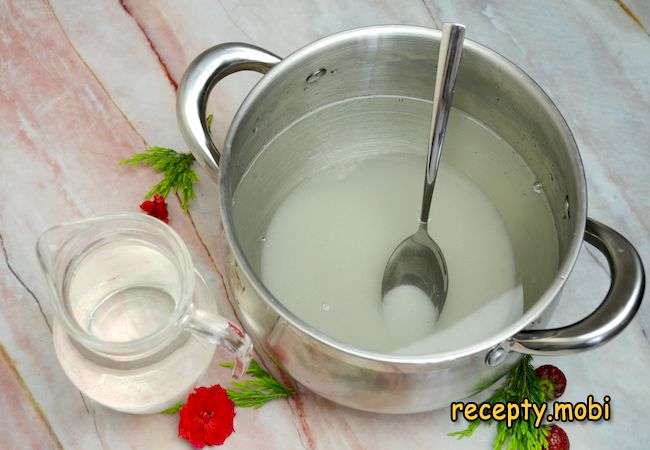
I add cold water and put the pot over high heat. I boil the sugar-and-citric-acid syrup for 3 minutes – the sugar dissolves completely.
The jar should stand on a metal trivet while I fill it with the hot syrup – otherwise the sudden change in temperature could crack the glass. So that the boiling syrup does not damage the glass, I first pour in only 1 litre. I cover the jar with a lid and leave it to warm through for 1 minute. Meanwhile I keep the pot of syrup on the lowest possible heat. Then I pour in the rest of the syrup – the liquid should reach the shoulders of the jar.
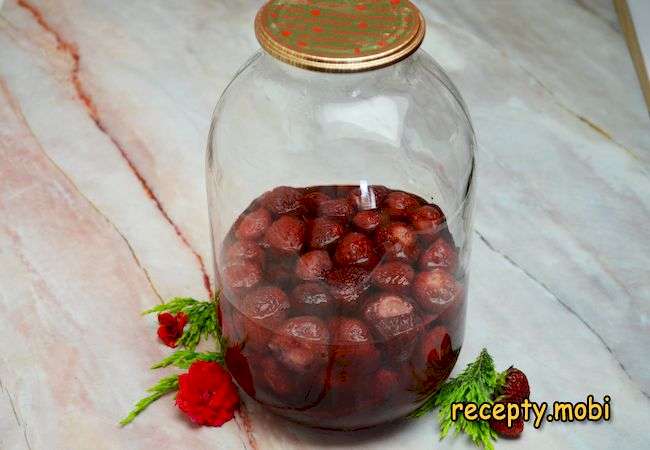
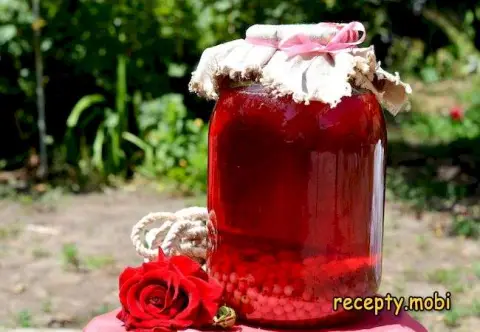
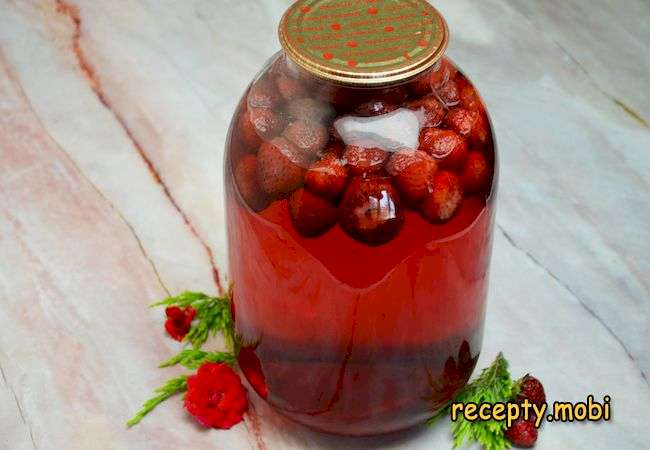
I seal the compote with a sterile lid. The liquid takes on a "strawberry" colour straight away, while the berries lighten a little – they give up their pigment to the syrup.
I carefully turn the jar upside down (to check the seal is airtight). I cover the preserve with a thick blanket and leave it for 12 hours – this is the "heat treatment" that takes the place of sterilization.
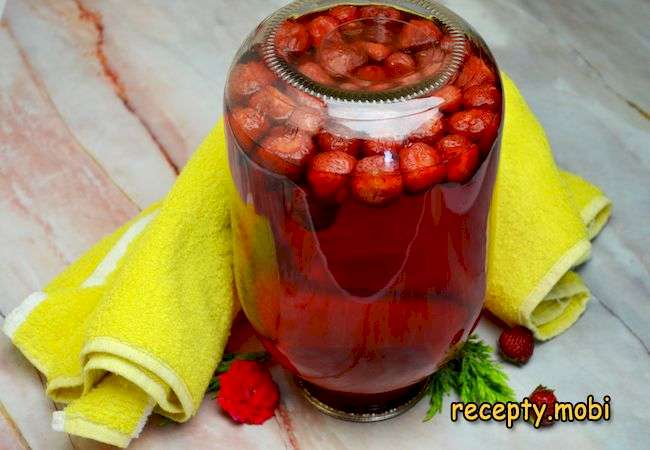
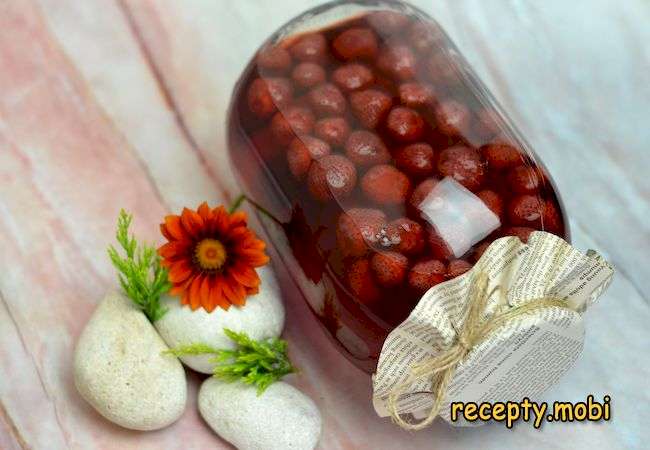
The strawberry compote for winter without sterilization is ready. Once it has settled, the colour becomes more saturated. I move the jar of cooled compote to the cellar. The strawberry compote keeps for 1 year.


Tips
- 1
Use medium-sized strawberries – small ones will "drown" in the syrup, and large ones do not cook through well under the boiling syrup. Medium is the "happy medium".
- 2
Stand the jar on a metal support (a knife, a bunch of keys) before pouring in the syrup – this spreads the heat and lowers the risk of cracking.
- 3
Pour the syrup in two stages – 1 litre, a one-minute pause, then the rest. Without this the jar will crack from the sudden overheating.
- 4
Keep the jar under the blanket for 12 hours MINIMUM – this takes the place of sterilization. I use the same "heat treatment" method for other berry preserves without sterilization too.
Video

FAQ
Can I make it without citric acid? +
I would not recommend it for long storage. Citric acid is a natural preservative that protects against botulism and mould. Without it the compote will only last 3–4 months in the fridge (not in the larder). Substitutes: lemon juice (the juice of a whole lemon per jar), dried rosehips (2–3 will add a little sharpness and some vitamins), apple cider vinegar (1 tsp – though an aftertaste may linger). Citric acid is cheap, easy to find and indispensable in preserving – do not skimp on it.
Why did my compote turn out cloudy? +
There are three reasons: the berries were poorly washed (tiny particles of dirt), the jar was not properly sterilized, or the lid did not seal tightly (air got in). You must NOT drink a cloudy compote – it is a sign of fermentation or spoilage. How to avoid it: wash the berries thoroughly (you can soak them for 10 minutes in cold water and rinse them several times), sterilize the jar for 15 minutes over steam or in the oven at 120 °C, and use ONLY new lids (old ones with a damaged seal will not close airtight).
How long does the compote keep? +
In a cellar or cool larder (10–15 °C) – up to 12 months. In a warm flat at room temperature (20–25 °C) – 6 months. In the fridge after opening – 5 days. Signs of spoilage: a cloudy syrup, a bulging lid, a sour smell or "hissing" when you open it. Do not try to "revive" a compote that has gone off – it is a health risk. Make plenty of jars at once – the effort of putting it up pays off in full come winter.
Can I add other berries? +
Yes, strawberries combine wonderfully. Options: strawberry + raspberry 50/50 (a classic), strawberry + blackcurrant (a brighter colour), strawberry + mint 2–3 sprigs (freshness), strawberry + redcurrant (sharper), strawberry + blackberry (a deeper colour). Keep the total weight of berries the same – 2 cups per 3-litre jar. Different berries give different flavour combinations; you can make 5–6 different jars in a single batch and taste them one by one in winter. For something exotic: strawberry + basil, 5 leaves – unusual, but tasty.
- Comment
or post as a guest
Be the first to comment.