avg —
Kvas from Chicory at Home

Instructions
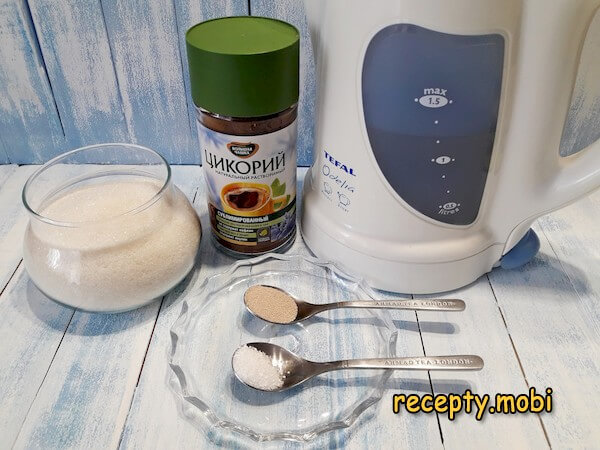
I prepare the ingredients for the chicory kvas. The boiled water should be warm, about 38 degrees, so the yeast activates in a comfortable environment and gets to work. The amount of sugar indicated makes the drink moderately sweet, just like barrel kvas used to be. The citric acid is needed not only to improve the flavour – it also helps the fermentation process along.
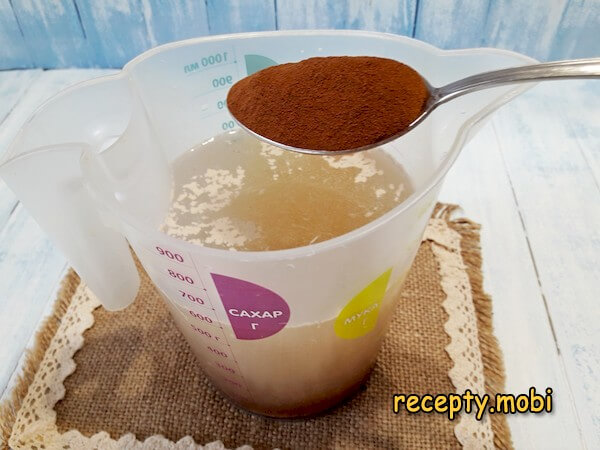
I pour 700 millilitres of water into a container that is convenient for stirring. I dissolve the yeast in it and add the chicory powder.
I add all the sugar and the citric acid to the same container.
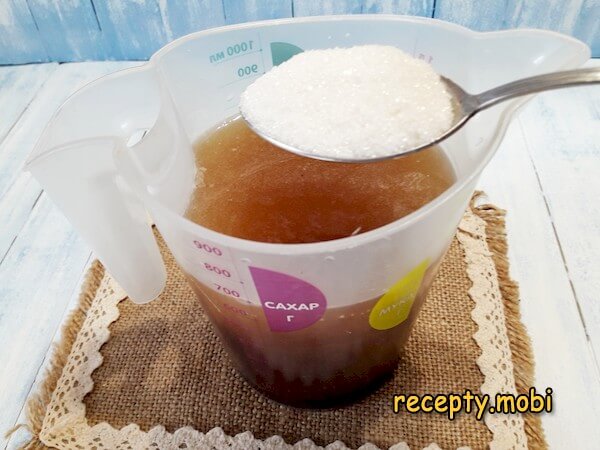
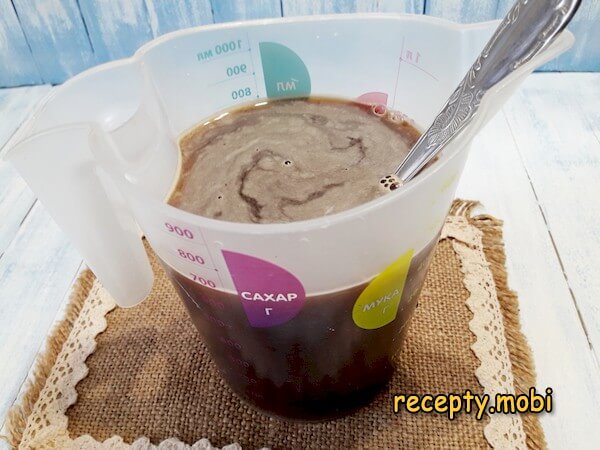
I stir the mixture with a spoon until all the ingredients have completely dissolved in the water.
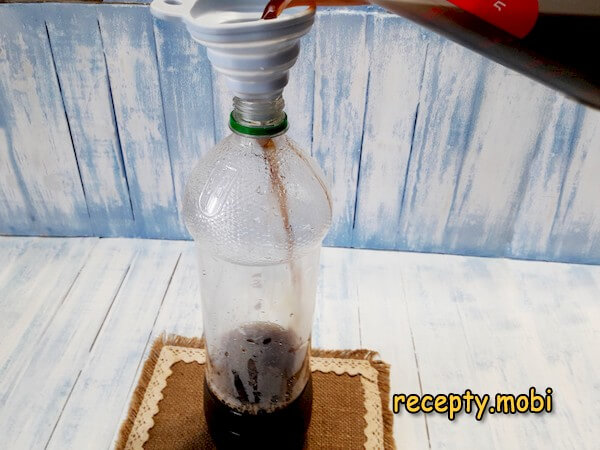
I fit a funnel into the neck of the bottle and pour the prepared solution into it.
Next I top it up with warm water, but not right to the top.
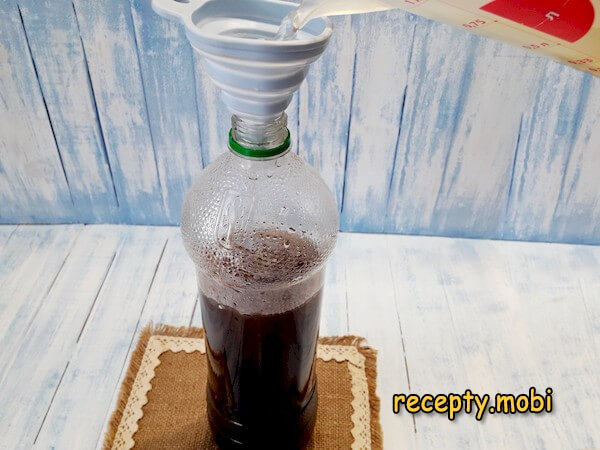
I leave about 7 centimetres up to the neck.
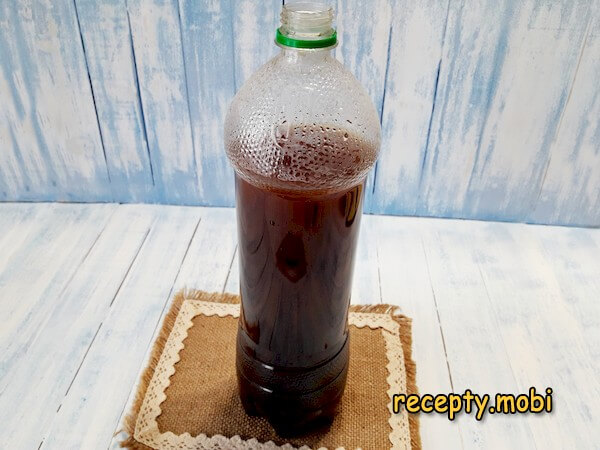
While the bottle is still open, I squeeze it with my hand so the drink rises right to the top, and in that state I screw the cap on very tightly – this is very important. Now it is best to leave the dented bottle in the sun for about 4 hours. If the weather is overcast, I wrap the bottle in a towel and put it somewhere warm (this could be the top shelf of a cupboard).
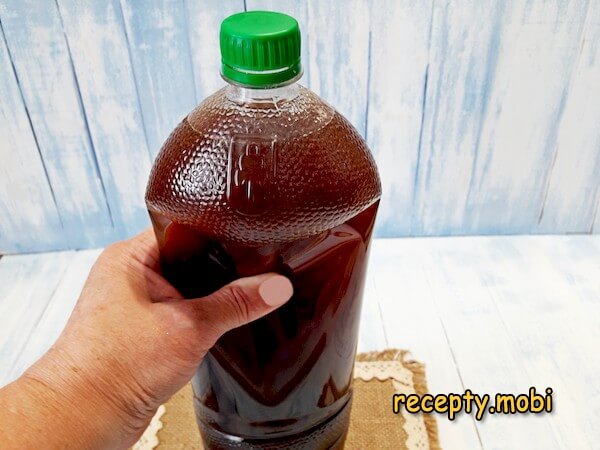
In the sun the process goes faster, but in any case I check the bottle after 4 hours. As soon as it straightens out and swells up, which shows there is a lot of gas inside, I move the bottle to the refrigerator for at least half an hour (I do not open the cap yet).
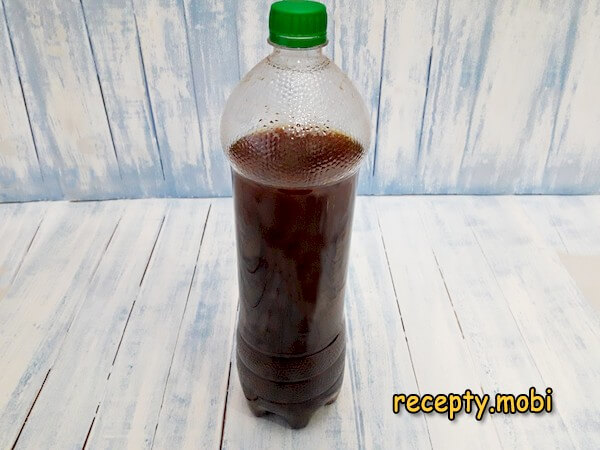
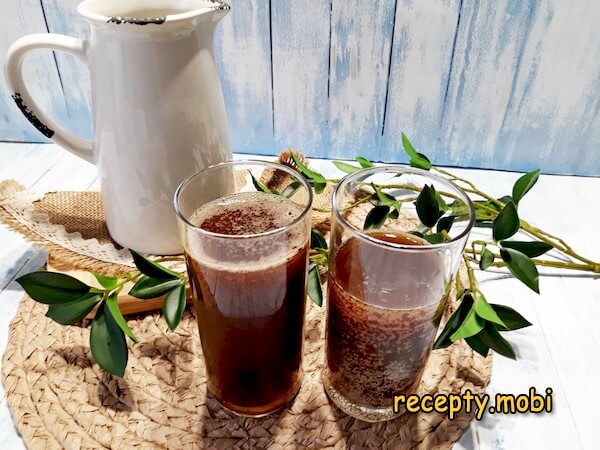
Once all the stages of preparation are complete, the kvas from chicory at home is ready. This invigorating, carbonated, genuinely delicious and wonderfully thirst-quenching drink will definitely be indispensable in hot weather.


Tips
- 1
Water at 38 °C is the secret to the yeast. With cold water the yeast stays dormant and fermentation will not start. Water that is too hot (above 50 °C) will kill the yeast. Only around 38 degrees gets it working actively.
- 2
The squeezed bottle is the secret indicator. Leaving open space at the top drags the process out. Squeeze the plastic bottle and it will tell you itself when the kvas is ready, straightening out as it fills with gas.
- 3
Citric acid is the secret to the barrel flavour. Without the acid the kvas is sweet and bland. Half a teaspoon gives it that characteristic tang and helps the fermentation.
- 4
Chilling under the cap is the secret to the fizz. Open the warm bottle and the kvas will go flat. Thirty minutes in the refrigerator with the cap on keeps the gas in and the kvas sparkling. The same principle works for other kinds of home-made carbonated drinks.
FAQ
Which chicory should you choose? +
Ideally, 100% natural ground chicory (2 tablespoons – the "classic" choice). Alternatives are: instant chicory (2 tablespoons – the "budget" option), freeze-dried chicory (2 tablespoons – the premium option), chicory with additions such as ginger or rosehip (2 tablespoons – "extended flavour"), freeze-dried chicory granules (2 tablespoons – "classic"), liquid chicory concentrate (1 tablespoon – premium), and dried chicory root (3 tablespoons – the "home farmhouse" option). Fresh ground chicory from an organic shop is a premium choice. Do not use chicory with artificial flavourings or chicory that is past its date (it turns bitter). For the "classic" result, be sure to use natural chicory with no added sugar.
Can the yeast be replaced? +
Alternatives are: fresh pressed yeast (5 g – "classic"), bread yeast (0.5 teaspoon – "classic"), brewer's yeast tablets (3 tablets – "diet"), dry kvas starter (1 tablespoon – premium), 5 raisins and nothing else for wild fermentation (the premium route), kefir grains (1 teaspoon – which makes a different drink), and a ready-made kvas starter (1 sachet – "convenient"). Wild yeast on raisins is a premium option. Do not use liquid brewer's yeast (it adds bitterness) or yeast that is past its date (the kvas will not ferment). For the "classic" result, be sure to use dry fast-acting yeast.
How long does chicory kvas keep? +
In the refrigerator, in a tightly closed bottle, it keeps for 3–4 days. Any longer and the kvas over-ferments and turns vinegary and sour. Chill it further before serving. On the second day the flavour becomes richer as fermentation slowly continues. I do not recommend the freezer, as the plastic bottle will burst from the expansion. Fresh, after 30 minutes of chilling, it is at its "star" best (maximum fizz and freshness). Do not leave it at room temperature for more than 8 hours after making it, or the fermentation process will continue. It is ideal to make it "for 2–3 days".
What do you drink chicory kvas with? +
The summer classic is with fresh mint and a slice of lemon. With ice in the glass. With basil for a spicy note. With thin strips of fresh ginger. With slices of cucumber for freshness. With cold okroshka (as the liquid base). With salted fish. With cured meat. With baked ham and horseradish. With belyashi and pirozhki. With pelmeni and vareniki. With cold borscht (instead of sour cream). With a slice of black bread and butter. With pickled cucumbers. With radishes and salt. With a meat roast. For a "summer picnic" it goes with everything. A refreshing, alcohol-free kvas for the beach, the dacha and sports games.
- Comment
or post as a guest
Be the first to comment.