avg —
Non-Alcoholic Mulled Wine

Instructions
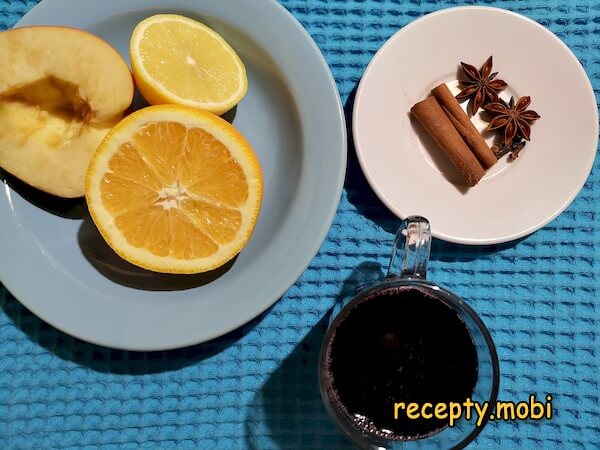
I prepare the ingredients needed for the non-alcoholic mulled wine with grape juice. You can adjust the amount of spices to your taste. There's no need to peel the fruit. I cut out the core of the apple.
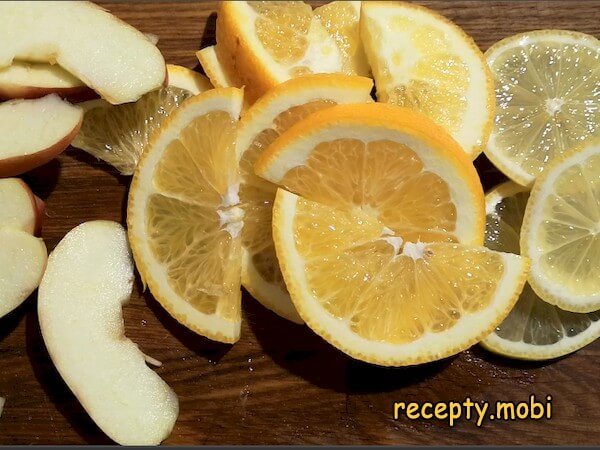
I cut the lemon and orange into rounds, with the peel left on. Then I cut these rounds in half again. If the lemon is small, there's no need to cut its rounds. I cut the apple into small wedges.
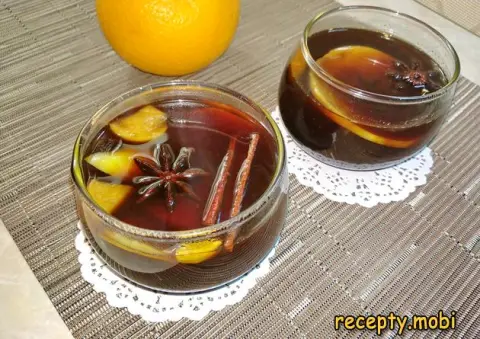
I put the prepared fruit into a pot and add the star anise, cinnamon sticks and clove buds. You can adjust the amount of spices and fruit to your taste.
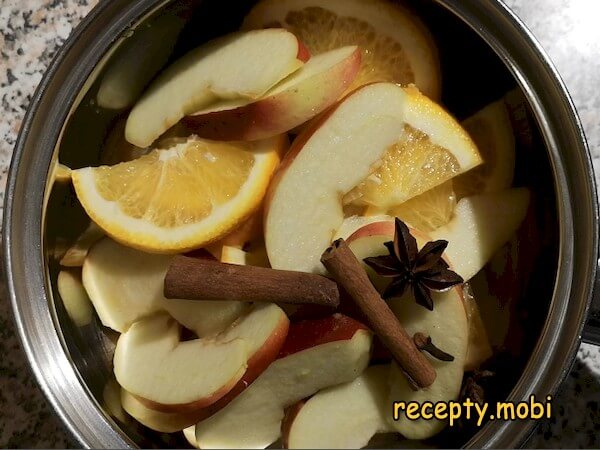
I pour in 700 millilitres of grape juice.
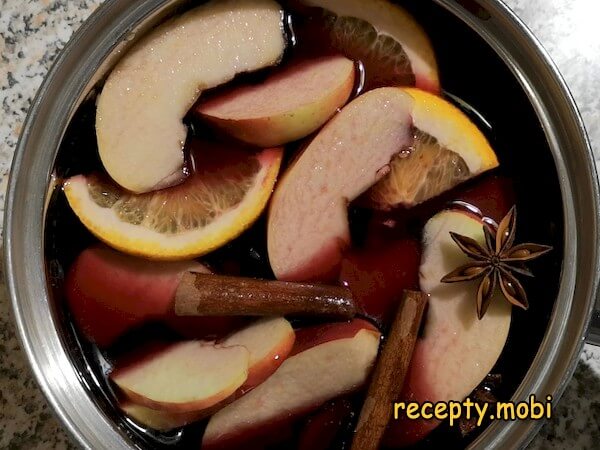
I place the pot on the stove, set the heat to below medium and, stirring occasionally, bring the contents to the boil. I cook the non-alcoholic mulled wine at a gentle simmer for 1–2 minutes.
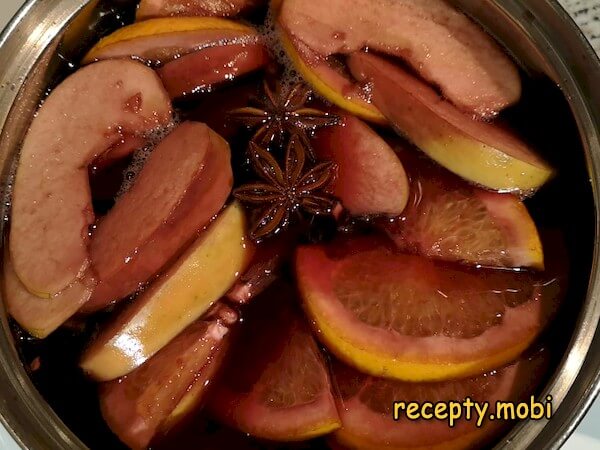
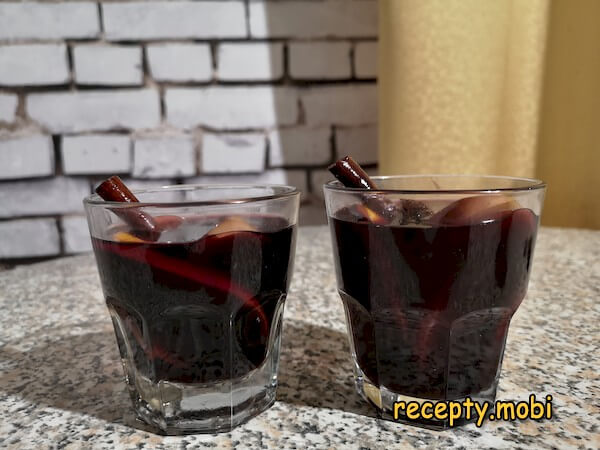
The warming homemade non-alcoholic mulled wine is ready. You can strain the finished mulled wine through a sieve if you wish, or leave it unstrained. The fruit and spices will look striking in the glasses.


Tips
- 1
Don't boil it for long – this is the secret to the aroma. Once it comes to the boil, give it only 1–2 minutes over low heat. Any longer and the volatile spice oils escape, and the aroma is lost.
- 2
Fruit with the peel on – this is the secret to the flavour. Citrus zest contains essential oils that give their aroma to the drink. Peeled fruit gives only juice without the aroma.
- 3
Whole spices – this is the secret to clarity. Ground cinnamon and cloves leave a cloudy sediment. Sticks and buds give a clear drink with a rich aroma.
- 4
Grape juice – this is the secret to imitating wine. Red grape juice resembles wine in colour and richness. It suits children, pregnant women and those who are driving. The same principle works in other kinds of warming non-alcoholic drinks.
Video

FAQ
Which grape juice should I choose? +
Ideally – a natural cold-pressed juice from red grapes with no added sugar (700 ml). Alternatives: clarified juice from dark grapes (700 ml – the "budget" option), a "black grape" nectar juice (700 ml – milder), a 50/50 blend of grape and apple juice (350 ml of each – an interesting flavour), cherry juice (700 ml – brighter and more sour), pomegranate juice (700 ml – the premium choice, more astringent), or blackcurrant juice (700 ml – a "wintry" variant). Freshly squeezed grape juice is the premium option. Don't use: juices with a lot of sugar (too sickly), or nectars made with water and colourings. For the "classic" version – a natural red grape juice is a must.
What can I use instead of star anise? +
Alternatives: ground star anise (1/4 tsp – the closest match to whole star anise), anise seeds (2 tsp – brighter), fennel seeds (1 tsp – milder), a whole vanilla pod (1/2 pc – gentler, without the aniseed note), green cardamom seeds (3–4 pods – the premium choice), a 1:1 mix of cinnamon and anise (twice the amount – similar to five-spice), or coriander seeds (5 seeds – a spicy accent). Fresh star anise stars are the premium option. Don't use: ground star anise (it leaves sediment), or artificial flavourings. For the "classic mulled wine" – whole star anise stars are a must.
How long does mulled wine keep? +
In the fridge, in a covered pot – 1–2 days. Any longer and the fruit will give off bitterness and the spices will over-saturate the drink. Before serving – warm it over low heat for 3–5 minutes (don't boil it, or the aroma will evaporate). You can also heat it in the microwave for 1–2 minutes. I don't recommend the freezer – the fruit will break down the texture. Fresh mulled wine is at its "best" straight from the pot (hot and aromatic). On the second day the flavour is deeper, as the spices have steeped more strongly. Don't leave it at room temperature for more than 4 hours with the fruit in it – it may start to ferment.
What can I serve non-alcoholic mulled wine with? +
A classic for a winter evening: with a cinnamon bun or a strudel. With ginger biscuits (a Christmas option). With a slice of homemade pie. With a cheese platter. With sliced jamón or prosciutto. With baked apples with cinnamon. With chocolate cake or brownies. With cheesecake. With vanilla ice cream (a hot/cold contrast). With tart mandarins or a slice of fresh orange. With nut biscuits. With gingerbread. With a piece of dark chocolate. For a "Christmas dinner" – it's a versatile drink. A warming non-alcoholic drink for the cold time of year.
- Comment
or post as a guest
Be the first to comment.