avg —
Apricot Jam with Kernels

Instructions
I prepare the ingredients. Sugar quantity determines after pitted-apricot weight: half the apricot weight (minimum, for sweet "Medovy" variety); up to 1:1 ratio for less-sweet varieties. Jars and lids sterilise in advance.
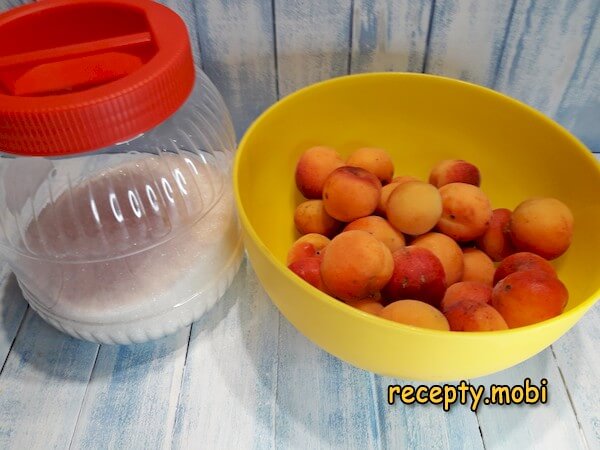
Apricots rinse gently — gentle pressure to avoid skin bursts. Split each fruit in half, remove pit (save pits for kernels later).
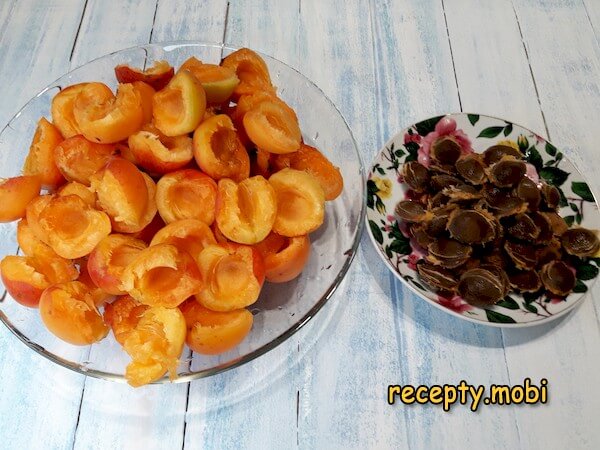
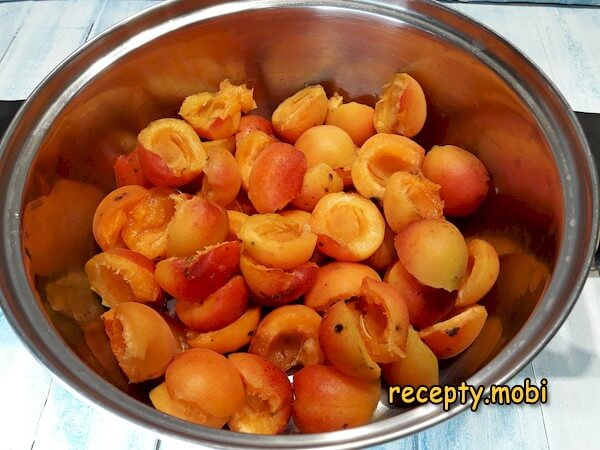
Apricot halves transfer to the cooking pot. Weigh — example: 630 g cleaned, so 315 g sugar (half-weight ratio).
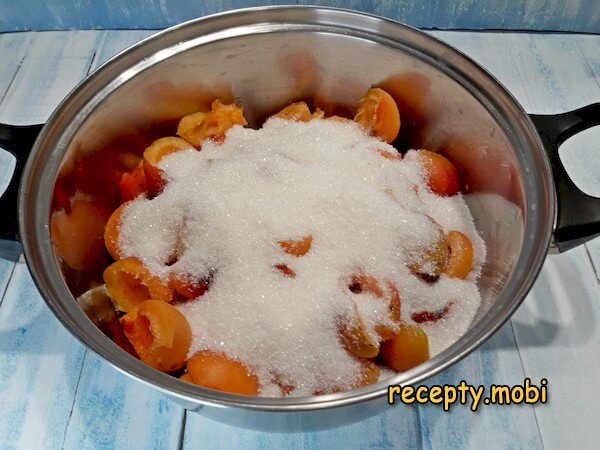
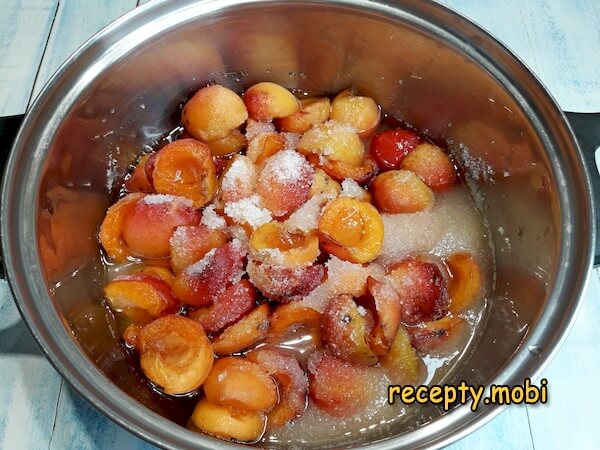
Sprinkle apricots with sugar. Rest at room temperature 4 hours — juice releases, sugar partly dissolves.
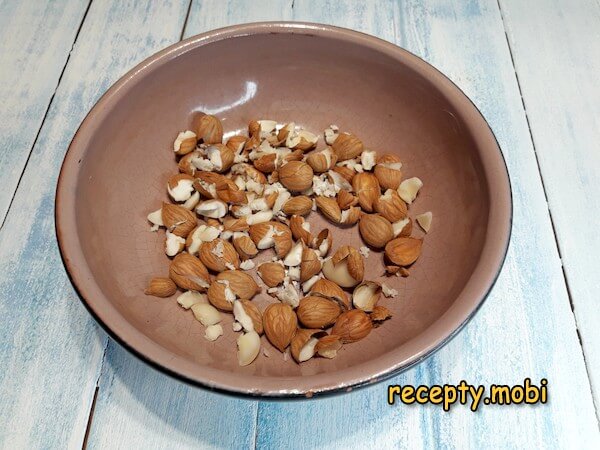
Meanwhile, dry the pits in oven or skillet. Crack to extract kernels. Some apricot varieties have very hard pits — needs hammer or nutcracker.
After 4 hours, apricots have released enough juice. Pot ready for stove.
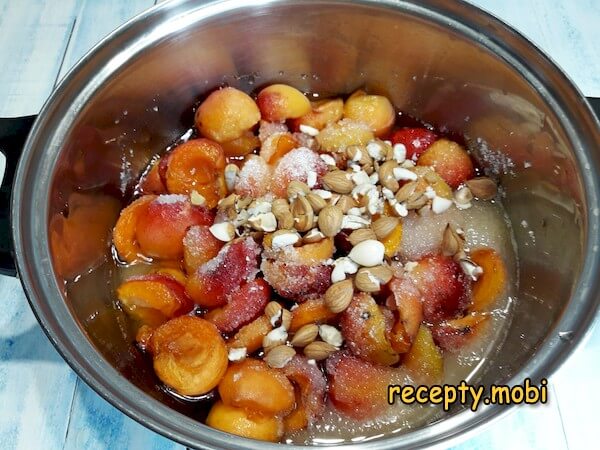
Kernels add to the pot. Cooking begins.
Heat slightly below medium for sugar dissolution. NO spoon-stirring (breaks apricot halves) — instead, swirl the pot gently to circulate. Skim foam as it rises. Once boiling, cook 5 minutes.
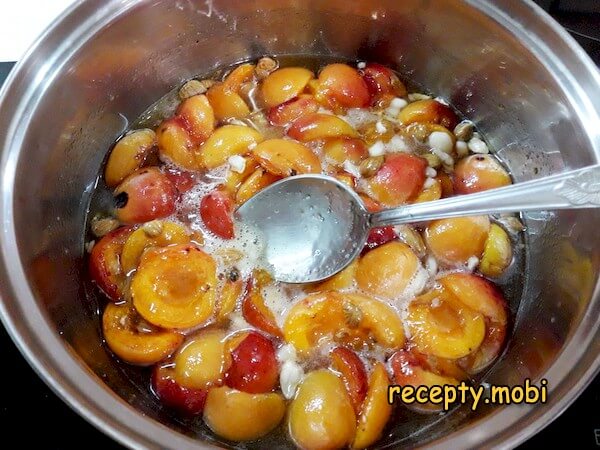
Off heat. Cool naturally 4 hours — apricots absorb syrup, syrup thickens. Then return to heat: boil again 7-10 minutes, skimming foam, swirling pot to mix.
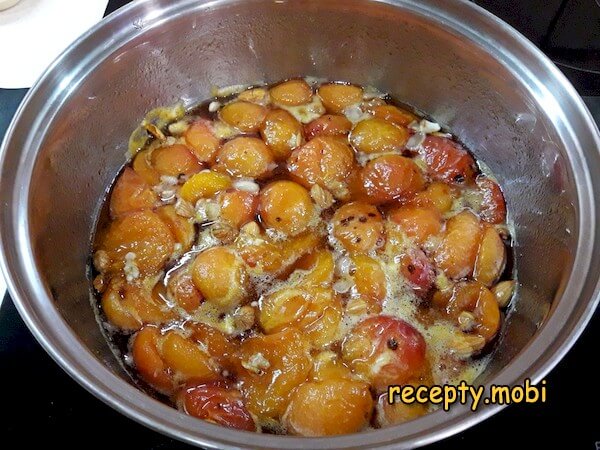
Place paper/cloth napkin under jar (catches drips). Fill jar with boiling jam to the very top.
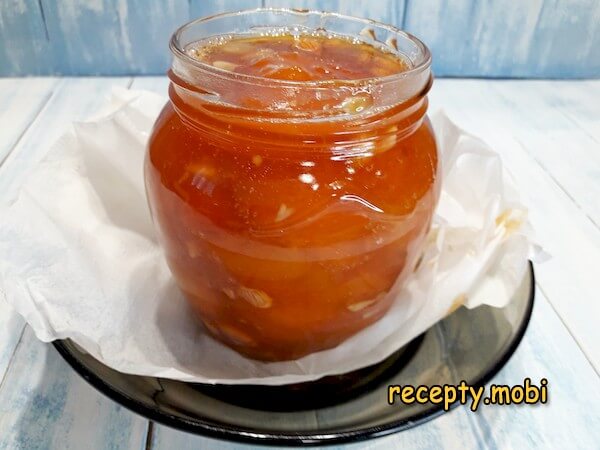
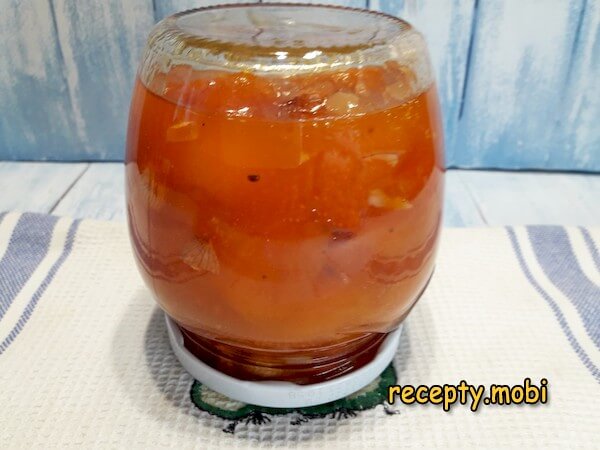
Lid screws on. Invert jar to test seal. If sealed properly, return upright and let cool naturally.
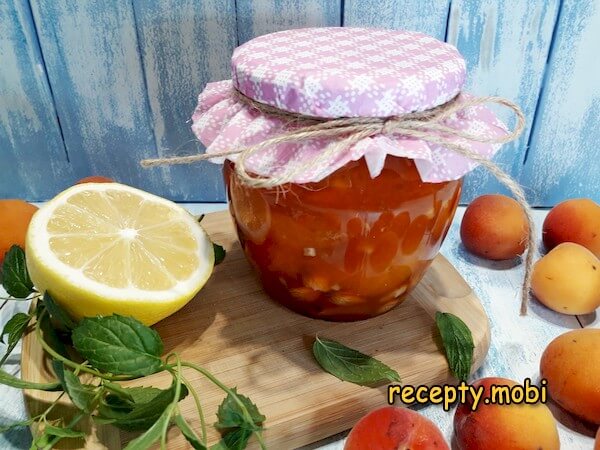
Apricot jam with kernels ready. Stores at room temperature 12+ months; cool storage extends this. Each apricot half holds summer's warmth — beautiful golden colour, fragrant aroma, with the almond-like accents from kernels making each spoonful complex and memorable.


Tips
- 1
THE TWO-STAGE COOK + 4-HOUR REST. Step 8-9's "boil 5 min, off-heat 4-hour rest, then boil 7-10 min" is the classic Russian "varenye" technique. The off-heat rest is when the apricots fully absorb syrup and the syrup thickens through pectin gel formation. Single-cook approaches produce thinner jam with less syrup-saturated fruit. Both stages are essential. Some recipes extend to 3 cooks (Russian "trekhratnoye varenye" — three-times jam) for even thicker results.
- 2
SWIRL, DON'T STIR. Step 8's "swirl the pot, don't stir with spoon" instruction protects the apricot halves. Stirring breaks them into mush within minutes. Swirling (rotating the pot in a circular motion while gently shaking) circulates syrup without disturbing fruit shape. The result: jam with intact beautiful apricot halves rather than jam with apricot puree. The technique requires practice but is worth mastering. For another fruit-jam variation worth comparing, see Apricot Jam with Slices.
- 3
THE KERNEL-TASTE-TEST IS SAFETY. Some apricot varieties have bitter kernels (contain higher amygdalin levels) — these need skin removal via boiling-water blanch (5 minutes), or kernel-omission entirely. Sweet apricot kernels are safe in moderate quantities. ALWAYS taste-test 1 kernel before adding all to the jam. Bitter kernels = either skin-blanch or skip entirely. The "Medovy" variety in this recipe has sweet kernels typically; other varieties vary.
- 4
SUGAR RATIO BY APRICOT VARIETY. Different apricot varieties have wildly different sweetness. Sweet "Medovy" or honey-apricot varieties: 1:0.5 fruit-sugar (this recipe). Common supermarket apricots: 1:0.7 ratio. Tart wild apricots or pre-ripening fruit: 1:1 ratio (full sugar match). Test sweetness by tasting one fresh apricot — if you'd happily eat it raw, use 1:0.5; if it puckers your mouth, use 1:1. The sugar isn't just for sweetness — also for preservation safety. For another pitted apricot jam worth trying, try Apricot Jam Without Pits for Winter.
FAQ
Are apricot kernels safe? +
Sweet apricot kernels (the kind used in this recipe) are safe in moderate quantities — same as eating bitter almonds occasionally. The trace amygdalin content is far below toxic threshold for moderate consumption. The kernel quantity in this recipe (about 8-12 kernels in a 0.5 L jar) is well within safety. Don't eat kernels by the handful as snacks; do enjoy 1-2 per spoonful of jam. Bitter kernels (from non-sweet varieties) contain higher amygdalin and should be skin-blanched or skipped. Children should be educated to spit out kernels rather than chew them.
Why "Medovy" variety specifically? +
"Medovy" (Russian for "honey") is a Soviet-developed apricot variety known for: sweet flesh (high natural sugar content), sweet kernels (no bitterness, safe for direct use), good shape-retention during cooking. The variety is common in Eastern European markets. Substitutes: any sweet eating-quality apricot variety works. Common substitutes: Goldcot (Canadian), Tilton (American), Royal Blenheim (California). Avoid: very tart "cooking apricots" intended for pies — the kernel-eating tradition assumes sweet varieties.
How long does the jam keep? +
Properly sealed jars at room temperature in a dark cupboard keep 12+ months. Cool basement extends to 18-24 months. Once opened, transfer to fridge and use within 4-6 weeks. The kernel almond-like flavour intensifies over months — fresh batches are mildly almond-noted; aged batches (3+ months) are more pronounced. The colour darkens slightly over time but flavour stays excellent. If you spot mould, fizzing, or bulging lids, discard the jar.
What pairs well with this jam? +
Russian-Eastern European tradition: black tea or coffee, fresh white bread, butter on warm rolls, plain yogurt, vanilla ice cream, baked apples (apricot-stuffed). Modern uses: glaze for roast pork or duck (savoury-sweet pairing), filling for thumbprint cookies, swirled into vanilla pound cake batter, with strong sharp cheese (apricot-cheddar combination). The almond-cherry flavour profile (from kernels) makes the jam more sophisticated than plain apricot jam — pairs especially well with rich nutty cheeses or savoury meats.
- Comment
or post as a guest
Be the first to comment.