avg —
Beetroot Cold Soup with Kefir

Instructions
Lay out every ingredient before starting the cold soup. Rinse and dry the fresh herbs thoroughly. Boil the egg until hard (about ten minutes from cold-water start) and slip off the shell. Peel the garlic clove. Have everything ready on the work surface for the assembly steps that follow in quick succession.
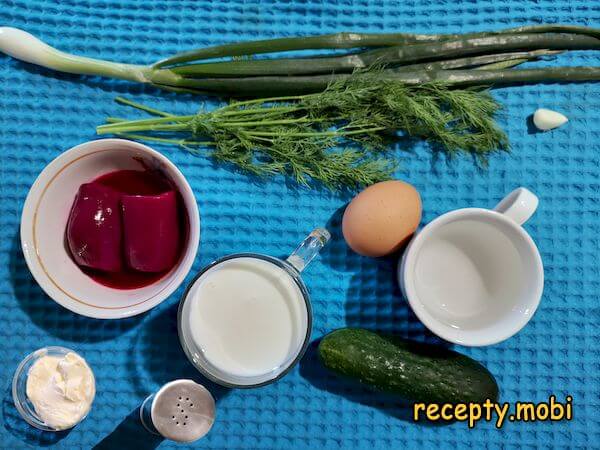
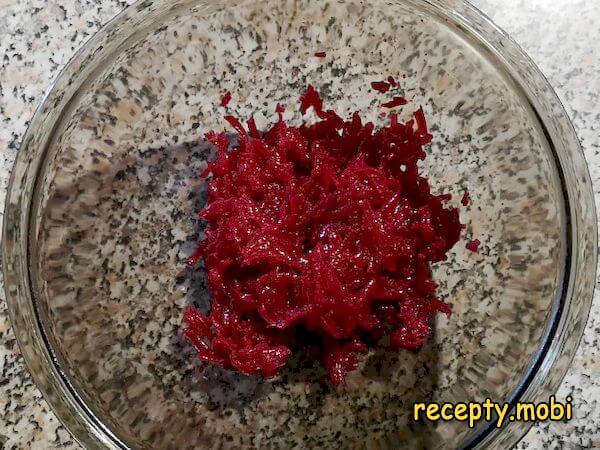
Grate the pickled beetroot on a vegetable grater. The grated texture distributes more evenly throughout the soup than chunks would, producing the smooth uniform body that defines this preparation.
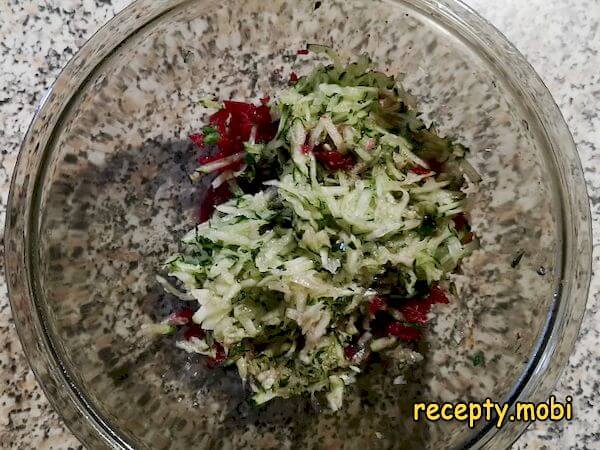
Grate the cucumber on the same vegetable grater (no need to clean between vegetables) and add it to the bowl with the grated beetroot. The cucumber adds bright fresh contrast to the deeper earthier beetroot flavor.
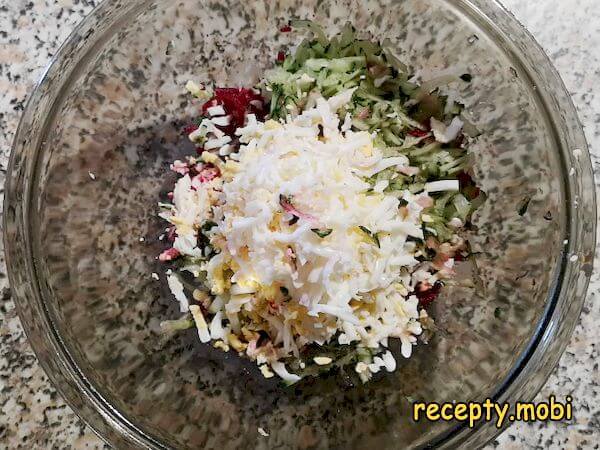
Continue grating without putting the grater away. Grate the cooled boiled egg through the same grater and add the egg shreds to the bowl with the other vegetables.
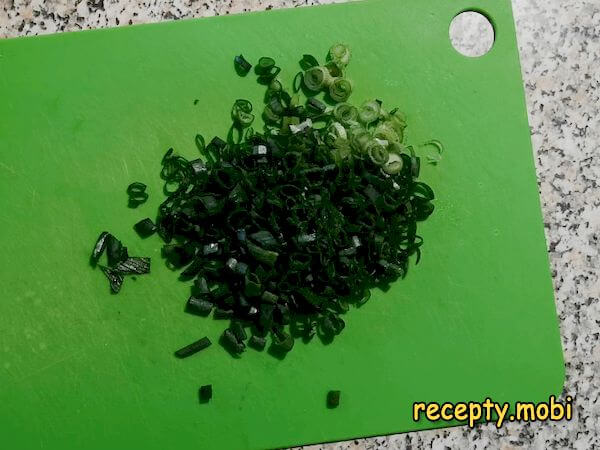
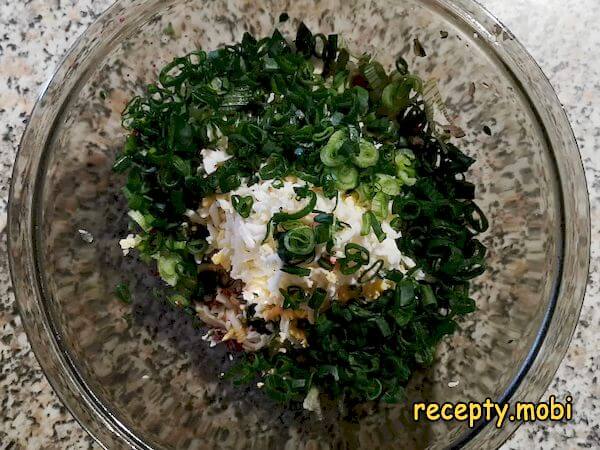
Finely chop the green onion feathers with a sharp knife. The thin slices distribute evenly throughout the soup and contribute the fresh oniony note that lifts the entire bowl.
Add the chopped green onion to the bowl that already contains the grated vegetables and egg.
Chop the dill (or simply tear it by hand for a more rustic look). Both methods produce equally good results in the finished soup; the choice comes down to personal preference and how much time you want to spend on prep work.
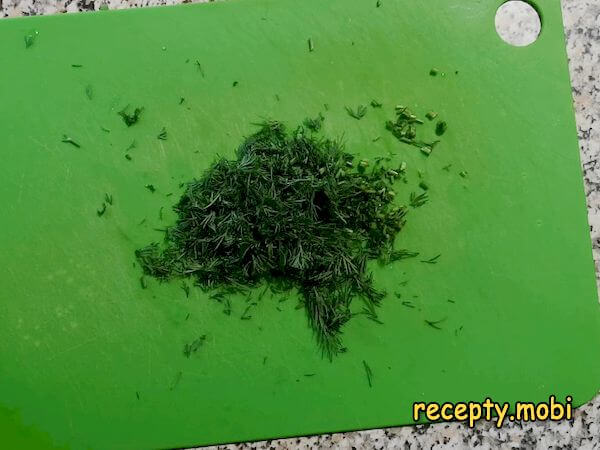
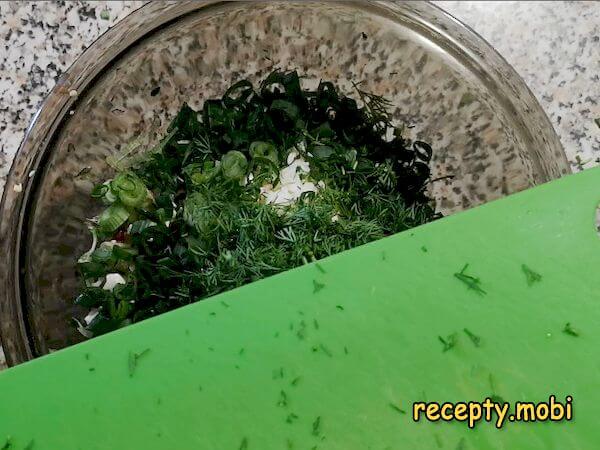
Add the prepared dill to the same bowl with the other ingredients. The dill is the most assertive herb in the soup; its bright green flavor anchors the entire dish.
Cut the peeled garlic clove into very small even cubes. Avoid pressing the garlic; the small dice releases flavor more gradually and pleasantly than crushed pressed garlic in this delicate cold soup.
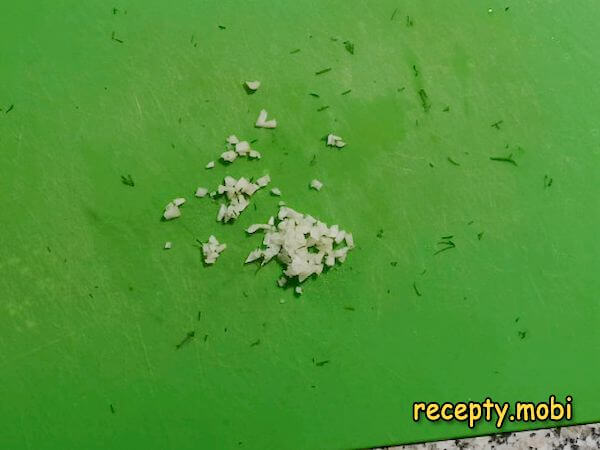
Add the chopped garlic to the bowl with the other ingredients. All the prepared components now sit together waiting for the liquid additions in the next steps.
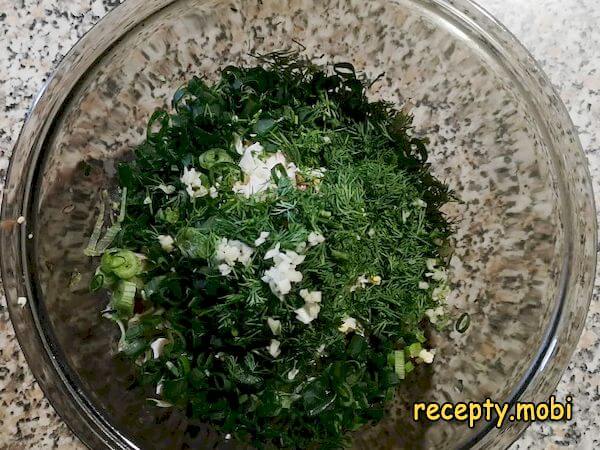
Lightly salt the mixture and stir everything together to distribute the seasoning evenly throughout the bowl. The salt also draws out additional liquid from the cucumber and beetroot, contributing to the natural broth.
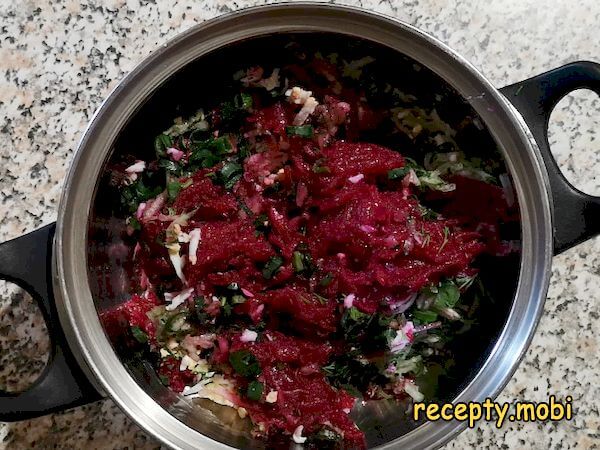
Pour in the marinade left from the pickled beetroot at this stage. The marinade contributes the tangy character that defines a proper cold beet soup and avoids waste of the flavorful pickling liquid.
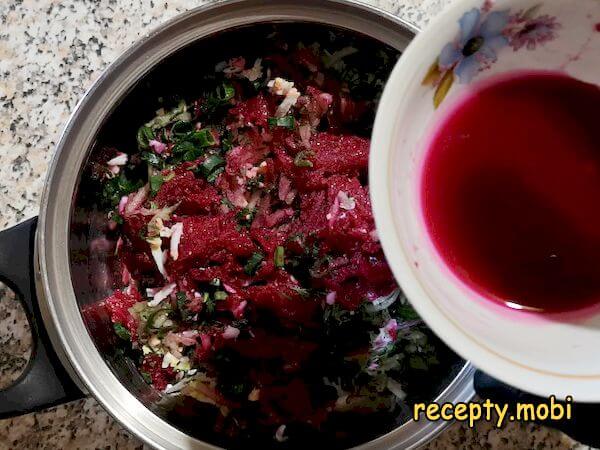
Following the marinade, pour in the kefir and stir gently to combine. The kefir provides the creamy tangy base that distinguishes this cold soup from simpler vegetable-only versions.
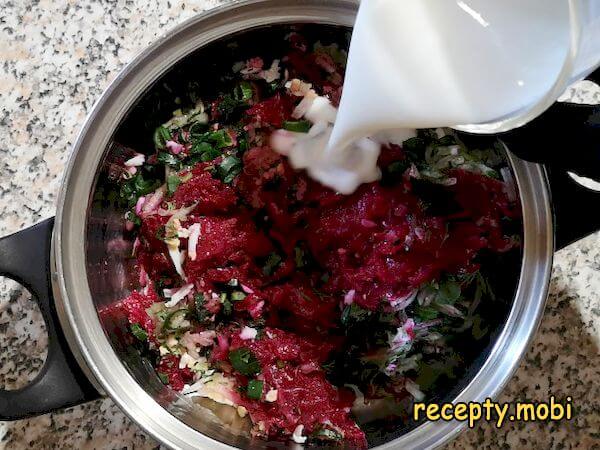
The final touch: add the water and stir to combine. If the cold soup feels too thick for your preference, add a little more water until you reach the desired consistency. Different households prefer different thickness levels; adjust freely.
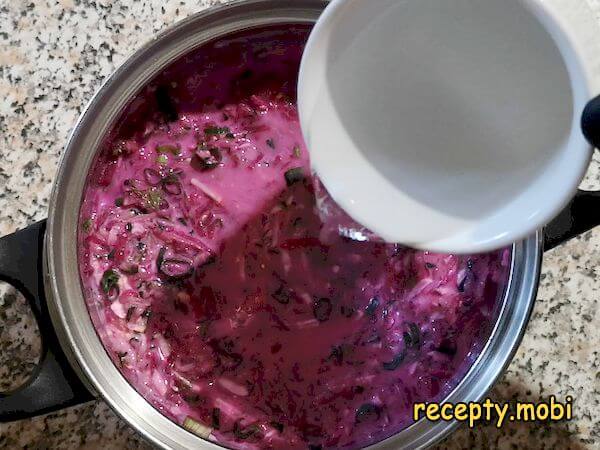
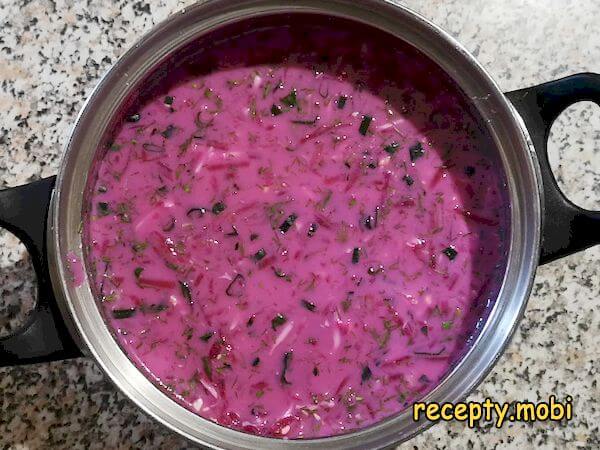
Taste the soup carefully and add more salt if needed. The beetroot cold soup with kefir is ready to serve. Optional finishing touches include a swirl of sour cream on top of each bowl for extra creaminess and a final garnish of fresh dill sprigs for visual appeal. Bon appetit alongside good company on a hot summer afternoon.


Tips
- 1
Use cold ingredients straight from the refrigerator for the most refreshing finished soup. Warm or even room-temperature ingredients produce a tepid soup that lacks the cooling effect that defines a proper cold soup. Refrigerate all the components (pickled beetroot, kefir, water, cucumber, hard-boiled egg) for at least an hour before assembly. The chilled components produce a properly cold soup that delivers maximum refreshment on hot summer days.
- 2
Choose quality kefir with significant fat content (at least three percent) for the richest finished soup. Low-fat kefir produces a thinner less satisfying soup. Full-fat kefir delivers the creamy substantial mouthfeel that makes this soup memorable. Pair this cold soup with the related summer classic okroshka with whey.
- 3
Make the soup at least one hour ahead of serving for the best flavor balance. The brief rest in the refrigerator lets the flavors meld and the herbs release their oils into the surrounding liquid. Soup served immediately after assembly tastes good but lacks the unified character that develops during the rest. Stir before serving to redistribute any settled ingredients and check the salt level one final time.
- 4
Add a splash of fresh lemon juice or a teaspoon of vinegar to brighten the finished soup. The extra acidity perfectly complements the kefir tanginess and the beetroot earthiness, lifting the soup into more dynamic flavor territory. Pair the cold soup with the related beetroot soup with ayran for a beetroot-themed summer cooling spread.
FAQ
Can I make this soup with fresh boiled beets instead of pickled? +
Yes, fresh boiled beets work beautifully as an alternative to pickled. Boil two medium beets until tender (about forty-five minutes), peel them when cooled enough to handle, and grate as the recipe describes. Without the pickled marinade, you'll need to add a tablespoon of vinegar plus a teaspoon of sugar to compensate for the missing acidity and balance. The fresh-beet version tastes slightly sweeter and earthier than the pickled-beet version; some diners prefer one, some the other. Try both and choose your favorite.
How long does the cold soup keep in the refrigerator? +
The assembled soup keeps well for up to two days in a covered container in the refrigerator. The flavors actually deepen overnight as the herbs release their oils into the surrounding liquid. After two days, the cucumbers start to lose their bright crunch and the soup texture suffers slightly. For best results, prepare close to serving time and consume within forty-eight hours. The cold soup also makes an excellent packed-lunch option for hot summer workdays at the office.
Can I make this soup dairy-free? +
Yes, several alternatives work well for a dairy-free version. Coconut yogurt mixed with water produces a similar tangy creamy character with subtle coconut undertones. Soy yogurt thinned with water gives a more neutral flavor that lets the beetroot and herbs dominate. For a fully vegan version, also skip the egg or replace it with finely diced firm tofu seasoned with a pinch of black salt for the eggy flavor. The basic technique works across many dietary variations and welcomes adaptation to whatever the family enjoys.
What can I serve alongside beetroot cold soup? +
Several light summer dishes pair beautifully with this refreshing soup. Crusty rye bread or dark sourdough provides essential bread for the soup. Boiled potatoes with butter and dill make a hearty side that pairs particularly well with cold beet soup in Eastern European tradition. Pickled vegetables (cornichons, marinated mushrooms) deliver tangy crunchy contrast. For the lightest meal, the soup stands beautifully on its own with just bread and butter alongside. For drinks, chilled vodka, dry white wine, or kvass all pair traditionally with cold beet soup at any summer table.
- Comment
or post as a guest
Be the first to comment.