avg —
Canapés with Herring

Instructions
I prepare the ingredients for the canapés. The butter needs to be at room temperature — take it out 10 minutes before starting so it's soft enough to mix smoothly with the egg yolk. Mixing different bread types (white wheat + dark rye) gives an attractive visual contrast on the serving platter.
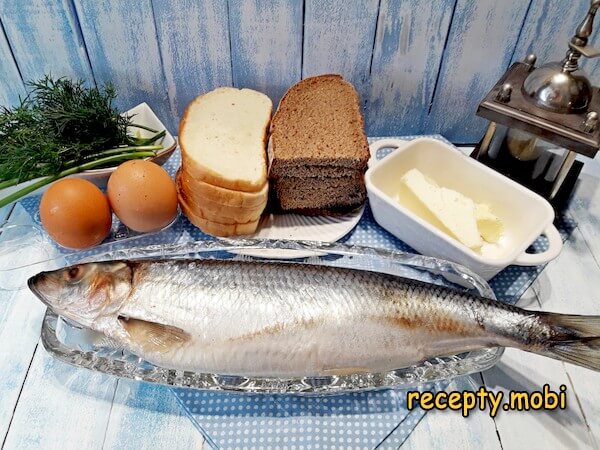
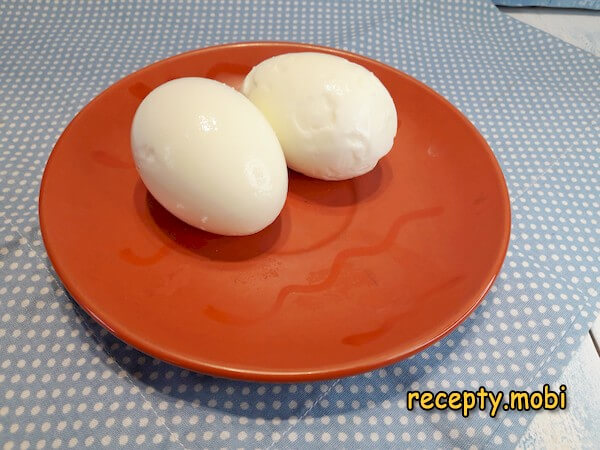
I hard-boil the eggs — about 8 minutes from boiling. The fully cooked yolk is what gives the spread its rich, creamy character.
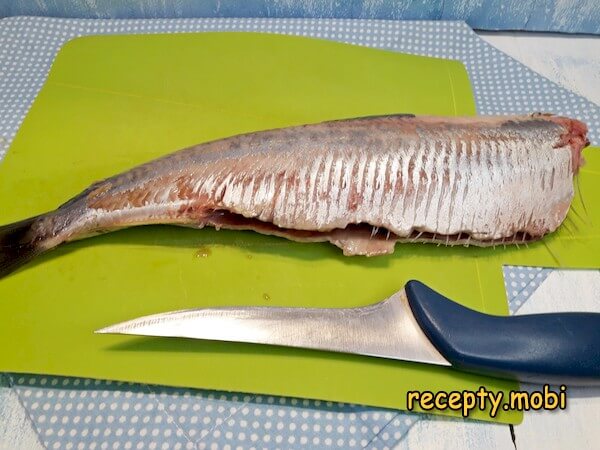
While the eggs cook, I prep the herring. I remove the head, slit along the back, and peel off the skin in one piece. Then I open the belly cavity, remove all internal organs, and rinse the cavity under cold water.
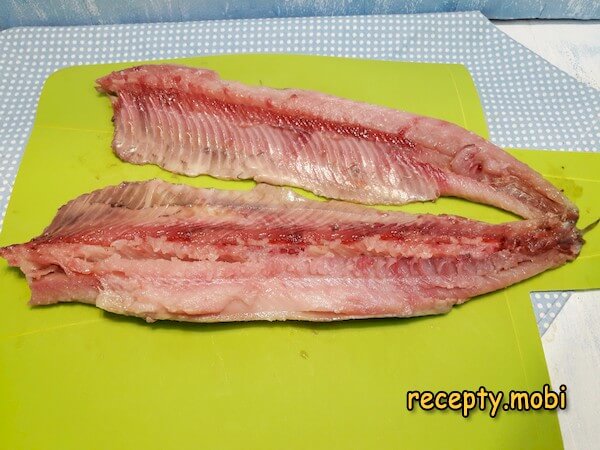
I separate the fillet from the spine: pinch the spine bone with my fingers and pull the flesh away with a head-to-tail motion. The fillets come off cleanly with practice.
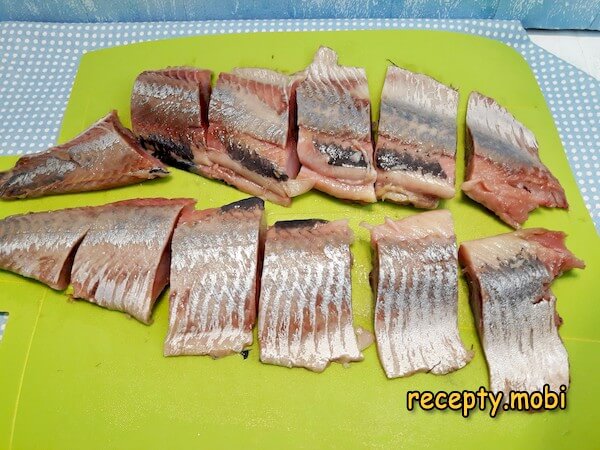
I cut each fillet into bite-sized pieces — about 3 cm each, sized to fit the bread base.
I cool the boiled eggs in cold water, peel them, and remove just the yolks. I mash the yolks with a fork into smooth crumbs — the whites aren't needed for this recipe (save for a salad).
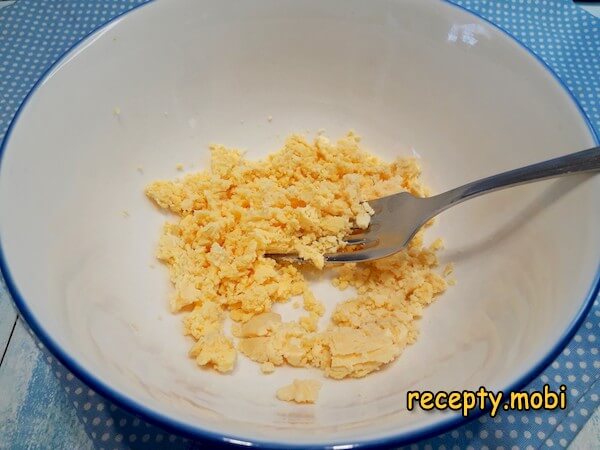
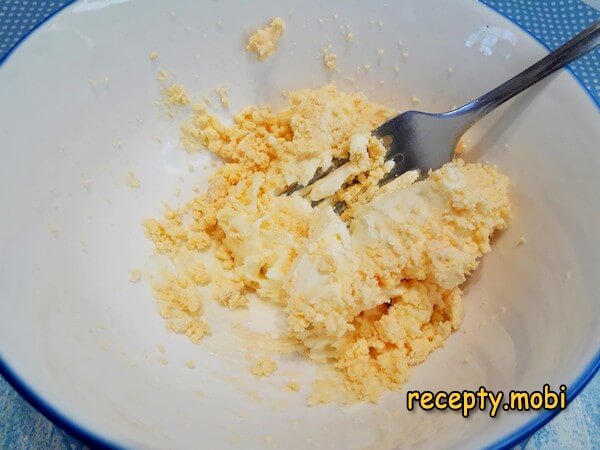
I add the soft butter to the mashed yolks and mix thoroughly until smooth and creamy. The texture should be like a thick spread — pipeable but not runny.
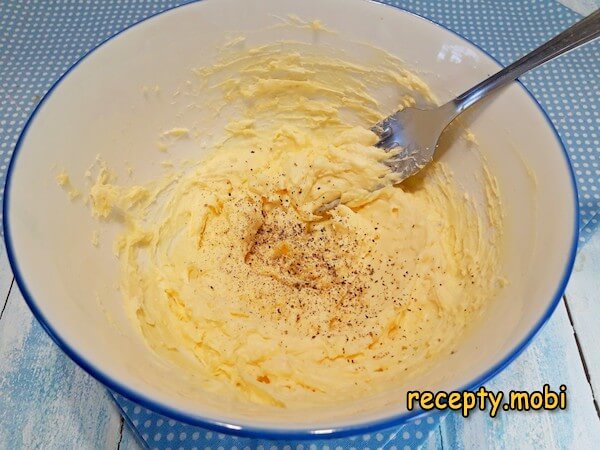
I season the spread with freshly ground black pepper. Pre-ground pepper has lost most of its volatile aroma — the difference at this stage is noticeable.
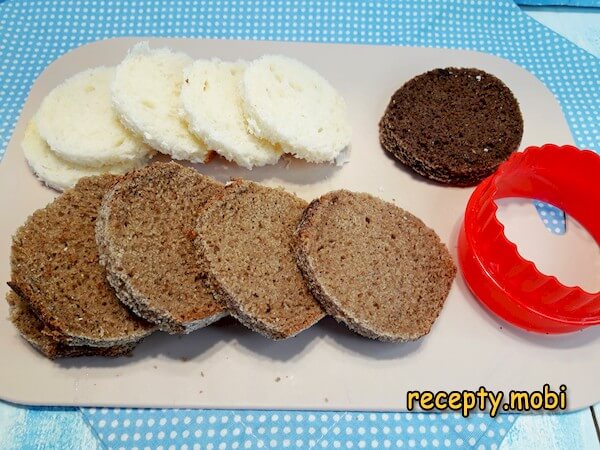
Using a 5-6 cm round cookie cutter, I cut bread bases. Squares of 3-4 cm work equally well as a no-cutter alternative — use different bread types for visual variety on the platter.
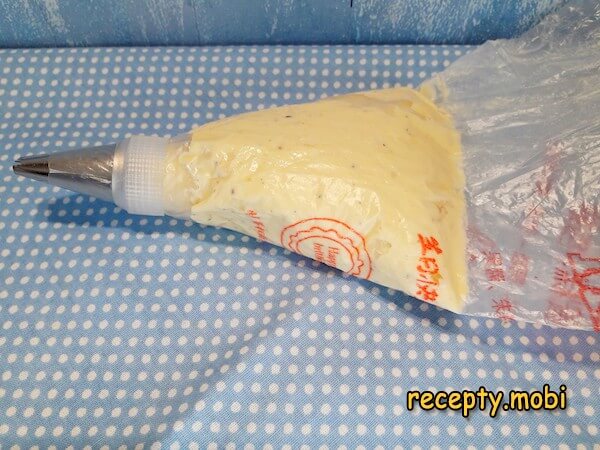
I transfer the yolk-butter spread into a piping bag fitted with a decorative star or rose nozzle. The decorative piping is what elevates these from sandwiches to canapés.
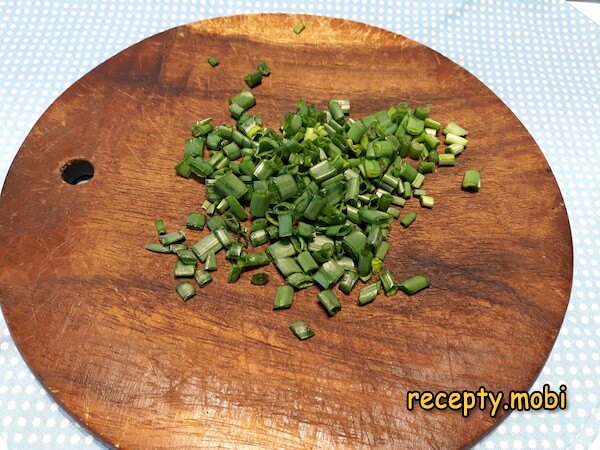
I finely chop the green onion feathers — the delicate texture matters; coarse cuts overpower the bite.
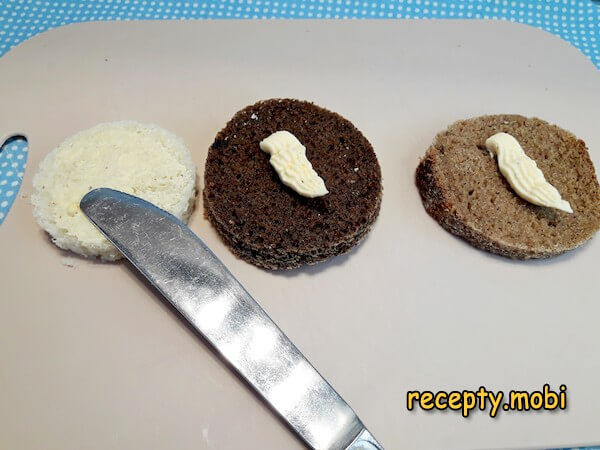
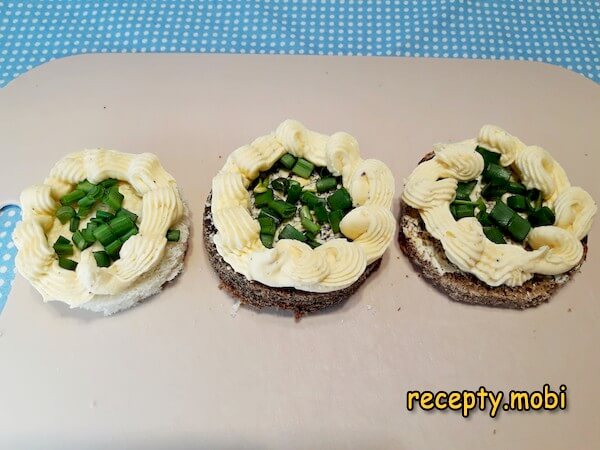
I pipe a small dot of spread onto each bread base and smooth it with a knife to cover the surface. This thin layer is what makes the green onion sprinkle stick — without it the onion just falls off the bread.
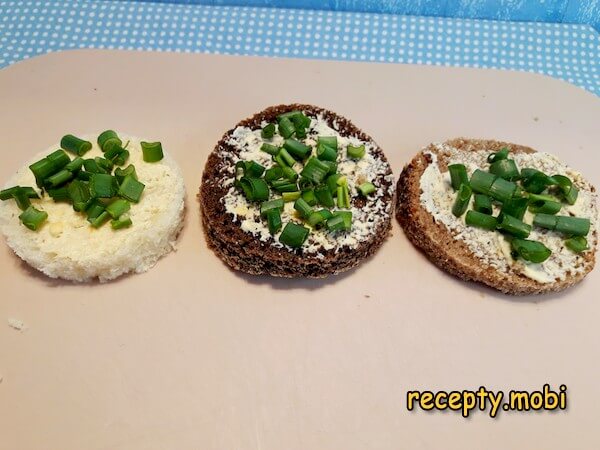
I sprinkle a pinch of green onion across each spread base.
I pipe a decorative border of the spread around the edge of each base, leaving the centre open for the herring. The border doubles as a mini-wall holding the herring in place visually.
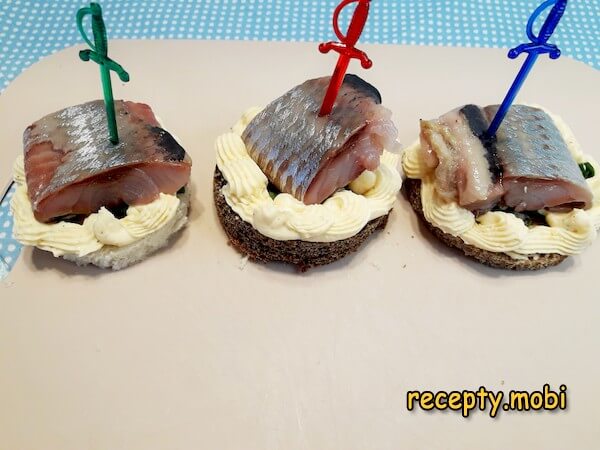
I place a piece of herring fillet in the centre of each canapé and secure with a wooden cocktail skewer if needed for transport. The skewer also helps guests pick the canapé up cleanly.
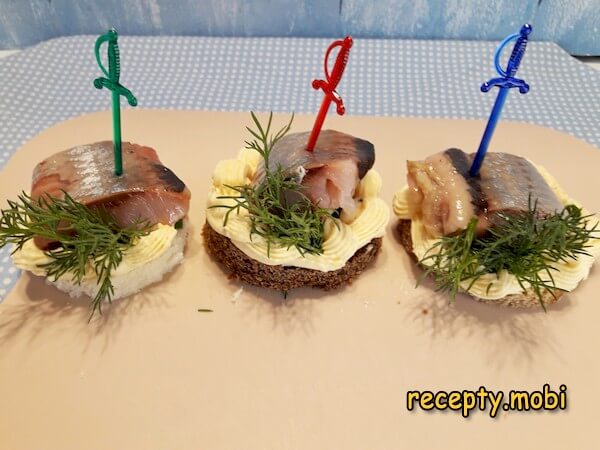
I top each canapé with a small sprig of dill — both the visual finish and the aromatic last note when biting in.To serve, I arrange the canapés on a long platter with garnishes: lemon wedges (for those who want extra brightness), thin tomato slices, and cucumber rounds. The combination of lightly salted herring on creamy yolk-butter spread on dark rye bread with fresh dill is the classic Russian zakuska experience — best enjoyed alongside chilled vodka or sparkling wine.


Tips
- 1
CHOOSE THE RIGHT HERRING. Lightly salted (slabosolyonaya) herring is the canonical choice — too-salty pickled herring overwhelms the delicate yolk-butter spread, and unsalted herring is too bland. Look for herring labelled "lightly salted" or "matjes-style" at the deli counter. Pre-filleted lightly salted herring saves the cleaning work but loses some texture; whole herring fillets give better results despite the extra prep.
- 2
THE BREAD CHOICE MATTERS. Dark Russian rye (Borodinsky) is the most authentic base — its dense crumb and slight sweetness pair perfectly with the salty herring. Pumpernickel is a good substitute. White wheat bread (Tin loaf, French baguette) gives a milder result that lets the herring flavour dominate. Pre-toasting the bread bases for 2 minutes adds crunch and prevents sogginess if the canapés sit before serving. For another classic herring spread to compare, try Herring Butter – Classic Recipe.
- 3
ASSEMBLE CLOSE TO SERVING TIME. Canapés look beautiful right after assembly but degrade quickly — the herring oil migrates into the bread, the spread softens, and the dill wilts. Assemble at most 30-45 minutes before serving. For larger parties, prep all components separately (cut bread, mash spread, slice herring) up to 4 hours ahead and assemble in batches as needed.
- 4
VARIATIONS ON THE THEME. The basic recipe welcomes endless tweaks. Try smoked salmon instead of herring (Scandinavian style); add a thin slice of pickled cucumber under the fish for crunch; substitute cream cheese for the yolk-butter spread for a milder version; top with capers instead of dill for a Mediterranean lean. Each gives a different but equally elegant canapé. For another classic herring preparation worth comparing, see Herring Forshmak.
FAQ
Can I use pre-filleted herring to save time? +
Yes, and many cooks do. Pre-filleted lightly salted herring (sold in tubs at deli counters or in vacuum packs in supermarkets) saves the messiest 5 minutes of the recipe. Quality varies between brands — premium pre-fillets can be excellent; budget versions may be over-salted, watery, or have ragged edges. Whole herring you fillet yourself will be fresher and have better texture, but the time savings of pre-filleted is real. For 12 canapés, you need only 250-300 g of pre-filleted herring (vs. 450 g whole, which includes head, bones, etc.).
How do I prevent the canapés from getting soggy? +
Three strategies. First, lightly toast the bread bases — a 2-minute pass under the grill or in a dry pan crisps the surface and creates a moisture barrier. Second, use thicker bread bases (1 cm rather than 5 mm) so the surface moisture takes longer to penetrate to the bottom. Third, pat the herring pieces dry with paper towel before placing — surface oil is the main soaking culprit. With these three habits, canapés stay crisp for 1-2 hours after assembly.
Can I make a vegetarian version? +
Yes, with substitutions for the herring. Best replacements: marinated mushroom slices (use the canapé technique with a sautéd-and-marinated mushroom on top), pickled cucumber rounds with sun-dried tomato, smoked tofu strips with capers, or roasted red pepper strips. Each gives a different flavour but maintains the canapé format and visual elegance. The yolk-butter spread base works with all of these — it's a universally good binder.
What drinks pair best with herring canapés? +
Vodka is the traditional Russian/Polish pairing — chilled, taken in a small glass alongside (not on top of) the canapé. The neutral fire of vodka cleanses the palate between rich bites. Other pairings: dry sparkling wine (Champagne, Cava, Prosecco) — the bubbles cut the richness; ice-cold dry white wine (Sancerre, Albariño, dry Riesling); chilled aquavit (Scandinavian-style, where the caraway notes pair with the dill); or quality dark beer for casual settings.
- Comment
or post as a guest
Be the first to comment.