avg —
Cheese soup with chicken and mushrooms

Instructions
I prepare the ingredients. Chicken breast can substitute with thighs (richer flavour, slightly more fat). Oyster mushrooms ↔ champignons interchangeable. Hard cheese should melt easily; can be replaced with additional processed cheese (170 g processed cheese total instead of mixed).
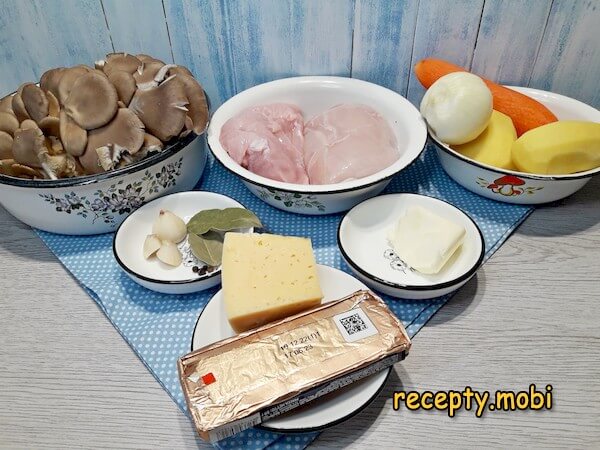
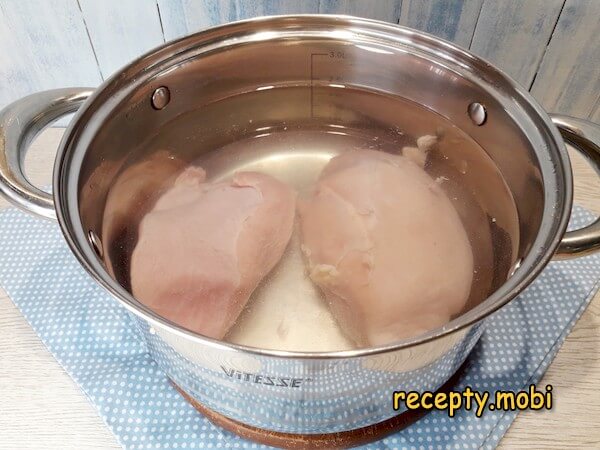
Pour cold water over the chicken fillet in a pot; place on stove. Cold-water start extracts flavour from chicken into broth (creates richer broth than hot-water start).
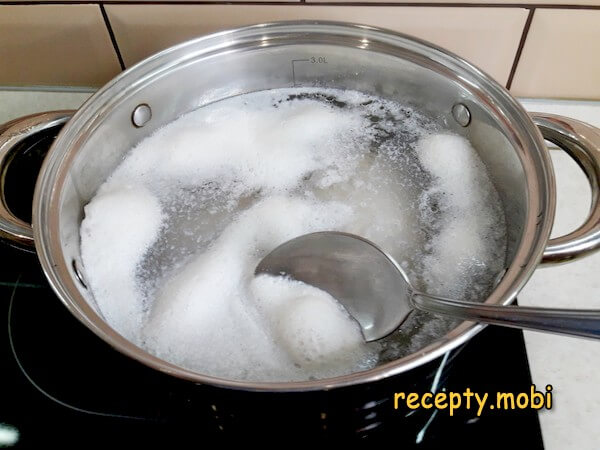
Before water boils, foam collects on surface — skim off with a spoon. Produces clear creamy broth (vs cloudy if foam left).
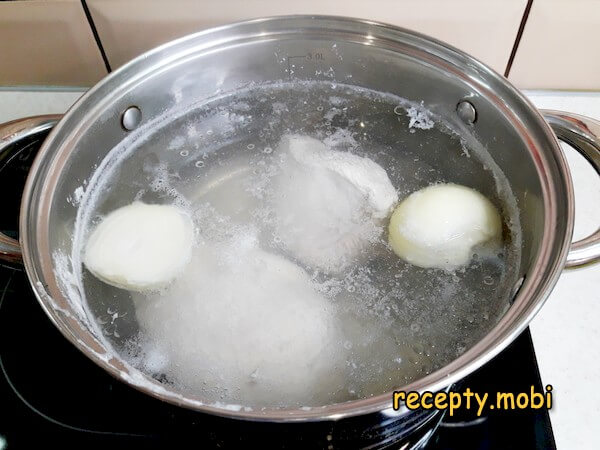
Since the soup uses no sautéed-vegetable foundation, add a halved onion (raw) for aromatic infusion. Boil chicken + onion 15 minutes.
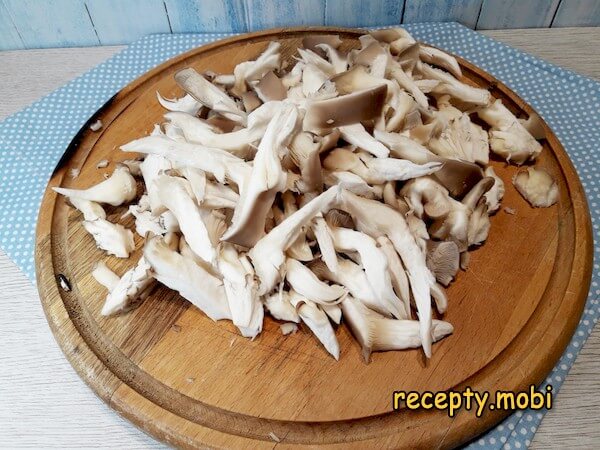
While broth boils, clean mushrooms of debris; slice into elongated pieces.
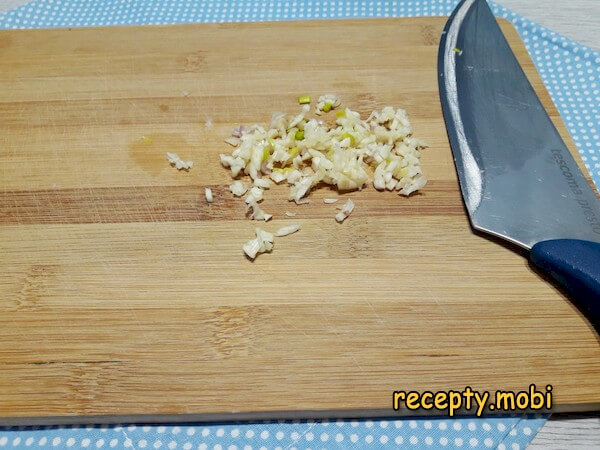
Mince garlic finely with a knife.
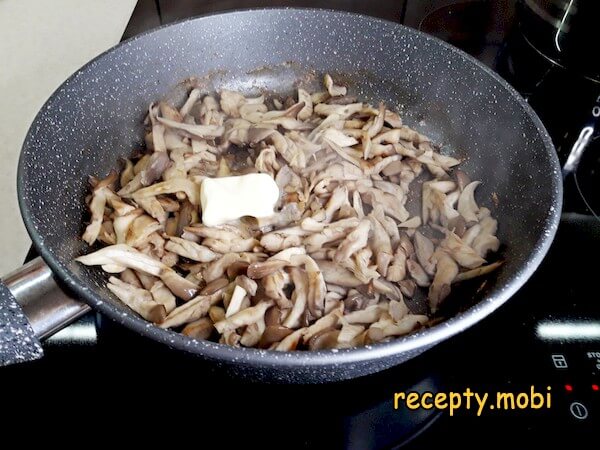
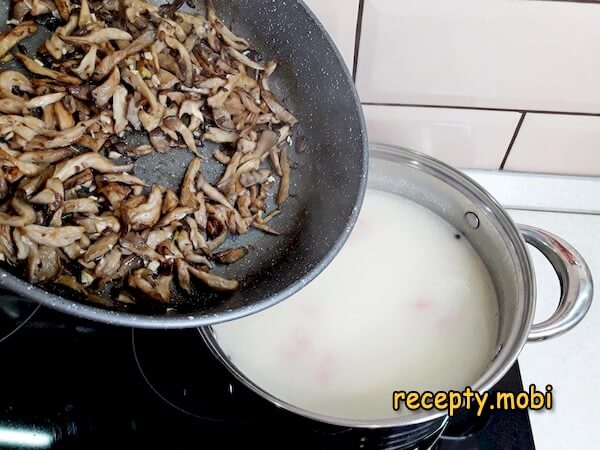
Heat a skillet very hot WITHOUT any oil/fat. Add the sliced mushrooms. The hot dry pan immediately draws moisture out of the mushrooms — they release water, then the water evaporates, then the mushrooms reduce dramatically in volume. Salt them. When all moisture has evaporated, add butter (25 g) and sauté 1 more minute. The dry-roast-then-butter technique concentrates mushroom flavour without grease.
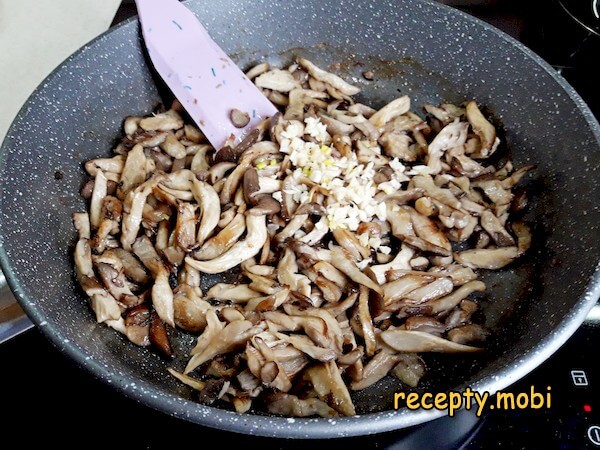
Remove pan from heat; add minced garlic. Stir to release garlic aroma into the warm mushrooms (residual heat releases aroma without burning).
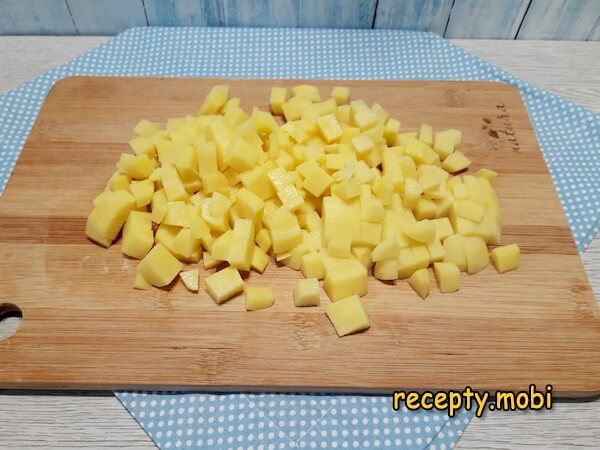
Cut potatoes into small cubes (1.5 cm).
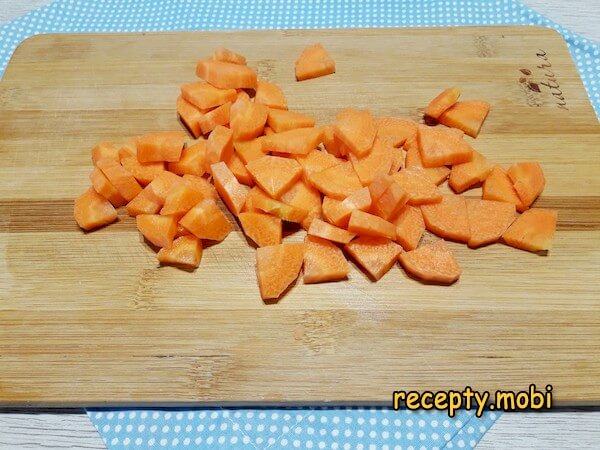
Slice carrot into rounds; cut each round into quarters. The carrots WON'T be sautéed — sautéed carrots release orange colour into broth, but cheese soup should be creamy-white, not orange.
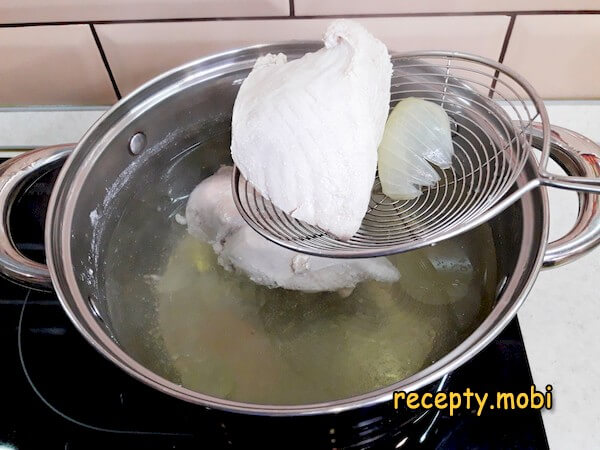
After 15 minutes, remove the chicken fillet AND the boiled onion from the broth. The onion has done its job (released aroma into broth); discard it.
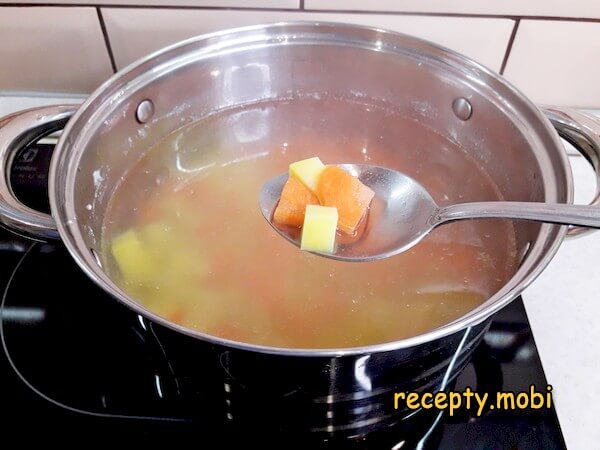
Add the cubed potatoes + quartered carrot pieces to the broth. Boil 5 minutes.
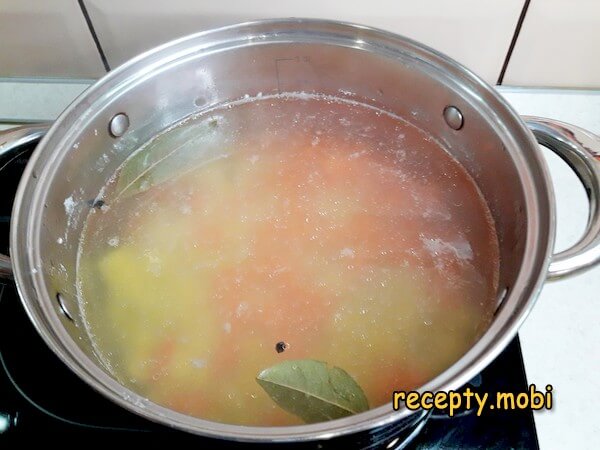
Add bay leaf and black peppercorns. DON'T add salt yet — cheese is salty, and mushrooms were salted during dry-roasting. Final salt adjustment comes later.
Finely chop both cheeses (or grate the hard cheese on coarse holes).
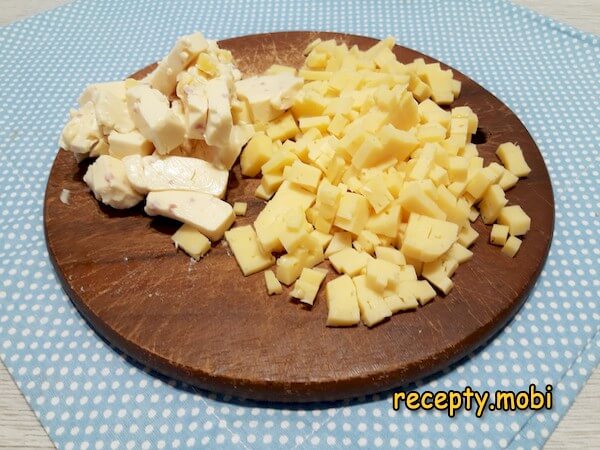
Once vegetables are boiling, add the prepared cheese.
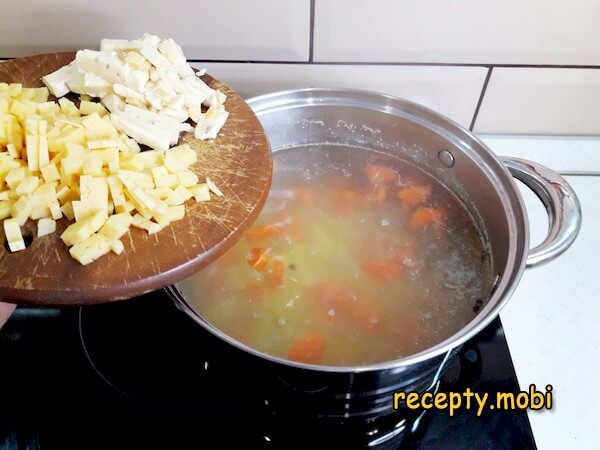
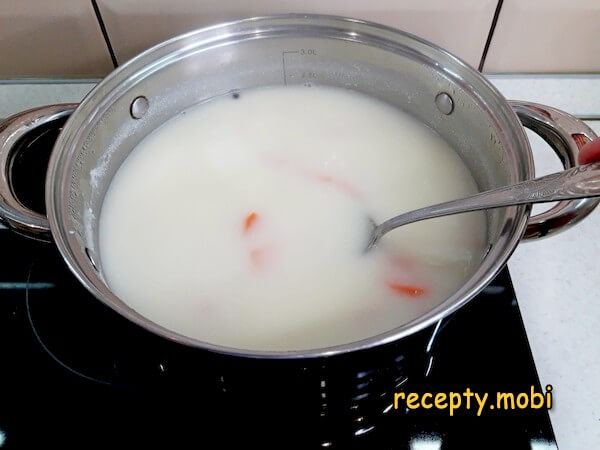
Stir vigorously and continuously — helps cheese melt uniformly and prevents bottom-of-pot sticking. Stir until the cheese is completely dissolved.
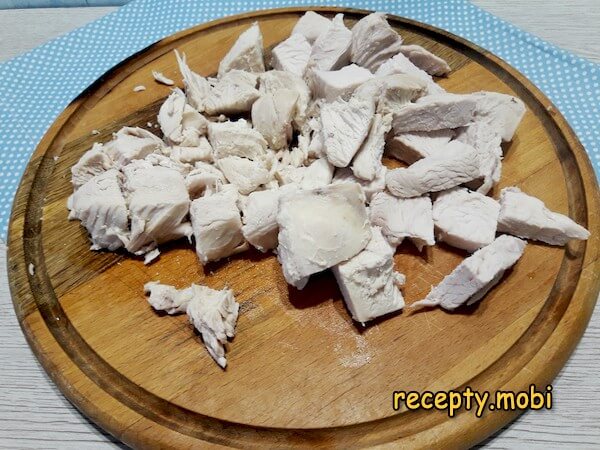
Let the boiled chicken fillet cool slightly (manageable for cutting).
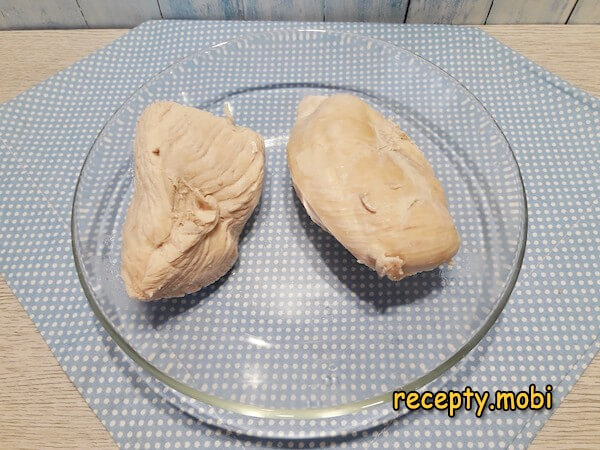
Cut chicken into medium-sized bite pieces.
Add the prepared mushrooms (with their garlic flavour) into the soup.
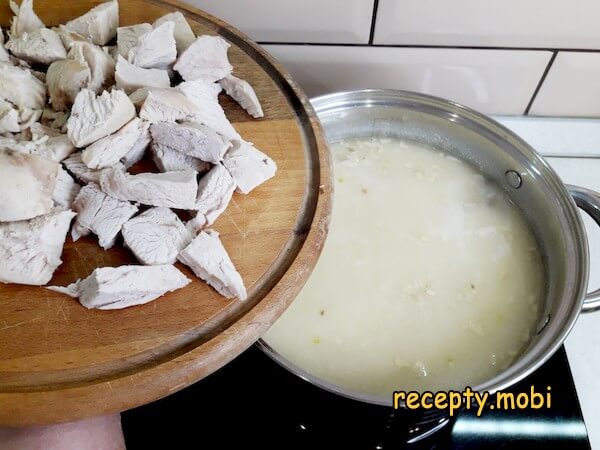
Add the cut chicken pieces. Taste broth NOW for salt; adjust as needed. Boil 5 more minutes after returning to a boil; then let the soup rest covered 10 more minutes (off heat) for full flavour integration.
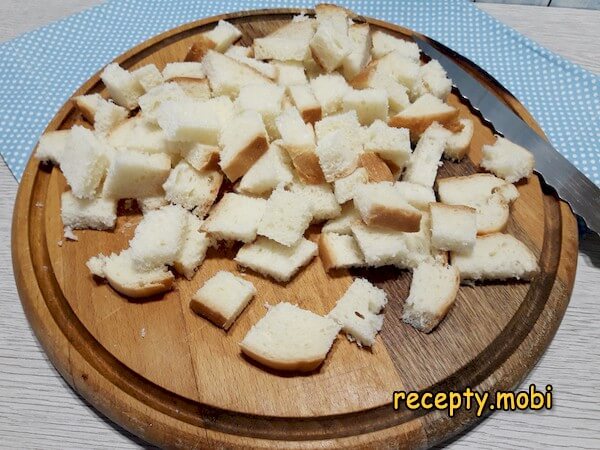
While soup rests, make croutons. Cut white bread (or baguette) into medium cubes.
Heat a mix of sunflower oil and butter in a skillet.
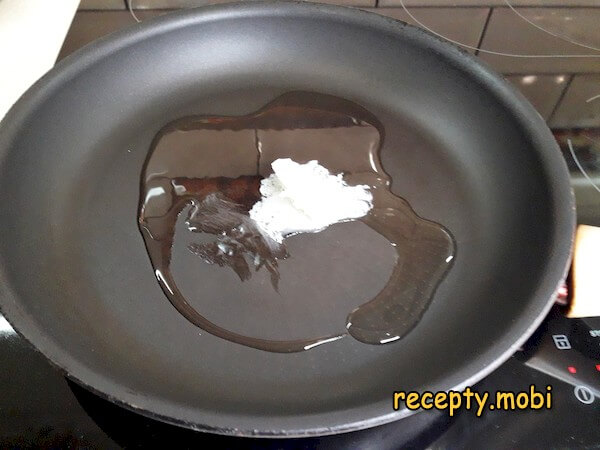
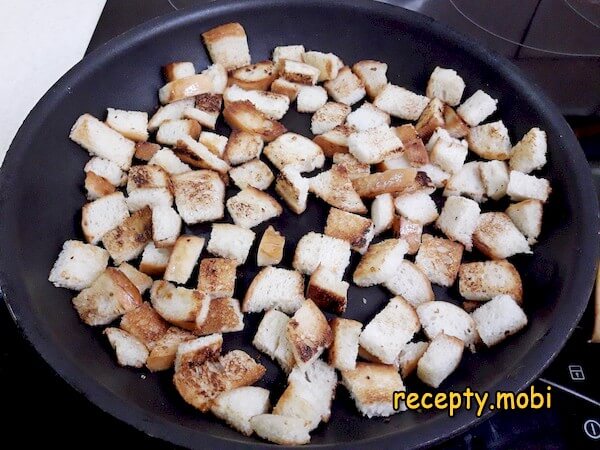
Add bread cubes; fry until golden, adding a pinch of salt + pinch of sugar (the sugar accelerates Maillard browning, gives crisp golden colour faster).
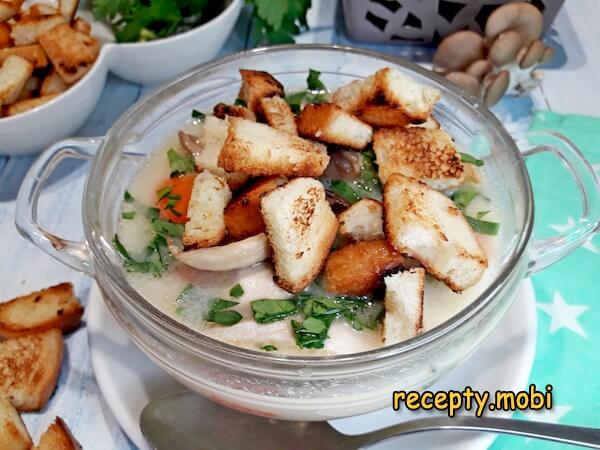
The cheese soup with chicken and mushrooms is ready. Serve with fresh herb sprinkle (parsley, dill, or chives) and the crispy croutons floated on top of each bowl.


Tips
- 1
THE DRY-PAN MUSHROOM TECHNIQUE IS FLAVOUR CONCENTRATION. Step 7's "hot dry pan first, butter later" sequence is precision technique. Adding fat (oil/butter) to mushrooms IMMEDIATELY in cold pan: they absorb the fat (greasy result), then release water (steaming, not browning), produces pale-grey rubbery mushrooms. Dry-pan-first: water evaporates fast, mushrooms develop golden caramelisation, THEN butter adds flavour without changing texture. The order matters enormously. Same principle applies to ALL mushroom cooking — don't add fat until water has evaporated.
- 2
THE ONION-IN-AND-OUT IS BROTH FLAVOUR. Step 4 + step 11's "add halved onion to broth, then remove" trick is precision flavour engineering. The onion releases its aroma compounds into the broth during boiling without contributing visible chunks (which would interfere with the cheese soup's smooth creamy character). The onion is essentially used as a flavour bouquet — added for purpose, removed before serving. Same technique works in many traditional broth recipes (French stock, Vietnamese pho). For another mushroom-and-cheese soup variation worth comparing, see Cheese Soup with Mushrooms and Processed Cheese.
- 3
THE NO-SAUTÉ-CARROT RULE IS COLOUR PRESERVATION. Step 10's instruction to skip carrot sautéing is intentional. Sautéed carrots in oil release their orange pigment into the cooking fat — when added to the broth, the orange tint stains the white cheese soup, producing muddy-orange colour instead of creamy-white. Raw-added carrots release no oil-soluble pigment (just water-soluble subtle colour); the soup stays creamy-white. The visual matters: cheese soup should look "rich creamy white" with visible coloured ingredients (mushroom dark, chicken pale).
- 4
THE TWO-CHEESE COMBINATION IS FLAVOUR ENGINEERING. The processed cheese + hard cheese pairing (step 14) isn't redundant. Processed cheese (Russian "plavlenny syr") melts smoothly into the broth without strings, creates creamy body, neutral flavour. Hard cheese (Russian "Russky", Cheddar, Gouda) provides distinct flavour notes — sharp, aged character. Single-cheese versions: all-processed = creamy but flavourless; all-hard = good flavour but stringy texture. The combination delivers both creamy mouthfeel + complex flavour. Don't skip either cheese type. For another chicken soup variation worth trying, try Chicken soup with champignon mushrooms and potatoes.
FAQ
What kind of processed cheese works? +
Processed cheese ("plavlenny syr" in Russian markets) is a specific category — pre-melted cheese product with smooth uniform texture. Best brands: Hochland, President, Russian-market "Druzhba", "Yantar", "Volna", "Karat" — all standard processed cheese in foil triangles or wedges. International equivalents: La Vache qui Rit (Laughing Cow), Velveeta cubes, processed cream cheese spreads. Avoid: artisanal aged cheeses (won't melt smoothly), block-style cheeses labeled "processed" (often just mild cheddar). The smooth melting property is what defines proper processed cheese for this application.
Can I use fresh wild mushrooms? +
Yes — wild mushrooms produce dramatically richer flavour when in season. Best wild types: porcini (king of mushrooms, deep umami flavour), chanterelles (golden colour, peppery notes), morels (rich earthy character). Method adjustment: wild mushrooms often have more dirt; clean carefully (don't soak in water — they absorb moisture). The dry-pan technique still applies. For mixed wild + cultivated: use 50/50 ratio. For dried wild mushrooms (porcini commonly available dried): rehydrate 30 minutes in warm water, drain (save liquid for broth), then proceed with recipe. Soaking liquid added to the broth amplifies mushroom flavour.
How do I make this richer/heartier? +
Several enhancements work. Best additions: replace 200 ml water with heavy cream (added at step 13, richer body), add 50 g extra hard cheese, use chicken thighs instead of breast (more fat), add 50 g sour cream stirred at the end (tangy creamy finish). For VEGETARIAN version: skip chicken, use vegetable broth, increase mushrooms to 600 g. The dish handles modifications within a 20% range; beyond that, becomes a different dish.
How long does it keep? +
Refrigerated, 2-3 days at peak quality. The cheese-thickened broth tends to set slightly when cold (re-heating loosens it back). Reheat in saucepan over medium-low heat with frequent stirring; add 100 ml water if too thick. The chicken pieces firm up slightly during refrigeration but soften back when reheated. Don't freeze — the cheese emulsion breaks during freeze-thaw, producing grainy unappetising texture on thawing. The croutons should be made FRESH each serving — refrigerated croutons go soggy fast. For meal-prep approach: prep soup ahead, make croutons same-day as serving.
- Comment
or post as a guest
Be the first to comment.