avg —
Chudu in the Dagestani style

Instructions
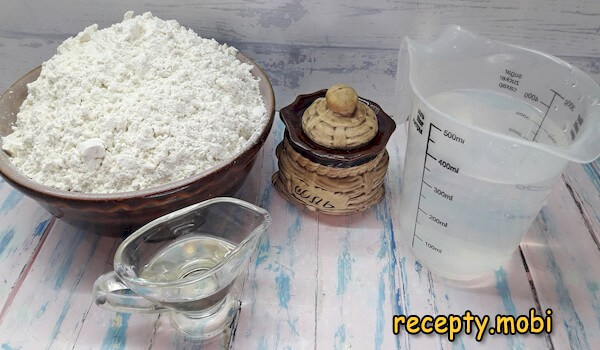
I prepare ingredients for unleavened dough.
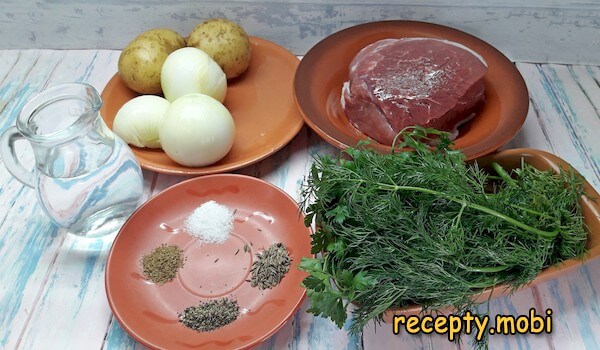
Prepare filling ingredients.
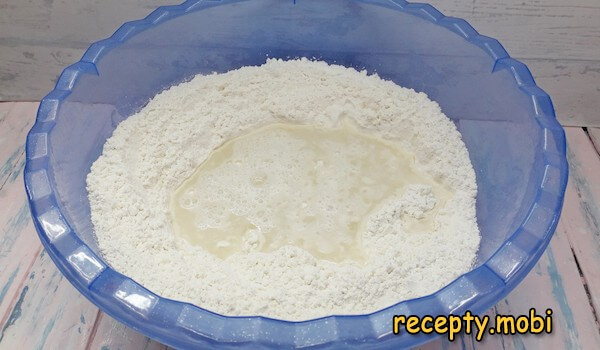
In spacious bowl: SIFT salted flour (mandatory). Make WELL; pour in water.
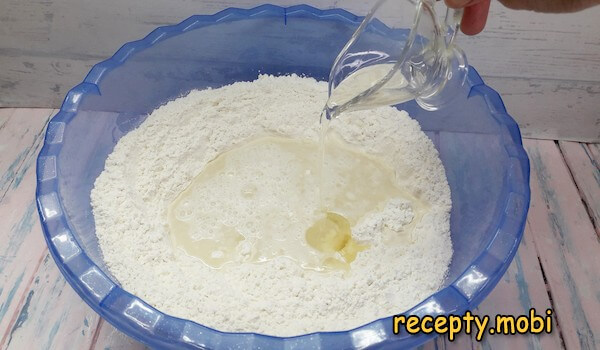
Add oil (makes dough more pliable + easier to roll).
Mix flour with liquid by hand; first try to shape into single non-falling lump.
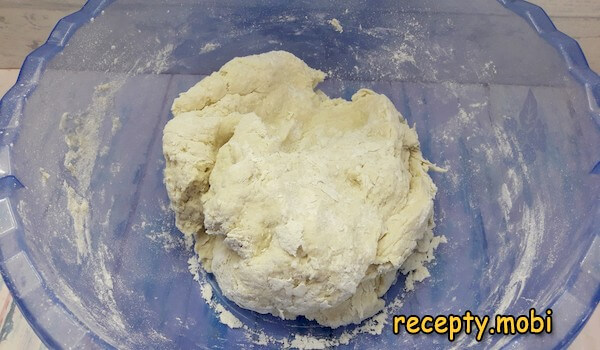
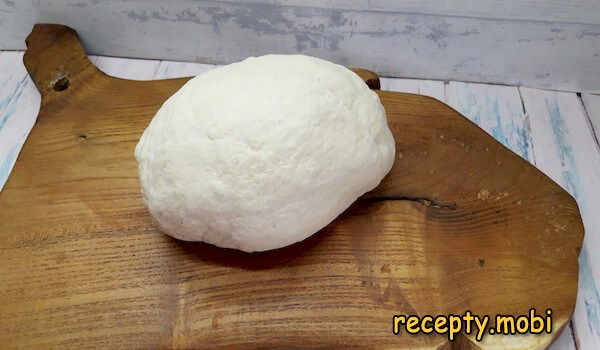
Continue kneading on table; press all areas to form SMOOTH non-sticky homogeneous dough. Let rest 15 min under towel.
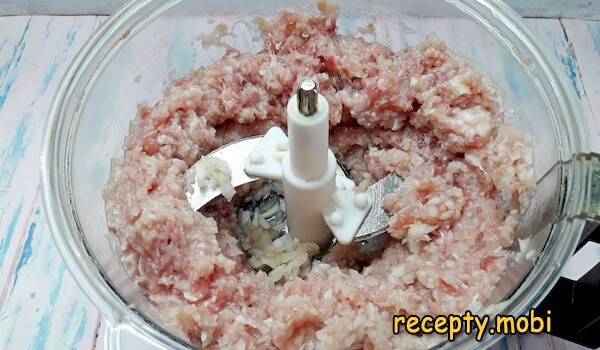
Meanwhile prepare filling. Grind meat together with onion into minced meat.
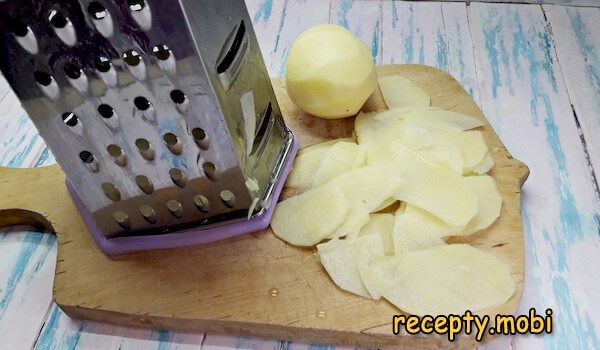
Grate potatoes into VERY THIN slices using grater intended for this purpose.
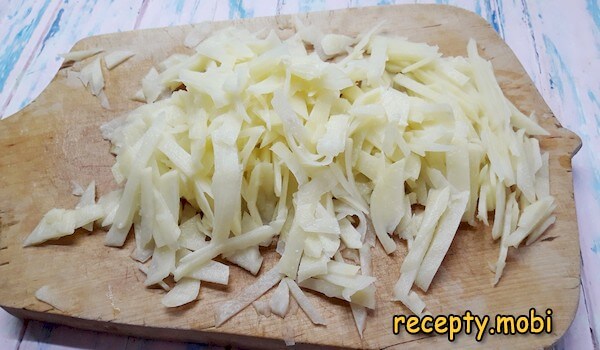
Cut potato slices into STRIPS (this cutting method blends best with meat filling, doesn't weigh it down).
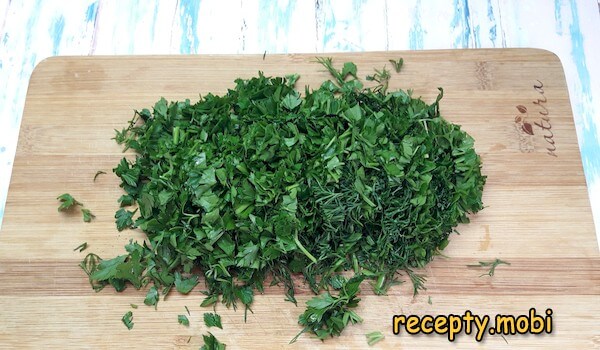
Chop fresh herbs with knife.
Combine meat + potatoes + herbs in one bowl.
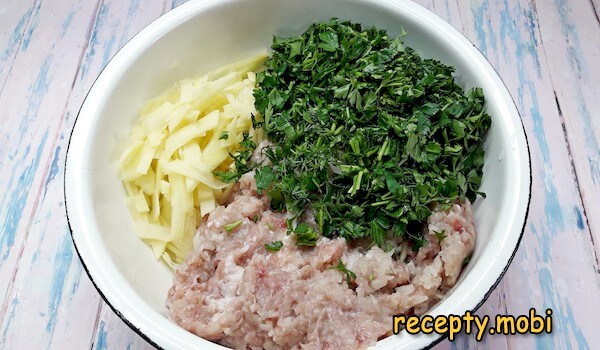
Season with salt + spices (coriander + cumin + pepper).
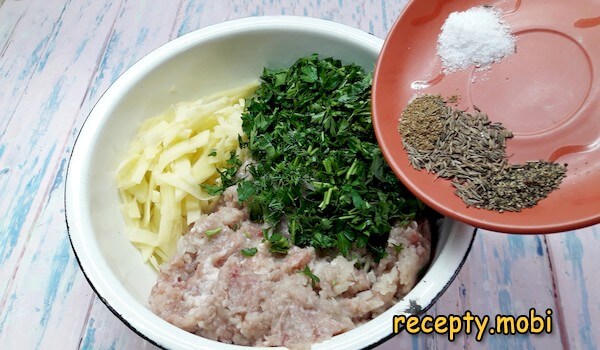
Add 200 ml water to filling (keeps it juicy during baking).
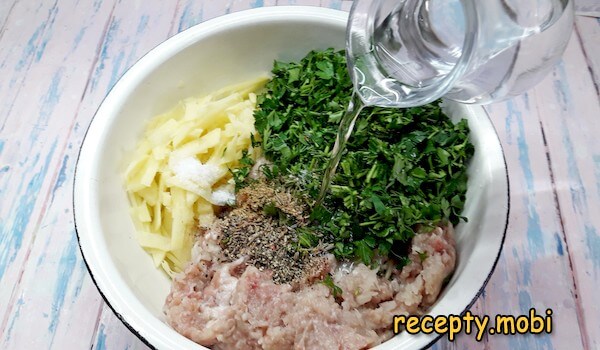
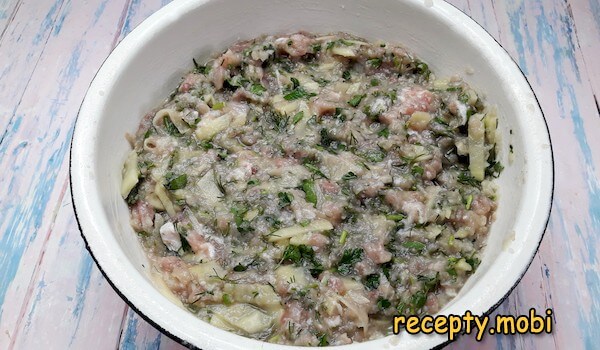
Mix all components well. Minced meat continues releasing juice — STIR before each use. Heat oven to 200 °C.
Dough has rested + become pliable. Divide into 3 PIES with bottom layer slightly larger than top: 3 LARGE balls 185 g each + 3 SMALL balls 150 g each. Cover with film.
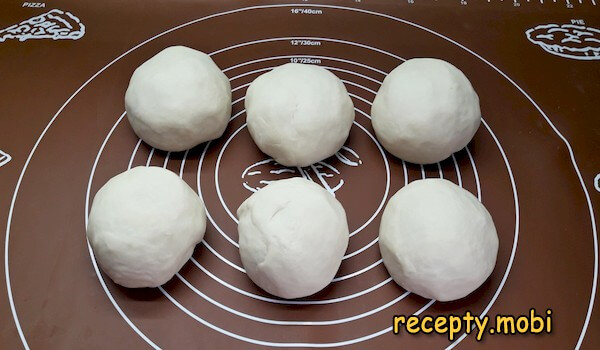
Dust work surface with flour. Roll out LARGE ball to diameter that fits baking sheet.
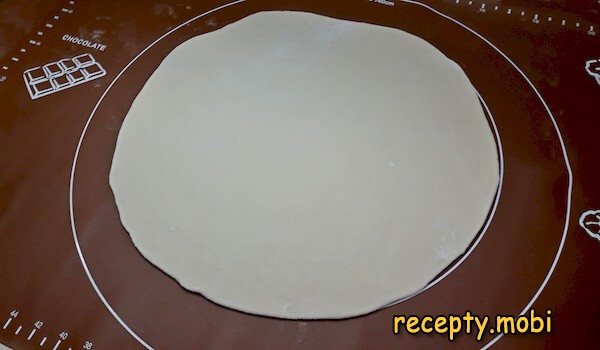
Layer should be THIN — no more than 3 mm.
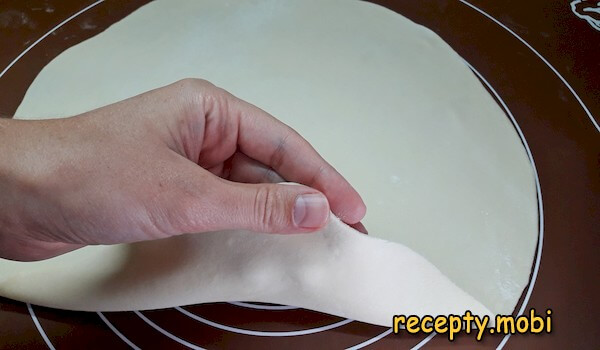
Transfer to lined baking sheet. Place THIRD of filling on top; spread with spoon back over entire diameter, leaving gap near edges.
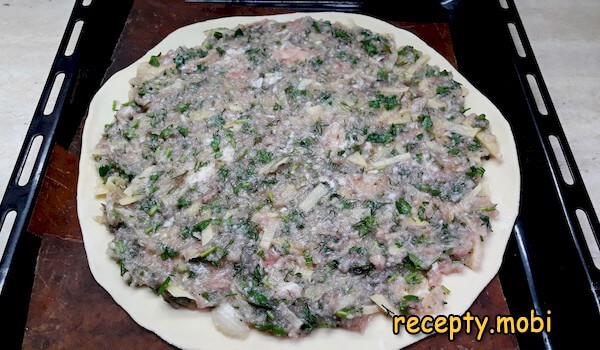
Cover everything with rolled-out SMALLER ball.
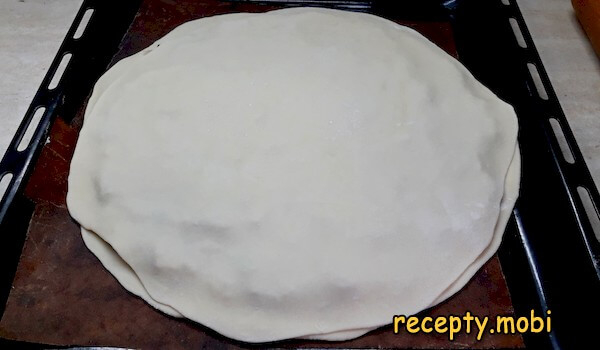
PINCH edges UP, twisting them into rope (decorative seal).
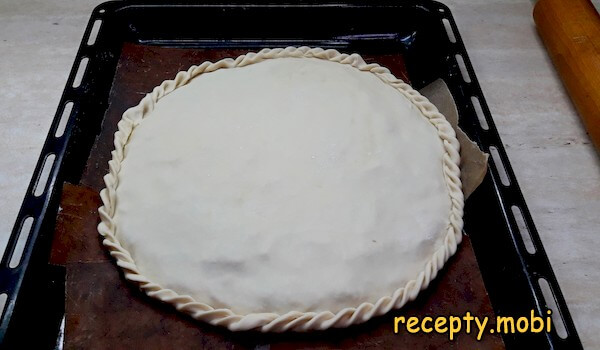
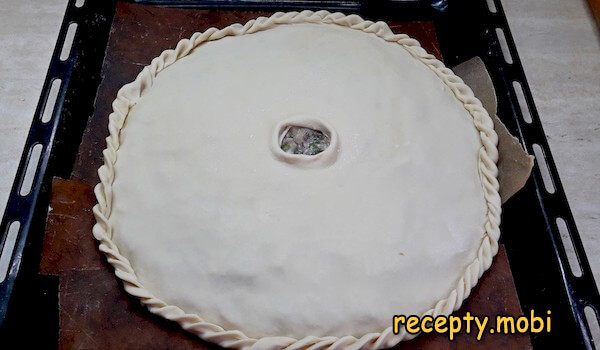
Make HOLE in CENTER for steam release (essential — prevents bursting).
Dilute egg yolk with few drops water/milk; brush top of chudu (creates golden crust).
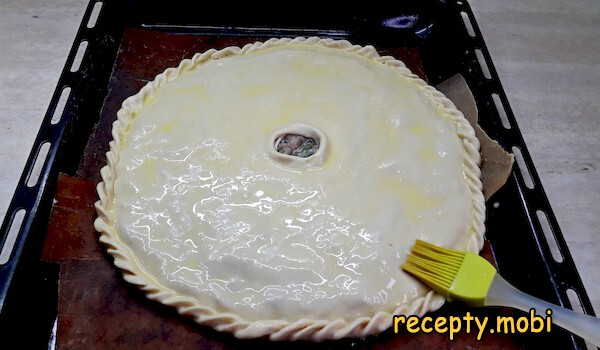
Place baking sheet on MIDDLE rack of oven 30 min. Pie bakes well + acquires beautiful color.
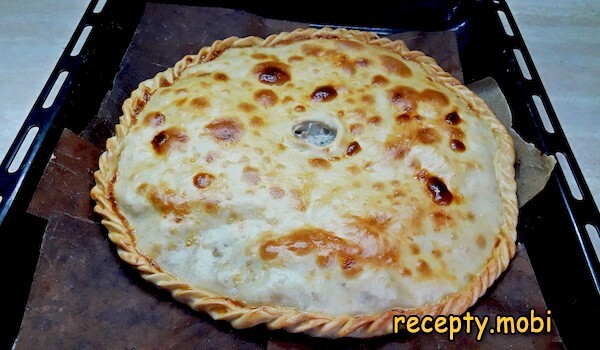
Once removed from oven: IMMEDIATELY MOISTEN with regular water (softens top crust).
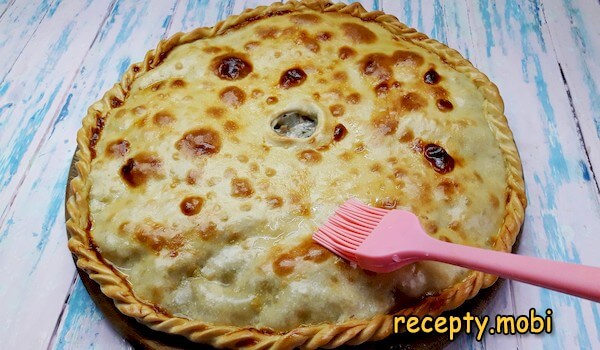
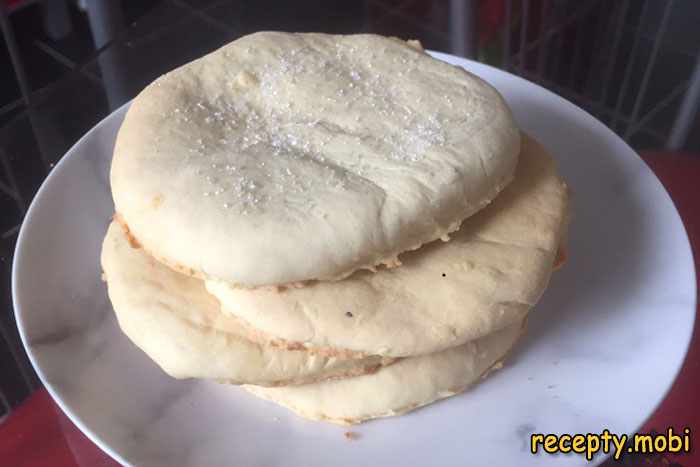
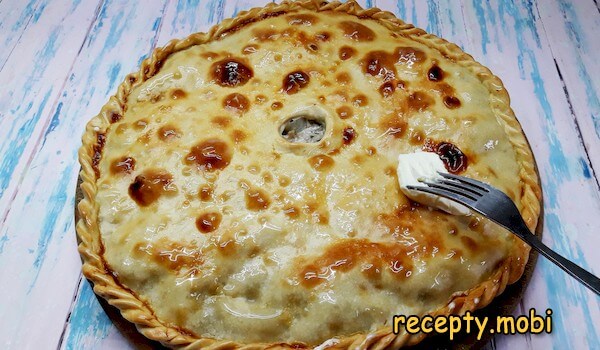
For creamy flavor: GREASE top with butter. Cover pie with film, then towel. Self-heat softens chudu. Stack subsequent pies on top of each other (treat similarly). Chudu in Dagestani style is ready. STANDALONE dish — needs only fresh herbs + vegetables alongside. Serve cut into portioned pieces (entire stack including bottom one). Bon appétit!


Tips
- 1
THE PARCHMENT-THIN ROLLING TECHNIQUE. The intro emphasizes "rolled to almost parchment thickness" — Dagestani-tradition signature. Most pie doughs roll 5-7 mm thick; chudu rolls 2-3 mm thin. Why critical: thin dough cooks through evenly during 30-min bake without becoming tough; thicker dough produces bread-like result (wrong character). The 700 g flour + 400 ml water + 25 ml oil ratio is calibrated for proper thin-rolling (extra oil keeps thin dough flexible). Same paper-thin pastry technique used in: Greek phyllo, Turkish yufka, Caucasian-tradition pastries.
- 2
THE WATER-IN-FILLING JUICINESS. Step 13's "add 200 ml water to filling" seems counter-intuitive but is recipe-essential. Without water: filling becomes dry during 30-min bake (juices escape, meat dries). WITH water: maintains internal moisture, meat stays juicy, potatoes don't burn. The water creates STEAM during baking, which moves through the steam-hole (step 21). Same juiciness-maintenance technique used in: Turkish börek, Russian pirog with meat, Polish pierogi-stuffed dishes. For another large Caucasian pie tradition worth comparing, see Khachapuri Imeretian.
- 3
THE WATER-MOISTEN-AFTER-BAKE TECHNIQUE. Step 24's "immediately moisten with regular water" is unusual but important Caucasian-baking tradition. Hot from oven: top crust is dry + hard. Moistening with water: rehydrates outer crust, softens it for proper Dagestani-tradition texture. Then butter-greasing (step 25) adds creamy flavor. The 2-step finishing (water + butter) produces signature soft-creamy chudu surface. Without moistening: harder cracker-like crust (different dish entirely).
- 4
THE 3-PIE STACK SERVING TRADITION. Step 25's "stack subsequent pies + serve cut through stack" is Caucasian feast-table tradition. Single pie: serves 8 people, smaller occasion. STACK of 3: serves 24, suitable for major celebrations + esteemed-guest visits. The cutting-through-stack approach: each diner gets piece showing all 3 pie layers (visual drama + consistent serving size). For another moistened-after-bake tradition worth trying, try Lavash Pita on a Frying Pan.
FAQ
Can I use other meats? +
Yes — recipe accepts variations. LAMB (Caucasian-most-traditional): more pronounced Caucasian flavor, recipe-canonical for Dagestani regions. PORK: traditional Russian variation, equally hearty. CHICKEN: lighter, more accessible to international cooks. MIXED beef-lamb (50/50): combines best characters. The 620 g works at 1:1 substitution. Lamb produces strongest "Caucasian" identity. Don't use very lean meats without fat (dish needs fat for proper juiciness).
What about smaller versions? +
Single chudu also works — divide recipe by 3 (use 1/3 quantities + 1 large + 1 small dough ball). Smaller pies (200 g balls): bake on small sheet pan; produce family-meal-size dish. INDIVIDUAL chudu (50 g balls): produce hand-pies for snacks. The recipe's 3-stack format is for celebrations; smaller versions are equally authentic for everyday. Bake time scales with size: smaller pies need 18-22 min instead of 30.
How long does it keep? +
Best fresh — within 4-6 hours of baking for peak quality. Room temperature, covered with damp cloth: 1 day. Refrigerated covered: 2-3 days, but textures harden. Reheating: 8-10 min in 180 °C oven (regains crisp surface). Microwave produces rubbery dough. FREEZER: works adequately — wrap baked chudu in plastic + foil, freeze 1 month, thaw + reheat oven. Frozen RAW assembled chudu: works too (freeze on tray, transfer to bag, bake from frozen extending time to 45 min).
What sides go best? +
Caucasian tradition: minimal sides. CLASSIC: fresh herb platter (cilantro, parsley, dill, basil), fresh vegetable platter (tomato, cucumber slices, radishes), fermented dairy (matsoni, yogurt, kefir). PICKLED VEGETABLES: any traditional Caucasian pickle. WINE: Dagestani semi-sweet wine traditional. The chudu IS substantial main course; sides should be fresh + light to balance rich pie. AVOID: heavy salads, additional starches, anything competing with the pie's substantial character. The combo of "pie + fresh herbs + simple vegetables" is recipe-canonical Caucasian feast.
- Comment
or post as a guest
Be the first to comment.