avg —
Cottage Cheese Easter with Condensed Milk

Instructions
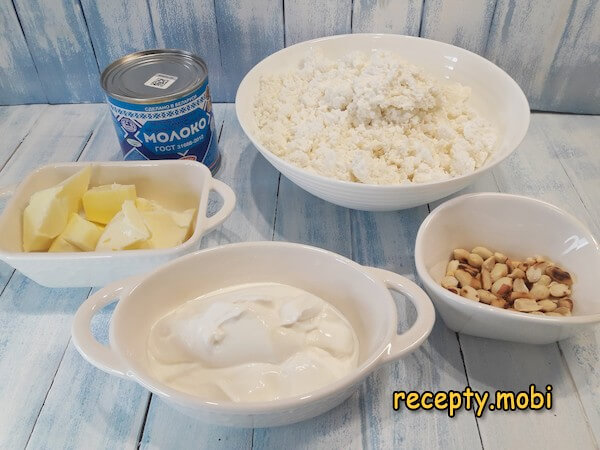
I prepare the ingredients. Cottage cheese MUST be fatty (9%+ — low-fat versions don't have proper texture); same with sour cream (20%+). Butter should be high-quality 82% fat — take out 15 minutes ahead to soften to pliable state. Nut choice: walnuts (most traditional), hazelnuts, peanuts (lightly toasted) — chef's preference.
Acquire a special detachable Easter mould (truncated cone shape) if possible. Without one: any container with holes for whey drainage works (improvise with a colander lined with cheesecloth). Recipe quantities are calibrated for a mould of: 12 cm base side × 13 cm height × 6 cm top diameter (truncated cone).
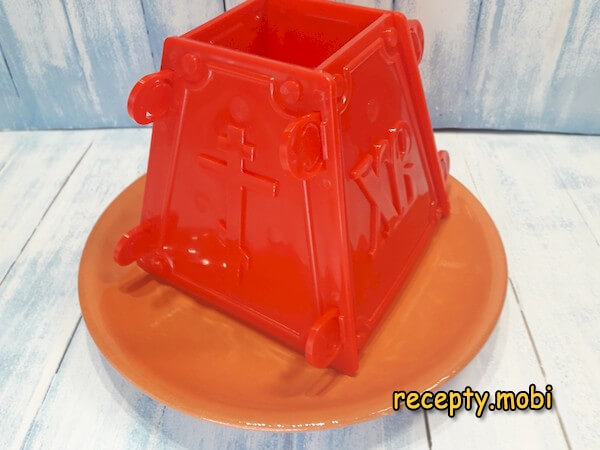
Start boiling the condensed milk first (this takes longest). Place sealed can in a small pot of water with a cloth underneath the can (prevents the can from hitting the pot walls during boiling — important safety + noise prevention). Boil 1.5-2 hours. The condensed milk inside transforms from white to coffee-caramel colour with rich flavour.

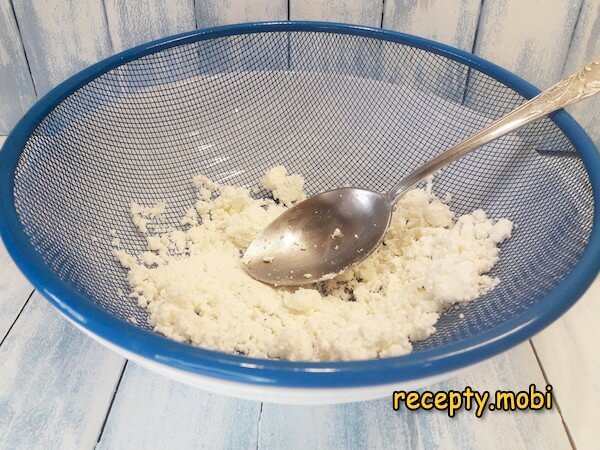
While condensed milk boils, prepare the cottage cheese — push through a fine-mesh metal sieve OR blend with an immersion blender. The smoothing step is critical for proper texture; lumpy cottage cheese produces grainy unappealing dessert.
After the condensed milk has boiled and cooled, add ONLY 200 g (the can typically contains 380-400 g — save the rest for other uses).
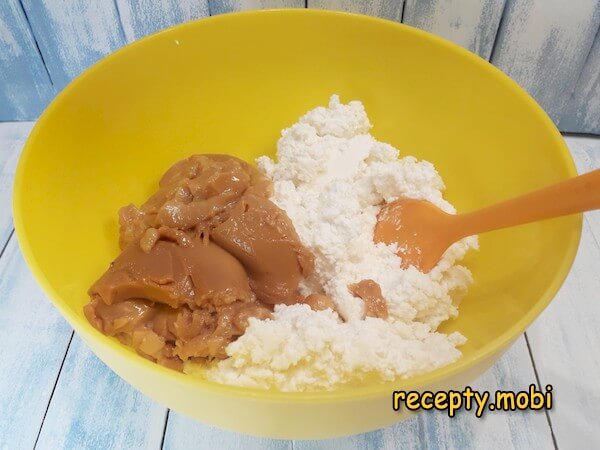
Add the softened butter and sour cream to the cottage cheese mixture.
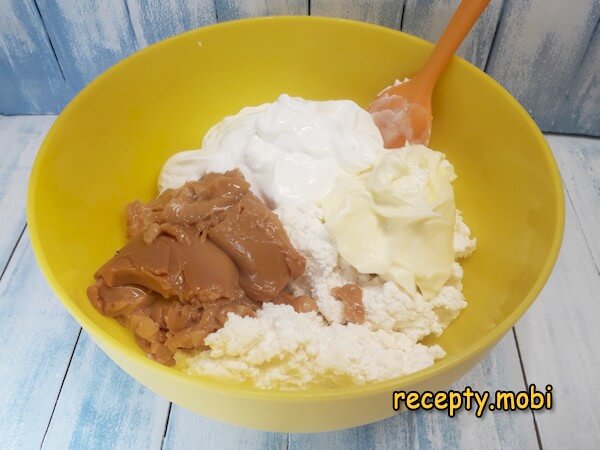
Mix everything until smooth and uniform — an immersion blender works perfectly. Result: silky tender base for the Easter dessert.
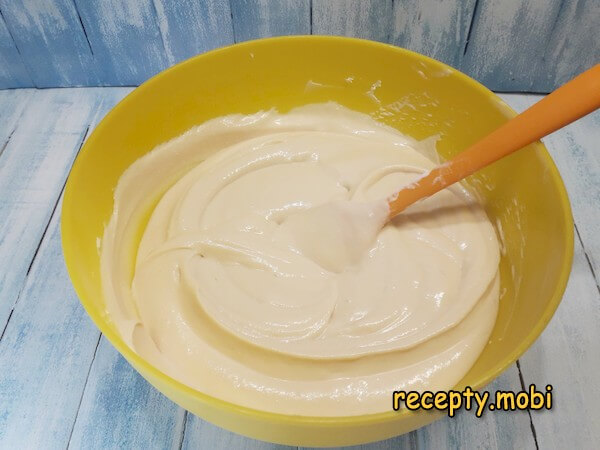
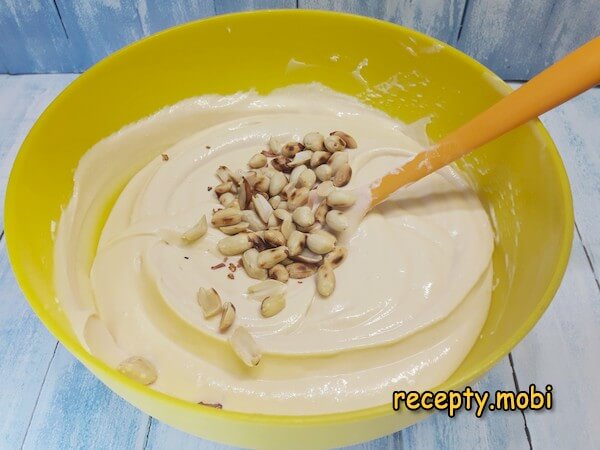
Add the chopped nuts to the mixture; fold in.
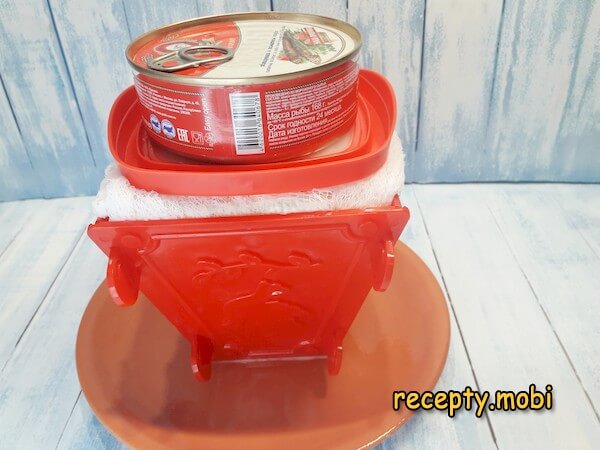
Prepare the mould lining: pour boiling water over a cheesecloth piece (sterilises and softens it); squeeze out water. Place the mould narrow-side-down on a plate (the plate catches whey). Line the inside with the cheesecloth (folded into 2 layers), leaving free edges hanging outside the top of the mould. Smooth folds by shifting them to corners.

Fill the lined mould with the cottage cheese mixture; press down to eliminate air pockets.
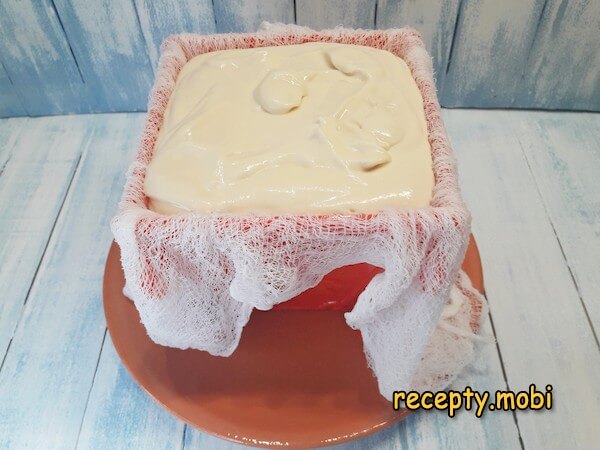
Fold the overhanging cheesecloth edges over the top of the mixture; cover the surface completely.
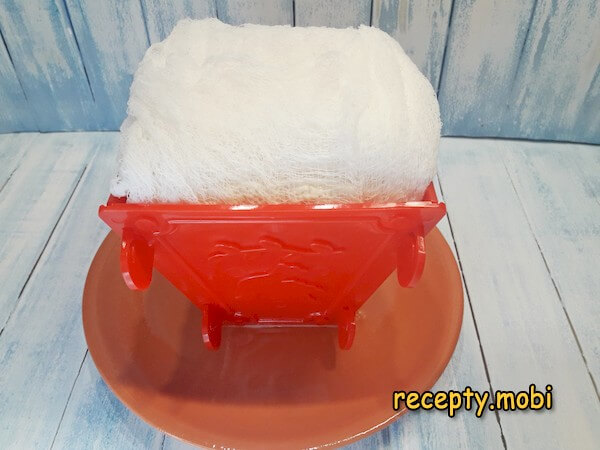
Place a small weight (200-300 g) on top of the cheesecloth — use a flat surface (small saucer) between the weight and the cheesecloth for even pressure distribution. Transfer the entire structure to the refrigerator. Rest 12+ hours minimum for proper compaction. Pour off accumulated whey from the plate 2-3 times during the rest period.
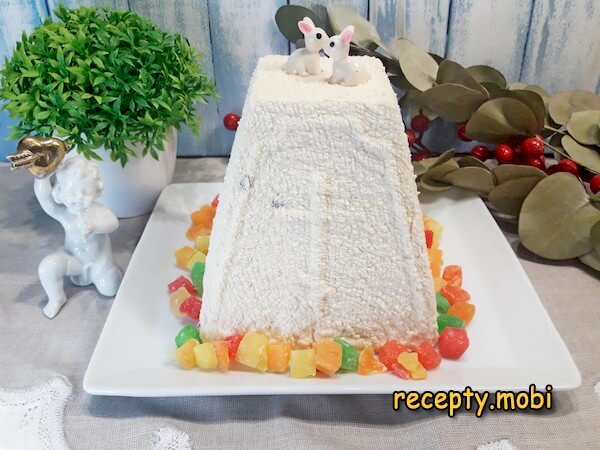
After full chilling, invert the mould onto a serving plate; carefully disassemble the mould; peel away the cheesecloth. Decorate the surface to taste (traditional decorations: powdered sugar pattern, fresh berries, nuts, candied fruits). Serve at the Easter Sunday table alongside kulich and dyed eggs.


Tips
- 1
THE BOILED-CONDENSED-MILK IS FLAVOUR FOUNDATION. Step 3's condensed-milk-boiling transforms ordinary sweetened condensed milk into "varenoye sgushchenoye" (boiled condensed milk, "dulce de leche" in Latin American cuisine). The 1.5-2 hour boil caramelises the sugars, develops deep brown colour, and produces complex caramel-toffee flavour. Without boiling: ordinary condensed milk = pale white, simple sweet flavour, lacks depth. Boiling is non-negotiable for the recipe's signature flavour. Some markets sell pre-boiled condensed milk (skip the boiling step) — check the dairy aisle. SAFETY: never boil un-opened can directly without water + cloth — explosion risk.
- 2
THE FATTY-DAIRY MANDATE. Step 1's emphasis on 9% cottage cheese + 20% sour cream isn't preference. Lower-fat versions release excessive whey during pressing, producing watery dessert with poor texture. Higher-fat versions hold structure beautifully and develop rich silky mouthfeel. Same principle applies to all dessert applications of cottage cheese (cheesecakes, syrniki, vareniki). Don't substitute "diet" or "fat-free" versions hoping to lighten the dessert — the recipe doesn't work with them. For another cottage-cheese Easter cake variation worth comparing, see Cottage Cheese Easter Cake with Candied Fruits.
- 3
THE WEIGHT-PRESSING IS STRUCTURE. Step 12's small weight (200-300 g) compresses the mixture, forcing out excess whey and creating dense uniform texture. Without weight: loose, slightly watery, doesn't hold the mould shape. With proper weight: firm, sliceable, holds the truncated-cone shape beautifully when unmoulded. Don't over-weight (more than 500 g compresses too much, produces brick-like texture) or under-weight (less than 100 g, insufficient pressing). The 200-300 g range is the calibrated sweet spot.
- 4
THE CHEESECLOTH SETUP IS CRITICAL. Step 9's cheesecloth-with-overhang setup enables both filling AND unmoulding. Cheesecloth too short: doesn't cover top, mixture sticks. Cheesecloth too thin: tears during pressing, produces messy unmould. The 2-layer fold + boiling-water sterilisation produces sturdy clean lining that releases the dessert smoothly. If cheesecloth unavailable: thin cotton kitchen towel works (pre-washed, sterilised). Don't use plastic wrap — interferes with whey drainage. For another cooked-version cottage-cheese Easter cake worth trying, try Cottage Cheese Easter in the Oven.
FAQ
What does "Easter" mean in the dish name? +
"Easter" (in Russian "Paskha") refers BOTH to the holiday AND the dish itself — Russian Orthodox tradition uses the same word for both contexts. The dish is specifically called "tvorozhnaya paskha" (cottage cheese Paskha) and is served exclusively for Easter Sunday celebration. The truncated-cone shape (formed by the special mould) symbolises the Tomb of Christ in Christian Orthodox iconography. Together with kulich (the tall sweet bread) and coloured eggs, the cottage cheese Easter forms the traditional triumvirate of Russian Orthodox Easter table. Each item has religious symbolism deeply embedded in centuries of tradition.
What if I don't have an Easter mould? +
Improvisations work. Best alternatives: small flowerpot (clean, lined with cheesecloth — drainage holes already built in), colander (lined with cheesecloth, place over a bowl for drainage), pyramid-style cake mould (creates similar truncated cone shape), or even a clean plastic strawberry-basket (already has drainage holes). The key requirements: drainage path for whey + container that can be inverted for serving. Skip metal moulds without drainage (whey can't escape, dessert stays soggy). Special Russian-style Easter moulds (wooden traditional or modern silicone) are available at Eastern European specialty stores.
Can I use other ingredients? +
Yes — the basic recipe accepts thoughtful additions. Best add-ins (folded in at step 8 with nuts): candied fruits (most traditional addition), raisins (soaked in warm water 10 min, drained), dried apricots (chopped fine), chocolate chips, vanilla extract (1 tsp), lemon zest, orange zest, a tablespoon of cocoa powder (chocolate version). Avoid: fresh fruits (release water, ruin texture), chopped chocolate bar (melts/separates during pressing), large nut pieces (interfere with even compression). Flavour additions enhance the base without disrupting structure.
How long does it keep? +
Refrigerated, 5-7 days at peak quality. The dish is essentially a cured cheese product — keeps better than most dairy desserts due to the pressing-out of moisture and the high-fat-content matrix. Storage method: keep in the original mould (covered with plastic wrap), OR transfer to a covered container after unmoulding. Don't freeze — the texture suffers significantly on freeze-thaw cycle. The flavours actually improve over the first 24-48 hours after preparation as the boiled-condensed-milk and cottage-cheese flavours integrate. Best made 1-2 days before Easter Sunday for peak flavour at the celebration table.
- Comment
or post as a guest
Be the first to comment.