avg —
Crab Sticks in Batter

Instructions
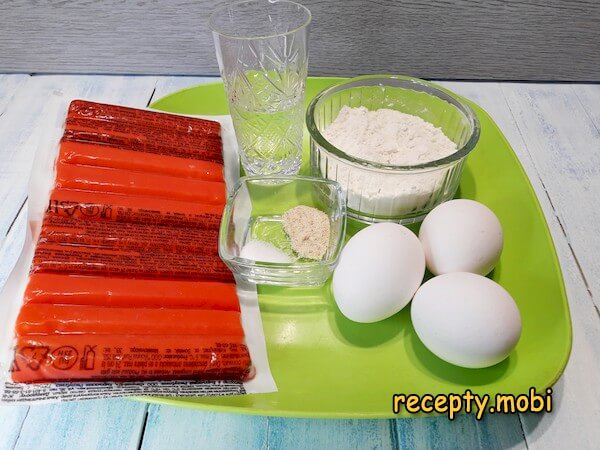
I prepare the ingredients for crab sticks in batter. Dried garlic adds piquancy but can be omitted if not available. CRITICAL: crab stick quality matters enormously — buy firm, tightly-wound surimi sticks (premium brands). Cheap loose-wound sticks fall apart during frying, tearing the batter. If sticks have been frozen, thaw fully before use (water in frozen sticks expands during frying, ruining the batter coating).
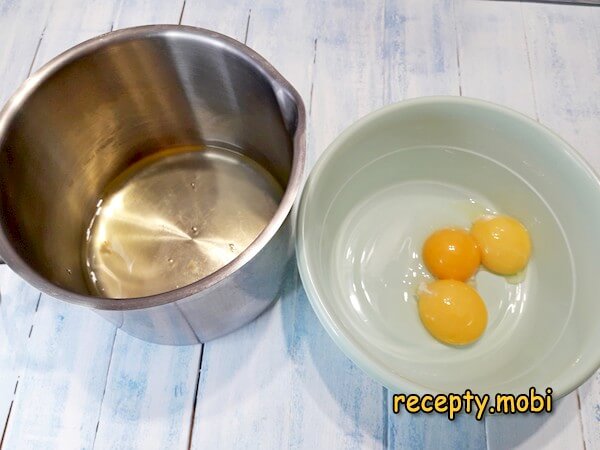
Separate egg whites from yolks into TWO different bowls. Critical: any yolk fragment in the whites prevents proper whipping (yolk fat inhibits foam formation). Use the cleanest possible separation.
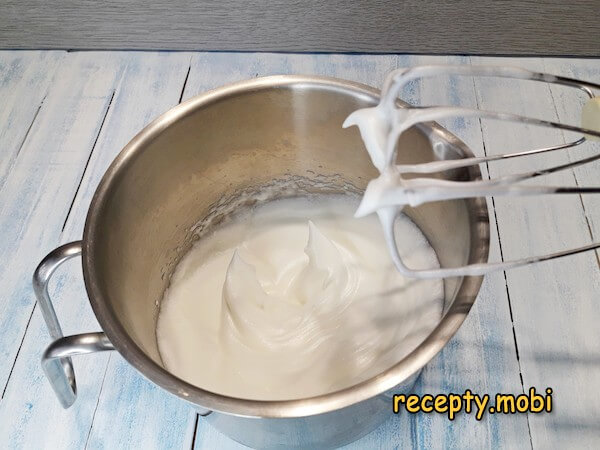
Beat egg whites with a mixer — START at low speed, gradually increase to high. The slow-start ensures even foam structure; jumping straight to high speed produces unstable foam that collapses fast. Beat to STIFF PEAKS — the foam should hold its shape on the whisks without slipping or falling.
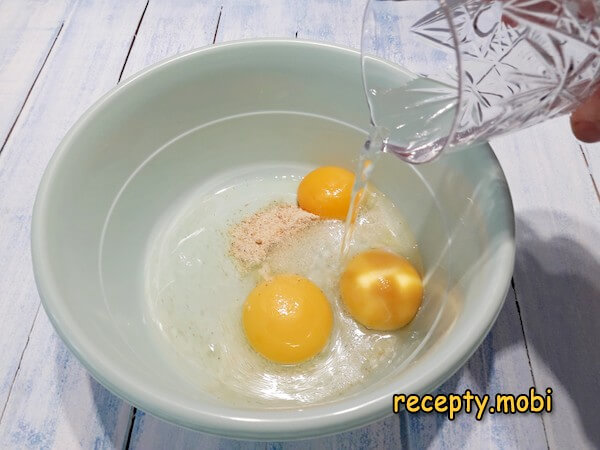
To the yolks bowl: add salt, dried garlic, and water.
Add all the flour at once to the yolk mixture.
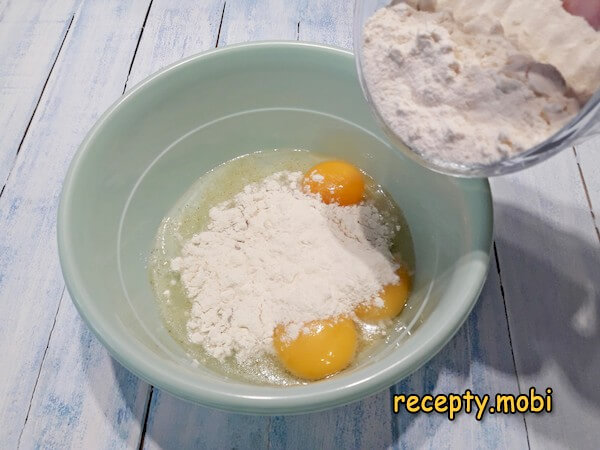
Mix with the same mixer (no need to wash first — yolks don't contaminate downward like whites). Don't over-mix — combine just until the components integrate. The result is a thick paste that looks too dense to be a frying batter; this changes dramatically once whites are folded in.
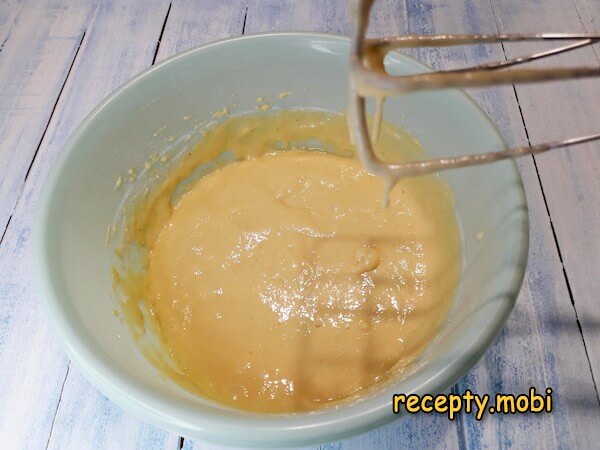
Add HALF the whipped whites to the yolk mixture. Use a spatula and FOLD gently — no aggressive stirring (collapses the foam). The folding direction: bring batter from below up over the whites, rotate bowl, repeat.
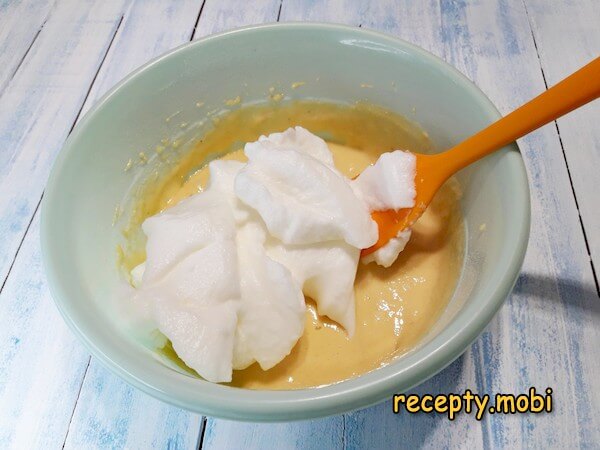
Add the remaining egg whites; fold in carefully with the same gentle technique. Goal: maintain maximum air in the foam while achieving uniform incorporation.
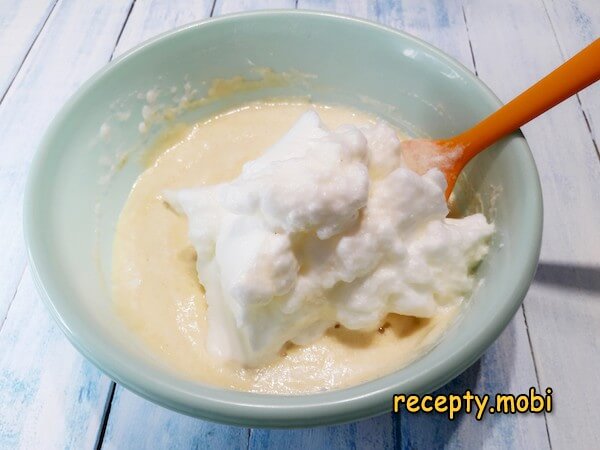
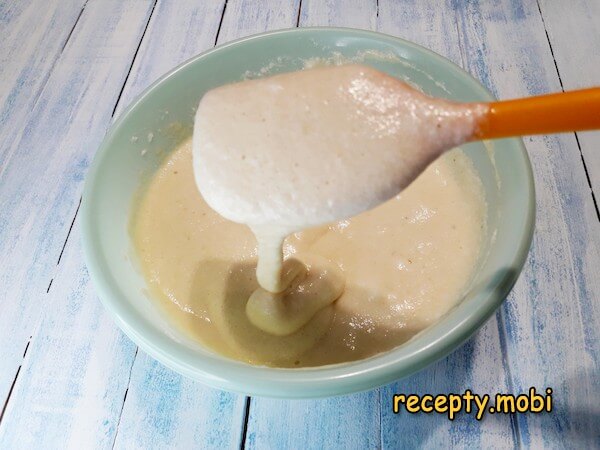
The result: light airy batter with the texture of sponge cake batter — soft, fluffy, holds soft peaks briefly before settling. Perfect coating consistency.
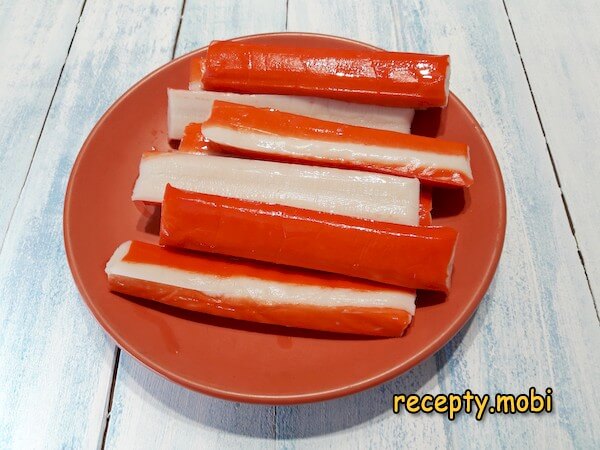
Remove the plastic wrap from each crab stick. Lay them on a plate, ready for battering.
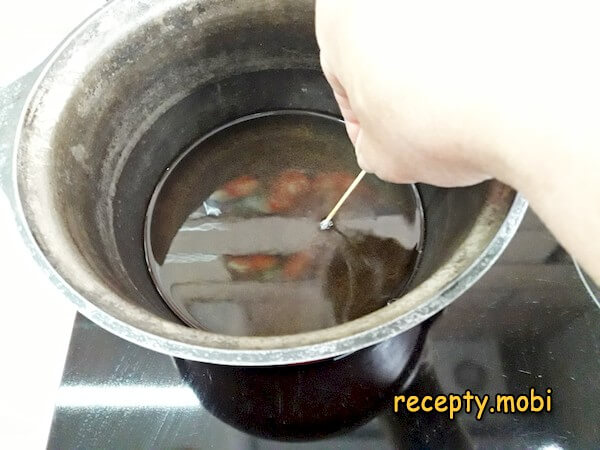
Pour enough vegetable oil into a deep saucepan that submerged sticks can float without touching the bottom (3-4 cm depth minimum). Heat on max heat first; test with a wooden skewer — small bubbles should gather on its surface (oil temperature ~170-180 °C). Reduce heat to slightly-above-medium for actual frying.
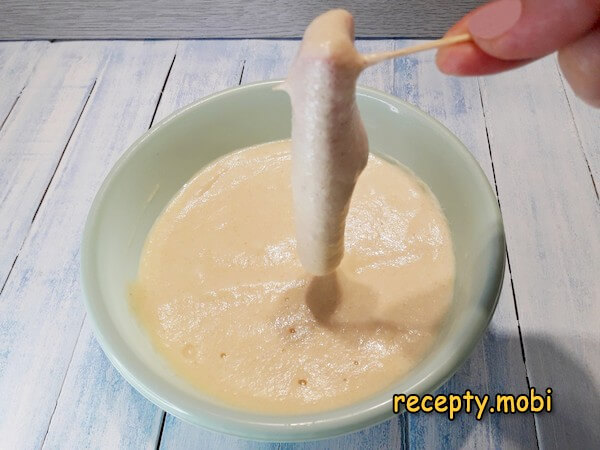
Pierce a crab stick with a toothpick (acts as a handle). Dip into the batter, rotating to coat completely. Lift and let excess batter drip off briefly — overly thick batter coating won't crisp properly.
Lower the battered stick into the hot oil. Wait 5-7 seconds — the batter surface sets slightly, becoming non-stick. NOW it's safe to add the next stick (without setting wait, fresh batters touch each other and merge).
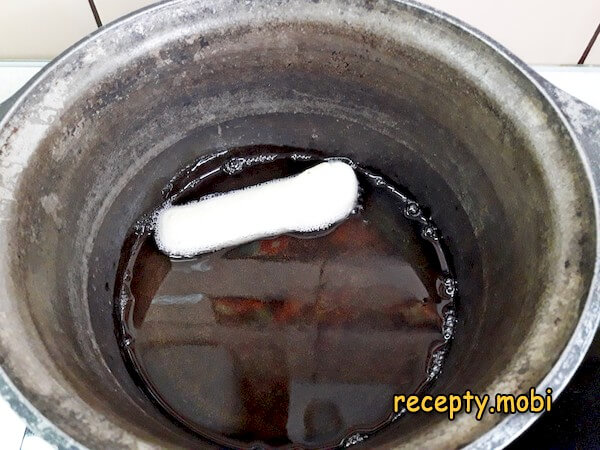
Add the next battered stick. Fry both until golden on all sides (turn with toothpick or slotted spoon for even colour) — total cooking time per stick is about 2 minutes.
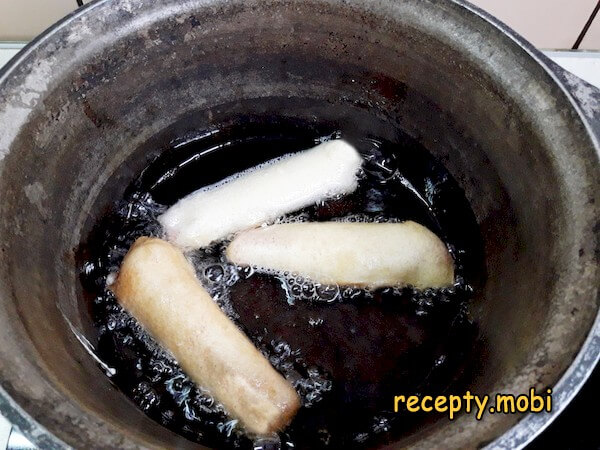
Transfer the cooked sticks to a paper-towel-lined plate to absorb excess oil from the surface.
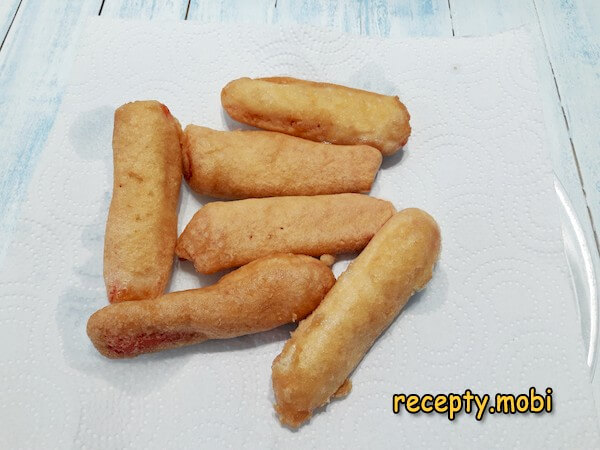
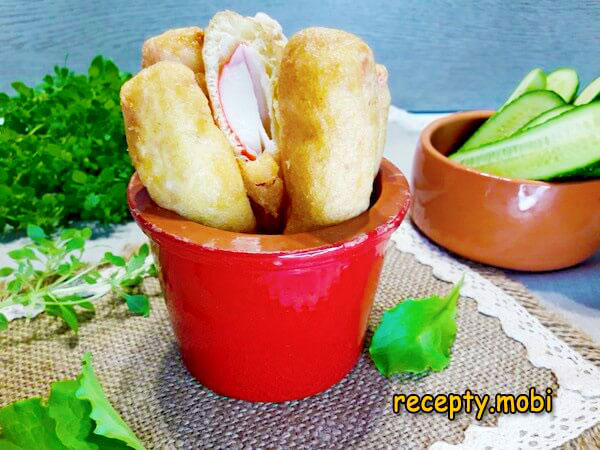
The crab sticks in batter are ready. Serve with fresh herbs and ranch sauce for dipping. The crab stick interior retained its juiciness — the airy batter coating "wrapped" it perfectly during frying, sealing in the moisture. The crispy golden crust + porous tender batter centre + tender juicy crab stick interior creates a remarkable textural cascade in every bite.


Tips
- 1
THE EGG-WHITE-LAST METHOD IS BAKERY SCIENCE. Step 7-8's egg-whites-folded-in-last technique produces the airy sponge-cake-like batter that defines this recipe. The whipped whites trap air; folding them in carefully preserves the air pockets through to frying. The sudden hot-oil contact converts those air pockets to steam, expanding the batter dramatically into the final porous texture. Whisking eggs whole into the batter (instead of separating + whipping whites) produces a flat dense coating — same ingredients, vastly different result. Master this technique once.
- 2
THE 5-7 SECOND WAIT IS BATTER PHYSICS. Step 13's brief wait between sticks isn't decorative timing — it prevents merger disasters. Wet batter on contact with another wet batter merges instantly, gluing the sticks together into a single mass. The 5-7 second oil-set creates a non-stick exterior on the first stick, allowing safe addition of the second. Without this wait: half-fried merged blob. With wait: individual perfect sticks. For another lavash-based crab-stick appetiser format worth comparing, see Lavash Roll with Imitation Crab Sticks.
- 3
THE CRAB STICK QUALITY DIRECTLY DETERMINES SUCCESS. Quality variations among crab sticks are huge — from premium ($-$$) to budget ($) versions. Premium sticks are firm, tight-wound, hold their shape during frying perfectly. Budget sticks are loose, soft, fall apart during oil contact, tearing the batter and producing a mess. The 15-minute prep effort + ingredient cost + skill is wasted on bad sticks. Spend the extra dollar — buy premium sticks. The "Vichi", "Snejana", or comparable Russian-market premium brands; in Western markets, Japanese-imported "kani" surimi or store-brand premium versions.
- 4
THE TOOTHPICK HANDLE IS PROFESSIONAL TRICK. Step 12's toothpick technique solves a real frying problem. Without a handle: dipping crab sticks into batter using fingers means battered fingers + uneven coverage + difficulty placing into hot oil. With toothpick: clean fingers + even coverage + safe placement + easy retrieval. Same principle applies to all batter-fried foods (onion rings, pakoras, fried Mars bars). Always have toothpicks ready when batter-frying. For another cheese-and-crab-stick appetiser worth trying, try Raffaello from crab sticks and cheese.
FAQ
Are crab sticks actually crab? +
No — despite the name, crab sticks contain little or no actual crab. They're "surimi" (Japanese for "ground meat"), made primarily from white-fish protein (often pollock or whiting), processed into paste, mixed with starch and flavourings, formed into sticks, coloured red on one side, and packaged. The "crab" in the name refers to the IMITATION crab flavour profile achieved through artificial flavourings (sometimes including small amounts of real crab extract). The product was developed in Japan in the 1970s as an affordable seafood substitute. Quality variations: premium versions use higher fish-content; budget versions are mostly starch.
Can I use a different batter type? +
Yes — but the airy egg-white-folded version (this recipe) is the best for crab sticks specifically. Alternatives that work: standard tempura batter (lighter Japanese version, even crispier), beer batter (English fish-and-chips style, golden colour), basic flour+water+egg batter (simpler, denser). Avoid: bread crumb coatings (texture too heavy for delicate crab sticks), very thick yeast-based batters (overwhelms the delicate filling). The egg-white-folded version is the winner because its lightness matches the delicate crab stick perfectly — heavier batters dominate the filling.
What sauces work best? +
The standard pairing is ranch sauce (creamy + tangy + herby), as mentioned in the recipe. Other excellent dips: tartar sauce (classic seafood pairing), garlic-mayo aioli (rich pungent), sweet chili sauce (Asian fusion contrast), cocktail sauce (tomato-horseradish brightness), or simple lemon wedges (clean light option). For party platters: serve 3-4 different sauces in small bowls so guests can experiment. The crab sticks' mild flavour accepts almost any condiment style. Pair with chilled beer, white wine, or sparkling water — the dish handles each beverage type well.
Why does my batter slide off the sticks? +
Three common causes. First: wet sticks (frozen-thawed surimi releases water). Solution: pat dry with paper towel before battering. Second: too-thin batter. Solution: the recipe batter should leave a thick visible coating after dipping — if it runs off like cream, add 1 tbsp flour. Third: oil too cool. Solution: pre-heat to proper temperature; the batter should sizzle immediately on contact, setting the surface fast enough to stay attached. The combined fix: dry surimi + proper-thickness batter + hot oil = clean adherent coating that survives the frying process.
- Comment
or post as a guest
Be the first to comment.