avg —
Delicious Easter Kulich (Doesn't Stale Quickly)

Instructions
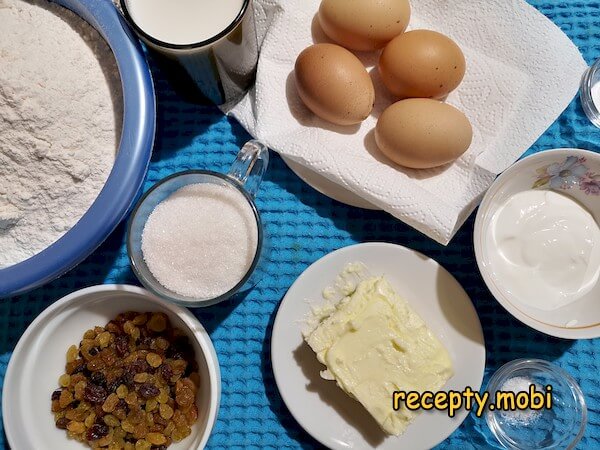
I prepare the ingredients. Rinse raisins + chicken eggs under running water. Butter and eggs MUST be at room temperature. For sweeter kulich: increase sugar by 20-30 g.
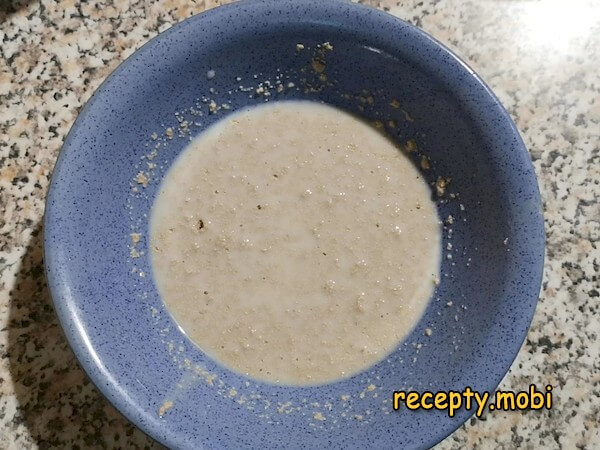
Prepare the leaven (small starter): mix 40 ml warm milk + 10 g dry yeast + 1 tsp sugar (from the total). Place in warm spot to activate.
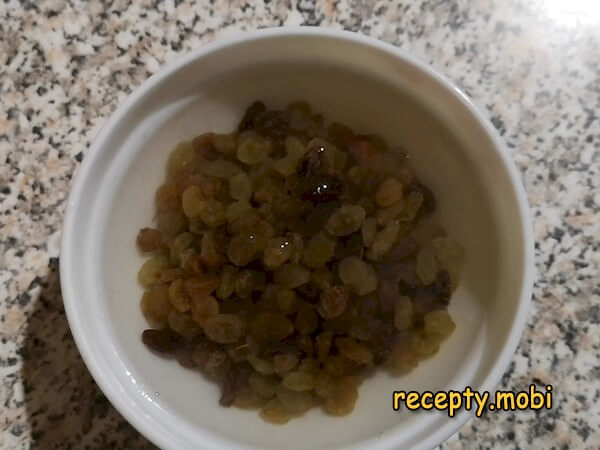
Soak raisins in boiling water; let cool completely.
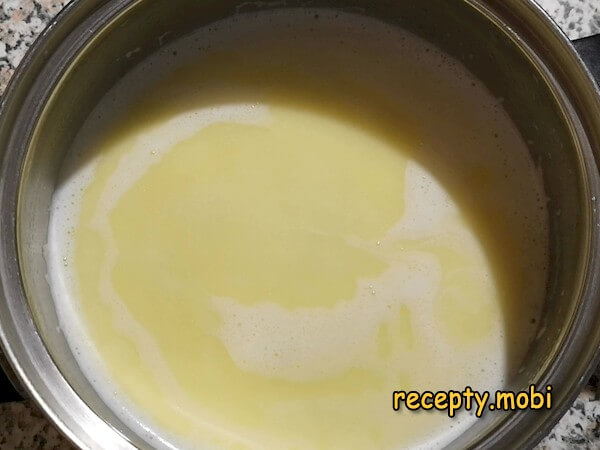
While raisins cool, pour remaining milk (210 ml) into saucepan; add 50 g butter (from total 120 g). Heat over medium heat; stirring occasionally, bring to boil; remove from heat.
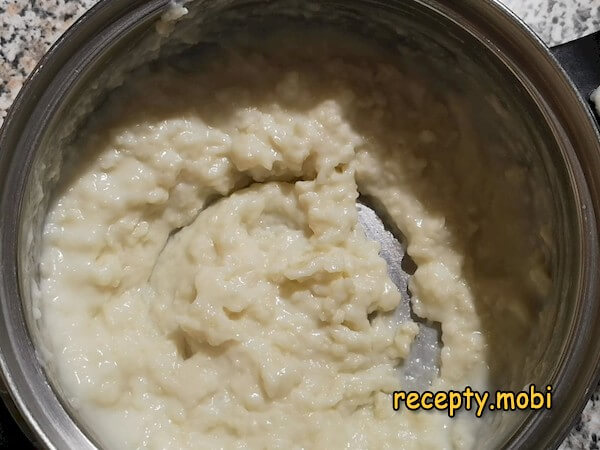
Add 2 heaping tbsp flour (from total 700 g) to the hot milk-butter mixture; stir to integrate. This is the CUSTARD-FLOUR component — produces the long-lasting tender crumb. Let cool completely.
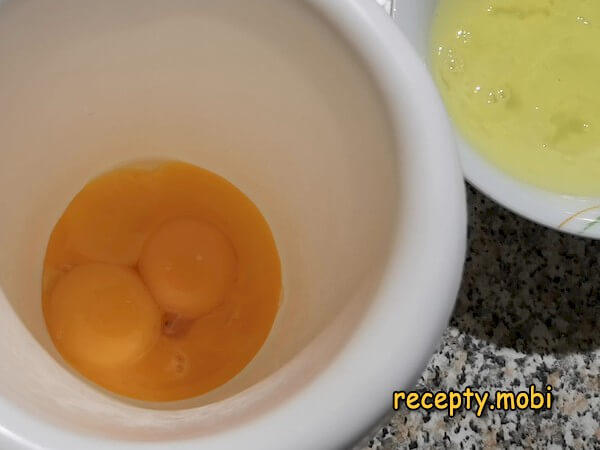
Separate eggs into yolks + whites (different bowls).
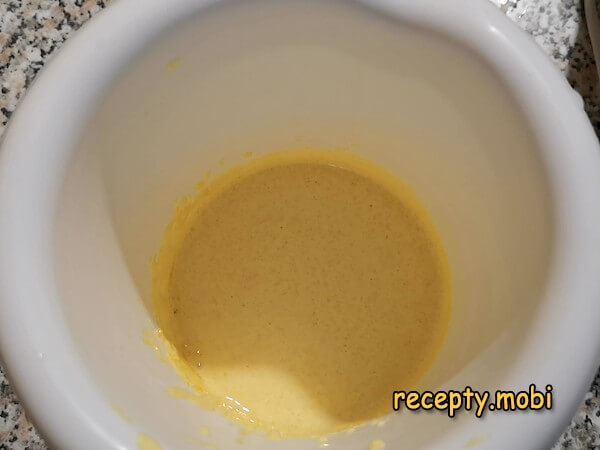
To the yolks: add 1 g vanillin + 1/3 tsp salt + 1/3 tsp turmeric + 70 g sugar (from total 150 g). Whip with mixer 30 seconds until pale fluffy.
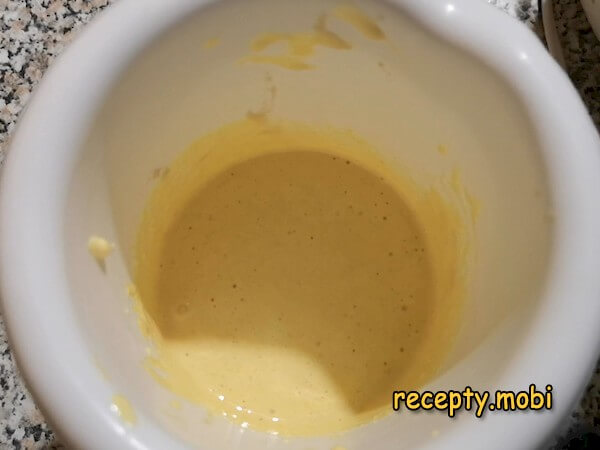
Add the activated leaven (from step 2) to the yolk mixture; mix together.
To the egg whites: add remaining sugar (80 g); beat with mixer 1-2 minutes until frothy.
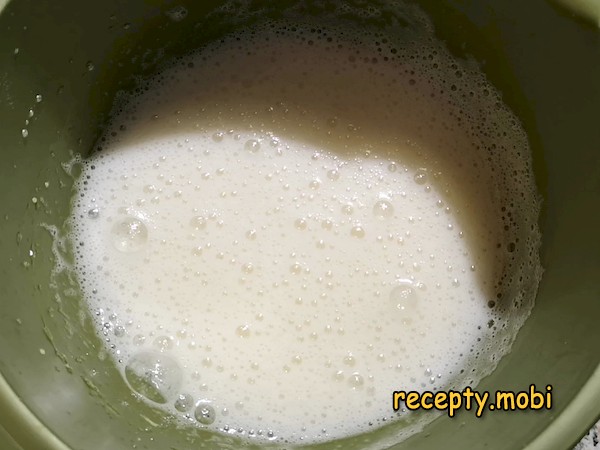
Add 4 tbsp sour cream + remaining 70 g butter to the whipped whites; mix well.
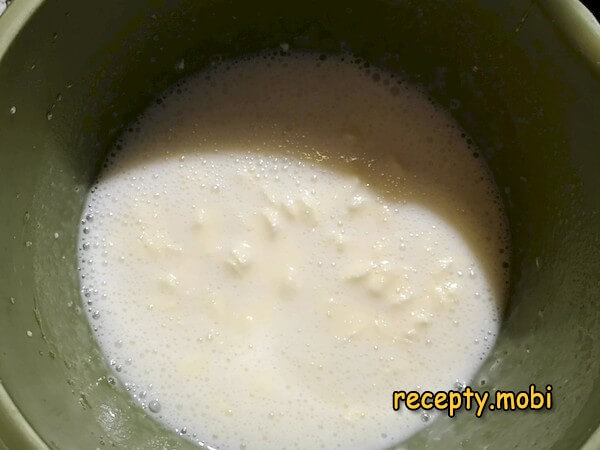
In a deep container: combine the yolk mixture + the egg-white mixture + the cooled custard-flour mixture. Stir to integrate.
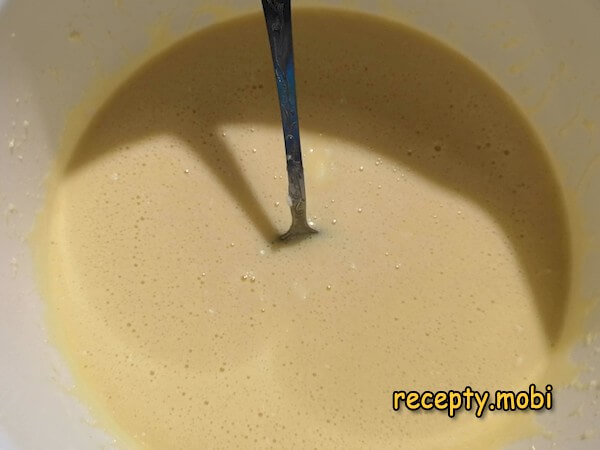
Gradually sift remaining flour into the wet mixture; mix together.
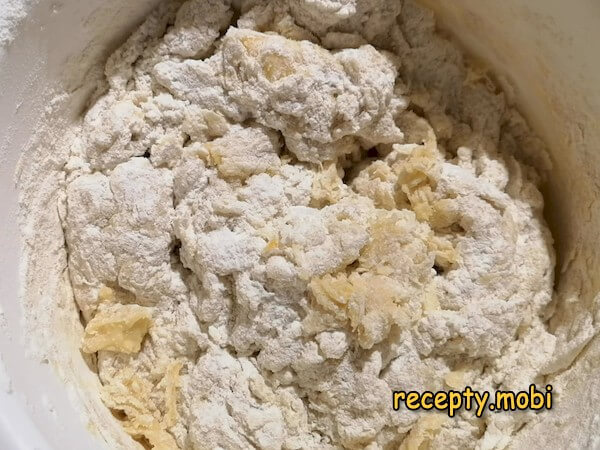
When dough becomes too thick to mix, transfer to floured work surface; knead by hand. Finished dough: slightly sticky to hands (correct texture).
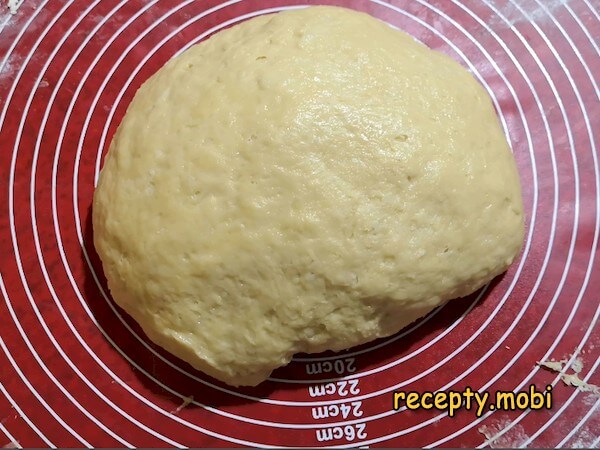
Transfer dough ball to a deep container; cover with plastic wrap. Place in warm spot; rise 1.5 hours.
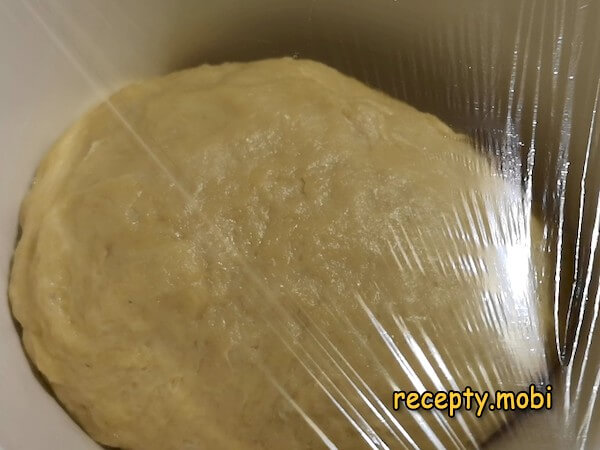
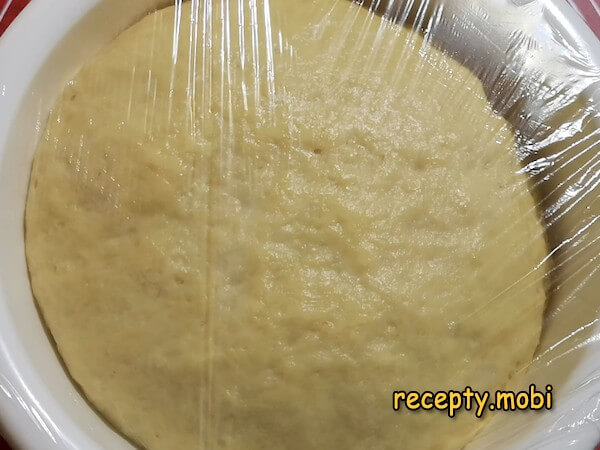
After 1.5 hours, dough has significantly increased in volume.
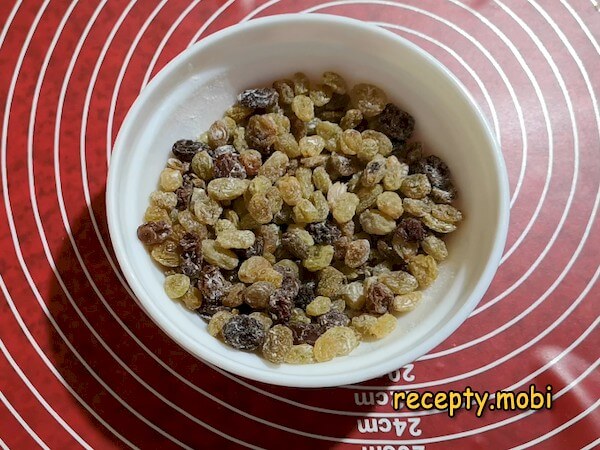
Drain raisins; pat dry. Toss with 1 tsp flour (prevents clumping).
Carefully transfer dough to work surface — DON'T add more flour. Place flour-coated raisins on top.
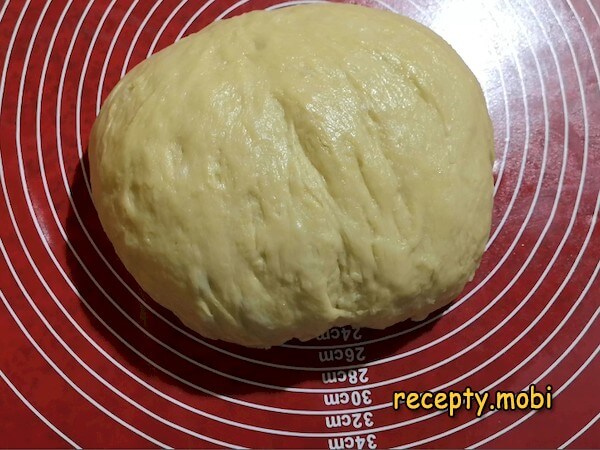
Lightly grease hands with vegetable oil; incorporate raisins into the dough by hand-kneading.
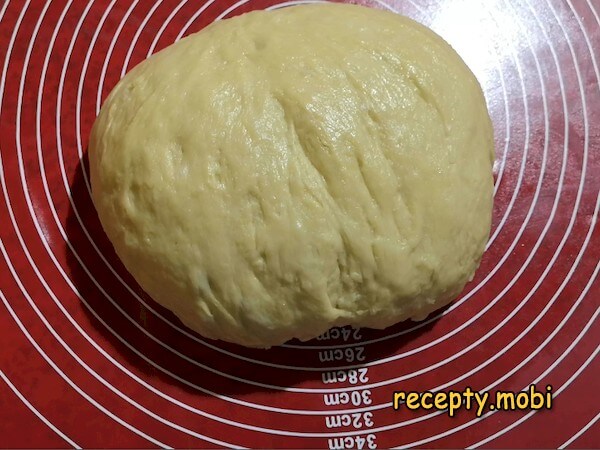
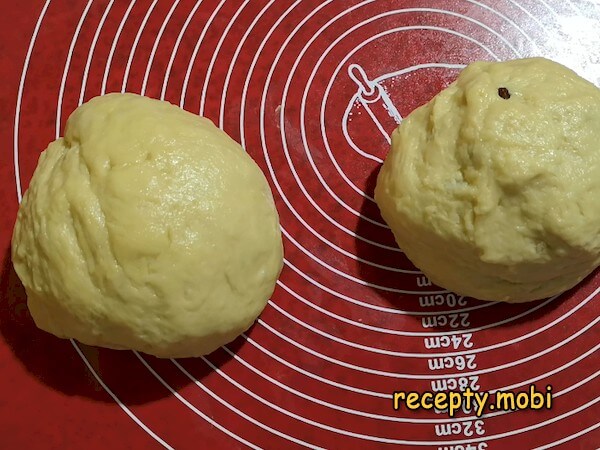
Divide dough into 4 portions (for 4 kulich, 11 cm dia each). Shape each portion into a ball. Fill kulich moulds 1/3 with dough.
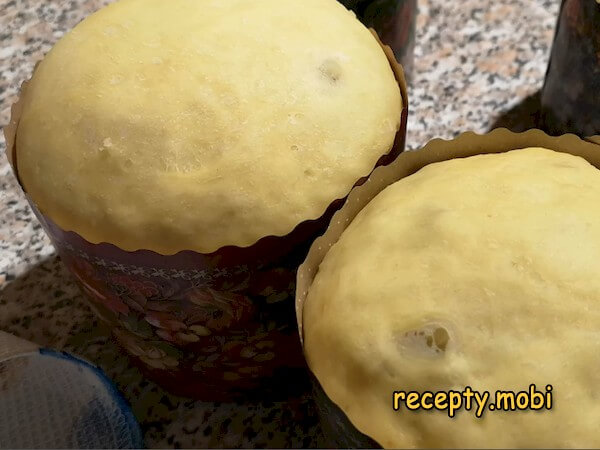
Place moulds in warm spot; cover with towel. Wait for dough to rise to mould tops (about 1 hour).
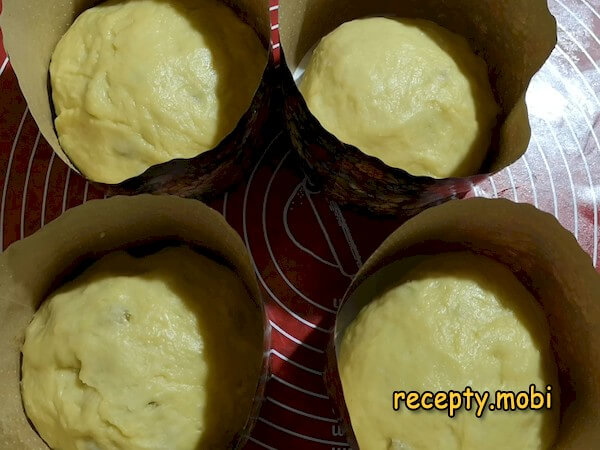
After full proofing, the kulich have risen near mould tops.
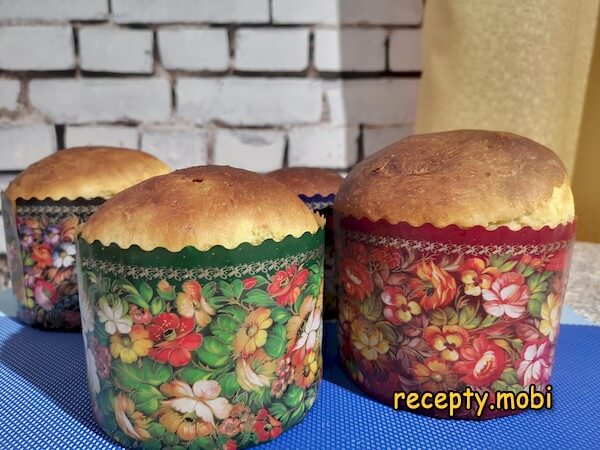
Bake at 170 °C for 30 minutes. Test doneness with wooden skewer (should come out dry). Remove from oven; cool completely.
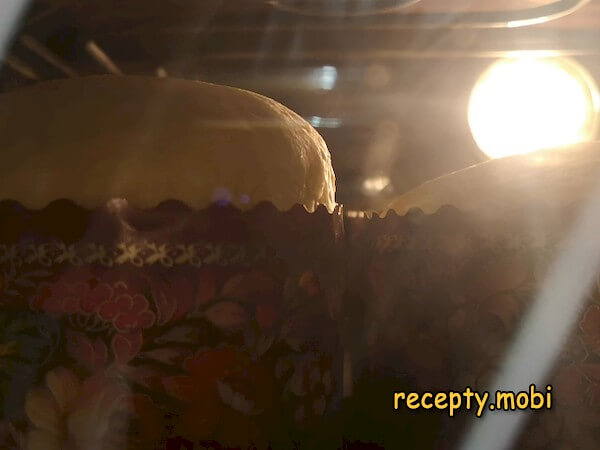
The kulich is basically ready — just decoration remains.
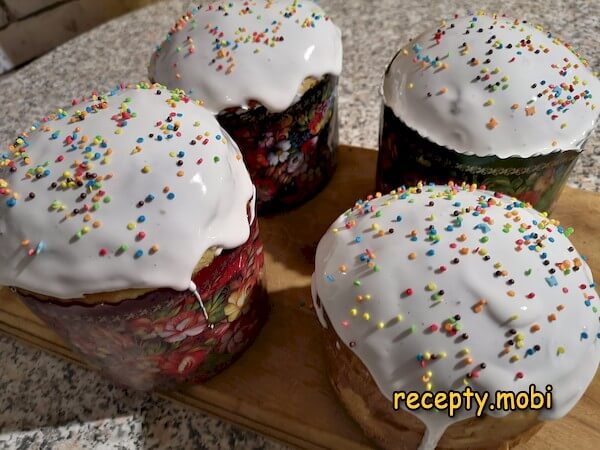
Coat with gelatin icing (no-egg version, doesn't crumble). While icing is still wet, sprinkle with festive decorations.Bright Easter!


Tips
- 1
THE CUSTARD-FLOUR TECHNIQUE IS FRESHNESS HACK. Step 4-5's "milk + butter + flour brewed separately" is the recipe's secret weapon. The pre-cooked flour-milk paste hydrates the gluten + starches BEFORE incorporating into the main dough — this preserves moisture in the finished bread for days. Conventional kulich without this step: stales in 3-4 days. With this step: 10-14 days fresh. Same technique appears in Asian "tangzhong" / "yudane" bread methods. Universal long-keeping bread principle.
- 2
THE THREE-WAY SEPARATION (yolks + whites + custard). The recipe combines THREE distinct preparation streams: yolk mixture (with sugar/spices/leaven), white mixture (with sour cream/butter), custard-flour mixture (with cooked-flour-paste). Combining these three in step 11 produces dough with all three structural advantages: yolks for richness, whites for lift, custard for moisture-retention. Standard single-stream mixing produces less complex, less long-keeping result. The extra prep work pays off in dramatically better kulich. For another cinnamon-nut Easter kulich variation worth comparing, see Easter Kulich with Cinnamon and Nuts Made with Dry Yeast.
- 3
THE FLOUR-COATED RAISINS DISTRIBUTION. Step 16's raisins-tossed-in-flour is universal baking wisdom. Raisins are dense + sticky; they sink to the bottom of risen dough during baking unless coated. Flour coating creates friction with the dough, preventing both clumping AND sinking. The 1 tsp flour quantity is small (doesn't change the dough chemistry) but creates significant texture distribution improvement. Same principle works for chocolate chips, chopped nuts, dried fruits in any baked good.
- 4
THE DON'T-ADD-MORE-FLOUR DURING PROOFING. Step 17's "DON'T add more flour" instruction is critical. Many bakers feel tempted to add flour when working risen dough that's slightly sticky — this is wrong. The slight stickiness is correct texture; added flour during shaping produces dense heavy kulich with poor rise. Use oil-greased hands instead of flour to handle the sticky dough. Same principle applies to all enriched yeasted breads — protect the established hydration. For another rich kulich with perfect icing variation worth trying, try Rich Easter Kulich with Perfect Icing.
FAQ
What is the "doesn't stale" technique exactly? +
The recipe's freshness extension comes from THREE technique elements working together. First: custard-flour pre-cook (gelatinises flour starches, retains moisture). Second: high egg + butter content (creates fat-water emulsion that resists drying). Third: sour cream addition (adds extra fat + slight acidity that maintains tender crumb). Combined effect: 2-3× longer shelf life than basic yeast kulich. The science is similar to commercial bread industry's "moisture retention" research — slow-fermentation breads with custard-component last dramatically longer than quick-yeast breads. Apply the same techniques to other yeasted breads for similar results.
Can I substitute fresh yeast for dry? +
Yes — the recipe explicitly states the conversion: 10 g dry yeast = 25 g fresh compressed yeast (2.5× ratio). Fresh yeast considerations: must be very fresh (check expiration date carefully — fresh yeast expires within 2 weeks of purchase). Dissolves into warm milk faster than dry yeast. Slightly more vigorous fermentation. Same proofing times apply for both. For practical home use: dry yeast more shelf-stable + widely available; fresh yeast slightly better flavour but harder to source. Both produce excellent results in this recipe.
Why is turmeric optional? +
Turmeric provides the traditional GOLDEN-YELLOW colour that distinguishes Easter kulich from ordinary white-crumb breads. Without turmeric: kulich is paler/whiter (still delicious but less visually traditional). The 1/3 tsp quantity adds NO detectable flavour to the finished bread — purely a colour additive. Some bakers add saffron instead (more luxurious, more complex flavour, more expensive) — same yellow colour effect plus subtle flavour. Some skip both — produce naturally cream-coloured kulich that emphasises the egg/butter richness visually. Choose based on traditional preference + ingredient availability.
How long does it actually keep? +
Properly prepared, this kulich keeps 10-14 days at room temperature in airtight storage. Compare to ordinary kulich (3-4 days). Storage conditions: airtight container OR plastic wrap, room temperature, away from direct sunlight. Don't refrigerate (drys faster than room temperature for breads). Freezing: works exceptionally well (3-month freezer life), thaw at room temperature 4 hours. The custard-flour technique is the magic — try this technique with your favorite kulich recipe and observe similar improvement. The dish remains soft + flavourful through the entire Russian Orthodox Easter Bright Week and beyond.
- Comment
or post as a guest
Be the first to comment.