avg —
Dorado in foil in the oven

Instructions
I prepare ingredients for dorado in foil. Fish cooks on VEGETABLE BED — vegetable quantities are calibrated for 2 medium dorados. Preheat oven to 180 °C immediately.
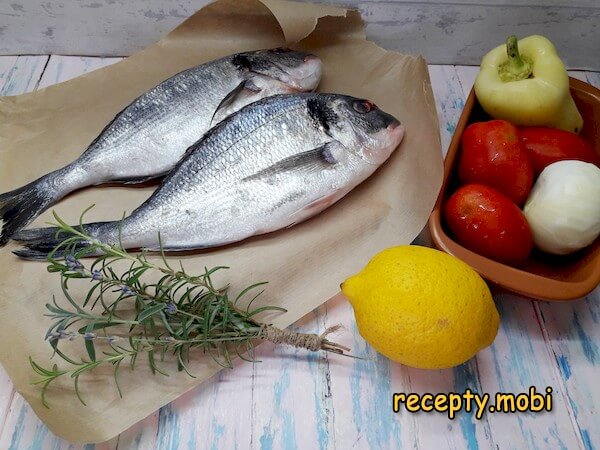
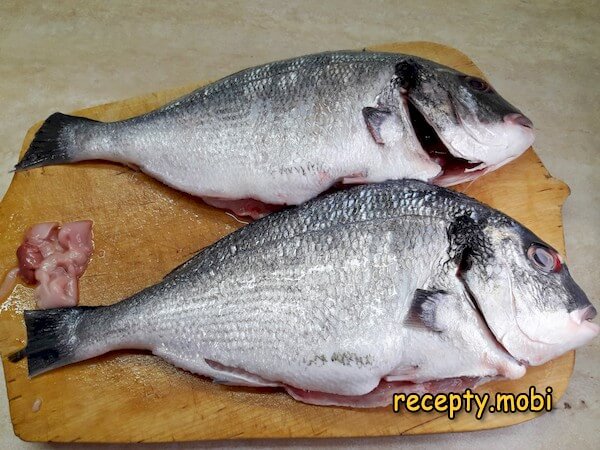
SAVE TIME: ask seller to clean fish at purchase, OR clean yourself. Scale from tail-to-head. Cut off fins (especially back fins — tough + spiny). Make belly cut; carefully remove organs WITHOUT crushing gallbladder. Rinse carcass; scrape off small black film along ribs.
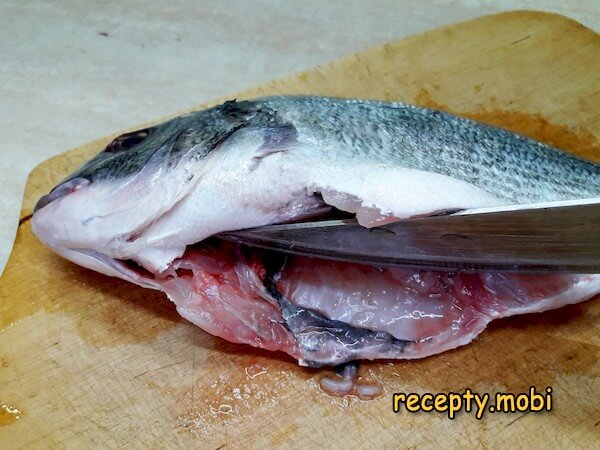
Remove gills + gallbladder. If gallbladder UNDAMAGED + bile didn't spill on liver/internal fat: leave them in carcass.
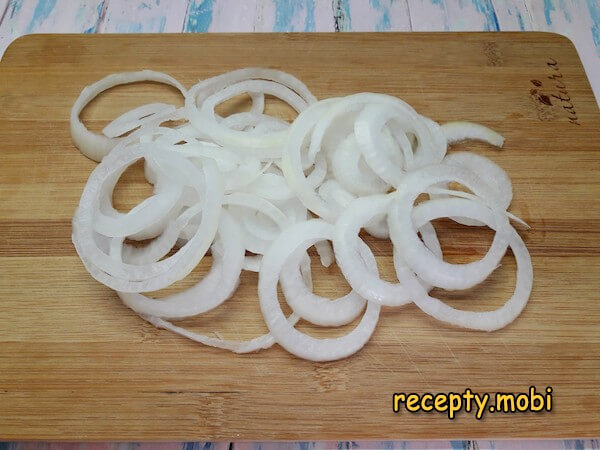
Cut onion into rings; separate them.
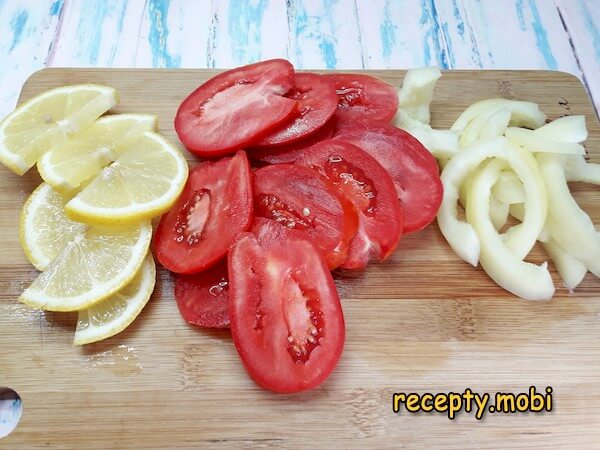
Cut tomatoes into circles; lemon into HALF-circles; sweet pepper into strips.
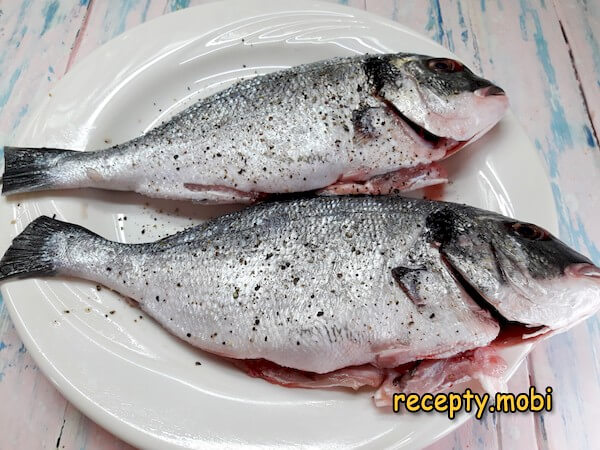
Salt + pepper fish INSIDE + OUT. Generously oil hands; rub spices into fish (oil helps spices adhere).
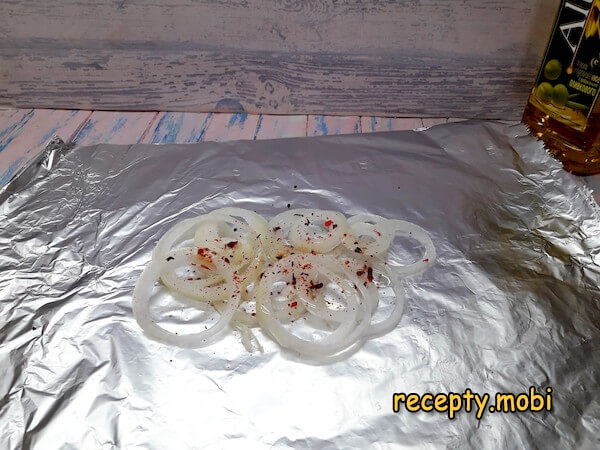
If foil is loose: fold in HALF (double-thickness for durability). Place HALF the onion rings in middle; sprinkle with paprika; drizzle with olive oil.
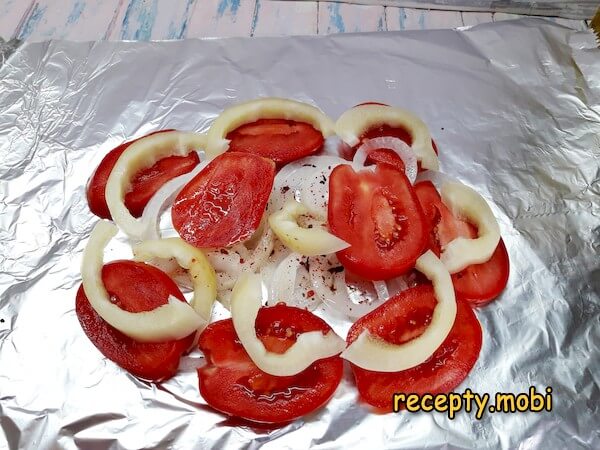
Enhance vegetable bed with tomatoes + bell peppers (LAYER 2).
Place fish ON TOP of vegetable bed. Juice released by fish soaks into vegetables, makes them tasty + juicy + harmonizes with sweet-tender dorado.
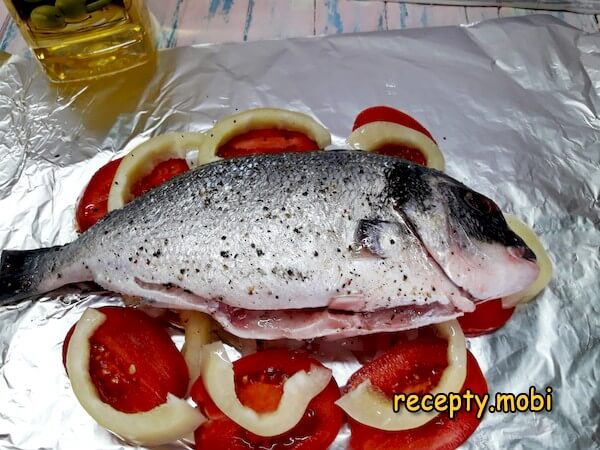
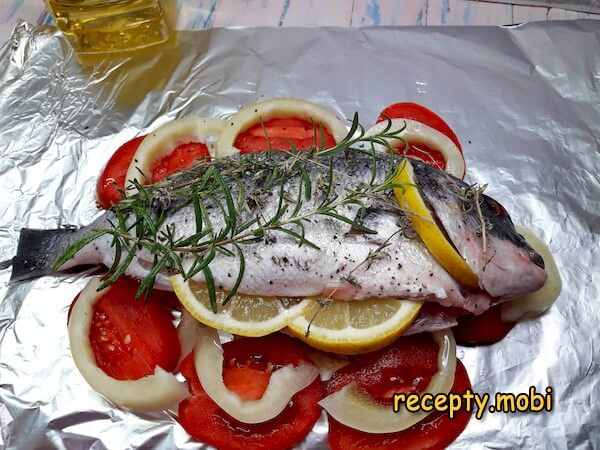
Stuff lemon wedges into BELLY + UNDER GILLS. Place rosemary + thyme sprigs on BACK.
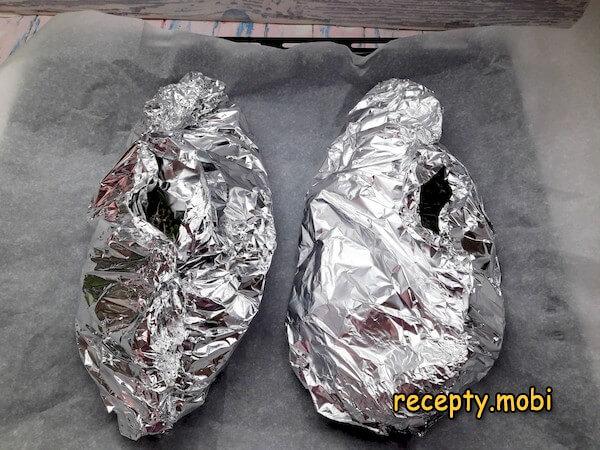
Gather foil into KNOT; leave SMALL HOLE at top (avoids condensation). Transfer to baking sheet; place in oven.
After 20 min: UNFOLD foil maximally (carefully — don't spill juice). Continue baking exposed for browning.
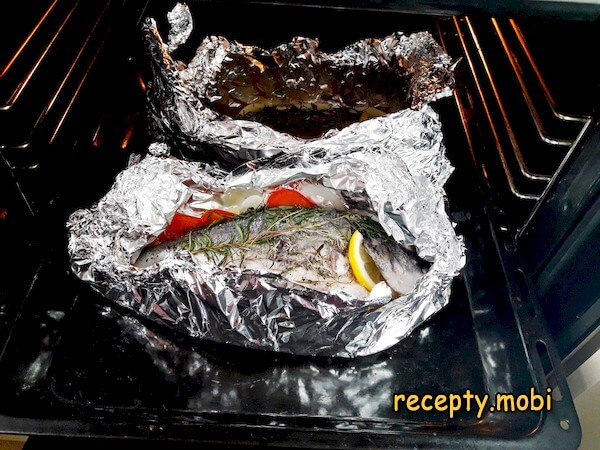
After 10 more minutes: remove fish from oven.
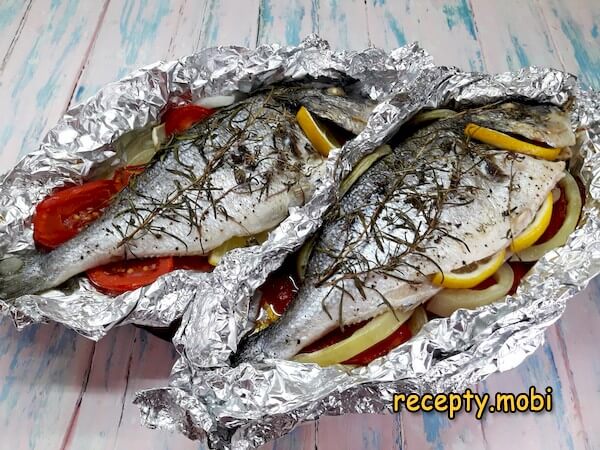
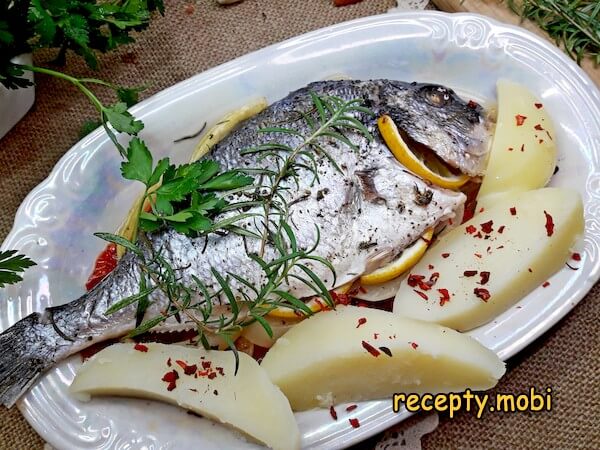
Baked dorado in foil is ready. Serve fish WHOLE in foil. OR transfer carefully to plate with boiled potatoes + fresh vegetables. The dried spicy sprigs (during baking) are better REPLACED with FRESH ones for serving. Bon appétit!


Tips
- 1
THE 2-STAGE BAKING TECHNIQUE. Step 11-13's sequence (sealed foil 20 min + open foil 10 min) is calibrated cooking science. SEALED PHASE: traps steam, gentle cooks fish through evenly without drying. OPEN PHASE: allows browning, develops crisp skin, intensifies flavors. Without open phase: fish is steamed but not browned (less appealing visually). Without sealed phase: fish dries during 30-min baking. The 2-stage approach combines best of both methods. Same technique used for: French papillote (fish in parchment), Mediterranean wrapped-fish preparations, Japanese hoiyaki.
- 2
THE VEGETABLE-BED INFUSION. The vegetables (steps 7-9) serve dual purpose. FUNCTIONAL: creates barrier between fish + foil (prevents sticking), ABSORBS fish juices (becomes flavorful side-dish). FLAVORFUL: aromatics (onion + tomato + pepper) infuse into fish during cooking. The "two-dishes-in-one" concept means: complete meal from one foil package. Removing vegetables ruins the magic — fish+veg combo is recipe-essential. For another foil-baked seafood preparation worth comparing, see Salmon in Foil with Vegetables.
- 3
THE FRESH-VS-FROZEN FISH IMPORTANCE. The intro emphasizes "chilled, not frozen" preference. CHILLED dorado: firm flesh, clean ocean flavor, optimal texture for foil-bake. FROZEN-then-thawed dorado: softer texture (ice crystals damage cell walls), slight watery texture, accumulated thaw-liquid. Both work, but fresh is meaningfully better. AVAILABILITY: fresh dorado typically only at fish-markets or premium grocers. SOURCING TIPS: trust your nose (fishy odor = old; fresh fish smells like ocean), check eyes (clear + bulging = fresh; sunken + cloudy = old), check gills (bright red = fresh; gray-brown = old). The recipe's "extra-tasty" claim depends on fish quality.
- 4
THE LEMON-IN-BELLY TECHNIQUE. Step 10's "stuff lemon wedges into belly + gills" is Mediterranean-tradition perfumery. During baking: lemon's volatile oils permeate fish flesh from INSIDE OUT. Without internal lemon: only surface flavor, less penetrated. WITH internal lemon: fish-flesh acquires gentle lemon character throughout, balances slight oily-fish quality. Same technique used for: roast chicken (lemon-stuffed cavity), traditional Italian whole-fish preparations, Greek psarosoupa. Don't skip — the lemon-internal placement is technique-essential, not optional. For another classic Mediterranean fish preparation worth trying, try Sea Bass Mediterranean Style.
FAQ
What other fish can I substitute? +
Multiple white-fish options work. SEA BASS (closest substitute): similar size, similar texture, equally premium. RED SNAPPER: sweeter flavor, slightly different presentation. POMPANO: rich flavor, similar Mediterranean preparation. TROUT (medium): freshwater alternative, equally elegant. SARDINES (smaller, multiple per person): more rustic, traditional Mediterranean. AVOID: salmon (too oily for this preparation, different identity), tuna (too dense, dries out), flat fish (sole, flounder — different cooking method needed). The technique works for any small-to-medium whole fish (300-500 g per fish ideal).
Can I cook them on grill instead? +
Yes — popular Mediterranean variation. METHOD: prepare fish identically (seasoning + lemon + herbs), wrap in foil packets, place on medium grill 10-12 min per side. Result: smokier flavor character, similar tenderness, more dramatic presentation. ADAPTATIONS: sealed packet only (no open-grill phase), or briefly open packet on grill for char-marks at end. Charcoal grill produces best smokey character. The foil-package technique works on grills, ovens, and even campfires identically. Same fish but different cooking environment changes character.
How do I know it's done? +
Multiple doneness checks. VISUAL: flesh changes from translucent to opaque, flakes easily with fork. INTERNAL TEMPERATURE: 60 °C (140 °F) for medium-cooked, 65 °C for fully-cooked. TIMING: 30 min total for 350-400 g fish (recipe-calibrated). LARGER fish (500+ g): extend by 5-7 min. SMALLER fish (250 g): reduce by 3-5 min. PHYSICAL CUE: fish-eye becomes WHITE + opaque (raw eye is translucent). Don't overcook — fish becomes dry rapidly past doneness. 30-min recipe timing is reliable for medium dorado.
How long does it keep? +
Best fresh — within 2-3 hours of baking. Refrigerated covered: 2 days, but fish texture degrades (becomes drier). Reheating: gentle 8 min at 160 °C oven (covered with foil to prevent drying), OR microwave 2 min covered. Don't freeze (cooked fish becomes mealy). For meal-prep: use leftovers in fish salads, pasta dishes, fish cakes — leftover fish has multiple repurposing options. The dish is best fresh-cooked; the 40-min prep makes fresh-cooking accessible most evenings.
- Comment
or post as a guest
Be the first to comment.