avg —
Eggplants for Winter 'Mother-in-law's Tongue'

Instructions
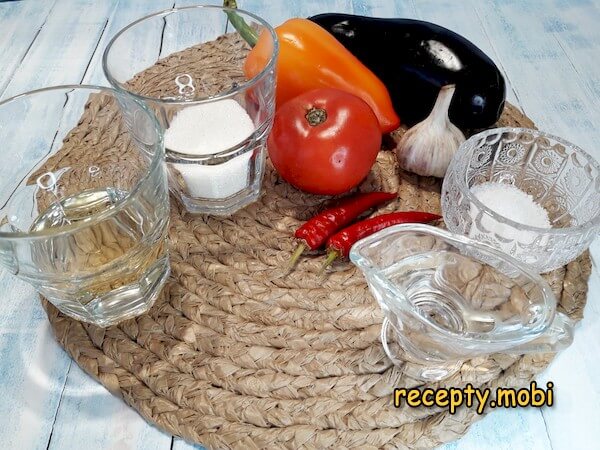
I prepare the ingredients. Quantities calibrated for medium spiciness. Spice fans can add 0.5-1 extra hot pepper pod for noticeably hotter result.
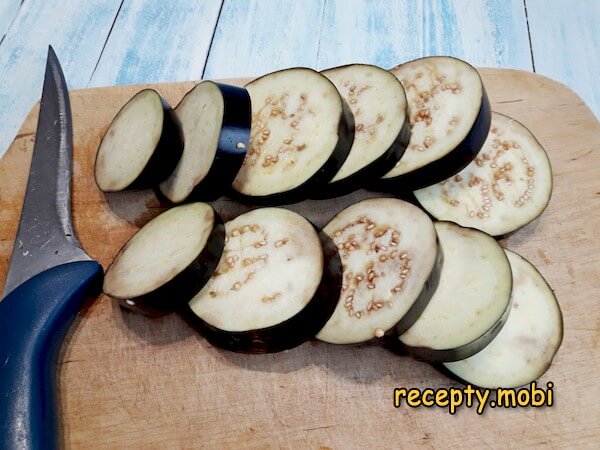
I trim the eggplant stems and slice into 0.75-1 cm rounds. The rounds go in a large bowl.
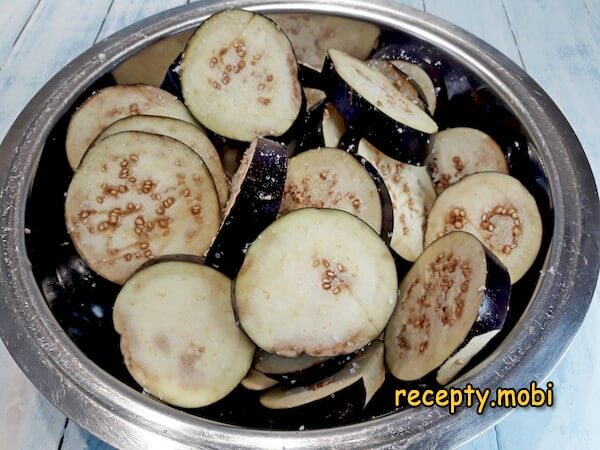
To purge bitterness: 25 g salt mixes with the rounds, sits 30 minutes. Bitter liquid drops form on the surface — visible proof the salt is working.
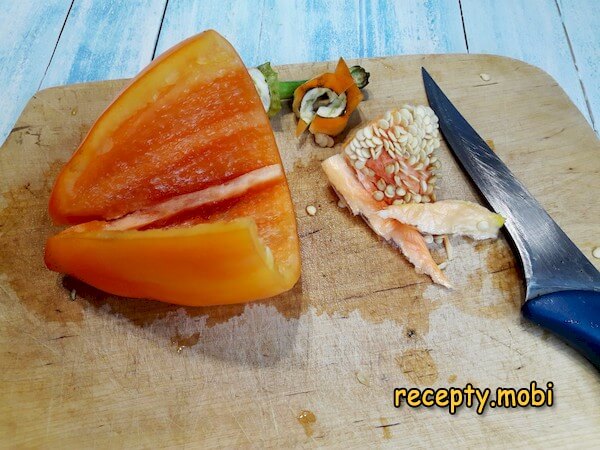
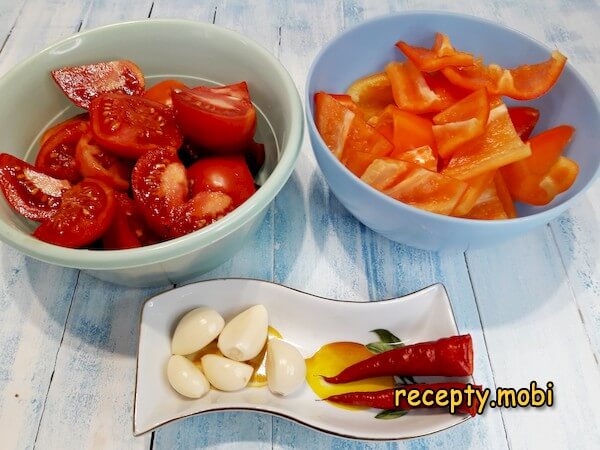
Meanwhile I prepare the marinade vegetables. Bell pepper deseeds, stems removed.
Bell pepper cuts into large grindable chunks. Hot pepper just gets the stem trimmed (seeds stay in for full heat). Tomatoes cut into 2-4 pieces. Garlic peels.
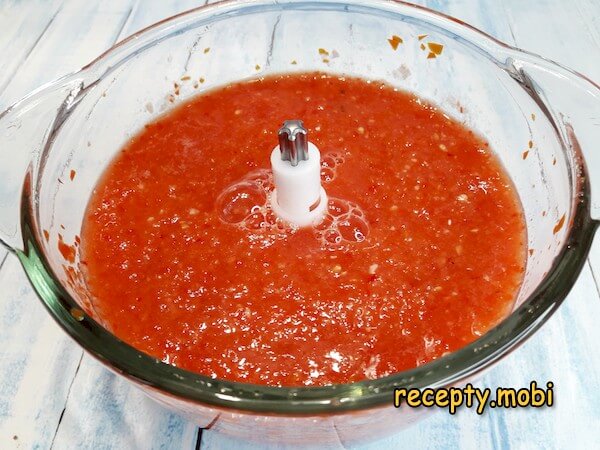
Everything grinds in a meat grinder or blender into a slightly liquid puree.
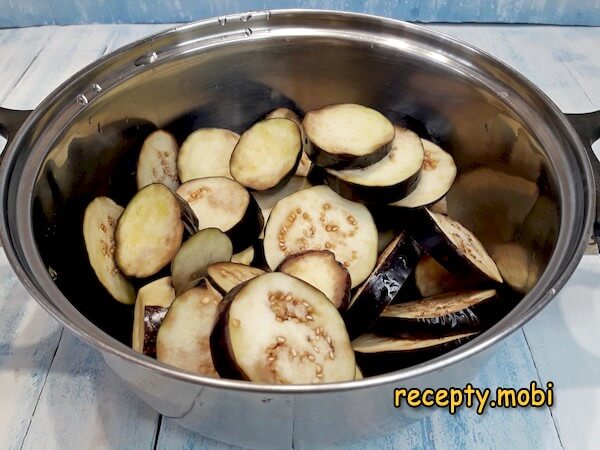
After 30 minutes, I rinse the eggplants under cold water and squeeze excess moisture out. The drained slices transfer to a cooking pot.
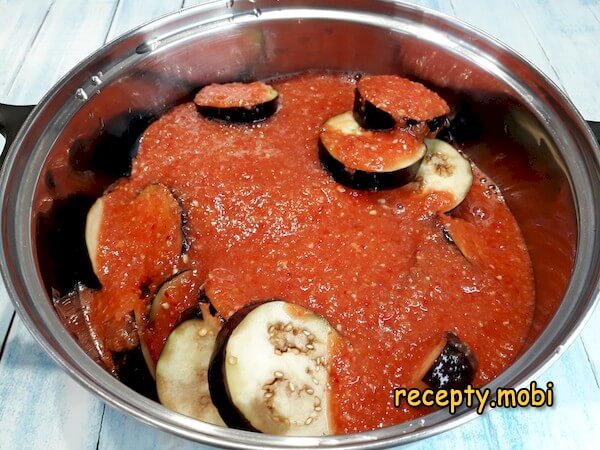
The pepper-tomato-garlic puree pours over the eggplants.
The 12 g brine salt and 60 ml vegetable oil go in. (The 25 g earlier salt was rinsed off the eggplants.)
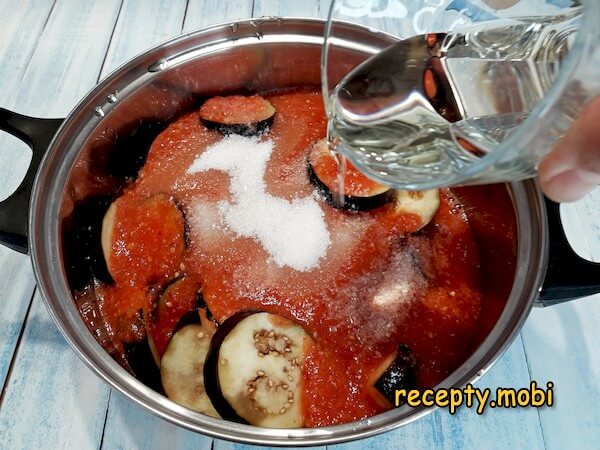
The 35 ml vinegar follows.
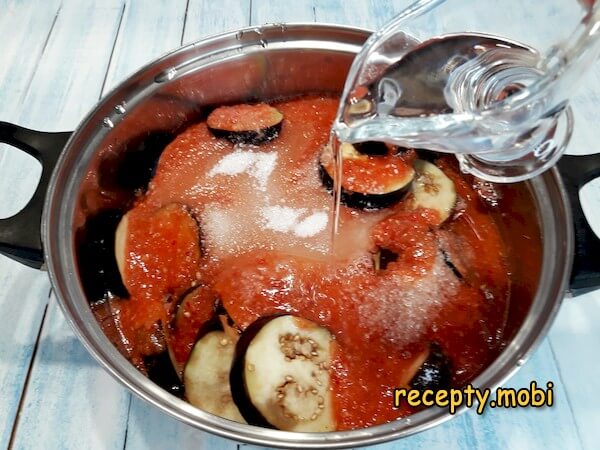
I mix everything well — the eggplant rounds should be coated in the puree.
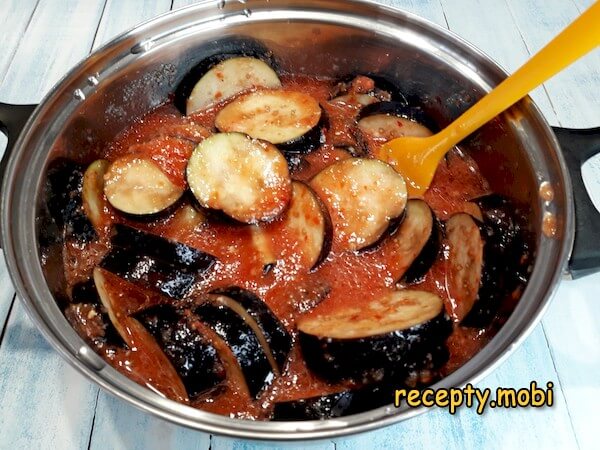
Pot on medium heat. Simmer 30 minutes from boiling, periodically lifting bottom rounds to the top so all pieces heat evenly. While cooking, I sterilise the jars and lids.
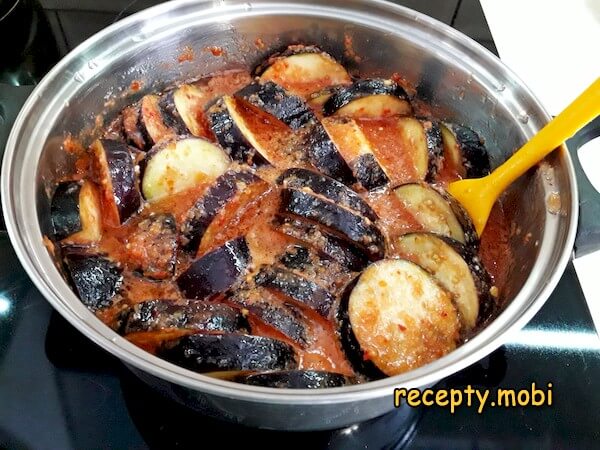
The hot eggplants and marinade distribute into jars — careful packing to avoid air bubbles. Lids screw on tight.
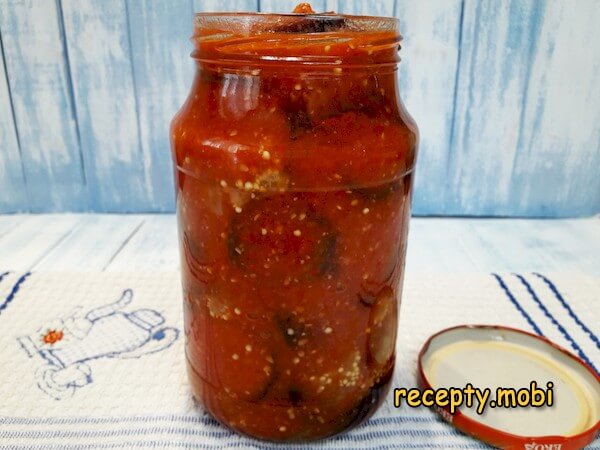
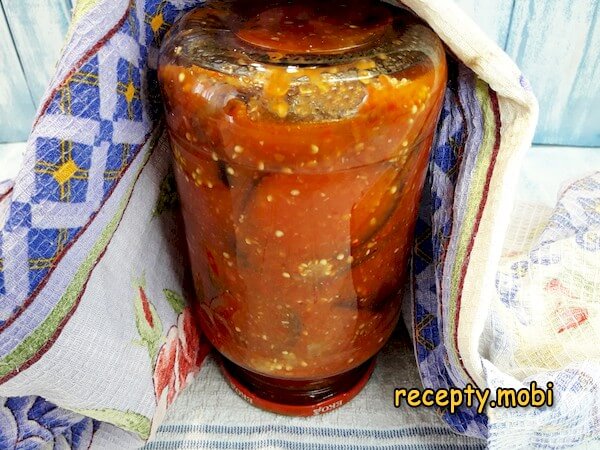
Jars invert, blanket-wrap, slow-cool 8 hours. The slow cool creates the vacuum seal.Eggplants for winter "Mother-in-law's Tongue" store best in a dark cool place — preservation lasts until next year's eggplant season. Room-temperature pantry storage also works. The spicy circles plus aromatic marinade are excellent on bread (open-face sandwiches), as zakuska alongside grilled meat, or as a side to plain boiled potatoes.


Tips
- 1
SALT-PURGE THE EGGPLANTS PROPERLY. Step 3's 30-minute salt-purge is the bitterness-removal step that separates good preserves from acceptable ones. Modern hybrid eggplants are less bitter than older varieties but the salt-purge still helps texture (firms the flesh) and reduces oil/marinade absorption (more concentrated flavour). Don't skip; don't shortcut. The visible bitter-liquid drops on the surface are the proof.
- 2
SEEDS-IN HOT PEPPER FOR FULL HEAT. The recipe deliberately keeps hot pepper seeds in the marinade — that's where most of the capsaicin lives. Removing seeds gives milder pepper character but loses the preserve's "Mother-in-law's tongue" identity. The dish should bite slightly. For zero-heat versions: substitute the hot pepper with 1 tsp paprika (gives colour without heat). For another zucchini-based "Mother-in-law's Tongue" preserve worth comparing, see Mother-in-law's Tongue from Zucchini for the Winter.
- 3
STIR FROM THE BOTTOM PERIODICALLY. Step 12's instruction to lift bottom layers up isn't fussiness — eggplant rounds at the bottom of the pot get over-cooked while top rounds stay underdone. The 30-minute simmer with periodic stirring (every 5-7 minutes) gives even doneness across the entire batch. Use a wooden spoon to lift gently rather than stir — keeps the rounds intact.
- 4
SERVE TRADITIONALLY. Russian zakuska tradition serves these on dark rye bread (one round per slice, top with the marinade), accompanied by raw onion slices, a slice of feta-style cheese, and chilled vodka. Modern serving: as a topping for pizza or flatbread, in grain bowls with quinoa or barley, or stirred into pasta with feta and herbs. The recipe is endlessly versatile beyond the traditional zakuska. For another spicy Caucasian eggplant preserve worth trying, try Georgian-style Eggplants for Winter.
FAQ
Why is it called "Mother-in-law's Tongue"? +
The whimsical name has two interpretations. Visual: the elongated oval eggplant rounds resemble tongues laid out in the jar. Linguistic: the spicy biting marinade references mothers-in-law's reputation for sharp tongues in Russian humour. Both layers work together — the dish is visually tongue-like AND verbally biting. Many Russian recipes carry humorous "in-law" or "mother-in-law" references; it's a cultural tradition. Similar dishes exist with zucchini and tomatoes; the eggplant version is the original "tyoshchin yazyk."
How long do the jars keep? +
Properly sealed jars at room temperature in a dark cupboard keep 12+ months. Cool basement extends to 18 months. Once opened, transfer to fridge and use within 2-3 weeks. The eggplant texture stays good for 6-8 months, then softens gradually. The marinade flavour deepens over months. If you spot mould, fizzing, or bulging lids, discard the entire jar. Properly preserved eggplants don't ferment.
Can I add other ingredients to the marinade? +
The recipe is precise but accepts modest variations. Best add-ins: 2 tbsp finely chopped fresh cilantro or parsley (added to the puree at step 6 for herbal depth), 1/2 tsp khmeli-suneli (Georgian spice blend) for Caucasian leaning, 1 tsp paprika for richer red colour. Avoid: cinnamon (clashes with vegetables), allspice (too perfumy), or sweet aromatics. The pure tomato-pepper-garlic-chili profile is what makes this distinctly Russian.
Can I use yellow or green bell peppers instead of red? +
Red bell peppers give the dramatic deep-red marinade colour that's part of the dish's identity. Yellow or orange peppers work but produce a more muted orange-red tone. Green bell peppers should be avoided — they're underripe and have a slightly bitter vegetal flavour that doesn't suit this preserve. Mixed-colour batches (50% red + 50% yellow) work for visual variety. The flavour is similar across red/yellow/orange varieties; only colour differs significantly.
- Comment
or post as a guest
Be the first to comment.