avg —
Eggplants in Adjika for Winter

Instructions
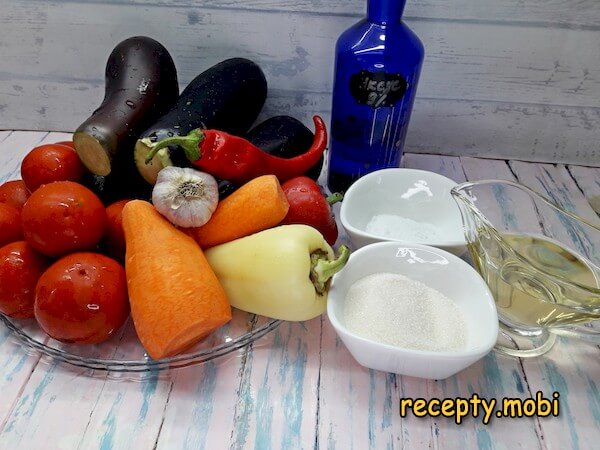
I prepare ingredients for eggplants in adjika for winter.
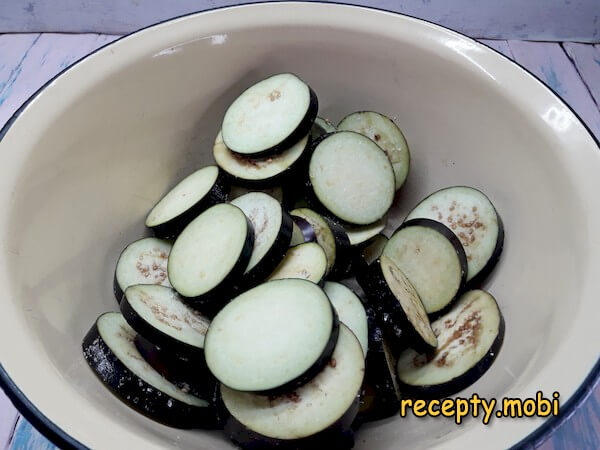
Cut eggplants into SLICES 5-7 mm thick (not too thin — otherwise fall apart during cooking, not too thick — won't soak up sauce). Place in bowl; SALT generously; mix; let stand 20 MINUTES to release bitterness.
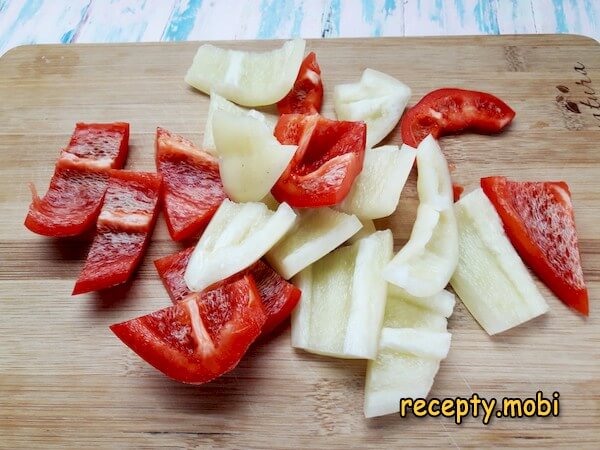
Remove seed pod + ribs from sweet pepper. Cut into pieces convenient for meat grinder/chopper.
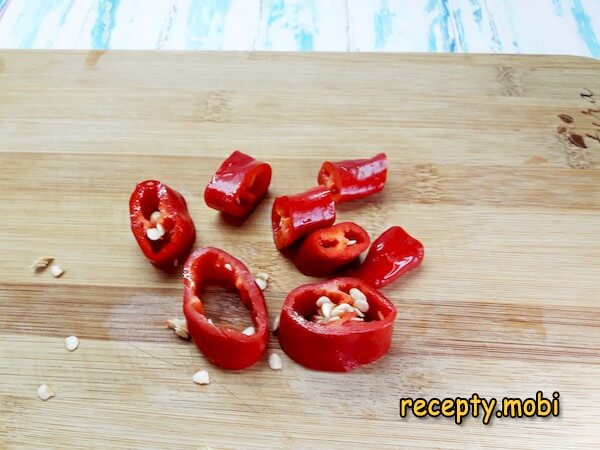
Cut hot pepper into several pieces; KEEP SEEDS (for spicier adjika).
Cut tomatoes; remove stems.
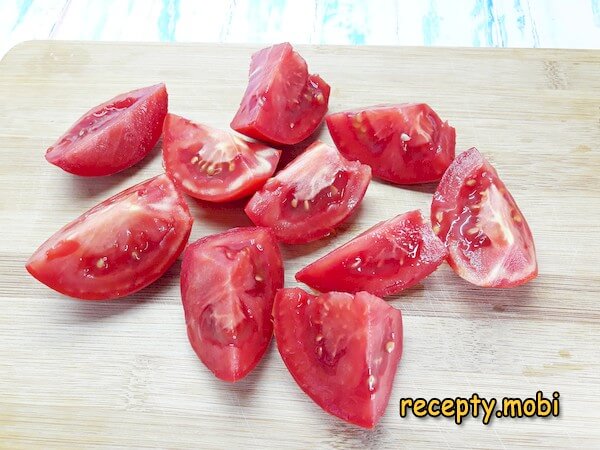
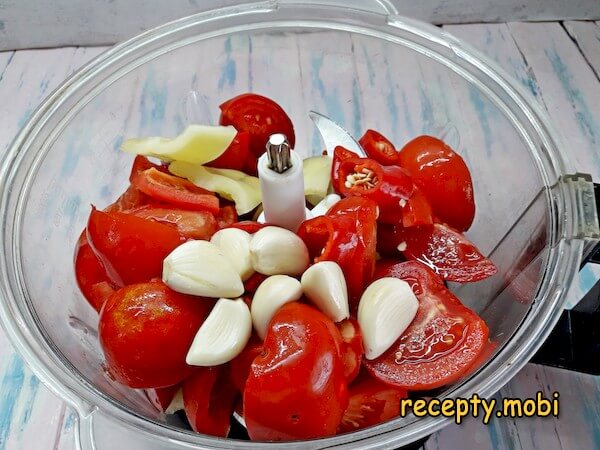
Place tomatoes + both peppers + garlic cloves into chopper/meat grinder.
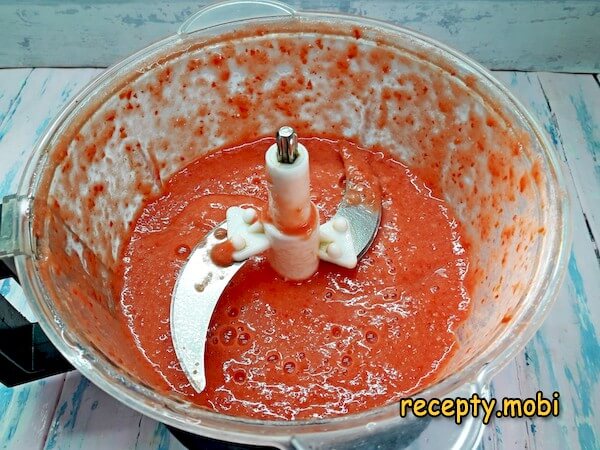
After grinding: result is homogeneous + sharp tomato adjika.
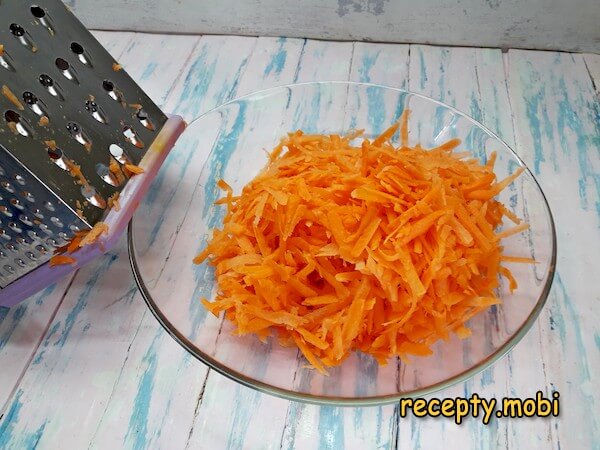
Grate carrot COARSELY.
Pour adjika into pot. Add CARROT.
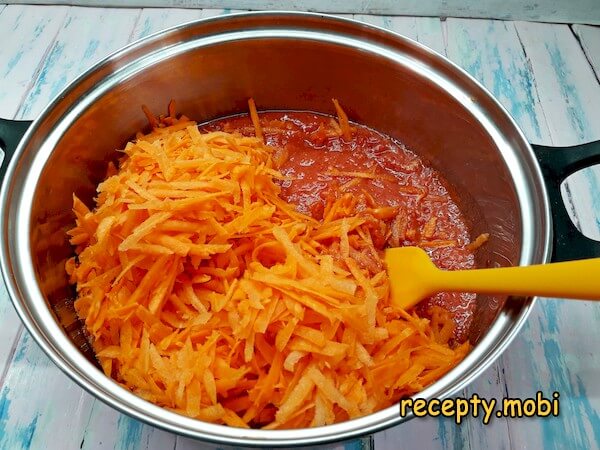
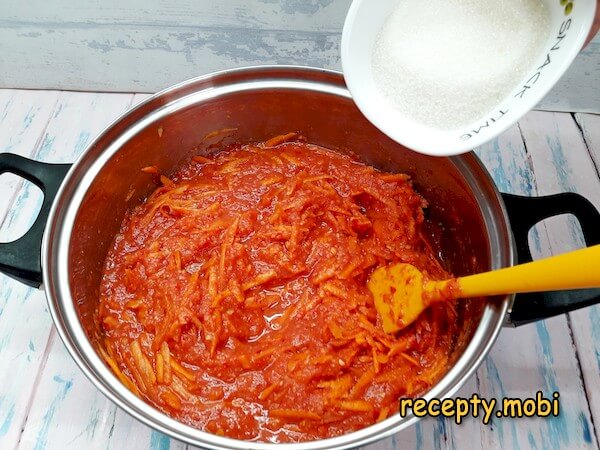
Season everything with SALT + SUGAR.
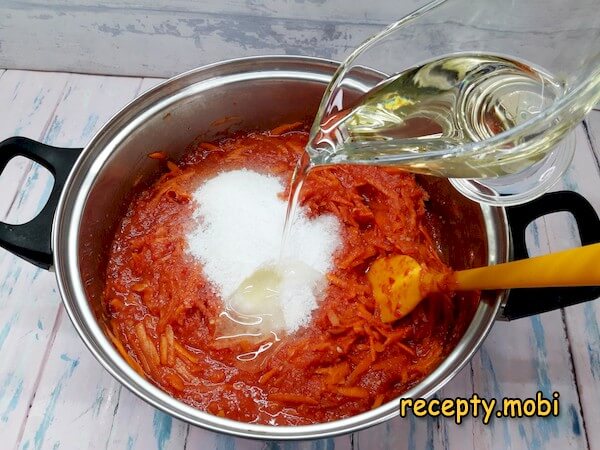
Pour in OIL.
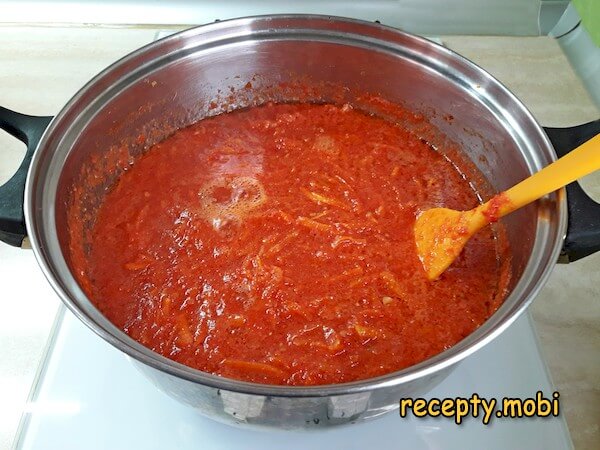
On low heat: cook bubbling mixture COVERED for 15 minutes (count from start of boiling).
During this time eggplants released bitter liquid. Rinse THOROUGHLY; squeeze liquid out by hand.
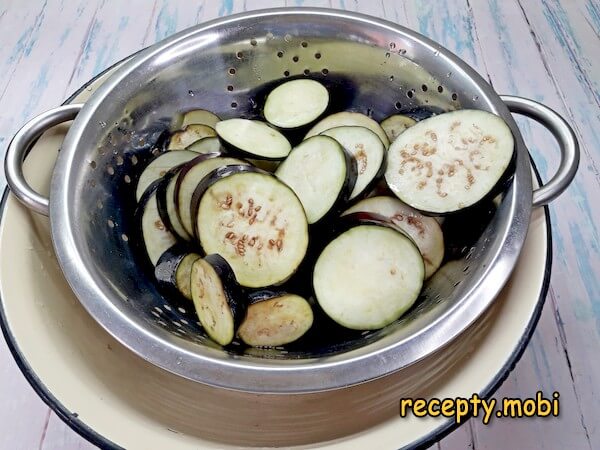
Add eggplant slices to pot with BOILING adjika.
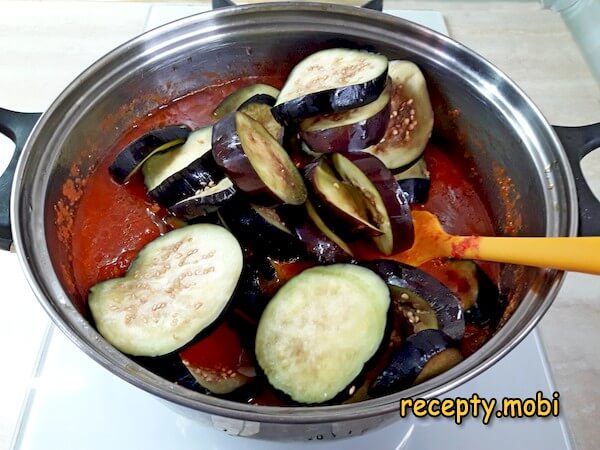
Cook 20 MINUTES — eggplants soften, soak up sauce, but DON'T fall apart. Sterilize containers for sealing.
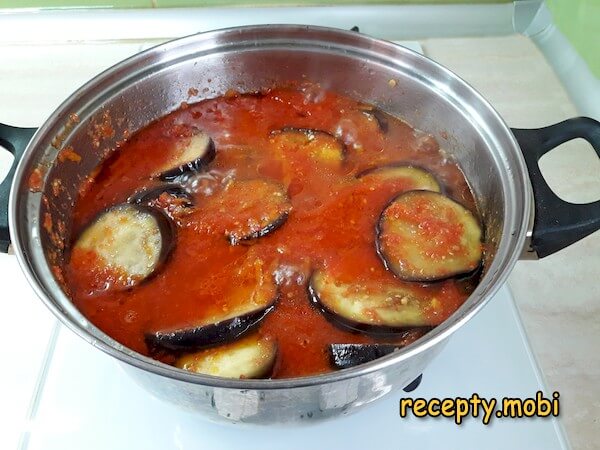
After 20 minutes: pour in VINEGAR. Boil overall mixture 3 minutes more.
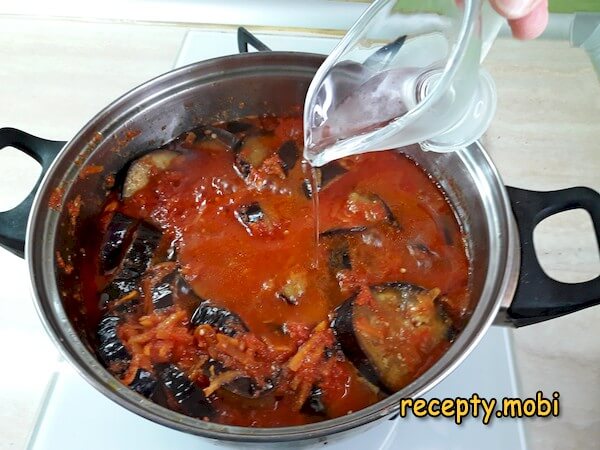
Distribute eggplants into prepared jars; pour adjika to TOP.
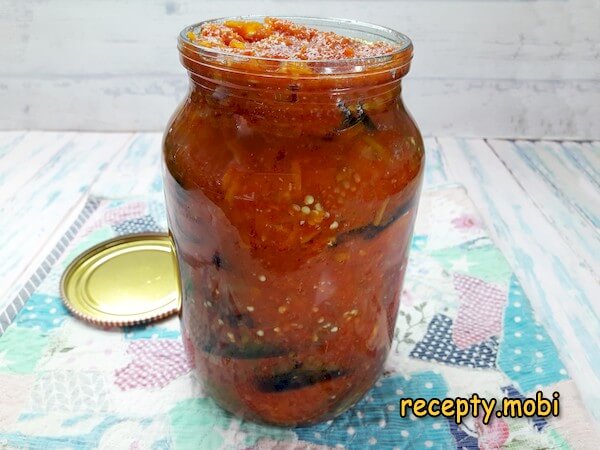
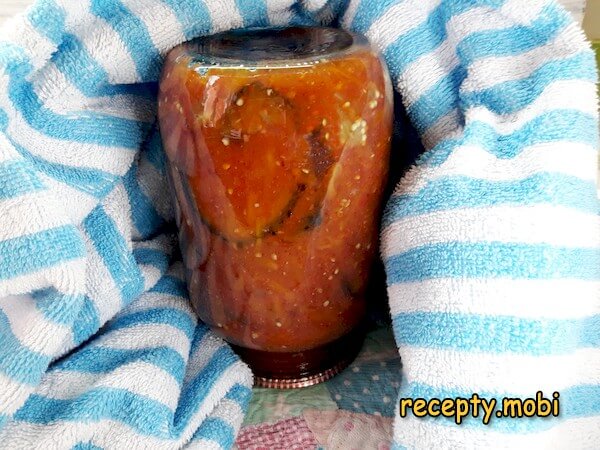
Seal + turn UPSIDE DOWN. Verify lids securely tightened. Cover jar with thick towel for at least 8 HOURS.
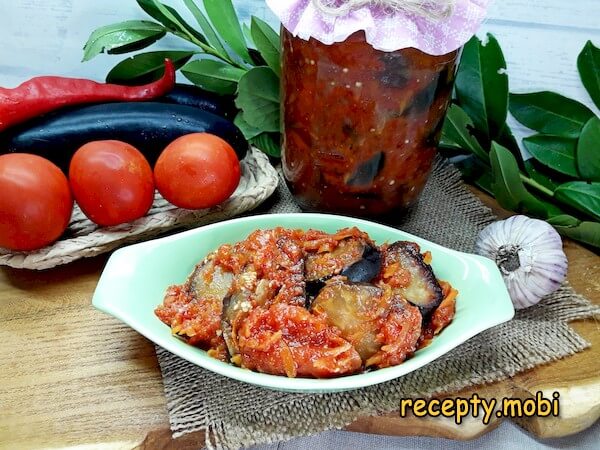
Better stored cool but keeps room-temperature until next harvest. Successfully complements pasta, potatoes, meat, fish — all combinations are wonderful. Bon appétit!


Tips
- 1
THE 20-MIN BITTER-LIQUID RELEASE. Step 2's "salt + 20-min stand to release bitterness" is texture + flavor essential. Eggplant raw bitter compounds (solanine + cucurbitacins): produce off-bitter taste in finished dish. SALTED-then-RINSED method: salt draws out bitter liquid via osmosis, brown bitter water emerges, pieces become firmer. Without salting: finished dish has unpleasant background bitterness. The 5-7 mm slice thickness is calibrated — thinner doesn't hold shape, thicker doesn't fully release bitters. Squeeze pieces well after rinsing — water content dilutes adjika sauce. Same salting technique: French ratatouille, Italian melanzane parmigiana, Greek moussaka.
- 2
THE ADJIKA-FIRST + EGGPLANT-LATER LAYERED COOKING. Steps 6-14's sequence — adjika cooks first 15 min, eggplants added later for 20 min — is texture critical. Single-stage method (all together): eggplants overcook + dissolve, lose identity. STAGED METHOD: adjika base reduces + thickens during initial 15 min (sauce concentration), then eggplants enter ALREADY-CONCENTRATED sauce + cook briefly. Eggplants absorb sauce flavor without losing structural integrity. Same staged-addition principle: French daube, Italian caponata. The 15+20 minute split is calibrated for proper texture preservation. For another classic Caucasian-Russian preserve worth comparing, see Eggplant Caviar Classic.
- 3
THE GROUND-RAW-VEGETABLE ADJIKA BASE. Steps 6-7's "tomatoes + peppers + garlic ground RAW into adjika" is recipe-defining technique. Cooked-then-blended sauce: smoother but less complex flavor. RAW-GROUND adjika: preserves vegetable-fresh character + creates layered cooking development (raw-vegetable juices + cooking-released compounds blend during simmering). The hot pepper SEEDS retention: provides spice-heat + capsaicin oils. Same raw-grinding technique: Caucasian classic adjika, Mexican raw salsas, Italian uncooked sauces. The 1 head of garlic seems excessive — but cooked garlic mellows + integrates fully. Result: MODERATELY spicy character (not overwhelming).
- 4
THE LATE-VINEGAR + UPSIDE-DOWN COOLING. Step 16-18's vinegar-at-end + upside-down cooling combination ensures preservation. VINEGAR added late: 3-min cook activates preservation function but doesn't destroy vinegar character (long-cook vinegar evaporates aromatic compounds). The 25 ml of 9% vinegar is calibrated for safe canning + balanced flavor. UPSIDE-DOWN cooling: ensures hot product contacts lid + creates partial vacuum on cooling = perfect seal. The 8-hour towel-wrapped period: gradual cooling preserves texture (rapid temperature drop = soggy result). For another Caucasian-Russian winter preserve worth trying, try Marinated Tomatoes Classic.
FAQ
How spicy will it be? +
Recipe is MODERATELY SPICY (not overwhelming). The 0.75-1 chili pepper for ~1.5 kg total vegetables produces background heat that complements without dominating. SPICIER (Caucasian-style): use 2 full chili peppers + extra garlic. MILDER (kid-friendly): use 0.25 chili (or omit entirely). HEAT SOURCES: chili capsaicin (long-lasting, builds), garlic (front-of-tongue heat, brief), black pepper (optional addition, sharper character). The seed retention (Step 4) doubles the heat versus seedless. Actual heat result depends on chili variety: jalapeño = mild, serrano = medium, Thai bird = hot, Caucasian sukhoi = traditional medium-hot.
Can I make it without sterilizing jars? +
Recipe REQUIRES sterilization for safe winter storage. Sterilization options: BOILING WATER (jars + lids in boiling water 10 min), STEAM (over kettle 15 min, traditional), OVEN (clean jars at 120°C for 15 min, modern). Skipping sterilization: fermentation + spoilage within weeks. EXCEPTION: if eating within 2 weeks (refrigerated), no sterilization needed. The recipe's standard warm-fill + upside-down cooling provides additional safety margin but doesn't replace initial jar sterilization. Same sterilization principle: French confit, Italian preserves, all home canning.
How long does it keep? +
Properly sealed jars: UP TO 12 MONTHS at room temperature, 18 MONTHS in cellar conditions. Months 1-3: peak texture (eggplants firm, sauce bright). Months 4-8: still excellent, eggplants softer + flavor concentrates. Months 9-12: still safe + tasty, more sauce-character. After OPENING: refrigerate, consume within 2 weeks. Spoilage signs: bulging lid (immediate disposal), fermentation bubbles, off-smell, visible mold. Storage tips: cool dark place ideal, clean dry spoon between uses. Don't store in direct sunlight — degrades color + nutrients.
What goes best with it? +
Caucasian-Russian tradition has classic eggplant-adjika companions. CLASSIC: hot boiled potatoes with butter, plain rice, buckwheat kasha. WARMING: grilled meat (lamb, beef, chicken), kebabs, traditional Georgian khinkali. BREAD: dark rye, lavash flatbread, sourdough. ZAKUSKA: serve cold on toasted bread with cheese, alongside vodka or beer. PASTA: hot pasta tossed with butter + adjika as sauce = quick lazy lunch. EGG DISHES: scrambled eggs with adjika spread = protein-rich breakfast. The adjika is versatile — equally good cold (from jar) OR heated.
- Comment
or post as a guest
Be the first to comment.