avg —
Flammekueche

Instructions
I prepare the ingredients. Water needs to be warm — about 50 °C, comfortable to the touch. Sour cream should be 20%+ fat for proper richness. Champignons can be used raw — cut into large pieces and sauté in vegetable oil or butter until tender; no boiling needed.
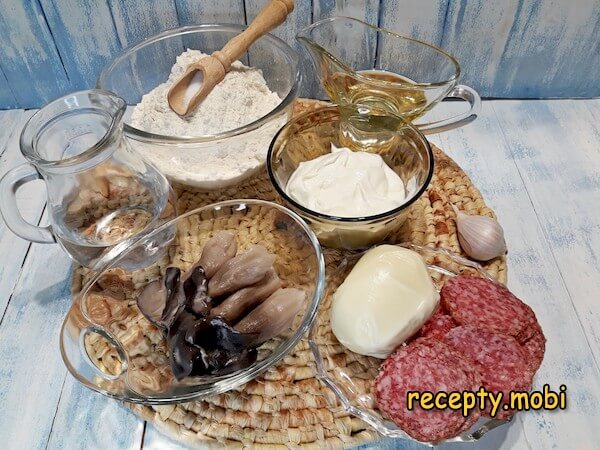
In a mixing bowl, I combine the flour with salt and pour the sunflower oil into the centre.
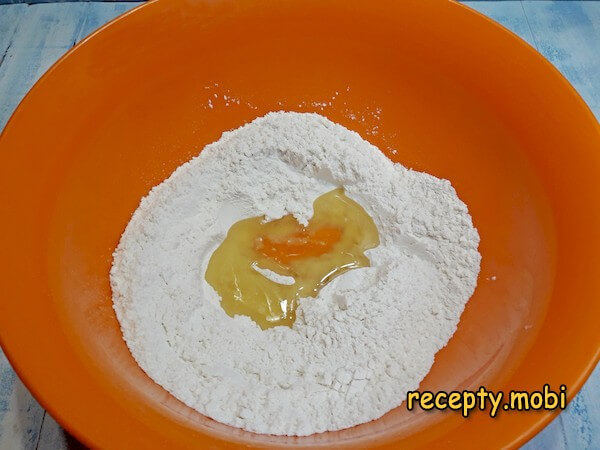
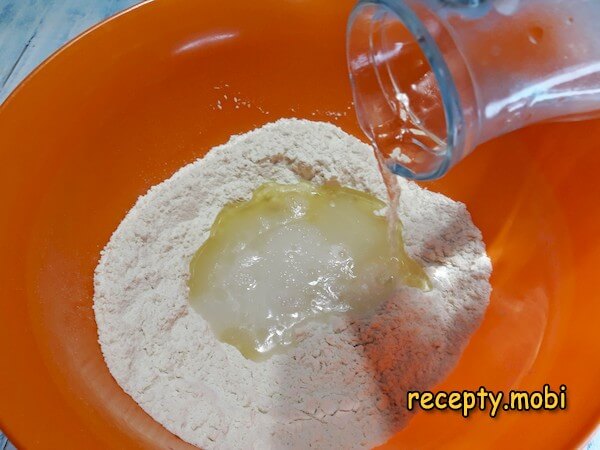
I add the warm water.
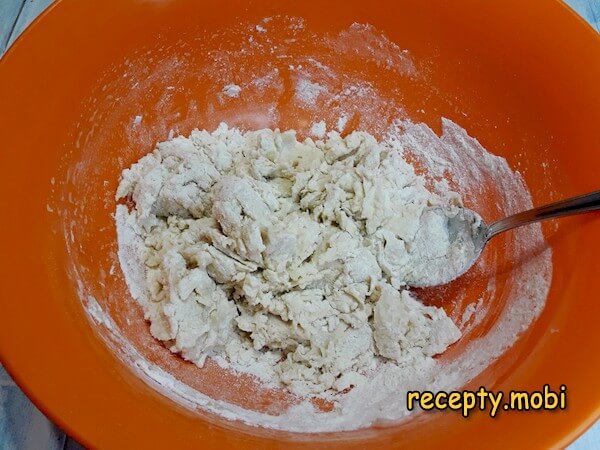
I stir with a spoon until the mixture resembles dry flakes — that's the right texture before kneading.
I knead by hand right in the bowl (or on the counter) until a uniform ball forms — soft, warm, non-sticky. Cover with a cloth and rest at least 5 minutes — short rest is fine for unleavened dough.
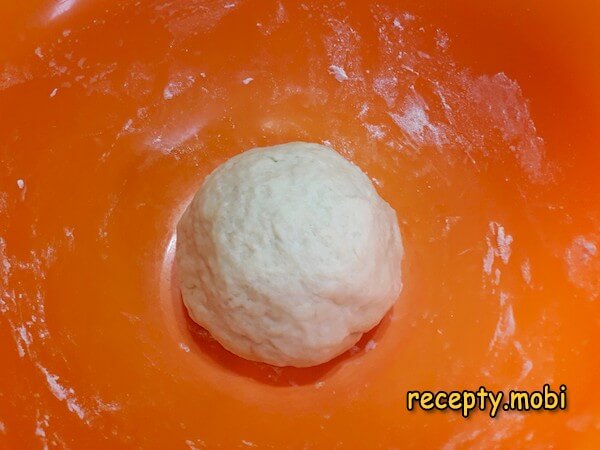
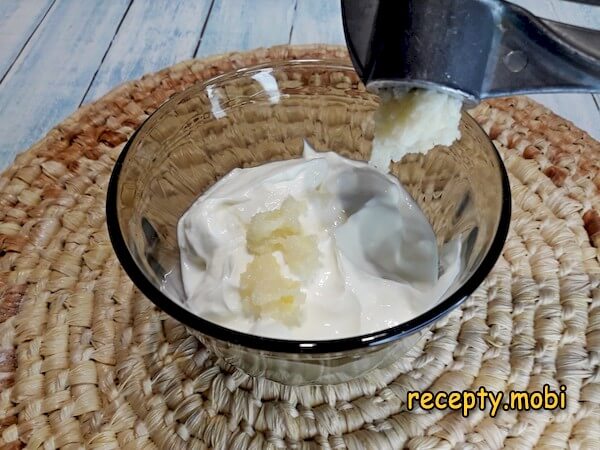
While the dough rests, I prepare the sour cream sauce. Press the garlic through a press into a bowl of sour cream.
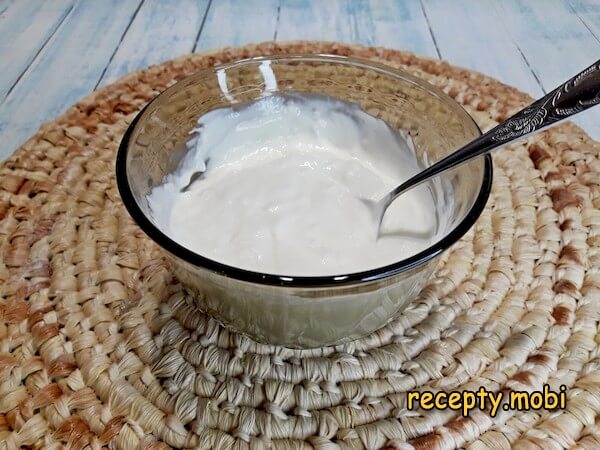
I add a pinch of salt and mix well.
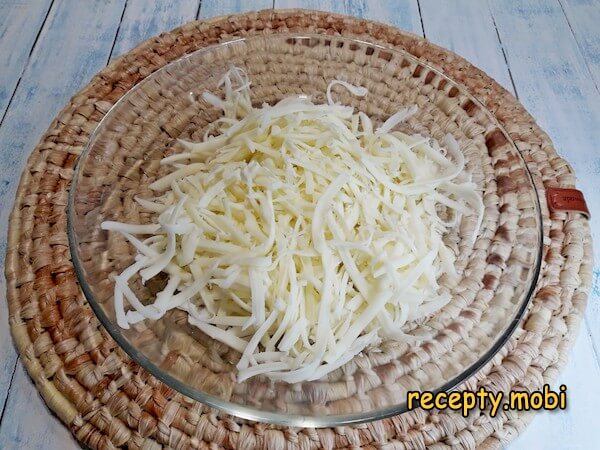
I grate the mozzarella on a coarse grater.
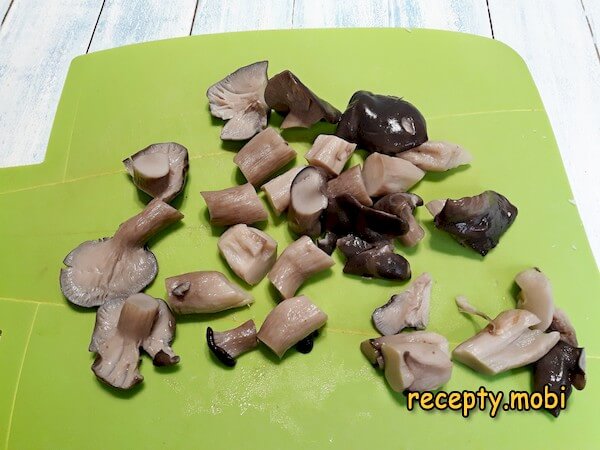
I cut the mushrooms into medium pieces.
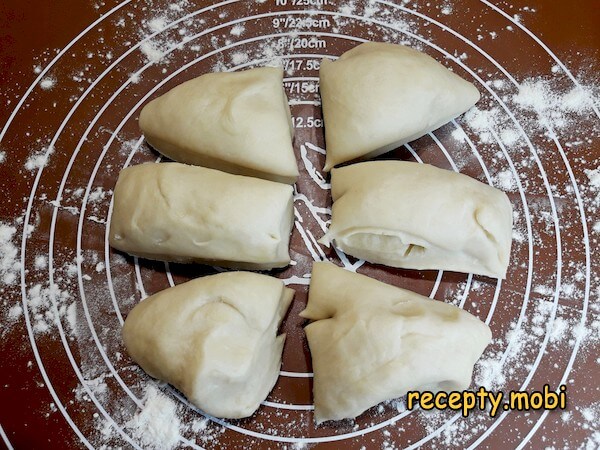
Now I work with the rested dough. I knead briefly, shape into a ball, and divide into 6 equal portions.
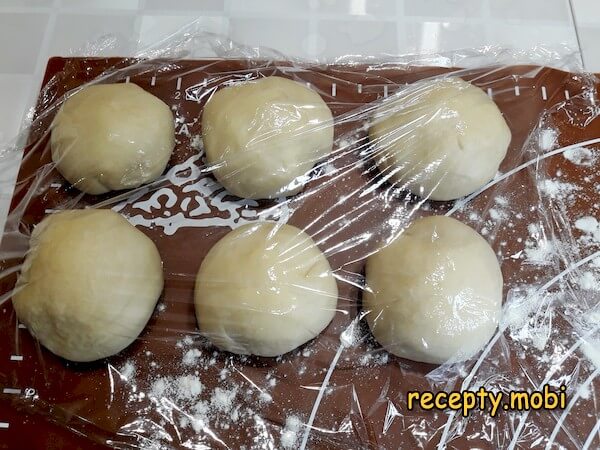
I round each portion into a small ball and cover with cling film to prevent drying while I work on each one in turn.
I roll out each ball into a very thin flatbread — paper-thin enough that the work surface is faintly visible through the dough.
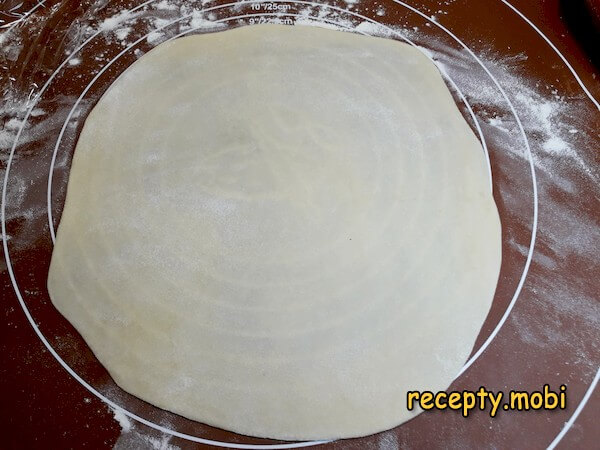
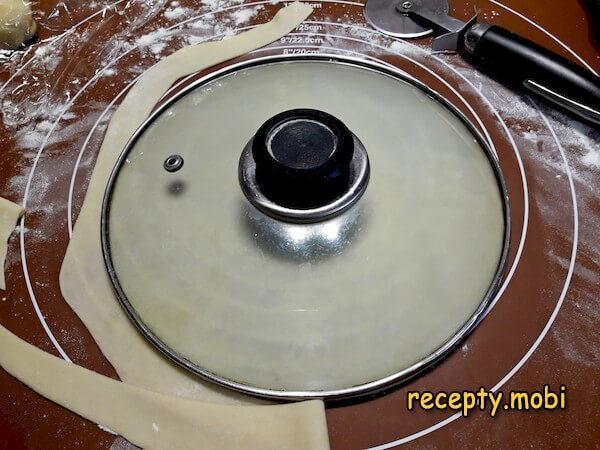
Using a 21 cm lid or plate as a template, I cut a neat circle. Scraps go back under cling film — they make one more flatbread when re-rolled.
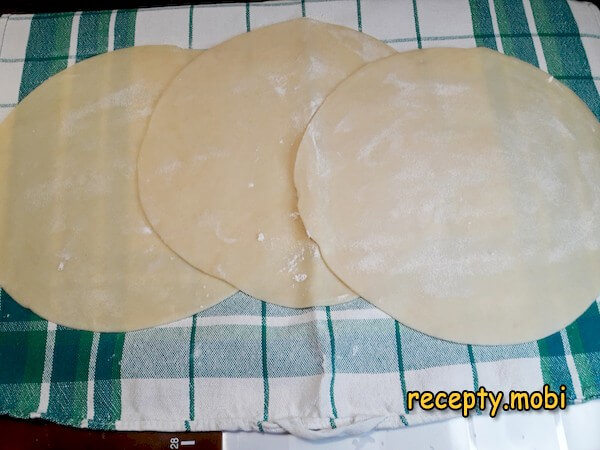
I stack the rolled flatbreads on a clean towel, lightly dusting both sides with flour to prevent sticking.
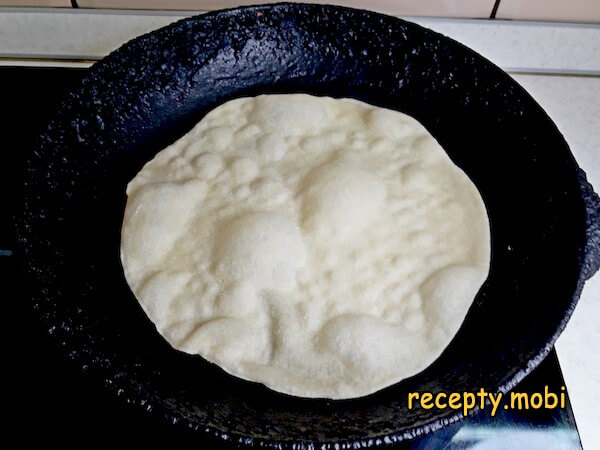
I heat a cast-iron or thick-bottomed skillet over medium-high heat (no oil — dry pan). I place a flatbread in the hot pan — it puffs immediately. I gently press large bubbles flat with a spatula. First side cooks 30-40 seconds until golden brown spots appear underneath.
I flip and cook the second side for 30 seconds.
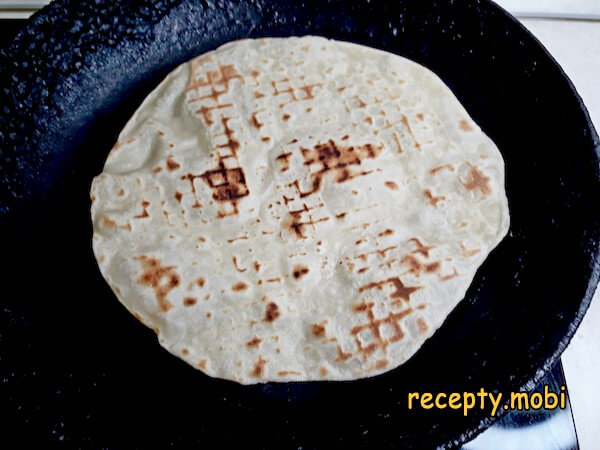
The cooked flatbreads stack on a towel, covered with the same towel to keep them warm and pliable.
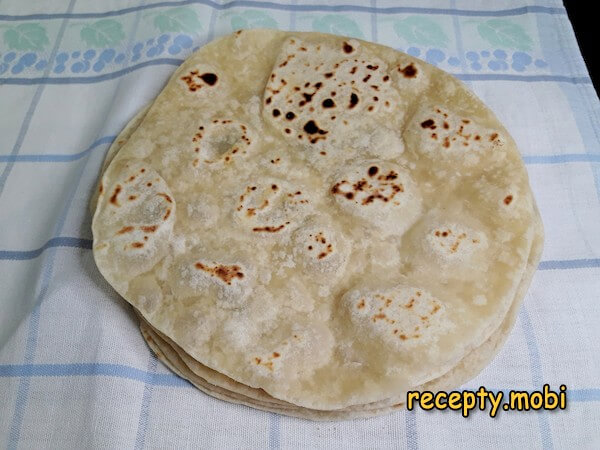
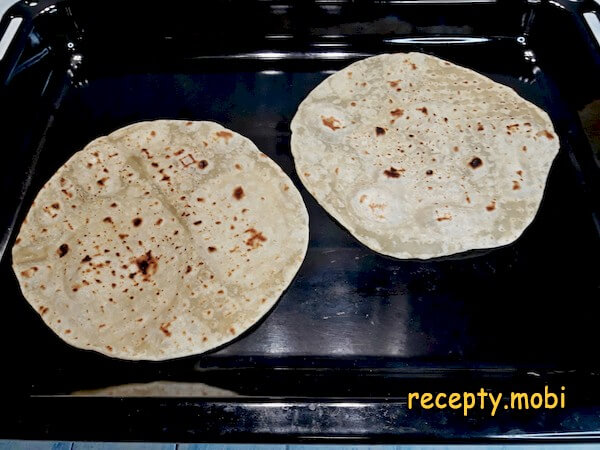
I preheat the oven to 180 °C. The pre-cooked flatbreads go on a baking sheet.
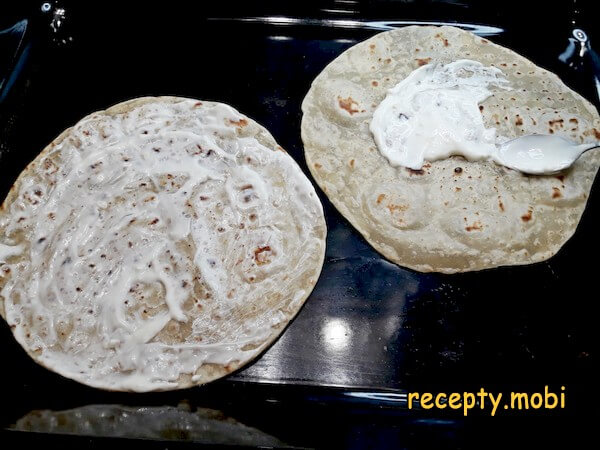
I spread sour cream sauce on each flatbread — 1-1.5 teaspoons per flatbread is enough. Don't overload; the flatbread has no rim and excess sauce slides off.
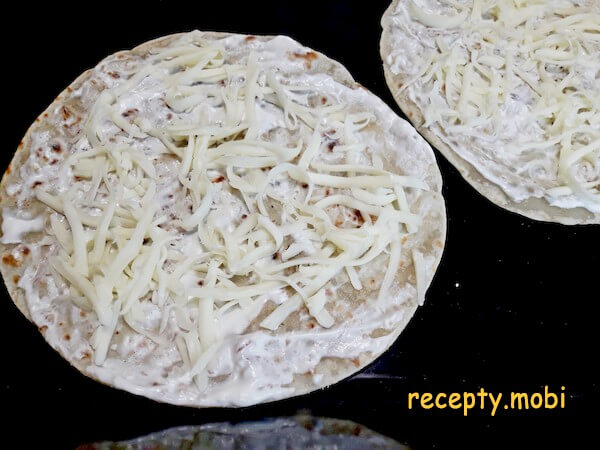
A thin layer of grated cheese covers the sauce. Again, don't overdo it — melted cheese without a rim slides off.
Slices of salami go on top of the cheese (not under — the salami needs to be visible and crisp at the edges).
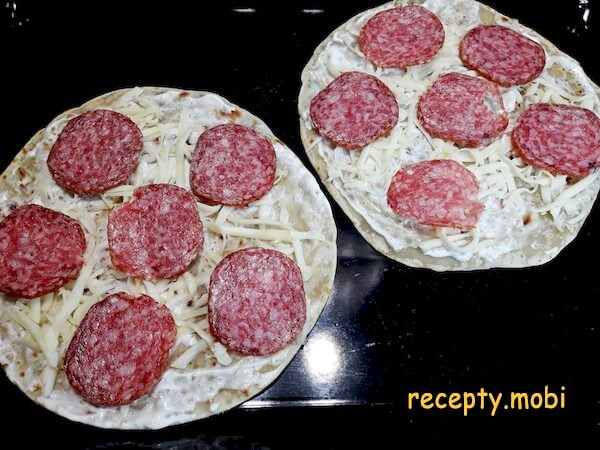
Other flatbreads get the mushroom topping instead of salami — variety on the platter.
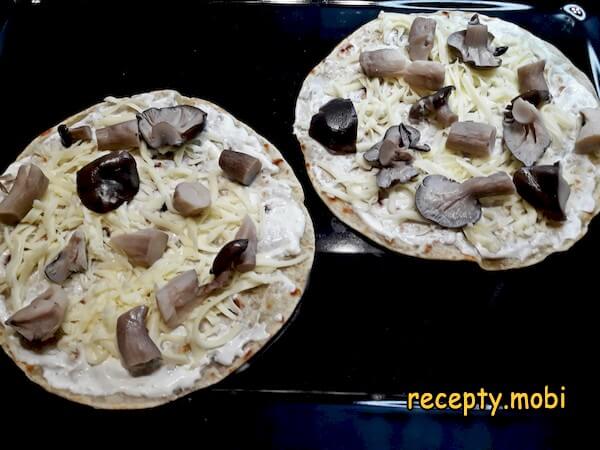
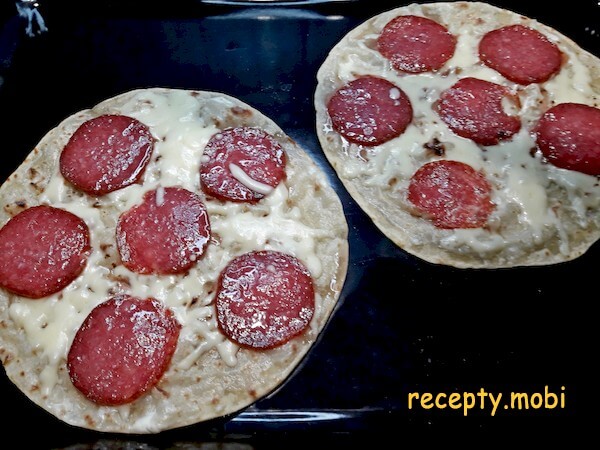
Into the oven for just 4 minutes. The kitchen fills with the warm garlic aroma; the cheese melts; the salami browns slightly at the edges.
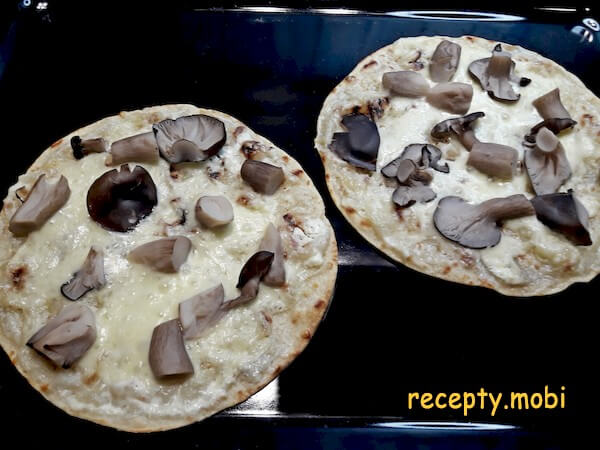
The mushrooms bond with the melted cheese into a unified topping.
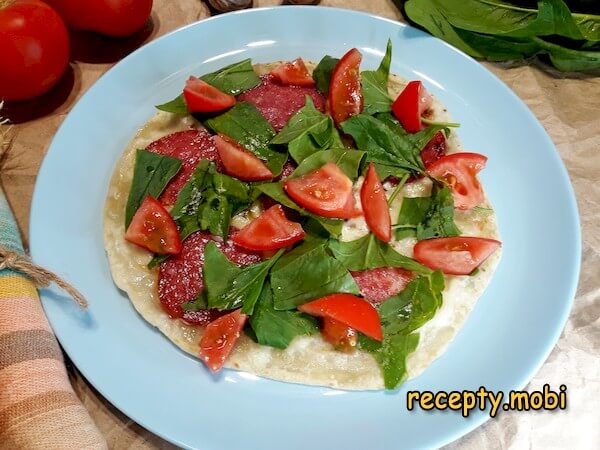
The final fresh touch: hand-torn arugula and spinach leaves and chopped tomato pieces scattered on top.For small flammekueche (18-21 cm), each flatbread is a single portion — folded in half (sometimes folded twice) and eaten in hand without slicing. If using ready-made tortillas as a shortcut base, the recipe takes just 10 minutes from start to plate. The mix-and-match topping flexibility makes this excellent for picnics or party food where each guest gets their preferred combination.


Tips
- 1
THE FLATBREAD MUST BE PAPER-THIN. Authentic flammekueche dough is rolled until almost translucent — 1-2 mm thickness max. Thick dough turns the dish into a generic personal pizza. Use the "shadow visible through dough" test: if you can dimly see the work surface through the rolled dough, thickness is right.
- 2
THE TWO-STAGE COOK IS CRITICAL. Pre-cooking the flatbread in the dry skillet (steps 15-17) gives it the crisp foundation that supports the toppings during the brief oven bake. Skipping this step and going straight to topped-and-baked gives soggy, flaccid flammekueche. The 30-40 second skillet sear is essential. For another quick pizza-style preparation worth comparing, see Lazy Skillet Pizza (+Cooking Video).
- 3
SHORTCUT WITH TORTILLAS. Pre-made flour tortillas substitute brilliantly for the homemade flatbread base. Skip steps 2-17, brush each tortilla with a tiny bit of olive oil, top with sauce + cheese + toppings, bake at 200 °C for 5-6 minutes. Result is virtually indistinguishable from from-scratch version. Great for weeknight emergencies or when you want flammekueche but not the dough work.
- 4
CLASSIC ALSATIAN VS MODERN VARIATIONS. Traditional Alsatian flammekueche uses crème fraîche (not sour cream), bacon (lardons), and onion — that's it, no cheese, no other toppings. The version here is the modernised "everything on it" style. For authentic traditional version, top each flatbread with crème fraîche + diced bacon + thin-sliced raw onion only, and bake. Both versions are excellent. For another classic Belgian/Alsatian-style preparation worth comparing, try Pizza with cheese and ham.
FAQ
Is flammekueche really Belgian or French? +
The dish straddles a regional border. The Alsatian/Strasbourg origin (now French) is older and more documented; the Wallonia/Belgian version (the article's framing) is closely related and often considered a regional variant. The name itself is German — "Flammkuchen" — reflecting the area's Germanic heritage when Alsace was alternately French and German over centuries. Today the dish appears across the German-French-Belgian border region with subtle local variations. Calling it "Alsatian" or "Belgian" is regionally specific; "northeastern French + Belgian" is geographically accurate.
Can I make this without an oven? +
Yes — the original flammekueche cooked in 90 seconds in 400 °C wood-fired ovens, but a covered skillet on the stovetop works as a home alternative. After topping the pre-cooked flatbreads, place each in a hot skillet, cover with a lid for 2-3 minutes (steam melts the cheese), then briefly uncover for 30 seconds (crisps the bottom). Result is similar to the oven-baked version but slightly less crisp on top.
Can I prep components ahead? +
Yes — every component is make-ahead-friendly. Dough: refrigerate up to 24 hours wrapped in cling film. Pre-cooked flatbreads: cool completely, stack with parchment between layers, refrigerate up to 2 days. Sauce: 3 days in the fridge. Mushrooms: cooked and refrigerated up to 3 days. The final assembly + 4-minute bake is the only on-the-day work — perfect for parties.
How do I store leftover flammekueche? +
Best fresh; reheating tends to make the toppings rubbery and the flatbread chewy. If you must store: cool to room temperature within 1 hour, refrigerate covered up to 24 hours. Reheat in a 200 °C oven for 4 minutes (best texture) or 60 seconds in microwave at half power (faster but softer). Don't freeze — the cream-based sauce splits on thaw and the texture suffers.
- Comment
or post as a guest
Be the first to comment.