avg —
Fried Eggplants for Winter in Tomato Sauce

Instructions
Wash the eggplants, cut off the stems. Slice the eggplants into rounds, and you can cut larger rounds in half. Uniform thickness ensures even cooking across all the pieces.
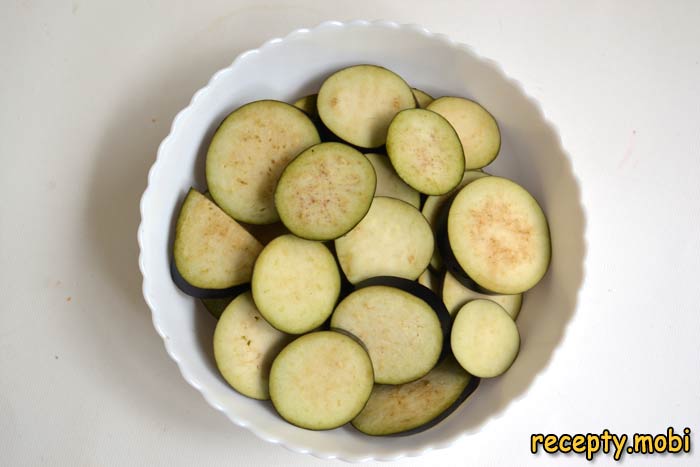
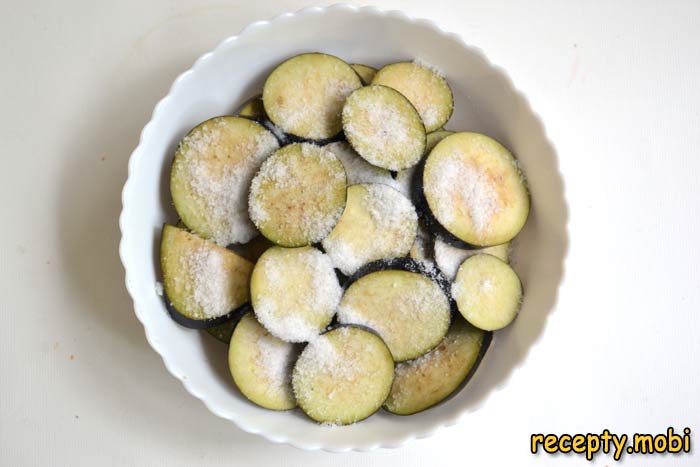
Sprinkle the slices of eggplant with salt. Leave them in salt to let the bitterness out. The 30-minute salt treatment is essential for preparing eggplants for frying.
While the eggplants are soaking in salt, prepare the other vegetables. Choose firm non-watery tomatoes for the preparation. Since we cook the eggplants in tomato sauce without sterilization, vinegar will be added to the preservation. Take sweet rather than sour tomatoes for the filling. Make small cross-shaped cuts on the tomatoes with a sharp knife on the side opposite the stems.
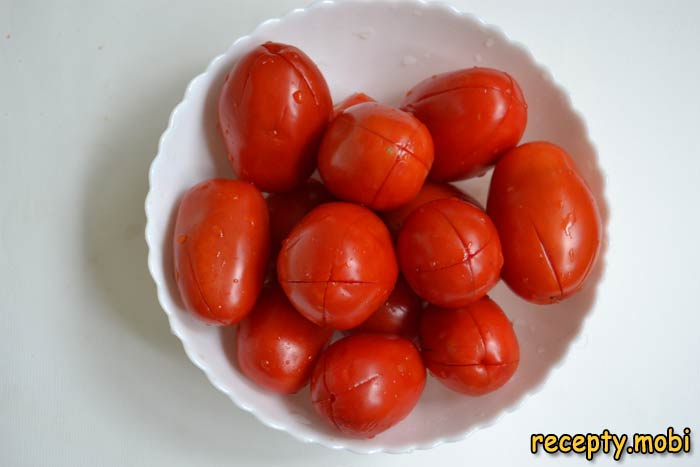
For 1 minute, dip the cut tomatoes in boiling water, then transfer them to cold water. The brief blanching loosens the skins for easy peeling.
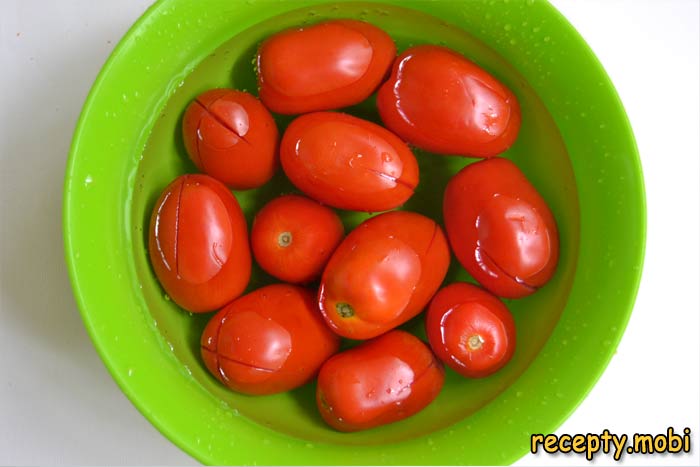
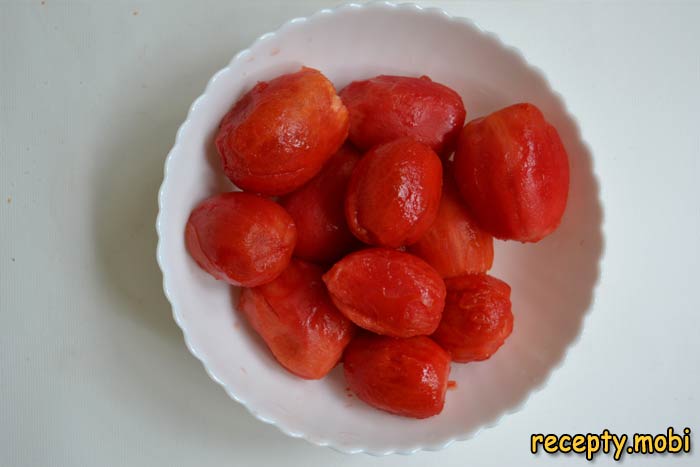
Peel the tomatoes from the skin. The skin should slide off easily where the cross-cuts were made.
Take the remaining vegetables according to the recipe.
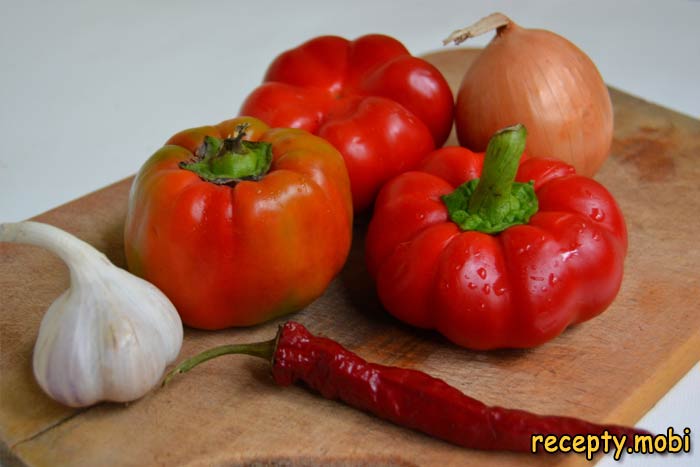
Peel the cloves of garlic. Chop the peeled onion (from the skin) randomly. Also chop the seeded pepper into pieces.
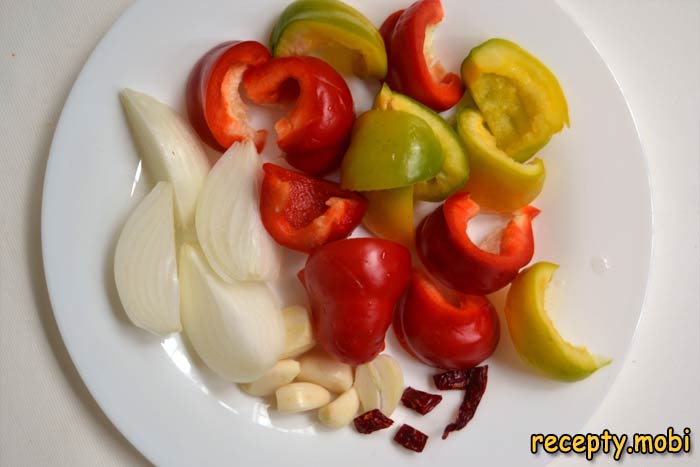
Now twist all the prepared vegetables, except for the eggplants, through a meat grinder. This results in about 2 liters of vegetable mixture. Place the vegetable puree in a cooking pot over low heat and bring the mixture to a boil. While stirring, cook the mass until thickened. This takes up to 40 minutes — the long reduction concentrates the sauce beautifully.
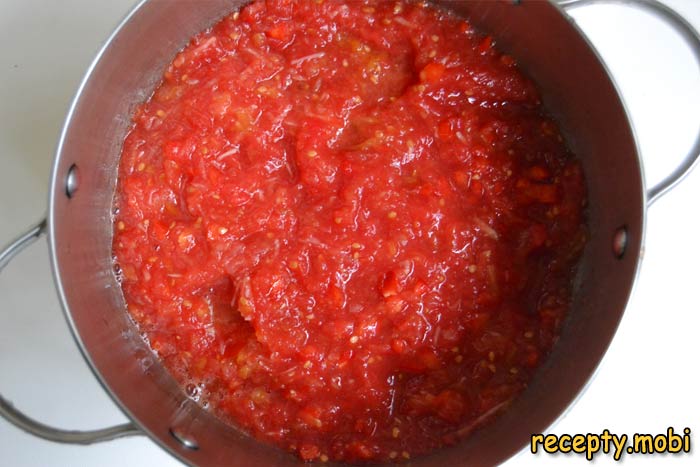
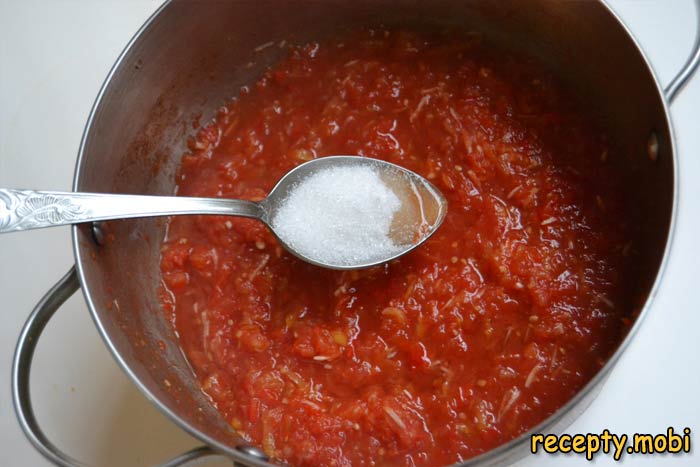
During the cooking process, add salt, sugar, and spices to the sauce according to the recipe. Taste and adjust as the sauce develops.
Meanwhile start frying the eggplants. After rinsing the eggplant slices from salt, lightly squeeze them. Fry the eggplants in vegetable oil until golden brown. The Maillard browning develops the deep savory flavor that defines this preserve.
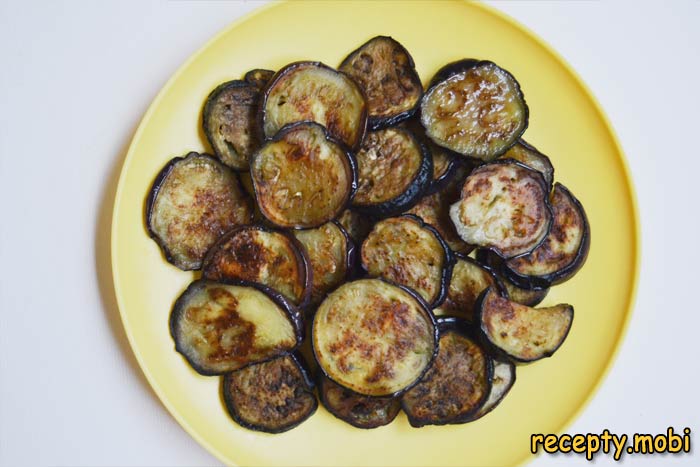
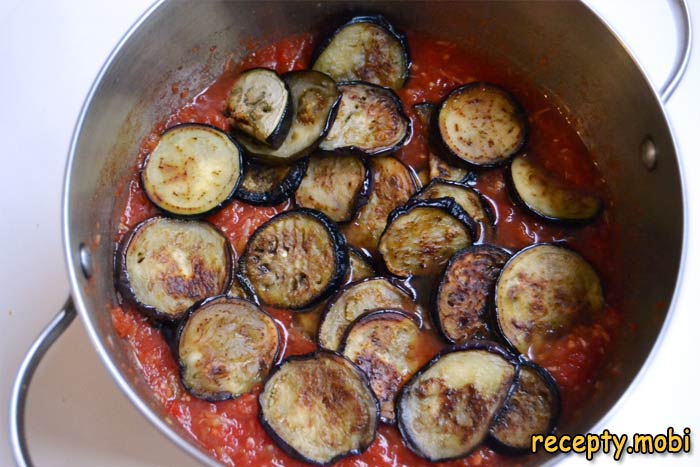
After placing the well-fried eggplants in the pot with sauce, cook them in the tomato sauce for 20 minutes over low heat. Gently stir the tomato sauce with the eggplants and avoid vigorous boiling. 5 minutes before the end of cooking, add vinegar (if the snack is not being prepared for storage but to eat immediately, vinegar does not need to be added). Place the eggplants in pre-sterilized jars and seal with lids (previously boiled). Carefully turn the jars upside down and wrap them in a blanket for 12 hours. Then store them away.Fried eggplants for winter in tomato sauce with pleasant spiciness will be very appropriate on the festive table.


Tips
- 1
Salt the eggplant slices for at least 30 minutes before frying. The salting step draws out bitter compounds and reduces the spongy texture that absorbs excessive oil during frying. Rinse and squeeze the salt-treated slices before cooking. The minor extra time investment dramatically improves the finished preserve and reduces oil consumption during frying.
- 2
Sterilize the jars and lids properly for long-term storage. Wash jars with hot soapy water, rinse, then either oven-sterilize (120°C for 15 minutes) or boil for 10 minutes. Boil the lids separately for 5 minutes. The sterilization is non-negotiable for safe winter storage. The same sterilization approach applies to strawberry jam with whole berries for winter and many other home-canned preserves.
- 3
Use ripe but firm tomatoes for the sauce. Overripe mushy tomatoes produce watery sauce that takes forever to reduce; underripe tomatoes lack the sugar and acid balance for proper preserve. Look for tomatoes that yield slightly to pressure but are not soft. Mixed varieties produce more complex sauce than single-variety preparations.
- 4
Wait at least 1 month before opening for full flavor development. Fresh-made eggplant preserves taste good but the flavors marry and develop dramatically during the first month of storage. Patience is rewarded with noticeably better flavor. Pair the finished preserve with crusty homemade bread for a simple winter snack, or use as a side with roasted meats and grilled fish for complete meals.
FAQ
How long does this preserve keep? +
Properly sealed and stored in a cool dark place, the eggplant preserve keeps for 6-12 months. Check seals before opening — the lid should be slightly concave and not move when pressed. Any jar with a popped lid, bulging cap, or off smell should be discarded immediately, never tasted. Refrigerate after opening and consume within 2 weeks.
Can I skip the vinegar? +
Only if eating immediately or refrigerating for short-term storage. The vinegar provides essential acidity that prevents bacterial growth during long-term ambient storage. Without vinegar, the preserve is unsafe for winter storage and must be refrigerated and consumed within 1 week. For shelf-stable preserves, follow the vinegar quantity precisely as the recipe specifies for safe results.
What other vegetables work in this preserve? +
Zucchini, summer squash, mushrooms, or mixed Mediterranean vegetable medleys all work beautifully with the tomato-vinegar preservation method. Adjust cooking times based on vegetable density — zucchini cooks faster than eggplant, mushrooms about the same. The basic technique — salt-treat the vegetables, fry until golden, simmer in vinegar-tomato sauce, jar — adapts to many summer harvests.
Why is my sauce thin? +
Either insufficient reduction time or tomatoes too watery. Continue simmering until the sauce coats the back of a spoon — this can take 50+ minutes for very wet tomatoes. Adding a tablespoon of tomato paste during the simmer accelerates thickening. Strain off some liquid before adding the eggplants if needed. Properly thick sauce coats the eggplants beautifully in the jar.
- Comment
or post as a guest
Be the first to comment.