avg —
Georgian Solyanka

Instructions
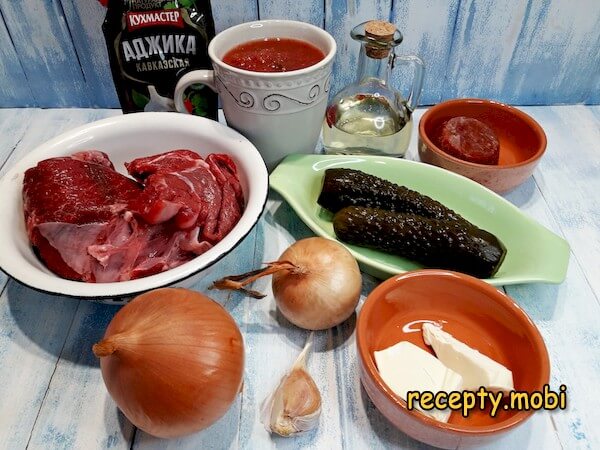
I prepare the ingredients. Beef substitutes with veal — cooking time halves to 30-40 minutes. Canned puréed tomatoes substitute with fresh sour-variety tomatoes (peeled, chopped). The pickles must be properly fermented (sour, not sweet pickles).
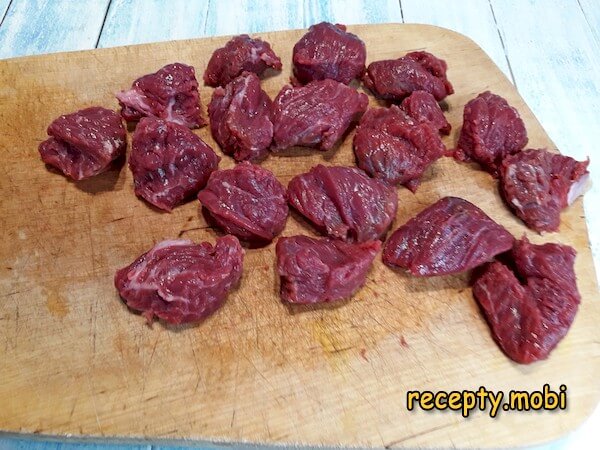
I cube the beef into bite-sized pieces. Visible silver skin and tendons stay — they soften completely during the long stew and add gelatinous body to the sauce.
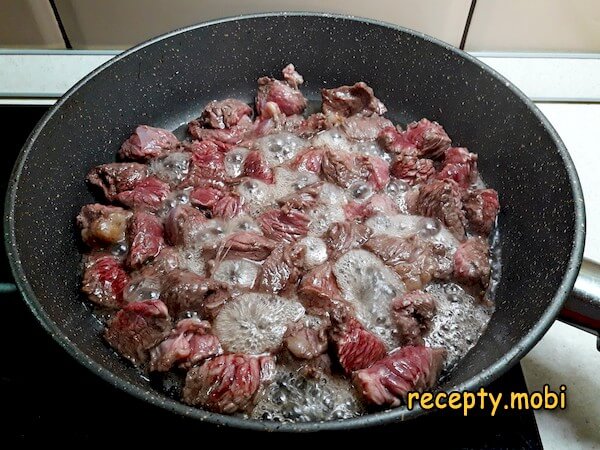
In hot vegetable oil over high heat, I sear the beef cubes — the Maillard browning develops the flavour foundation.
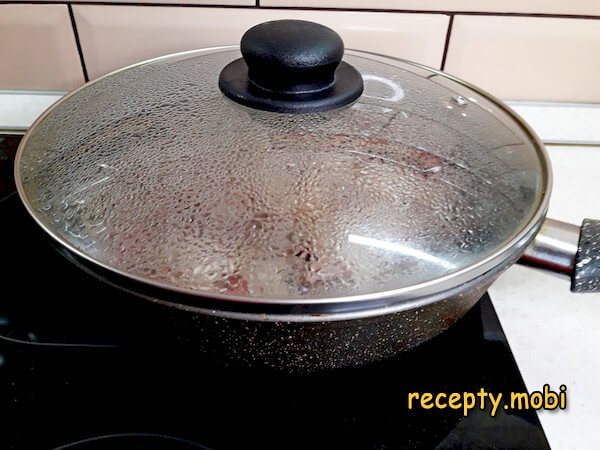
After 3-4 minutes of high-heat sear, I cover with a lid, reduce heat to minimum, and stew the beef for exactly 1 hour. The meat releases its own juices, which become the initial cooking liquid.
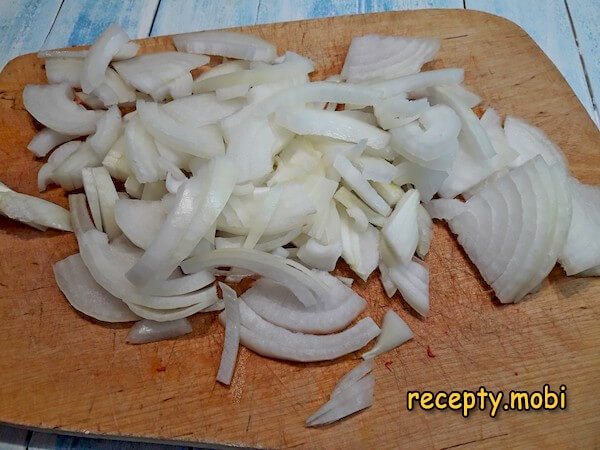
While the meat stews, I prep other ingredients. Onion gets cut into thin short strips.
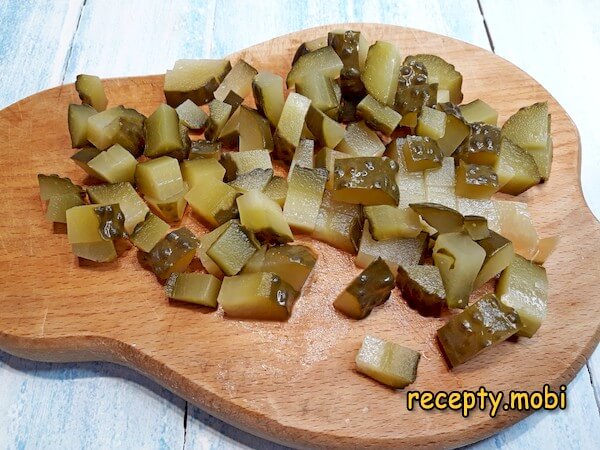
Pickles get cubed at medium size — small enough to integrate, big enough to stay visible.
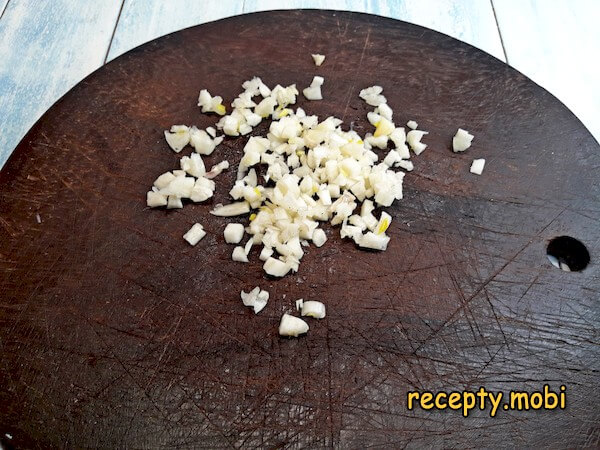
I finely chop the garlic with a knife — chopped is preferable to pressed here for the slightly chunky texture.
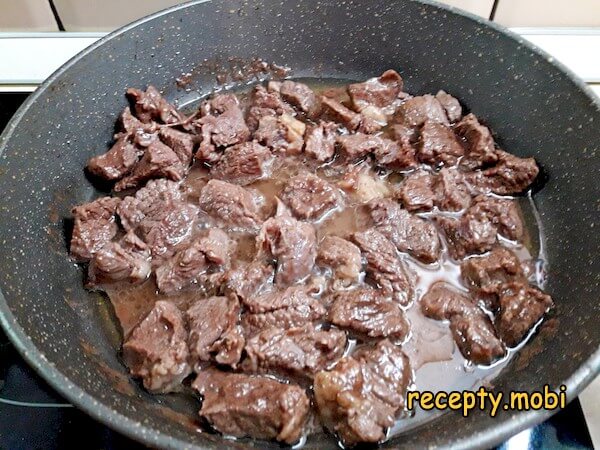
After the 1-hour stew, the beef has released significant juice and is approaching tender — visible by the way it gives at fork pressure.
Beef pulp tends to be lean, so I add the butter to enrich the sauce.
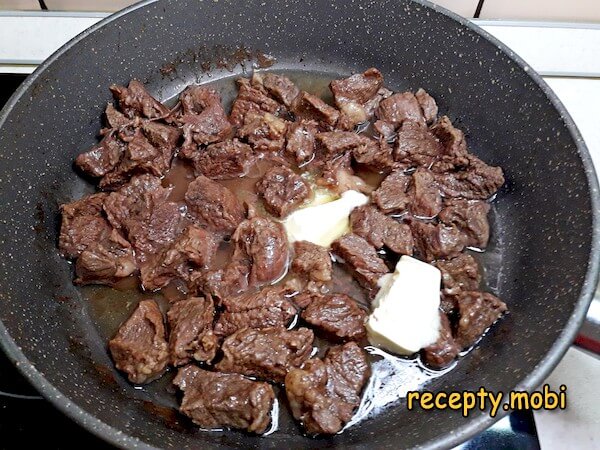
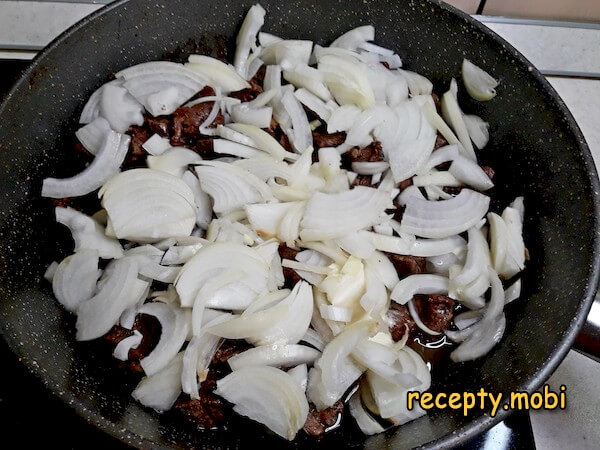
As the butter melts, I add the chopped onion. Stir to combine, cover, and simmer 5 minutes — the onion softens in the meat juices and butter.
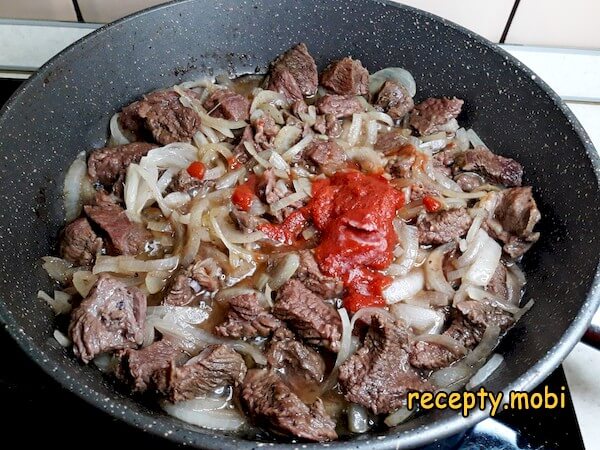
I add the tomato paste — primarily for deep colour and concentrated tomato flavour.
I stir in the spicy adjika — Georgian chili-and-spice paste that brings heat plus a layered aromatic profile (coriander, fenugreek, marigold petals depending on the brand).
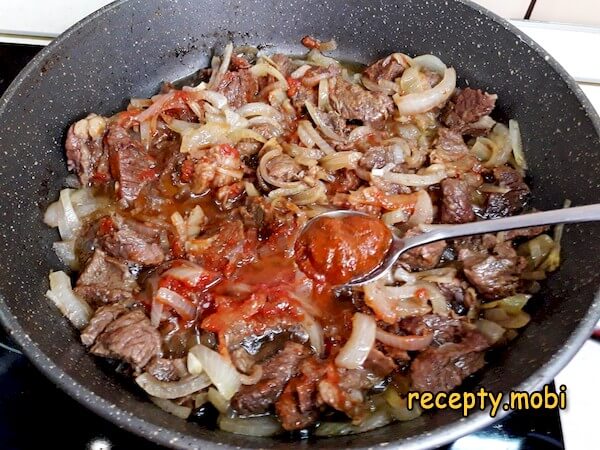
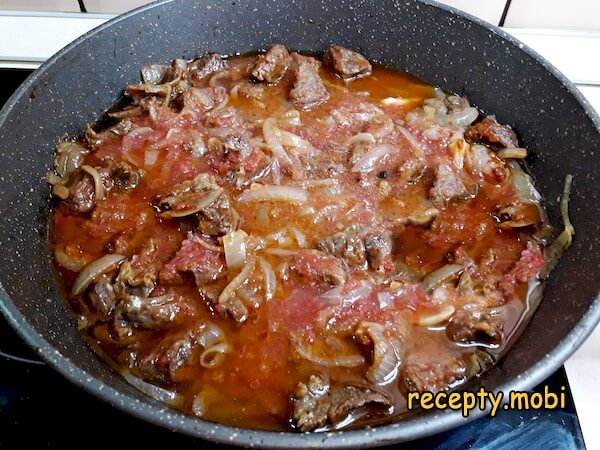
I pour in the puréed tomatoes and stir. Cover, simmer 5-7 minutes — the sauce takes on its characteristic deep red colour and starts unifying.
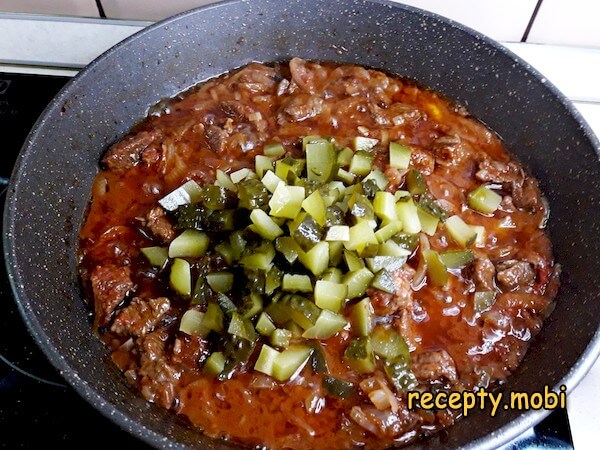
Now the diced pickles go in.
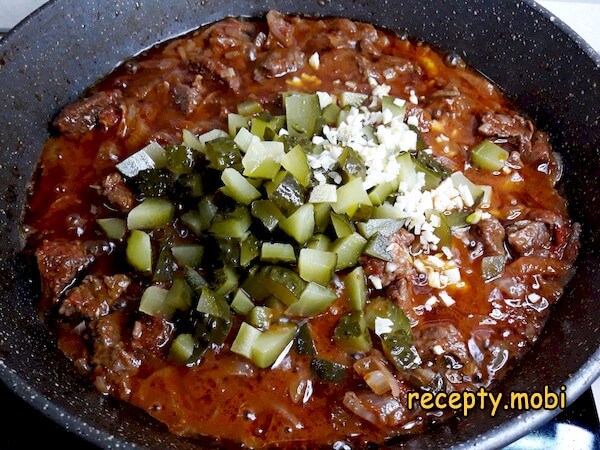
Together with the chopped garlic. I stir, taste — salt may not be needed at all (pickles + adjika usually contribute enough). Cover, simmer 10 more minutes on low heat. Garnish with fresh herbs at serving.Georgian solyanka is served hot, ideally with a side of crusty Georgian bread (shoti or lavash) for sauce-mopping. Fresh chopped herbs (parsley + cilantro) sprinkled at serving brighten the dish; raw red onion rings on the side are the traditional accompaniment. The tender beef-and-tomato base meets the salty-sour pickle bite in a way unique to Georgian cuisine.


Tips
- 1
THE 1-HOUR LOW-HEAT STEW IS NON-NEGOTIABLE. Tough beef cuts need time at low temperature to convert collagen into gelatine — that's what gives the dish its characteristic silky tenderness. High-heat shortcuts ruin the result. If pressed for time, use veal (cooks in 30-40 minutes) or pre-tenderised meat from a butcher. The wait is genuinely worth it.
- 2
CHOOSE PROPERLY FERMENTED PICKLES. Sour fermented pickles (Russian-style salted/fermented cucumbers, not sweet vinegar pickles) are essential. Sweet pickles unbalance the dish completely. Look for pickles with active fermentation — cloudy brine, no sugar in the ingredient list, sometimes labelled "lacto-fermented" or "barrel-aged". The pickle's brine acidity is part of the recipe's structural balance. For another Georgian beef preparation worth comparing, see Chashushuli Georgian Style.
- 3
ADJIKA QUALITY MATTERS. Adjika comes in many forms — Georgian green adjika (mild, herb-forward), Abkhazian red adjika (very spicy, garlic-forward), Russian commercial adjika (mass-market, often watered down). For this dish, traditional Abkhazian or Georgian red adjika is ideal. If unavailable, substitute: 1 tsp adjika ≈ 0.5 tsp harissa + 0.25 tsp dried coriander + small pinch of fenugreek.
- 4
SERVE WITH GEORGIAN ACCOMPANIMENTS. The full Georgian table for solyanka includes: shoti or lavash bread, raw red onion rings, fresh herbs (parsley, cilantro, mint, basil), pickled green tomatoes or peppers, and a glass of dry red wine (Saperavi or Mukuzani). The dish is the centrepiece; the accompaniments customise each portion. For another braised beef preparation in the same family, try Georgian-style Beef in the Oven.
FAQ
What's the difference between Georgian and Russian solyanka? +
Significant — they share only the name. Russian solyanka is a tangy thick soup with multiple meats (sausage, ham, beef, kidney), olives, lemon slices, and pickles, served with sour cream. Georgian solyanka is a thick stew (not soup) with one meat (beef), tomato sauce, onion, pickles, and adjika — no olives, no lemon, no multiple meats. The Russian version is a soup-course; the Georgian is a main course. Both delicious, completely different eating experience.
Can I use pre-cooked beef to save time? +
Yes, with adjustments. Pre-cooked beef (from a previous roast, leftover stew meat, or canned corned beef) skips the 1-hour braise. Total time drops to about 30 minutes. Add the cubed pre-cooked beef at step 9 (after the onion has softened), then proceed as written. Quality is acceptable but somewhat less integrated than freshly braised — the long stew with raw beef is what creates the deep flavour fusion. Pressure cooker shortcut: 25 minutes at high pressure with natural release matches the texture of the 1-hour braise.
Can I make this dish less spicy? +
Yes. Reduce the adjika to 0.5 tsp or omit entirely — the dish is still excellent without the heat (though less authentic). For zero spice but maintained complexity, replace adjika with 0.5 tsp ground coriander + a pinch of dried marigold or fenugreek. The dish becomes a Georgian-leaning beef stew suitable for kids and spice-averse palates. The pickle-and-tomato character remains the defining flavour element regardless of heat level.
How do I store and reheat leftovers? +
Refrigerated in an airtight container, Georgian solyanka keeps 4 days and the flavour deepens overnight. Reheat gently on the stovetop with a splash of water if the sauce has thickened, or microwave at half power for 2-3 minutes. The dish freezes excellently — 3 months in airtight containers; thaw overnight in the fridge before reheating. The pickles soften slightly through freezing-thawing but the dish stays tasty. Best served the day after cooking, when flavours have fully integrated.
- Comment
or post as a guest
Be the first to comment.