avg —
Georgian Style Eggplants for Winter

Instructions
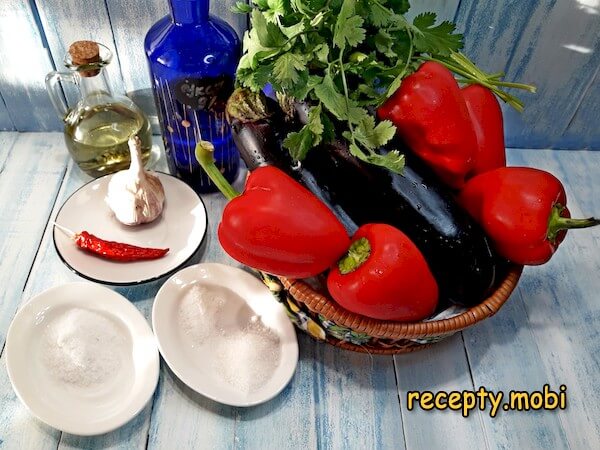
I prepare the ingredients. Young firm eggplants with dense flesh are best — overlarge ones tend to be seedy and watery. Red bell pepper gives the prettiest colour; mix red and yellow for visual variety. Adjust chili amount to taste — Georgian tradition is moderately hot, not blistering.
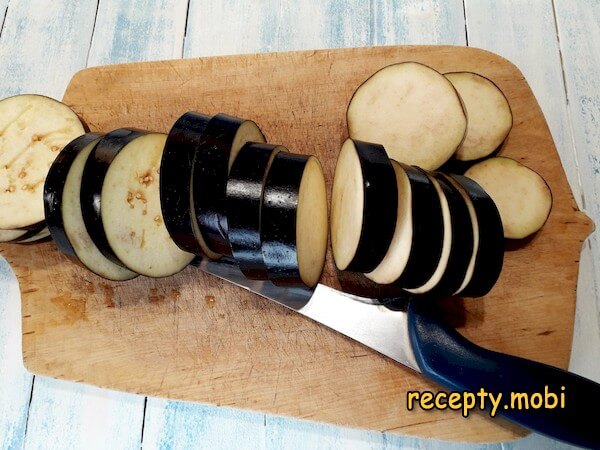
I wash the eggplants, cut off the stem, and slice into rounds 1-1.2 cm thick — keeping the skin on for structural integrity during frying.
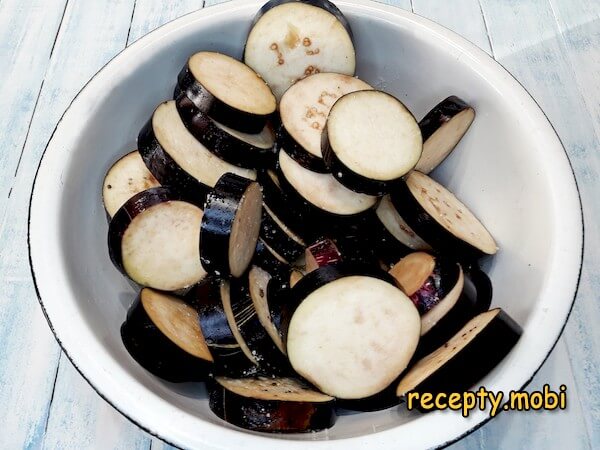
I place the rounds in a deep bowl, sprinkle with 2/3 tbsp salt, mix, and let sit at least 30 minutes. The salt draws out the bitter juice that would otherwise spoil the finished preserve.
While eggplants purge, I prepare the dressing. I deseed the bell pepper and cut into chunks suitable for grinding. The chili pepper goes in whole with seeds — that's where most of the heat lives.
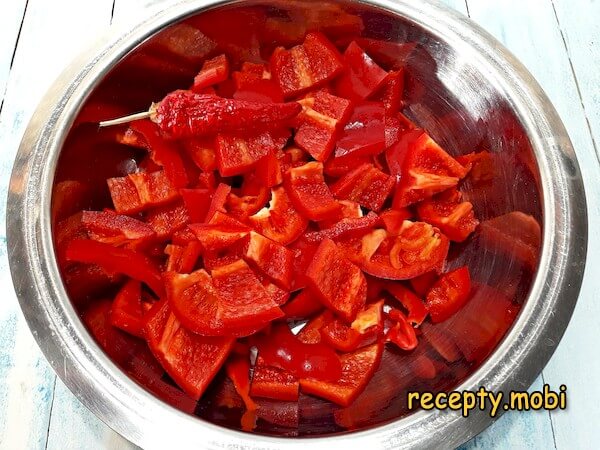
I peel the garlic cloves and add them to the bowl with the peppers.
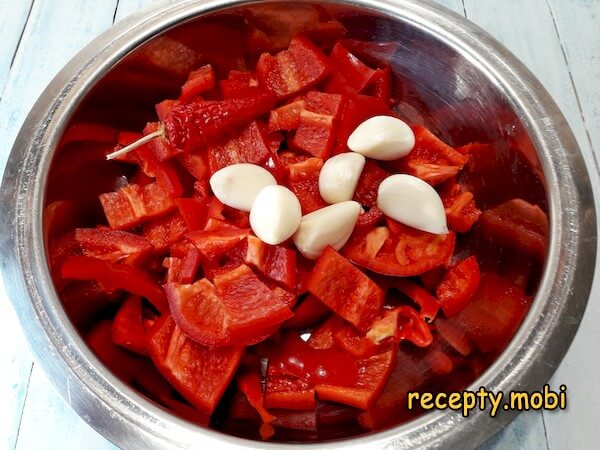
Everything goes into a blender or meat grinder. The meat grinder gives a coarser texture; blender gives a smoother purée. Both produce equally tasty dressing — choice is texture preference only.
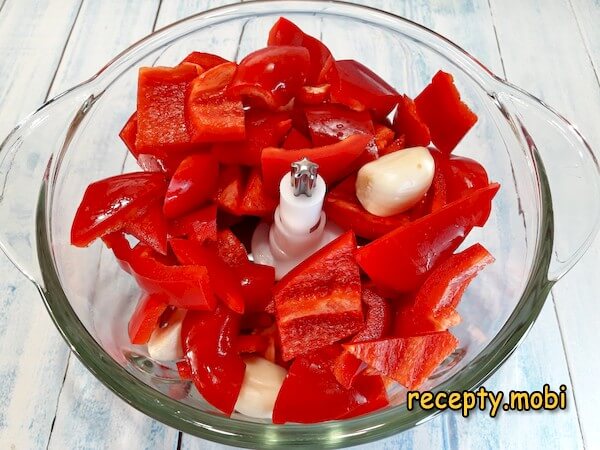
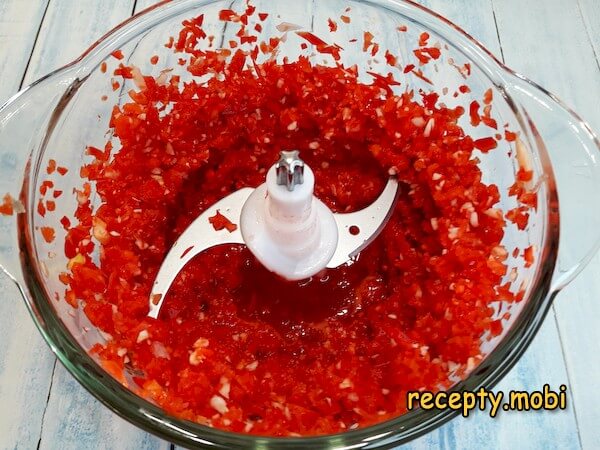
I grind the vegetables until they reach a thick mushy consistency.
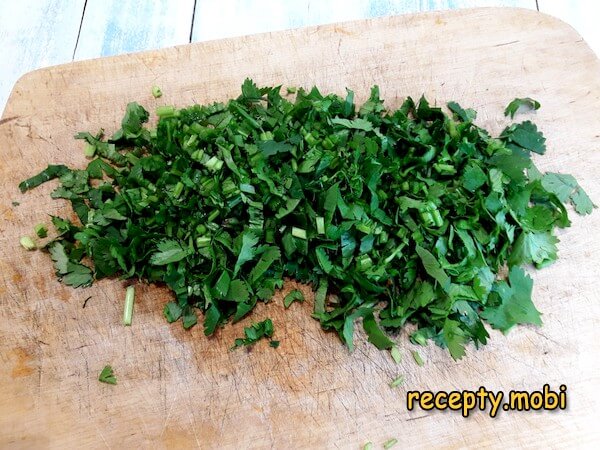
I finely chop the parsley and cilantro herbs together — about a 50/50 mix.
I combine the ground pepper-garlic with the chopped herbs in a bowl, add salt (1/2 tbsp), sugar (2/3 tbsp), and vinegar (1.5 tbsp).
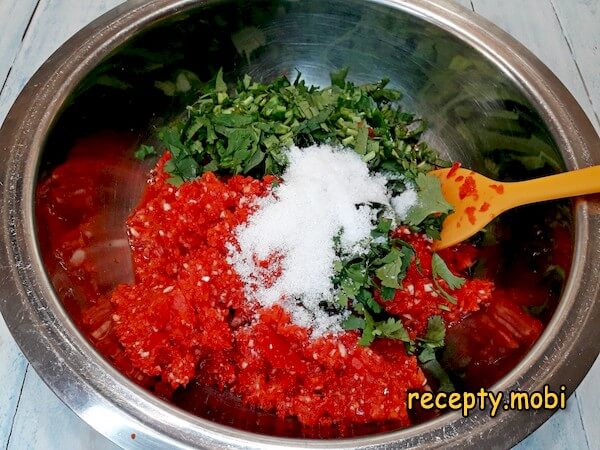
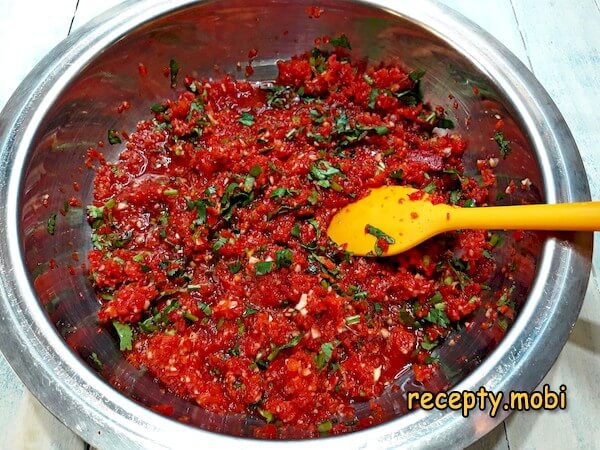
I mix the dressing and set aside while the salt and sugar dissolve fully. Meanwhile I sterilise the jars and lids.
In a skillet I heat a small amount of oil. I squeeze excess moisture from each eggplant round (paper towel pressure works well) — drier rounds absorb less oil and don't splatter. The rounds go in over medium heat and fry on both sides until lightly golden.
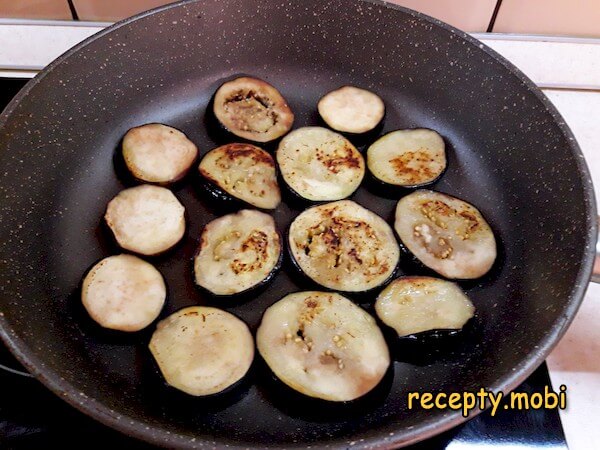
For each new batch, I add about 2 tbsp of oil to the skillet — eggplants are notoriously oil-greedy and a dry pan burns the next batch. The fried rounds rest on a plate.
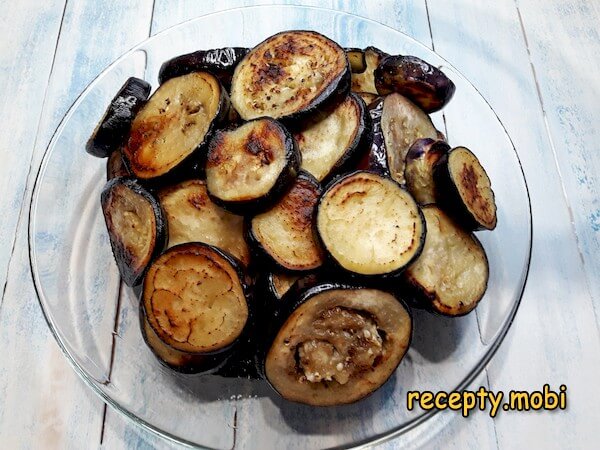
I lay the first layer of fried eggplant rounds at the bottom of each sterilised jar.
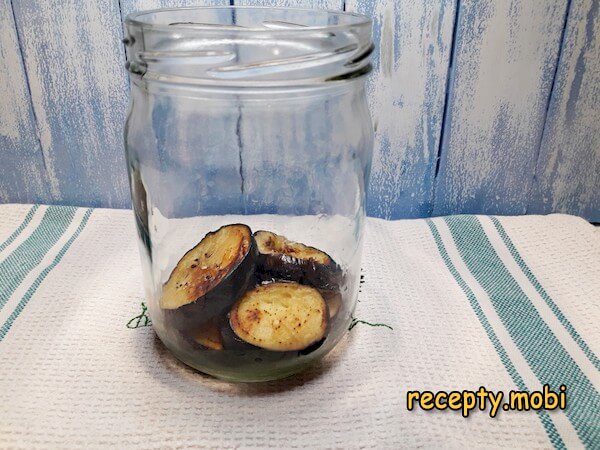
About 2 tbsp of dressing covers the eggplant layer.
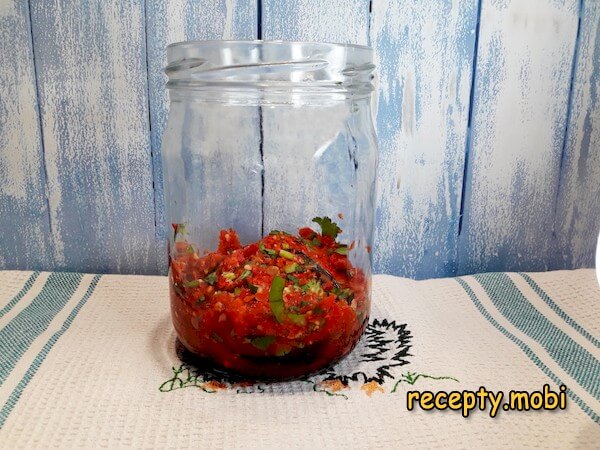
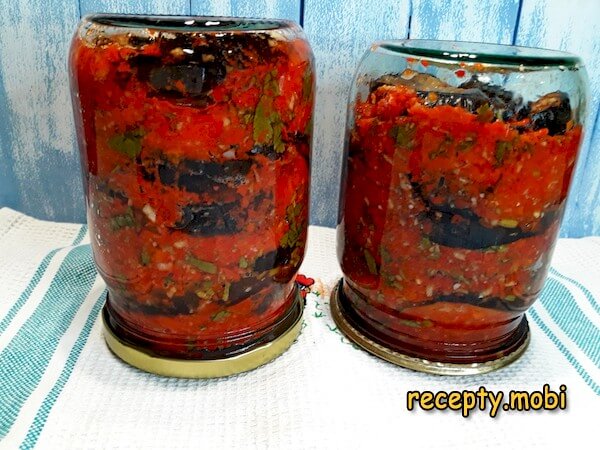
I continue alternating eggplant rounds and dressing layers until each jar is full to about 1 cm below the rim.
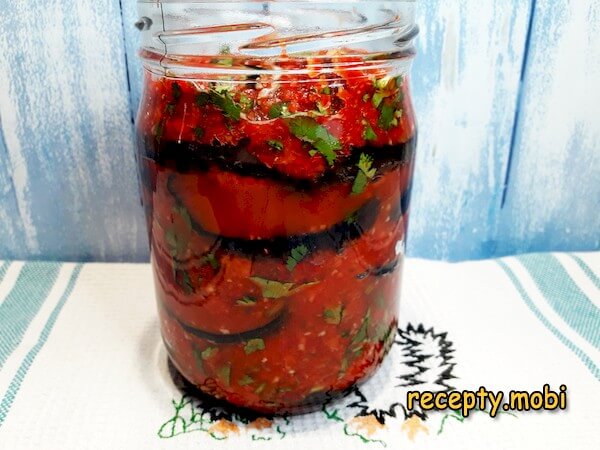
I cover the jars with lids without screwing them down (just resting on top). Either screw caps or canning lids work for this method.
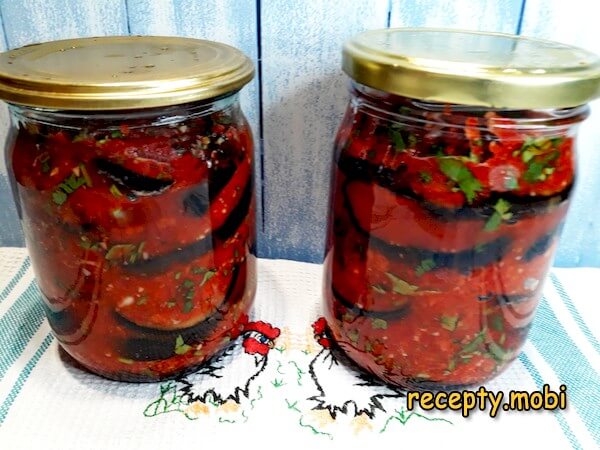
I lay a cotton cloth in the bottom of a large pot and stand the jars on it. Cold water goes in up to the jar shoulders, then onto the stove. Once boiling, I sterilise 15 minutes for 0.5 L jars (20 minutes for 1 L jars).
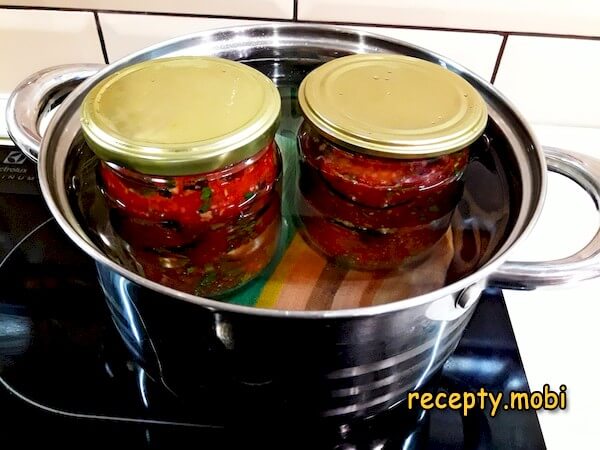
I carefully remove the jars (jar tongs are essential — they're hot), screw the lids on tight, and invert to check seal integrity. Cool naturally to room temperature.Georgian-style eggplants for winter store in a regular kitchen cupboard or, preferably, a cool pantry — they keep until next year's harvest. In cold-weather months a jar opened on the table brings instant Caucasian summer to the meal. Pair with grilled meat, rye bread, and a glass of dry red wine for the full Georgian zakuska experience.Try it, bon appétit!


Tips
- 1
THE SALT-PURGE IS NON-NEGOTIABLE. Step 3's 30-minute salt-rest isn't optional decoration — it's the structural step that prevents bitter eggplant juice from ruining the preserve. Skip it and you risk a faintly bitter aftertaste in every bite. Modern hybrid eggplants are less bitter than older varieties but still benefit from the purge. Squeeze each round firmly before frying (step 11) to remove the bitter water that's been drawn out.
- 2
THE OIL-PER-BATCH RULE. Eggplant rounds soak up oil — start with too little and the second batch fries in a dry pan and burns. Step 12's 2 tbsp per batch is the right ratio. Don't try to save oil; under-oiled eggplants are bitter and burnt. The fried rounds drain naturally on the plate after frying. For another bright Caucasian winter preserve worth comparing, see Green Tomatoes in Georgian Style for Winter.
- 3
CHILI HEAT IS DIAL-ABLE. Georgian tradition runs medium-hot — 1 small chili with seeds gives that classic warmth. For mild Caucasian: deseed the chili and use only half. For seriously spicy: 2 chilis with seeds plus 0.5 tsp cayenne stirred into the dressing. The dressing gets sampled before jarring (step 10) — taste-test and adjust at that point. Dressing flavours intensify during the 15-minute sterilisation, so dial it slightly milder than seems right.
- 4
DRESSING-LAYER TECHNIQUE. The alternating eggplant-dressing layering (steps 13-15) is what makes this preserve distinct. Don't pour all the dressing on top of stacked eggplants — every other round needs its own dressing layer to flavour through the entire jar evenly. About 2 tbsp dressing per eggplant layer, with the top layer being dressing, ensures the top eggplants don't dry out during sterilisation. For another similar-style winter eggplant preserve, try Eggplants for Winter in Jewish Style.
FAQ
Why do eggplants need salt-purging? +
Eggplants contain solanine and other bitter compounds in their cellular juice. Salt draws out this juice via osmosis, taking the bitter compounds with it. Modern hybrid eggplants have been bred for lower bitterness but the salt-purge remains beneficial — it also pre-seasons the flesh and reduces oil absorption during frying. The 30-minute minimum is what's needed; up to 1 hour gives slightly drier rounds with even less oil-absorption. Squeeze rounds firmly before frying to remove the drawn-out water.
Can I skip the sterilisation step? +
Not safely. The 15-minute sterilisation is the food-safety step that allows shelf-stable storage. The acidic dressing (vinegar) plus salt provide some preservation, but eggplant flesh is borderline-low-acid and needs the heat treatment to ensure botulism-spore destruction. Without sterilisation, the jars must be refrigerator-stored only and consumed within 4-6 weeks. For long-term cupboard storage (the whole point of "for winter" preserves), don't skip the boil.
How long do the jars keep? +
Properly sealed and sterilised jars at room temperature in a dark cupboard keep until next year's eggplant harvest (10-12 months). Cool pantry storage extends this slightly. Once opened, transfer to fridge and use within 2 weeks. The eggplants gradually soften in the dressing over time — texture is best in the first 6 months. If you spot mould, fizzing, or off-smells, discard the entire jar — properly preserved eggplants don't ferment or spoil visibly.
What pairs best with this preserve? +
Georgian-Caucasian tradition serves these eggplants alongside: grilled meats (especially mtsvadi/shashlik), boiled or roasted potatoes with butter, fresh khachapuri or lavash bread, and a glass of dry red wine (Saperavi or another Georgian red). Modern Russian zakuska tradition pairs them with a slice of dark rye bread topped with butter, a slice of feta-style cheese, and a shot of cold vodka. As a starter or small side, the spicy bright eggplants cut through richness beautifully.
- Comment
or post as a guest
Be the first to comment.