avg —
Guryevskaya Kasha

Instructions
I prepare the ingredients. Condensed milk can be replaced with a 1:1 mix of regular milk and heavy cream — the milk-foam formation works similarly. Other nuts (hazelnuts, almonds, peanuts, pine nuts) and other berries or dried fruits substitute freely.
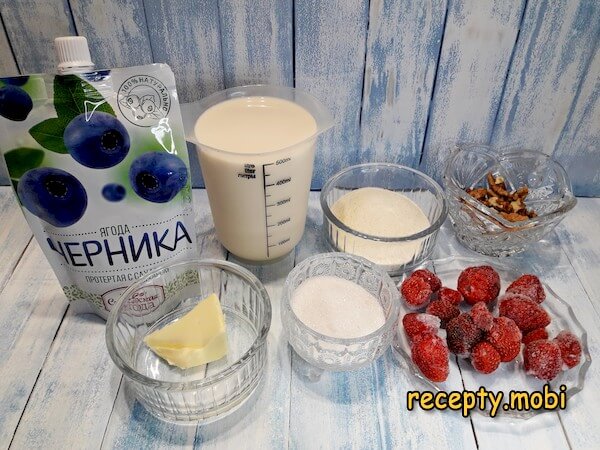
The foam-creation needs a wide-bottomed oven-safe pan (no plastic handles). I pour 500 ml of condensed milk into the pan and place on the stove to heat while the oven preheats to 180 °C.
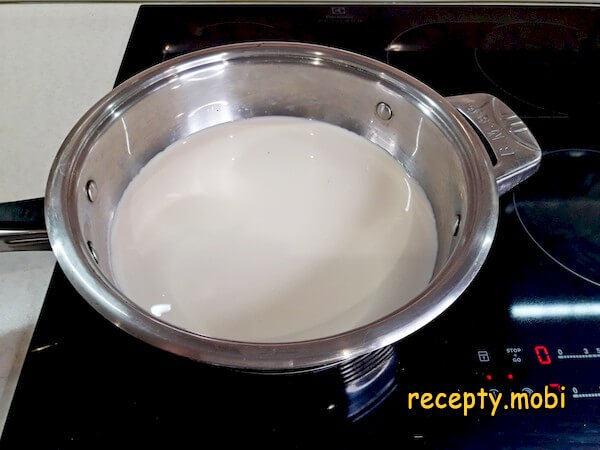
Once the oven is hot and the milk is warm, I transfer the pan to the oven. The oven heat doesn't boil the milk — it gently simmers it, and the still surface forms a thick skin (the "foam" of the recipe).
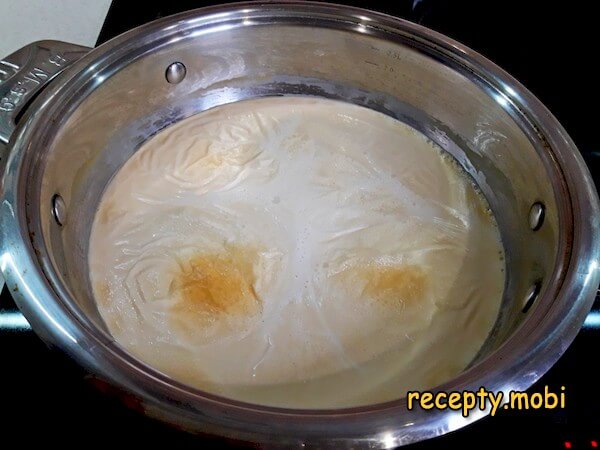
After about 15 minutes, I pull the pan out and lift the formed milk skin with a wide spatula or skimmer.
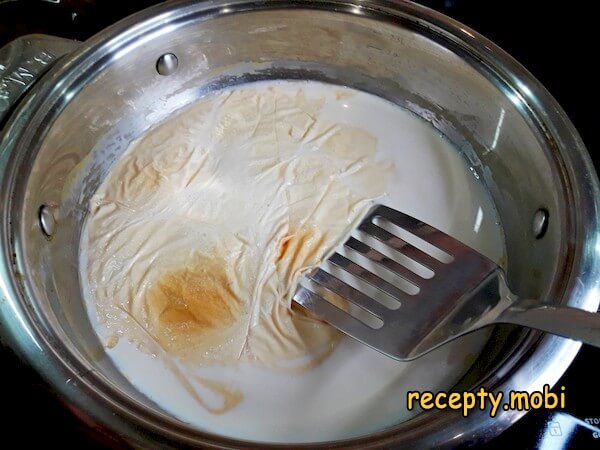
The first foam transfers to a plate.
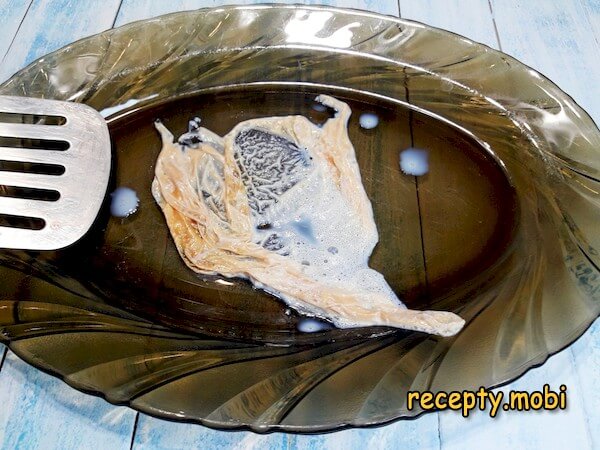
I return the pan to the oven and wait 15 more minutes for the next foam to form. Total: 4-5 foams collected over about 75 minutes. Letting them sit a few extra minutes between collections gives a more golden, browned look. I leave the oven on.
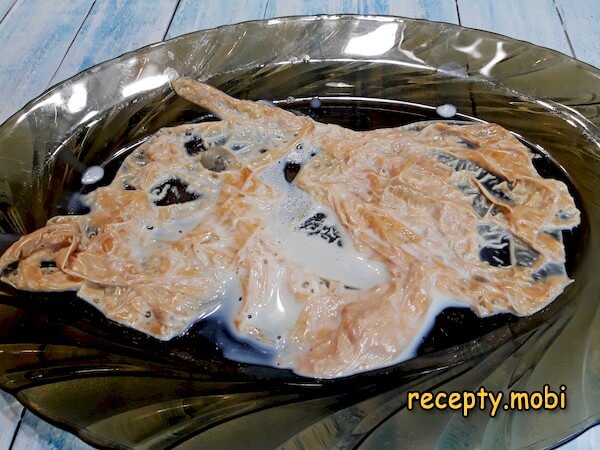
While the foams form, I toast the walnuts in a dry frying pan until hot — toasting makes them more brittle and aromatic.
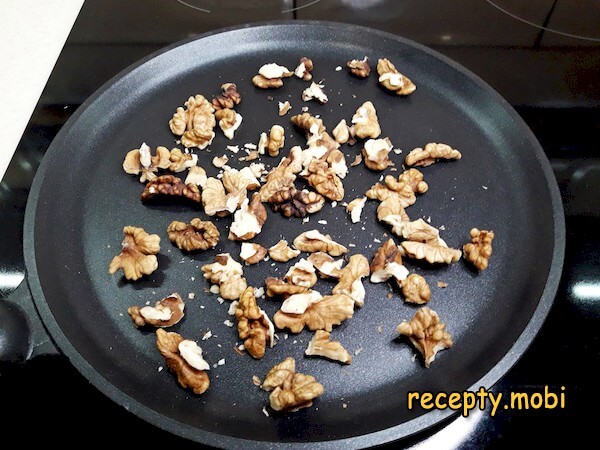
I chop the toasted walnuts to a coarse crumb.
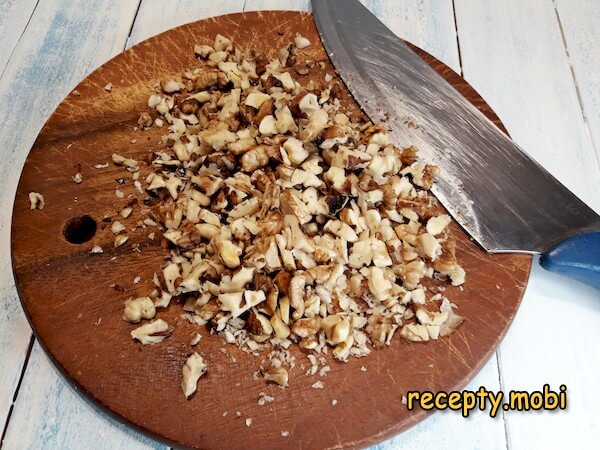
Now the semolina layer. I pour the milk left in the pan after foam collection into a saucepan and top up with the additional 300 ml condensed milk to reach 500 ml total. On medium heat, I gradually add the semolina with one hand while whisking continuously with the other — this technique prevents lumping.
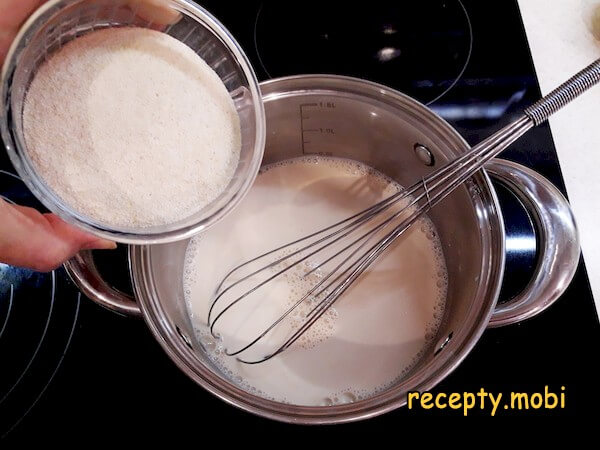
The semolina thickens fast. I cook 3-4 minutes, adding the butter as it cooks.

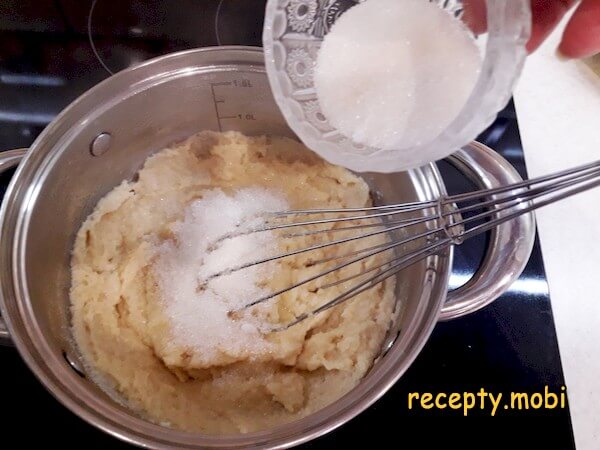
I add the sugar and stir until dissolved.
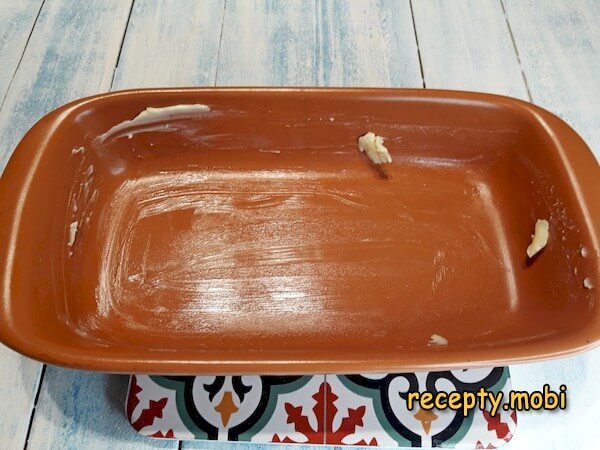
I generously grease an oven-safe serving dish or individual ramekins.
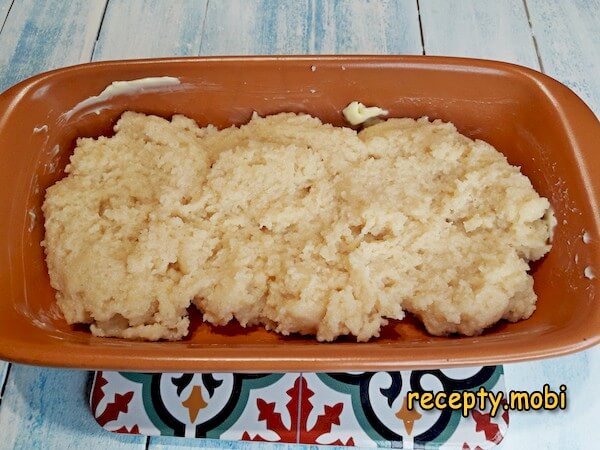
The first semolina layer goes into the dish.
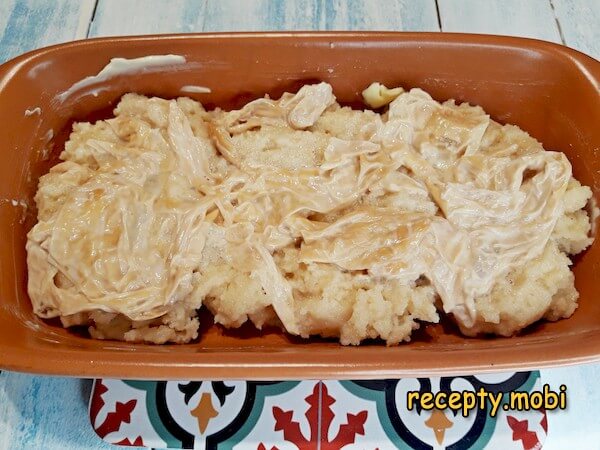
Half of the prepared milk foams cover the semolina layer.
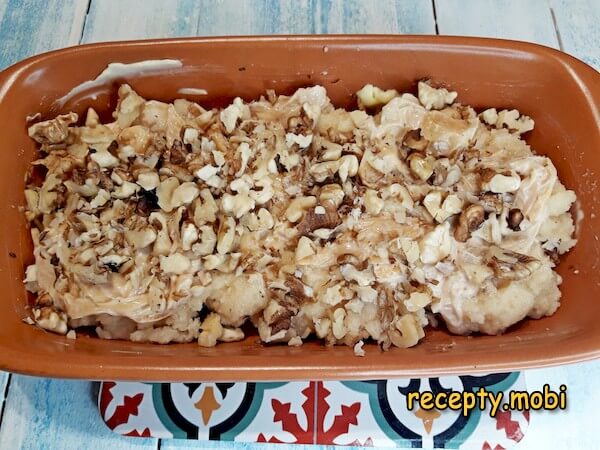
Chopped walnuts sprinkle over the foam layer.
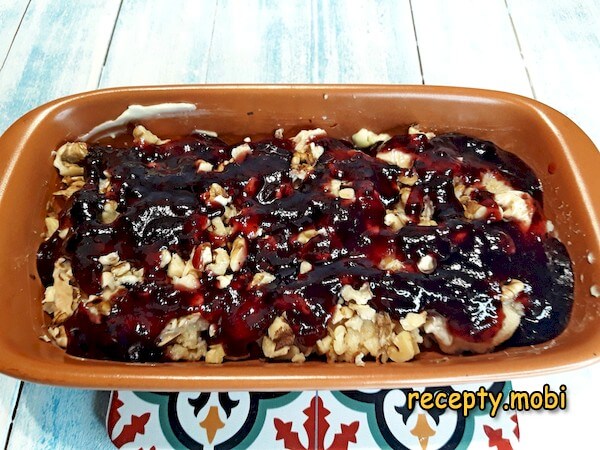
Berry jam is the next layer.
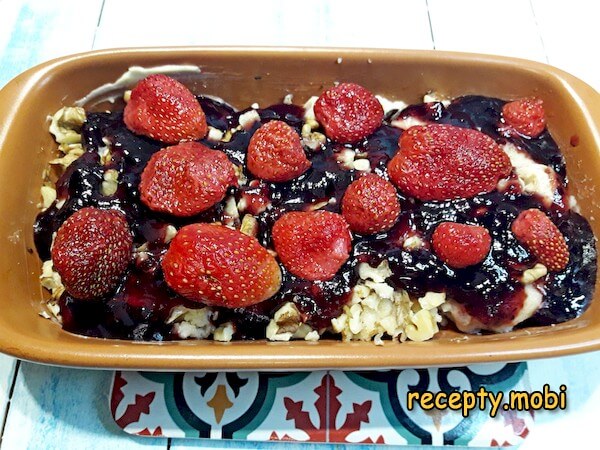
Strawberries arrange on top of the jam.
The second semolina layer goes on top of the strawberries, covered with the remaining milk foams.
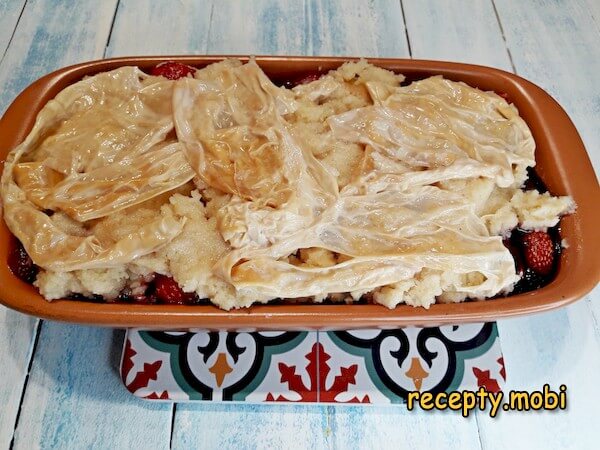
Final touch: nuts on top and a pinch of sugar — the sugar caramelises during the final bake giving a golden surface.
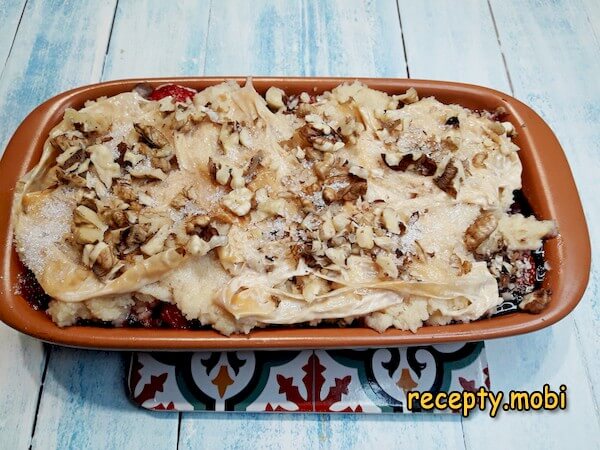
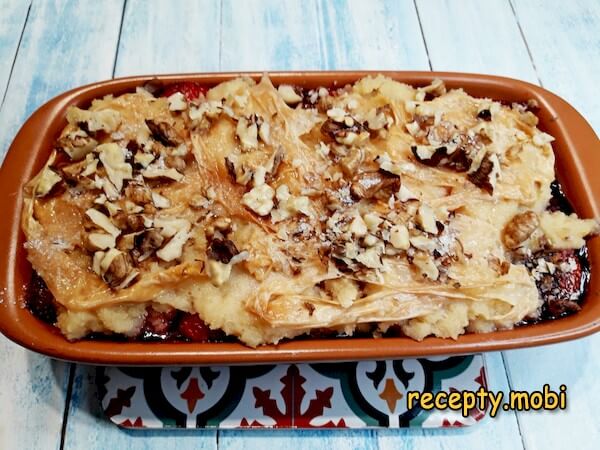
The assembled dish goes back into the still-hot oven for 5-7 minutes — just long enough to brown the top.The finished Guryevskaya kasha presents as a layered dessert with visible bands of semolina, foam, jam, and berries — far removed from ordinary breakfast porridge. The milk foams hold the layers in place. Excellent as an elegant breakfast or a heritage Russian dessert at the end of a meal. The foams can be made the day before and refrigerated to shorten morning prep.


Tips
- 1
THE WIDE-BOTTOMED PAN IS NON-NEGOTIABLE. Foam formation depends on surface area — wider pan = larger foam = more substantial layered dessert. A pan with at least 25 cm base diameter is ideal. A narrow saucepan gives small thin foams that don't structure the dessert properly. Cast-iron skillets work beautifully because their thick walls give even gentle heat in the oven.
- 2
THE FOAM CONSISTENCY MATTERS. The foam should be thick enough to lift cleanly with a spatula but tender enough to fold over the layers. If your foam is too thin, the oven temperature is too low — bump up to 190 °C. If foams are forming too crispy and breaking, oven is too hot — drop to 170 °C. The 180 °C target is calibrated for most ovens. For another grain-and-fruit Russian dessert worth comparing, see Rice Kutya with Raisins.
- 3
MAKE FOAMS AHEAD FOR EASIER MORNINGS. The foams take 75 minutes to make in real time but require only 15 minutes of attention per foam. They keep refrigerated for 24 hours covered with parchment between layers. Day-of assembly: cook fresh semolina + assemble layers + brief oven brown = 25 minutes total. Great for impressive weekend breakfast or special-occasion brunch.
- 4
CUSTOMISE THE FILLING FREELY. The basic strawberry-jam-walnut combination is delicious; many variations work. Try: raspberry jam + pistachios + raspberries; apricot jam + almonds + dried apricots; cherry jam + hazelnuts + fresh cherries. Match the jam to the fresh fruit for maximum flavour cohesion. Honey can replace the jam for a more delicate sweetness. For another Central Asian grain dessert worth comparing, try Mashkichiri – Uzbek pilaf with mung beans.
FAQ
Where does the name "Guryevskaya" come from? +
The dish is named after Count Dmitry Guryev (1758-1825), a Russian Minister of Finance under Alexander I and a notable gourmand. According to the legend, he tasted the dish at a friend's estate where it had been invented by a serf cook named Zakhar Kuzmin. Guryev was so impressed he bought Kuzmin and his entire family in order to bring the cook to his own household — a transaction that says more about 19th-century serfdom than about culinary history. The dish became Guryev's signature dessert and bears his name to this day.
Can I substitute the condensed milk with regular milk? +
Yes, with a small flavour shift. Use full-fat dairy milk (3.5%+) for the foams — it forms thicker skins than skimmed milk. For the semolina cooking liquid, use a 1:1 mix of milk and heavy cream to mimic the richness of condensed milk. The result is slightly less sweet (no added sugar from the condensed) so increase the sugar in the semolina to 80-100 g. The dish becomes lighter, less candy-sweet — many cooks prefer this version.
Why are my foams not forming? +
Two usual causes. First, oven temperature too low — below 170 °C the milk just stays liquid without forming a skin. Bump up to 180-190 °C. Second, the milk surface is being disturbed — even slight pan movement breaks the forming foam. Place the pan on the oven rack and don't open the door until the 15-minute mark. Air drafts also disrupt foam formation; close kitchen windows during the foam stage.
Can I make a single-serving Guryevskaya kasha? +
Yes — scale the recipe by half (35-40 g semolina, 250 ml condensed milk for foams, 150 ml extra for cooking, 25 g sugar, 20 g walnuts, 15 g butter, 45 g strawberries, 25 g jam). Use a smaller pan (15-18 cm diameter) for the foams and individual ramekins for assembly. Single servings actually look quite elegant — three small layers of semolina, foam, and filling in a clear glass ramekin show off the visual structure beautifully.
- Comment
or post as a guest
Be the first to comment.