avg —
Horseradish Snack for Winter

Instructions
I prepare the ingredients. Meaty tomato varieties are best — Roma, Plum, San Marzano — they have less water than juicy varieties and produce a thicker condiment. For seriously spicy versions: add 0.5 tsp ground hot pepper or grind a fresh chili together with the tomatoes. Glass jars should be sterilised in advance; lids (metal or plastic) get scalded with boiling water.
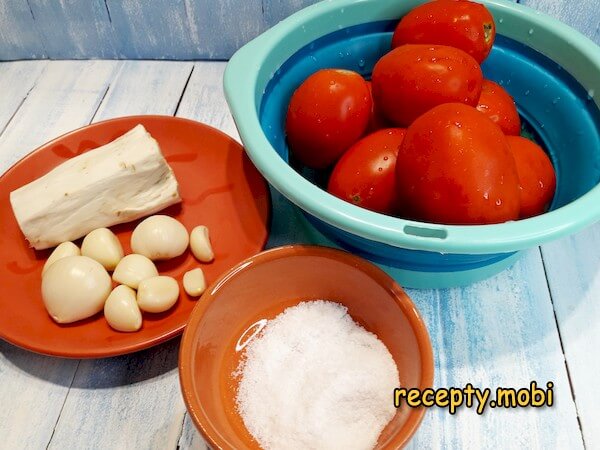
I cut the tomatoes into large chunks, removing the stems. Then they grind in a blender or meat grinder into a smooth puree.

Now the horseradish — and the eye-irritation challenge. Horseradish releases volatile compounds that irritate eye mucous membranes intensely (more than onions). To minimise this, I work sequentially: first peel the root, then cut into medium pieces.
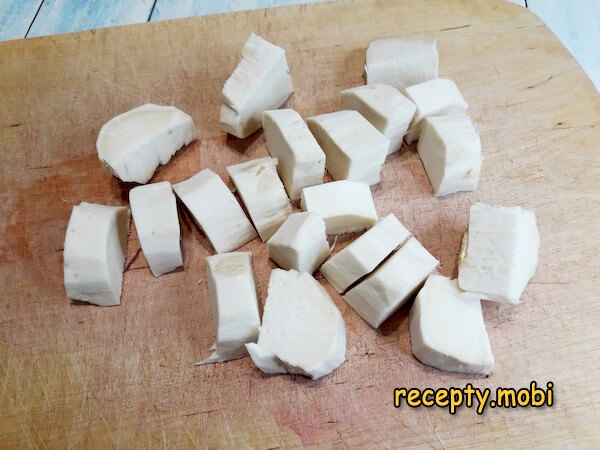
The clever workaround: I attach a food bag to the meat grinder output (tied with a rubber band around the grid). When I grind the horseradish pieces, they fall directly into the bag — almost no volatile compounds escape into the air. Eye protection achieved.
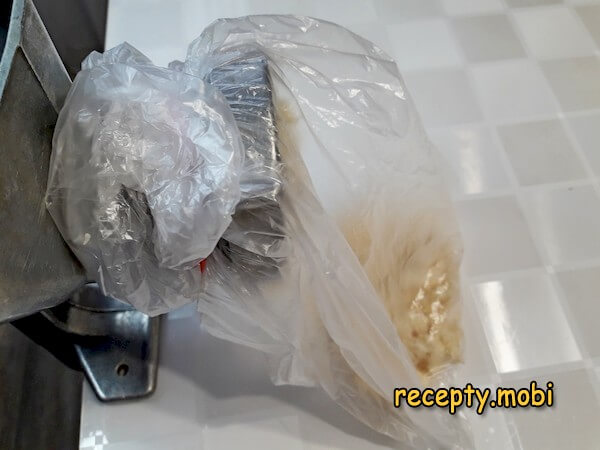
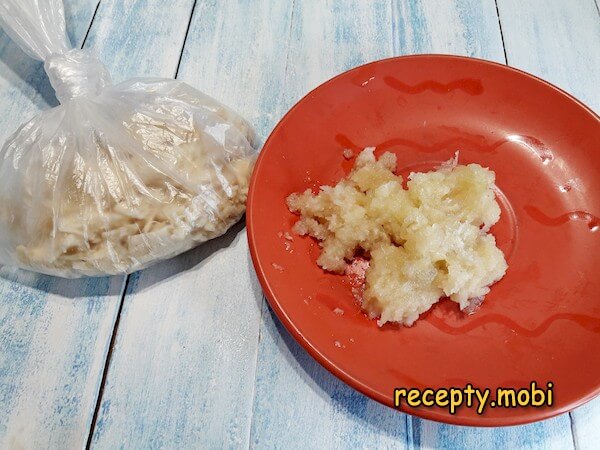
I carefully remove the bag from the grinder and tie a knot in it for now (the volatile compounds stay sealed inside). Then I press the garlic through a garlic press.
The tomato puree pours into a mixing container — stainless steel or glass works well; aluminum reacts with the acid.
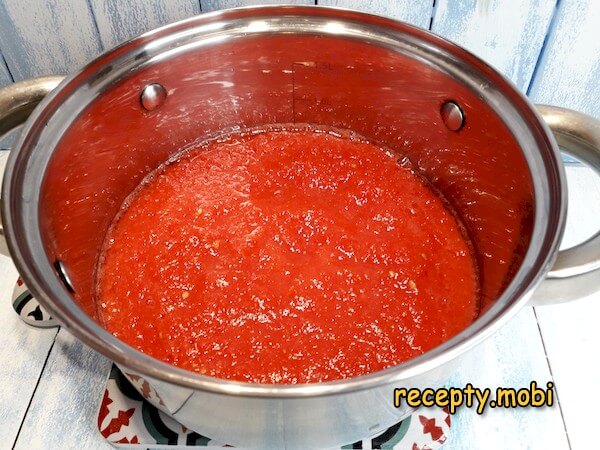
Salt goes in NOW — while the tomato is still clean and tasteable, before adding the spicy components.
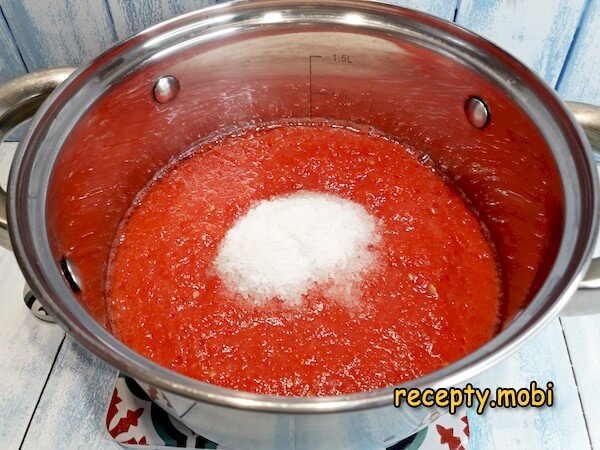
I stir and let it sit 20 minutes for the salt to fully dissolve. Then I taste-test the saltiness — should be slightly saltier than normal cooking-salt level. Once the horseradish and garlic are added, the spiciness overwhelms taste-buds and accurate salt judgment becomes impossible.
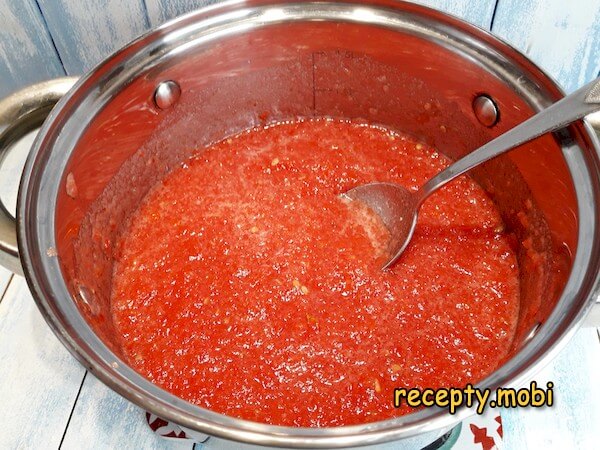
Now I add the pressed garlic to the salted tomato.
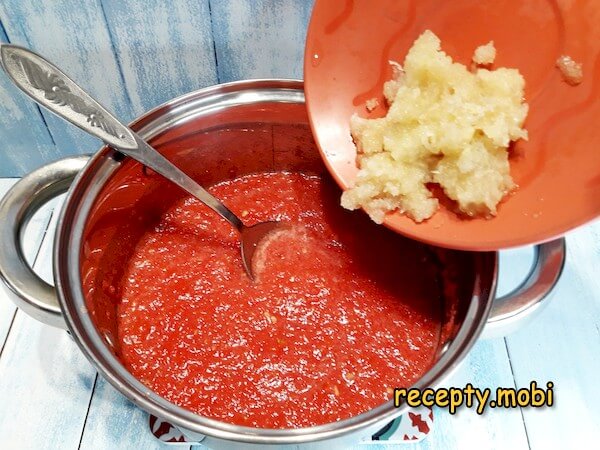
And the ground horseradish (untie the bag carefully — eye irritation will be present even at this stage).
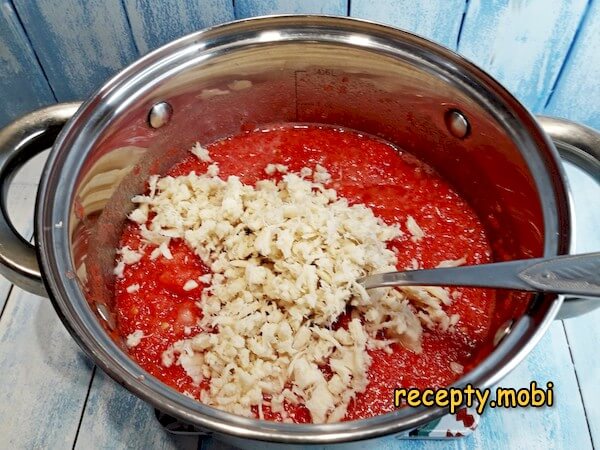
I mix everything well — uniform distribution of all components.
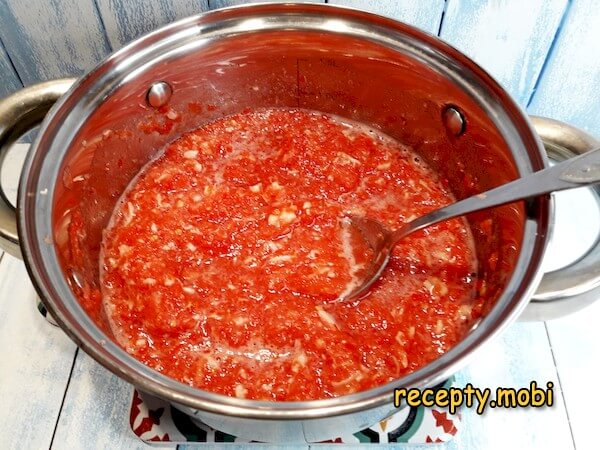
The finished khrenovina goes into jars, sealed with plastic or metal lids.The horseradish snack must be stored ONLY in the refrigerator — the trade-off for using all-fresh, no-vinegar, no-boil ingredients. On the bright side, the fridge keeps it perfectly safe until next summer's tomato season — the lid won't bulge, no mould develops on top. The only change over time: the heat gradually mellows, becoming a milder version of itself by month 6.



Tips
- 1
THE FOOD-BAG GRINDER TRICK IS LIFE-CHANGING. Step 4's tied-bag technique is the difference between weeping over horseradish for 20 minutes and processing 100 g of root in 30 seconds with no tears. The bag captures the volatile allyl isothiocyanate compounds (the "horseradish heat" molecules) before they reach your eyes. Use a strong food-grade plastic bag, secure tightly with a rubber band, and process quickly. The same trick works for processing wasabi root.
- 2
SALT BEFORE THE SPICE FOR ACCURATE SEASONING. Step 7-8's order matters — once horseradish and garlic are in the mixture, your taste receptors are overwhelmed and accurate salt judgment becomes impossible. Salt the tomato puree first, taste-test for slightly-saltier-than-cooking, then add the spice components. This ordering principle applies to many spicy condiments — season the base before adding heat. For another horseradish-tomato preserve worth comparing, see Tomatoes with Horseradish and Garlic for Winter.
- 3
THE HEAT MELLOWS — KNOW WHEN TO USE. Fresh khrenovina is at maximum heat for the first 2 weeks. Heat decreases over months as the volatile compounds gradually release. Plan accordingly: use the most intense early-batch portions on robust foods (beef shashlik, jellied meat) where heat balances richness; save mellower late-stored portions for delicate foods (boiled potatoes, eggs, fish). Some traditional Russian families specifically age the condiment 1 month before serving for a calmer heat profile.
- 4
SERVE WITH RICH RUSSIAN FOODS. The condiment is designed for the Russian table where rich-fatty foods need spicy-cutting accompaniment. Best pairings: kholodets (jellied meat), pelmeni (Russian dumplings), boiled tongue, beef brisket, fatty fish (mackerel, herring), boiled potatoes with butter, on rye bread with thinly-sliced lard or salo. The horseradish-tomato-garlic profile cuts through fattiness while adding immune-boosting compounds. For another Russian-style winter condiment worth trying, try Caviar from Green Tomatoes for Winter Without Sterilization.
FAQ
Why is it called "khrenovina" or "ogonyok"? +
"Khrenovina" derives from "khren" (horseradish in Russian) — literally "the horseradish stuff." "Ogonyok" means "little flame" — referring to the spicy heat. Both names are colloquial; there's no single official Russian name. Some regions call it "ogonyok," others "khrenovina," and some call it simply "khren s pomidorami" (horseradish with tomatoes). The dish itself is centuries old in Russian peasant cooking, originally made fresh in autumn when both tomatoes and horseradish are at peak.
How long does it keep in the fridge? +
Properly made and refrigerated, khrenovina keeps 6-9 months without quality loss — well into next summer. The high concentration of horseradish (allicin) and garlic (allyl sulfides) plus the tomato acidity creates an environment hostile to spoilage bacteria. The heat decreases gradually over months but flavour and safety remain. If you spot mould (rare but possible if the jar is contaminated), discard the entire jar. Many Russian households make 2-3 batches over autumn and have fresh khrenovina all winter.
Where do I get fresh horseradish root? +
In autumn (September-November), fresh horseradish is widely available in farmers' markets and well-stocked supermarkets in regions with significant Eastern European population. Look for: firm white roots, no soft spots, fresh-smelling cut surface (a brief sniff — not a deep inhale, that's painful). If unavailable: pre-packaged grated horseradish (in jars, with or without vinegar) works as substitute but produces a less authentic result. The fresh root is dramatically more pungent than jarred. Avoid horseradish "sauce" (cream-based) — wrong product entirely.
Can I freeze khrenovina for longer storage? +
Technically yes, but not recommended. Freezing breaks down the cell walls of the fresh tomato, garlic, and horseradish, releasing more water on thaw and creating a separated watery condiment. The texture is noticeably worse than fresh-fridge khrenovina. If you need more shelf-stable storage, consider the boiled-and-vinegared variants of horseradish-tomato condiments (different recipe, different character) — those genuinely keep at room temperature for 12+ months. The fresh version is meant for fridge storage; that's part of its identity.
- Comment
or post as a guest
Be the first to comment.