avg —
How to Dye Eggs with Hibiscus Tea

Instructions
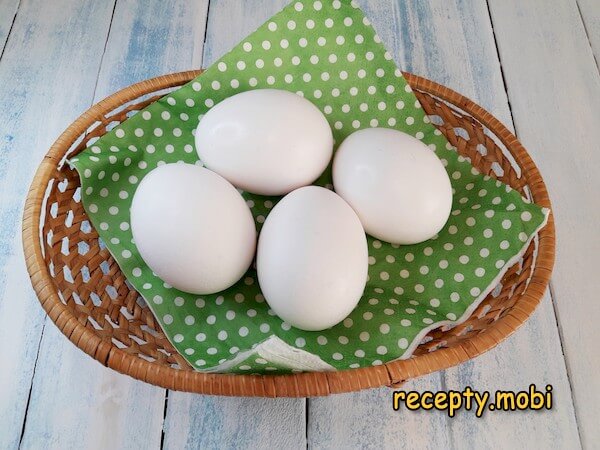
I prepare the ingredients. Take eggs out of fridge 10 minutes ahead — room temperature eggs less likely to crack during boiling. Hibiscus tea: dried red flower petals (called "karkade" in Russian), available at tea/spice stores.
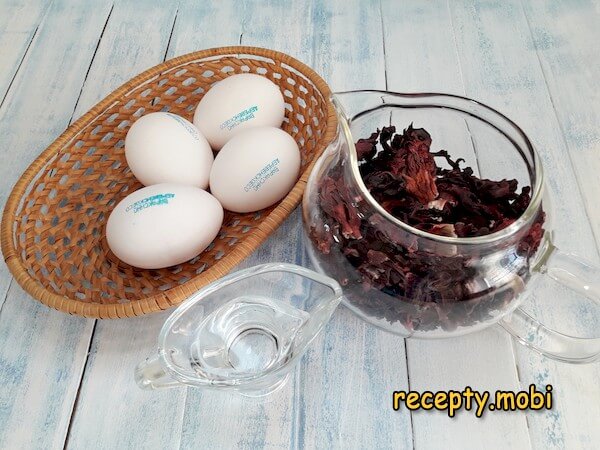
Wash eggs with sponge + baking soda — surface must be CLEAN. Be gentle — don't crack the shells.
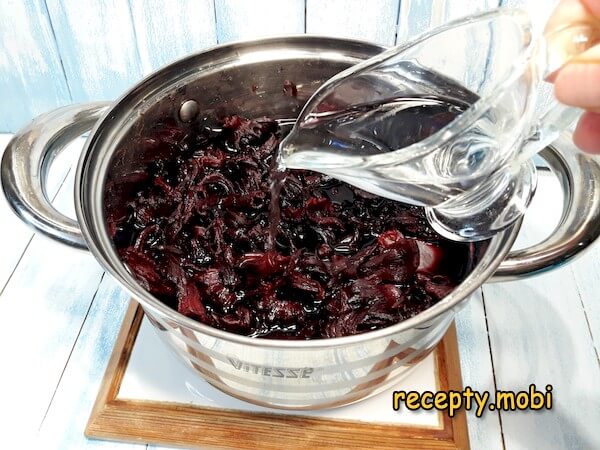
Layer dried hibiscus at bottom of small pot. Place eggs on top; pour remaining tea over the eggs (creates layered cushion).
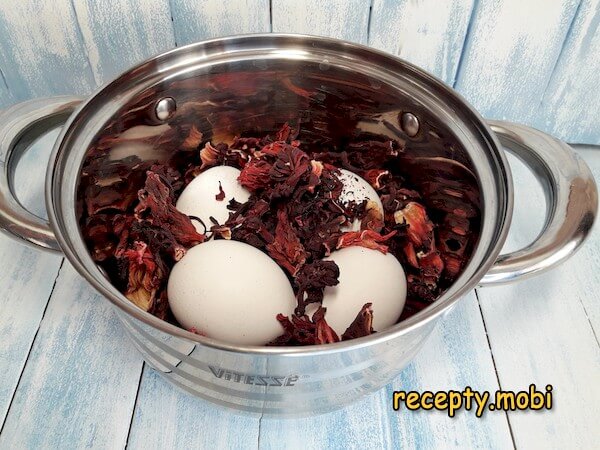
Pour water to cover everything. Place on stove. Bring to boil; reduce heat to minimum. Boil 10 minutes.
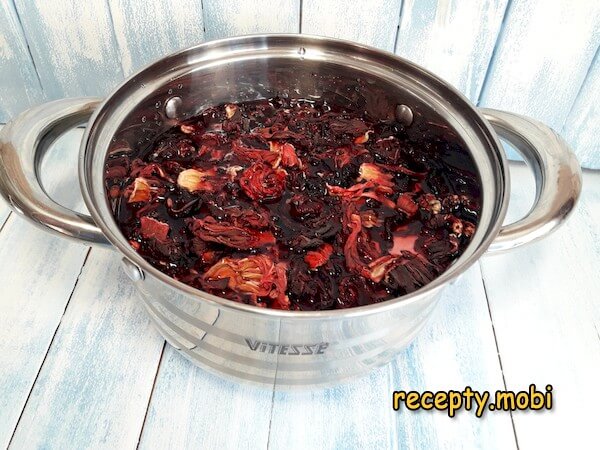
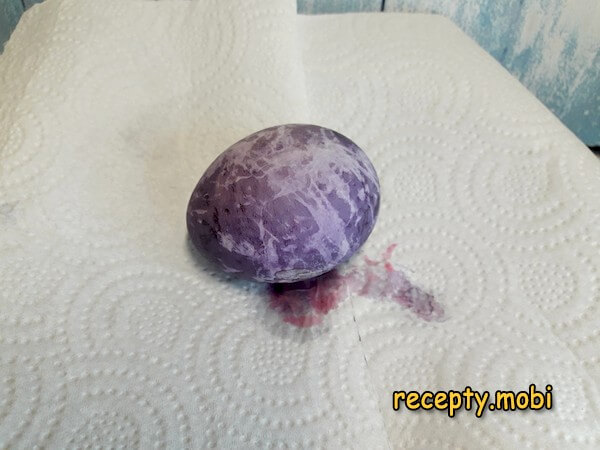
Turn off heat; let the eggs sit in the hot tea broth 10 minutes. Carefully remove FIRST egg — it'll be PALE LILAC at this stage.
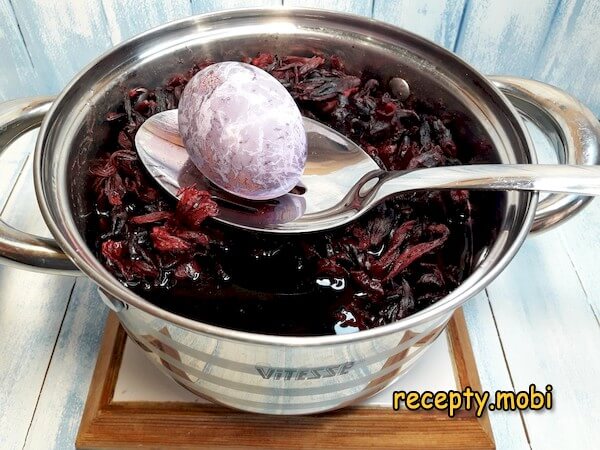
Transfer first egg to napkin. After 2 minutes, colour darkens to more pronounced purple. After 10 more minutes, remove second egg — slightly brighter purple than first. Remaining 2 eggs continue soaking.
Add vinegar to the remaining tea broth (in pot); stir. The acid shifts pigment chemistry — colour deepens to BLUE. Let remaining 2 eggs steep 20 more minutes.
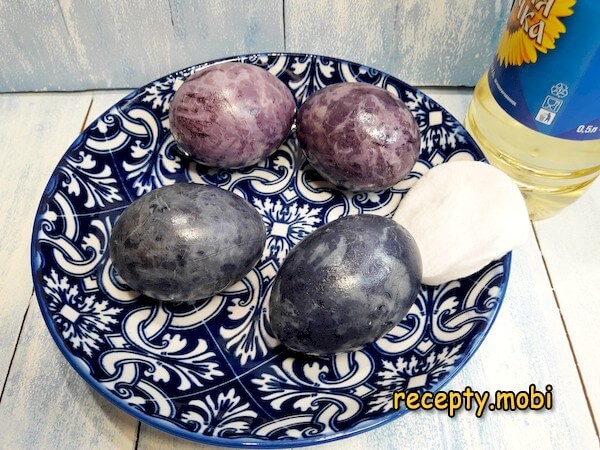
Remove final 2 eggs — they're DEEP BLUE with cosmic-pattern speckles and streaks (uneven dye contact creates the signature texture). Optional finish: rub with cotton pad + vegetable oil for glossy shine.Hibiscus dyeing produces a gradient of shades from one batch — pale lilac through purple to deep cosmic blue. The natural-dye approach is completely safe even for children. Eggs keep refrigerated up to a week at peak colour.


Tips
- 1
THE pH-COLOUR-SHIFT IS CHEMISTRY MAGIC. Step 7's vinegar addition triggers a dramatic colour change in the dye broth. Hibiscus contains anthocyanin pigments — these compounds are pH-sensitive: in neutral pH (without vinegar), the pigments display purple. In acidic pH (with vinegar), the pigments shift to red-purple. In ALKALINE pH (rare in this context), they shift to blue-green. The "vinegar = blue eggs" effect happens because the acid PRECIPITATES the pigment onto the shell more aggressively, producing the deep cosmic-blue appearance. Same chemistry works with red cabbage juice (also anthocyanin-based).
- 2
THE STAGED-REMOVAL TECHNIQUE PRODUCES VARIETY. The recipe's "remove eggs at different times" approach is brilliant. First egg: pale lilac (least pigment exposure). Second egg: stronger purple. Third + Fourth eggs (after vinegar + extended soak): deep blue. From ONE preparation: 3 distinct colour shades + the dramatic blue-purple range. For families wanting visual variety: this single-batch staged-removal beats making multiple separate batches. Perfect for Easter baskets where colour variety is desired. For another natural-dye method worth comparing, see Marinated Eggs in Soy Sauce.
- 3
THE PETAL LAYERING IS PATTERN GENERATOR. Step 3's "petals at bottom + eggs on top + petals over" layering creates uneven dye contact across each egg's surface — different areas contact different pigment concentrations. Result: cosmic speckled/streaked patterns rather than uniform colour. Without the layering: more uniform but less visually interesting eggs. Stir-once during the soak to redistribute petals briefly = even more variety. Each egg in the same batch will have unique speckle pattern.
- 4
THE DRIED PETALS QUANTITY IS COLOUR DRIVER. The recipe's 80 g dried hibiscus per 1 L water produces standard intensity. To DEEPEN colour: increase to 100-120 g (uses more tea, but produces more dramatic blue/purple). To LIGHTEN: 50 g (subtle pastel results). The pigment cost is moderate — hibiscus tea is widely available and inexpensive. Source: tea section of any grocery, ethnic food stores (Middle Eastern, Mediterranean, Eastern European), spice shops. Loose petals work best (vs tea bags — bags contain less pigment per gram). For another red-wine egg-dye variation worth trying, try How to Dye Eggs with Red Wine.
FAQ
What is hibiscus tea? +
Hibiscus tea (called "karkade" in Russian/Egyptian/Sudanese cuisine, "agua de Jamaica" in Mexican cuisine, "bissap" in West African) is made from dried Hibiscus sabdariffa flower petals — the deep red dried petals brew into a tart cranberry-like tea. The tea is consumed worldwide for its flavour, vitamin C content, and natural cooling properties. Beyond drinking applications, the petals' anthocyanin pigments make excellent natural dye for crafts (cloth dyeing, food colouring, this Easter egg dyeing technique). The dried petals store indefinitely in airtight container without flavour or colour loss.
Can I drink the leftover dye broth? +
YES — the broth IS hibiscus tea (just slightly more concentrated than usual). After dyeing eggs and removing them: strain the broth through fine sieve (catches petal fragments and any egg residue), refrigerate. Drink hot or cold; sweeten with sugar or honey if desired. The vinegar addition makes it slightly more tart but still palatable. The eggs flavour the broth slightly (very subtle egg note); some prefer not to drink it for this reason. Without vinegar/eggs in it: regular hibiscus tea, perfectly delicious. Don't waste — a 1 L tea broth from this recipe is a substantial amount.
Why are some eggs more speckled than others? +
Speckling depends on contact randomness during the soak. Eggs in heavy contact with petal mass: more speckled (where petals press hardest, dye accumulates densely; gaps remain pale). Eggs floating freely in liquid: more uniform colour. The bottom-of-pot eggs typically get more speckled (trapped under floating petal mass); top-of-pot eggs more uniform. To CONTROL speckling: turn eggs once during soak (changes contact pattern). For deliberately speckled eggs: layer petals densely, no stirring. For uniform eggs: stir during soak, fewer petals.
How does this compare to red cabbage method? +
Both methods use anthocyanin pigments and respond similarly to pH changes — but produce different colour ranges. Hibiscus: pale lilac → purple → cosmic blue range, slight tart-tea aroma. Red cabbage: pink/red base → purple → deep blue range, slight cabbage aroma. Hibiscus produces more dramatic blue at high concentration; red cabbage more reliable for pink-to-purple gradients. Both are completely food-safe natural dyes. Cost: hibiscus moderately priced; red cabbage cheap and abundant. For practical Easter dyeing: try both methods on different batches for visual variety.
- Comment
or post as a guest
Be the first to comment.