avg —
Korean-style cucumbers with carrots for winter

Instructions
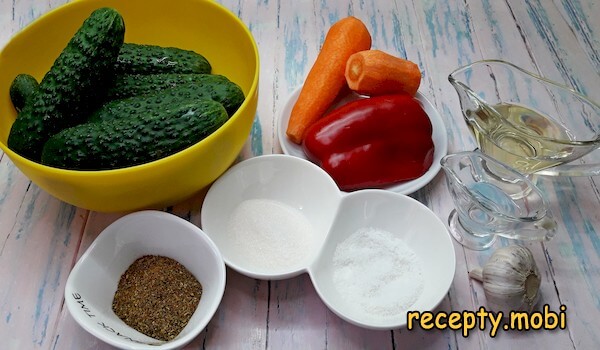
I prepare ingredients for Korean-style cucumbers.
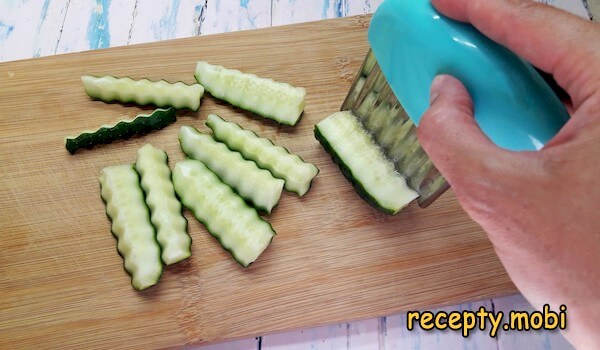
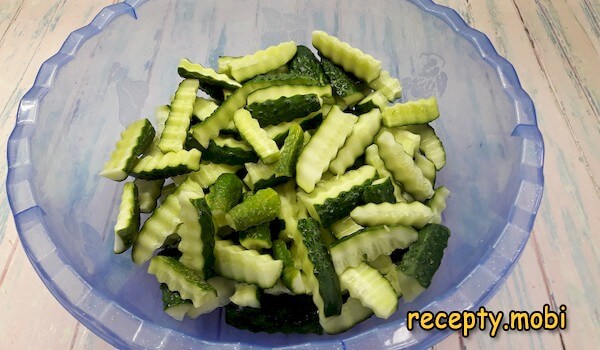
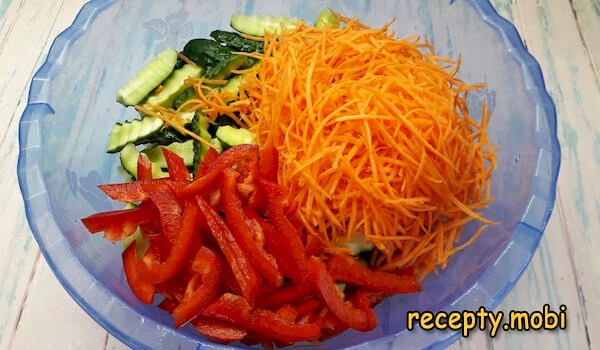
Trim ends of cucumbers. Cut into SHORT STICKS (decorative knife OK; average thickness 1 cm).
Transfer to SPACIOUS BOWL.
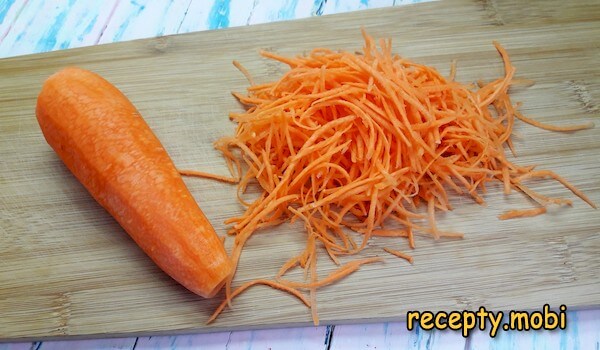
Grate CARROT with KOREAN GRATER.
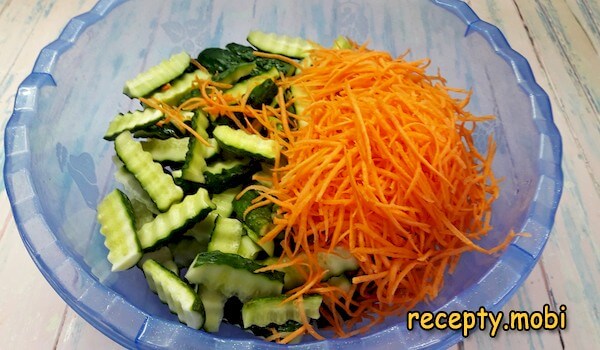
Add to cucumbers.
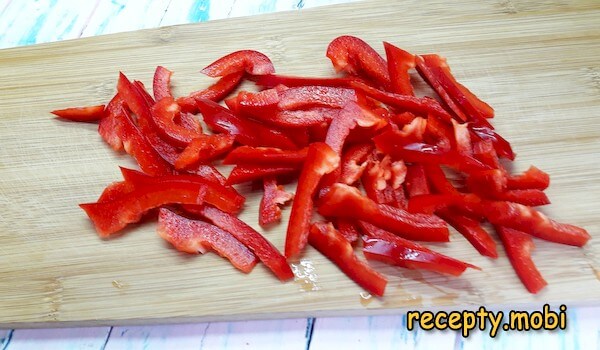
Cut PEPPER into SHORT STRIPS.
Add to prepared vegetables.
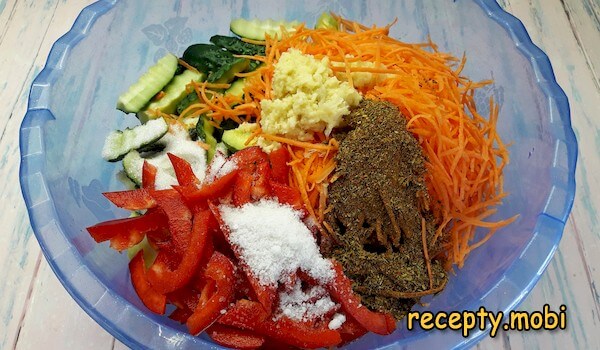
Use GARLIC PRESS to squeeze ALL cloves from head into bowl. Season with DRY SPICES.
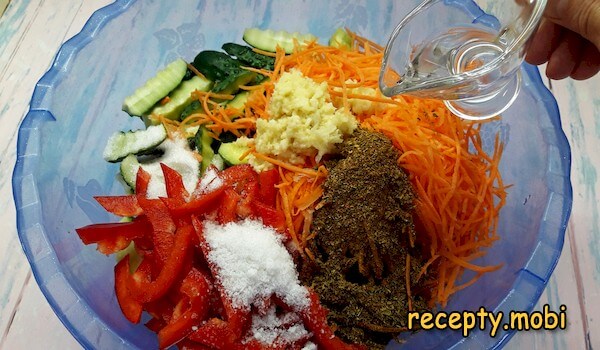
Pour VINEGAR.
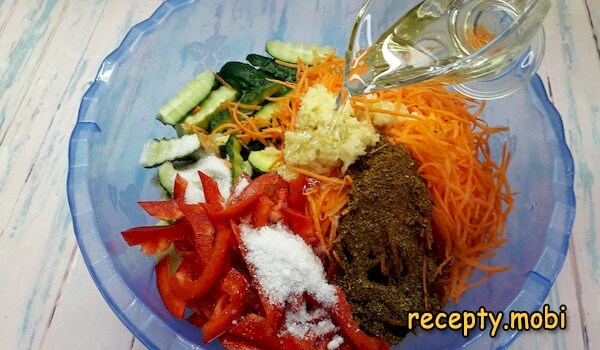
Next: OIL.
GENTLY mix snack; separate stuck carrot strips.
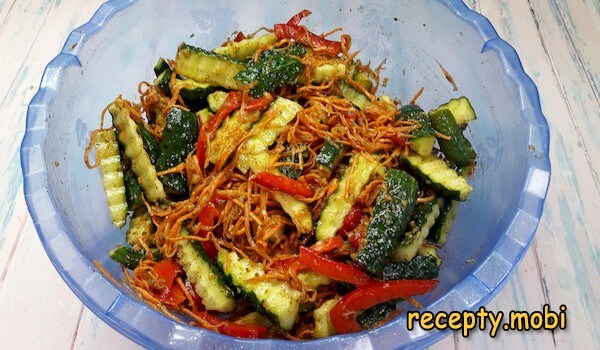
Cover bowl with lid; place in REFRIGERATOR 1 DAY. Stir contents several times during this time.
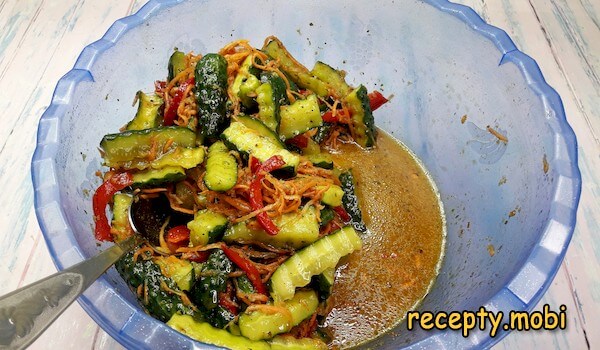
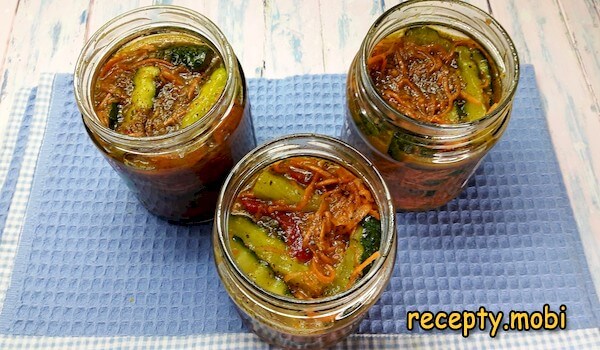
When salted + marinated: lots of juice released. Snack ALREADY READY to eat. For long-term storage: place vegetables in jars + evenly pour juice.
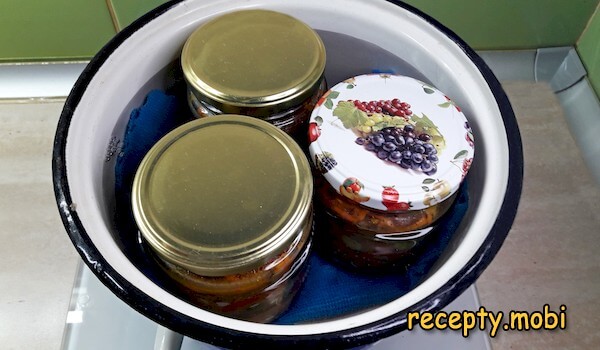
Place jars on cloth in pot of suitable volume; LOOSELY cover lids. Fill cold water (stop 1 cm from jar mouth). Boil 0.5 L jars 15 MIN (1 L: 25 min).
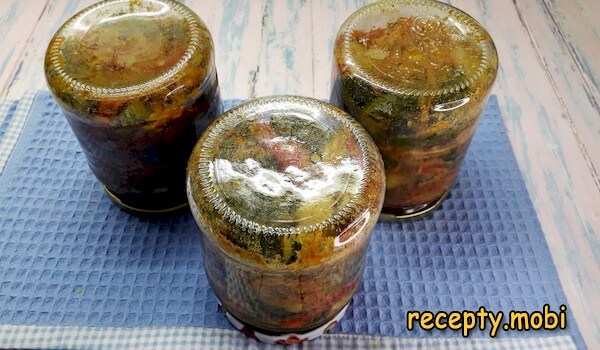
TIGHTLY screw lids; turn UPSIDE DOWN. Wrap in blanket; leave 12 HOURS for slow cooling. Jars store WHOLE YEAR room temperature. Some can be kept in container with lid in refrigerator 2 WEEKS for immediate enjoyment. Bon appétit!


Tips
- 1
THE READY-MADE KOREAN-CARROT-SEASONING SHORTCUT. Recipe's "ready-made seasoning" specification is genuine recipe-convenience. SEPARATE-SPICE method: requires ground coriander + black pepper + cayenne + paprika + garlic + nutmeg = complex multi-spice handling. KOREAN-CARROT-SEASONING (commercial blend, 15 g): pre-mixed proper proportions, recipe-canonical accessibility. AVAILABILITY: most well-stocked international groceries, online retailers, Russian/Eastern European markets. SUBSTITUTE: equal parts ground coriander + cayenne + paprika + black pepper + garlic powder = approximate. The 15 g amount: substantial spicy character. Same shortcut-spice principle: traditional Soviet-Korean fusion cooking, modern home-canning convenience.
- 2
THE 24-HOUR DRY-MARINATION SECRET. Step 12's "1 day in refrigerator + several stirs" is texture + flavor essential. Standard Korean-style preparation: cucumbers go into hot brine — softens + loses crunch. THIS COLD-DRY-MARINATION (24h refrigerated): salt + sugar draw out cucumber moisture via osmosis, OWN JUICE forms naturally + becomes brine, vegetables retain CRUNCH-character through cold processing. The PERIODIC STIRRING (3-4 times during 24h): redistributes juice + ensures even flavor absorption. Same osmotic-cold-marination principle: Korean kimchi initial-stage, Russian malosolyonyye cucumbers. For another classic Korean-fusion Russian-tradition preparation worth comparing, see Korean-style Eggplant He.
- 3
THE DECORATIVE-KNIFE STICK CUT. Step 2's "decorative knife OK" is genuine recipe-flexibility note. STANDARD straight knife cut: works fine, 1 cm sticks, simple presentation. DECORATIVE knife (waffle/wave-cut blade): produces visually-striking sticks with fluted surfaces, restaurant-quality presentation, increases surface area for marinade absorption. The 1-cm thickness: balance between flavor absorption + crunch retention. Pro-tip: julienne slicer simplifies the work. Same decorative-cut principle: French chef-knife traditions, Asian cuisine presentation. Don't overthink — straight cut works perfectly. Quality of cucumber matters more than cut precision.
- 4
THE TWO-STORAGE-OPTIONS DESIGN. Step 15's "1 year sealed OR 2 weeks refrigerator" is genuine recipe flexibility. SEALED + STERILIZED (1 year): pantry-stable, year-round availability, traditional winter preservation, ALL canning steps required. UNSEALED + REFRIGERATED (2 weeks): fresher character, no canning equipment needed, shorter shelf life. Reserve some of marinated batch in refrigerator container = immediate enjoyment + jar long-term storage. Same flexible-preservation principle: French confits, Italian sott'olio, Korean kimchi traditions. For another Korean-fusion preparation worth trying, try Quick Korean-style Tomatoes.
FAQ
What's "Korean carrot seasoning"? +
Soviet-Korean fusion spice blend originating from Russian Far East Korean diaspora (Koryo-saram) cooking traditions. CONTAINS typically: ground coriander, paprika, cayenne pepper, black pepper, garlic powder, sometimes nutmeg + ginger. PURPOSE: provides complete Korean-fusion flavor profile in single ready-made blend. AVAILABILITY: Russian/Eastern European groceries (most accessible), online retailers, sometimes Asian groceries. SUBSTITUTE if unavailable: 1 tsp ground coriander + 0.5 tsp cayenne + 0.5 tsp paprika + 0.5 tsp black pepper + 1 tsp garlic powder. The TRADITIONAL Korean carrot salad ("morkovcha") recipe uses this seasoning — extends to cucumber variations + other vegetables. Recipe-canonical: pre-blended ready-made.
How spicy will it be? +
Recipe is MODERATELY-SPICY but adjustable. Korean-carrot-seasoning + 1 head garlic produces moderate heat with complex aromatic warmth. SPICIER versions: increase Korean seasoning to 25 g (substantial heat), add 1 chopped fresh chili, add 0.5 tsp cayenne. MILDER (kid-friendly): reduce Korean seasoning to 10 g, omit garlic to single clove. Heat sources: Korean-seasoning capsaicin (lasting heat), garlic (front-tongue burn), black pepper (sharper). The recipe-canonical version: family-friendly spicy + complex character. Soviet-Korean tradition: medium-heat to allow mass-appeal across generations.
How long does it really keep? +
SEALED jars at room temperature: UP TO 12 MONTHS (recipe-stated). Months 1-3: peak crunch + bright character. Months 4-8: PEAK FLAVOR (post-canning aging develops complexity). Months 9-12: still excellent, slight softening. Past 12 months: not recommended. COOL CELLAR (10-15°C): extends to 18 months. UNSEALED REFRIGERATED: 2 weeks (recipe-stated). Once OPENED sealed jar: refrigerate, consume within 2-3 weeks. Storage tips: dark place, clean dry fork, tight lid. Spoilage signs: bulging lid, fermentation bubbles, cloudy brine — discard. The recipe-canonical 1-year keeping = sufficient for full winter season.
What goes best with them? +
Korean-fusion + Russian/Slavic tradition has specific companions. CLASSIC: alongside grilled meats (chicken, pork, beef, shashlik kebabs) — Korean-fusion meat accompaniment. RICE: over plain rice for one-bowl meal. ASIAN BANCHAN: with Korean carrots + cucumbers + kimchi as full Korean-zakuska. POTATOES: alongside boiled potatoes (Russian-fusion comfort). SOUP: chopped fine + added to cold soups, gazpacho-style. NOODLES: tossed with cold buckwheat noodles. ZAKUSKA: with vodka, beer (traditional Russian drinking-snack). The salad is fundamentally cold zakuska — pairs with anything fatty/rich.
- Comment
or post as a guest
Be the first to comment.