avg —
Korean Zucchini for Winter without Sterilization

Instructions
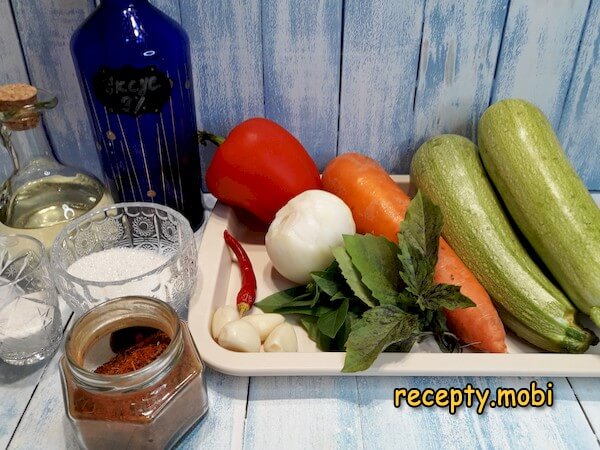
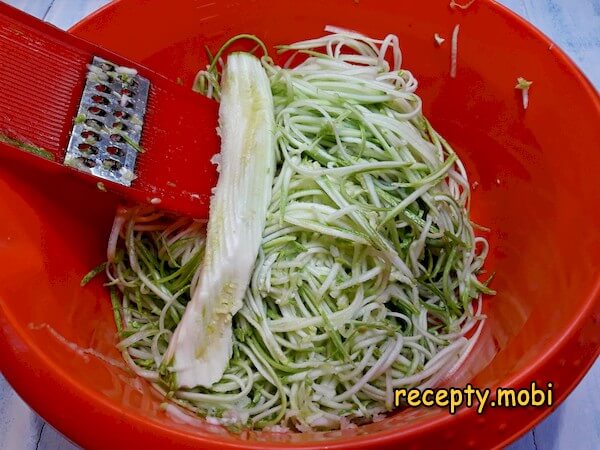
I prepare the ingredients. Fresh basil is best; 1 tsp dried basil substitutes if fresh isn't available. Glass jars and lids should be pre-sterilised by a convenient method. 2. I trim the zucchini ends and wash thoroughly. They grate on a Korean-carrot grater into long thin strips. The inner seedy part is best avoided — its loose structure turns to mush in the salad.
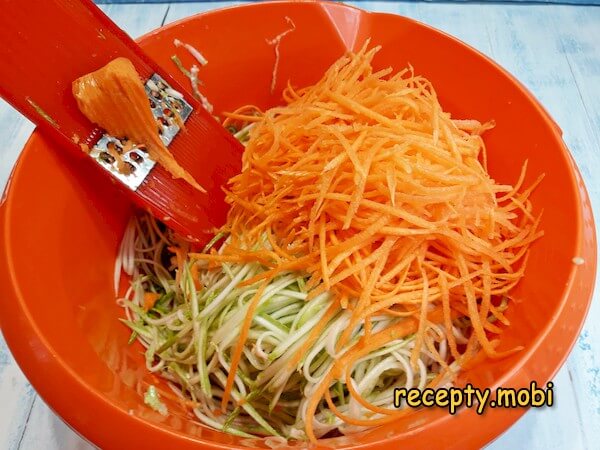
The carrots grate on the same Korean grater for matching long-strip texture.
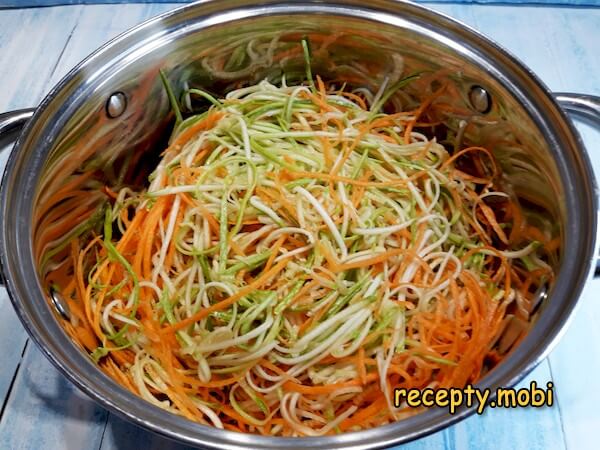
The two grated vegetables mix together and transfer to a pot — using the cooking pot now saves transferring later.
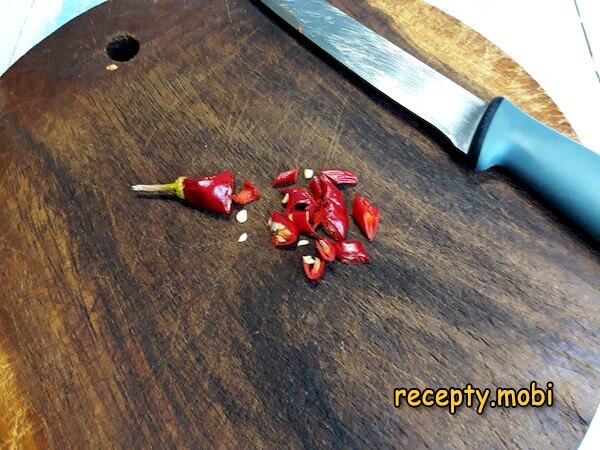
I finely chop the hot pepper. Adjust amount based on heat preference — half pepper for mild, whole for genuinely spicy.
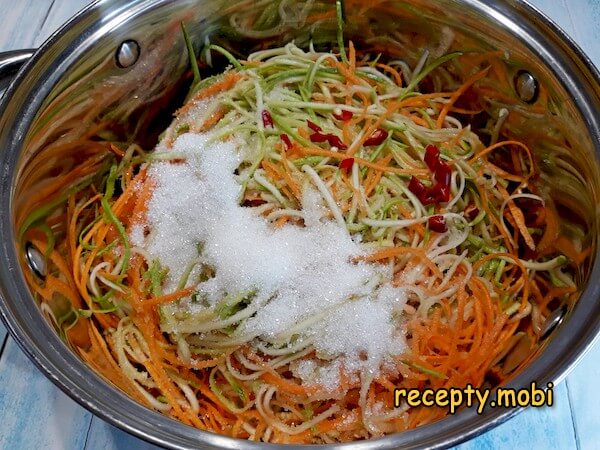
The chopped hot pepper joins the pot, along with the salt and sugar.
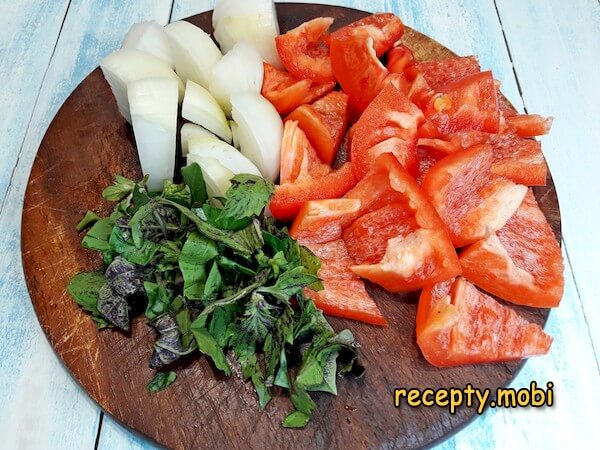
Bell pepper deseeds, washes, and gets cut into medium chunks. Same for the white onion and the basil — all three get cut into medium pieces ready for grinding.
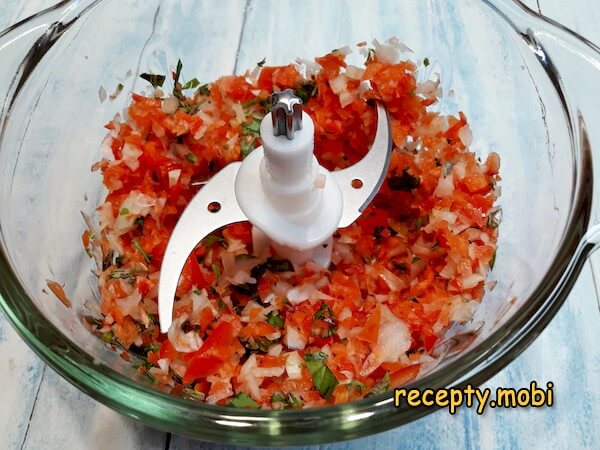
The bell pepper-onion-basil mixture grinds in a chopper or screw meat grinder into a fine paste.
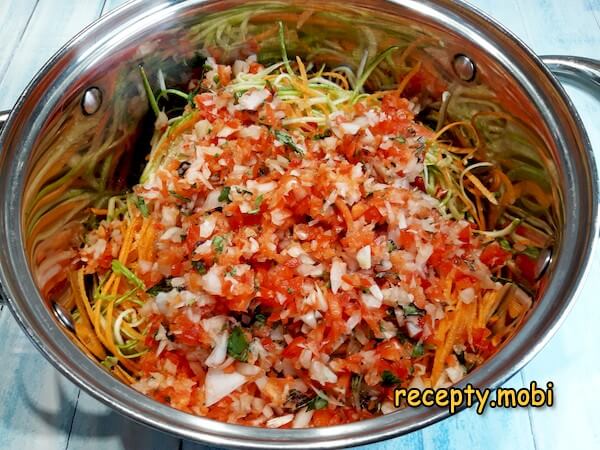
The ground paste joins the main vegetable composition in the pot.
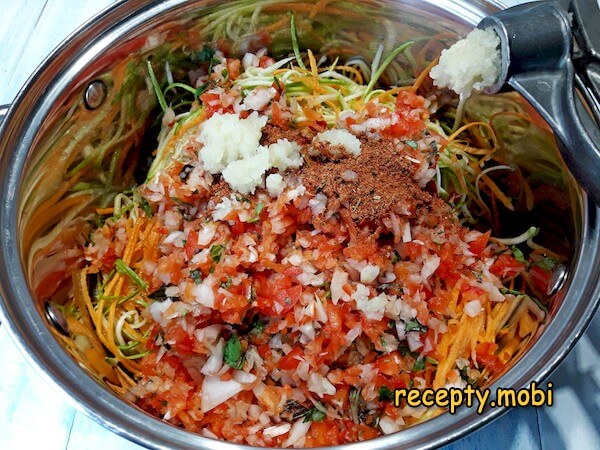
The Korean-carrot seasoning sprinkles on top, plus the garlic crushed through a press. NO mixing yet — the next step requires the seasonings exposed and clustered.
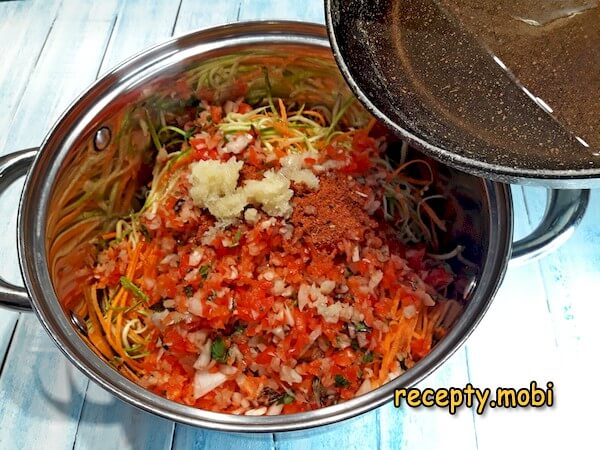
I heat the vegetable oil to very high temperature in a pan (almost smoking), then pour the hot oil directly over the Korean seasoning and garlic. The hot oil "blooms" the spices — a dramatic burst of fragrance that's the technique signature of Korean and Korean-style preparations.
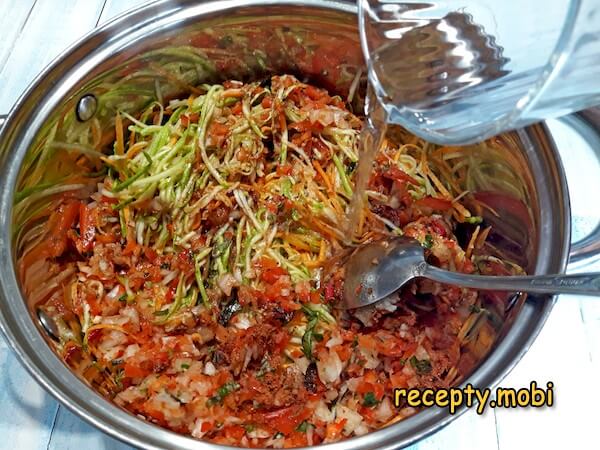
Now I add the vinegar and mix everything thoroughly — every strand of vegetable gets coated with the spice-oil-vinegar dressing.
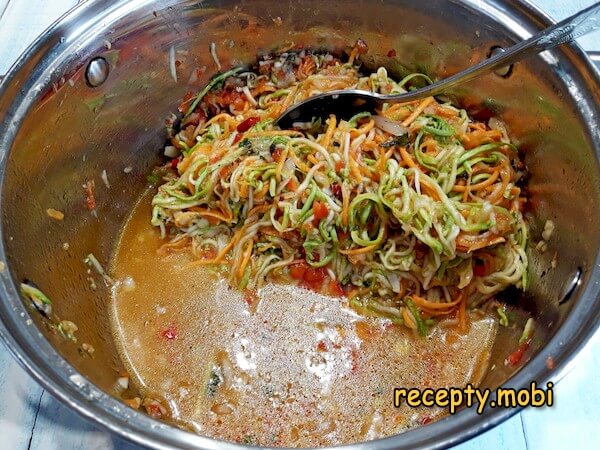
The dressed salad rests for 30 minutes — during which a generous amount of vegetable juice releases. The juice becomes the cooking liquid for the brief boil.
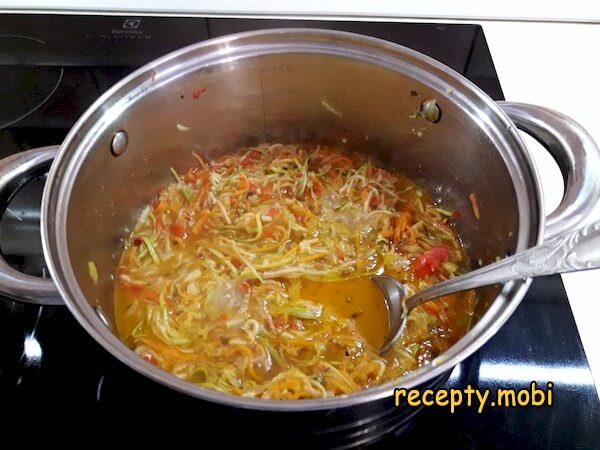
After the rest, I place the pot on medium heat and boil the mixture 10 minutes from the start of boiling.
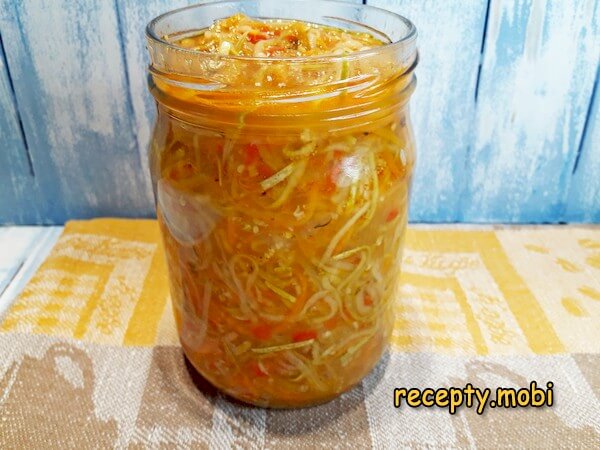
I fill the jar with salad — vegetable strands first (less moist), then pour the remaining juice over to fill to the rim.
The lid screws on tight. The jar inverts and wraps in a warm blanket — slow cooling under the blanket creates a strong vacuum seal. The 10-hour cool gives full preservation.Korean-style zucchini for winter stores best in a cool pantry but also keeps well at room temperature until next year's harvest. The preserve adds bright flavour to even the blandest dishes — sprinkle on plain rice, layer in sandwiches, fold into pasta salads, or serve as standalone zakuska with rye bread and chilled vodka.


Tips
- 1
THE HOT-OIL BLOOM IS THE TECHNIQUE SECRET. Step 11's pour-hot-oil-on-spices technique is borrowed directly from Korean and Sichuan cooking — the high temperature dramatically extracts and amplifies aromatic compounds in the dried seasoning. Cold oil mixed in produces flat, muted seasoning. Smoking-hot oil drizzled on spices "blooms" them into intense fragrance. The same technique works for any spice blend — try it on cumin-coriander-paprika for instant flavour upgrade.
- 2
SEED-CORE REMOVAL FOR ZUCCHINI. Step 1's note about avoiding the seedy inner part isn't preference — it's structural. Zucchini's central seed cavity has loose tissue that breaks down completely during the boil and 10-month storage, producing mushy patches in an otherwise crisp salad. Use only the firm outer flesh; save the seedy cores for soup or stir-fries. For another no-sterilisation winter zucchini preserve worth comparing, see Green Tomato Salad for Winter Without Sterilization.
- 3
KOREAN-CARROT GRATER IS THE TEXTURAL TOOL. The long thin strips produced by a Korean-carrot grater (sometimes called julienne grater or "spiralizer") are essential for the Korean-style aesthetic. Box graters produce shorter coarser strands that look wrong and have wrong mouthfeel. If you don't have a Korean grater, a julienne peeler works as substitute. As a last resort, very thin matchstick cuts by hand are acceptable but tedious for the 750 g of vegetables in this recipe.
- 4
THE 10-HOUR BLANKET-COOL IS NON-NEGOTIABLE. Step 16's slow-cool technique replaces formal water-bath sterilisation. The slow temperature drop creates a much stronger vacuum seal than rapid cooling, which is what allows the no-sterilisation method to be safe. Don't shortcut this — 10 hours minimum, ideally overnight (12 hours). The blanket isn't decorative; it's the slow-cool insulator. For another sauce-style winter preserve worth trying, try Caviar from Green Tomatoes for Winter Without Sterilization.
FAQ
What is "Korean-carrot seasoning"? +
Korean-carrot seasoning ("Приправа для морковчи" in Russian, "당근 양념" approximately in Korean) is a spice blend popularized in post-Soviet countries through the Koryo-saram (ethnic Korean Soviet diaspora) cuisine. Typical ingredients: ground coriander, dried garlic, paprika, ground black pepper, dried hot pepper, salt, sometimes turmeric or fenugreek. It's widely available in Russian/Eastern European supermarkets and online. DIY substitute: 1 tsp ground coriander + 1/2 tsp paprika + 1/2 tsp dried garlic + 1/4 tsp ground hot pepper + 1/4 tsp ground black pepper. Authentic Korean cuisine doesn't actually use this exact blend — it's a Russified Korean adaptation.
How long does the preserve keep? +
Properly sealed jars at room temperature in a dark cupboard keep 10-12 months — until next year's zucchini season. Cool basement storage extends to 14 months. The texture stays crisp for the first 6 months, then softens gradually. Once opened, transfer to fridge and use within 3 weeks. The acidic content (vinegar + tomato) plus salt plus heat-seal provides the preservation; if you spot mould, fizzing, or bulging lids, discard the jar. Properly preserved Korean-style zucchini doesn't ferment.
Can I use other vegetables besides zucchini? +
Yes — the technique works for many shred-able vegetables. Best alternatives: yellow summer squash (identical handling), pattypan squash (cube before grating for the seedy parts to be removable), white radish/daikon (gives crunchier result with sharper flavour), or cucumber (drain the grated strands 30 minutes before use to remove excess water). Mix-vegetable batches work too: 50% zucchini + 50% daikon is delicious. Keep total vegetable weight at 750 g (zucchini + carrot) for the same dressing ratio.
Why is the basil in there? +
Basil isn't traditionally Korean — it's an Eastern European adaptation that adds aromatic complexity. The fresh basil's herbal-sweet character balances the heat from chili and the acidity from vinegar. Without basil, the preserve is pleasant but one-dimensional. Substitutes: fresh dill (gives Russian-style character), fresh mint (gives surprising freshness), or 50/50 fresh dill + cilantro (gives more Caucasian leaning). The fresh-herb component is what distinguishes this preparation from generic spicy-sour pickled vegetables.
- Comment
or post as a guest
Be the first to comment.