avg —
Kutabs with Greens and Cheese

Instructions
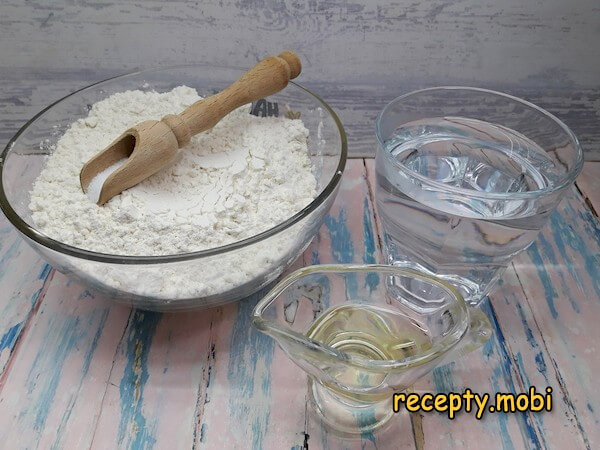
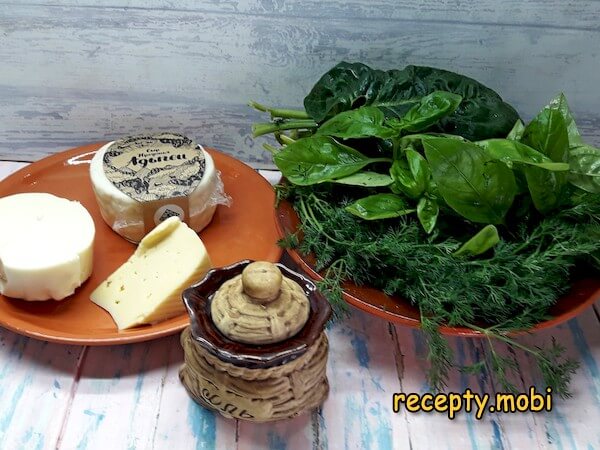
I prepare the ingredients for the dough.
Stock up on filling ingredients. Greens substitution: green onions, parsley, cilantro, sorrel — any combination. IMPORTANT: total weight should match recipe specification (140 g).
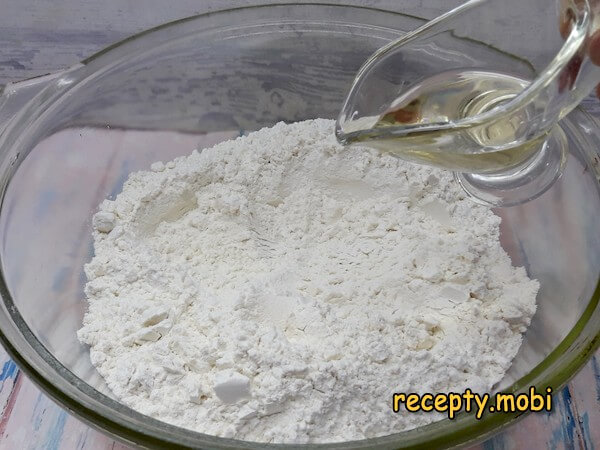
Sift + salt flour in mixing bowl; pour in vegetable oil.
Boil the 200 ml water in saucepan (water MUST be BOILING — pasta-dough technique).
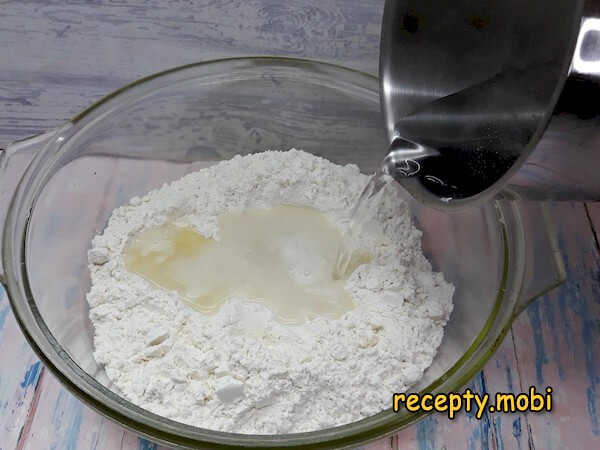
Pour boiling water into flour-oil mixture immediately.
Mix everything with spoon until mass is evenly moistened.
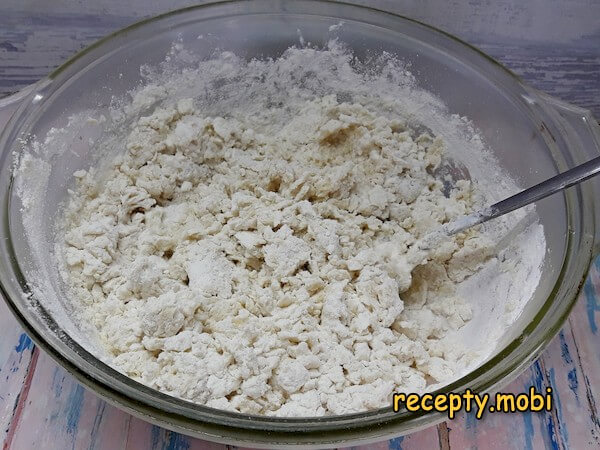
Once temperature drops to handleable: continue kneading on table by hand. Knead until dough completely cools = SMOOTH SOFT BALL.
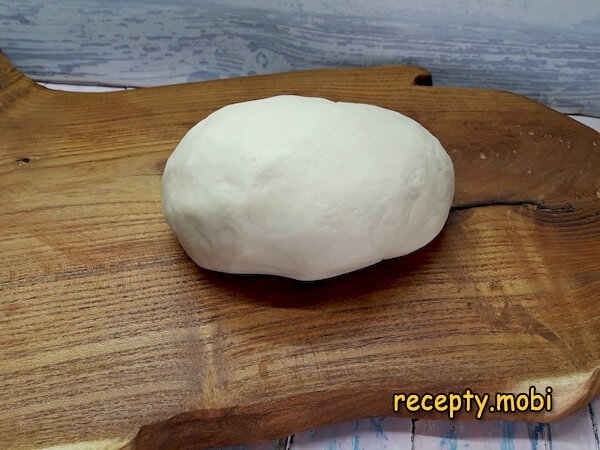
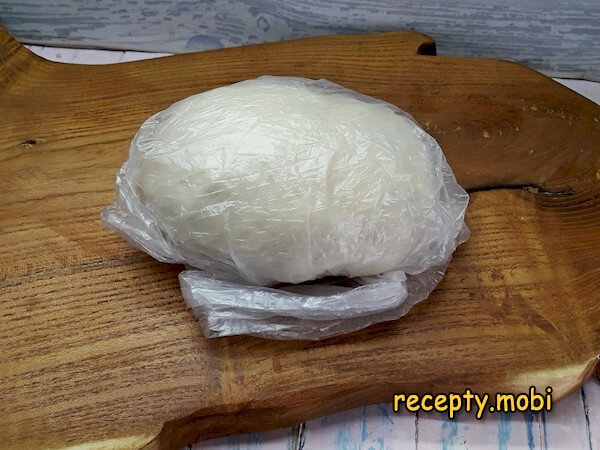
Place dough in bag; leave on table while preparing filling.
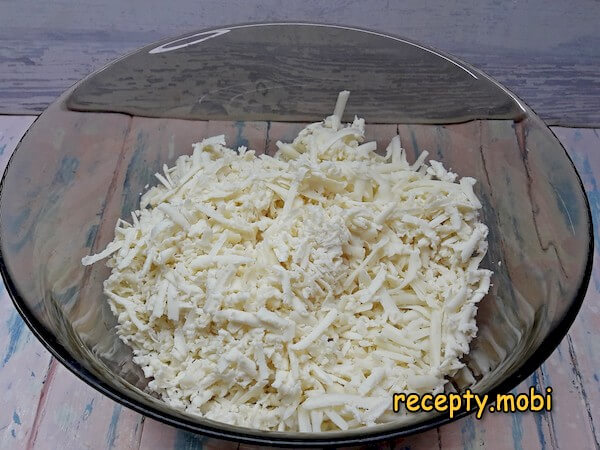
Grate ALL cheeses (separately or together).
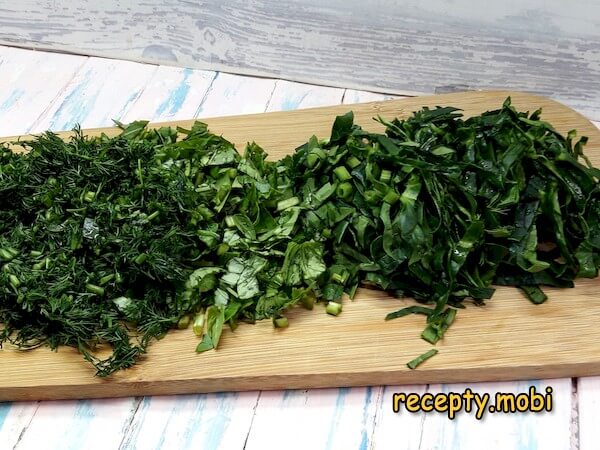
Finely chop greens mix.
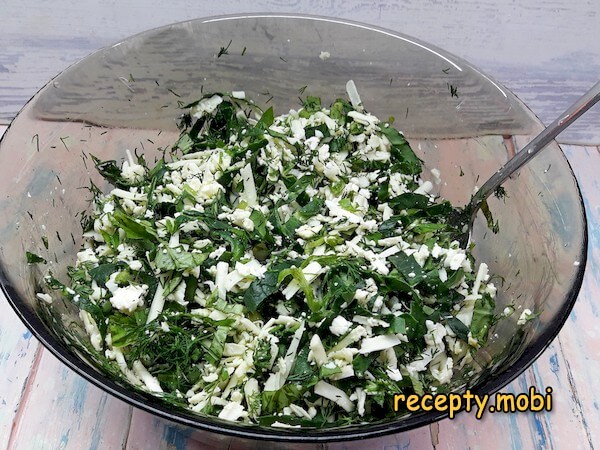
Combine grated cheese + greens. Mix; taste BEFORE salting (some cheeses very salty already — adjust accordingly).
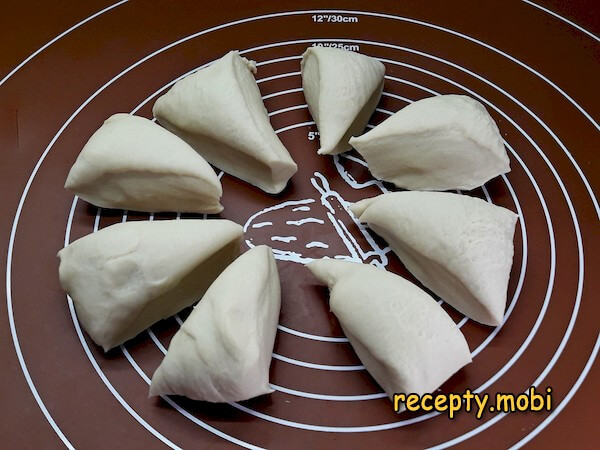
Take dough from bag — slightly moist from retained heat. Knead briefly WITHOUT adding flour. Divide into 8 pieces.
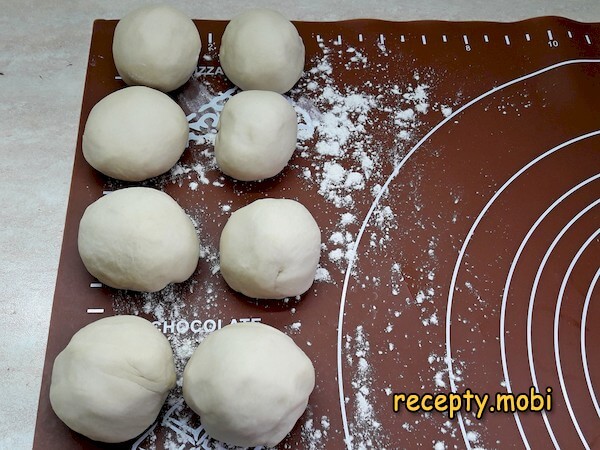
Roll each piece into ball; place on FLOURED surface; cover with film (prevents drying).
Roll out each ball THINLY to ~20 cm diameter. The pasta-dough doesn't contract or tear; holds large filling perfectly.
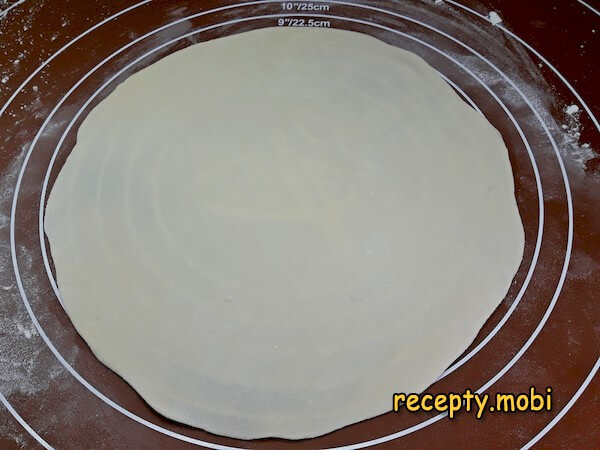
On ONE HALF of flatbread: place 2 large spoons cheese-greens mix. Press slightly + spread, leaving 1-1.5 cm to edges.
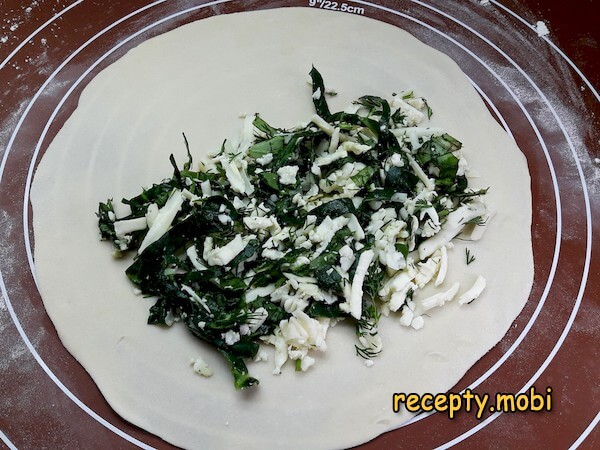
COVER with second half of flatbread. CRITICAL: press out air from filling starting at fold + moving toward edges.
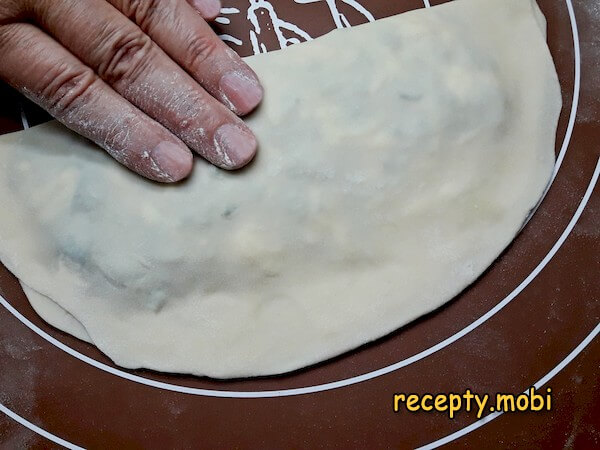
Seal edges by PINCHING with fingers.
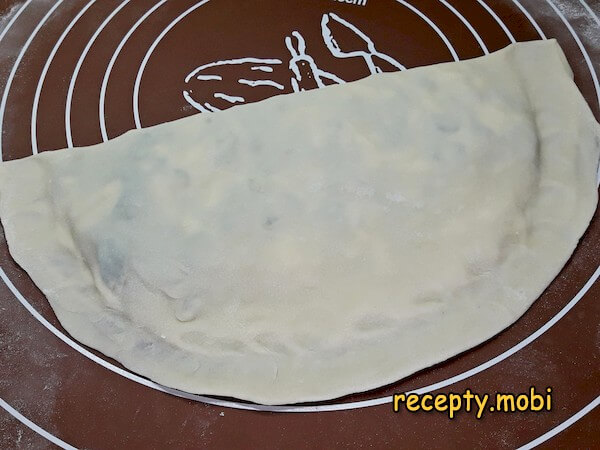
For aesthetic appearance: trim excess dough with decorative or regular knife.
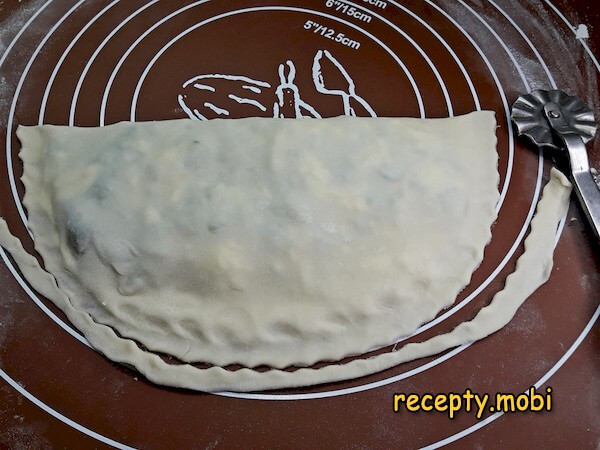
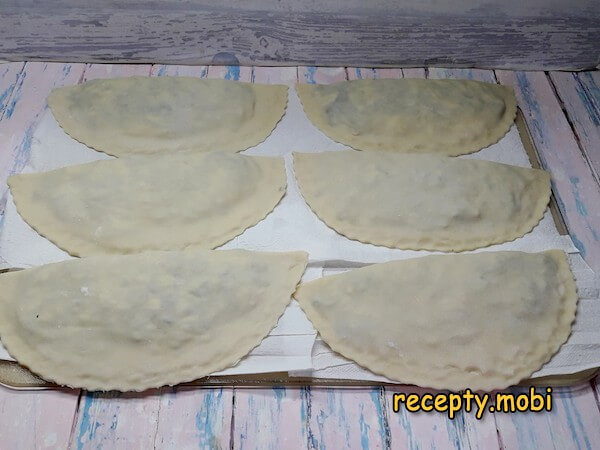
Prepare all kutabs identically; lay on paper towel or floured table.
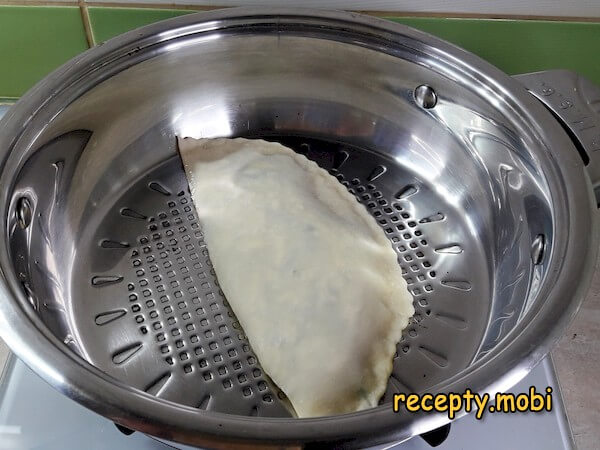
Heat THICK-bottomed skillet well — DO NOT add oil. Set to MEDIUM heat. Place first kutab.
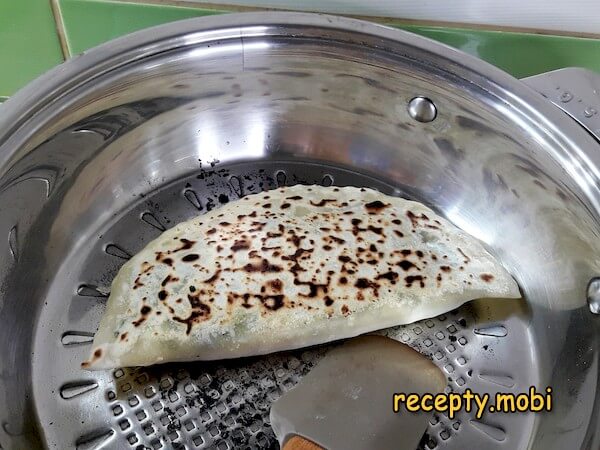
After 2 min: lift edge — if light browning visible, flip. Fry second side 2 min. If kutab puffs after flipping: poke with sharp knife to release steam.
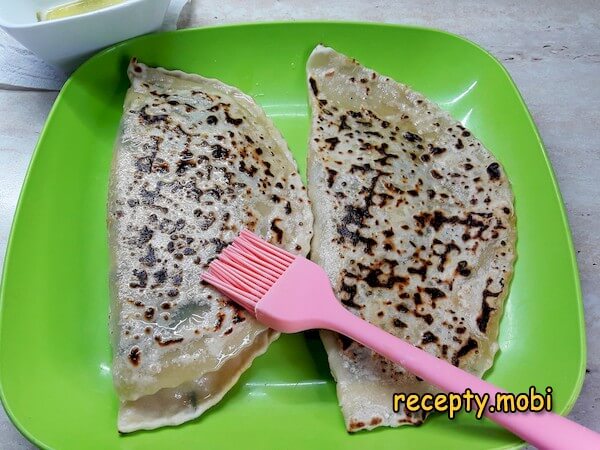
Stack kutabs; brush ONE SIDE with melted butter (only the cooked side, traditional Azerbaijani technique).
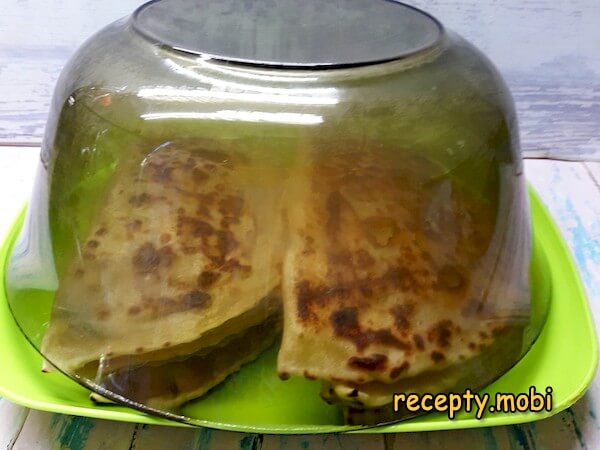
Cover stacked kutabs with LARGE BOWL; let steam 5 minutes (final softening, melts cheese fully).
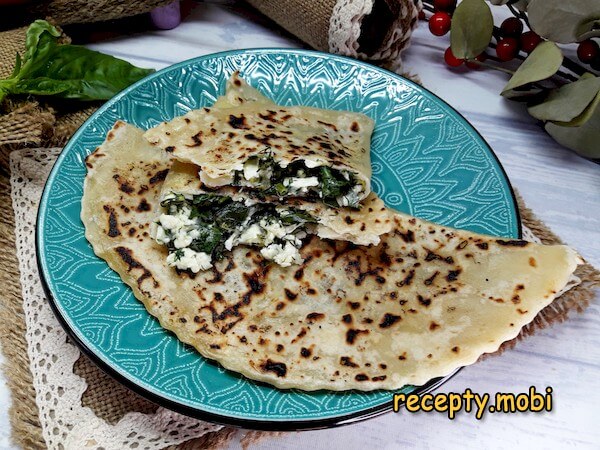
Kutabs with greens and cheese are ready. During cooking: pastries became JUICY — melted cheese unified filling + thin dough. Disappear quickly with any meat, fish, vegetables, or alongside tea.


Tips
- 1
THE BOILING-WATER PASTA-DOUGH. Step 4-5's "pour BOILING water" is the recipe's structural foundation. Cold-water flour: forms tough chewy dough that tears during thin rolling. BOILING-water-treated flour: starches PARTIALLY GELATINIZE, dough becomes pliable + tear-resistant + holds large filling without breaking. Same scalded-dough technique used in: Chinese hand-pulled noodles, Russian pelmeni dough, Turkish çörek. The technique enables ultra-thin rolling (the kutab signature).
- 2
THE DRY-SKILLET COOKING. Step 20's "DO NOT add oil" is Azerbaijani-tradition-essential + practical. Oil-frying: produces oily greasy kutab (wrong for cuisine). DRY skillet: produces toasted-crisp surface, clean flavor, traditional appearance. The DOUGH'S OIL CONTENT (20 ml in dough) is sufficient for non-stick effect. Use thick-bottomed skillet (cast iron ideal — retains heat evenly). For another dry-skillet flatbread tradition worth comparing, see Lavash Pita on a Frying Pan.
- 3
THE 3-CHEESE BLEND IS BALANCE. Step 9's three cheeses (mozzarella + brined Adyghe + hard cheese) creates Azerbaijani-flavor balance. MOZZARELLA: melt + bind, mild. ADYGHE (Caucasian brined cheese, similar to feta): tangy salty character, traditional. HARD CHEESE: pronounced flavor + crystalline texture. Together: complete cheese-experience. Single-cheese versions: simpler but less interesting. Substitute Adyghe with: feta (similar character) or halloumi (firmer). The 3-cheese ratio (150+200+70 = 420 g) is calibrated.
- 4
THE STACK + STEAM-UNDER-BOWL FINISH. Step 23's "cover with bowl, let steam 5 min" is essential finishing step. Without steaming: kutabs may be slightly stiff/dry on first bite. WITH steaming under bowl: residual heat softens dough fully, cheese melts completely, butter penetrates deeply. Result: tender pliable kutab with proper Azerbaijani character. Same finishing technique used for: Turkish gozleme, Indian naan stacking, Mexican tortilla-warming. Don't skip — transformation is dramatic. For another Caucasian flatbread tradition worth trying, try Khachapuri Imeretian.
FAQ
What's the difference from Georgian khachapuri? +
Both are Caucasian cheese-filled flatbreads but distinctly different. KHACHAPURI (Georgian): yeast or unleavened dough, BAKED in oven, often boat-shaped (Adjarian) or round (Imeretian), almost ALL CHEESE filling. KUTAB (Azerbaijani): pasta-dough, DRY-PAN cooked, half-moon shape, MIXED cheese + abundant greens filling. Different dough technique, different cooking method, different filling philosophy. Both delicious — visit either Georgian or Azerbaijani restaurant for authentic representation. Same basic concept (flatbread + cheese) executed differently per regional tradition.
Can I add meat to filling? +
Traditional kutab variations include MEAT versions ("kutab ile kuyma" — with mince). RECIPE: replace cheese-greens filling with: 250 g ground meat (lamb traditional, beef acceptable) + 1 finely chopped onion + 1/2 tsp salt + 1/2 tsp pepper + chopped herbs. The meat-kutab is equally Azerbaijani-traditional as cheese-greens version. For pumpkin variation ("kutab ile kabak"): 300 g grated pumpkin + 1 onion finely chopped + spices. Each filling produces distinct Azerbaijani specialty. The DOUGH is universal across kutab variations.
How long do they keep? +
Best fresh — within 2-4 hours of cooking for peak quality. Room temperature, covered with damp cloth: 1 day. Refrigerated covered: 2-3 days, but textures harden. Reheating: brief skillet refresh (1-2 min per side, no oil), OR 5 min in 180 °C oven. Don't microwave — produces rubbery texture. The traditional Azerbaijani approach: make fresh for each meal (cooks in 4-5 min per kutab once dough + filling are ready). For meal-prep: prep dough day-before (refrigerate covered), prep filling day-of, assemble + cook fresh.
Do I need special pan? +
Cast-iron skillet is ideal but not strictly required. CAST IRON: retains heat best, produces ideal browning, traditional Caucasian choice. CARBON STEEL: similar to cast iron, lighter weight. THICK-bottomed STAINLESS STEEL: works adequately. NON-STICK pan: works but produces less browning (different texture). The "thick-bottomed" requirement is critical — thin pans burn the dough before it cooks through. For best result: invest in cast-iron skillet (lifetime tool, perfect for many other dishes too). Crepe pan: too thin for kutab (better for thin pancakes only).
- Comment
or post as a guest
Be the first to comment.