avg —
Lavash Roll with Korean Carrots

Instructions
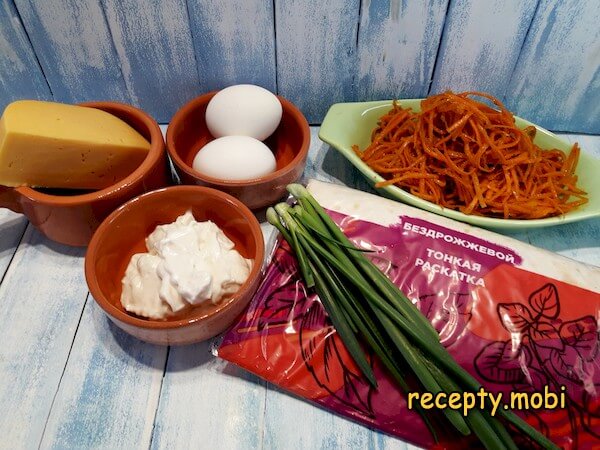
I prepare the ingredients. If the lavash comes as one large sheet, I cut it in half. Korean carrots can be store-bought or homemade — both work, with homemade giving more control over heat and seasoning.
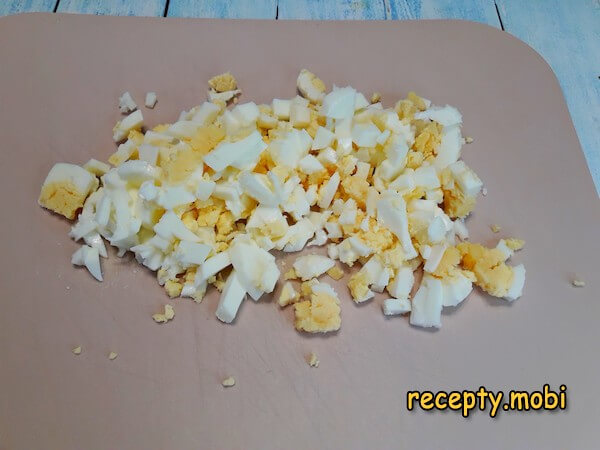
I boil the eggs hard — 8 minutes from boiling. After cooling them under cold water, I peel and chop into medium cubes (5 mm).
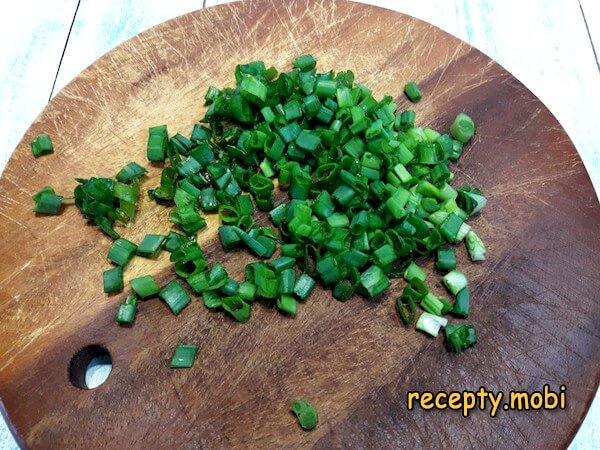
I finely chop the green onions for sprinkling later.
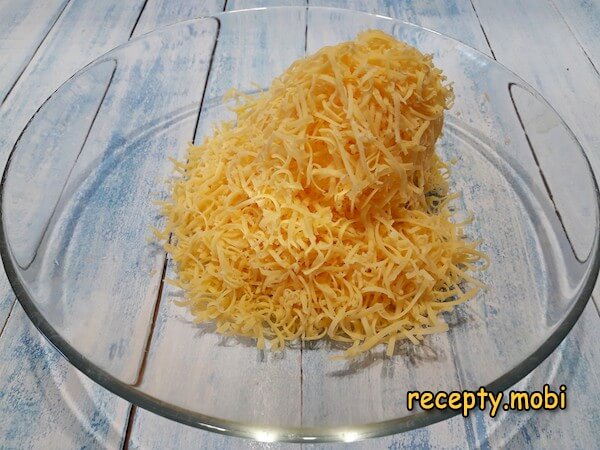
I grate the hard cheese on the fine side of the grater. Fine grating ensures even distribution through the egg filling.
I combine the chopped eggs, grated cheese, and mayonnaise in a single bowl.
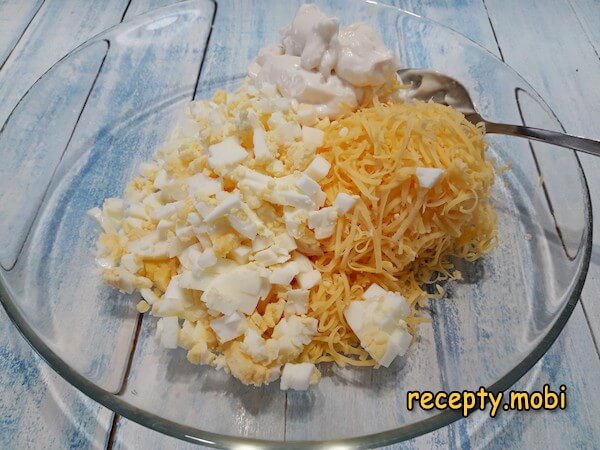
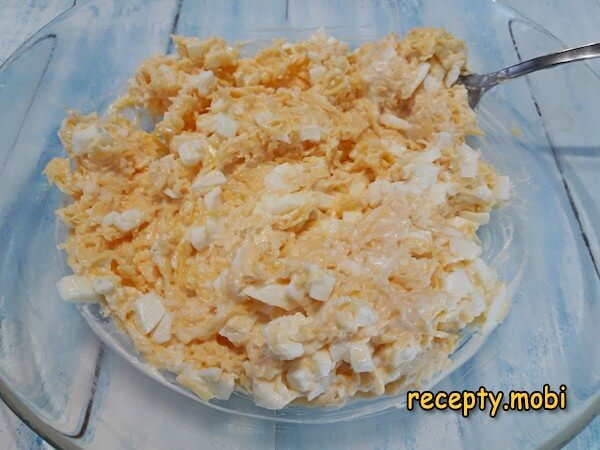
I mix everything until uniform — the texture should be thick and spreadable, like cold dip.
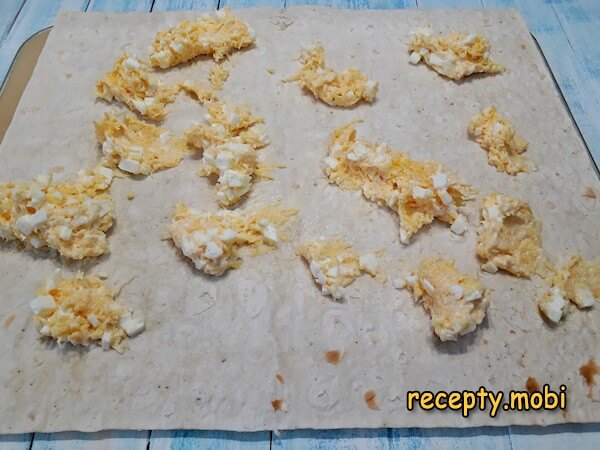
I unroll the first lavash sheet on the work surface. With a spoon, I distribute the egg filling in dollops across the surface — the filling is thick and won't pour, so dollops are easier than trying to spread directly.
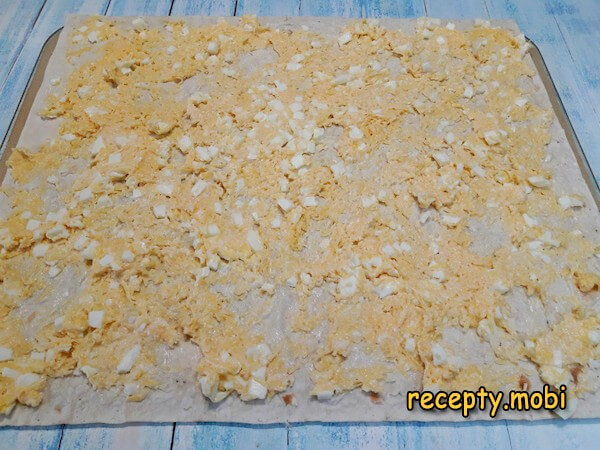
I spread the dollops smoothly over the entire lavash surface using the back of a spoon or a butter knife. Even coverage matters — bare patches give dry spots in the finished roll.
I lay the second lavash sheet on top of the first, pressing gently to bond the layers through the filling.
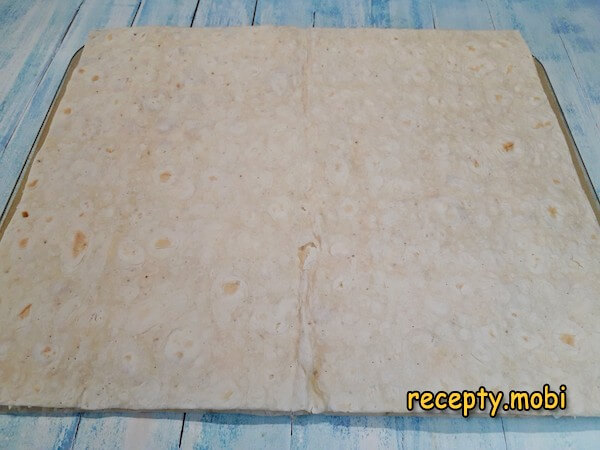
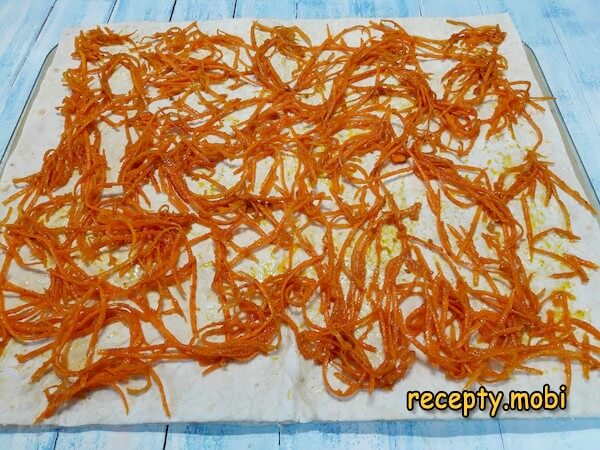
I distribute the Korean carrots evenly across the second lavash. Drained carrots work better than wet ones — squeeze excess liquid out of the carrots first.
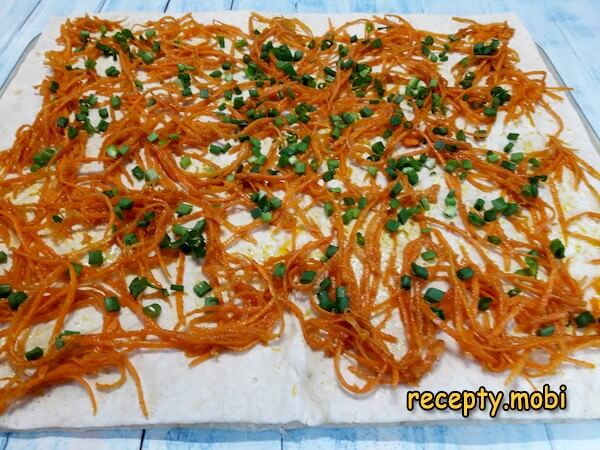
I sprinkle the chopped green onions across the carrots.
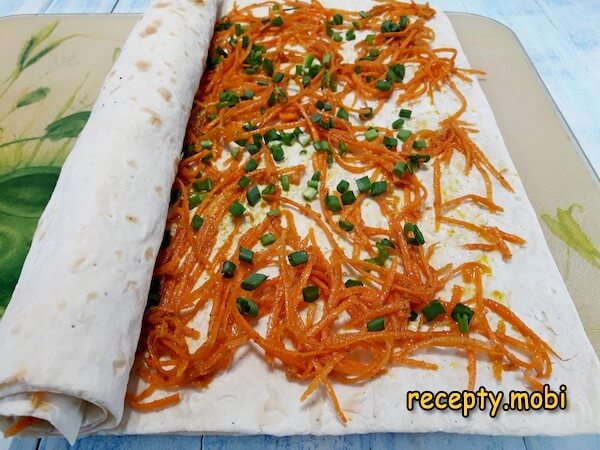
I roll the lavash up tightly. Starting from a long side gives a thinner, longer roll (more spiral slices); starting from a short side gives a thicker, shorter roll (chunkier slices). Both visually appealing — choose based on serving aesthetic.
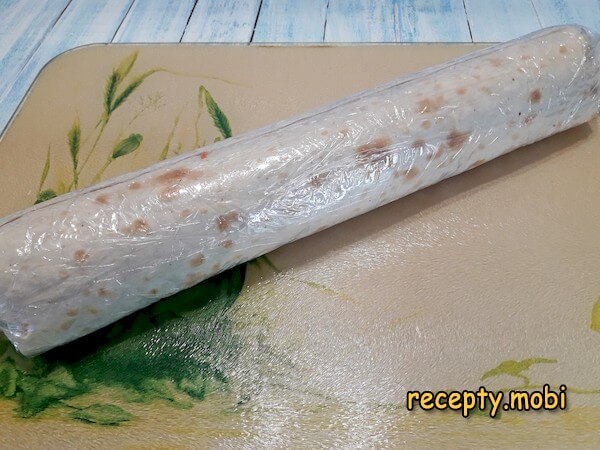
I wrap the rolled lavash tightly in cling film and refrigerate for at least 20 minutes. The chill-and-soak step is what makes the dish work — without it, the roll is dry-edged and falls apart on slicing.
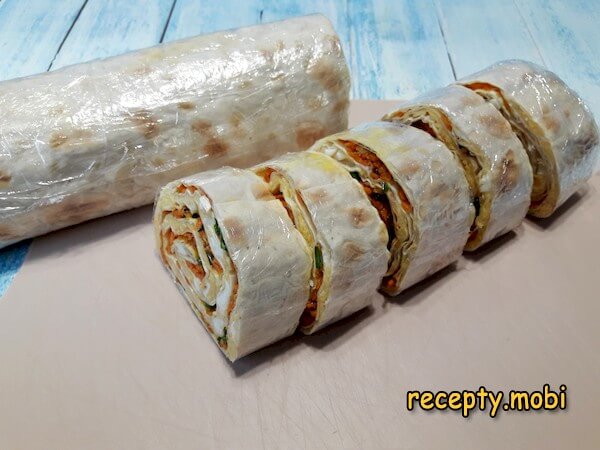
After the chill, the lavash has fully softened from the filling moisture and the roll holds its shape. I slice into portion-sized pieces (about 2 cm thick) without removing the film — slicing through the film gives clean edges; the film peels off easily afterwards.The lavash roll with Korean carrots presents beautifully — bright orange spiral with white-and-yellow flecks of cheese and egg, fresh green onion accents. The spicy carrots cut the creamy filling, and their slight crunch gives textural contrast against the soft lavash. Excellent buffet appetiser, lunch box filler, or part of a Russian zakuski spread.


Tips
- 1
DRAIN THE KOREAN CARROTS FIRST. Korean carrots from the deli or made at home are usually quite wet from their marinade. Wet carrots leak liquid into the lavash, causing soggy patches. Drain them in a colander for 5-10 minutes, or even press lightly with a spoon, before distributing on the lavash. The marinade can be reserved for salad dressing if homemade.
- 2
THE CHILL TIME IS NON-NEGOTIABLE. The 20-minute fridge soak (step 13) is what transforms the assembly from "lavash with stuff in it" to "cohesive flavour-melded roll". The lavash absorbs filling moisture, the flavours integrate, and the structure firms up enough to slice cleanly. For larger gatherings, the roll improves with up to 4 hours in the fridge — make ahead. For another lavash-based roll worth comparing, see Lavash Roll with Minced Meat in the Oven.
- 3
CHOOSE THE RIGHT MAYONNAISE. Thick, full-fat mayonnaise (67%+) is essential — it acts as the binder for the egg-cheese filling and prevents leakage into the lavash. Light mayonnaise is too watery and breaks down the structure. Greek yogurt or sour cream can substitute for half the mayonnaise for a tangier, slightly lighter filling — but keep at least half mayonnaise for binding power.
- 4
ENDLESS VARIATIONS ON THE THEME. The basic technique welcomes substitutions: replace the egg-cheese filling with cream cheese spread (Philadelphia + chopped dill); use ham slices and pickled cucumber instead of carrots for German-style; add smoked salmon and capers for Scandinavian; or swap Korean carrots for sun-dried tomatoes for Mediterranean. The lavash-roll format is a blank canvas. For another stuffed-roll appetiser to compare, try Hungarian Roll with Nuts and Rhubarb.
FAQ
Where can I find Korean carrots? +
Korean carrots (морковь по-корейски / morkov po-koreyski) are sold ready-made in deli sections of Eastern European, Russian, and many international supermarkets. They're spicy julienned carrots in a vinegar-oil-coriander-garlic marinade — a Soviet-era reinvention of Korean banchan tradition. To make at home: julienne 500 g of carrots, salt and let drain 30 minutes, then dress with 50 ml vegetable oil heated with crushed coriander, garlic, vinegar, and a pinch of sugar. Refrigerate overnight for full flavour development. Store-bought is faster; homemade is sharper and adjustable.
How long does the roll keep? +
Best within 24 hours of assembly — the lavash continues to absorb filling moisture and eventually becomes too soft to hold the roll shape. Store wrapped in cling film in the fridge. After 24 hours the roll is still safe to eat but visually less impressive (slumped shape, slightly soggy lavash). For meal prep that lasts longer, store the components separately (filling, lavash, carrots) and assemble fresh each day — components keep 3-4 days separately.
Can I add meat or fish to the roll? +
Absolutely — meat and fish additions extend the roll into more substantial territory. Popular versions: thinly sliced smoked chicken or ham layered between the lavash sheets; smoked salmon strips; thinly sliced grilled chicken breast; tuna salad in place of the egg filling; grated smoked sausage mixed with the egg filling. Each addition changes the calorie count significantly upward — adjust serving size accordingly. For another smoked-protein-based dish to explore, the same principles apply.
Can I make this gluten-free? +
Yes, with substitutions for the lavash. Gluten-free flatbreads (corn tortillas, rice paper sheets, GF lavash from specialty stores) all work. Rice paper sheets give the most elegant thin-spiral effect but need brief soaking before use to soften (5 seconds in warm water, then drained on a clean towel). Corn tortillas are sturdier but break the visual appeal — better cut into smaller appetiser-sized squares. The filling and toppings stay identical.
- Comment
or post as a guest
Be the first to comment.