avg —
Leek for winter

Instructions
I prepare the only ingredient. Leeks need thorough washing especially in the leaf axils where soil accumulates between layers. Then pat dry with paper towels — water on the surface ruins both freezing and drying.
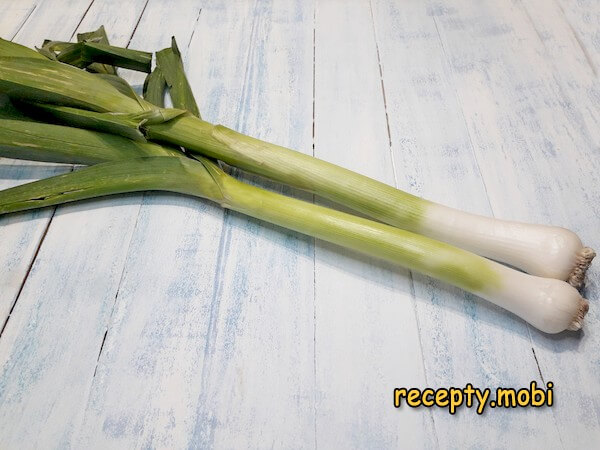
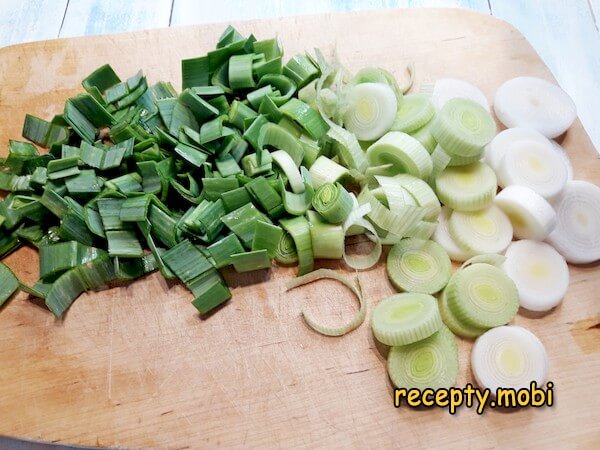
The white part slices into thin rings. The green feathers (commonly discarded but flavourful) slice thinly into strips. Both parts have culinary value — different uses but equally worth preserving.
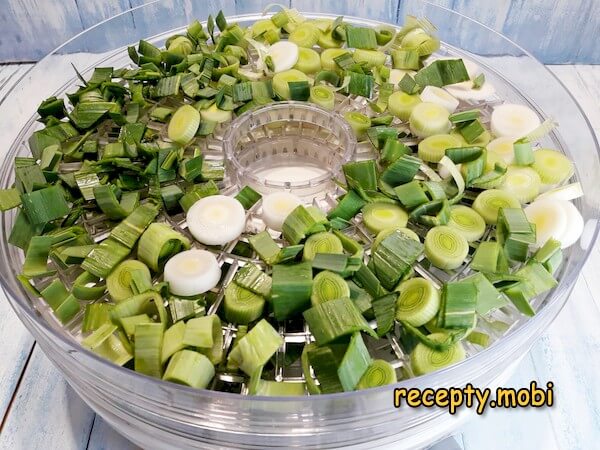
Part of the leek goes for drying — preferentially the green portions which dry better. A food dehydrator at 50 °C is ideal — spread on the rack in a single layer.
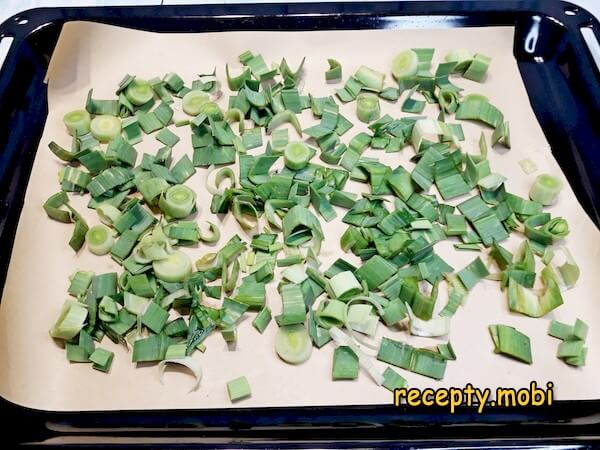
Without a dehydrator, the oven works: top + bottom heat with convection ON, oven door propped slightly open (allows moisture to escape), 50 °C target temperature.
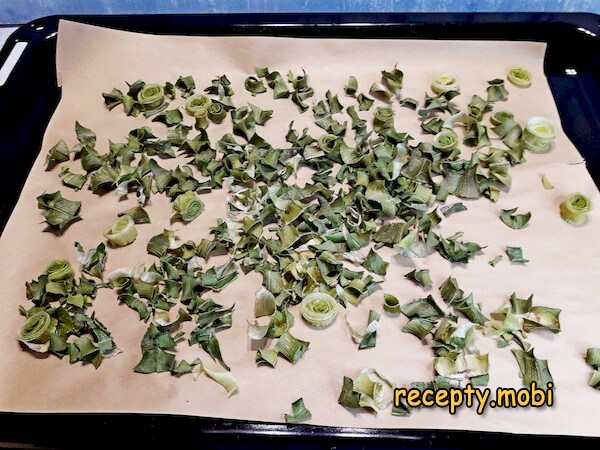
Dry until the leek pieces are brittle — about 2.5-3 hours. Brittle dryness ensures long-term shelf stability; any remaining moisture promotes mould.
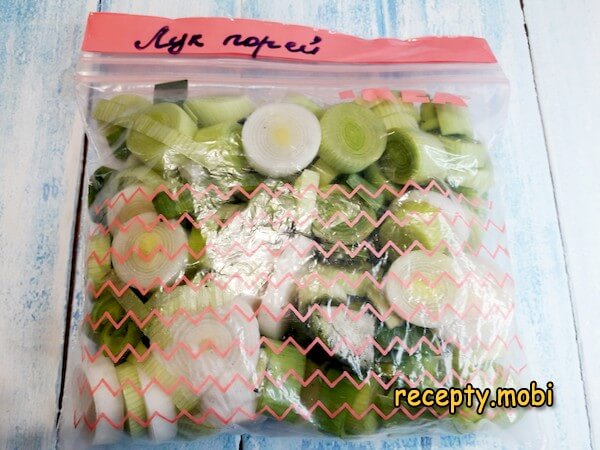
The remaining leek (more white-part heavy) goes in zip bags into the freezer.
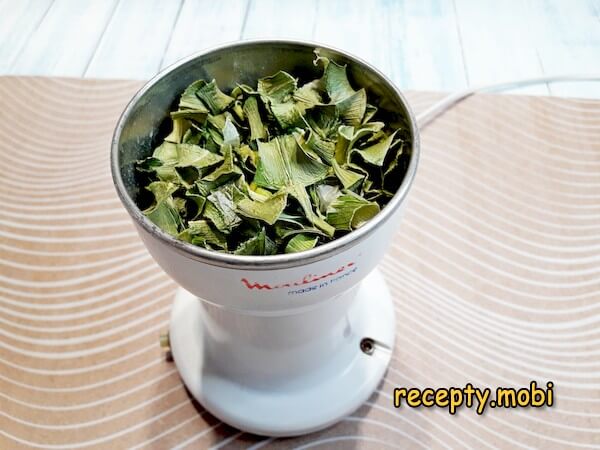
Dried leek can stay as large shavings, or grind further. The coffee grinder works well for fine-crumb production.
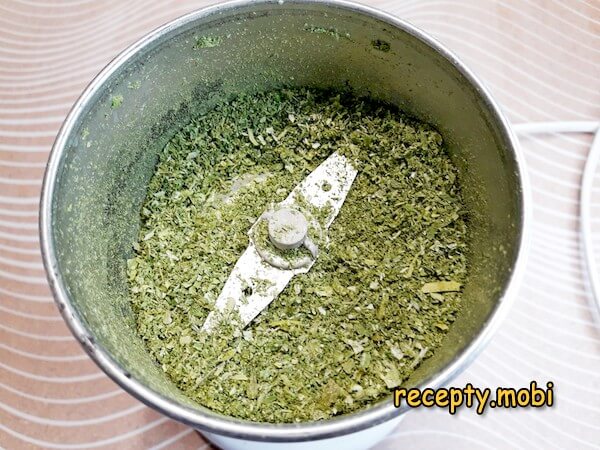
Ground leek crumbs into a fine seasoning powder — equivalent to commercial dried onion seasoning but with leek's distinctive milder profile.Ground dried leek stores in a glass jar — takes very little space relative to fresh leek volume. Excellent seasoning for soups, sauces, savoury baking, sprinkling on grilled meat, mixing into homemade salt blends. Both dried and frozen leek keep for years if not consumed earlier. Soups and broths seasoned with home-dried leek are remarkably aromatic.


Tips
- 1
WASH BETWEEN THE LAYERS. Leeks grow with their stems hilled up against soil — fine grit gets between every leaf layer. Standard rinsing doesn't reach the trapped soil. The proper technique: cut the leek lengthwise (down to but not through the root end), fan out the layers under running water, scrub between layers with fingers. Then proceed with slicing. Skipping this leaves grit in your final preserve — unpleasant texture.
- 2
50 °C IS THE PRECISE DRYING TEMPERATURE. Higher temperatures (above 60 °C) cook the leek instead of drying it, producing slightly off-flavour. Lower temperatures (below 45 °C) take dramatically longer (5+ hours) and risk fermentation in the slow-drying middle. The 50 °C sweet spot dries efficiently while preserving the fresh leek aroma. The same principle applies to drying other alliums (chives, scallions, regular onions). For another winter preserve worth comparing, see Apple-Pumpkin Juice for Winter.
- 3
THE DUAL-METHOD ADVANTAGE. Frozen leek (rings) keeps the cell structure for stews, soups, and other cooking applications where you want recognisable leek pieces. Dried/ground leek functions as concentrated seasoning where leek presence is desired but visible pieces aren't. Maintaining both forms in the freezer/pantry gives flexibility — most leeks can be split 50/50 between methods like the recipe shows.
- 4
USE THE GREEN PARTS. Most cooks discard leek green tops — but these are the most flavourful part and dry beautifully. Don't waste them. The white part has the milder onion flavour preferred for fresh use; the greens have stronger aromatic punch that's perfect concentrated for dried seasoning. The economy + flavour-density of using the entire leek (white + light green + dark green) is one of the kitchen's best free flavour upgrades. For another shelf-stable kitchen ingredient worth trying, try Canned Sorrel Winter Appetizers.
FAQ
Why dry AND freeze instead of just one method? +
Different methods serve different culinary purposes. Frozen leek rings cook into stews and soups looking like fresh leek — visible identifiable pieces with retained moisture. Dried/ground leek dissolves into liquids as a concentrated seasoning — no visible pieces but intense aroma. A cook who only freezes loses the seasoning-powder option; one who only dries loses the recognisable-piece option. Doing both gives full flexibility. Most home cooks find they use frozen leek for soups and stews, and dried leek for sauces and dry rubs.
How long do dried and frozen leek keep? +
Dried leek in airtight jars at room temperature keeps 2-3 years easily — much longer if vacuum-sealed. Aroma intensity slowly decreases over years but flavour remains good. Frozen leek keeps 12 months at consistent freezer temperature without quality loss; up to 18 months acceptable. Don't refreeze thawed leek (texture degrades dramatically). Both methods preserve nutrition far better than fresh leek stored beyond a few weeks.
Can I use the same technique for green onions or chives? +
Yes — the technique applies broadly to alliums. Green onions (scallions) dry similarly at 50 °C; expect 1.5-2 hours since they're thinner. Chives dry in 1-1.5 hours, retain bright green colour, and grind into a beautiful concentrated seasoning. Garlic scapes dry well. Spring onions (with bulb) dry in 2-2.5 hours. Regular onions can be dried but take 4-5 hours due to higher water content. The 50 °C principle works for the entire allium family.
What's the best way to use ground dried leek? +
Ground dried leek (1 tsp = roughly 1/4 of a fresh leek by flavour intensity) works as direct seasoning replacement in many applications. Sprinkle on roasting potatoes, mix into compound butter, stir into mashed potatoes, blend into mayonnaise for sandwich spreads, dust on roasted chicken, mix with salt + paprika for a dry rub. The mild leek character is more delicate than dried regular onion — use slightly more by volume than you'd use dried onion powder. Avoid: very wet applications where the powder clumps before fully rehydrating.
- Comment
or post as a guest
Be the first to comment.