avg —
Marinade for Chicken Kebab

Instructions
I prepare the ingredients. Chicken fillet should be chilled (not frozen). Hot mustard works in 1 hour; milder/sweeter mustard needs 2 hours. No added salt — soy sauce provides plenty.
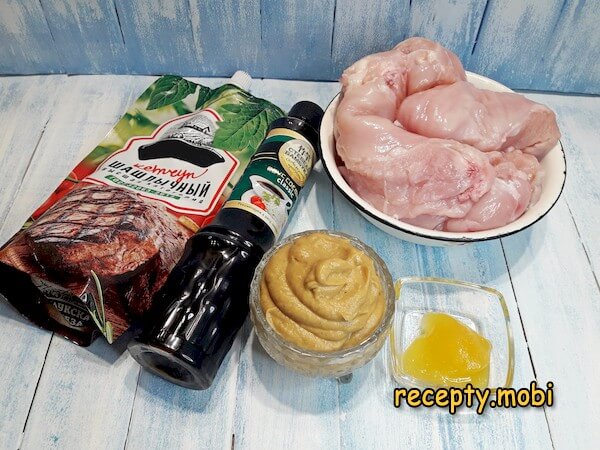
Each chicken fillet cuts into 4-5 pieces, sized for convenient skewering.
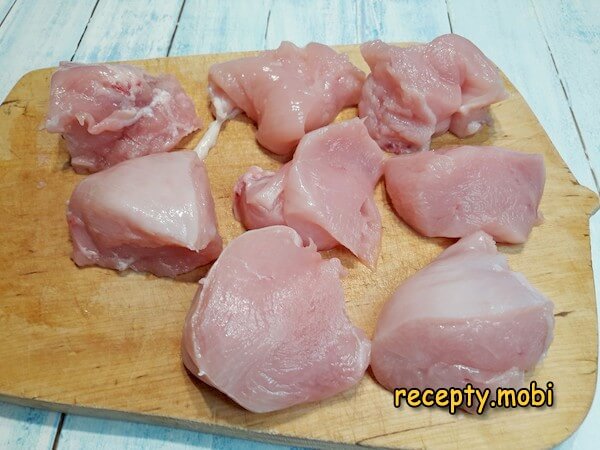
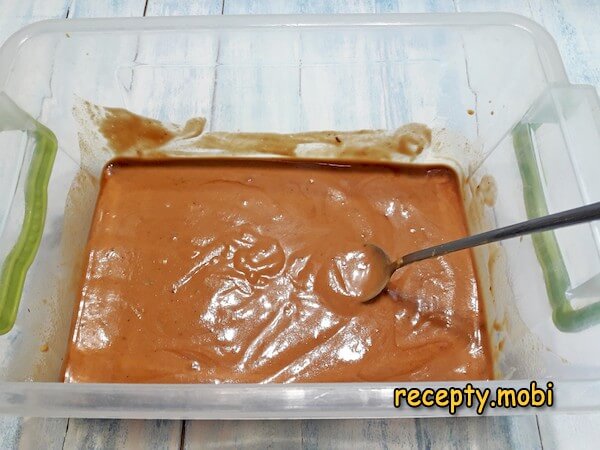
In a tight-lidded container, mustard + honey + ketchup combine. This combination delivers tender chicken with sharp-sweet flavour blend.

Soy sauce pours in.

Mix everything to uniform consistency.
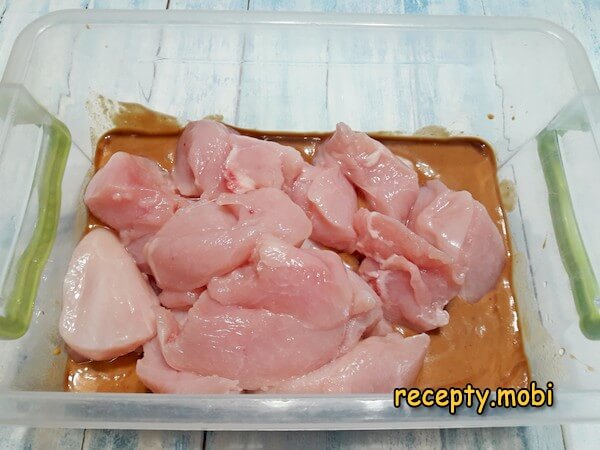
Chicken pieces add to the marinade container.
By hand, I work the marinade between pieces so every surface is fully coated. Container goes to fridge for at least 1 hour.
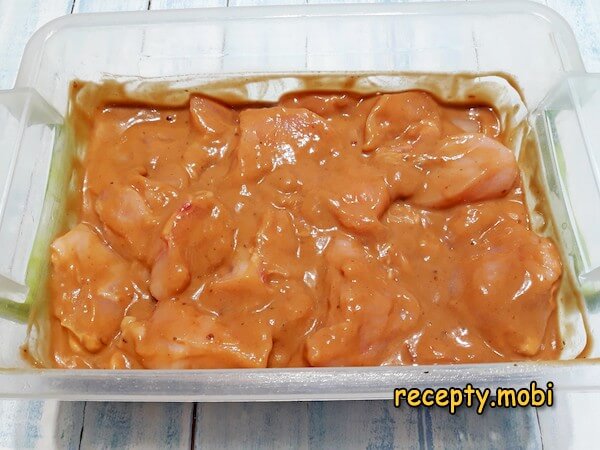
The marinade also extends well — chicken can stay in it up to 12 hours if needed. Beyond fillet, any chicken parts work (even bone-in), just remove skin and pierce thick parts (drumstick/thigh meat) several times for marinade penetration. Same technique applies regardless of cut.Try it, bon appétit!


Tips
- 1
THIS MARINADE IS ENZYMATIC + CARAMELISING. Mustard contains enzymes that gently tenderise chicken protein (different from acid-based tenderising); soy sauce delivers salt-cure-style flavour penetration; ketchup-tomato adds acidity (mild) plus colour-developing sugars; honey caramelises beautifully on grill heat for the iconic orange-gold finish. The four ingredients work together — removing any one degrades the result. Don't simplify; this is a proven combination.
- 2
AVOID ACID-HEAVY MARINADES FOR CHICKEN. The intro's note about "lemon, vinegar are not suitable" is technical not preference. Acidic marinades denature chicken protein at the surface, producing tough rubbery skin and dried-out interior. Acid-marinated chicken looks white-cooked even raw. The mustard-soy-ketchup approach gives gentle protein-conditioning without aggressive acid damage. For another classic chicken-skillet preparation worth comparing, see Chicken Tabaka in a Skillet Under a Press.
- 3
THE 1-HOUR MINIMUM IS PRECISE. Step 7's 1-hour minimum is calibrated for hot-mustard versions. Less time = surface-only marinade penetration; meat centre stays unflavoured. More time (up to 12 hours) is fine — flavour deepens. Beyond 12 hours, the salt content from soy sauce starts over-curing the meat (tough texture). The 1-12 hour window is the practical range. For spontaneous quick grilling, 1 hour works; for planned grilling, 4-6 hours is ideal.
- 4
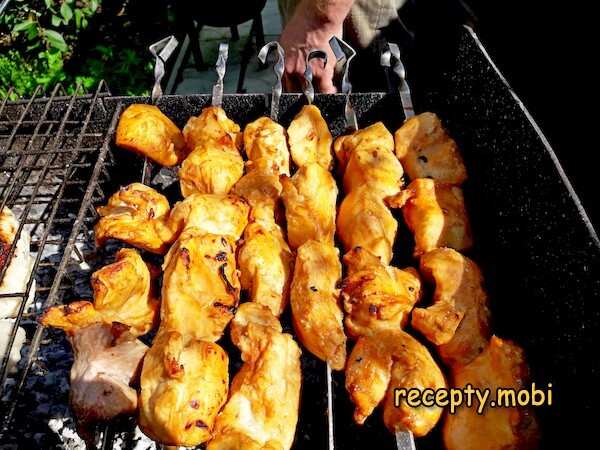
WATCH THE GRILL TEMPERATURE. The honey + ketchup sugars caramelise beautifully BUT also burn quickly. Grill chicken on medium-hot coals, NOT direct fire. Higher heat = blackened sugar surface with raw centre. Medium heat with proper coverage gives the orange-gold caramelised finish over fully-cooked chicken. Brush remaining marinade on during the last 2 minutes of grilling for extra glaze. For another braised chicken with vegetables variation worth trying, try Braised Chicken with Vegetables in a Cauldron.
FAQ
What soy sauce works best? +
Light soy sauce (Japanese-style "shoyu", Kikkoman is widely available) is the standard choice — gives proper salty-umami without overwhelming colour. Chinese light soy sauce works equivalently. Avoid: Chinese dark soy sauce (too sweet, too dark, throws off the flavour balance), low-sodium versions (lack the proper salt-cure effect). The 100 ml ratio is calibrated for proper salting; reducing soy sauce significantly leaves the chicken unsalted (no salt is added separately). Use proper full-sodium light soy sauce.
Can I use other chicken parts besides fillet? +
Yes — bone-in chicken parts work beautifully. Boneless thighs (most flavourful, naturally juicier than breast). Bone-in thighs (most flavour, longer cook time on grill). Drumsticks (lots of meat per piece). Wings (great party-style serving). For bone-in parts: remove skin first (skin doesn't take marinade well and burns easily), pierce the thick meat with a fork in 5-6 spots for marinade penetration. Cook time on grill is longer for bone-in parts (8-12 minutes per side vs 5-6 for fillet). The marinade quantity stays the same; the chicken proportionally needs more time.
What if I don't have hot mustard? +
Adjustments per the recipe: milder mustard (Dijon, English mustard) needs 2 hours instead of 1 hour for the same tenderising effect. Honey mustard (already sweet) can replace the mustard + honey separately — use 170 g of honey-mustard, skip the additional honey. Wholegrain mustard works (gives interesting visible texture in the marinade) but takes 2-3 hours. Avoid: yellow American ballpark mustard (too vinegary, too mild), German sweet mustard (too sweet, throws off balance). Russian or Eastern European hot mustards are the recipe's intended product.
Can I marinate frozen chicken? +
Not directly. The recipe specifies "chilled, not frozen" because frozen chicken's surface is too hard to absorb marinade properly — only surface-coating happens during the 1-hour window. Plus, thawing during marinade time produces uneven results (outer parts thaw and over-marinate while centre is still frozen). Always thaw chicken fully (overnight in fridge) before marinating. Once thawed, follow the recipe normally. Don't refreeze marinated chicken — texture suffers dramatically.
- Comment
or post as a guest
Be the first to comment.