avg —
Mexican stuffed tortilla

Instructions
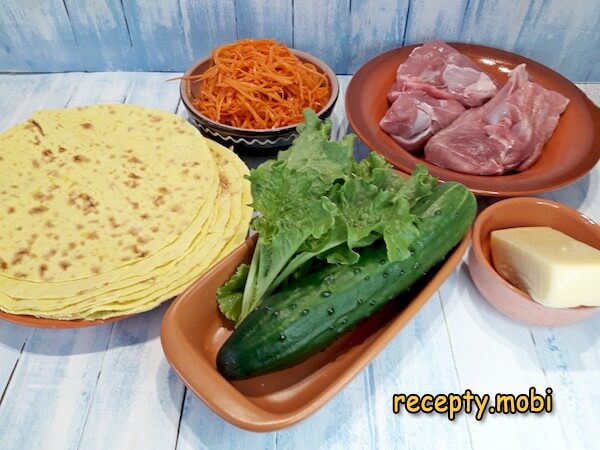
I prepare the ingredients. Any meat works — turkey (this recipe), chicken breast, beef strips, pork. Pre-fried or boiled meat shortens the cooking time to ~10 minutes (skip the paper-envelope frying step). For first-time preparation, raw turkey breast is recommended for best texture.
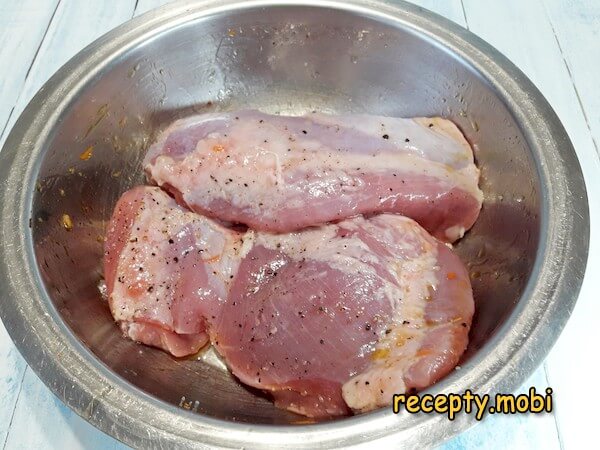
Season the turkey fillet with salt and pepper. Brush with olive oil for moisture retention during cooking.
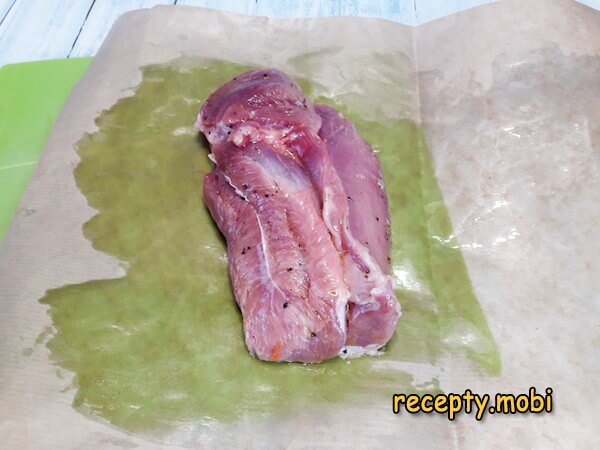
The paper-envelope frying technique keeps the meat juicy and prevents kitchen mess. Grease a parchment paper sheet with vegetable oil. Place the seasoned turkey on one half.
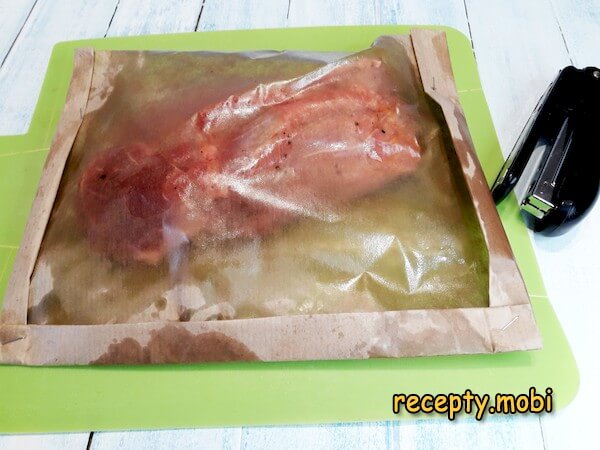
Fold the parchment over the meat (envelope style). Fold the open edges several times for tight closure; secure with stapler if needed (REMEMBER staple count for later removal).
Place the parchment envelope on a well-heated frying pan; cook 15 minutes (adjust based on meat thickness).
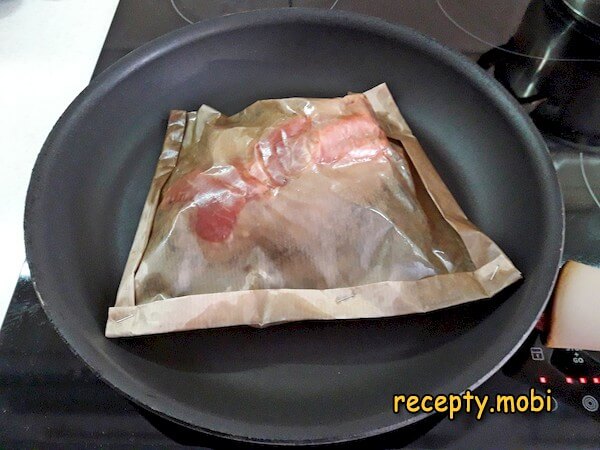
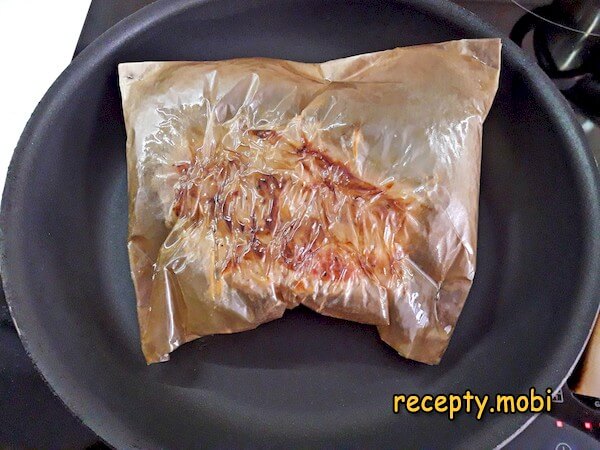
Flip the envelope; fry the other side another 15 minutes. The parchment traps steam and renders fat — produces dramatically juicier meat than direct-pan frying.
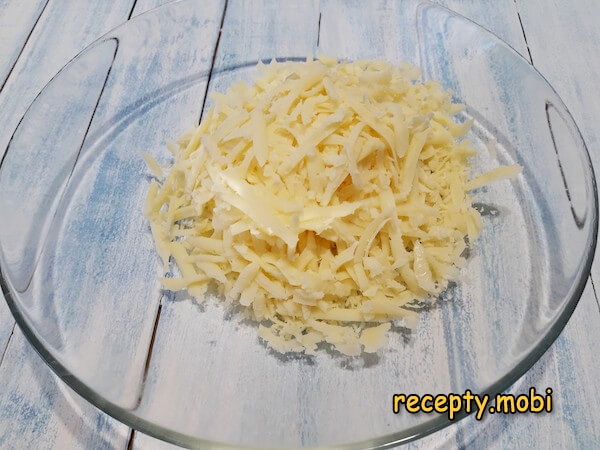
While meat finishes cooking, grate the cheese on coarse holes.
Remove the cooled fillet from the parchment (count and remove ALL staples). Cut into thin strips for tortilla-friendly portion sizes.

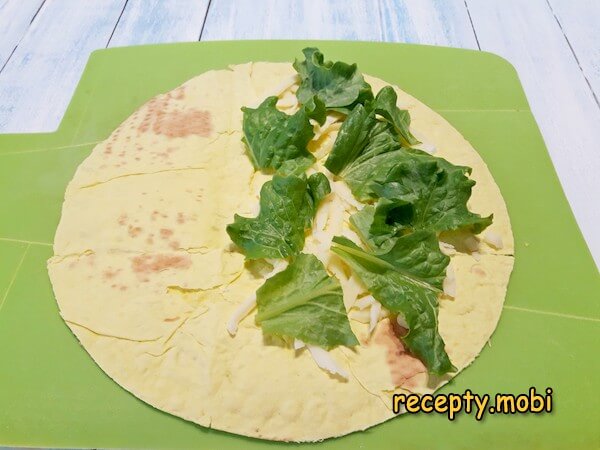
Begin tortilla assembly. Lay a tortilla flat. On HALF the tortilla, sprinkle a thin layer of grated cheese.
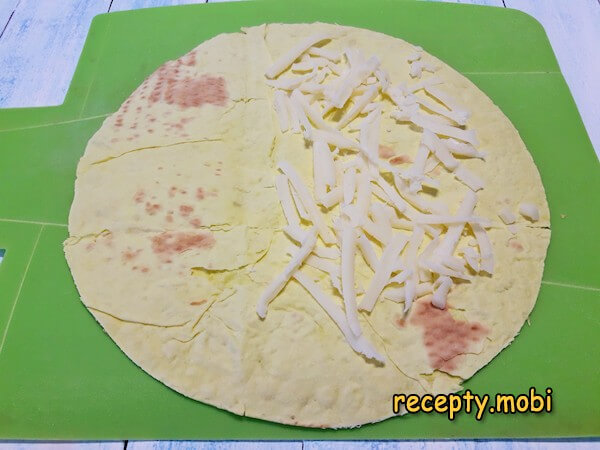
Tear lettuce leaves into bite-sized pieces; place on the cheese.
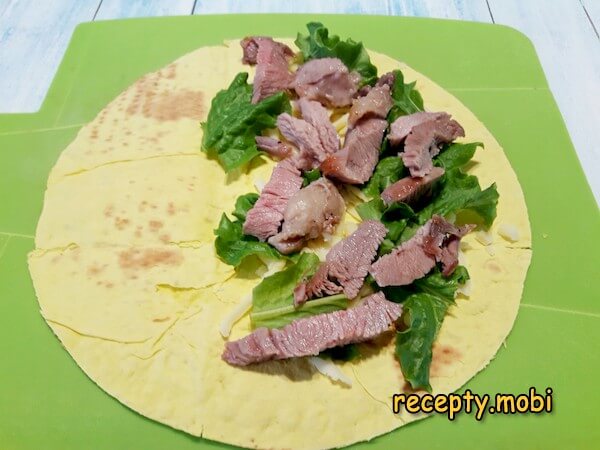
Add the meat strips on top of the lettuce.
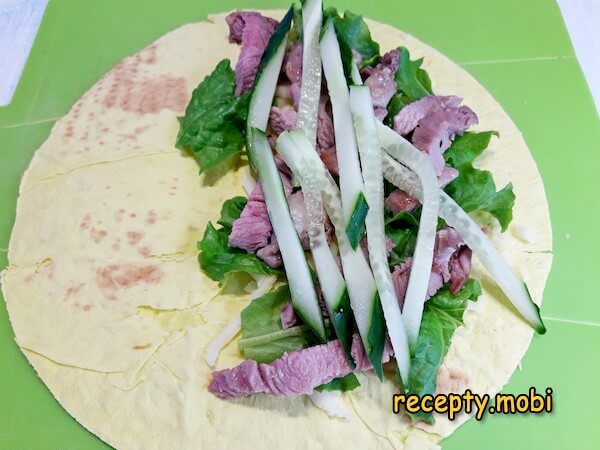
Add a layer of julienned cucumber strips for fresh crunch.
Add Korean-style carrots for spicy-sweet kick.
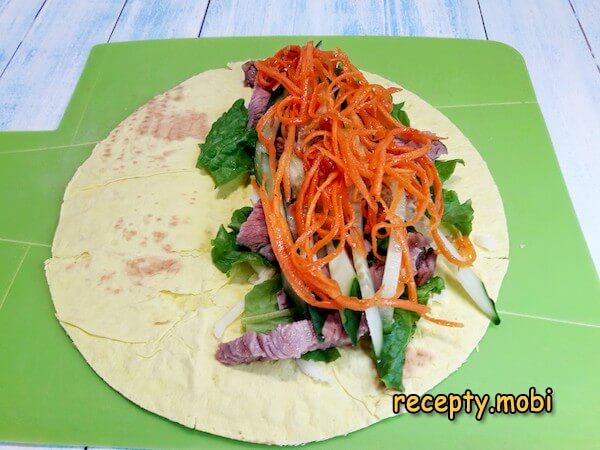
Finish with another thin layer of cheese on top — the upper cheese melts into the lower cheese during pan-frying, sealing the filling.
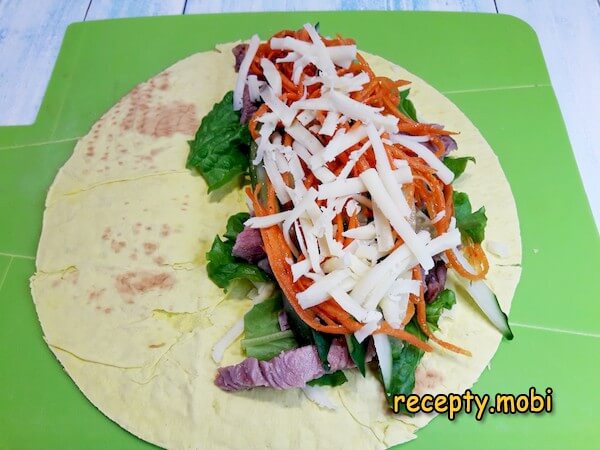
Fold the empty half of the tortilla over the filling; press gently to compact.
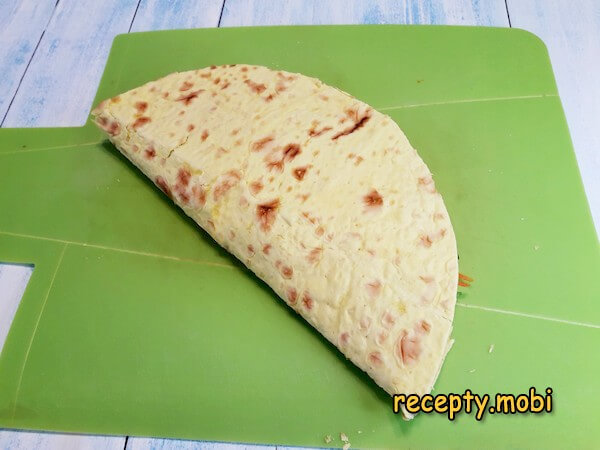
Place the folded tortilla on a hot frying pan; toast both sides until cheese melts and tortilla edges crisp (2-3 minutes per side).
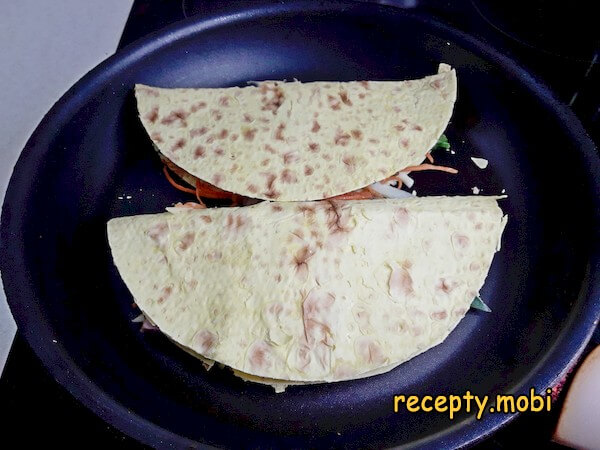
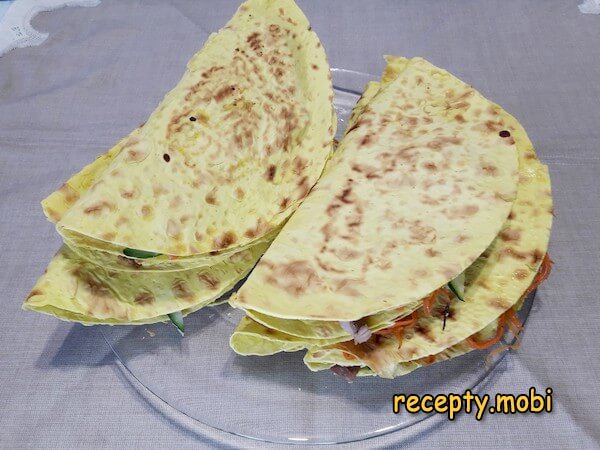
Repeat the assembly + toasting process for each remaining tortilla. The dish is ready.Mexican stuffed tortillas are served IMMEDIATELY after toasting — hot from the pan. For convenient eating, cut each tortilla in half (creates two manageable pieces) and place on a plate, or wrap in a napkin for hand-held eating. The tender tortilla + spicy meat-vegetable filling combination has earned this dish worldwide popularity.


Tips
- 1
THE PARCHMENT-ENVELOPE TECHNIQUE IS PROFESSIONAL. Step 3-6's paper-envelope cooking method (called "papillote" in French cuisine) achieves what direct frying can't. The parchment traps steam, preventing meat from drying out; the brief contact with the hot pan provides outer browning + flavour development; the closed environment renders fat into the meat (rather than splattering on stove). Result: dramatically juicier meat than open-pan frying. Same technique works for fish, vegetables, and chicken. Worth the extra prep effort.
- 2
THE STAPLE-COUNT WARNING IS GENUINE SAFETY. Step 4's staple-counting reminder isn't pedantic — it's preventing actual hazard. Lost staples in finished food are sharp metal that can puncture mouths or cause more serious harm. The "remove all staples" rule is non-negotiable. Alternative envelope-securing methods: paperclips (similar count-and-remove rule), tied butcher twine (no count needed but watch for fragments), or tightly-folded edges with no fastener (works for short cooks under 10 minutes). For another stuffed-format dish worth comparing, see Stuffed Peppers in an Air Fryer.
- 3
THE CHEESE-ON-BOTH-SIDES IS SEAL TECHNIQUE. Step 9's bottom-cheese AND step 14's top-cheese aren't redundant — they form the structural seal that holds the tortilla closed during eating. The cheese melts during toasting, fusing the upper and lower tortilla halves where they meet. Filling-only tortillas without bracketing cheese fall open during eating, dropping fillings everywhere. The cheese functions as edible glue. Same principle applies to all quesadilla-format dishes — always cheese-bracket the filling for structural integrity.
- 4
THE KOREAN CARROTS ARE BRILLIANT FILLING CHOICE. Korean-style carrots (Russian-Korean fusion food) bring three properties that ordinary fillings lack: spicy heat (from the dressing), pre-pickled tang (vinegar component), and crisp texture (julienne cut + brief marinade). All three properties enhance the tortilla experience without requiring additional sauces or condiments. Substitutes that work: kimchi, Mexican pickled jalapeños, escabeche-style pickled vegetables. The Korean carrot version is the recipe's specific choice — keep them in the standard preparation. For another lavash-wrapped meat dish to compare format, try Lavash Rolls with Minced Meat.
FAQ
Is this authentic Mexican cuisine? +
This is a globalised adaptation rather than authentic traditional Mexican. Real Mexican quesadilla format uses different ingredients (typically just cheese + chiles + occasionally beans), cooked on dry comal (clay griddle), and served with salsa verde or salsa roja. The fillings here (turkey + Korean carrots + cucumber) are Russian-Mexican fusion sensibilities. Authentic Mexican stuffed tortillas would also use traditional Mexican cheeses (Oaxaca, Chihuahua) rather than generic "hard cheese". The recipe is delicious in its own right but represents the dish's evolution as it spread internationally — every cuisine adapts foreign foods to local ingredients and tastes.
What kind of tortillas should I buy? +
Corn tortillas are the recipe's specification (provides the "sunny" yellow colour and characteristic crumbly texture). Wheat-flour tortillas work as substitutes (more pliable, less crumbly, slightly different flavour). Quality matters: look for short ingredient lists (just corn flour, water, lime, salt for corn tortillas; flour, water, fat, salt for wheat tortillas) — long ingredient lists with preservatives indicate lower quality. Fresh tortillas from a Mexican market or specialty store are dramatically better than supermarket bagged versions. Tortilla size: 20 cm diameter is standard; larger sizes (25 cm) work but require larger pans for toasting.
Can I prepare these ahead? +
The components hold well separately, but assembled tortillas don't keep. Make-ahead approach: cook the meat 1-2 days ahead (refrigerate sliced); grate cheese and prep vegetables day-of (5 minutes work); assemble + toast at serving time. The full assembly + toasting takes only 5 minutes per tortilla once components are ready. Don't pre-assemble cold tortillas — the moisture from vegetables soaks into the corn tortillas, producing soggy mess. Pre-toasted-and-stored tortillas are also poor (lose crispness on cooling). Always toast fresh; that's the dish's defining characteristic.
What sauces work best? +
The standard sauce pairings are salsa-style. Best options: salsa verde (green tomatillo-based, classic Mexican), salsa roja (red tomato-based, classic Mexican), guacamole (creamy avocado, popular American adaptation), sour cream + lime juice (lighter version), Mexican crema (richer than sour cream), chipotle mayo (smoky-spicy fusion option). For Russian-fusion-style dishes (this recipe's variant): garlic-mayo sauce, ranch dressing, or Korean carrot brine work surprisingly well. Serve sauce ON THE SIDE for dipping, not pre-applied to the tortillas — pre-applied sauce makes the tortilla soggy.
- Comment
or post as a guest
Be the first to comment.