avg —
Pollock stewed with carrots and onions in tomato – a simple and quick recipe

Instructions
Usually, pollock is sold frozen. First defrost the fish in a deep bowl. Clean the defrosted pollock from scales. Pollock has small scales, so be thorough cleaning the less noticeable scales under the fins. Clean off the scales while holding the pollock under running water. Cut off all the fins. If the purchased fish is not processed, also cut off the head. Carefully cut open the belly of the fish, being careful not to damage the gallbladder, and then remove the insides. The inside of the belly is covered with a black skin, which must be completely peeled off and discarded to avoid bitterness in the finished fish dish. Thoroughly wash and dry the fish.
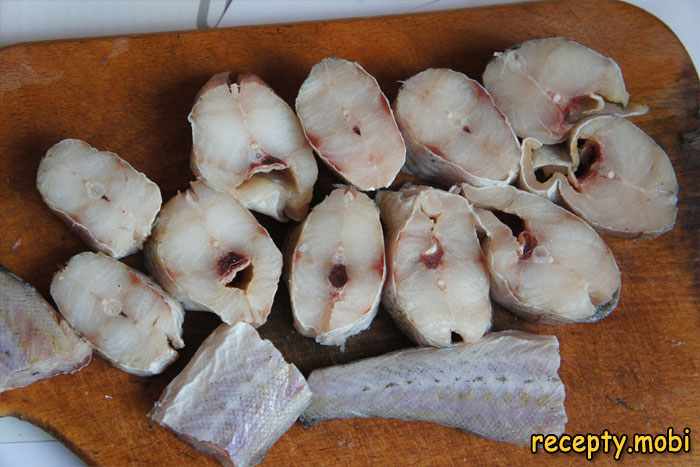
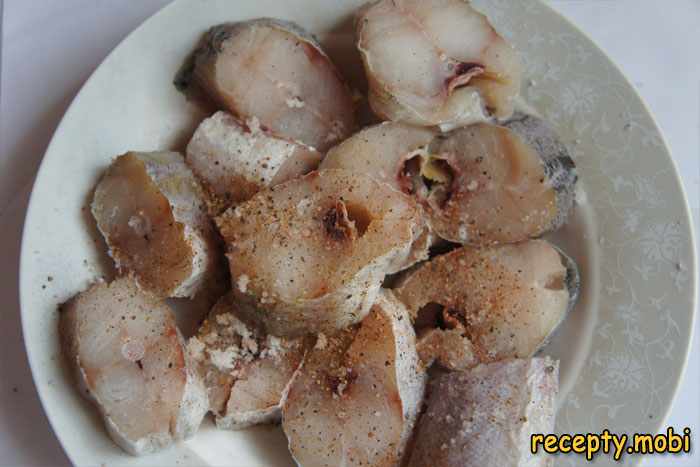
Cut the fish into portion-sized pieces. Salt and pepper the pieces of pollock, grinding black peppercorns in a grinder. Leave the pollock in the spices for 15 minutes for proper finished flavor penetration.
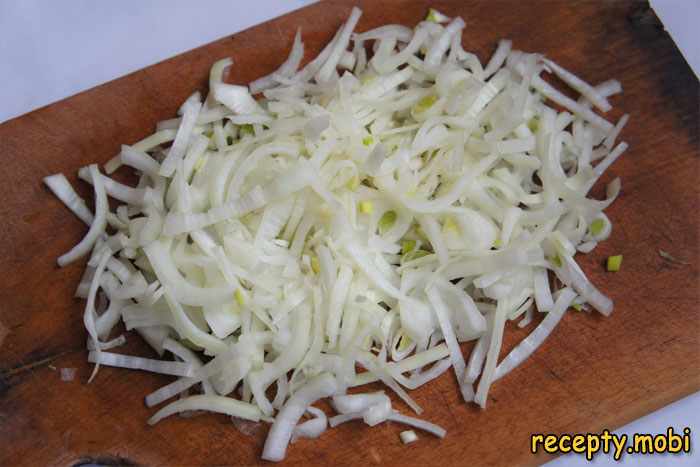
While the fish is absorbing the spices, prepare the vegetables for the sauce. Peel the onion. The onion can be cut in different ways depending on preferences. If you like large pieces of onion in a fish dish, cut the onion into large half-rings. If you want a more homogeneous sauce for the fish, then the onion can be finely chopped with a knife. Cut the onion heads into quarters and then into strips.
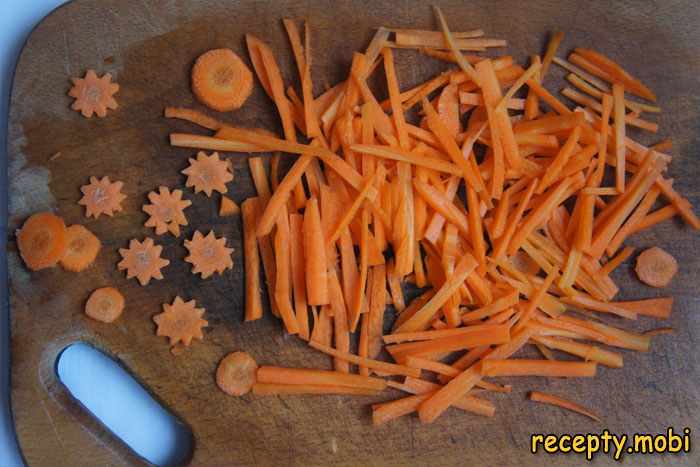
Peel and wash 2 roots of carrots. The carrot can be cut as you wish – into long strips, short strips, or circles. You can even cut flowers out of the circles. There is also an option of adding grated carrots to the sauce. Cut the carrot into long strips for proper finished sauce texture.
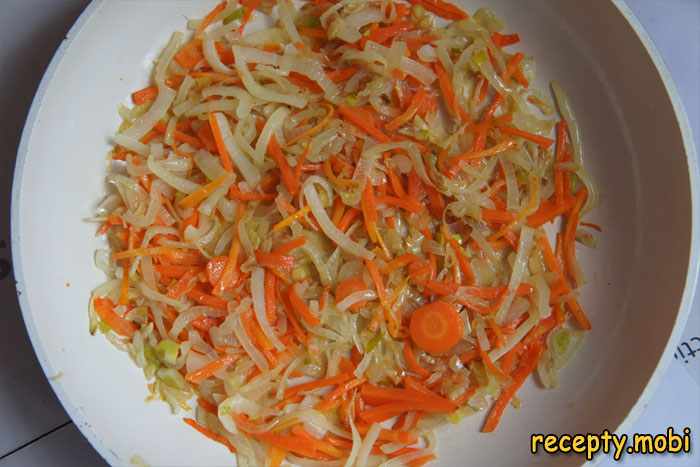
To enhance the aroma of the vegetables, lightly and briefly fry them in vegetable oil. The onion and carrot for the sauce can be sauteed without browning, just lightly sauteing. Saute the vegetables in a separate pan with high sides for proper finished aromatic foundation.
Pour 2 tbsp of refined vegetable oil into the pan. Before placing the pieces of pollock in the pan, coat them in flour. The fish should not be placed in a poorly heated pan; otherwise, it will stick to the bottom. Heat the frying pan well, and only then place the coated slices of pollock on it.
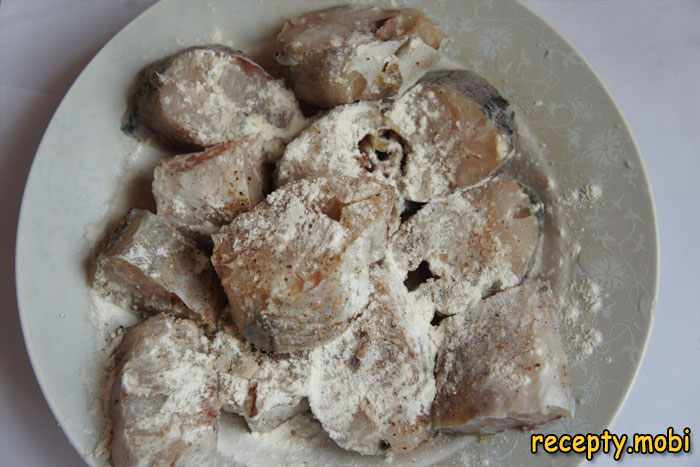
Fry the pieces of pollock on both sides until a thin, light crust forms. There is no need to cook the fish all the way through. As soon as the coating on the pieces of pollock is covered with a light, golden crust, immediately turn off the heat under the pan with the fish.
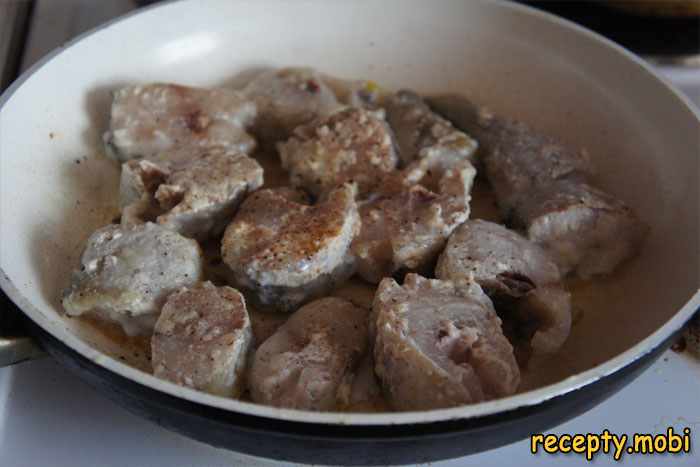
Transfer part of the sauteed vegetables to a plate. Place the pieces of fish on the remaining vegetables in the deep pan for proper layered finished structure.
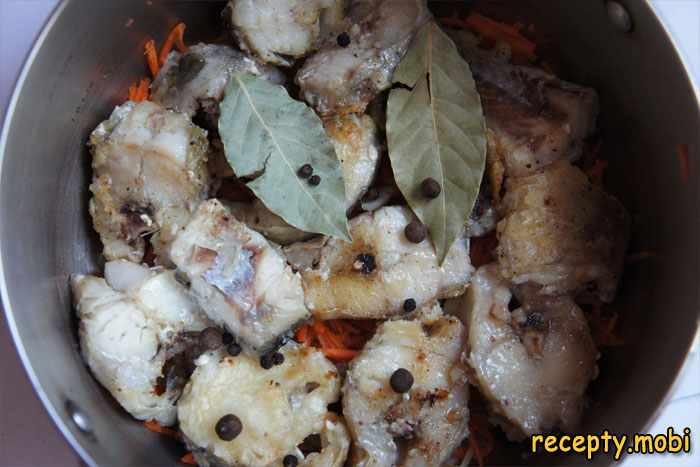
Cover the pollock on the vegetable bed in the pan with the sauteed vegetables that you set aside earlier in the plate.
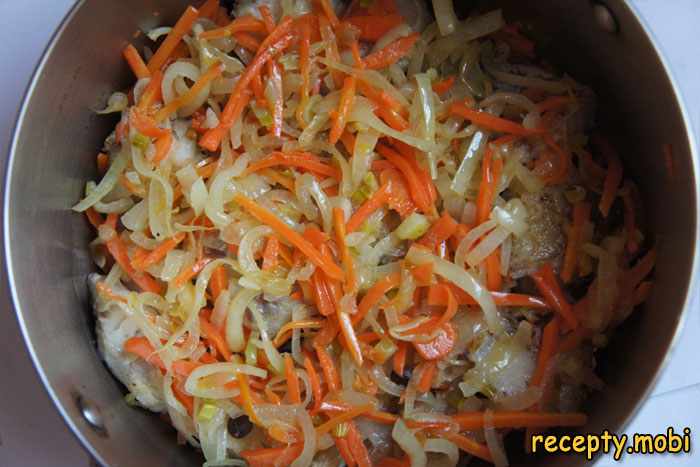
Add salt and tomato paste to the tomato juice, mixing it well. Taste the tomato sauce. If the tomato juice is sour and not very sweet, add 1 tsp of sugar to it for proper finished flavor balance.
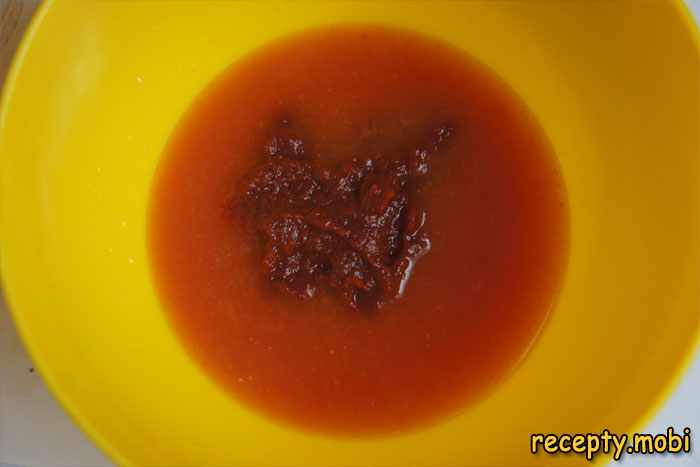
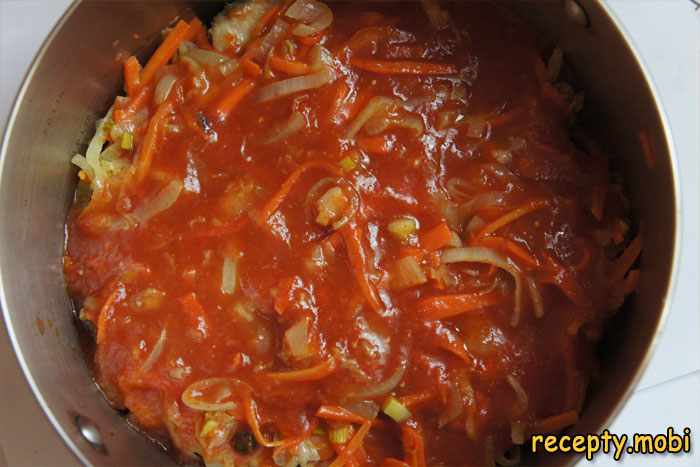
Pour the resulting tomato sauce over the fish with vegetables in the pan. If desired, you can simmer the pollock not in the skillet, but in a pot. After pouring the pollock with the tomato sauce, place the dish on the heat. For aroma, add bay leaves. The optimal option is 1-2 leaves. As soon as the sauce boils, cover the pan (or pot) with the fish with a lid. Reducing the heat to a low level, simmer the pollock with vegetables in tomato for 40 minutes. It is preferable for the fish dish to sit for a bit, so don't rush to serve it. Leave the fish in the cooking vessel in the tomato sauce for at least another 15 minutes.
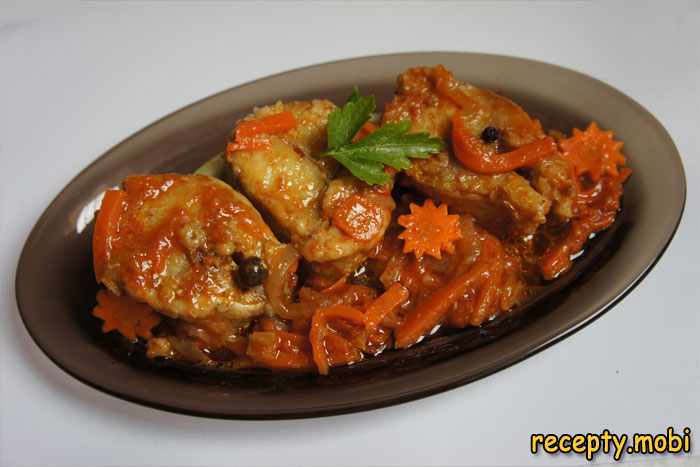
Serve the stewed pollock in tomato with any side dish or as an independent dish (without a side). Enjoy your meal!


Tips
- 1
Choose properly thawed firm pollock for the best finished texture. Improperly thawed mushy pollock produces inferior results that fall apart during cooking; properly slow-thawed firm pollock produces the proper intact piece-style finished character authentic to traditional Russian-style preparations. Thaw pollock in the refrigerator overnight or in cold water (not hot) for proper finished texture preservation throughout family meal applications consistently across batches reliably.
- 2
Coat the fish in flour before frying for proper finished crust development and sauce-thickening. Unfloured fish produces sauce that doesn't cling properly to fish pieces; flour-coated fish develops proper light crust that helps thicken the tomato sauce during stewing. The same flour-then-fry principle elevates many fish preparations including Don Cossack fish zrazy and similar Russian-style fish preparations across various traditional Slavic cooking traditions.
- 3
Layer the vegetables above and below the fish for proper finished steaming-stewing effect. Bare-fish placement produces dry results; vegetable-sandwich placement creates proper steam-stew environment that produces the signature tender finished pollock character authentic to traditional Russian-style fish stews. The layering technique matters significantly for finished dish quality consistently across batches and various stewed-fish preparations throughout the year for proper restaurant-style results worth showcasing reliably.
- 4
Allow proper minimum 15-minute resting time after cooking for proper finished flavor integration. Rushed serving produces disconnected flavor notes; properly rested fish shows beautifully integrated tomato-sauce character with proper depth throughout. Pair the rested pollock with crusty homemade bread for substantial Russian dinner spreads, alongside boiled potatoes for traditional accompaniment, or with rice or buckwheat for elegant family meal presentations worth showcasing.
FAQ
Can I substitute other fish? +
Yes, hake, cod, haddock, perch, or any white sea fish work as substitutes for pollock. Each fish produces distinct character: pollock is most economical, cod is most substantial, hake is most universally Russian, perch is most refined. Adjust cooking times slightly based on fish thickness for proper finished doneness. The basic stewing technique stays identical regardless of fish choice for consistently excellent finished tomato-sauce-fish results across various seafood preferences throughout the year reliably.
How long does the dish keep? +
Stored covered in the refrigerator, the stewed pollock keeps for 2-3 days at peak quality. The flavor improves significantly overnight as components meld together beautifully throughout the resting period. The dish freezes well for up to 2 months in airtight containers; thaw overnight in refrigerator before reheating gently on stovetop for proper restored quality across multiple servings throughout the month for proper finished results consistently across various meal applications throughout busy weeks ahead.
Can I use canned tomatoes instead of juice? +
Yes, canned crushed tomatoes (1 can = 400g) work as substitute for the cup of tomato juice. Quality whole peeled tomatoes also work after blending into puree. Each option produces distinct character: tomato juice is most traditional Russian-style, canned crushed is most convenient, whole peeled is most artisan. Adjust seasoning slightly based on canned product saltiness for balanced finished results across various tomato-stewed-fish preparations throughout the year reliably.
What sides pair best with this dish? +
Boiled potatoes, mashed potatoes, buckwheat porridge, rice, pasta, or fresh garden salads all work beautifully alongside the stewed pollock. Each side produces distinct character: potatoes are most universally appealing, buckwheat is most traditional Russian, rice is most universally Asian-style. Choose based on personal preference and intended cuisine inspiration for endless variations across various Russian-style fish-dinner traditions throughout the year for proper finished family-meal presentations consistently.
- Comment
or post as a guest
Be the first to comment.