avg —
Potatoes in Their Skins in the Microwave

Instructions
I select potatoes for baking. Same-size small-to-medium tubers are best — they cook at the same rate, ensuring all are done together. Mixed sizes mean some are mushy while others are still hard.
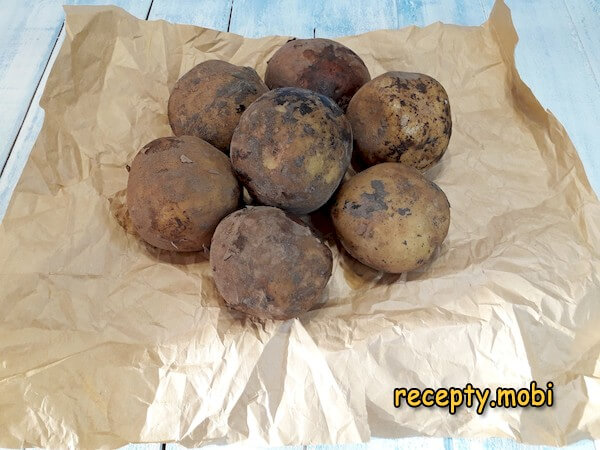
Since the potatoes bake skin-on (in the jacket) and the skins are edible, I wash thoroughly with a brush and the rough side of a kitchen sponge — every speck of soil must come off.
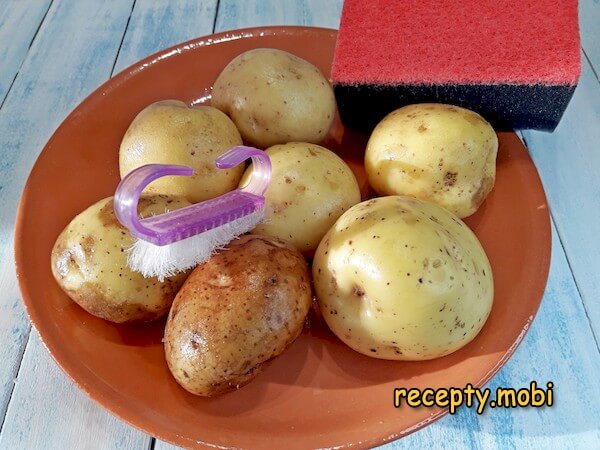
Each potato gets dense piercing with a toothpick — many small holes prevent skin bursting in the microwave AND speed up cooking by giving steam release points.
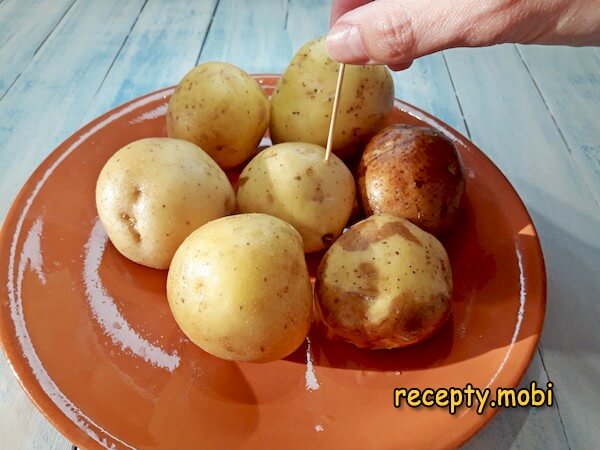
The microwave-safe dish must be glass, ceramic, or clay — NEVER with metallic patterns or gold-rim decoration (sparks at best, fire at worst). Cover with a microwave lid to prevent the potatoes drying out.
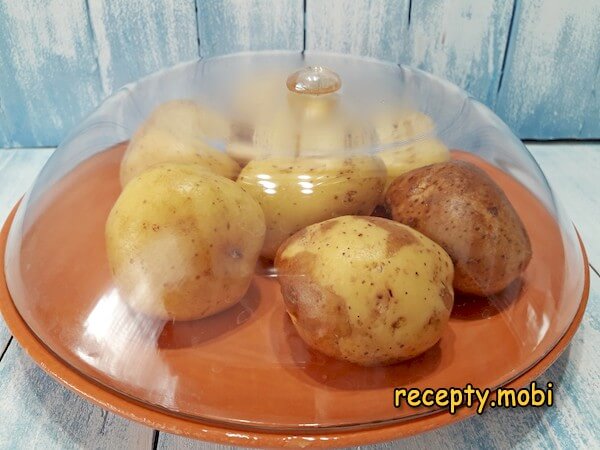
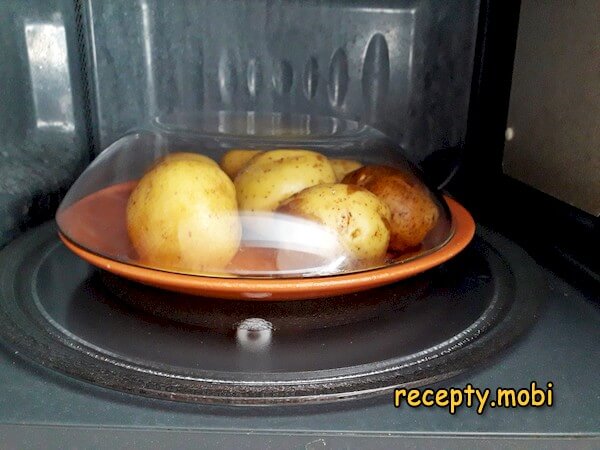
Microwave at maximum power (typical 800 W). Set timer 9 minutes. Test doneness with the same toothpick — should slide easily to the centre. If not done, add 1 minute and re-test.Microwave jacket potatoes need no elaborate sides — just a sprinkle of salt and optionally a piece of butter melted into the split middle. Serve with dry-salted cucumbers or pickled herring for a complete rustic Russian-Slavic plate. Cooled potatoes work brilliantly in salads (peel before salad use). The simplicity of the dish creates a uniquely homey atmosphere — sometimes the simplest food is the most comforting.


Tips
- 1
THE TOOTHPICK PIERCING IS DUAL-PURPOSE. Step 3's piercing serves two functions: prevents the potato skin bursting from steam pressure inside the microwave (a well-documented occasional disaster), AND creates microchannels that let steam escape and heat penetrate, dramatically speeding cooking. About 10-12 holes per potato is the right amount — many small holes work better than a few deep ones.
- 2
SAME-SIZE POTATOES ARE THE TIMING SECRET. Step 1's instruction about same-size tubers is calibration, not preference. Different sizes cook at different rates — the small ones turn mushy waiting for the big ones to finish. Sort potatoes by size at the start; cook similar-sizes together. For mixed sizes: cook bigger ones first for 5 minutes, then add smaller ones for the final 5-7 minutes. For another easy potato preparation worth comparing, see Secrets of the Most Delicious Fried Potatoes.
- 3
COVER MATTERS MORE THAN YOU THINK. Step 4's lid requirement is a moisture-preservation issue. Uncovered microwave potatoes lose so much moisture they become mealy and dry; covered potatoes retain steam that keeps them tender. Even a microwave-safe plate placed loosely on top works. Plastic wrap with vent holes also acceptable. The cover difference is dramatic.
- 4
FESTIVE PRESENTATION TRICKS. The basic salt-only treatment is rustic and excellent. For dressed-up serving: split each hot potato lengthwise, top with a teaspoon of softened butter mixed with chopped fresh dill (the butter melts into the steaming potato), sprinkle with flake salt and freshly ground pepper. Even more luxurious: top with sour cream + salmon roe (Russian-style "trofeya"), or with bacon crumbles + chives + cheddar (American-style loaded). The humble base accepts these elevations gracefully. For another multicooker potato method to compare, try How to Boil Potatoes in a Multicooker.
FAQ
Why microwave instead of oven? +
Three advantages: speed (10 minutes vs 45-60 minutes for oven jackets), energy efficiency (microwave uses far less electricity for small batches), no preheating waste. The texture is slightly different — microwave potatoes have softer skins than oven-roasted ones (oven gives crispier skins thanks to dry heat). For maximum crispy-skin appeal, oven is better; for everyday speed and convenience, microwave is the clear winner. Many home cooks combine both: microwave 8 minutes for the centre, then 5 minutes in a 220 °C oven for the crispy finish.
What potatoes are best? +
Floury (starchy) potatoes — Russet, King Edward, Maris Piper — give the fluffiest centre when baked in jackets. Waxy potatoes (Charlotte, Yukon Gold) hold their shape better but produce a slightly less fluffy interior. New potatoes are too small and waxy for proper jacket baking. The recipe specifies "medium-sized" — golf-ball to billiard-ball size is the sweet spot, regardless of variety. Avoid green-tinted potatoes (contain solanine — bitter and slightly toxic).
How long do leftovers keep? +
Cooked jacket potatoes keep 3 days in the fridge in an airtight container. Reheat methods: microwave 1 minute (closest to original texture), oven 10 minutes at 200 °C wrapped in foil (gives slightly crispier skin), or slice and pan-fry in butter (gives delicious browned exterior — ideal for breakfast). Don't refreeze cooked potatoes — texture goes mealy. The peeled flesh of cooked-then-cooled jacket potatoes is the best base for potato salad — the dry-bake concentrates the flavour beyond what boiling produces.
Can I cook just one potato? +
Yes — single-potato cooking takes 4-5 minutes at 800 W. The microwave's efficiency for small portions is a real advantage over oven cooking. For instant lunch: pierce one potato, microwave 5 minutes, split and top with a soft-poached egg + cracked pepper + salt = 8-minute dinner. The technique scales from 1 potato (5 min) to 8 potatoes (15 min) — adjust time based on total volume. Beyond 8 potatoes at once, oven baking becomes more practical.
- Comment
or post as a guest
Be the first to comment.