avg —
Puff Pastry Without Yeast

Instructions
I prepare the ingredients. Water at room temperature (cold water makes the dough too stiff to work; warm water risks softening the butter prematurely). Butter must be 82% or 72% fat content (lower-fat versions don't laminate properly). Take butter out of fridge ~20 minutes ahead — needs to be cool but pliable, not rock-hard or melted-soft.
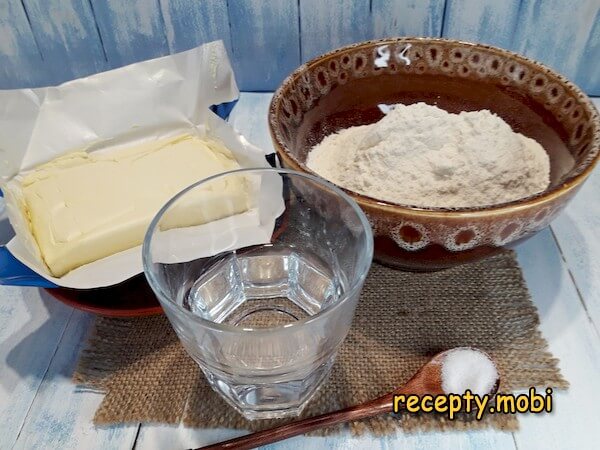
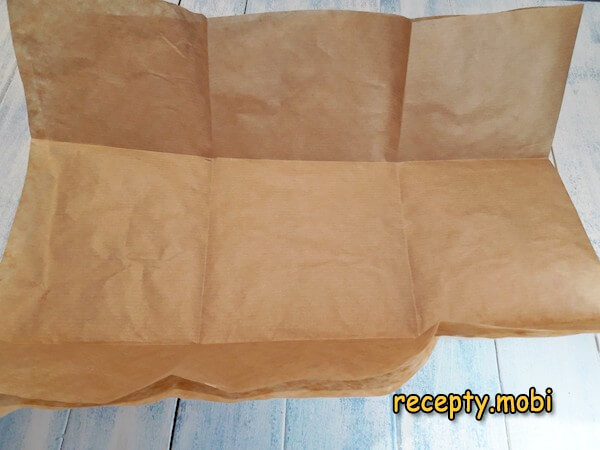
Begin with the butter shaping. Prepare a parchment-paper envelope: fold a sheet of parchment to create a centre square (12 cm × 12 cm) with foldable margins on all sides.
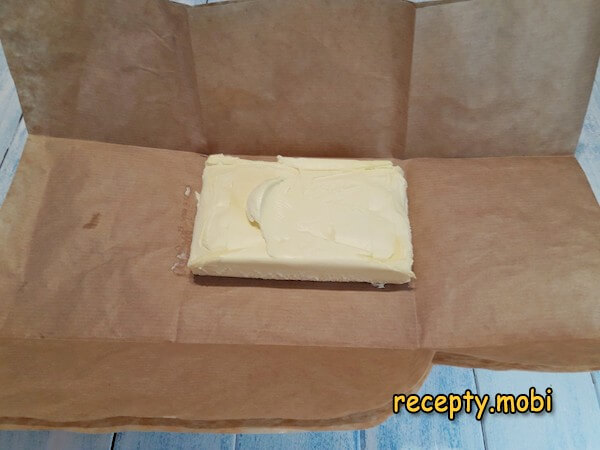
Place the butter block in the centre of the prepared envelope; fold the parchment edges along the marked creases, encasing the butter completely.
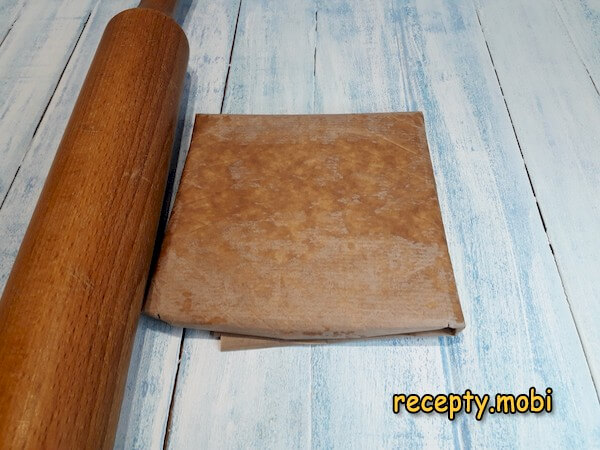
Roll out the butter (still inside the parchment envelope) with a rolling pin until it fills the entire 12×12 cm space, becoming a uniform square slab. Refrigerate this butter package 30-40 minutes.
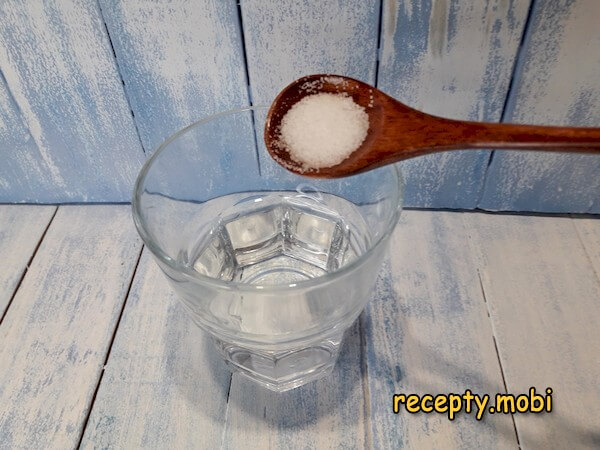
While butter chills, prepare the dough. Stir salt into the water until fully dissolved.
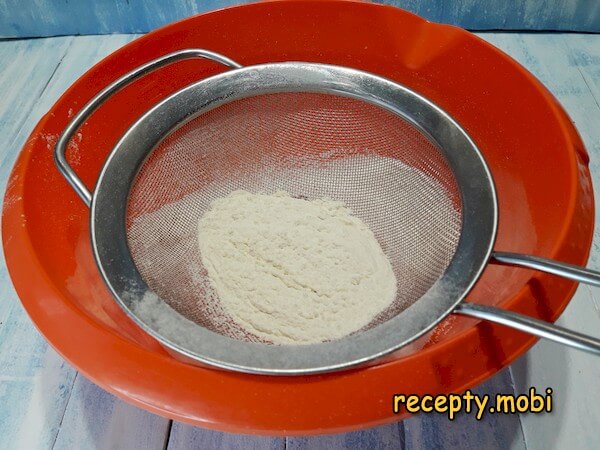
Sift flour into a mixing bowl. The sifting step removes lumps and incorporates air, producing more uniform dough.
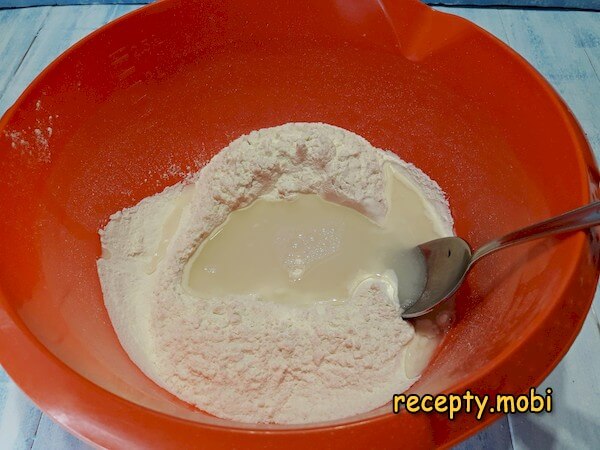
Make a well in the centre of the flour; pour the salt-water in.
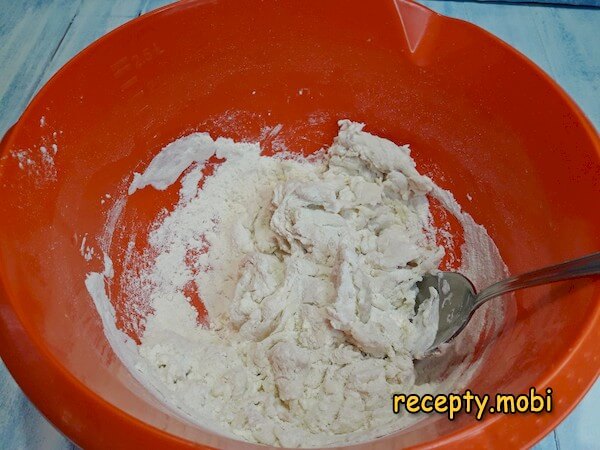
Begin kneading with a spoon, working the flour gradually into the water from the centre outward.
Transfer to a work surface; knead by hand 7-10 minutes. Target: dense, firm, smooth dough. Flour quantity may need ±10-20 g adjustment based on flour quality. CRITICAL: dough must be FIRM (like dumpling dough) — soft dough spreads during the rolling-with-butter step and won't contain the butter properly. Don't over-soften; firm is the goal.
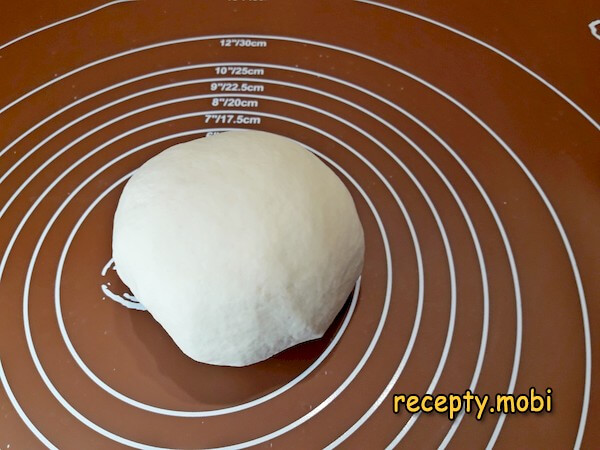
Cover with an inverted bowl; let dough rest 30 minutes. The rest relaxes the gluten, making rolling easier.
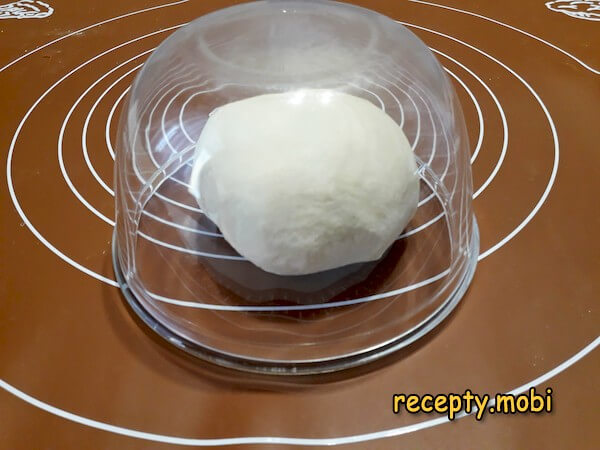
Begin lamination. Lightly flour the work surface. Roll the rested dough into a rectangle large enough to accommodate the butter square + adequate margins (roughly 30×16 cm).
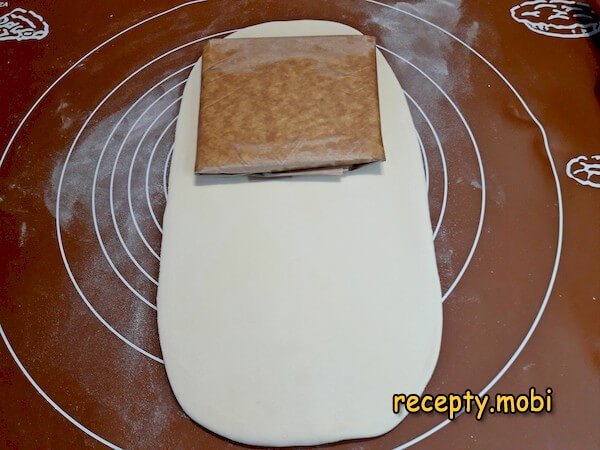
Remove the chilled butter from its parchment envelope. Place in the centre of the rectangular dough.
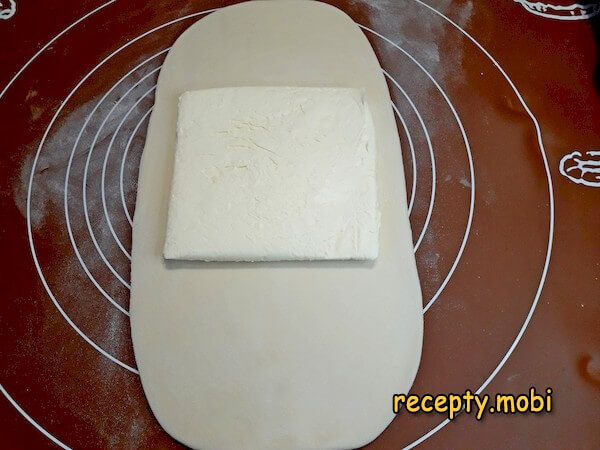
Fold the dough edges over the butter, sealing it inside completely. Press all seams firmly to prevent butter leakage during rolling.
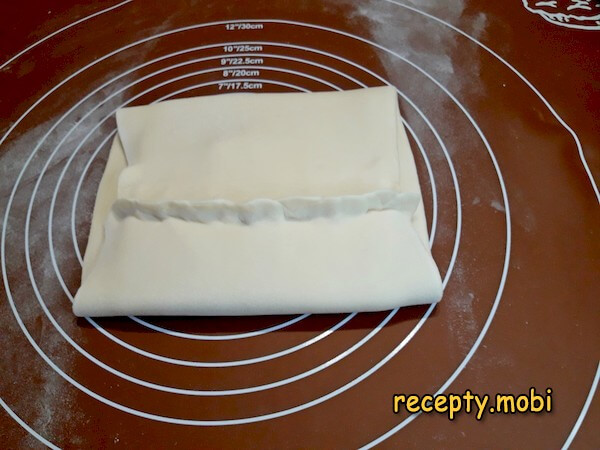
Gently press out air pockets, working from the centre outward. Trapped air = tears during rolling = butter leakage = ruined laminations.
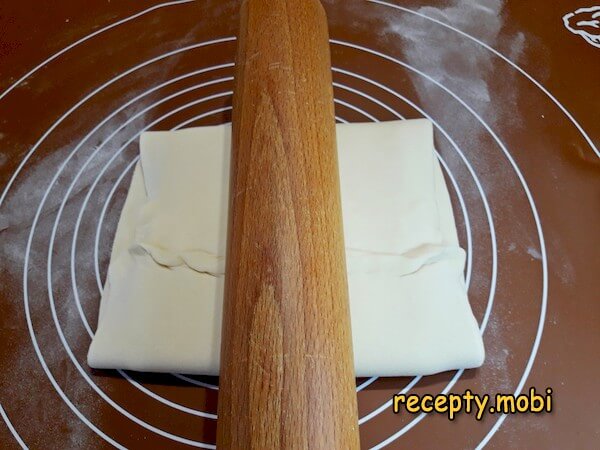
Pinch all edges firmly to seal — double-check every seam.
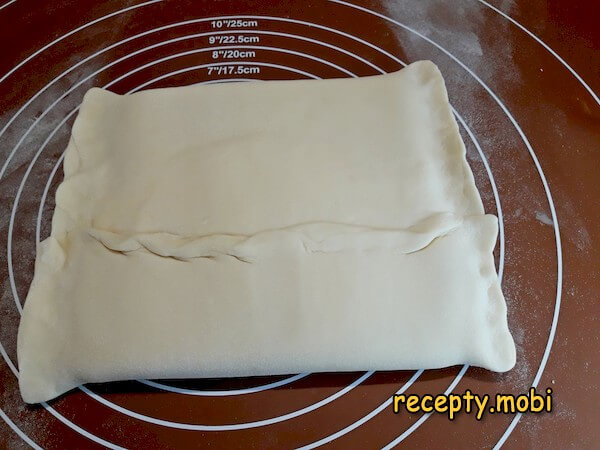
Roll out into a rectangle, but only in ONE DIRECTION (lengthwise — don't roll perpendicular). Single-direction rolling preserves the layer structure.
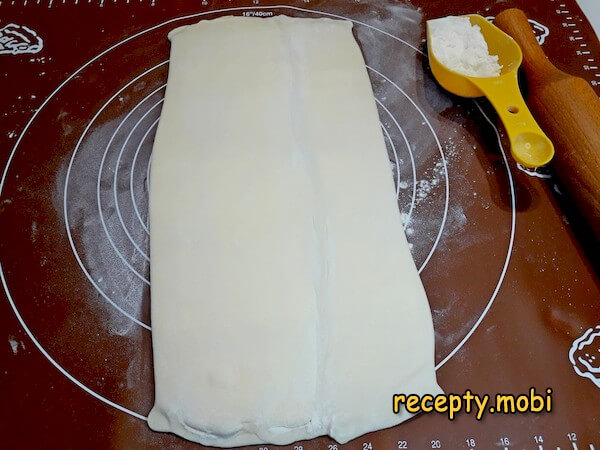
Begin the fold sequence — tuck one end inward, but not all the way to the centre. Stop closer to the edge (about 1/3 of the length).
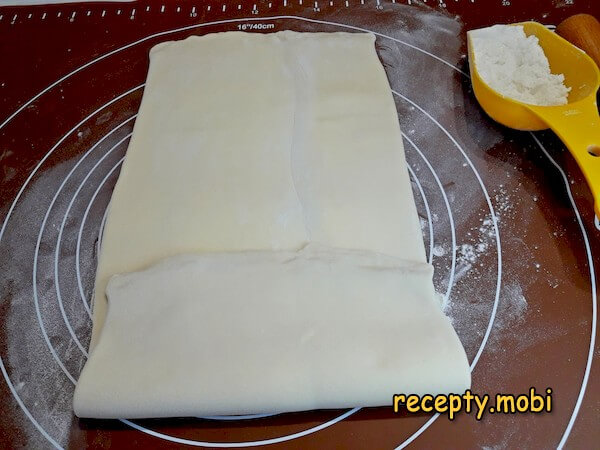
Fold the second end inward to meet the first — they should butt up against each other.
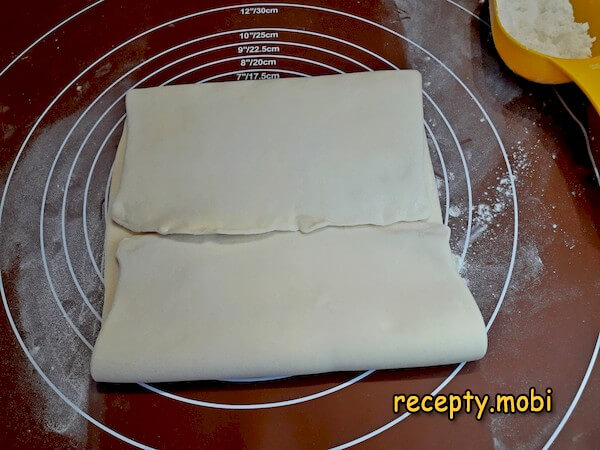
Now fold the entire packet in half along the seam line.
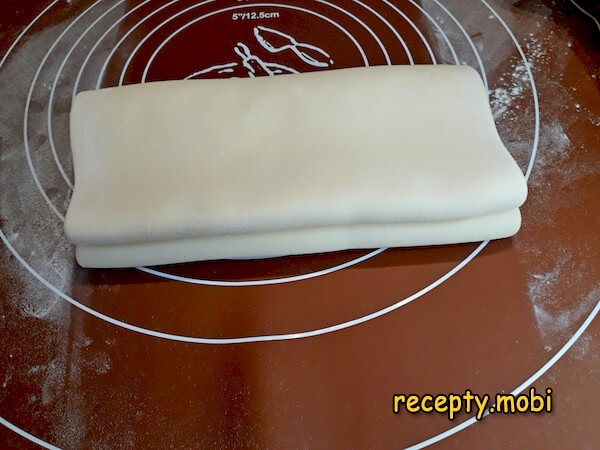
You've created the "book fold" — 4 layers of dough alternating with butter, totaling 16 individual layers. This is one "turn" complete.
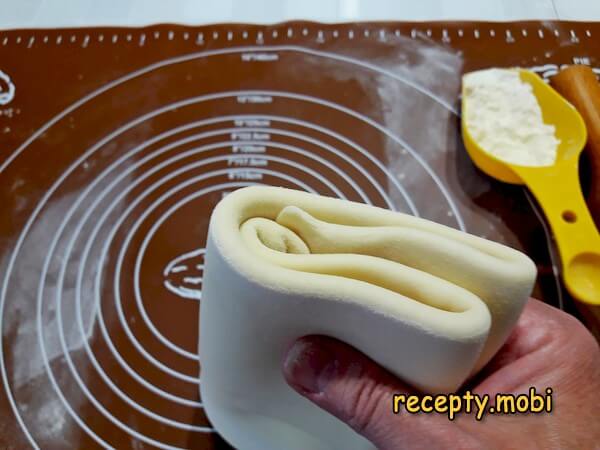
Wrap the dough in plastic; refrigerate 30 minutes. The chill keeps the butter firm during the next rolling.
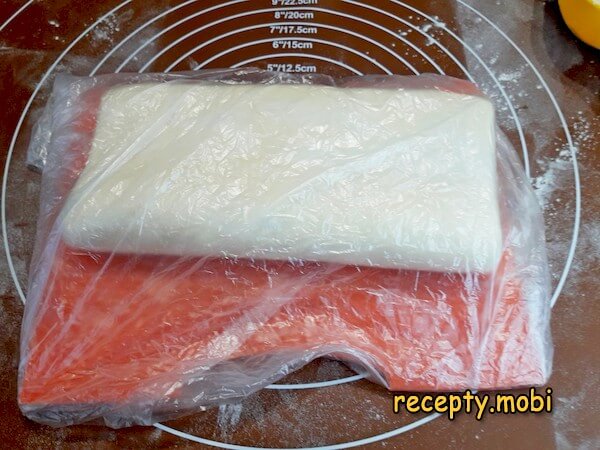
Roll out into a rectangle again (single-direction).
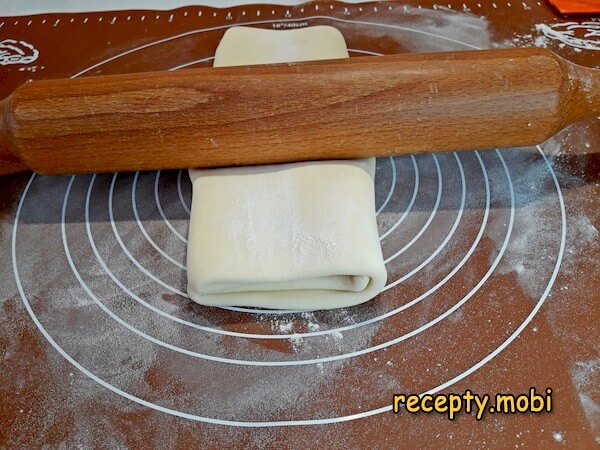
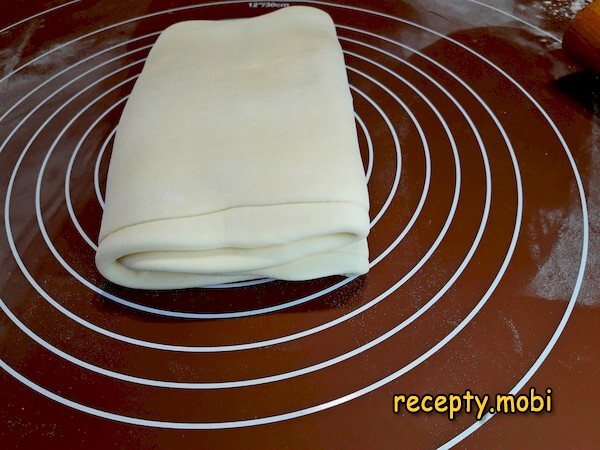
Fold same way (4-layer book fold), refrigerate 30 min. TOTAL: roll-and-fold cycle 4 times. With each subsequent fold, layers become thinner — increased risk of tearing. Work slowly + carefully + with adequate flour dusting to prevent disaster.
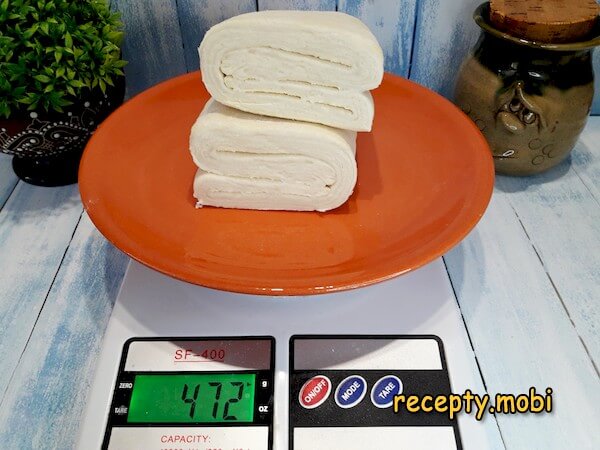
Final dough weight by these proportions: 472 g.
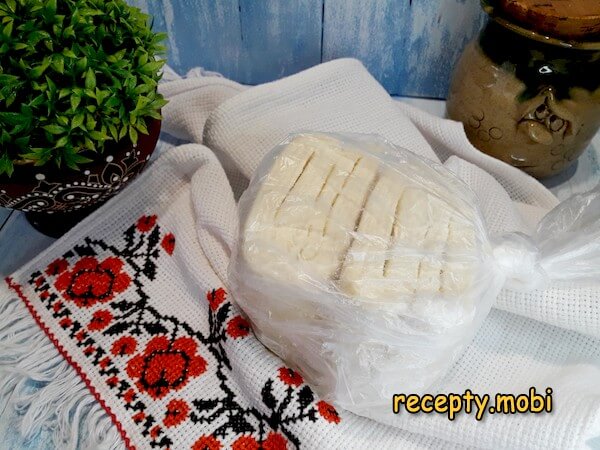
To use immediately: refrigerate at least 1 hour before rolling-out for final pastry use. To store: wrap in plastic, freeze (3-month freezer life). Frozen dough thaws BY REFRIGERATING (slow thaw 12 hours) before use — never thaw at room temperature (butter melts, layers compromise).Puff pastry without yeast is the foundation for both simple pastries (puff tongues, palmiers) and complex multi-layer creations (Napoleon cake, mille-feuille, vol-au-vents, savoury beef Wellington wrappings). For frozen storage: thaw via refrigerator overnight before use.


Tips
- 1
THE BUTTER TEMPERATURE IS LAMINATION SCIENCE. The butter must be COOL but PLIABLE — not rock-hard (cracks during rolling, breaks layers) and not soft (melts into dough, no layers form). The 20-minute pre-temper is the precision step. Test by pressing: should leave a dent without crumbling. Same temperature target applies to all laminated doughs (croissants, pain au chocolat, kouign-amann). Master this temperature gauge and laminated baking becomes much more achievable.
- 2
THE FOUR-FOLD CYCLE PRODUCES MATHEMATICAL LAYERS. Each book-fold turn quadruples the layer count: 1 turn = 4 layers, 2 turns = 16, 3 turns = 64, 4 turns = 256 layers. The recipe's 4 turns produces 256 individual butter-dough alternating layers — this is what creates the dramatic puff during baking. Skipping turns reduces layers exponentially; adding turns risks tearing the now-paper-thin layers. The 4-turn count is the proven sweet spot. For a yogurt-based dough variation worth comparing, see Yogurt-Based Pizza Dough Without Yeast.
- 3
THE REFRIGERATION INTERVALS ARE NOT OPTIONAL. The 30-minute chill between every roll-and-fold cycle isn't padding — it's structural necessity. During rolling, friction warms the butter; warm butter starts melting into the dough, blurring the layer boundaries. The chill firms the butter back to working temperature before the next roll. Skipping chills = greasy dough with merged layers = no puff during baking. Set a timer; respect the chills religiously.
- 4
THE SINGLE-DIRECTION ROLLING IS LAYER PRESERVATION. Step 16's "one direction only" instruction is critical. Multi-direction rolling shifts the butter layers in random patterns, blurring the lamination structure. Single-direction rolling stretches the layers uniformly while preserving their parallel alignment. Same technique applies to ALL laminated doughs. Always work the rolling pin lengthwise; rotate the dough 90 degrees only between separate turn cycles. For another non-yeasted dough format worth trying, try Lenten yeast dough for pies and pasties.
FAQ
What's the difference between this and yeast puff pastry? +
Both are layered doughs but produce different textures. Non-yeast puff pastry (this recipe) puffs purely from butter steam during baking — produces shatteringly crisp shards, perfect for Napoleon, palmiers, vol-au-vents. Yeast puff pastry adds yeast leavening on top of butter lamination — produces softer "tearable" texture with both layered and bread-like qualities, perfect for croissants and Danish pastries. Choose based on application: classical French dessert pastries = non-yeast version; breakfast viennoiseries = yeasted version. Both techniques use similar 4-turn lamination methodology; the yeast addition is the differentiator.
Can I substitute margarine for butter? +
Yes for "industrial puff pastry" (commercial products use margarine for cost + temperature stability). NO for genuine quality. Margarine has different melting characteristics (higher melt point = less puff during baking, different mouthfeel) and dramatically inferior flavour (butter's flavour is essentially what makes good puff pastry taste good). The investment in real butter is what separates "edible" from "magnificent" homemade puff pastry. Don't compromise on this. If butter is unavailable: choose the highest-quality salt-free margarine you can find, accept the quality compromise, and cook accordingly.
How can I tell if my puff pastry is good? +
Three quality tests. First: visible layers when raw dough is sliced (you should see distinct alternating dough-butter-dough-butter pattern in cross-section). Second: dramatic puff during baking (good pastry triples in height; mediocre pastry barely doubles). Third: "shatter" texture in finished product (good pastry breaks with audible crisp shatter; mediocre pastry breaks with soft crumble). Failure modes: greasy dough = butter melted into dough (chill more); dense baked product = layers merged (technique error); flat baking = layers ruptured (rolled too aggressively).
What can I make with this dough? +
Hundreds of applications, sweet and savoury. Sweet classics: Napoleon cake (multi-layer cream filling), palmiers (sugar-glazed cookies), apple turnovers, raspberry pillows, mille-feuille, fruit-topped tart shells. Savoury classics: vol-au-vents (chicken or seafood-filled), beef Wellington wrapping, cheese puffs, sausage rolls, mushroom turnovers, leek-and-cheese tarts. Modern fusion: cinnamon sugar twists, savoury pinwheel appetisers, layered pizza-style snacks. The dough is universally adaptable. Once you have a batch (or several batches frozen), entire baking categories become accessible. The 3-hour investment pays back in dozens of subsequent quick-baked applications.
- Comment
or post as a guest
Be the first to comment.