avg —
Pumpkin porridge in a multicooker

Instructions
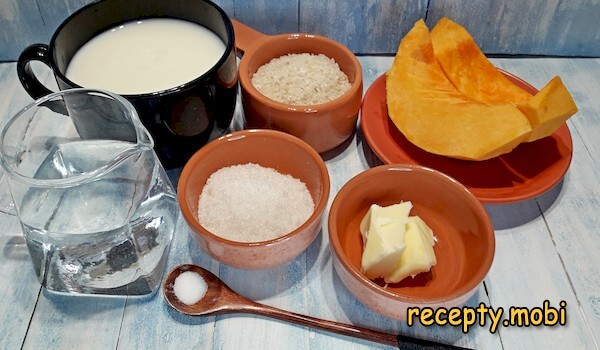
I prepare the ingredients. Round-grain rice gives the silkiest porridge — long-grain stays distinct and produces a less unified texture. The 250 g pumpkin weight is post-peel and post-seed; cut into slices first, then peel each slice (safer than wrestling with a whole pumpkin and a knife). For very sweet pumpkin varieties (kabocha, hokkaido), reduce or omit the sugar — or replace with honey added at serving time.
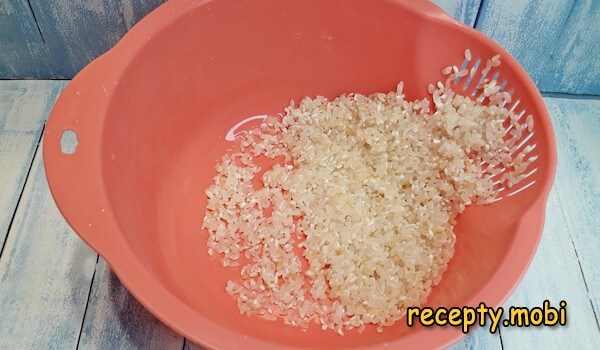
I rinse the rice in several changes of water until the runoff is clear — removes excess starch that would make the porridge gluey.
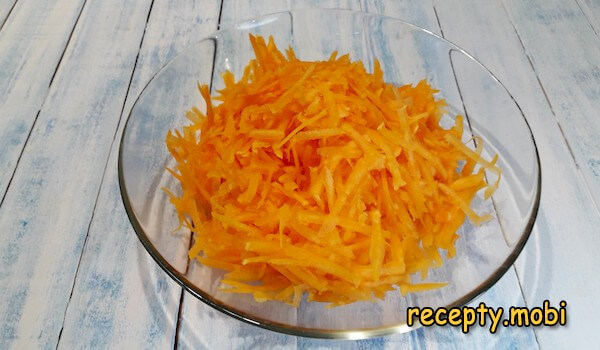
The peeled pumpkin grates on the coarse holes of a box grater. Cubed pumpkin can also work but produces a less silky porridge — chunks need mashing later, plus cubes need significantly more cook time. Grated is the time-and-texture-optimal choice.
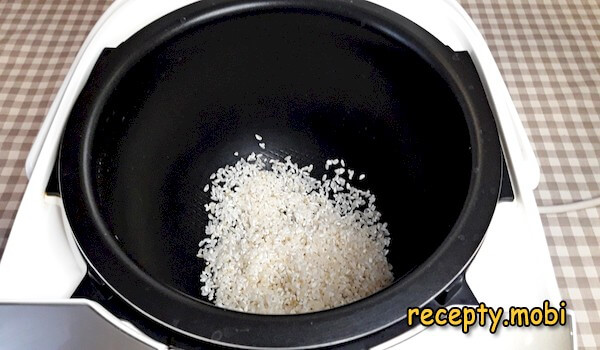
The rinsed rice goes into the multicooker bowl.
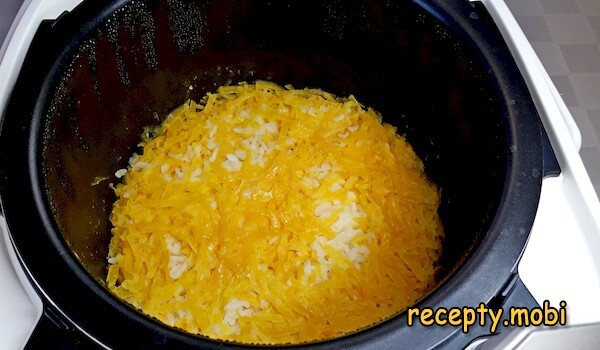
The grated pumpkin joins the rice on top.
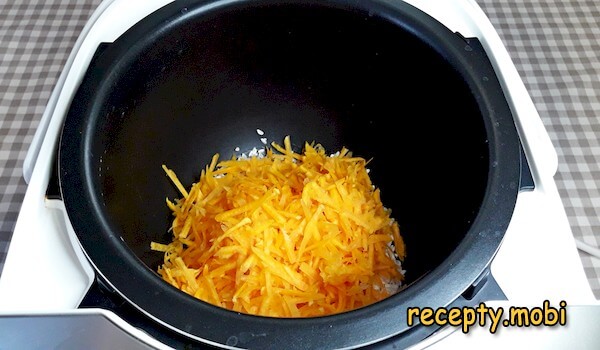
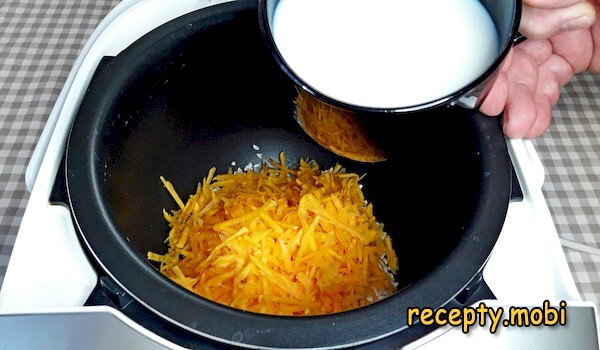
The 500 ml milk pours over the rice-pumpkin mixture.
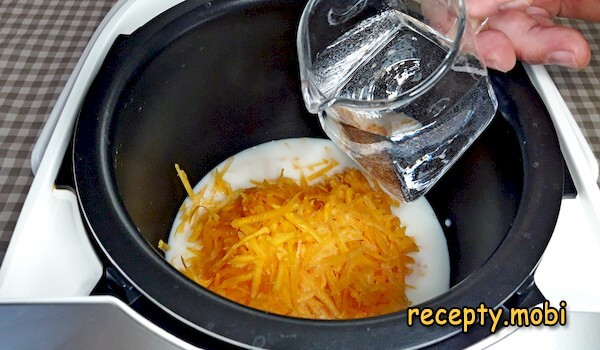
Then 250 ml water dilutes the milk — pure milk would be too rich, plain water too thin; the 2:1 milk-water ratio gives the right balance.
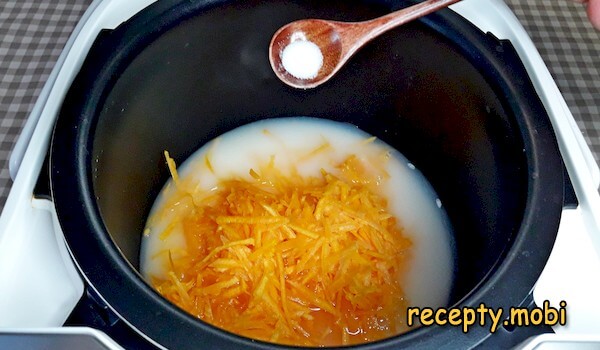
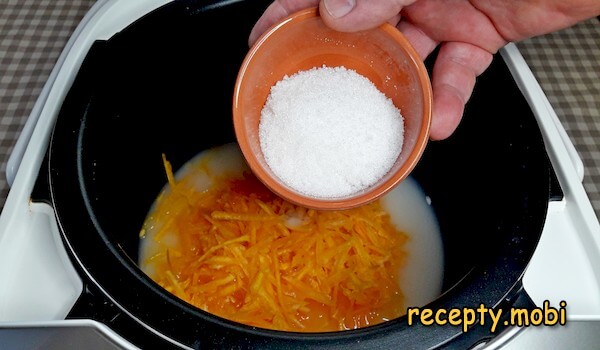
The salt goes in — even sweet porridges need salt for flavour balance. Without salt the porridge tastes muted and one-dimensional.
Sugar (40 g) follows. For very sweet pumpkin: reduce to 20 g or skip entirely.
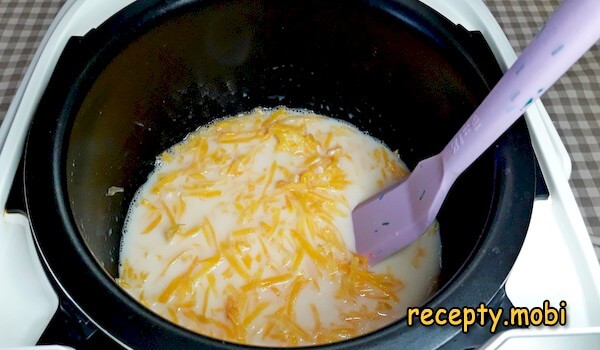
I gently mix everything with a silicone spatula — wood and metal spatulas can scratch the multicooker bowl coating.
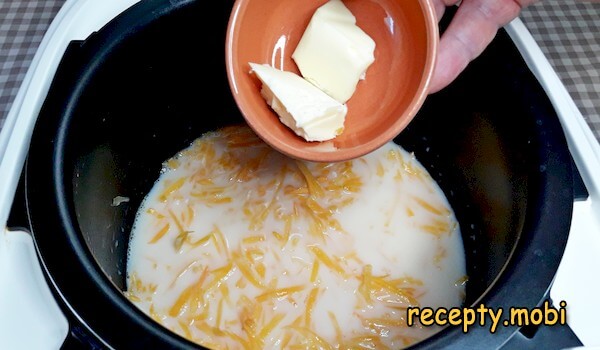
The butter (25 g) goes on top — no stirring this time. It melts and disperses naturally as the porridge heats up.
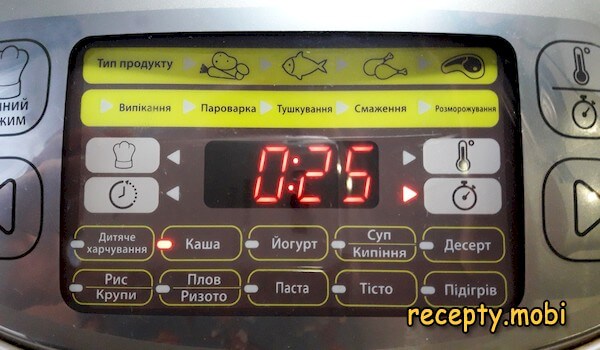
Lid closes, "porridge" mode selects. Time auto-sets to 25 minutes. I press start and walk away.
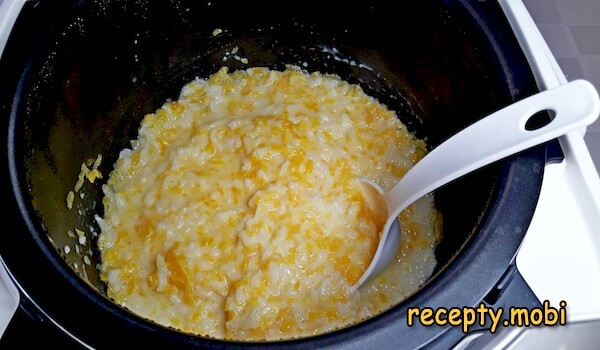
After the end-of-cycle beep, the multicooker auto-switches to "warm" mode. I leave the porridge in warm mode another 15 minutes WITHOUT lifting the lid — opening releases the steam that's still finishing the rice. After 15 minutes, I open the lid.
I stir thoroughly — the lighter pumpkin pieces tend to float to the top, so the stir distributes them evenly through the porridge.Pumpkin porridge in a multicooker is served hot — the pleasant original flavour can be enhanced at the table with: dried fruits (raisins, dried apricots, prunes), fresh or frozen berries (blueberries, raspberries), chopped nuts (walnuts, almonds), a drizzle of honey or maple syrup, or a sprinkle of cinnamon. This is the perfect autumn-winter breakfast — filling, comforting, and surprisingly nutritious from the pumpkin's vitamin A content.Give it a try, enjoy your meal!


Tips
- 1
ROUND-GRAIN RICE IS THE TEXTURE SECRET. Step 1's specification isn't casual — round-grain (sushi rice, pearl rice, arborio) has higher amylopectin content that releases starch during cooking, creating the silky uniform porridge. Long-grain rice (basmati, jasmine) keeps grains distinct and produces a fragmented texture. Medium-grain (Spanish bomba, Italian carnaroli) works as middle ground. The starch release is what binds the pumpkin into the rice.
- 2
THE 15-MINUTE WARM-MODE REST. Step 13's instruction NOT to lift the lid is critical. The 25-minute cook cycle finishes the rice to about 90% done; the 15-minute warm-mode rest lets residual steam complete the cook and lets the porridge texture set. Open the lid early and the steam escapes — your rice ends up slightly al dente in a wetter porridge. Trust the timing. For another multicooker porridge worth comparing, see Barley Porridge with Water in a Multicooker.
- 3
MILK-WATER RATIO IS FLEXIBLE. The 2:1 milk-to-water ratio (500 ml + 250 ml) is the sweet spot for richness vs lightness. Variations: 1:1 (370 ml milk + 380 ml water) gives a lighter porridge; 3:1 (560 ml milk + 190 ml water) gives a richer creamier porridge. Pure water gives a less satisfying breakfast but works for dairy-free needs (substitute 750 ml plant milk for the full ratio). Don't go below 50% liquid-to-grain ratio or the rice burns.
- 4
ADD-INS TIMING. Some additions go in during the cook (raisins, dried apricots, cinnamon stick — they plump and release flavour). Others go on at serving (fresh berries, chopped nuts, honey, fresh ginger zest — preserves their character). Decide before cooking what's a build-in vs a topping. Build-ins amount: 30 g of dried fruit per cup of dry rice is the maximum before texture suffers. Toppings have no upper limit — that's the eater's choice. For another multicooker grain dish worth trying, try How to Cook Spelt Porridge in a Multicooker.
FAQ
Why use both milk and water? +
Pure milk gives a richer porridge but tends to develop a "cooked-milk" off-flavour during the long porridge program — a slightly sulfurous note that some find unpleasant. Pure water gives a thinner less-satisfying porridge that lacks the dairy depth pumpkin needs. The 2:1 milk-water ratio is the proven balance: enough milk for richness and texture, enough water to prevent over-cooked-milk flavour. Many traditional Russian porridge recipes use this exact dilution principle for the same reason.
Can I make this dairy-free? +
Yes — substitute 750 ml of plant-based milk for the milk + water combined. Best plant milks: oat milk (closest texture to dairy milk, slight natural sweetness), coconut milk (richer, adds tropical notes), almond milk (lighter result). Avoid soy milk (can curdle in long cooks). For full dairy-free, also swap the butter for coconut oil or vegan butter (25 g). The pumpkin character carries through clearly with any plant milk variant.
What pumpkin variety is best? +
Sweet dense varieties produce the best porridge: butternut squash, kabocha, hokkaido (red kuri), sugar pumpkin, or sweet dumpling. These have less water and more concentrated sweet flavour than field-pumpkin (jack-o'-lantern type). If your only option is regular field pumpkin, taste a raw cube first — bland or watery raw flesh produces bland porridge. Avoid spaghetti squash (wrong texture entirely) and acorn squash (too watery). Frozen pumpkin puree (1 cup) substitutes acceptably if no fresh pumpkin available.
How do I store and reheat leftovers? +
Cooled pumpkin porridge keeps 3 days in the fridge in an airtight container. The porridge thickens significantly when cold (more than during the warm-mode rest). Reheat methods: stovetop with a splash of milk to loosen (best texture, 5 minutes over medium-low); microwave (fastest, 90 seconds per portion with a stir halfway); multicooker reheat ("warm" mode for 10 minutes covered). Pumpkin porridge actually tastes better the second day — the flavours have had time to meld. Don't freeze — the rice texture goes mealy on thaw.
- Comment
or post as a guest
Be the first to comment.