avg —
Rice Kutya with Raisins

Instructions
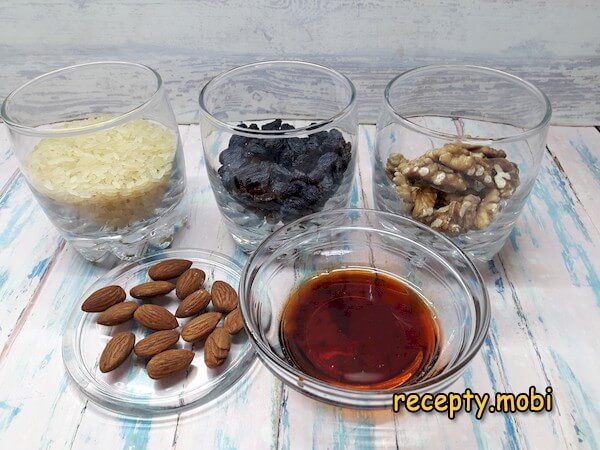
I prepare the ingredients for rice kutya with raisins. Any rice works — long-grain, round, parboiled. TWO TYPES of raisins create more variety + flavor interplay (golden + dark). Any nuts work substitutively.
Rinse rice several times until water runs CLEAR (removes excess surface starch).
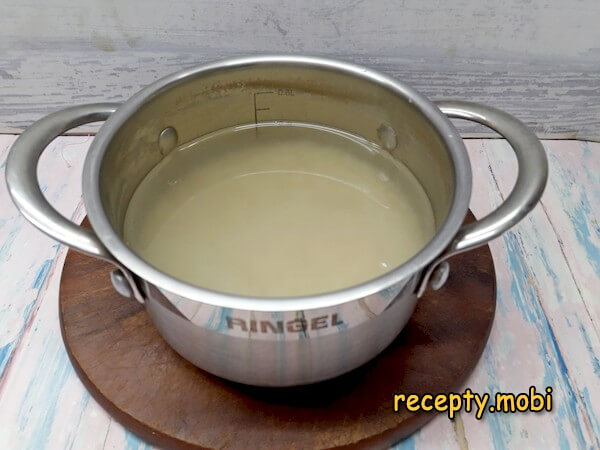
Pour purified water in specified amount (180 ml).
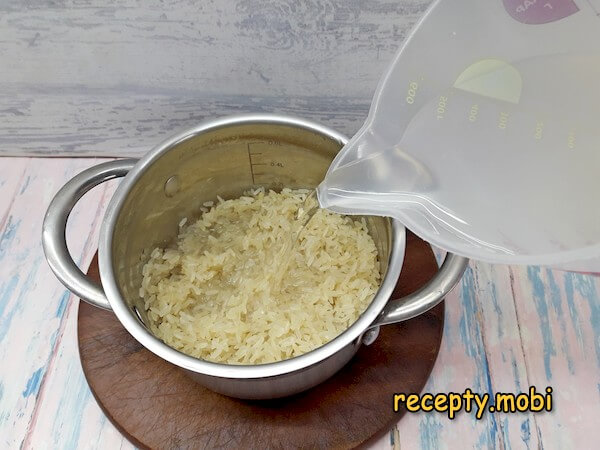
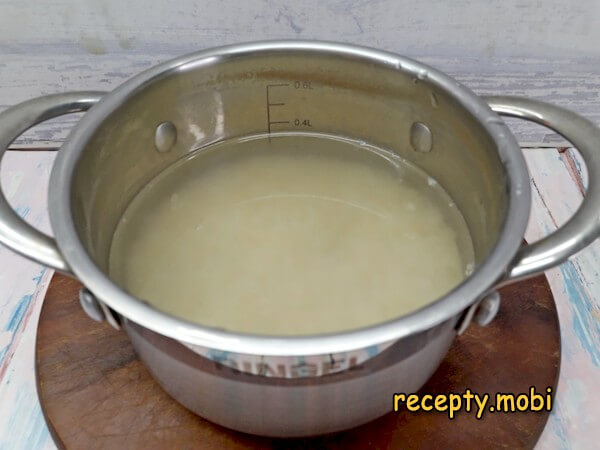
Water level should be 2 cm ABOVE rice level.
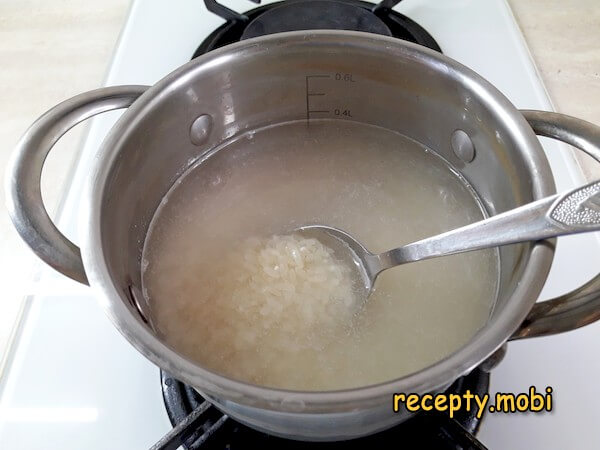
Place pot on LOW heat. Stir grain initially to prevent bottom-sticking.
SIMULTANEOUSLY: pour BOILING WATER over raisins (rehydrates them while rice cooks).
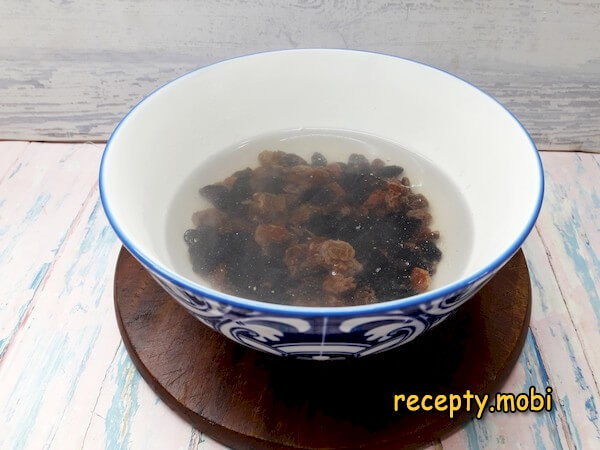
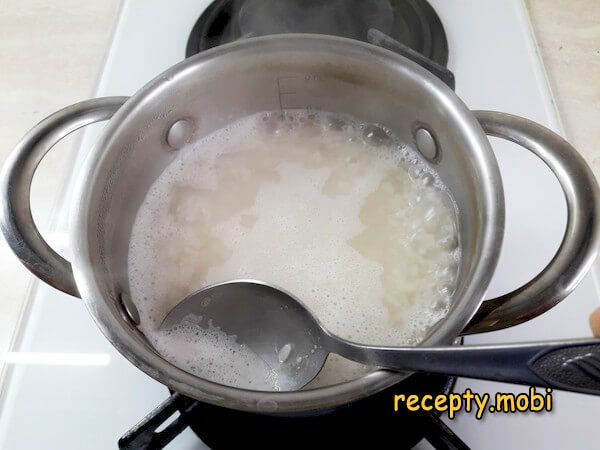
When foam appears in rice pot, REMOVE with spoon; reduce heat to MINIMUM.
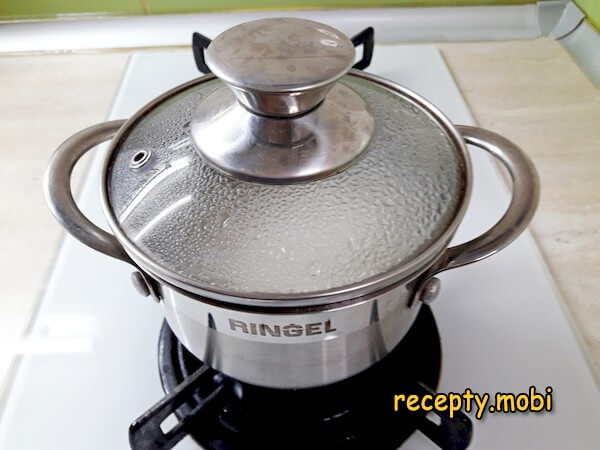
Cover rice with lid; cook 15 minutes (no peeking — disturbing absorbs unevenly).
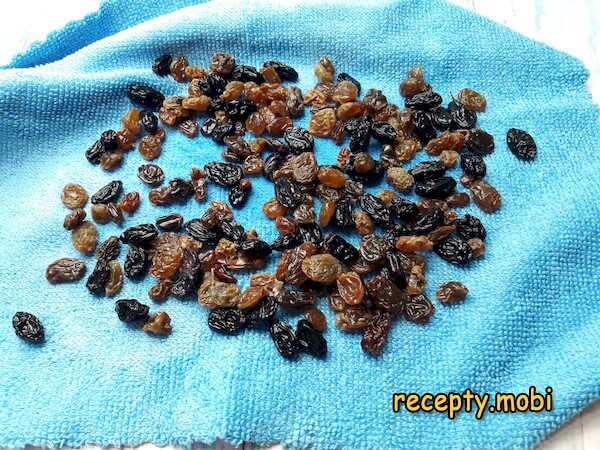
During rice-cooking time, drain raisins; rinse + dry on textile or paper towel.
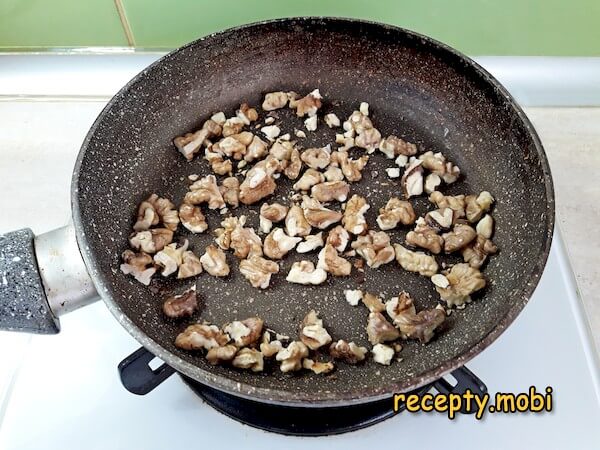
Break walnuts into small pieces with FINGERS (knife-cutting bruises walnuts; finger-breaking preserves character). Fry in DRY pan 1.5 minutes (toasts + releases oils).
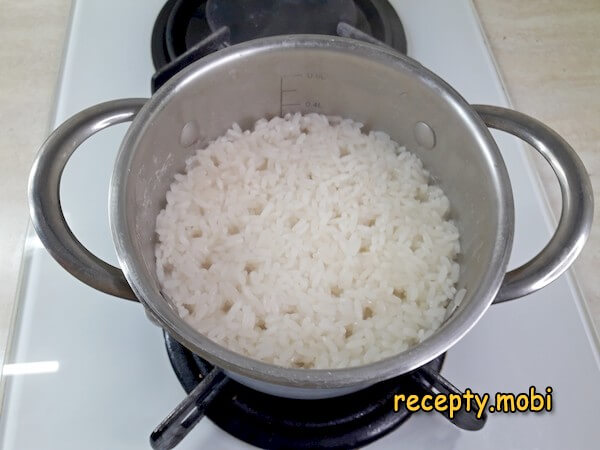
After 15 min boiling: water absorbed by rice. Remove pot from heat.
Wrap pot in TOWEL; let rest 15 minutes (final steam-cooking phase, traditional technique).

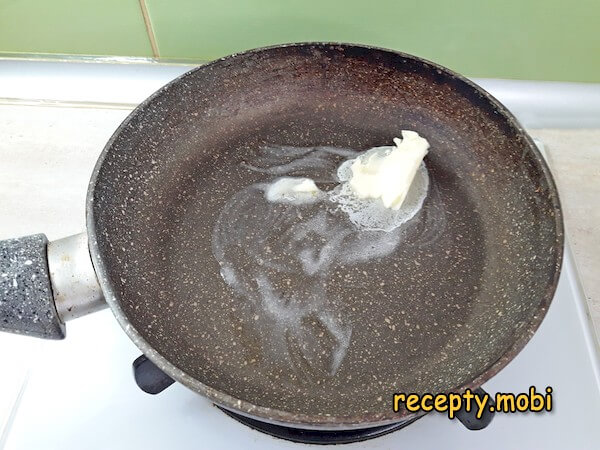
Melt butter in pan.
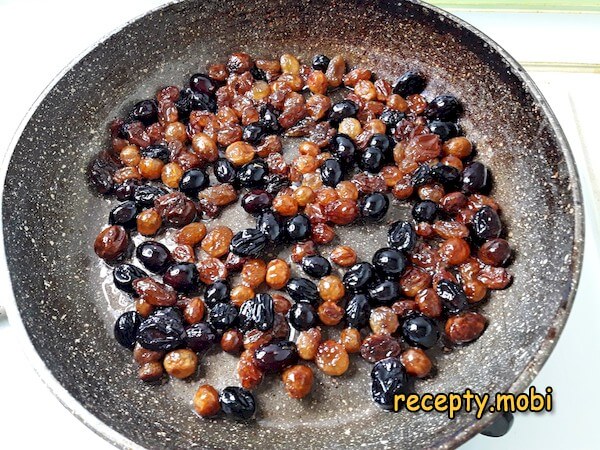
Fry raisins in melted butter 3 minutes. Heat causes them to SWELL further + release more sweetness.
Transfer rice to bowl; add HOT walnuts + HOT raisins (warmth helps integrate flavors).
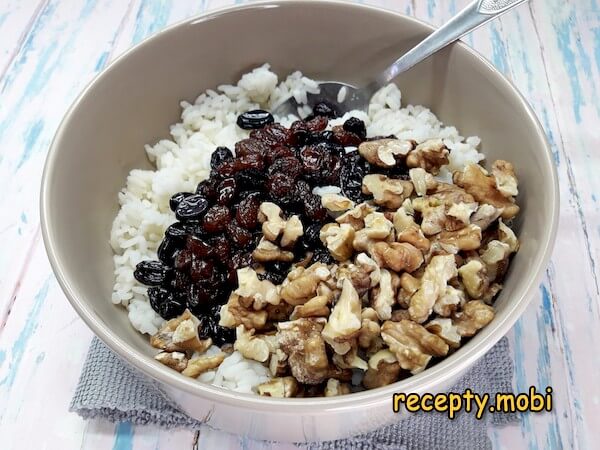
Sweeten everything with honey or sweet syrup (honey adds flavor complexity; syrup is neutral).
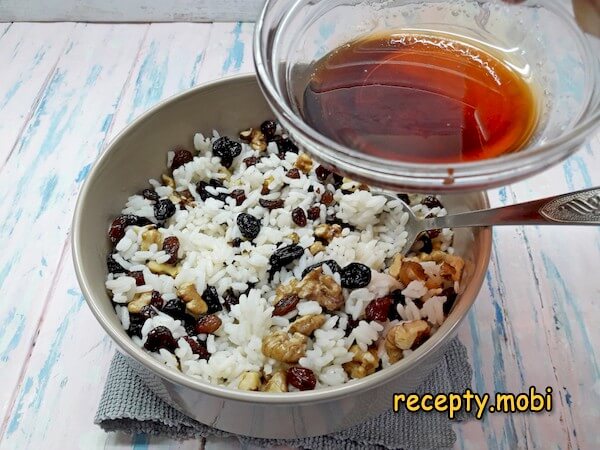
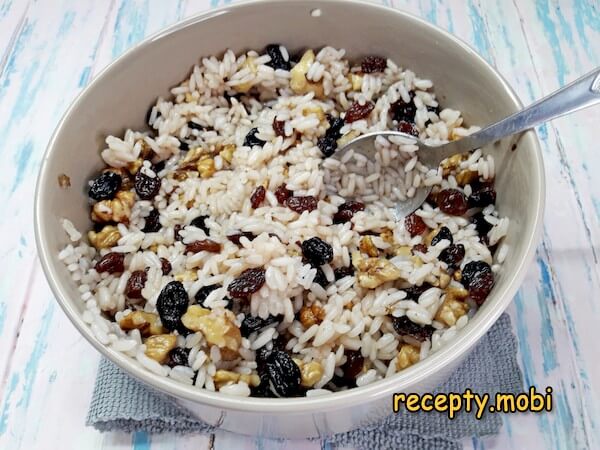
Mix all ingredients gently.
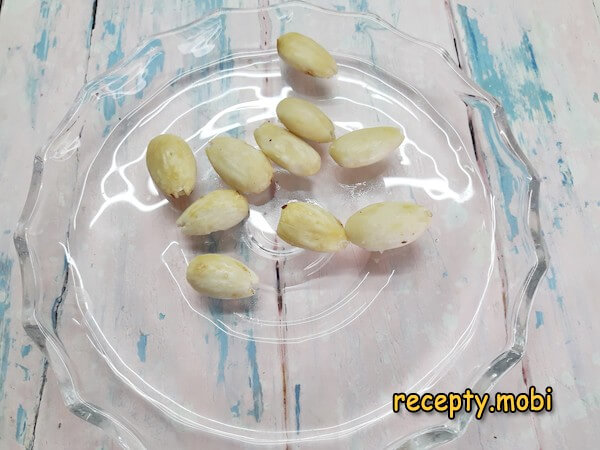
To easily peel almonds: hold in BOILING WATER 1 minute (skins slip off).
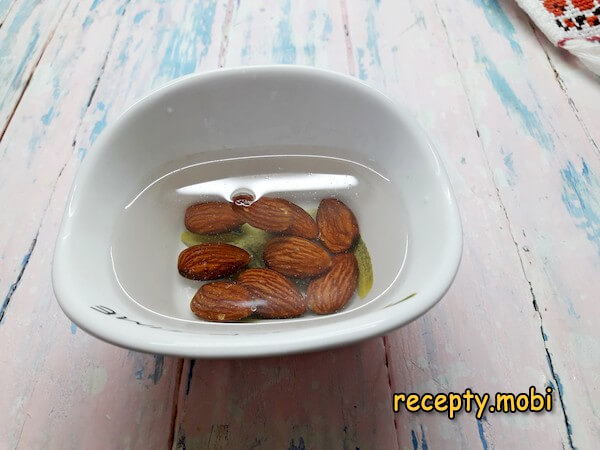
Peel skins from almonds; add to kutya.
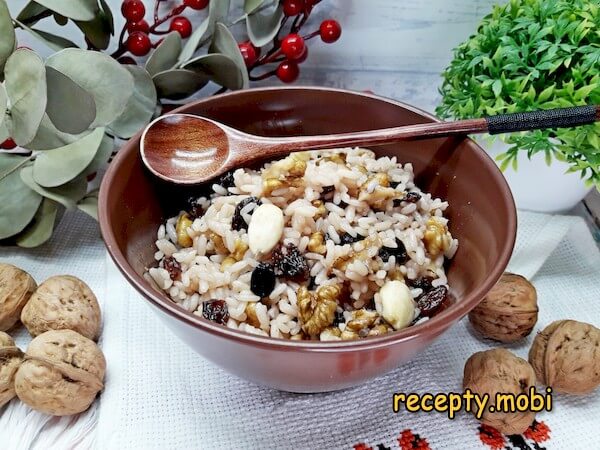
Rice kutya with raisins is ready. This is BASIC RECIPE — modernize composition: add candied fruits, dried apricots, other dried fruits, poppy seeds (traditional Ukrainian addition). Serve in common bowl per tradition.


Tips
- 1
THE TOWEL-WRAP STEAMING. Step 12's "wrap pot in towel for 15 minutes" is traditional Slavic-Asian rice-cooking technique. After heat-off, the pot's residual heat continues cooking rice via steam. Towel insulation slows heat-loss, extends gentle cooking phase. Result: GRAINS SEPARATE PERFECTLY (no clumping), full water absorption (no soggy bottom), tender consistent texture throughout. Same technique used in: Persian polo (rice pilaf), Korean bap, Japanese rice cooking. The towel detail is what separates restaurant-quality rice from amateur. Don't skip — 15-min wait is calibrated.
- 2
THE FINGER-BREAKING WALNUTS. Step 10's "break walnuts with fingers" is cultural detail with technical reason. Knife-chopping: bruises walnut tissue, releases oils prematurely (becomes bitter), produces uneven sizes. Finger-breaking: walnuts split along natural fracture lines, sizes vary naturally (matches the rustic dish character), oils released during toasting (not chopping). Same finger-breaking technique used in: Middle Eastern desserts (baklava layer prep), Italian pesto (mortar method). For another nut-and-grain ritual dessert worth comparing, see Honey Cake Medovik.
- 3
THE DOUBLE-COOKED RAISINS. Steps 6 + 14's "soak then fry raisins" double-process is technique-essential. SOAKING (boiling water): rehydrates raisins (fully plump, juicy character). FRYING (in butter): adds caramelized notes + butter richness, plumps further from heat. Result: raisins are NOT generic-package raisins anymore; they're transformed into rich-glazed jewels. Same process for: dessert preparations across European cuisines (raisin-based puddings, fruit-cakes, holiday sweets). The 5 minutes total (3 frying + briefer earlier soaking) deliver dramatic improvement over raw raisins.
- 4
THE TRADITIONAL-VS-MODERN ADAPTATIONS. Step 20's note about modernization is genuine recipe wisdom. TRADITIONAL strict version: only rice + raisins + walnuts + honey (4 ingredients, ritual purity). MODERN expanded versions: + candied fruits, + dried apricots, + dried cherries, + poppy seeds (Ukrainian "kutia"), + cherry compote pour-over, + cognac splash (festive Russian variation). For ritual occasions (Christmas Eve, commemoration): stick with traditional simple version (4-ingredient purity). For everyday family treat or modern dinner-party: embrace expansions. Both approaches are authentic. For another traditional Slavic ritual food worth trying, try Sweet Rice with Pumpkin.
FAQ
What's the meaning of kutya? +
Kutya holds significant religious + cultural meaning in Slavic Orthodox tradition. CHRISTMAS EVE: served as first dish of "Sviata Vechera" (Holy Supper) — symbolizes hope, abundance, ancestor-remembrance. EPIPHANY (January): blessed in church, eaten as ritual food. COMMEMORATION (funerals + memorial days): central food at meals after deceased's passing. The HONEY symbolizes sweetness of eternal life, RICE/WHEAT symbolizes resurrection (from "dead" seed to living plant), RAISINS + NUTS symbolize life's fruits. Each ingredient carries meaning. Modern serving: regardless of religious context, the dish is comforting traditional dessert appropriate any time.
Wheat vs rice version? +
Both are traditional. WHEAT KUTYA (more historically traditional in Ukraine, Belarus, parts of Russia): uses pearl wheat berries (whole-wheat "arnovka" or pearl barley), longer cook time (90+ min), chewier texture, more rustic. RICE KUTYA (this recipe, modern adaptation): faster prep, softer texture, more universally palatable. Some regions prefer wheat for ritual purity (closer to ancient origins); others prefer rice for everyday accessibility. Try both versions to discover preference. Wheat kutya: substitute 150 g pearl wheat for 150 g rice; cook 90+ min until tender; rest of recipe identical.
Can I make it without honey? +
Yes — substitutes work. SUGAR SYRUP (1 tbsp sugar dissolved in 1 tbsp hot water = simple syrup): clean sweetness, no flavor character. MAPLE SYRUP: distinctive flavor, caramel notes, North American adaptation. AGAVE SYRUP: vegan-friendly alternative. CONDENSED MILK (Russian "sgushchenka"): adds richness + sweetness, popular Russian variation. POPPY SEEDS + sugar (traditional Ukrainian "kutia"): completely different style, equally authentic. For dietary restrictions (vegan, allergies): syrup substitutes work. For traditional ritual: honey is canonical (HONEY-symbolism in Orthodox tradition specifically).
How long does it keep? +
Refrigerated covered: 3-4 days at peak quality. Day 1-2: peak quality, all ingredients distinct. Day 3-4: rice softens further (slight texture change), still excellent. Don't freeze (rice becomes hard + grainy on thaw, raisins texture changes). For ritual occasions: prepare fresh day-of (or night before for Christmas Eve). For everyday family snack: 4-5 days easy. Reheating: gentle 30 sec in microwave (warms slightly, doesn't dry out), OR enjoy COLD (also traditional — kutya is often served cold or room-temperature).
- Comment
or post as a guest
Be the first to comment.