avg —
Salad "Obzhorka" Classic Recipe with Beef

Instructions
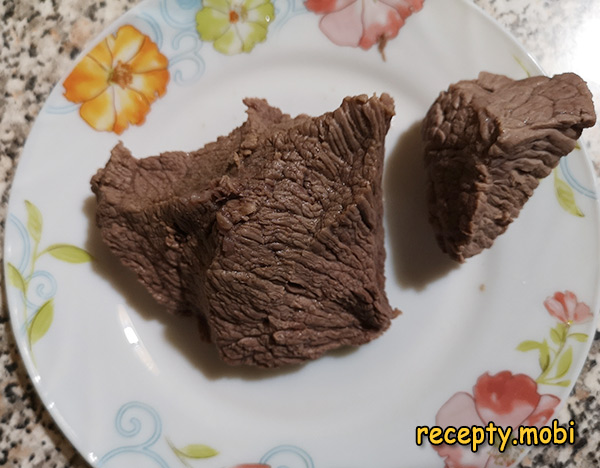
Boil the beef pulp gently over medium heat in salted water with a few peppercorns and a single bay leaf for added flavour. Cook for about an hour after the water reaches the boil. Check doneness by piercing the thickest part of the meat with a knife or fork: if the metal slides in easily without resistance, the beef is properly cooked. Let the meat cool down completely in its own broth for the juiciest most tender result.
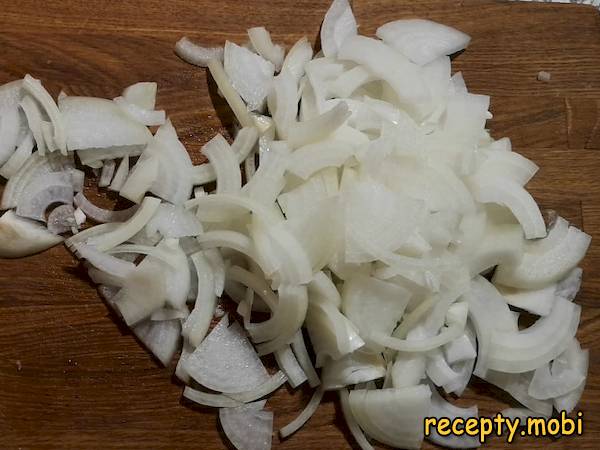
While the beef simmers, prepare the other ingredients. Cut the two peeled onions into thin even half rings. Half rings give a nice mix of flavour distribution and easy handling during the sautéing step that follows next in the recipe.
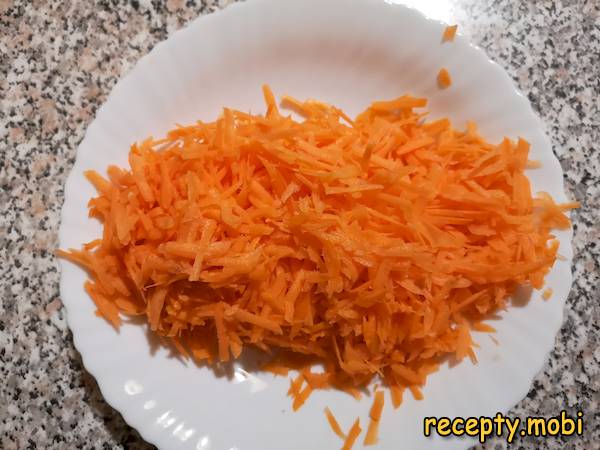
Grate the two peeled carrots on the coarse side of a box grater. Coarse grating produces longer thicker carrot strips that hold their shape better during the sautéing step than finer grating, which would dissolve too quickly into the surrounding ingredients.
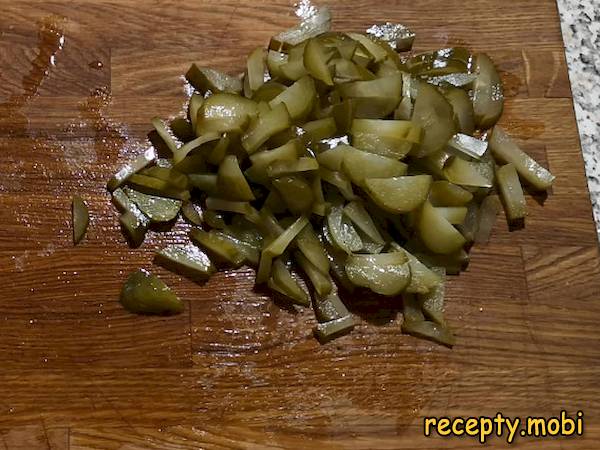
Cut the two pickled cucumbers into small thin matchstick strips. Drain the cucumbers well on a paper towel before chopping, since excess brine would make the salad watery and unbalance the carefully calibrated flavours during the resting time.
Heat a deep frying pan over medium heat and add a generous splash of vegetable oil. Add the prepared chopped onion to the hot oil and lightly sauté the onion for several minutes until it has softened completely and turned a beautiful pale golden colour at the edges.
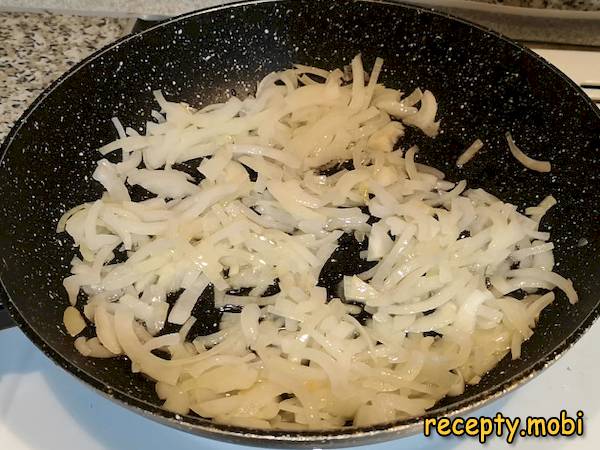
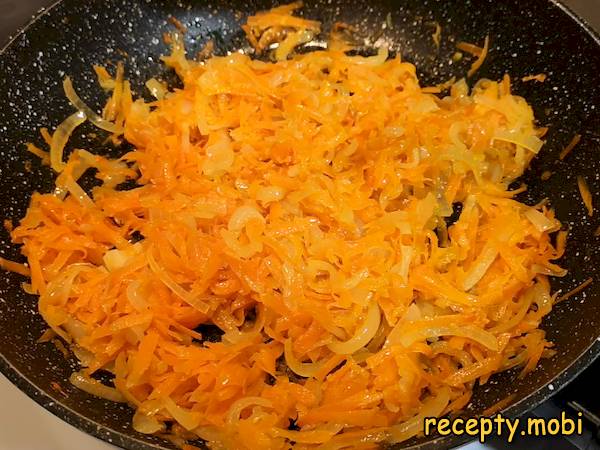
Add the grated carrot to the softened onion in the pan and continue frying everything together until the carrot has also softened and developed a slightly deeper orange colour. The combined cooking step lets the natural sweetness of both vegetables develop properly through caramelization.
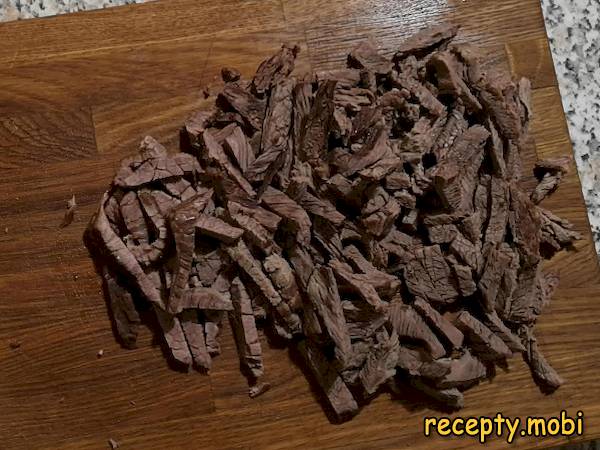
Cut the cooled boiled beef pulp into small even matchstick strips that match the size and shape of the prepared pickled cucumbers. Cutting against the grain rather than along it produces noticeably more tender strips in the finished salad.
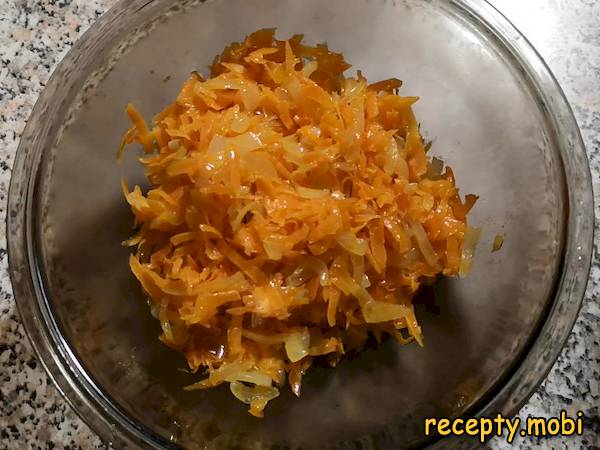
Transfer the sautéed onions and carrots to a deep mixing bowl ready for the assembly step. Use a slotted spoon to lift the vegetables out of the frying pan, leaving any excess oil behind in the pan to keep the finished salad lighter and more balanced.
Add the boiled beef strips to the bowl with the sautéed vegetables. Stir everything together gently to combine evenly, taking care not to break up the delicate strips of meat during the mixing step.
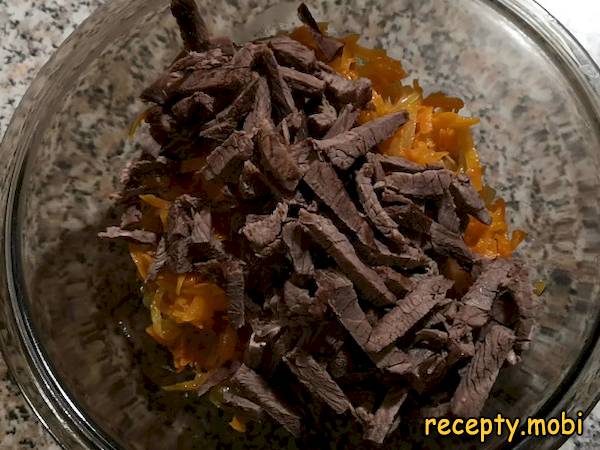
Sprinkle the prepared sliced pickled cucumbers into the bowl with the other ingredients. The bright tangy cucumbers add a beautiful crunchy contrast against the softer beef and sautéed vegetables in the finished salad.
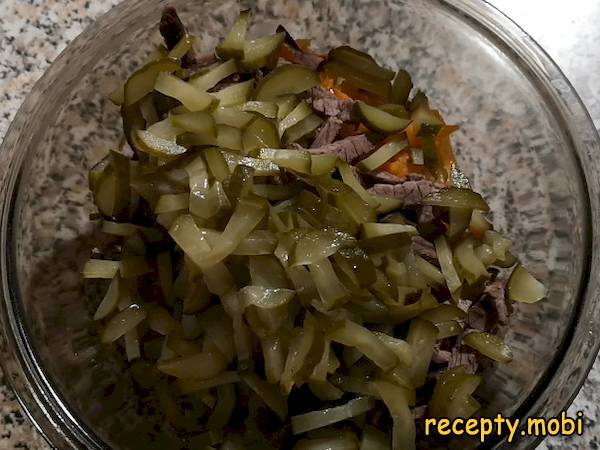
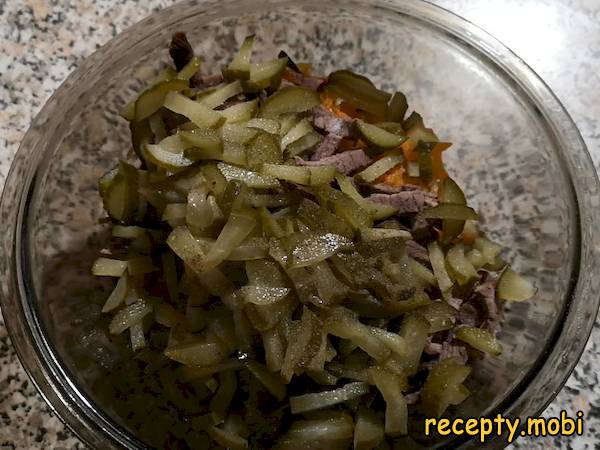
Add a generous pinch of salt and a few twists of freshly ground black pepper to taste. Start cautiously and adjust upward if needed, since both the pickled cucumbers and the eventual mayonnaise will add additional saltiness to the finished dish.
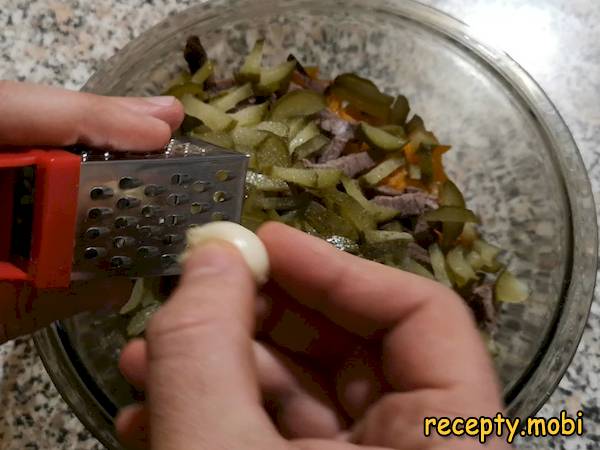
Add the minced garlic to the other ingredients in the bowl. Crush the garlic through a press or grate it finely on the smallest holes of a box grater for the most pronounced garlic flavour distribution throughout the finished salad.
Add mayonnaise to taste and stir everything together thoroughly. Start with a small spoonful and add more as needed, since the salad should taste rich and well-dressed but never drowning in mayonnaise. The finished salad should hold together loosely without being soupy.
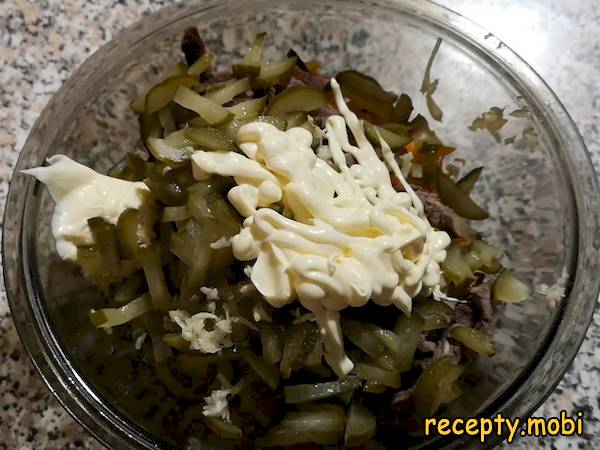
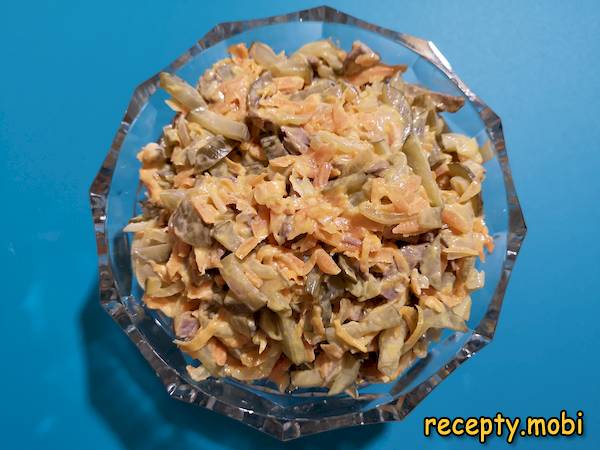
The classic salad Obzhorka with beef is now ready according to the recipe. Cover the salad and let it cool in the refrigerator for a few hours to let the flavours merge into a properly harmonious whole before serving at the table.
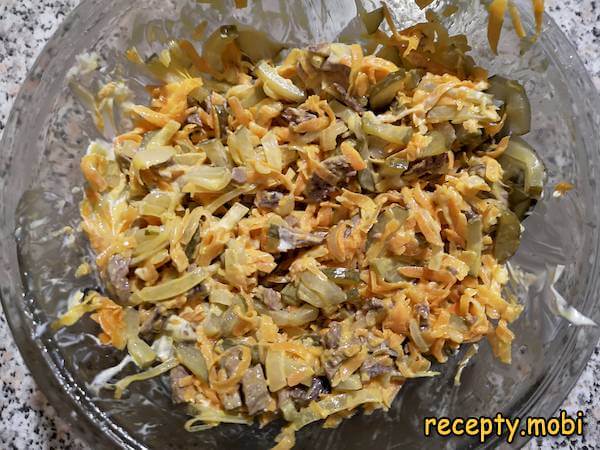
Transfer the chilled salad to a clean serving bowl and bring it to the table. Garnish with a few sprigs of fresh dill or parsley if you wish for an extra-festive presentation. Prepare salad Obzhorka with beef according to our recipe. Bon appetit!


Tips
- 1
Boil the beef in plenty of well-flavoured aromatic water with a few peppercorns, a bay leaf and a quartered onion for the most flavourful tender meat in the finished salad. Always allow the cooked meat to cool completely in its own broth rather than removing it while still hot, since the resting step lets the meat reabsorb juices that would otherwise drain away on the cutting board and produces noticeably juicier beef.
- 2
Drain the pickled cucumbers thoroughly on paper towel before chopping to prevent excess brine from making the salad watery. To pair this hearty meat salad with another properly traditional Slavic dish, try our beautifully tender step-by-step how to properly boil beef guide for the most reliable boiled meat technique to use in this and other layered salads.
- 3
Caramelize the sautéed onion thoroughly until properly golden and sweet rather than just translucent, since deeply caramelized onion contributes much more flavour to the finished salad than pale undercooked onion ever could. Take your time over this step and stir frequently to prevent any pieces from burning. The investment in proper caramelization pays off in noticeable depth of flavour at the table.
- 4
Allow the assembled salad to rest in the refrigerator for at least two hours before serving, since the resting time lets all the flavours merge into the harmonious whole that defines this dish. For another beautifully traditional layered Slavic salad to add variety to your celebration menu, try our hearty men's caprice salad with beef.
FAQ
Can I use a different cut of beef? +
Absolutely. Beef chuck, brisket, shin or even shoulder all work well as substitutes for the beef pulp in this recipe and produce broadly similar results in the finished salad. Tougher cuts with plenty of connective tissue actually produce noticeably more tender beef when slow-simmered for the full hour, so they often work better than leaner cuts. Avoid premium cuts such as fillet or sirloin, which can dry out during the long boiling process and waste their natural tenderness.
What can replace pickled cucumbers in this salad? +
Salt-fermented cucumbers, capers, gherkins or even chopped sauerkraut all work well as substitutes for traditional pickled cucumbers in this recipe. Each substitute brings a slightly different acidic note: capers add a more pronounced briny tang, gherkins are a touch sweeter, and sauerkraut contributes a more complex fermented character. Drain whichever substitute you choose thoroughly before chopping to prevent excess liquid from making the finished salad unpleasantly watery in the bowl.
How long does this salad keep? +
Store the assembled salad covered tightly in the refrigerator for up to two full days for best results. The flavours actually improve significantly on the second day as the beef, vegetables, garlic and mayonnaise continue to merge into a beautifully harmonious whole. After two days the texture begins to soften noticeably and the cucumbers can become unpleasantly mushy, so plan to make the salad fresh for celebrations rather than several days in advance.
Is there a lighter alternative to mayonnaise? +
Yes, a combination of natural Greek yoghurt mixed with a teaspoon of mustard, a small squeeze of fresh lemon juice and a pinch of salt makes a brilliant lighter dressing that suits this salad surprisingly well without sacrificing any creaminess. Sour cream blended with a drop of olive oil also lightens the calorie count noticeably while preserving the original flavour profile of the salad. Both substitutions hold up well during the resting time in the fridge.
- Comment
or post as a guest
Be the first to comment.