avg —
Shah Plov Azerbaijani Style

Instructions
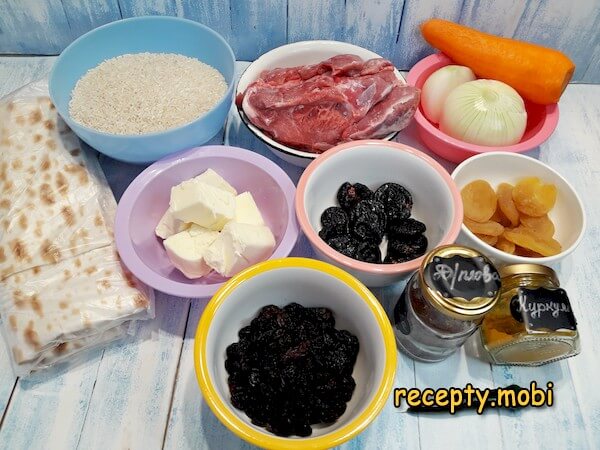
I prepare the ingredients. Turkey thigh works in this version; lamb or veal substitute equally well. Butter melts in microwave or water bath. Rectangular lavash is easier to work with than round.
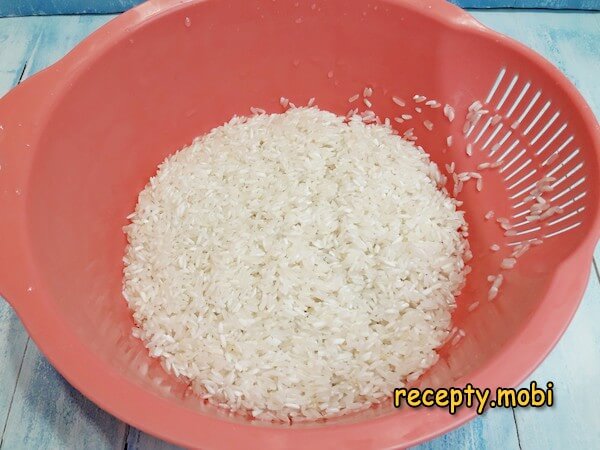
Rice rinses thoroughly until water runs clear.
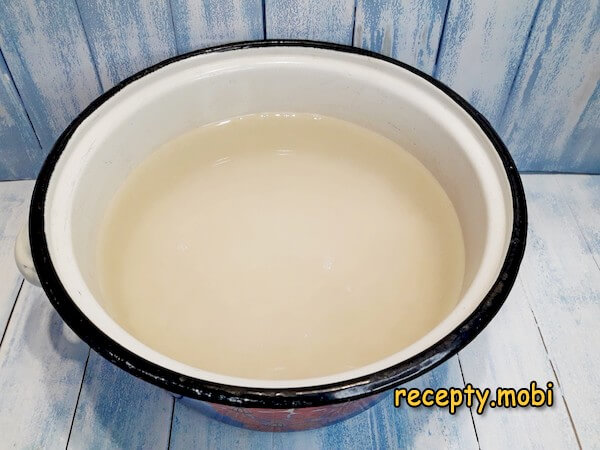
In a large pot of water, rice boils 5 minutes (only semi-cooks — final cooking happens in oven).
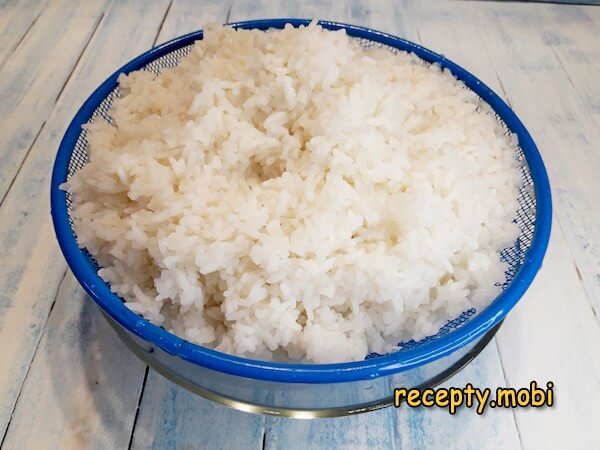
Drain and rinse under running water. Leave in colander to drain.
Boiling water pours over dried fruits to plump them. Then rinse under cold running water.
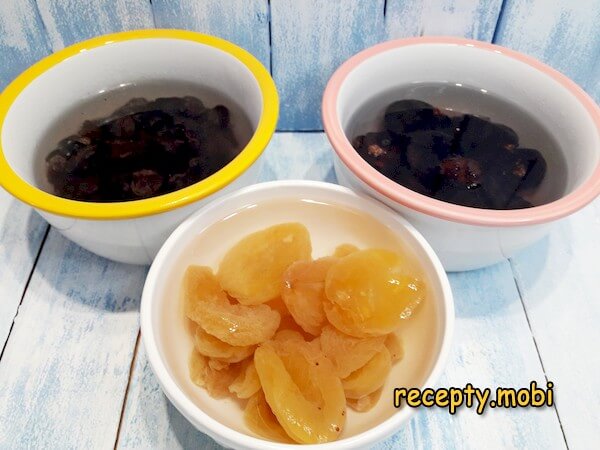
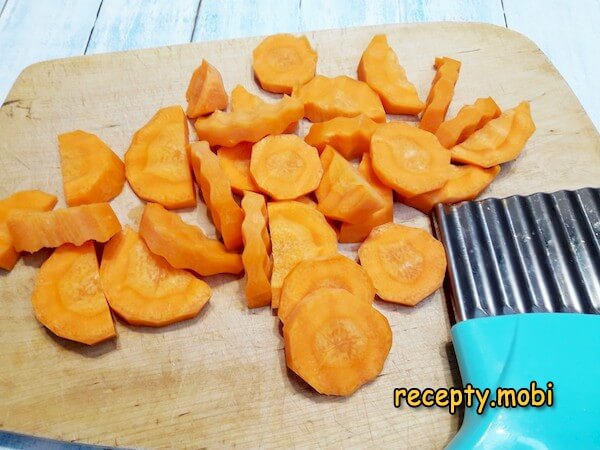
Carrot cuts into fairly large pieces.
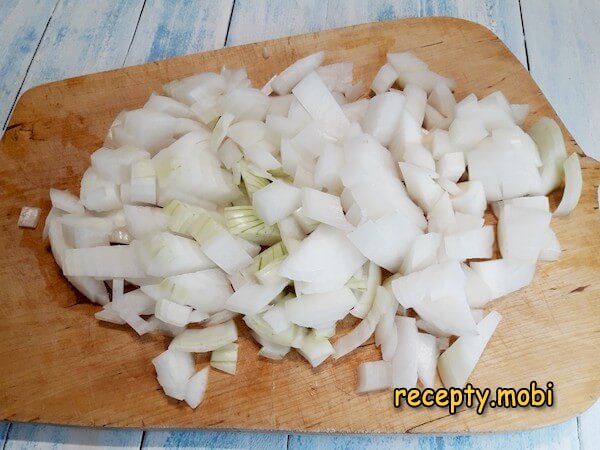
Onion cuts into rough cubes.
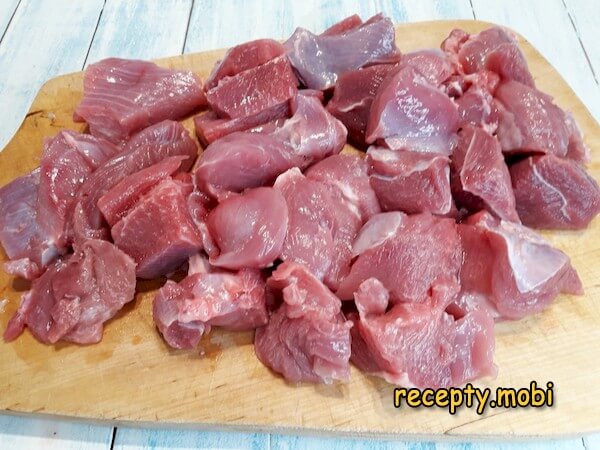
Meat cuts into medium pieces.
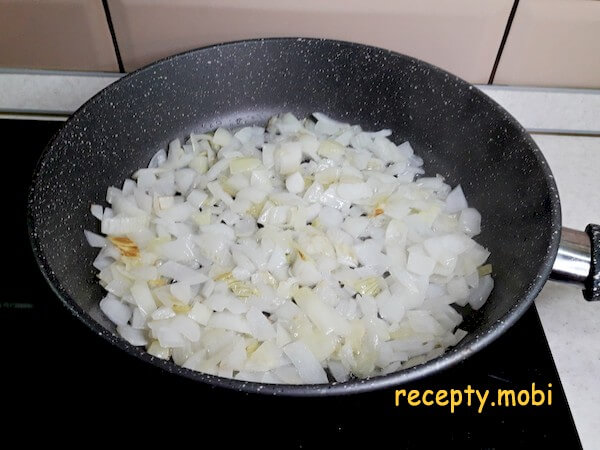
In heated oil, onion sautés until lightly translucent.
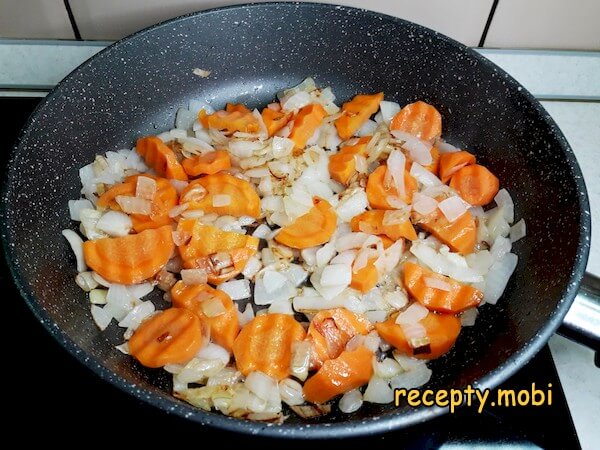
Carrot adds in. Fry together 3-4 minutes.
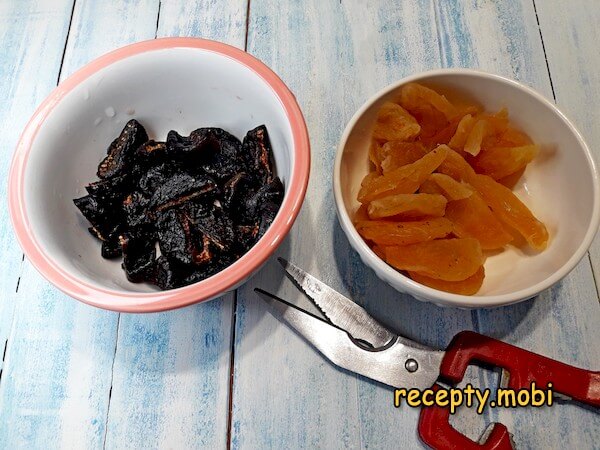
Large dried apricots and figs cut into strips.
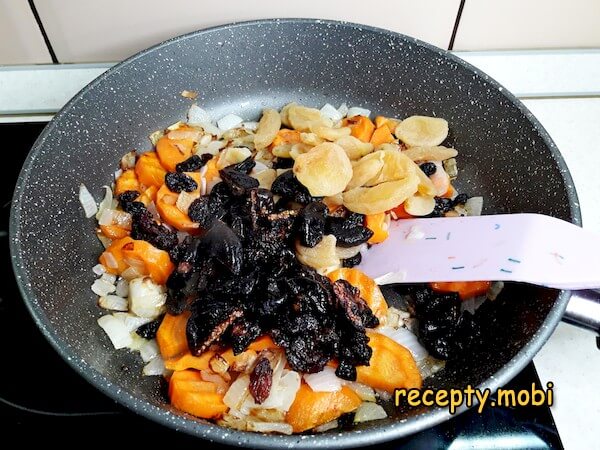
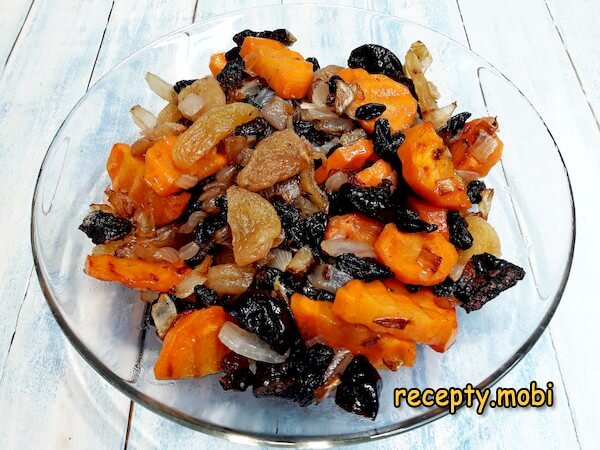
Dried fruits add to the vegetable pan. Sauté together 1 minute.
Sauté transfers to a plate. Pan returns to heat.
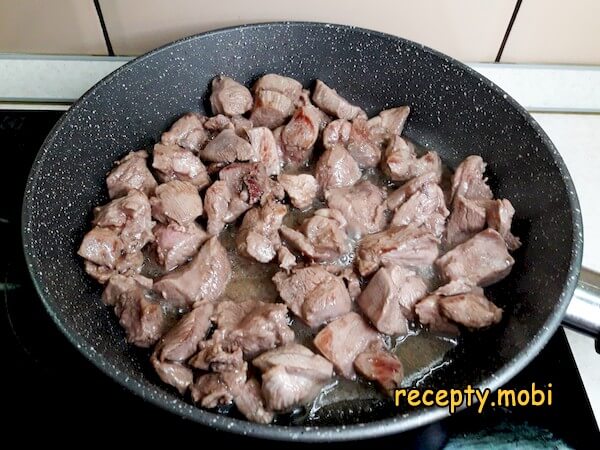
Meat pieces sauté in fresh oil — about 5 minutes regardless of meat type.
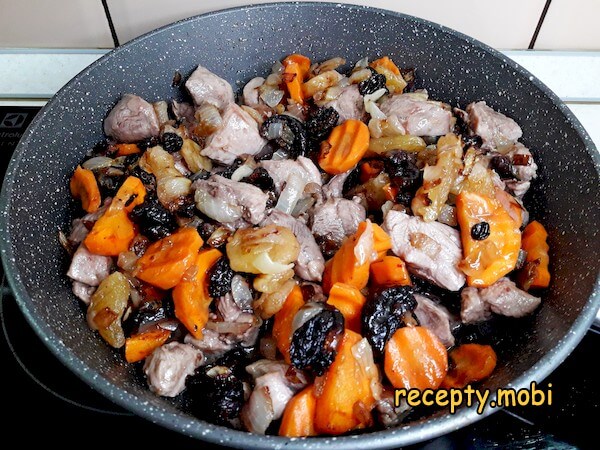
Sautéed vegetables-and-fruits return to the meat pan. Heat stays on.
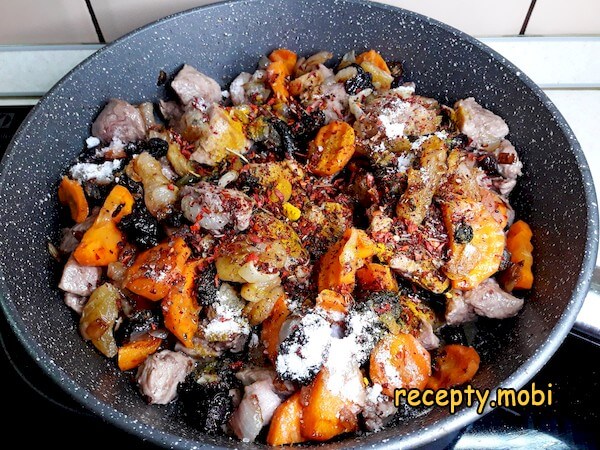
Salt and seasonings (turmeric, pilaf spice mix) add. Cook together 1 minute. Off heat.
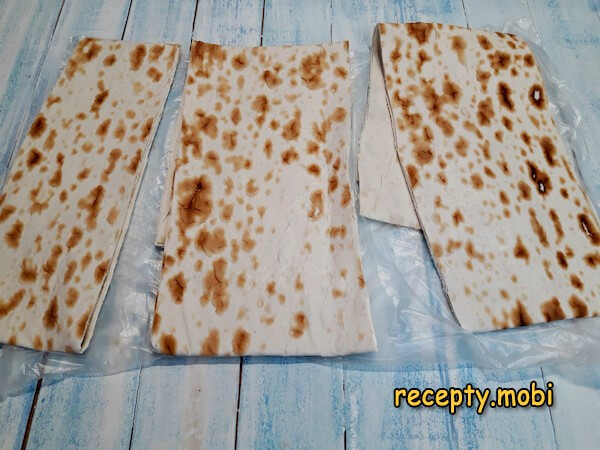
Lavash cuts lengthwise into 3 strips. Oven preheats to 160 °C with top + bottom heating.
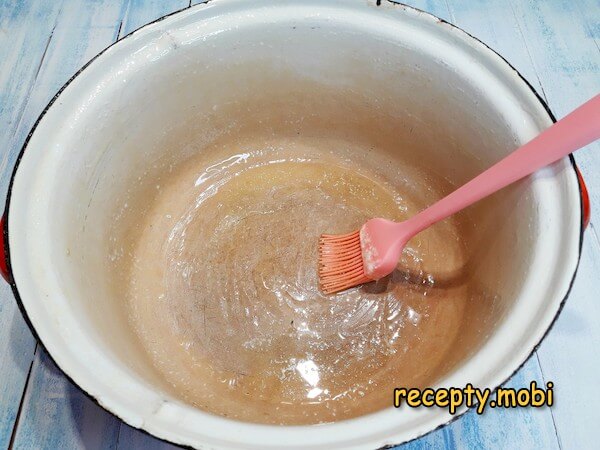
Heatproof pot, pan, or springform mold greases generously with melted butter — bottom and walls.
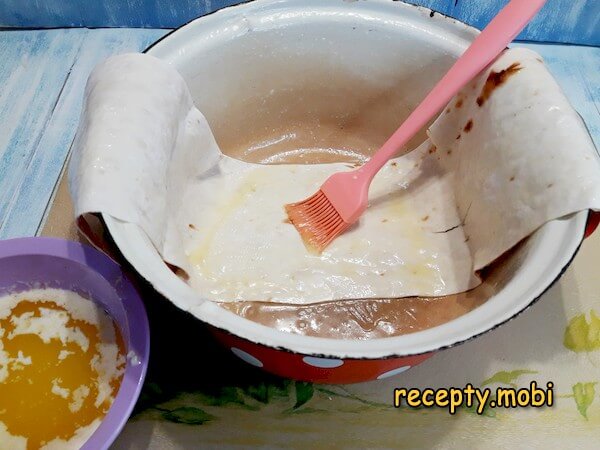
First lavash strip lays in the pot, edges hanging over the rim. Brush generously with melted butter.
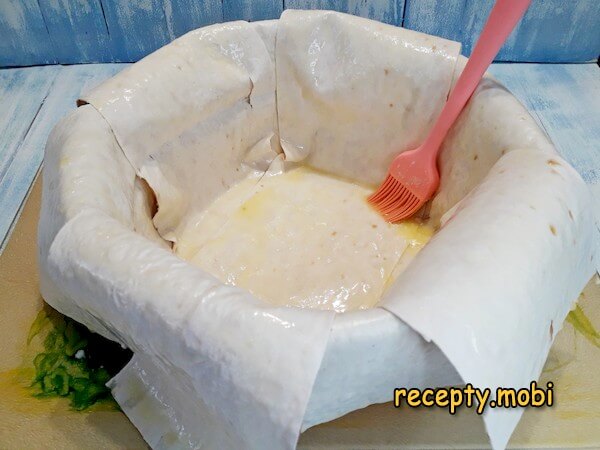
Remaining lavash strips overlap each other to fully line the pot. Brush each with butter.
Half the rice goes on the lavash bed. Level, salt lightly. NO tamping. Drizzle with melted butter.
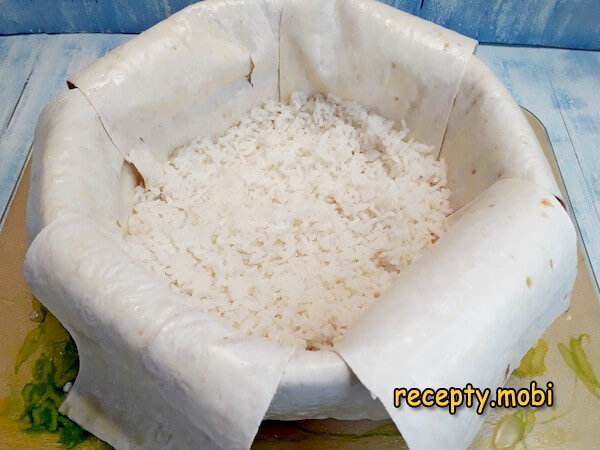
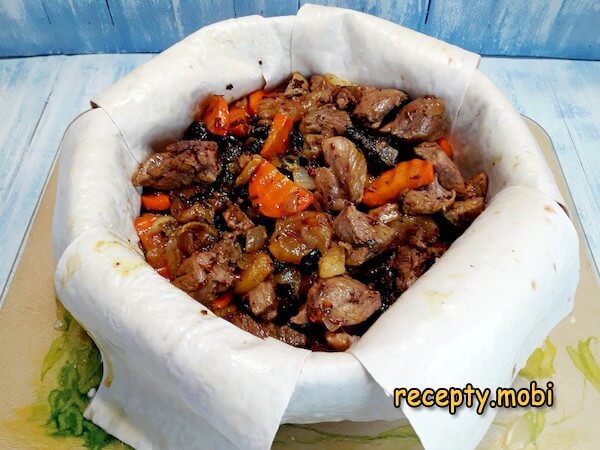
All the meat-vegetable-dried-fruit mixture distributes over the rice. Optional: chili pepper for heat.
Remaining rice covers the meat layer. Salt and butter-drizzle as before.
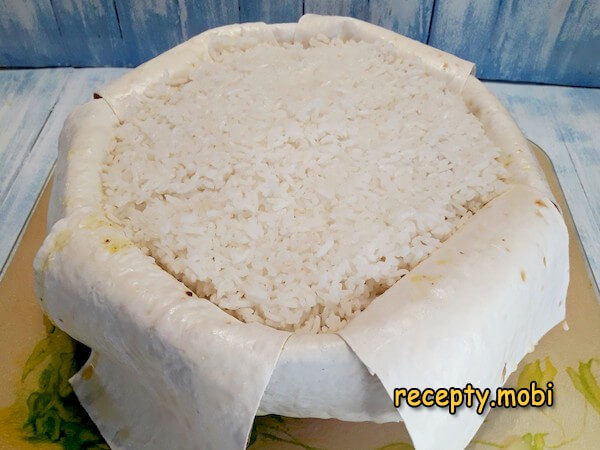
The overhanging lavash ends fold over the top, covering the rice completely.
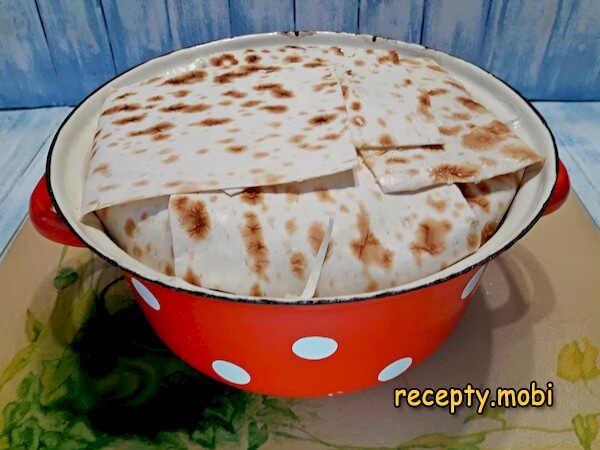
Brush the top with remaining melted butter.
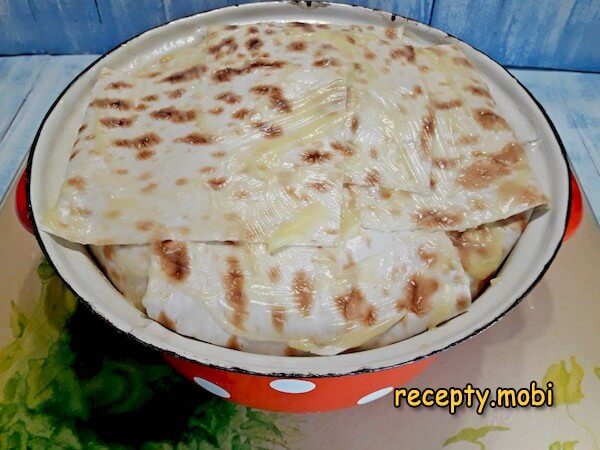
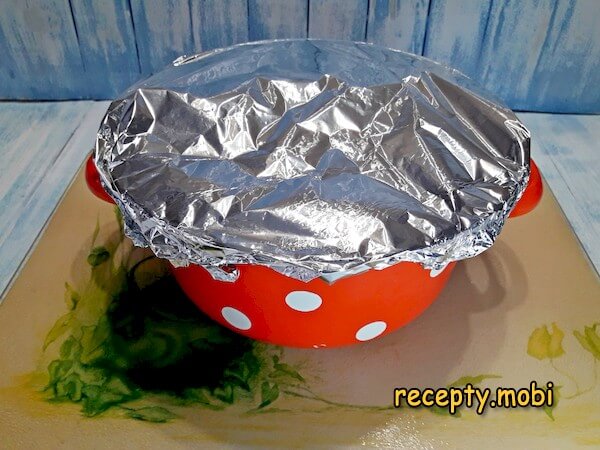
Foil covers the pot. Into the middle oven rack.
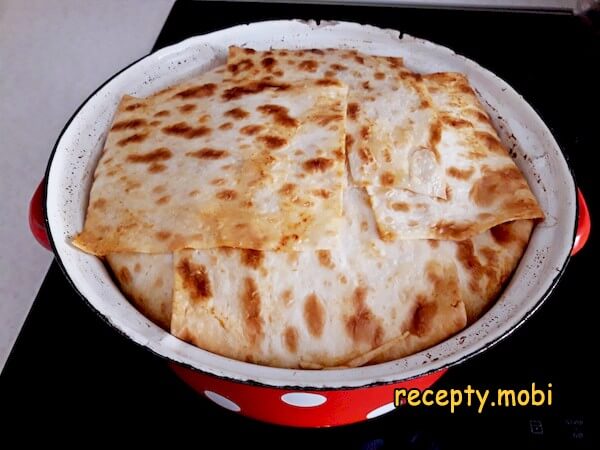
After 1.5 hours, foil comes off. Continue baking 20 more minutes at same temperature — this dries the lavash to crispy crust.
Invert onto a serving dish, remove the pot — the lavash crust is now on the outside.
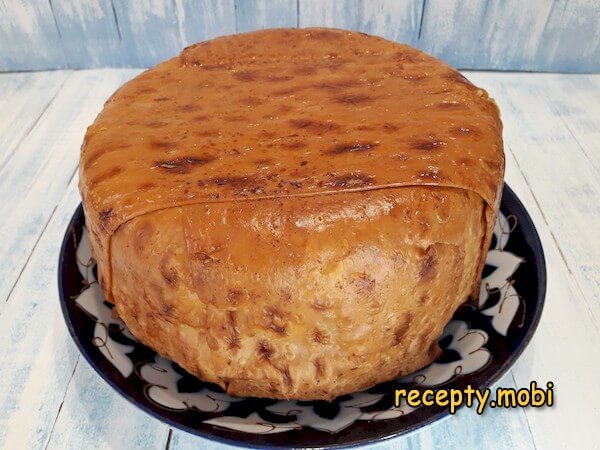
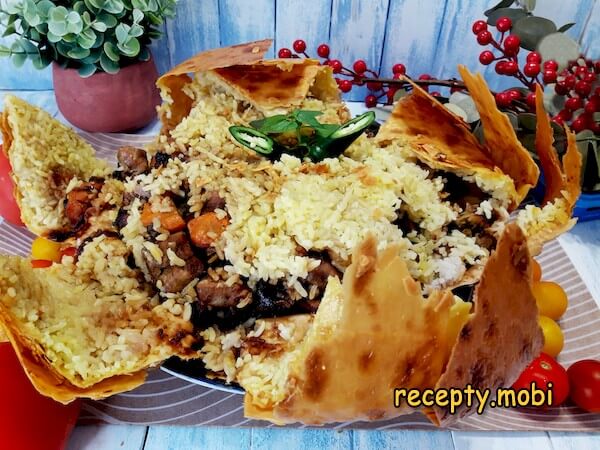
Shah-plov is ready. To serve: cut the crispy crust around the perimeter — the lavash unfolds like flower petals revealing the rice-meat-fruit centre. This dramatic presentation is reserved for celebrations and honoured guests. Try it for a special occasion. Bon appétit!


Tips
- 1
THE SEMI-COOKED RICE IS THE STRUCTURAL TECHNIQUE. Step 3's 5-minute pre-boil produces semi-cooked rice that finishes in the oven during the 1.5-hour bake — fully cooking the rice on the stovetop first would produce mushy rice after the long oven bake. The semi-cook approach gives the proper "fluffy crumbly grains" texture defined by Caucasian pilaf tradition. Don't skip the rinse-after-boil step either; it removes excess starch.
- 2
THE LAVASH-CRUST IS THE DEFINING FEATURE. Step 18-25's lavash architecture is what makes shah-plov shah-plov, distinct from regular Caucasian pilaf. Each lavash strip must be thoroughly oil-saturated — dry lavash burns; properly oiled lavash crisps to golden-brown shells. Don't reduce the butter quantity; this is where the dramatic crust comes from. For another Albanian-style chicken cutlet variation worth comparing, see Albanian-style Chicken Cutlets.
- 3
THE INVERT-AND-REVEAL IS THE WOW MOMENT. The presentation drama (step 28-29) is what makes shah-plov a celebration dish. Practice the inversion technique on smaller batches first — a too-fast invert breaks the crust; a too-slow invert makes it stick. The pot must cool 5-10 minutes after the bake before inverting (lets the structure firm up). The unfolding-petal moment at the table is genuinely impressive — this is theatre-as-cuisine.
- 4
THE DRIED-FRUIT TRINITY. Apricot + raisin + fig is the classic Azerbaijani dried-fruit combination, each contributing different sweetness and texture. Substitutions work but change character: prunes for figs (similar texture, different flavour), dates for figs (sweeter), dried cherries for raisins (more tart), apricots are fairly universal. The 80 g × 3 fruits = 240 g total is the sweet-savoury balance point. Don't reduce significantly; the dried fruits define the dish's character. For another Georgian-style chicken classic worth trying, try Chkmeruli Georgian Style.
FAQ
What is "shah-plov"? +
"Shah-plov" (شاه پلو in Persian script) means "king's pilaf" — a celebration version of standard pilaf featuring the dramatic lavash crust. The dish has Persian origins (where similar baked-rice "tahdig" preparations exist) and spread through Azerbaijani-Iranian cultural exchange. Each Azerbaijani region has its own variations: Baku-style uses more dried fruits; Ganja-style uses more meat; Lankaran-style adds saffron. The lavash-crust feature is universal — that's the "shah" (king) element distinguishing this from everyday pilaf. The dish appears at weddings, Novruz (Persian New Year), and major family celebrations.
What's "spice mix for pilaf"? +
Commercial pilaf spice mixes vary but typically contain: cumin, coriander, paprika, turmeric, dried barberry, dried marigold, salt, sometimes cardamom. Available in Russian-Caucasian markets and online. DIY substitute: 1 tsp ground cumin + 1 tsp ground coriander + 1/2 tsp paprika + 1/2 tsp dried barberry powder = makes 2 tsp blend. Without barberry, the mix is acceptable but loses authentic Caucasian character. The 2 tsp quantity is generous and intentional for the substantial 480 g of meat plus rice.
How do I serve and store leftovers? +
Serve immediately after the dramatic crust-cutting presentation — shah-plov is at its best fresh from the oven. Cooled leftovers keep 2-3 days in the fridge. Reheat method: in oven at 160 °C, covered with foil, 20 minutes (best texture but slow). Microwave reheat (3 minutes per portion) works but loses the crispy crust. Don't freeze — the lavash crust loses its character on thaw. For batch cooking: assemble fully on day 1, refrigerate uncooked, bake fresh on day 2 — gives that "just-baked" experience even with advance prep.
Can I make this without lavash? +
The lavash crust is what makes this "shah" plov. Without it, you have regular pilaf — pleasant but not the same dish. Substitutes for lavash if unavailable: very thin flatbread (Iranian sangak, Indian roti, or Turkish yufka all work), thinly-rolled fresh dough (gives slightly different texture but works), filo pastry layers (lighter, more delicate result). The substitute must be: thin enough to crisp, large enough to wrap around the pot, and tender enough to fold without breaking. Lavash is the optimal choice; substitutes acceptable in emergencies.
- Comment
or post as a guest
Be the first to comment.