avg —
Strawberry Jelly for Winter

Instructions
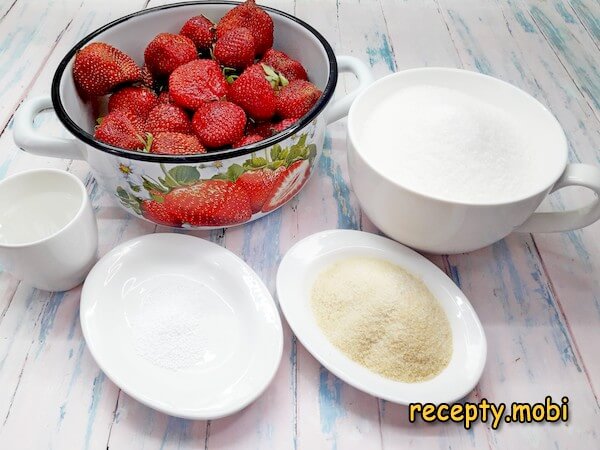
I prepare specified ingredients for strawberry jelly for winter.
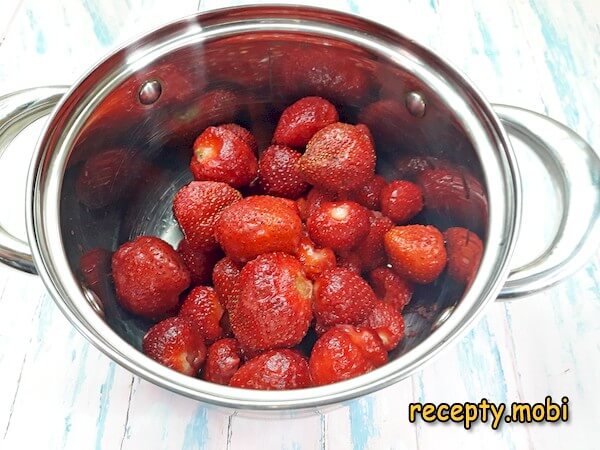
WASH strawberries (no stems); pat dry with napkins; place in pot (THICK BOTTOM preferred). Large berries: leave whole — all soften during cooking + later blended.
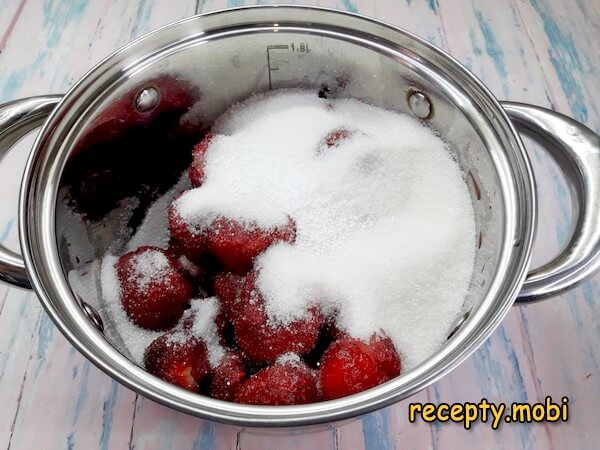
Add SUGAR + CITRIC ACID — enhances flavor + preserves natural strawberry color.
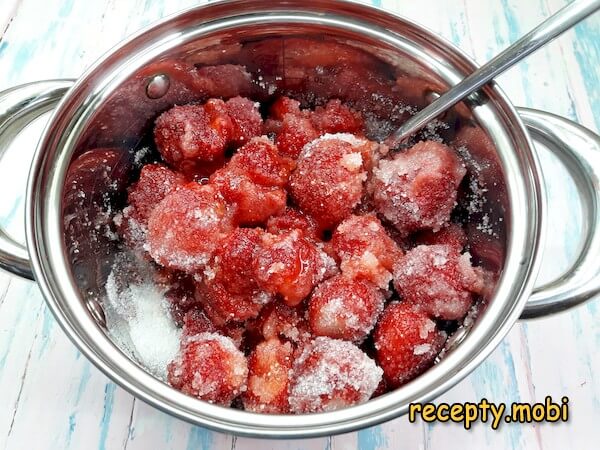
STIR pot contents confidently — don't fear crushing berries.
Transfer to LOW flame. As it heats: more juice released + sugar starts dissolving.
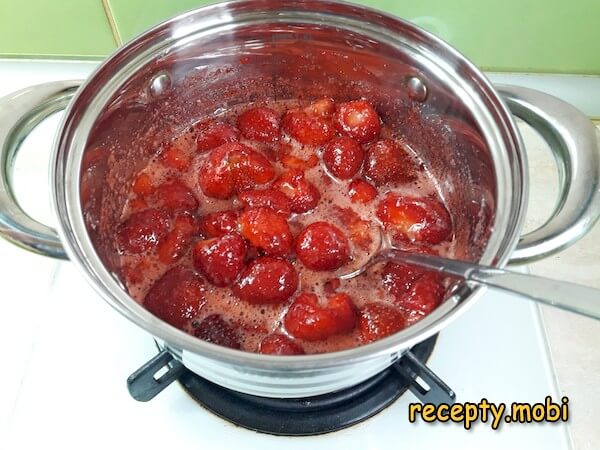
Boil mixture 15 MIN. Periodically remove FOAM.
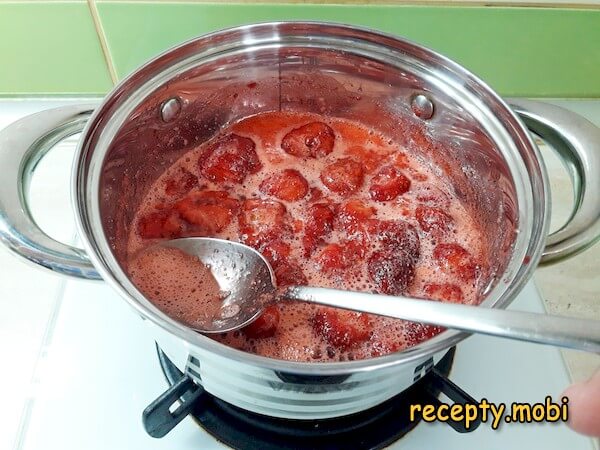
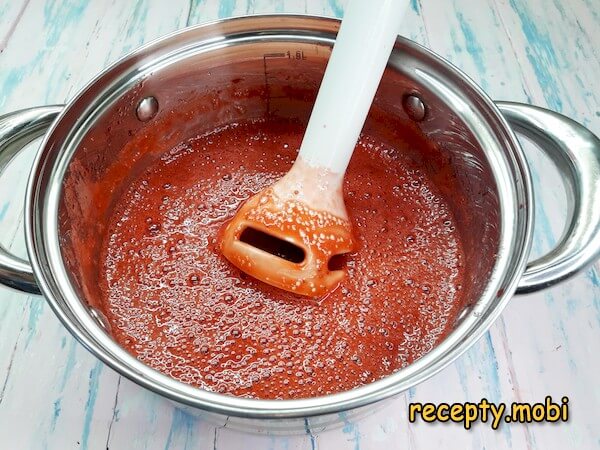
Carefully (avoid hot splashes): BLEND jam with blender to homogeneous.
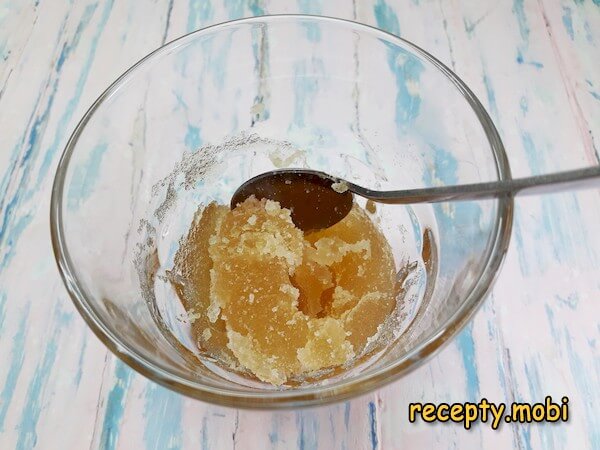
Pour gelatin with WATER. After absorbing moisture: dissolve to liquid in microwave on DEFROST mode.
Boil strawberry mixture 5 MORE MINUTES; remove from heat; immediately add GELATIN; distribute evenly throughout volume.
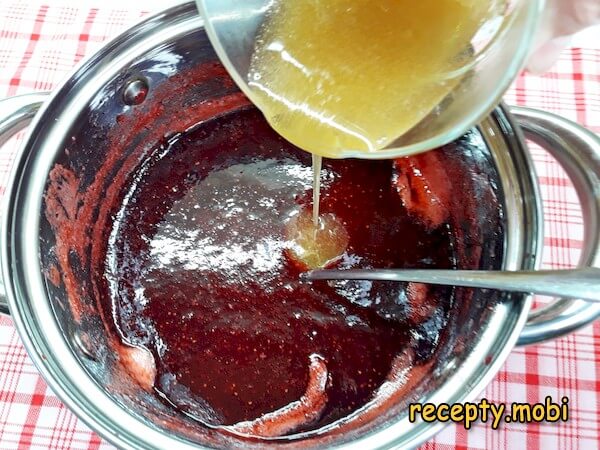
Pour HOT mixture into prepared jars to TOP; place PAPER NAPKIN under jar (protects glass from cracking).
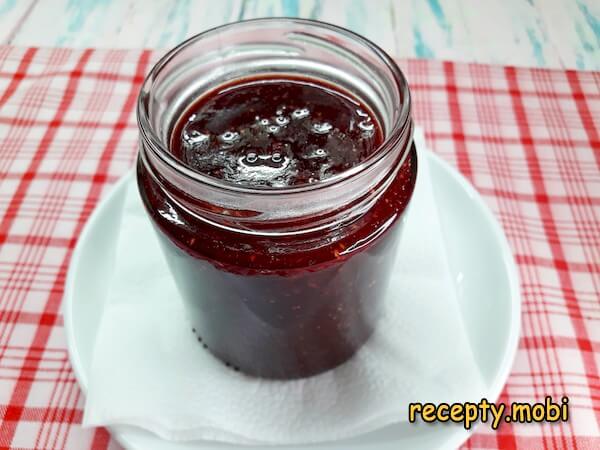
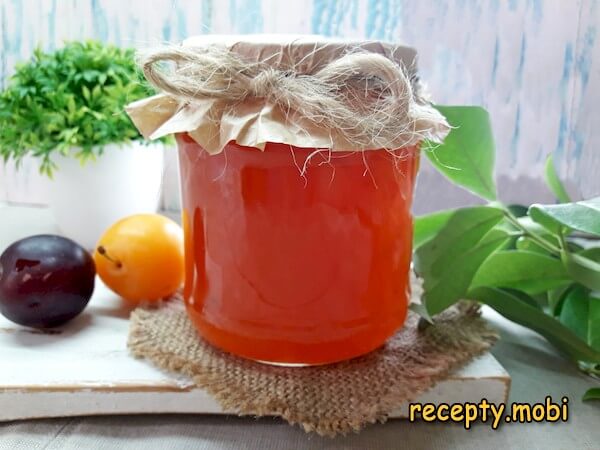
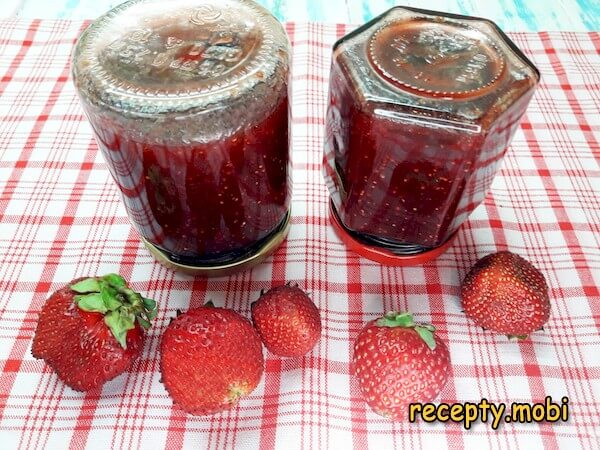
Screw on lids; turn UPSIDE DOWN. Hold 1 HOUR; then upright; cool until jelly thickens completely. Aromatic dessert: standalone with tea, spread on bread, layering for cakes. Best stored cool place (refrigerator if no cellar). Bon appétit!


Tips
- 1
THE GELATIN-FOR-STRAWBERRIES ESSENTIAL TECHNIQUE. Recipe's gelatin addition is necessary because strawberries have LOW NATURAL PECTIN. Strawberries: 0.5% pectin (vs red currants 1.5%, citrus 3%) = naturally won't form gel without help. ADDING GELATIN (30 g per 600 g berries = 5%): provides protein-network for proper gel-set. ALTERNATIVES: COMMERCIAL PECTIN POWDER (15 g equivalent for vegetarian option), AGAR-AGAR (10 g for vegan version). The 30 g gelatin amount: proper firm gel-set; less = softer; more = rubbery. Same low-pectin-fruit gelling principle: traditional Russian "zhele" preparations, French confitures-aux-fraises with added pectin.
- 2
THE CITRIC-ACID DUAL-FUNCTION. Step 3's "citric acid enhances flavor + preserves natural color" is genuine recipe science. PURPOSE 1 (Flavor): provides bright tart-balance to sweet strawberries, prevents cloying-sweet result. PURPOSE 2 (Color): acid environment prevents oxidation of strawberry pigments (anthocyanins), preserves BRIGHT-RED character throughout cooking + storage. Without citric acid: jelly turns muddy-pink during cooking + browns during storage. The 3 g amount: minimal but essential. SUBSTITUTE: 1 tbsp lemon juice (more flavorful but slightly less effective). Same dual-function principle: French confitures professional preparation, traditional Russian "varenye". For another classic strawberry preserve worth comparing, see Strawberry Five-Minute Jam.
- 3
THE GELATIN-AT-END NO-BOIL ADDITION. Step 9's "remove from heat + immediately add gelatin" is gelatin-preservation essential. BOILING gelatin: destroys protein structure, gel-set fails completely. ADDING TO HOT-BUT-NOT-BOILING liquid (after removing from heat): gelatin dissolves perfectly without protein damage, signature dense-gel set on cooling. The MICROWAVE DEFROST-mode dissolution (Step 8): gentle heat preserves gelatin function. Same gelatin-handling principle: French panna-cotta, Italian gelati base, professional pastry techniques. Don't boil gelatin — destroys recipe entirely.
- 4
THE 1-HOUR-INVERT-THEN-UPRIGHT METHOD. Step 11's "hold upside down 1 hour then upright" is texture-distribution essential. Long inversion (12+ hours): gelatin sets while berries float at top, top-heavy jelly. PROPER 1-hour invert: lid-area sterilization through hot-product contact, then upright + cool slowly = even gelatin distribution + uniform jelly throughout jar. The TIMING precise: 1 hour = lid-seal complete + gelatin still pourable. Same controlled-cooling principle: French gelée preparations, Italian gelato bombe-shaping. Don't extend inversion — defeats even-distribution purpose. For another classic Russian fruit preserve worth trying, try Strawberry Jam with Gelatin.
FAQ
What's the difference vs strawberry jam? +
Three key differences. CONSISTENCY: jelly = DENSE GELLED-set (slice-able), jam = soft-spreadable (pour-able). PROCESS: jelly = blended to homogeneous + gelatin added, jam = whole/halved berries in syrup. STORAGE: jelly = best refrigerated (gelatin-based), jam = room-temperature stable. USES: jelly = perfect for layer cakes + slice-on-toast, jam = traditional spread + tea-companion. Both are equally valid Russian "varenye" tradition with different end-products. CHOOSE based on use: structured dessert = JELLY, spreadable = JAM. The recipe-canonical jelly: more structured + photo-worthy presentation.
Can I use frozen strawberries? +
Yes — frozen strawberries work with adjustments. FROZEN STRAWBERRIES (no stems): 600 g, no need to thaw fully (slight thaw makes blending easier). Pat dry to remove excess moisture. Method: skip Step 2 (already cleaned + stem-less), proceed with sugar + citric acid + cook. Add EXTRA 5 g gelatin (35 g total) to compensate for additional moisture. FRESH strawberries (recipe-canonical): superior flavor + better gel-set, summer-only availability. CANNED strawberries (drained): also work, even more gelatin needed. The FROZEN option: year-round availability for emergency dessert + winter prep when fresh unavailable.
How long does it keep? +
Properly sealed jars in cool place: UP TO 12 MONTHS at peak quality. Months 1-3: peak fresh-fruit character. Months 4-8: PEAK FLAVOR (post-canning aging develops complexity). Months 9-12: still excellent, slight color darkening. Past 12 months: not recommended (gelatin gradually weakens). REFRIGERATED: 12+ months. ROOM TEMPERATURE: shorter (6 months — gelatin destabilizes faster at warm temperatures). Once OPENED: refrigerate, consume within 1 month. Storage tips: cool dark place, clean dry spoon, tight lid. Spoilage signs: surface mold, fizzy bubbles, off-smell, jelly liquefying — discard.
How do I serve it? +
JELLY-format particularly versatile. SLICED-DESSERT: spoon out by chunk + serve with whipped cream, ice cream on top. SPREAD-ON-TOAST: classic breakfast staple. CAKE LAYERING: between sponge layers in Napoleon cakes, jelly-roll preparations, layer cakes. PASTRY: filling for cookies (thumbprint), tartlets, doughnuts. CHEESE PAIRING: alongside aged brie, goat cheese, blue cheese (classic French-fusion). DAIRY: swirl into yogurt, cottage cheese, plain Greek yogurt. ICE CREAM TOPPING: drizzle over vanilla. The DENSE structure makes it especially suitable for clean-slice presentations. Russian tradition: spoon-by-spoon with hot tea.
- Comment
or post as a guest
Be the first to comment.