avg —
Takhana with chicken and vegetables

Instructions
I prepare the ingredients. Chicken breast can be replaced with boneless skinless chicken thighs (richer flavour, slightly more forgiving cooking).
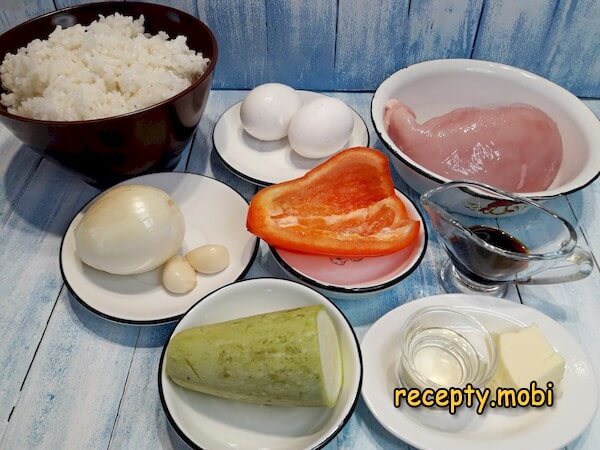
Rice variety matters — "rice for pilaf" (long-grain or medium-grain non-sticky varieties) is ideal. Sticky/glutinous rice clumps and turns mushy in stir-fry. Basmati and jasmine work well.
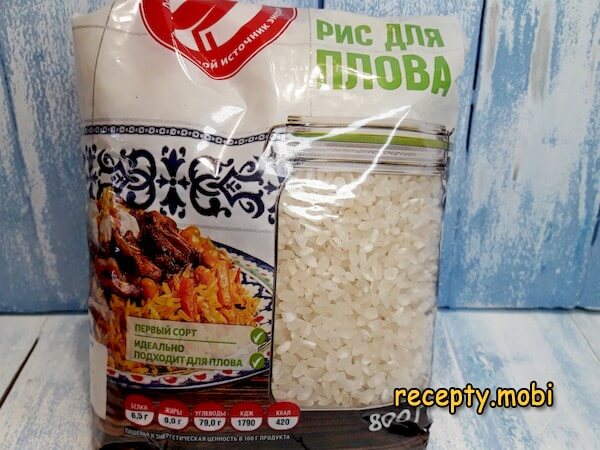
I rinse 200 g raw rice several times until water runs clear. Cook with water 2 cm above rice level, 7-10 minutes from boil, then off heat covered for 5 more minutes.
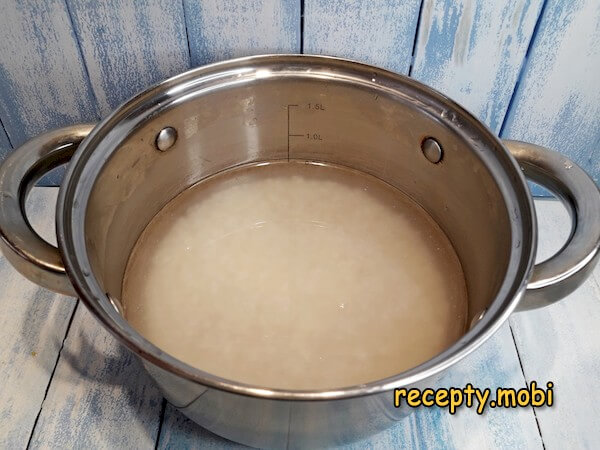
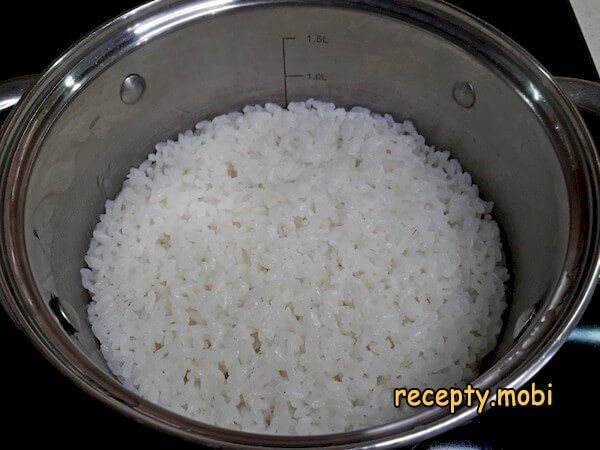
All water absorbed, grains plump and crumbly — this is the target rice texture.
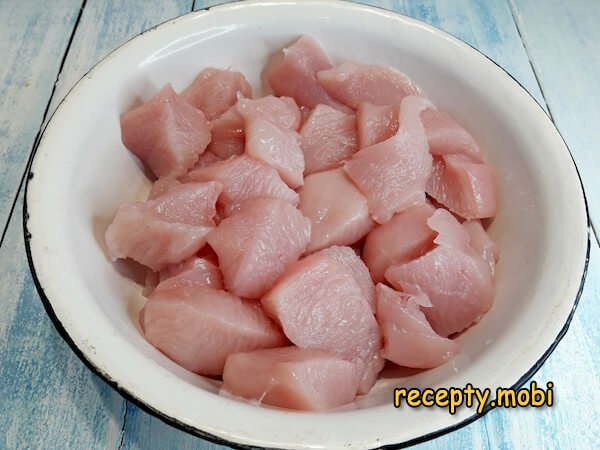
Chicken fillet cuts into medium cubes — about 1.5 cm pieces.
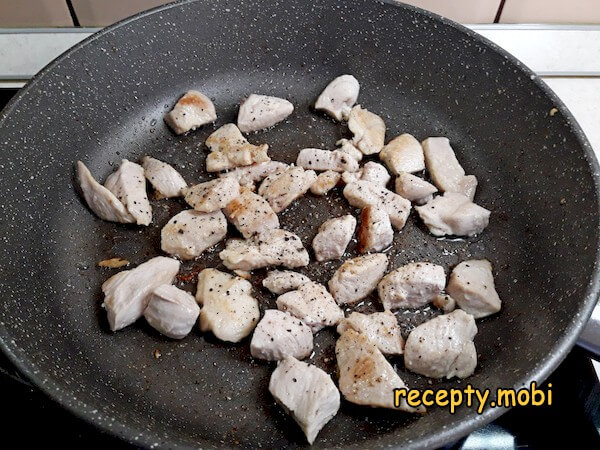
In hot vegetable oil, the chicken pieces fry quickly until cooked through. Salt and pepper at the end. Transfer to a separate plate.
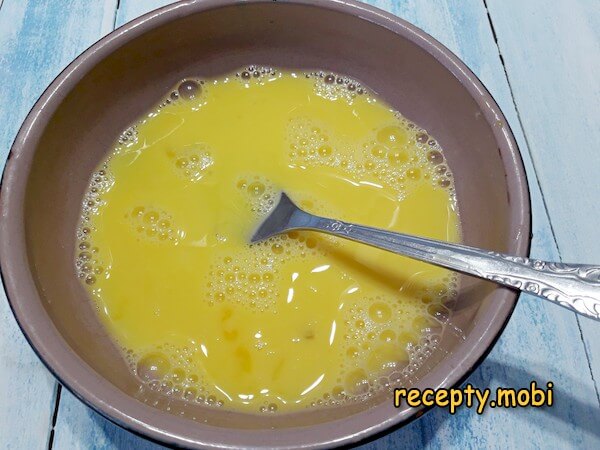
Eggs whisk briefly with a fork — uniform yellow.
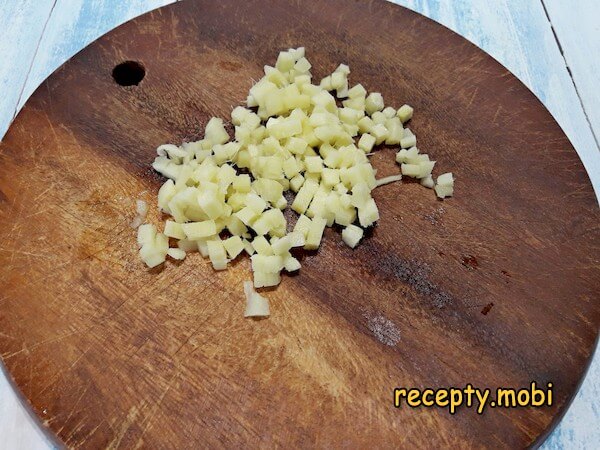
Ginger skin scrapes off (a teaspoon edge works perfectly), then cuts into small dice.
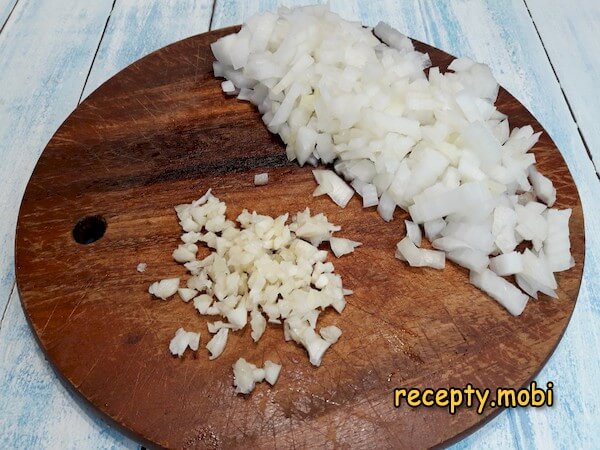
Onion and garlic chop finely with a knife.
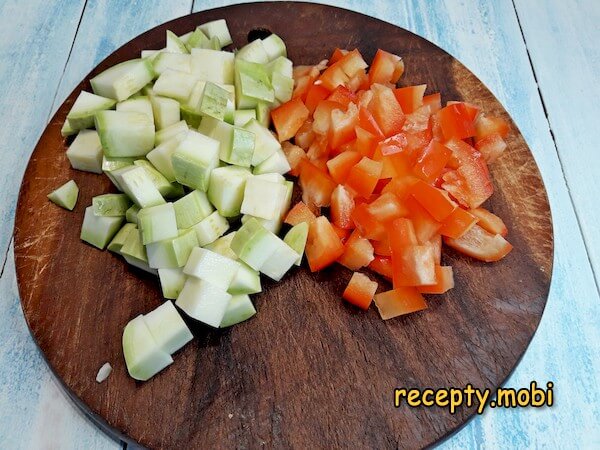
Bell pepper and zucchini cut into small pieces — keep zucchini skin on for tender young zucchinis (it adds colour without bitterness).
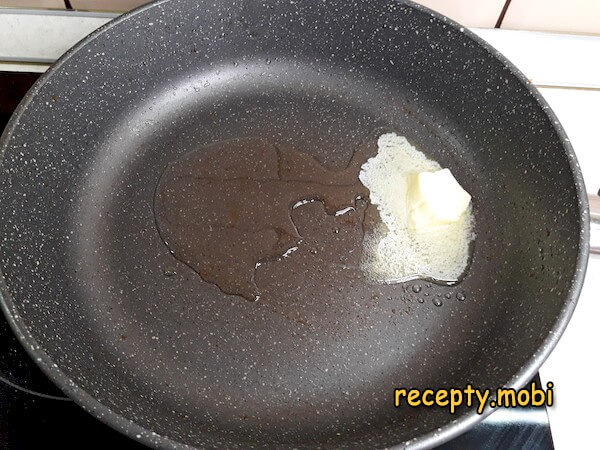
In the same skillet (with the chicken-fond), I heat the vegetable oil and butter together.
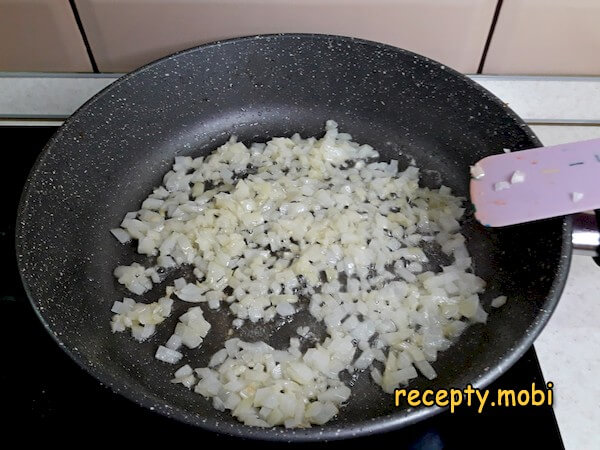
Onion and garlic sauté lightly until garlic aroma develops — about 1 minute on medium-high.
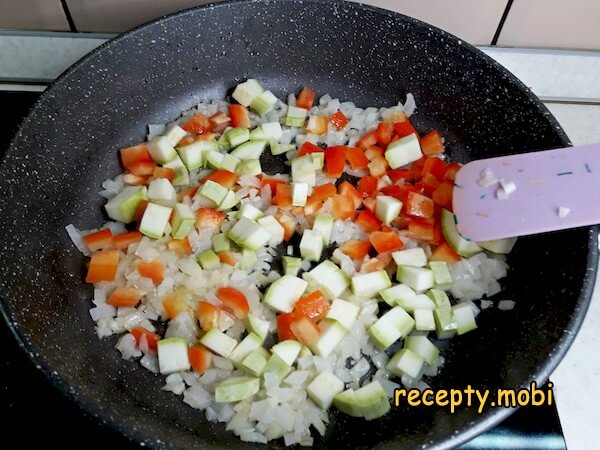
Zucchini and bell pepper join. Sauté together 1 minute — should retain crunch.
Ginger goes in. Cook 2 more minutes on medium heat — ginger releases its character without burning.
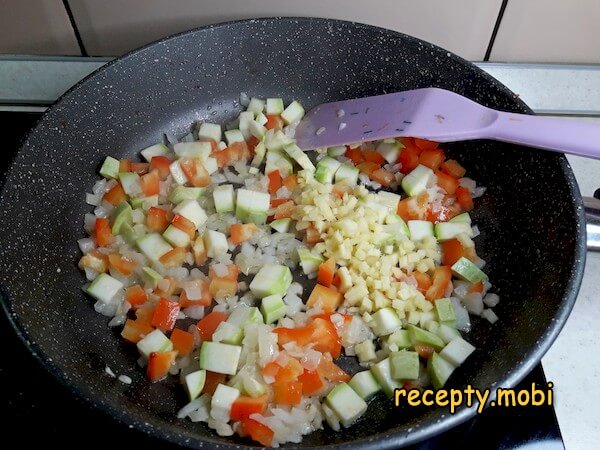
Beaten eggs pour into the skillet with a pinch of salt.
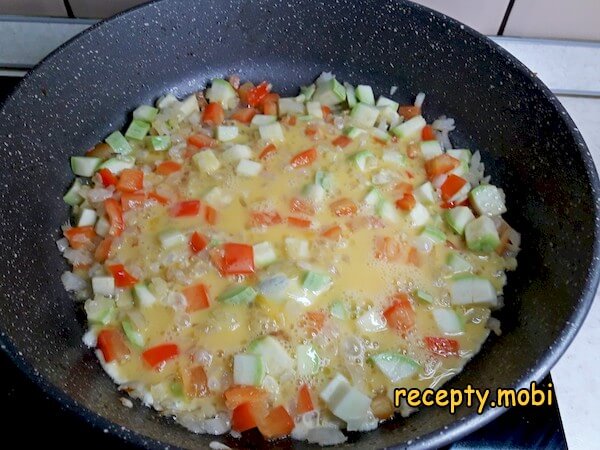
With a spatula, I break the egg mass into pieces — no wet areas remain.
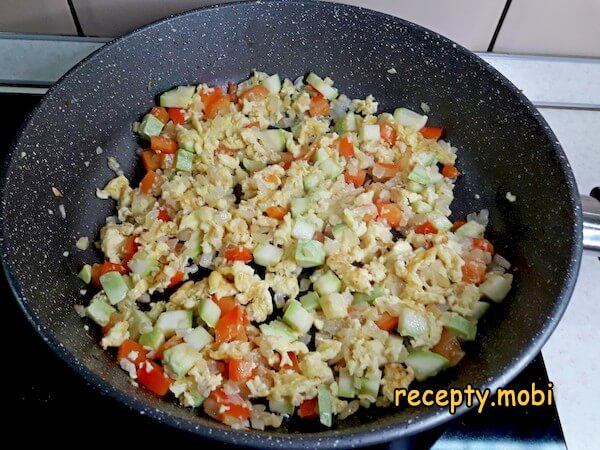
Cooked rice transfers into the skillet (heat stays on). Mix well to integrate everything.
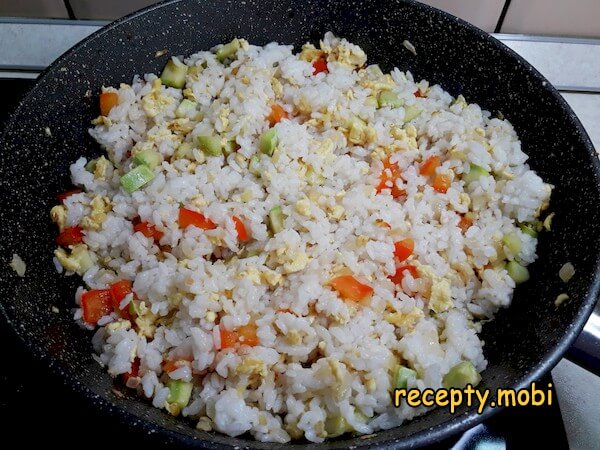
Soy sauce and pepper join, salt to adjust if needed. Stir-fry over high heat 3-4 minutes — gives the slightly toasted "fried rice" character.
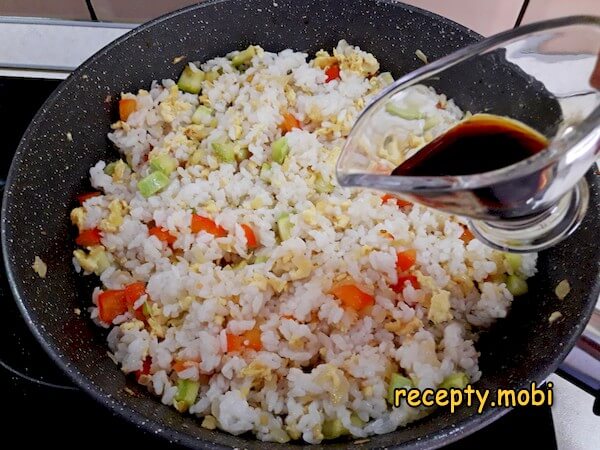
The reserved chicken adds back to the skillet.
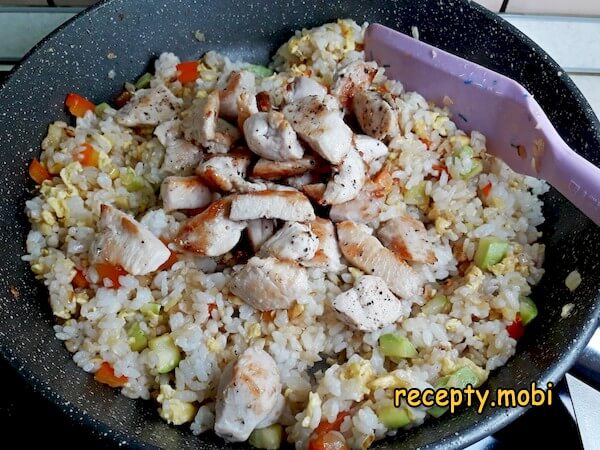
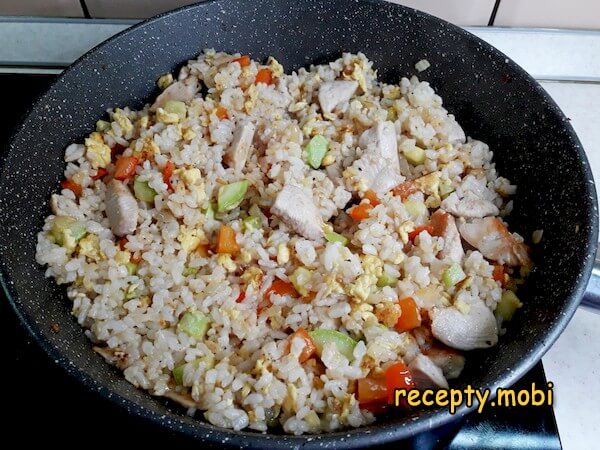
Mix everything thoroughly. Keep on heat 1 more minute to warm the chicken back through, then off heat.To serve, sprinkle the hot takhana with toasted sesame seeds (white or black — both work, just pre-toast in a dry pan 1 minute). The dish is delicious, nutritious, made from accessible ingredients, quick to prepare, with the distinctive Japanese-style aromatic profile that makes it interesting beyond ordinary chicken-and-rice dinners.Try it, bon appétit!


Tips
- 1
COLD RICE IS THE STIR-FRY SECRET. Best texture comes from rice cooked in advance and chilled in the fridge — even overnight chilling improves the result. Cold rice grains stay separate and develop the slightly chewy "fried rice" texture during the high-heat stir-fry. Hot fresh-cooked rice clumps and turns mushy. The recipe shows cook-rice-then-use, but pre-cooked-and-chilled rice gives noticeably better results. This is professional Asian-cooking wisdom.
- 2
KEEP VEGETABLES CRUNCHY. Step 13's 1-minute zucchini-pepper sauté is calibrated short specifically to retain crunch. Japanese-style fried rice values vegetable bite — overdone vegetables become mushy distractions. Trust the brief cook time. The vegetables will continue to slightly soften from residual heat after off-heat. For another braised chicken-vegetable dish worth comparing, see Braised Chicken with Vegetables in a Cauldron.
- 3
THE GINGER QUANTITY IS THE FLAVOUR ANCHOR. 20 g of fresh ginger (about a 4 cm piece) is generous and intentional — fresh ginger is what gives the dish its distinctive Japanese character vs generic Chinese fried rice. Reduce ginger and the dish loses its identity. The cube-cut (rather than minced) preserves visible ginger pieces in the finished dish — flavour bombs in every other bite. Don't substitute powdered ginger; fresh is essential.
- 4
SOY SAUCE QUALITY MATTERS. The 15 ml of soy sauce is small enough that quality shows. Best choices: Japanese-style "shoyu" (Kikkoman is widely available and excellent), Chinese light soy sauce (functional substitute), tamari (gluten-free option). Avoid: thick "dark" soy sauce (overwhelms with sweet-molasses notes), low-sodium versions (lack proper umami depth). The right soy sauce is what carries the umami throughout the dish. For another mixed-grain dish worth trying, try Chicken Liver with Rice and Vegetables.
FAQ
What does "takhana" mean? +
"Takhana" (тяхан / тахан in Russian transliteration) is the Russian/Eastern European borrowing from Japanese 炒飯 (chāhan, fried rice) — the term entered post-Soviet kitchens through Japanese cuisine popularization. The DB title "Takhana with chicken and vegetables" preserves this transliterated form. The dish is essentially Japanese-style chāhan adapted for Russian home kitchens — accessible ingredients, similar technique, slight Slavic-Russian seasoning preferences. Authentic Japanese versions might include scallions, mirin, or other elements; this version keeps it simple.
Why use both vegetable oil AND butter? +
The combination is European-Japanese fusion technique. Vegetable oil provides high smoke-point for the high-heat stir-fry; butter contributes the slightly nutty richness that distinguishes restaurant fried rice from amateur attempts. Pure butter would burn at the heat needed; pure vegetable oil lacks the rounded buttery character. The 25 ml + 15 g combination is calibrated. Substitutes: ghee (gives similar result), sesame oil added at the end (more authentically Japanese, distinct flavour profile). Don't replace with margarine.
Can I make this vegetarian? +
Yes — replace the chicken with: pan-fried tofu cubes (firm tofu, drained and cubed, fried at step 6), tempeh slices (more textural variety), or smoked tofu (bacon-like character). The technique stays identical. Vegetable additions can also be expanded: add 80 g shiitake mushrooms with the bell pepper (umami boost), add 50 g frozen peas at step 17 (visual colour pop), add 50 g shredded carrot (sweetness). The takhana technique is endlessly flexible — the soy sauce + ginger + egg foundation works with any compatible mix-ins.
How do I store leftovers? +
Cooled takhana keeps 2-3 days in the fridge in an airtight container. Reheat in a dry skillet over medium heat for 3-4 minutes (best texture) — adds 1 tsp oil if it sticks. Microwave reheating works (90 seconds per portion with stir halfway) but produces softer texture. Don't freeze — rice texture goes mealy on thaw. Day-2 takhana actually tastes better in some dimensions — the flavours have melded fully. The "Asian leftover lunch" quality is part of fried rice's appeal.
- Comment
or post as a guest
Be the first to comment.