avg —
Viennese Cookies

Instructions
I prepare the ingredients. Butter must be very cold, ideally frozen. Use full-fat butter (72%+); margarine substitute noticeably degrades both flavour and crumbly texture. For filling, blackcurrant or redcurrant jam are the classic Austrian choices — the berry tartness harmonises perfectly with the sweet shortbread.
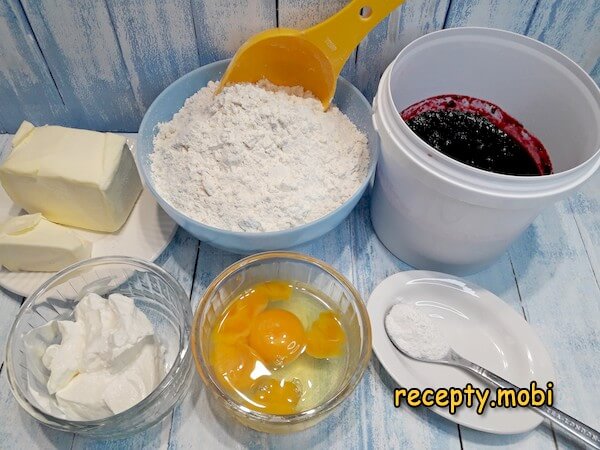
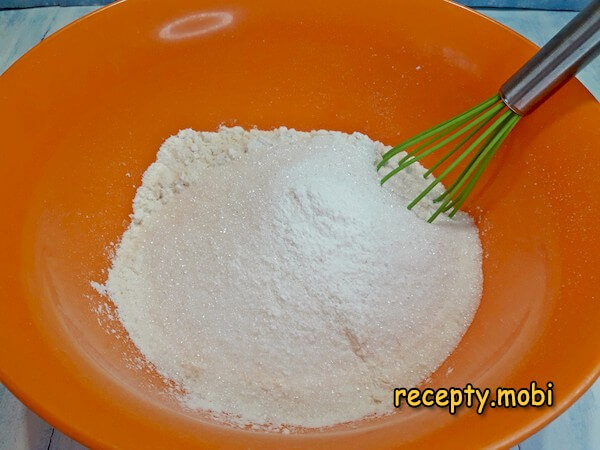
All dry ingredients (flour, baking powder, sugar) combine in a bowl. I whisk to distribute everything evenly.
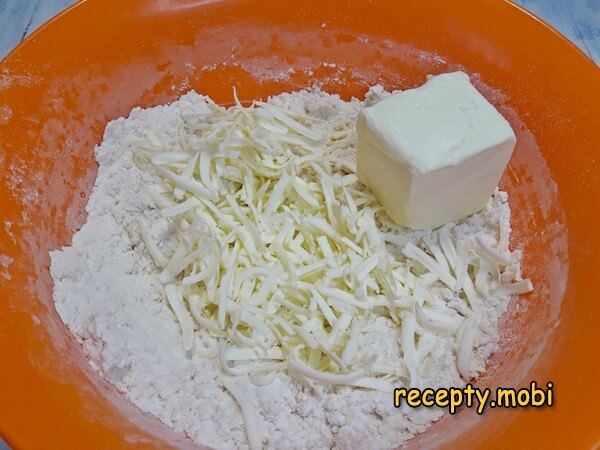
Frozen butter grates on a coarse grater. I dip the butter in flour periodically — prevents the grated pieces clumping together.
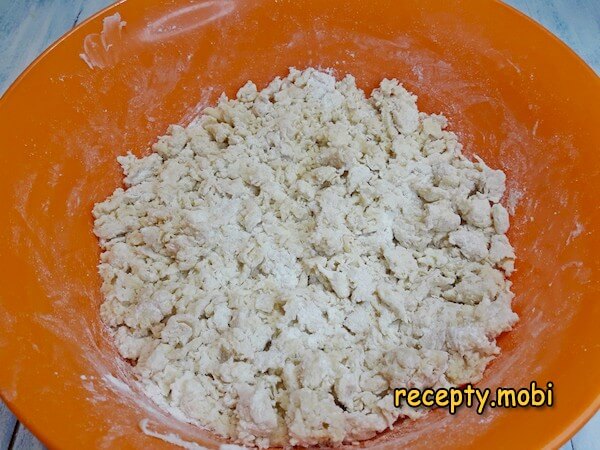
With my hands I rub the flour and butter into a coarse crumb. Speed matters — slow handling melts the butter from finger heat, ruining the crumbly structure.
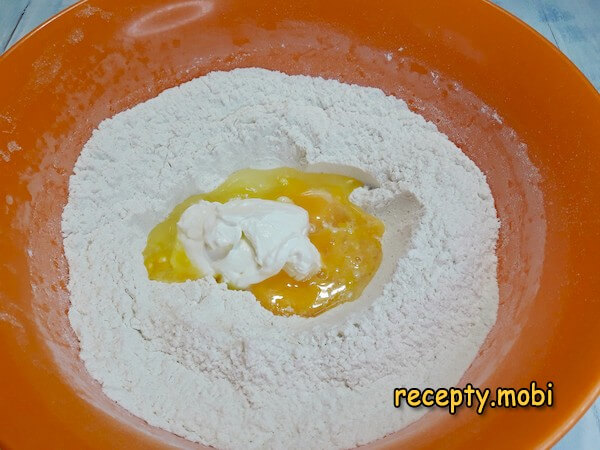
I make a well in the centre and add the eggs and sour cream.
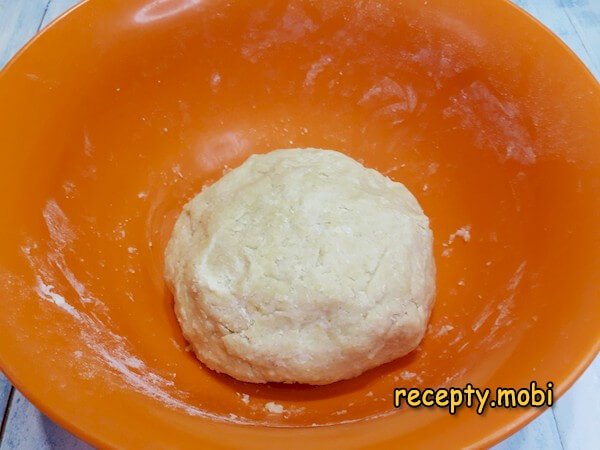
I combine wet and dry first with a spoon, then with hands. Shortbread dough shouldn't be kneaded long — just gather into a cohesive mass. Target consistency: soft, doesn't stick to hands.
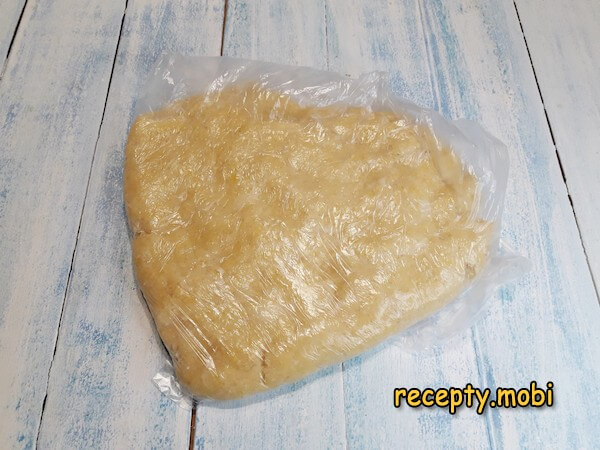
I separate 1/3 of the dough into a bag for freezing. Flatten slightly so it freezes faster.
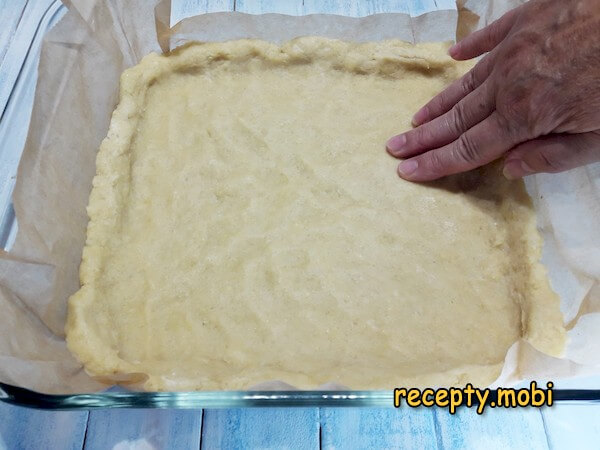
Pan lines with silicone parchment. With my hands I press the remaining 2/3 of dough across the bottom, forming slightly raised edges to contain the jam.
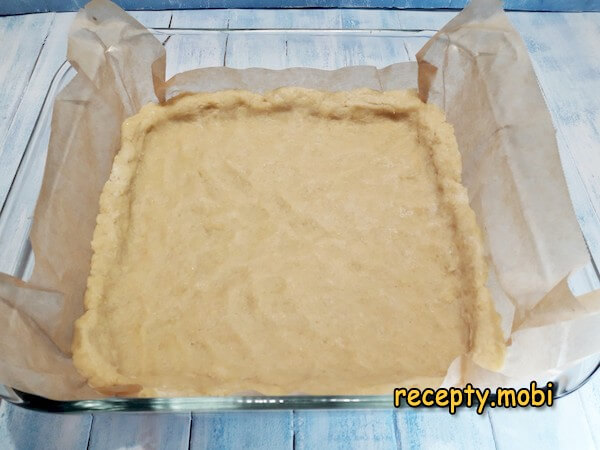
Pan goes to fridge for 20-25 minutes. By this time the freezer dough is also frozen solid.
Blackcurrant jam spreads evenly over the shortbread base.
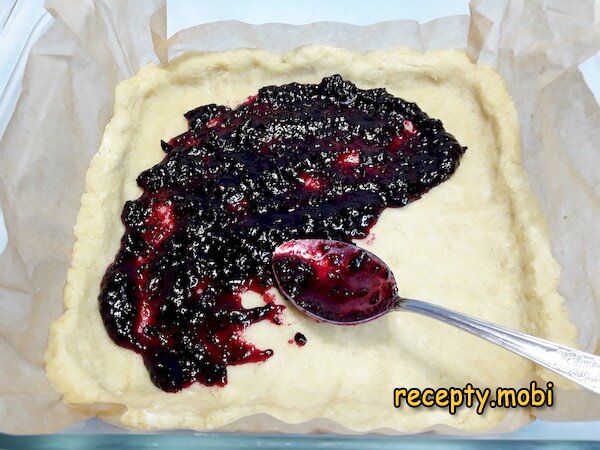
The frozen 1/3 portion grates over the top using the coarse grater — produces beautiful shortbread crumbs that cover the jam layer.
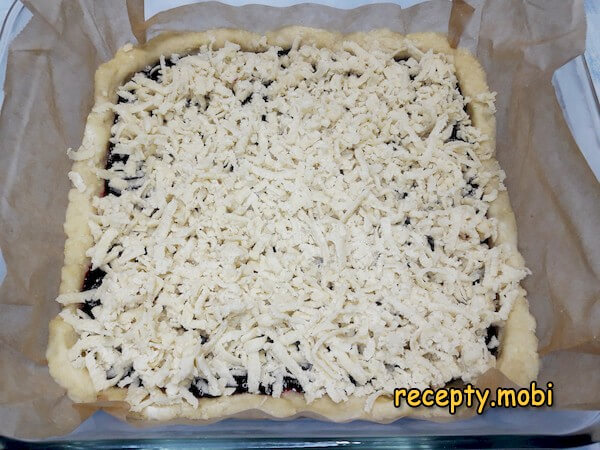
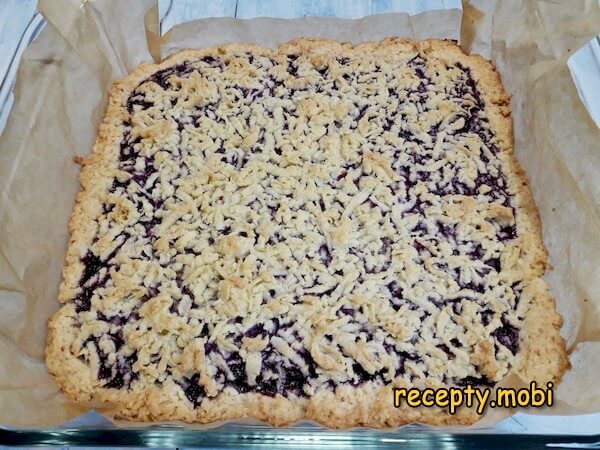
Oven preheats to 190 °C. Pan into the oven for about 35 minutes. Don't remove from pan immediately — let cool and stabilise, then cut into serving pieces.The fragrant, crumbly Viennese cookies fill the kitchen with coziness during the bake. A cup of hot tea with a piece of homemade Viennese cookie is the canonical evening tradition — equally appropriate for solo reading time and family gatherings.


Tips
- 1
FROZEN BUTTER + COLD HANDS = PROPER CRUMBLE. The shortbread structure depends on keeping the butter cold throughout. Frozen butter, grated quickly into cold flour, mixed minimally with cool fingertips. If your kitchen is warm, run hands under cold water before handling. Soft butter creates dense pastry; cold butter creates the layered crumbly texture that defines great shortbread.
- 2
THE GRATED-DOUGH-TOPPING IS THE TECHNIQUE SECRET. Step 11's grating-frozen-dough technique creates the signature Viennese cookie appearance — irregular crumb topping that bakes into a tender textured surface. Sprinkling regular crumbs (or pre-broken pieces) gives a uniform pellet effect that's not the same. The grater produces the right size and irregularity. Don't substitute. For another shortbread variation worth comparing, see Sand Cookies with Margarine Buttons.
- 3
JAM CHOICE SHAPES THE COOKIE'S CHARACTER. Blackcurrant is most authentic for Austrian-style. Other excellent choices: redcurrant (sharper tang), apricot (apricot is the most beloved Austrian filling — Linzer-cookie style), cherry (slightly sweeter), raspberry (most fragrant), gooseberry (least common but excellent). Avoid: very sweet jams (overload with sweet shortbread), runny preserves (leak through during bake), citrus marmalades (clash with shortbread). Tart-sweet balance is the goal.
- 4
COOLING IN THE PAN IS NON-NEGOTIABLE. Step 12's instruction to cool fully in pan before cutting prevents the jam-filled middle layer from leaking and the crumbly base from breaking. Hot Viennese cookies are too tender to slice cleanly. Wait at least 30 minutes (longer is better) — overnight cooling gives the cleanest slices. The cookies actually taste better the day after baking — flavours meld and structure stabilises. For another Christmas-style spiced cookie variation worth trying, try Christmas Cookies with Glaze, Cinnamon and Ginger.
FAQ
Why "Viennese" cookies? +
The recipe traces to Austrian (Vienna) baking tradition where similar grated-dough fruit-filled bars have been classics for over a century. The Linzer Torte uses similar architecture (shortbread base, jam layer, lattice or crumb topping) — the Viennese cookie is a simpler home-baker version. The name "Венское печенье" (Vienna cookies) became standard in Russian-Soviet baking literature mid-20th century. The original Viennese versions might use ground nuts (hazelnuts, almonds) in the dough; this Russified version uses pure flour.
Can I substitute the sour cream? +
Yes — full-fat Greek yogurt works as direct substitute (use the same 80 g). Crème fraîche works (slightly richer result). Buttermilk works but produces slightly thinner dough — reduce milk content if substituting. Avoid: low-fat sour cream (curdles), regular milk (too thin), heavy cream (too rich). The 80 g of moisture-rich dairy is what binds the dough properly while keeping the shortbread character.
How do I store leftovers? +
Cooled Viennese cookies keep 3-4 days in airtight container at room temperature. The shortbread tendency is to absorb moisture from the jam layer slowly, softening over time — best texture is days 1-2, acceptable through day 4. Refrigeration extends to 7 days but the texture goes slightly denser. Freezing: yes, 2 months wrapped tightly. Thaw at room temperature 1 hour before serving. The cookies actually pair beautifully with vanilla ice cream as a quick dessert.
Can I make these with nuts? +
Yes — for traditional Linzer-style: replace 100 g of the flour with 100 g of finely ground hazelnuts or almonds. The nut flour gives richer flavour and slightly different (denser, more crumbly) texture. The bake time stays the same. For a beautiful presentation: top the grated dough crumb with whole almonds or pine nuts before baking. The nuts toast during baking and add visual appeal plus textural contrast. Avoid: walnuts (too oily, can turn the cookies bitter on extended storage).
- Comment
or post as a guest
Be the first to comment.