avg —
Zucchini Jam with Lemon for Winter

Instructions
Lay out every ingredient before starting the jam project. Choose young zucchini with thin skins and no seeds for the best results; the jam made from young zucchini turns out tastier, more tender, and more pineapple-like than versions made with mature seedy zucchini.
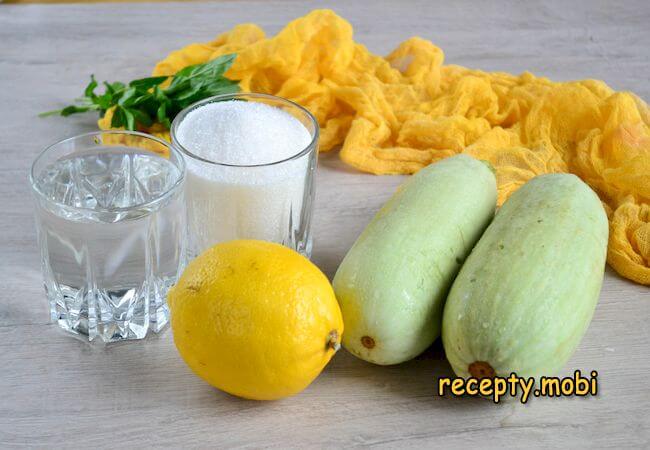
Peel the zucchini using a vegetable peeler. The skin can taste slightly bitter in the finished jam, so removing it produces a cleaner sweeter result that better mimics the pineapple character the recipe aims for.
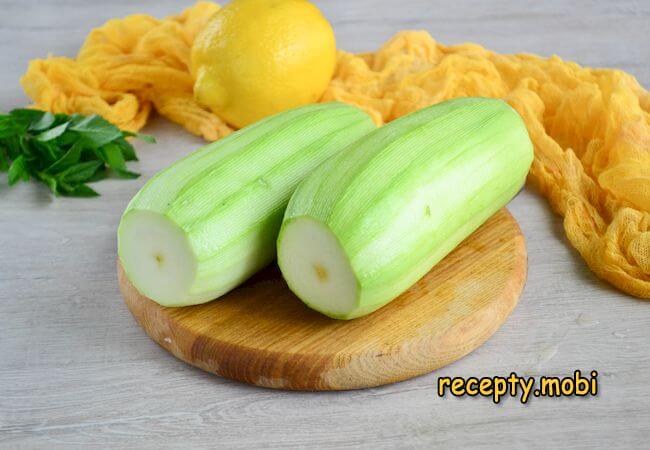
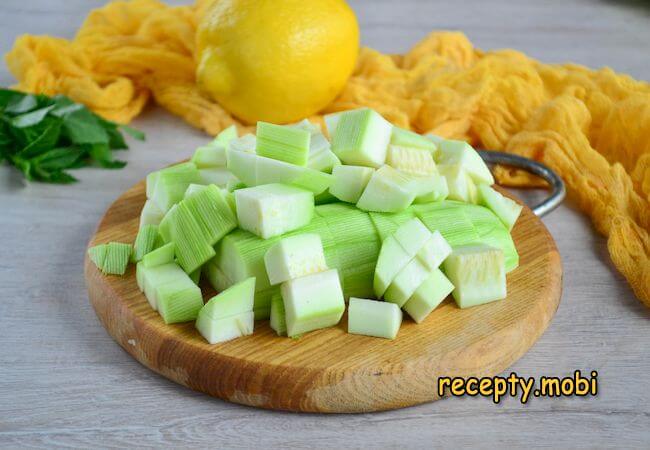
Cut the peeled zucchini into small even cubes about one centimetre across. If the zucchini contains noticeable seeds in the centre, scoop them out and discard before cubing because the seeds become unpleasantly soft during the long cooking phase.
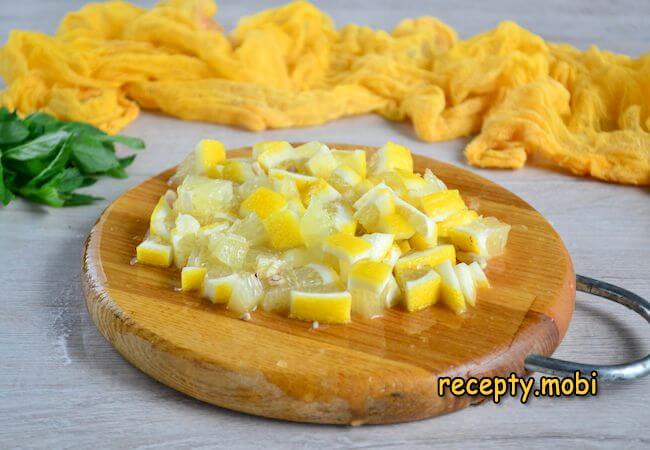
Cut the lemon into small cubes matching the zucchini in size. The lemon can be peeled first for a milder finished flavor, but the recipe works perfectly with the skin left on; the skin contributes extra citrus oils that intensify the pineapple-like aroma in the finished jam.
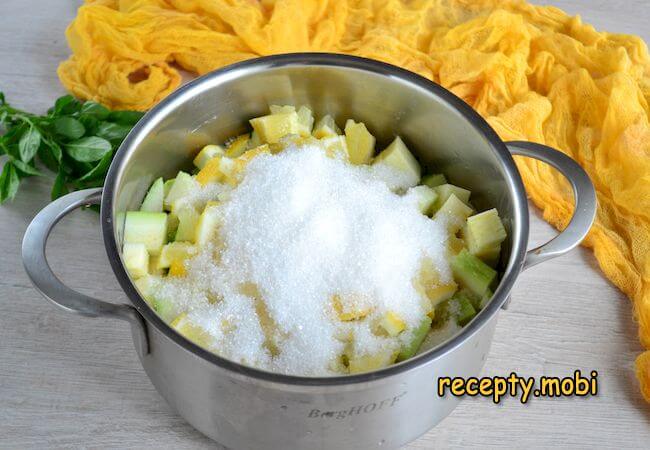
In a heavy-bottomed saucepan, combine the zucchini cubes with the lemon cubes, then add the water and the sugar. Stir gently to combine the ingredients and place the saucepan on the stove over medium heat.
Slowly bring the contents to a boil and cook for ten minutes after the boil starts. The jam will be cooked in three separate cycles to preserve the integrity of the zucchini cubes and produce the thick aromatic syrup that defines this preserve. Remove the saucepan from the heat after the first ten-minute boil and let it sit at room temperature for eight to ten hours. Most cooks start the jam in the morning, do the second boil in the evening, and the final boil the next morning.
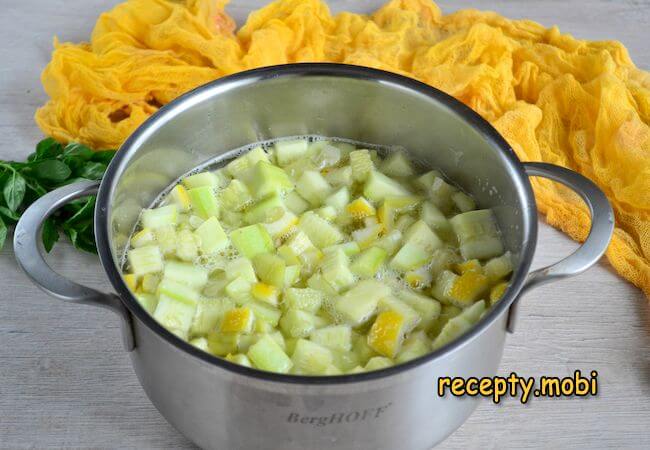
After the long rest, return the saucepan to the heat and boil for ten more minutes. This second cooking concentrates the syrup further and continues to firm up the zucchini cubes. The jam takes on its characteristic golden color during this stage.
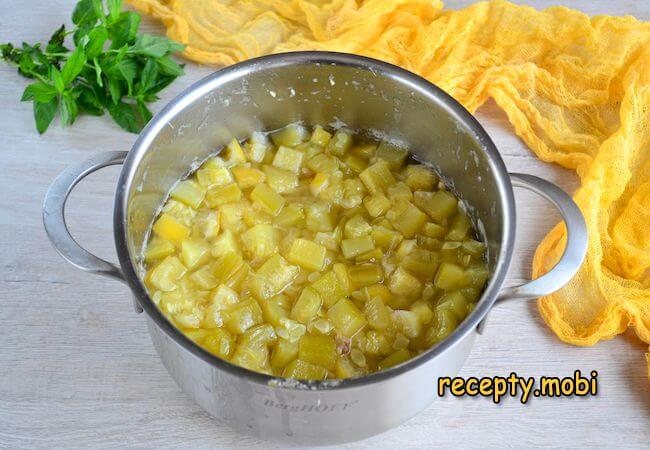
Boil the jam for the third and final time for ten minutes, then immediately ladle it into clean sterilized jars. The third cooking finishes the syrup thickening and ensures all the components have reached the safe temperature for long-term storage.
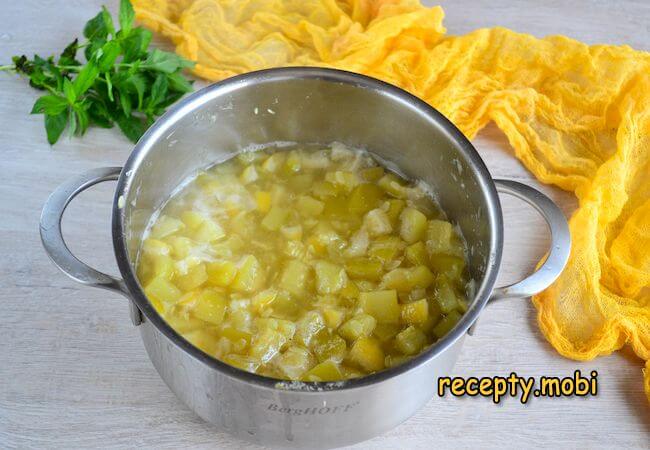
Seal each jar with a metal lid while the contents are still hot to create the strong vacuum seal essential for safe long-term storage. Leave the sealed jars to cool completely at room temperature, then transfer to a cool dark cellar or pantry for storage.
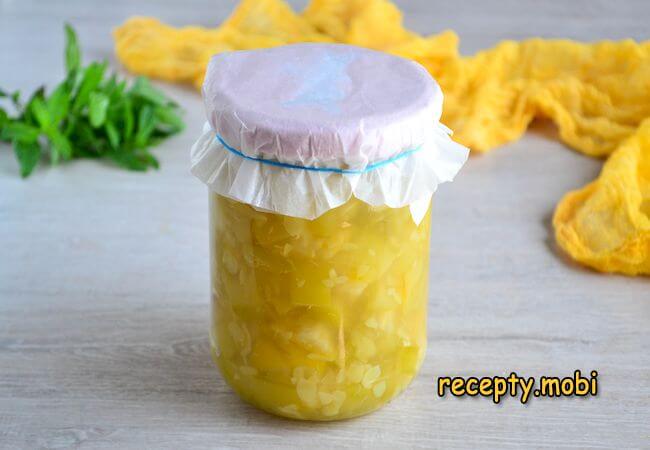
The delicious aromatic zucchini jam with lemon for winter is ready to enjoy throughout the cold months ahead. Try this beautiful preserve with afternoon tea and watch how the surprising pineapple-like flavor delights every guest. Bon appetit alongside good company at the tea table.


Tips
- 1
Choose young zucchini with thin skins and no developed seeds for the best results. Old overripe zucchini produces a less satisfying finished jam with watery texture and bitter notes from the mature flesh. Look for zucchini between fifteen and twenty centimetres long with shiny taut skins and firm flesh that resists gentle finger pressure. Smaller zucchini also works particularly beautifully because they tend to have the smallest seeds and the sweetest flavor profile in the finished preserve.
- 2
Use the staged cooking method (boil-rest-repeat) faithfully rather than trying to shortcut to a single long boil. The staged approach preserves the zucchini cube integrity and produces the brighter clearer syrup that distinguishes this jam from amateur attempts. The patient method requires more total time but the same total active attention; the rest periods do not need supervision. Pair this surprising jam with the bright watermelon jam from pulp for an unusual summer-vegetable preserve collection.
- 3
Sterilize the jars and lids thoroughly before filling. Boil the lids for five minutes in a separate small saucepan and either bake the empty jars at one hundred and twenty degrees for fifteen minutes or steam them over a kettle of boiling water. Properly sterilized vessels are essential for the long shelf life of any home preserve. The few extra minutes of preparation pay off generously in safe storage through the winter months.
- 4
Add a piece of fresh ginger or a vanilla bean to the saucepan during the second cooking cycle for an even more sophisticated finished flavor. Both additions enhance the natural pineapple-like character and produce a more complex aromatic jam suitable for fancy dinner parties. Pair the jam with the rustic yeast pancakes with milk for a classic Russian breakfast experience.
FAQ
Why does zucchini jam taste like pineapple? +
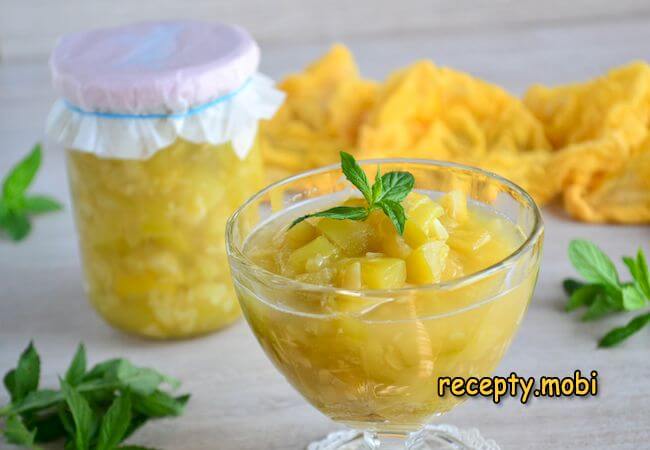
The transformation happens through chemistry between the zucchini cell walls, the citric acid in the lemon, and the sugar syrup during the long cooking. The natural pectin in the zucchini softens and absorbs the syrup, while the citric acid breaks down some of the cell walls and releases compounds that produce a pineapple-like aroma and flavor. The visual transformation is equally surprising: the zucchini cubes turn translucent and golden, looking almost identical to canned pineapple chunks in the finished jar. The single recipe demonstrates how the right combination of simple ingredients can produce genuinely surprising results.
How long does the zucchini jam keep on the shelf? +
Properly canned and sealed zucchini jam keeps for up to one year in a cool dark cellar or pantry shelf without significant loss of flavor or color. After one year, the bright golden color may fade slightly and the texture can soften further, though the jam remains safe for another six months. Always check the seal before opening: a properly sealed jar shows a slightly concave lid that does not pop when pressed. Once opened, refrigerate and use within three weeks for the best texture and flavor experience.
Can I substitute the lemon with another citrus fruit? +
Yes, several citrus alternatives work beautifully in this versatile jam. Orange produces a sweeter milder version with notes that suggest tropical fruit even more strongly than lemon does. Lime creates a sharper more complex flavor profile that suits diners who enjoy bold citrus character. A combination of lemon and orange produces the most pineapple-like flavor of all the variations. Whichever citrus you choose, use approximately the same volume as the original lemon and proceed with the recipe exactly as written for excellent results in the finished jar.
What can I serve this jam with besides plain tea? +
Several uses transform the basic jam into different culinary experiences. Use it as a filling for puff pastry turnovers; the visible zucchini chunks look surprisingly like pineapple inside the pastry. Spoon over vanilla ice cream for a quick refreshing dessert. Stir into Greek yogurt with fresh berries for a quick parfait. Serve alongside roast pork as an unusual sweet-savory glaze. Mix into cocktails (especially rum-based ones) for a creative tropical-style drink. Spread between sponge cake layers as an unexpected fruit filling that delights guests who try to identify the mystery ingredient.
- Comment
or post as a guest
Be the first to comment.